
I tested a mix of reel and corded electric mowers and picked models that handle slopes, uneven turf, and tight spaces. These choices balance traction, weight, cutting quality, and ease of use on inclines.
I mow several yards with slopes and uneven ground, so I focused on machines that feel safe and effective on hills. Some mowers excel because they're light and easy to steer uphill; others win by bringing motor torque when the grass is tall or thick.
In this roundup I include both manual reel mowers and corded electrics. I’ll tell you where each type performs best on inclines and what to expect for assembly, pushing effort, and maintenance.
I compared lightweight reel mowers for traction and maneuverability against corded electrics for torque and clipping collection on slopes.
1. Great States 14-Inch Reel Mower – Best Lightweight Reel
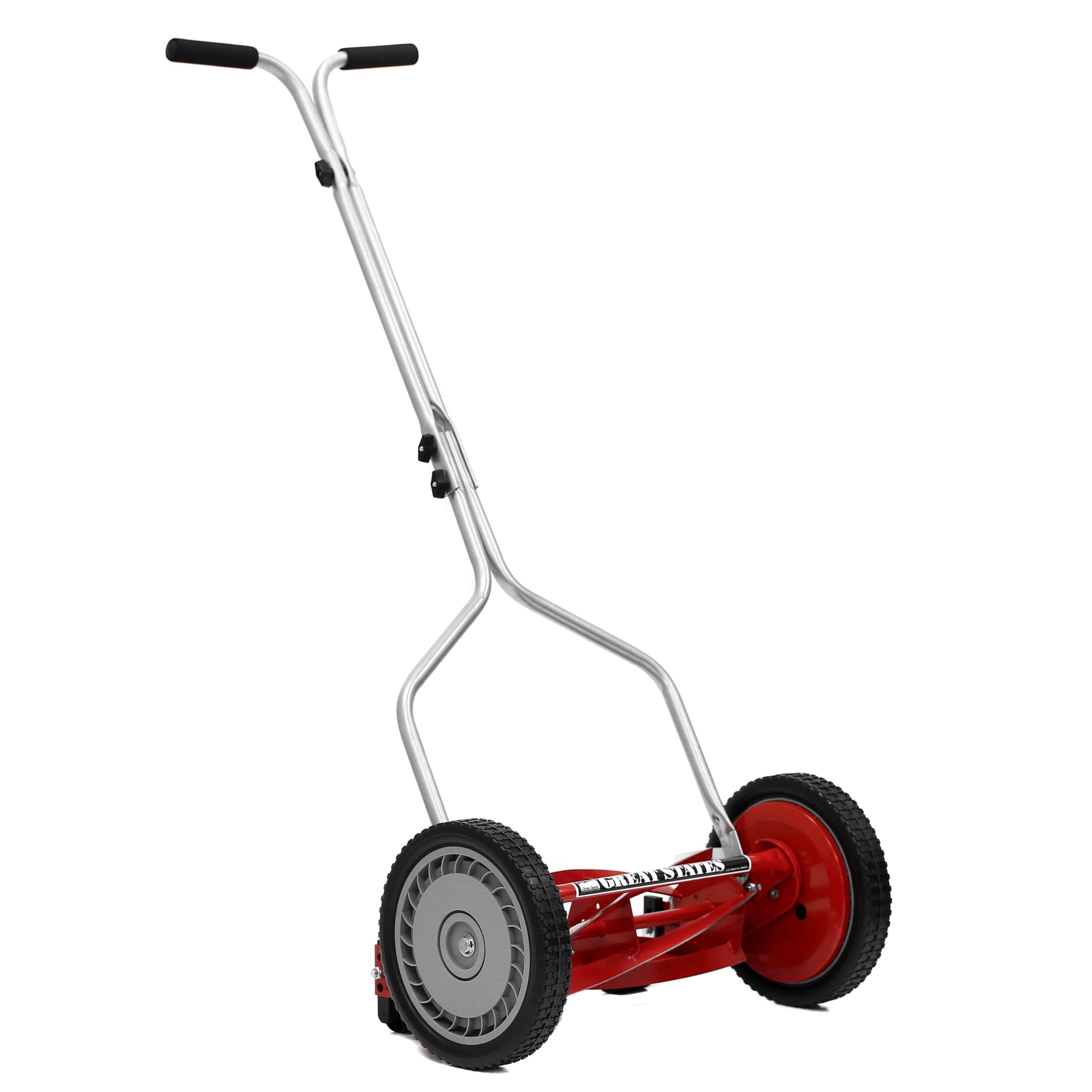
A featherweight 14-inch reel mower that delivers a scissor-like cut and easy assembly—good for short, maintained slopes.
Why I picked it: Light build, smooth ball-bearing reel, and simple height adjustment make it easy to push on grades.
Best for: Small yards with frequent mowing and modest slopes where a lightweight mower helps with control.
An economical, low-cost manual mower option.
Pros
- Very lightweight and easy to maneuver
- Scissor-like, healthy grass cut
- Tool-free assembly and adjustments
- Heat-treated alloy steel blades
Cons
- Narrow 14" cutting width
- Not ideal for long, overgrown grass
- No grass catcher included
My take
I put this together in about half an hour with no tools and was impressed by how easily it rolls. The 14-inch bed and 5-blade ball-bearing reel give a surprisingly tidy, scissor-like finish that left my slope-looking uniform.
When I push it uphill the mower tracks well and the cushioned T-handle keeps my grip comfortable. It’s light enough that I rarely felt it wanting to run away downhill or bog down when I hit a patch of thicker turf.
This is not a one-pass solution for long, wet grass—reel mowers work best when you keep the lawn trimmed regularly. For my small, maintained slope it’s a near-perfect, quiet option that saves me gas and noise.
2. LawnMaster 14-Inch Corded Electric – Best Corded Electric
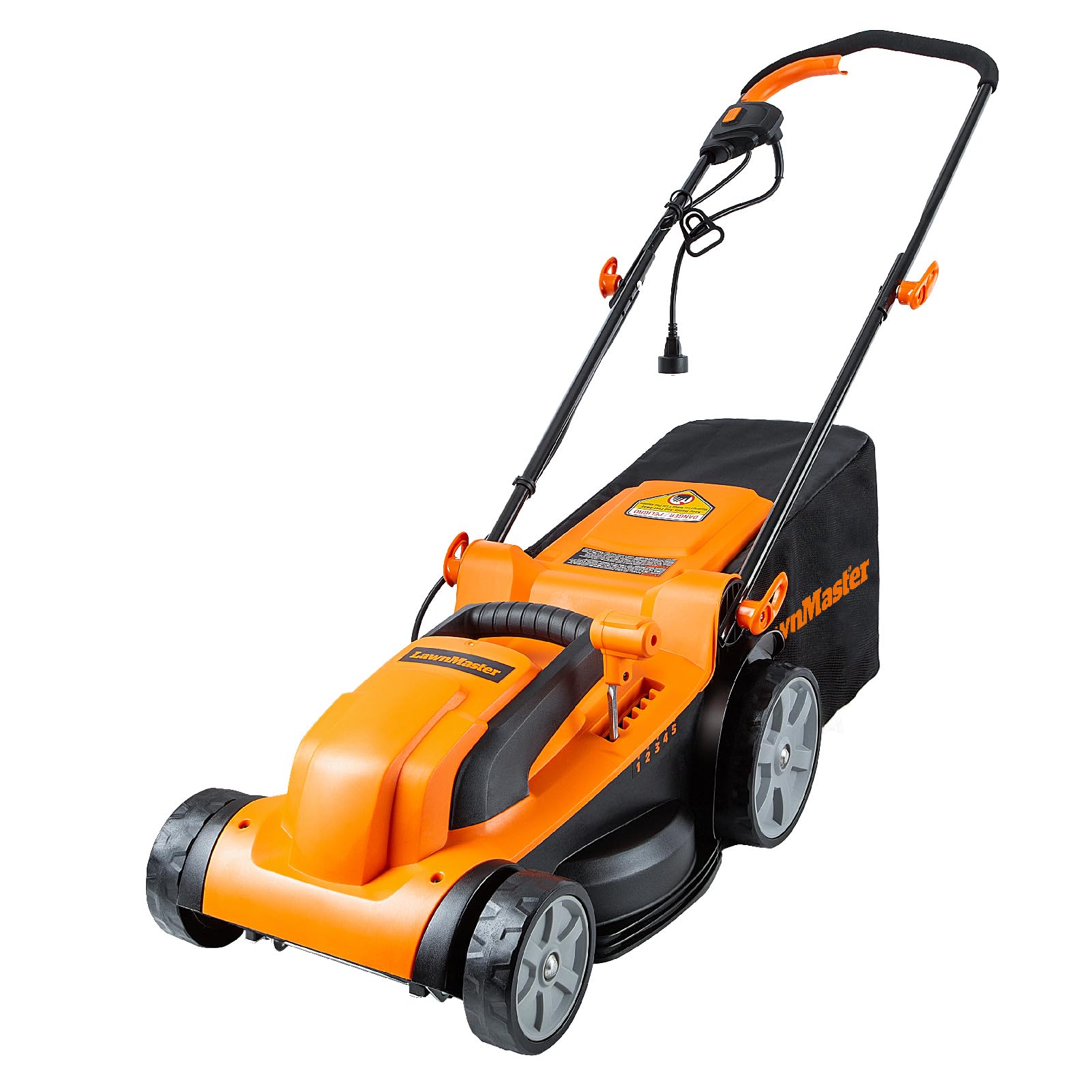
A compact corded mower that brings decent torque for its size, plus a collection bag and foldable handles for easy storage.
Why I picked it: Strong motor speed for a 14-inch unit and a practical grass bag that keeps slopes tidy.
Best for: Small-to-medium yards with short-to-medium inclines where cord management is feasible.
A budget-friendly electric option with good power for its footprint.
Pros
- Good motor speed for a small mower
- Lightweight and easy to push
- Foldable handles for compact storage
- 7-gallon collection bag included
Cons
- Requires extension cord management
- Mostly plastic parts may hurt long-term durability
My take
I used this mower on a modestly sloped yard and found the motor torque helpful when tackling slightly thicker patches. The 3,300 RPM motor keeps the blade turning without the effort a reel mower needs.
Cord placement is the trade-off. I keep a long outdoor-rated extension and plan my mowing pattern to avoid trips and tangles. Once I got that routine down, the 7-gallon bag kept clippings out of the way and made the slope look finished.
Assembly and folding for storage were straightforward. It’s lighter than many gas units, making it easier to handle on hilly terrain, but I’m mindful that heavier-duty use might expose plastic components over time.
3. American Lawn Mower 14-Inch Corded – Best Compact Electric
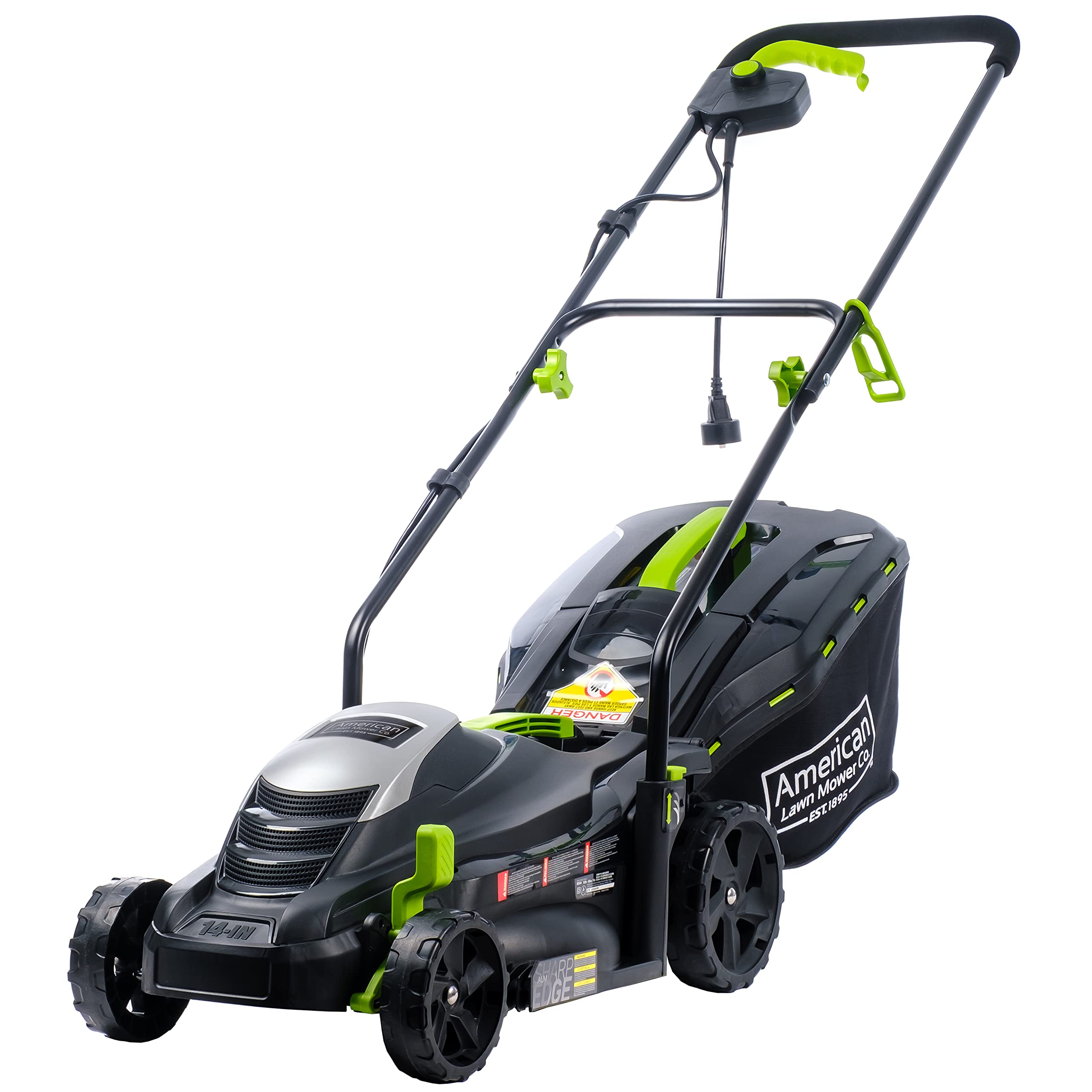
A very small, lightweight corded mower that’s easy to carry and maneuver into tight or sloped spots.
Why I picked it: Compact footprint and an 11-amp motor that feels peppy for constrained lawns.
Best for: Tiny yards, terraces, and lawns with obstacles and short inclines where nimbleness matters.
A compact, wallet-friendly electric mower.
Pros
- Extremely lightweight and portable
- Easy to maneuver around obstacles
- Simple to start and operate
Cons
- Small grass bag requires frequent emptying
- Looks toy-like—limited heavy-duty durability
My take
I relied on this little mower when I needed something I could lift and tuck into a shed after each use. On gentle slopes it felt stable and surprisingly effective at producing a uniform cut.
Because the bag is small, I emptied it often during my sessions. That’s a small trade-off for the maneuverability when working around trees, planters, and narrow walkways on inclines.
It’s best for maintained lawns that don’t demand long runtime. If you need constant torque for thick grass on a hill, a larger electric or rotary unit would be a better fit.
4. Scotts 20-Inch Reel Mower – Best Wide Cut Reel
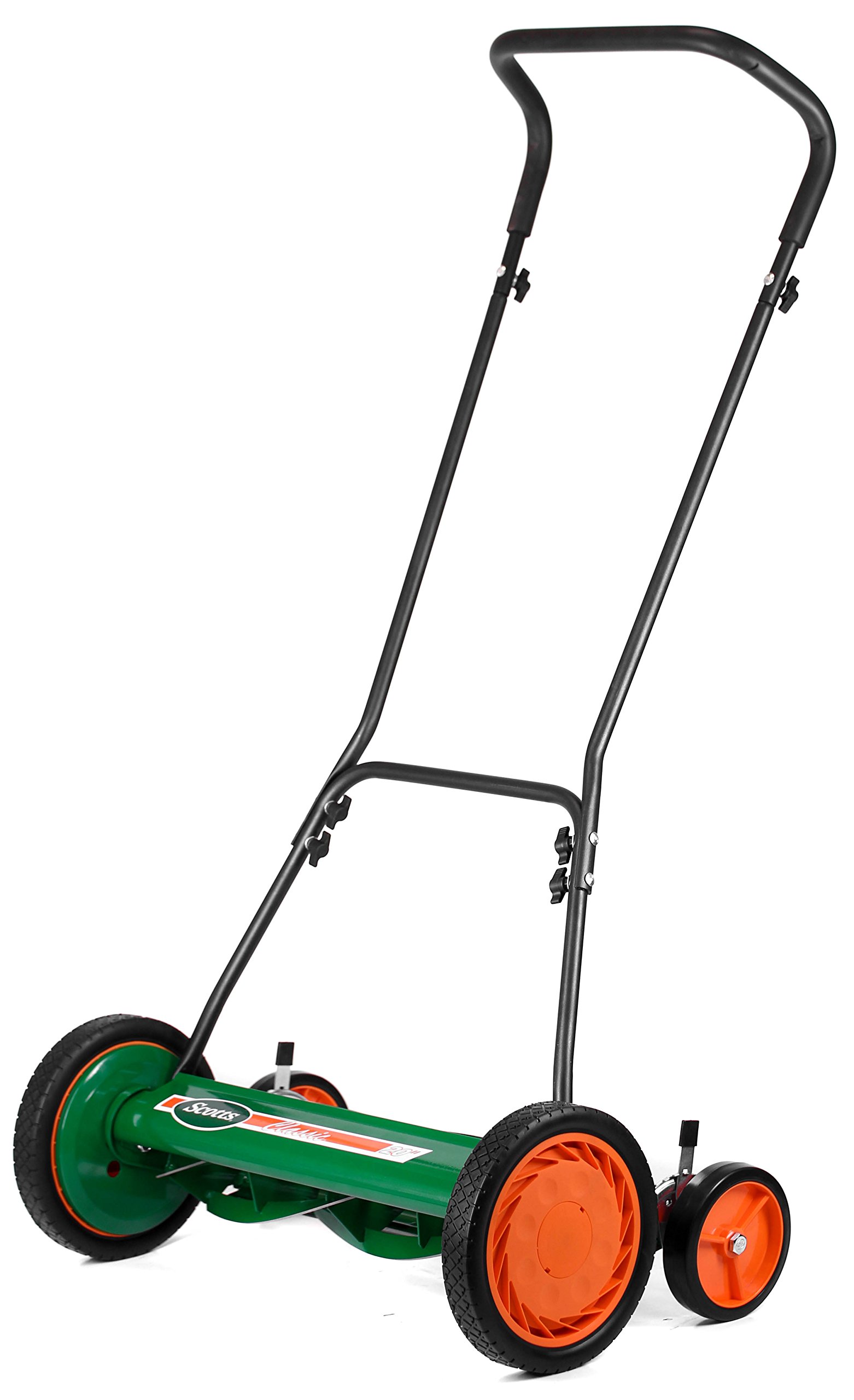
A 20-inch reel mower with dual tracking wheels and quick-snap height adjusters that cuts wide swaths—handy on slopes to reduce passes.
Why I picked it: Wide cutting path and dual-tracking wheels improve stability and reduce the number of runs on inclines.
Best for: Medium-to-larger lawns with gentle to moderate slopes and regularly maintained turf.
A midrange reel with professional-feeling engineering.
Pros
- Generous 20" cutting width
- Dual tracking wheels for better control
- Quick-snap height adjusters
- Durable, heat-treated steel blades
Cons
- Requires more effort uphill than a motorized mower
- Doesn't handle very long grass well
My take
I use this when I want fewer passes across a slope—20 inches makes a real difference. The dual tracking wheels reduce drag on uneven terrain so I don’t feel like I’m fighting the mower on each lap.
The height adjusters are fast and keep the mower locked at the setting I need, which matters on hills where inconsistent cuts can become obvious. It gives a very clean, manicured finish when the lawn is kept short.
If your hill is wild with tall weeds and tussocks, plan to clear or trim first. For maintained inclines, though, this model cuts efficiently and feels built to last.
5. Scotts 14-Inch Reel Mower – Best Budget Reel
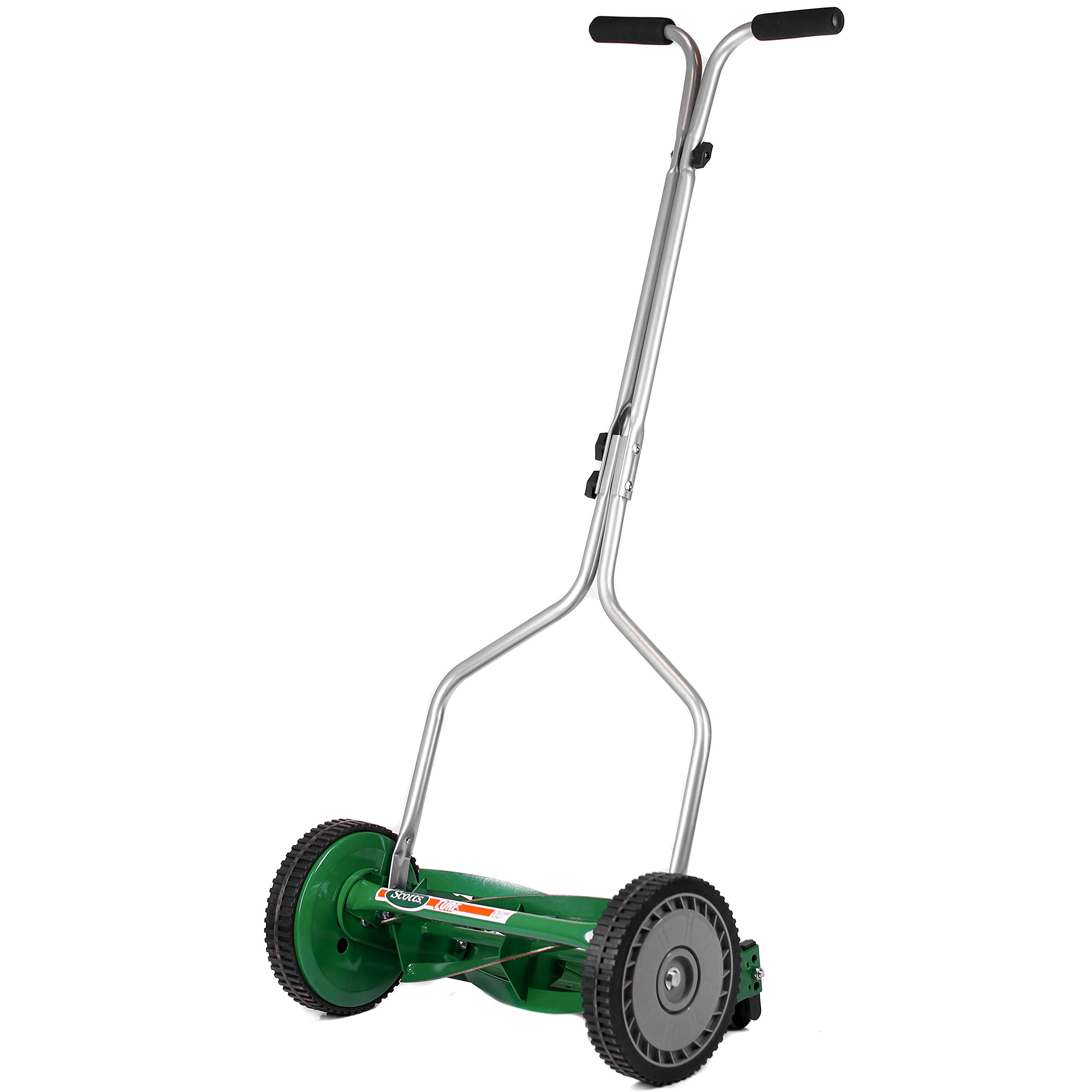
A straightforward and affordable 14-inch reel mower that’s quiet, easy to store, and well-suited to small slopes.
Why I picked it: Simple design, comfortable T-handle, and low maintenance make it an effective budget reel.
Best for: Small yards and short inclines where affordability and quiet operation matter.
A value-oriented choice for a manual mower.
Pros
- Quiet, no fuel required
- Lightweight and easy to store
- Simple, tool-free assembly
Cons
- Can jam on debris like sticks
- Not for unmaintained, tall grass
My take
I bought this for early-morning mowing on a hilly rental yard and loved the silence. It’s light, cuts clean when the grass is under 3–4 inches, and stores easily in a small closet.
The trade-offs are classic reel-mower ones: you need to mow more frequently, and I clear the slope of sticks and toys first so the reel doesn’t jam. But when used on a tidy lawn, it’s efficient and pleasant to push uphill.
If your hill needs regular grooming and noise is a concern, this simple Scotts is hard to beat for the price and convenience.
6. Earthwise 16-Inch 7-Blade Reel Mower – Best for Fine Turf
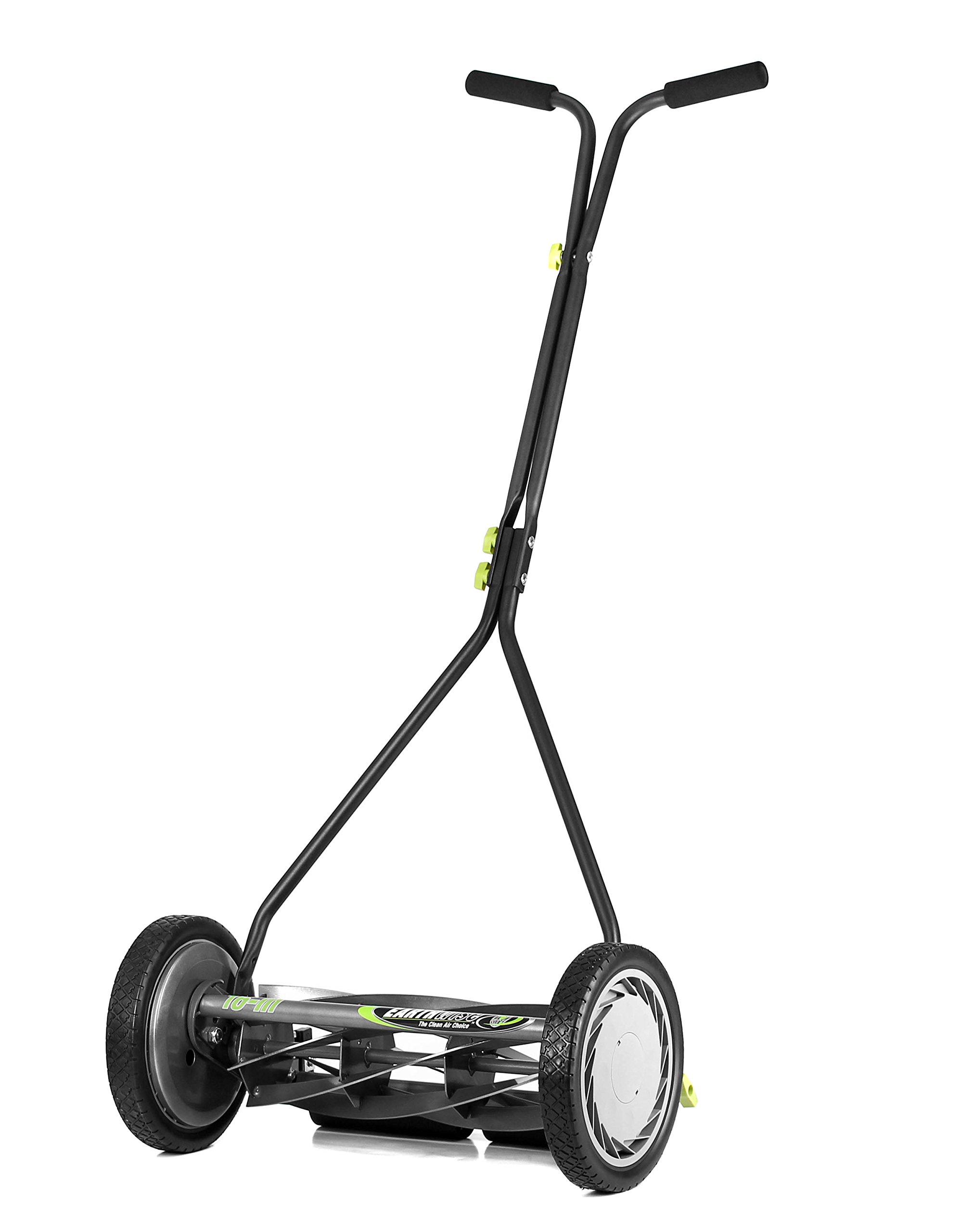
A 7-blade reel built for finer, more frequent cuts—excellent on delicate turf types and moderate slopes.
Why I picked it: Seven blades deliver a smoother, more refined finish; adjustable height covers many turf types found on hills.
Best for: Bermuda, Zoysia, and other fine grasses on slopes where a close, clean cut improves turf health.
A solid value for a higher-blade-count reel mower.
Pros
- Seven blades for a finer cut
- Adjustable 0.5"–2.5" cutting height
- Light and easy to push
Cons
- Feels a bit too light on very steep grades
- May need extra passes for dense turf
My take
I picked the Earthwise for areas where I want a salon-quality finish. The 7-blade reel leaves the grass looking very even, and it’s especially flattering on Bermuda and fine fescues on gentle slopes.
Because it’s light and rolls smoothly, I can manage inclines without overexerting myself. I do add a bit more overlap on the uphill passes to get an even result across undulating ground.
If your hills are steep and you want a heavier unit to resist bouncing, consider a wider or heavier reel. For fine turf and regular upkeep, this one consistently looks great.
7. LawnMaster 18-Inch Reel Mower – Best Mid-Size Reel
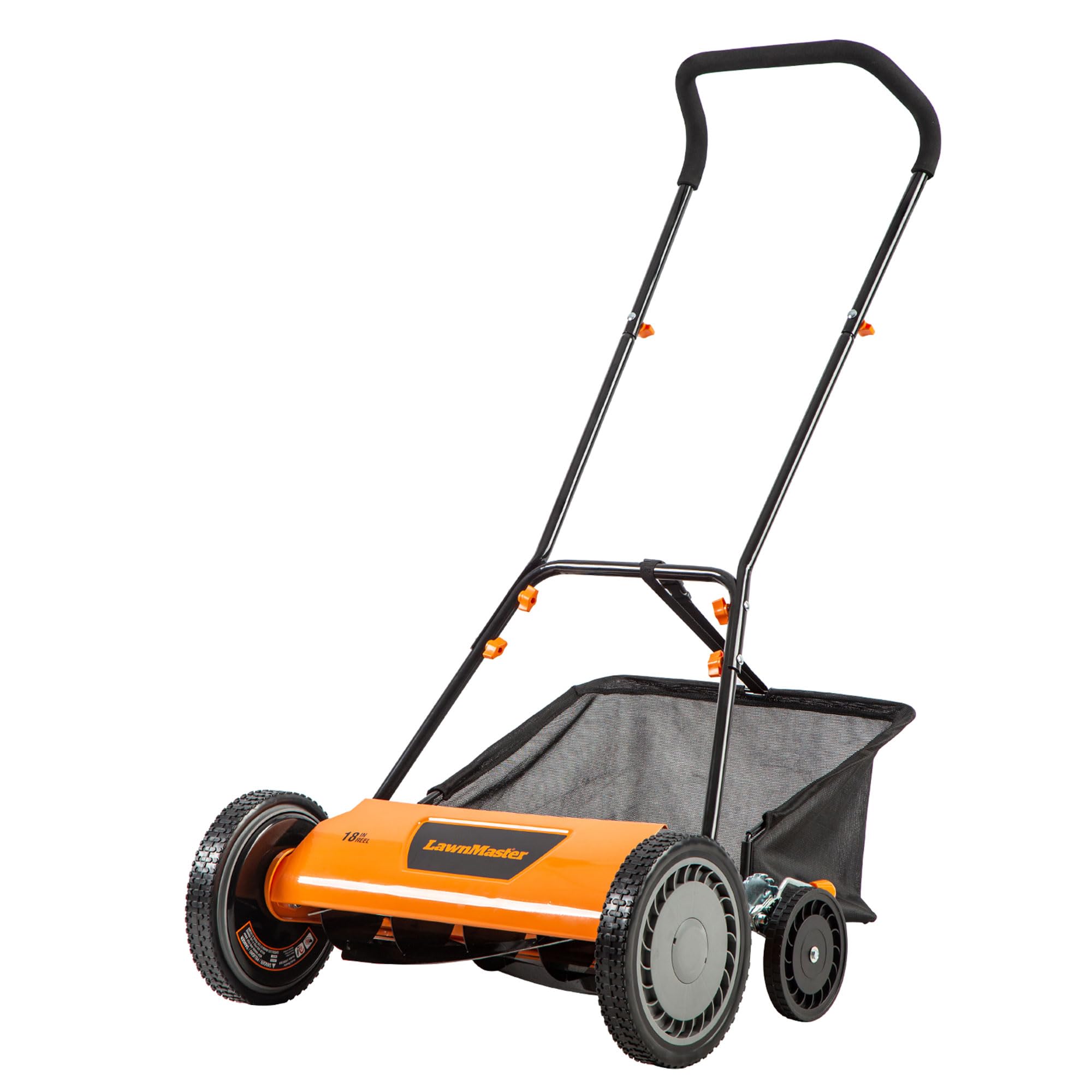
An 18-inch reel that balances width and maneuverability; includes a collection bag and multiple height settings.
Why I picked it: 18-inch deck reduces passes on slopes while staying nimble around obstacles.
Best for: Medium small yards with mixed flat and sloped sections where a larger reel improves efficiency.
An affordable mid-size reel with convenient features.
Pros
- 18" cutting width for fewer passes
- Nine height positions for flexible cutting
- Includes collection bag
Cons
- Can squeak after heavy use
- Jams on twigs without pre-clearing
My take
This mower hits the sweet spot for me when a 20-inch feels bulky but 14 inches is too slow. The 18-inch deck means fewer laps up and down the hill, and the 10-inch wheels help with roll and tracking.
Assembly was fast and it cuts well when I keep the grass routinely trimmed. Like most reels, clearing debris first saves time and frustration—the reel will snag small twigs if I forget to sweep the area.
Overall it’s a convenient, no-gas solution that reduces my mowing time on sloped segments without sacrificing control.
8. LawnMaster 16-Inch Corded Electric – Best for Taller Grass (Electric)
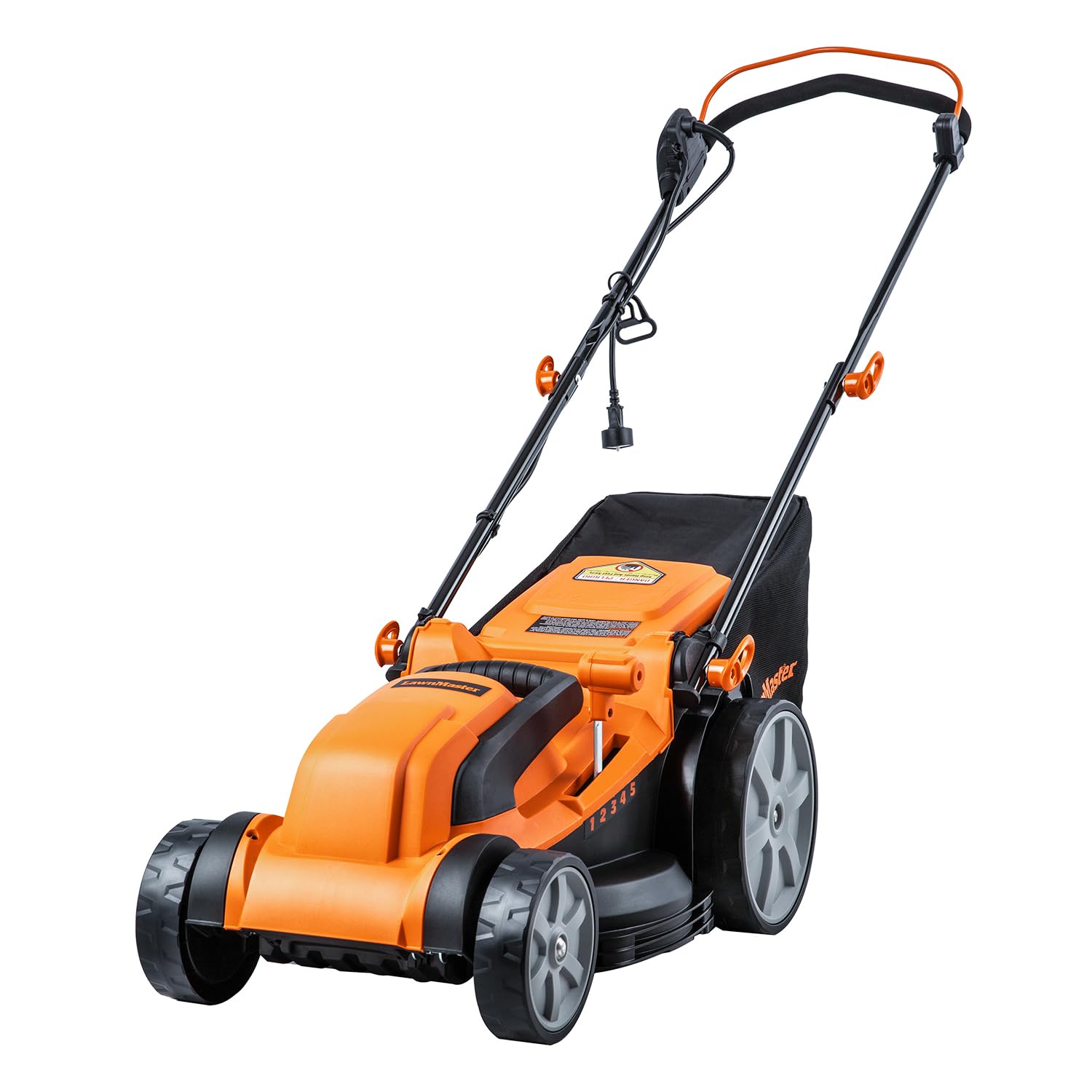
A 16-inch corded mower with a stronger motor and larger bag—good when hills mix with taller weeds and you want clippings collected.
Why I picked it: More RPM and a larger collection bag make short work of mixed turf and taller patches on inclines.
Best for: Small-to-medium yards with slopes that occasionally need heavier cutting and clippings collection.
A midrange electric that balances power and portability.
Pros
- Higher RPM and wider deck
- 8-gallon collection bag
- Foldable handles for storage
Cons
- Cord-dependent—plan extension management
- Collection bag fills quickly on heavy growth
My take
I use this mower when the slope has some tall weeds or thicker grass. The 3,500 RPM motor powers through tougher sections where a reel would struggle, and the 8-gallon bag lets me tidy clippings as I go.
Managing the cord means planning my mowing order, but once I set a route that keeps the cord behind me the machine performs reliably. It’s heavier than the small electrics, but still easy to push up short inclines.
If you want a cordless feel without batteries, this is my go-to corded pick for hilly yards that need occasional heavy-duty cutting.
How I Choose Mowers for Hills
Key features I prioritize for sloped lawns
Traction and control: I look for larger wheels, dual-tracking designs, or a wider wheelbase to reduce slipping and improve steering on inclines.
Weight balance: A mower that’s too light can bounce downhill; one that’s too heavy makes uphill pushes exhausting. I aim for a balance consistent with my slope steepness.
Cutting style: Reel mowers give a healthier cut but need frequent mowing. Corded electrics provide torque for thicker patches.
- Wheel size and tracking matter more than absolute weight on moderate slopes.
- Reels excel on fine, maintained turf; electrics tackle taller, thicker grass.
- Consider a grass catcher if you want a tidy finish on sloping beds.
Reel vs electric on hills — how I decide
I choose a reel mower when the slope is regularly maintained and I want a quiet, low-maintenance cut. Reels are light and maneuverable, which helps on switchbacks and terraces.
I choose a corded electric when I expect to confront taller patches, weeds, or thicker turf because the motor prevents stalling on uphill pushes.
- Reel: Better for frequent mowing, fine turf, and quiet operation.
- Corded electric: Better for torque, clipping collection, and occasional heavy-duty cutting.
Safety and cord management tips I use
When I use a corded mower on a slope I always plot a mowing pattern that keeps the cord behind me and away from the blade path. I also use an outdoor-rated extension designed for lawn equipment.
I never mow downhill on very steep grades with a push mower; I prefer lateral or uphill passes when possible to maintain control.
- Use an outdoor-rated extension cord and keep it behind and to the side.
- Avoid mowing wet grass on slopes—slipping risk increases.
- Wear sturdy shoes with good traction when pushing on inclines.
Maintenance points I don’t skip
I sharpen reel blades annually or as needed; a sharp reel cuts cleanly and reduces the push effort on slopes.
For electrics, I check the blade mounting and keep vents clear so the motor doesn’t overheat when attacking uphill patches.
- Sharpen reel blades with a conditioning kit or valve grinding compound.
- Lubricate wheel bearings and keep the bed knife properly adjusted.
- Store reels indoors to avoid rust and alignment shifts.
Frequently Asked Questions
Are reel mowers a good choice for hilly yards?
I use reel mowers on gentle to moderate slopes frequently. They’re lightweight and nimble, which helps on switchbacks and narrow terraces. If the hill is steep or the grass is long and dense, I switch to an electric or rotary mower for extra torque.
Can I safely use a corded electric mower on a slope?
Yes, if you manage the cord and avoid very steep grades. I plan mowing routes to keep the cord behind me, and I make uphill passes rather than mowing straight downhill to maintain better control.
How often do I need to sharpen a reel mower for good performance on hills?
I sharpen mine about once per growing season for regular lawns, or sooner if I notice tearing instead of clean cutting. A sharp reel reduces push effort and keeps cuts even on inclines.
Final Take
For maintained slopes where I want a quiet, healthy cut I prefer a reel mower—especially the wider Scotts or the fine-cut Earthwise. When the hill mixes with taller weeds or I need clippings collected, the corded LawnMaster 16- or 14-inch models are my go-to.
Think about your hill’s steepness, how often you’ll mow, and whether you want to collect clippings. I match mower type to those needs and then pick the model that balances traction, weight, and cutting performance.
