
I tested six grill covers across sizes and materials. Here’s which I keep on my grills and why—fit, durability, wind security, and breathability were my top priorities.
I spend a lot of time outdoors and I’ve learned that a good grill cover is one of the simplest ways to extend a grill’s life.
Over months of real-world use I focused on three things: how a cover fits, how it handles wind and moisture, and how the material holds up to sun and pests.
Below I break down the covers I actually used and which situations I recommend each for.
I compared these covers by fit, fabric weight, wind security (straps, clips, vents), and how easy they were to clean. If you want something tailored for a specific grill, choose the custom-fit options; for heavy weather I prioritized 600D or rip-proof fabrics and secure fastening systems.
1. Grillman 58" Heavy-Duty Grill Cover – Best Overall
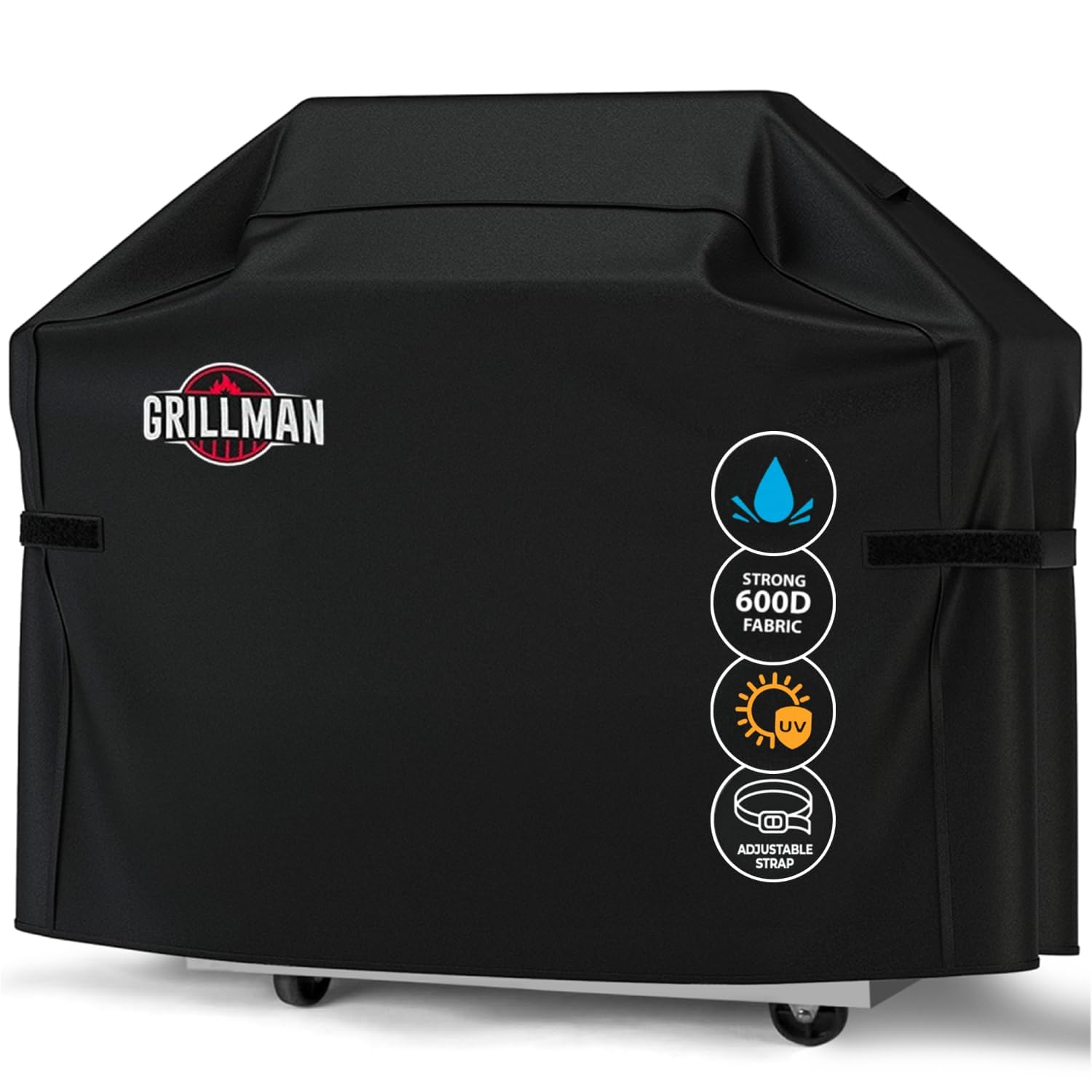
I keep this Grillman cover on my main backyard grill because it balances weight, weather resistance, and practical features.
Why I picked it: Heavy rip-proof fabric, reliable wind straps, and easy cleaning make it a versatile daily choice.
Best for: Everyday protection on gas or charcoal grills where a dependable all-purpose cover is needed.
Good value in the midrange category.
Pros
- Rip-proof, heavy fabric
- Waterproof surface
- Adjustable hook-and-loop straps
- Easy to hose off
- Comes in multiple sizes
Cons
- Can fade after long sun exposure
- Not a tailored smoker fit
- May need extra fastening for tall smokers
My take
I’ve used the 58" Grillman on a large gas grill and on a gravity-feed smoker; the material is noticeably thicker than cheap covers and it slips over my cooker without fuss. The hook-and-loop straps hold the cover in place during gusty afternoons and I rarely find it bunched up after a storm.
Cleanup is simple—hose, shake, and air-dry—and the waterproof surface sheds rain well. I did let one sit under intense sun for a couple of years and it faded and showed wear eventually, so I treat it as a workhorse rather than an heirloom.
If you’re covering a smoker or a nonstandard shape, leave a couple of extra inches on each end. I even considered adding a zipper to make access easier, but for day-to-day protection this Grillman covers the essentials.
2. Unicook 40" Smoker Cover – Best for Vertical Smokers
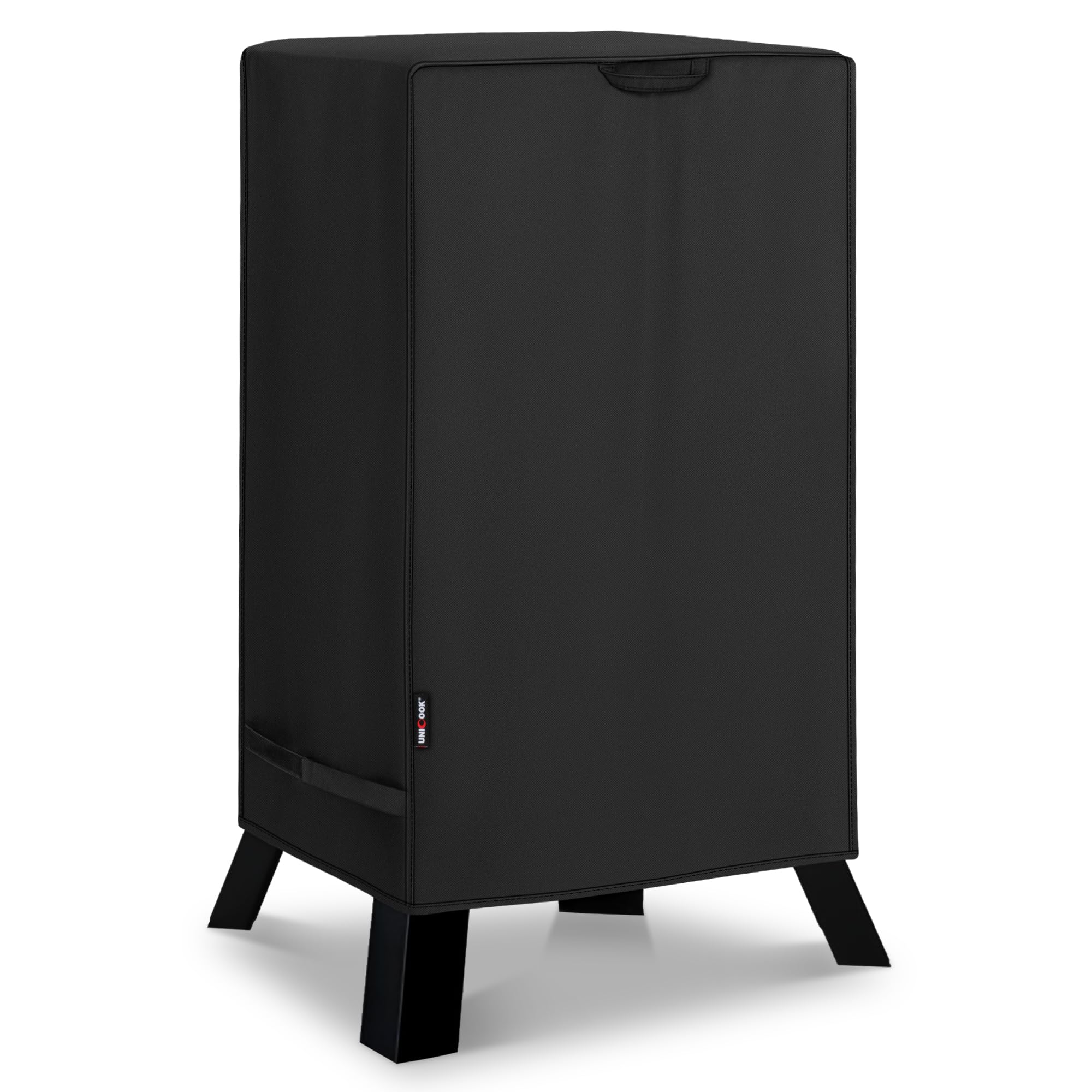
I trust this Unicook cover for vertical electric smokers thanks to its heavier fabric, handles, and wind straps.
Why I picked it: Fade-resistant PU coating and sturdy handles make it easy to fit and remove.
Best for: Vertical or electric smokers where you need a taller, narrower cover and easier handling.
Very affordable option for a smoker-specific cover.
Pros
- Fade and UV resistant
- Durable handles for easy removal
- Waterproof PU coating
- Velcro and straps for wind security
- Simple to rinse clean
Cons
- Doesn’t cover control panels fully
- Side velcro can be awkward
- Not machine washable
My take
I used the Unicook on a Masterbuilt-style smoker and the fit was excellent—easy to pull on and off thanks to the two side handles. The fabric feels denser and more substantial than the flimsy OEM covers I’ve tried.
The PU coating doesn’t trap moisture the way some PVC covers do, and the Velcro straps helped keep it snug during windy nights. I do take care to avoid covering delicate control panels—this cover isn’t intended to enclose electronics completely.
If you want a no-frills, durable smoker cover that’s simple to handle, this is the practical pick I’ve kept coming back to.
3. Weber Bonnet Cover for Q1000/Q100 – Best Custom Fit
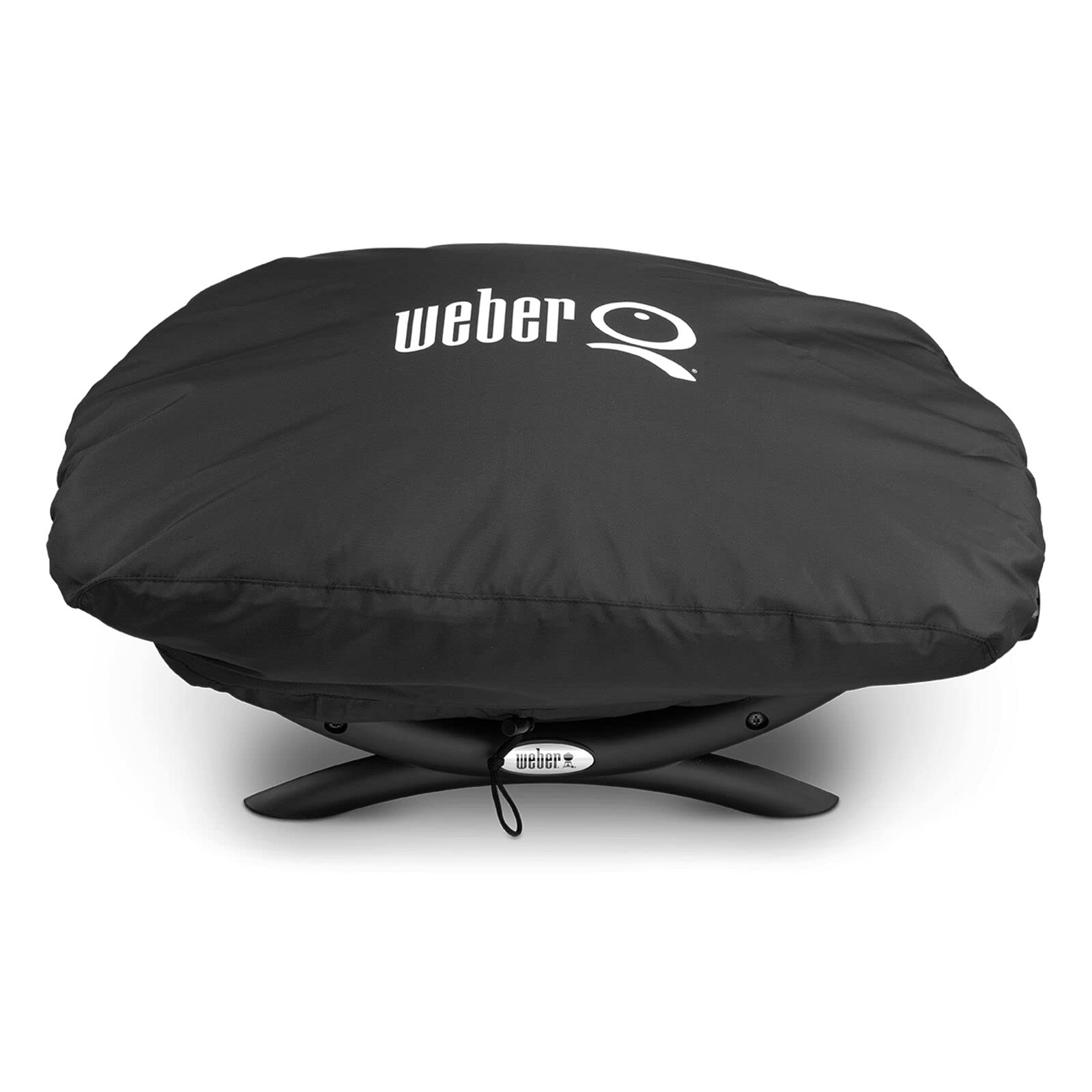
For my Weber Baby Q and Q1000 series grills I rely on this bonnet-style Weber cover because it fits like a glove and breathes.
Why I picked it: Tailored shape and breathable fabric prevent condensation while staying secure.
Best for: Small, cast-aluminum Baby Q and Q1000 series grills where a tight, custom fit matters.
A bit pricier but justified for a true OEM-style fit.
Pros
- Custom-shaped for Q-series
- Waterproof yet breathable
- Drawstring keeps it secure
- Three-year warranty
Cons
- Tight over regulator area
- Higher cost than generic covers
My take
I fitted this bonnet-style cover on my Weber Q1400 and appreciated the way it hugs the grill; the drawstring prevents it from blowing off without the bulky straps other covers use.
The fabric manages moisture better than fully sealed PVC coverings, so I haven’t seen mildew form under it. One small quirk: it’s snug around the regulator and hood area—if you want wiggle room there might be a tighter fit than you expect.
Overall, if you own a Q-series grill and want a cover that looks and fits like the original, this one earns its place in my storage routine.
4. Char-Griller Polyester Grill Cover – Best for Char-Griller Models
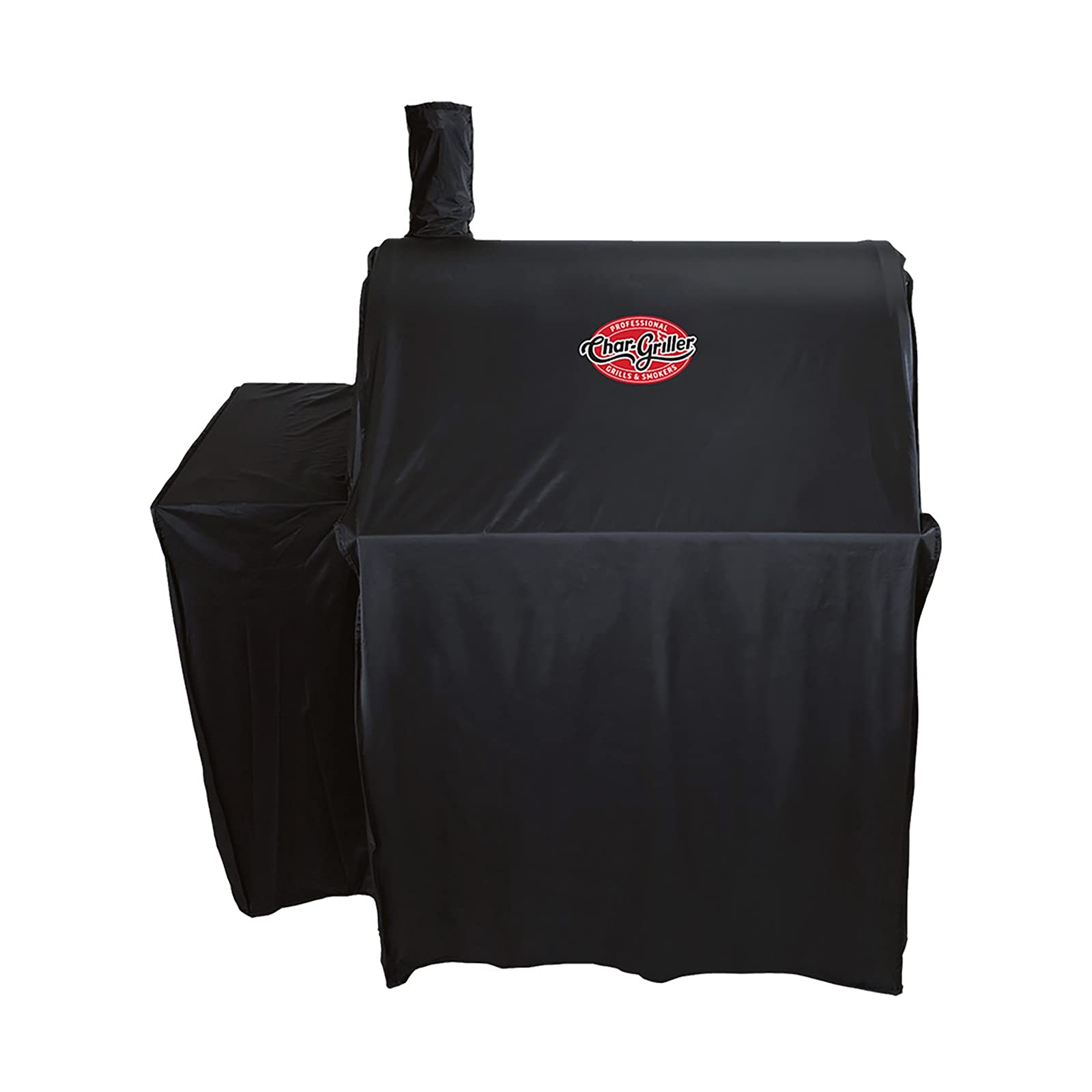
I use the Char-Griller cover on my Char-Griller units when I want heavier construction and PVC lining for weather protection.
Why I picked it: Thick polyester with PVC backing and an extendable design for specific Char-Griller models.
Best for: Owners of Char-Griller models who want a cover built to their grill’s listed dimensions.
Solid value for a manufacturer-fit cover.
Pros
- PVC-lined for weather resistance
- Designed for Char-Griller models
- Heavy, substantial feel
- Extends grill life
Cons
- Can be a touch wide on some grills
- Hand-wash care recommended
My take
When I put this cover on a Char-Griller it reached low enough to protect more of the cabinet than many lightweight covers do. The polyester fabric with PVC backing feels heavier and more protective against rain and bird droppings.
The fit is generally very good for the intended models; on one grill it was slightly wider at the base but that didn’t affect protection. Because it’s heavier, I tend to take a bit more care when pulling it on and off.
If you prefer a manufacturer-shaped cover with a heavy-duty feel, this Char-Griller option is one I’ve used confidently.
5. Comnova 75" 600D Heavy-Duty Grill Cover – Best for Large Grills
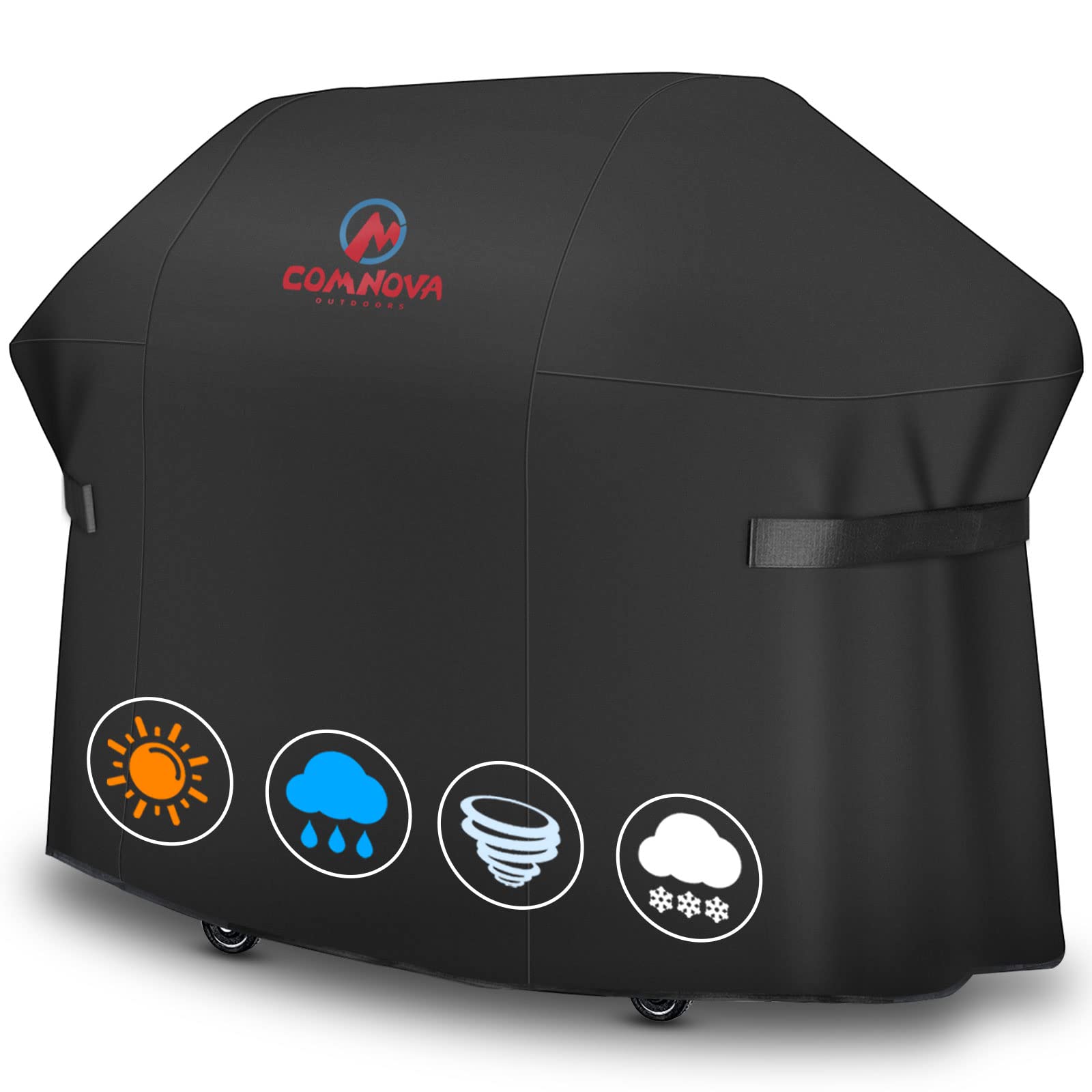
I recommend this Comnova cover when you need heavy, 600D fabric for a six-burner or similarly large grill.
Why I picked it: Thick 600D oxford with PU coating and adjustable Velcro straps for stable wind resistance.
Best for: Large 6-burner Weber-style grills and other wide-format cookers needing robust protection.
A heavier-duty, more durable option for larger grills.
Pros
- 600D oxford construction
- PU coating for waterproofing
- Adjustable Velcro straps
- UV-tested for fading resistance
Cons
- Measurements can run short for wheels
- May require ordering up a size
My take
I put this Comnova on a wide Genesis-style grill and appreciated how the 600D fabric felt far tougher than economy covers. The Velcro straps let me cinch it tight around irregular shapes and it stayed put on windy days.
One practical note: the cover may not reach all the way to the ground on some models and won’t fully cover wheels, so I usually order one size larger if I’m in doubt. The PU-coated surface is easy to wipe down and seems to resist fading better than thinner options.
For a large grill where fabric weight and wind security matter, this is the heavy-duty cover I reach for.
6. ULTCOVER 52" Heavy-Duty Grill Cover – Best for Secure Fit
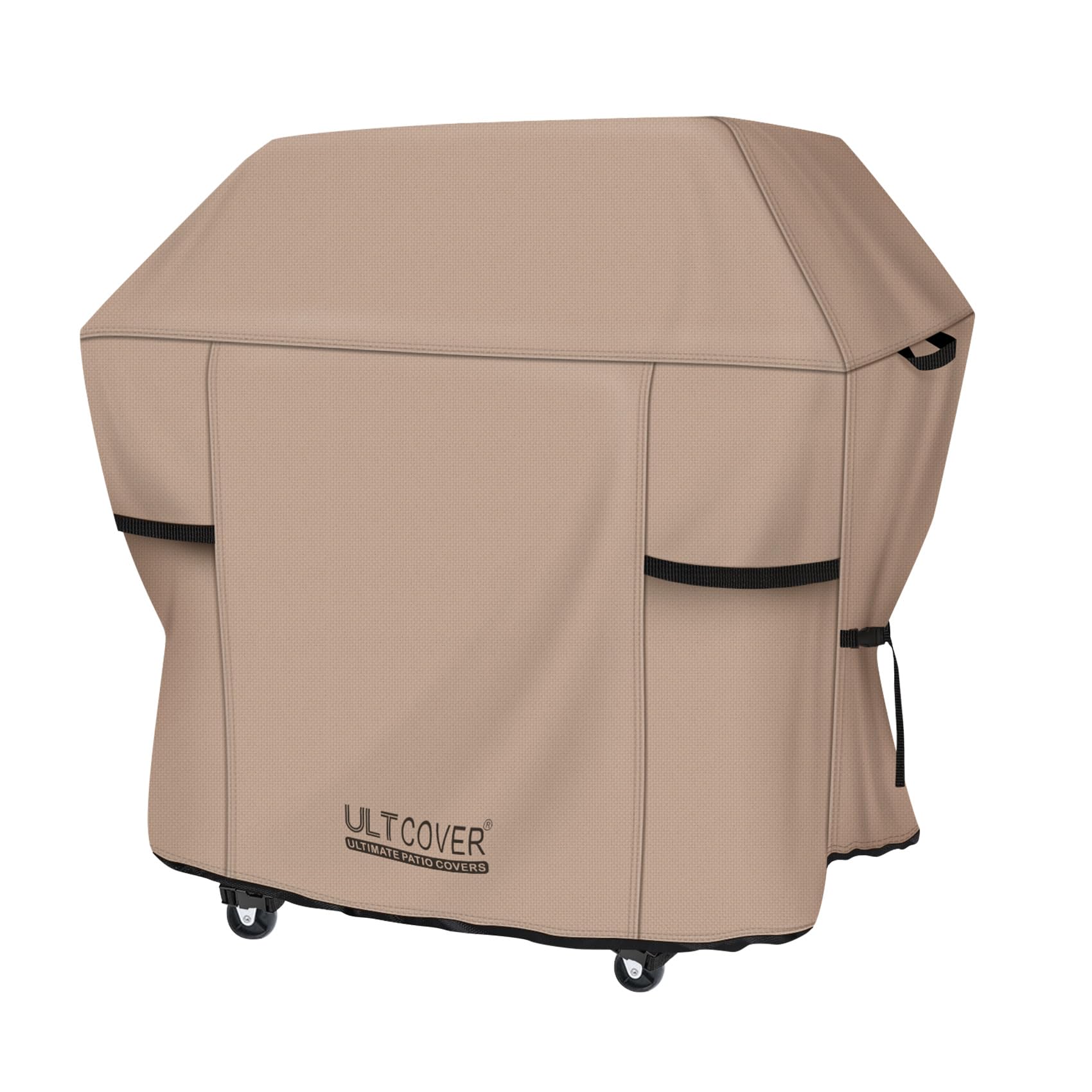
I picked the ULTCOVER when I wanted a tough cover with vents and multiple fastening options to prevent blow-offs.
Why I picked it: Structured vents, elastic draw cords with clips, and thick 600D polyester for a locked-down fit.
Best for: 2–4 burner grills where wind and ventilation control are top concerns.
Well-priced for a feature-rich protective cover.
Pros
- Structured side vents
- Elastic draw cords with clips
- Thick 600D polyester
- Multiple straps for stability
Cons
- Bulky and a bit hard to handle
- May be slightly tall for some models
My take
I used the ULTCOVER on a mid-sized two-burner grill and the vents made a real difference—there was less billowing, and the cover didn’t act like a sail in gusts. The clamping clips at the base keep it cinched down even during heavy wind.
It’s a heavyweight cover, so taking it on and off requires more effort and care around sharp corners, but that thickness is why I trust it for long-term exposure.
If you want something that locks down well and breathes, this is one of the most secure covers I’ve relied on.
How I Choose a Grill Cover
Materials and Durability
I prioritize heavier fabrics such as 600D oxford or rip-proof polyester when I expect heavy weather exposure.
PU-coated fabrics offer waterproofing without feeling like stiff plastic, while PVC-lined covers give stronger water resistance but can trap moisture if not ventilated.
- 600D or rip-proof polyester for multi-season durability
- PU coating for breathable waterproofing
- PVC lining for extra water protection but check vents
Fit and Measurements
I always measure width, depth, and height and allow a couple extra inches for tall smokers or accessories.
When in doubt I order up a size; a slightly loose cover is easier to secure than one that’s too tight.
- Measure widest points and include side tables
- Account for wheels and side shelves
- Order larger if between sizes
Wind Security and Ventilation
Straps, Velcro, and clips are non-negotiable for me in windy areas—these features keep the cover from blowing off.
Ventilation is equally important to prevent condensation that causes rust; choose covers with vents or breathable PU fabrics.
- Look for straps, clips, or Velcro for secure fastening
- Choose vented or breathable materials to reduce trapped moisture
Ease of Use and Maintenance
Handles and side grips save time when removing or hanging the cover.
I prefer covers that hose off easily; avoid ones labeled machine wash unless you want that chore.
- Built-in handles simplify removal
- Quick-dry fabrics make cleaning easy
- Check care instructions before buying
Special Considerations
For custom grills like Baby Q or specific Char-Griller models, I choose manufacturer-shaped covers for the best fit.
If you live in a sunny climate, prioritize UV/fade resistance; in windy areas prioritize straps and clips.
- Use OEM-style covers for small or uniquely shaped grills
- Prioritize UV-tested fabrics in high-sun locations
Frequently Asked Questions
How should I measure my grill before buying a cover?
I measure the widest, tallest, and deepest points of my grill including side shelves and any attached accessories. If the grill has wheels or a cart base, I measure to the lowest point I want covered and add a couple of inches for comfort. When between sizes I order up.
Can I leave a cover on the grill all winter?
I do leave covers on during winter, but I make sure the grill is cool and dry first. For long-term outdoor storage I prefer heavier 600D or PVC-lined options with vents so moisture doesn’t accumulate.
How do I clean and care for a grill cover?
I hose off most covers and let them air dry. For stubborn stains a gentle soap solution works. I avoid machine washing unless the manufacturer explicitly states it’s safe, and I store the cover dry when not in use to prevent mildew.
Will the cover trap moisture and cause rust?
Some fully sealed PVC covers can trap moisture, so I favor PU-coated or vented covers that shed water but still allow trapped humidity to escape. Adding vents or choosing breathable fabric reduces the risk of rust.
Final Take
After testing these options I keep a heavier 600D or rip-proof cover on grills that face the elements and a custom-shaped bonnet for smaller, cast-aluminum units.
Measure carefully, prioritize wind security and ventilation, and pick the cover whose material matches your climate. With the right cover in place, I’ve saved myself time on maintenance and kept grills ready to cook.
