
I tested compact electric cultivators and a hand tiller so you can see which tool handles raised beds, clay, weeds, and larger plots. I explain what each machine does best and when I’d choose one over the others.
I spent time turning compact beds, breaking up clay, and wrestling with persistent weeds to put these small garden tillers through real work. My goal was to separate machines that feel like toys from ones that actually dig and move soil efficiently.
In this roundup I compare corded electric cultivators and a manual twist tiller across power, width, depth, portability, and how they handle roots, rocks, and dense turf. I focused on tools that are practical for homeowners who want to avoid rentals or heavy gas equipment.
I grouped these picks into corded electric cultivators for medium beds and yards, plus a hand-powered twist tiller for raised beds and tight spots. Expect differences in power (amps), working width and depth, cord management trade-offs, and how often you’ll need to clear tines of grass or roots.
1. Sun Joe TJ604E 16" Electric Tiller – Best Overall
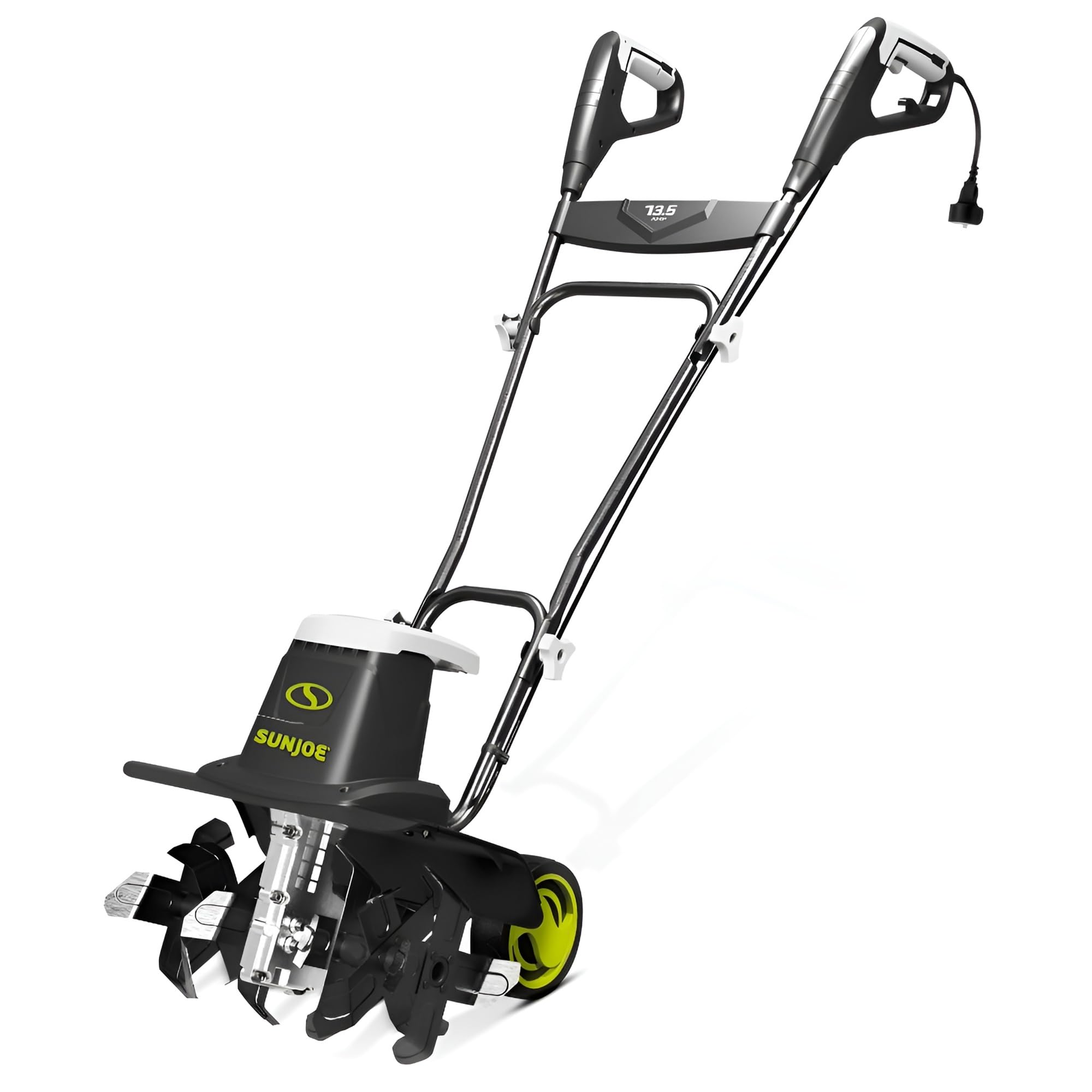
I found this to be the most capable all-around corded cultivator for homeowners: plenty of torque for compacted soil, a sensible working width, and user-friendly storage features.
Why I picked it: Strong 13.5-amp motor, 16" width, and durable steel tines that handled tough soil in my yard.
Best for: Medium beds, prepping new planting areas, and homeowners who want a powerful corded option.
Affordable alternative to renting a gas tiller; good long-term value.
Pros
- Powerful 13.5-amp motor
- 16-inch working width
- Steel angled tines for durability
- Foldable handle for storage
- Three-position wheel adjustment
Cons
- Cord limits range
- Tines can snag roots and debris
My take
I used this tiller to reopen a tired planting bed and to break up clay-heavy patches after a tree removal. The 13.5-amp motor pushed through dense soil and the six angled steel tines shredded turf and compacted clods more quickly than I expected.
Assembly was straightforward and the foldable handle made storage easy in my shed. Because it’s corded, I had to be deliberate about cord placement while working, but the trade-off is steady power without gas maintenance.
The machine will wrap vines and roots around the tines on occasion, so I paced my work and unplugged to clear the blades when needed. I appreciate the solid build and two-year support for peace of mind.
2. Sun Joe TJ603E 16" Electric Tiller – Best Value
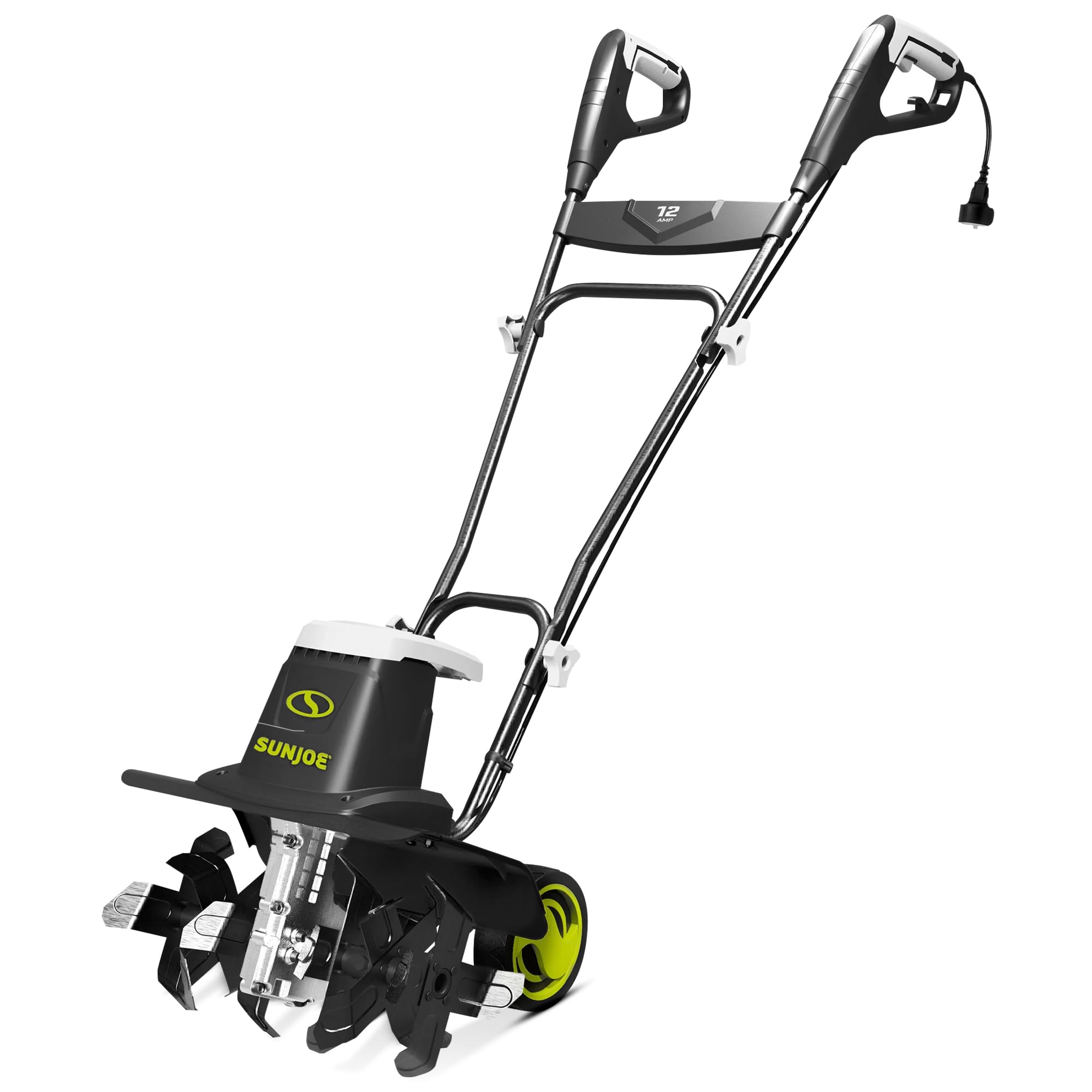
I liked this as the best value pick because it balances lighter weight with enough power to tackle raised beds and medium garden plots.
Why I picked it: 12-amp motor with 16" width and adjustable wheels gives a good mix of maneuverability and digging depth.
Best for: Raised beds, smaller gardens, and anyone who needs an easy-to-handle electric cultivator.
Excellent low-cost option for homeowners who don’t need a heavy-duty machine.
Pros
- Lightweight and portable
- Three-position wheel adjustment
- Six rust-resistant steel tines
- Folding handle for compact storage
Cons
- Less torque than larger models
- Cord needed during operation
My take
I carried this into raised beds and was impressed by how easy it was to maneuver compared with heavier gas cultivators I’ve used. The 12-amp motor gave me reliable churning for seedbed prep and mixing compost into the topsoil.
It handled a season of garden work without fuss, although on the hardest, driest clay I had to slow down and make multiple passes. The unit is quiet for an electric tool and quick to assemble.
If you want a tiler that’s manageable for frequent use and lightweight enough to lift into raised beds, this is the one I’d reach for.
3. Yard Butler Twist Tiller Hand Cultivator – Best Hand Tool
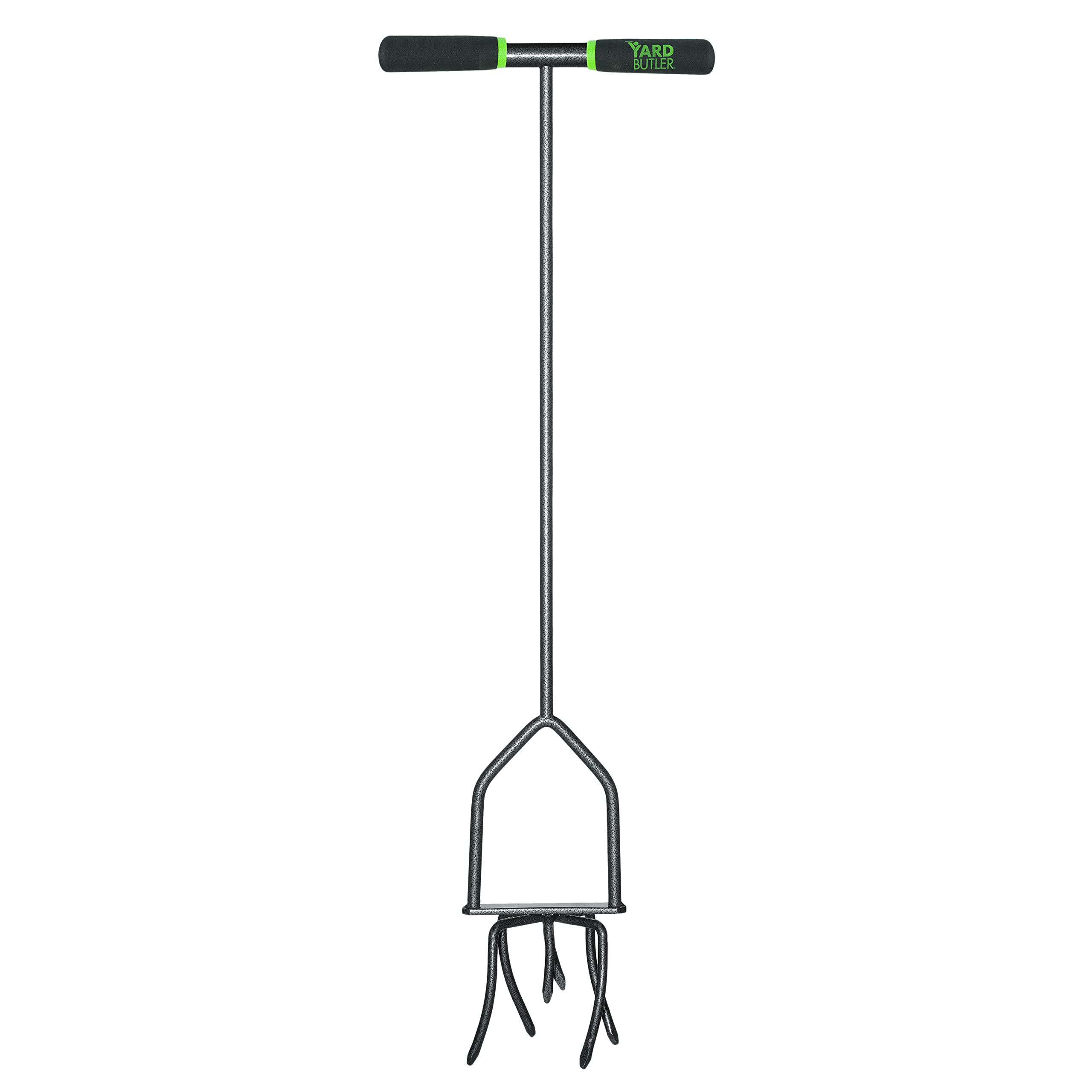
When I needed a no-power solution for raised beds and stubborn weeds, this manual twist tiller proved to be efficient, simple, and tough.
Why I picked it: Long handle, foot bar, and six claws let me break up compacted topsoil without electricity.
Best for: Raised beds, small plots, and precise spot cultivation where a powered tiller is too big.
Extremely budget-friendly for light-duty gardening and maintenance.
Pros
- No power required
- Long handles reduce bending
- Comfortable grips
- Effective on amended soil
Cons
- Tiring on very compacted soil
- Not for heavy roots or rocks
My take
I handed this to my partner for everyday raised-bed work and used it myself when I needed to break up sod. The claws bite in when you step on the plate and twist, letting you stand upright instead of hunching over.
On previously worked or amended soil it removes weeds and mixes compost quickly. For rockier ground or deep clay I still prefer a powered cultivator to avoid excessive effort.
This is the tool I keep for quick touch-ups and weeding where precision matters more than brute force.
4. LawnMaster TE1318 18" Electric Tiller – Best for Larger Gardens
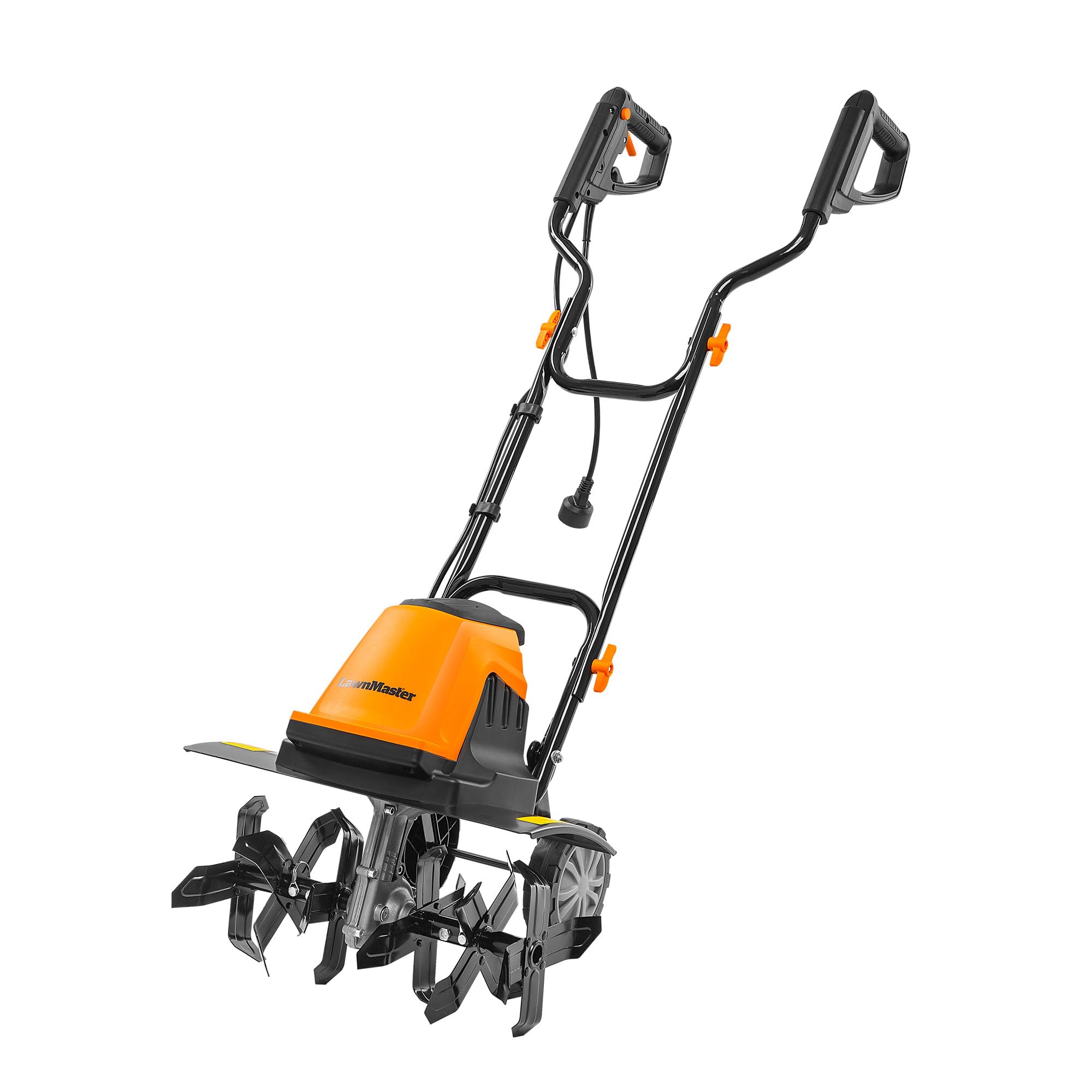
I reached for this unit when I needed wider coverage and deeper tilling. The 18" width and 9" depth made short work of bigger areas around my yard.
Why I picked it: Wider cutting width and deeper tilling capability with mechanical overload protection for safety.
Best for: Larger garden plots, breaking ground for landscaping, and anyone who values faster coverage.
A solid midrange option versus renting a larger gas machine.
Pros
- 18-inch working width
- 9-inch maximum depth
- Mechanical overload protection
- Foldable handles for storage
Cons
- One speed only
- Can throw dirt and debris toward operator
My take
I used this tiller to prepare a large garden area and to rough-level ground for a small pool base. The 13.5-amp motor and wider tines let me cover more ground in less time than the 16" models.
The overload protection gave me confidence when I hit roots or buried debris: the motor shuts off instead of frying. I did notice a lot of thrown material when working at full speed, so I adapted my technique by pulling it toward me at times.
If you want faster coverage without moving up to rental-size equipment, this is the more capable electric option I’d choose.
5. BILT HARD 16" Electric Tiller – Best for Small Gardens
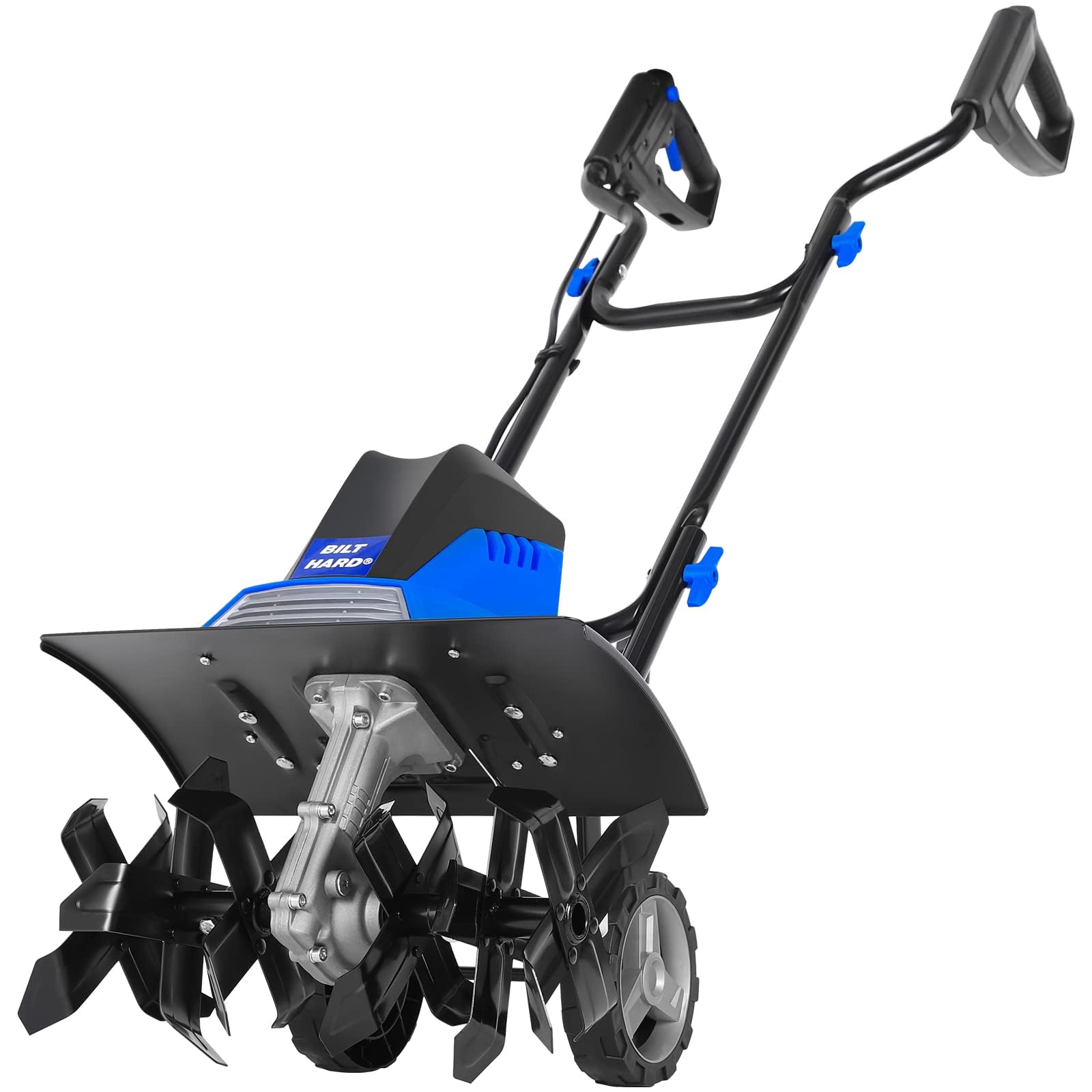
This compact electric tiller impressed me for small plots and for users who need an easy-to-handle, foldable machine that still digs well.
Why I picked it: Compact footprint, foldable handles, and solid digging performance for small to medium gardens.
Best for: Small vegetable plots, seniors, and anyone who wants a manageable electric cultivator.
Good value for a compact, easy-to-store tiller.
Pros
- Foldable handles for storage
- Adjustable wheels
- Six rust-resistant blades
- Easy assembly
Cons
- Tines need frequent cleaning with bermuda grass
- Can be noisy and shake during use
My take
I appreciated how easy this tiller was to assemble and move around. For my smaller garden plots it dug depth and loosened turf faster than a shovel and was simpler to store than larger machines.
It did require more frequent blade cleaning when working Bermuda grass, and the vibration can be noticeable on long runs. That said, the digging performance and compact size make it a very practical keeper.
For anyone who needs a capable small cultivator without the bulk of larger models, this is the one I’d recommend.
How I Choose Small Tillers and Cultivators
Power and Tines
I look at motor amps and the tine design first. Higher amps translate to more torque for clay and rooty conditions, while steel, angled tines cut and mix turf effectively.
For light maintenance and raised beds, a lower-amp unit or a manual twist tiller can be faster and easier to control.
- 12–13.5 amp is a good range for most homeowner tasks
- Six steel tines are common and versatile
- Angled tines mulch turf better than straight claws
Width and Depth
I match width to the area I’m working. An 18" machine covers ground faster; a 16" unit is more maneuverable in beds and around plants.
Depth matters for initial ground-breaking: deeper cutting helps when turning over sod or digging new beds.
- 16" is a balanced choice for most yards
- 18" speeds up work on larger plots
- Look for 8–9" max depth for tougher jobs
Corded vs. Manual
Corded electrics give steady power without gas maintenance, but you must manage the cord. If you need a spot tool for raised beds, a manual twist tiller saves on cost and storage.
I keep both types in my shed: electric for bigger jobs, manual for precision weeding and small beds.
- Cord management is essential for safety
- Manual tools cost less and need no fuel
- Electric tools are quieter and lower maintenance than gas
Build, Storage, and Safety
Foldable handles and adjustable wheels make storage and transport simpler. I also value mechanical overload protection or a clear shutoff behavior when tines snag.
Regularly clearing wrapped grass and roots extends the life of the tines and keeps the motor from overheating.
- Foldable handles = easier storage
- Adjustable wheels help control tilling depth
- Unplug before clearing tines to avoid injury
Frequently Asked Questions
Can a corded electric tiller handle clay and roots?
Yes — in my tests a 13.5-amp unit pushed through clay and shallow roots, though very dense clay may need repeated passes or a bit of water to soften. I cleared wrapped roots by stopping and removing debris between passes.
How do I prevent tines from getting wrapped with grass and vines?
I pause regularly and unplug the machine to cut away or unwind material. For heavy bermuda or vine build-up I stop more often and keep a small hand tool nearby to clear the tines quickly.
Are manual twist tillers worth owning?
Absolutely for raised beds and spot work. I use the hand twist tiller for precision weeding and mixing amendments where a powered tiller is too wide or aggressive.
How should I store an electric cultivator?
I fold the handle, clean dirt off the tines, and keep the tool in a dry shed. Storing it elevated or on a rack prevents moisture contact and keeps the cord tidy.
Is a wider tiller always better?
Not always. I choose a wider tiller for big open areas to save time, but for raised beds and tight spaces I prefer a narrower, more maneuverable machine.
Final Take
If I need to prep a large area quickly, I reach for the LawnMaster 18" for its width and depth. For a balance of power and portability the Sun Joe TJ604E is my go-to, while the TJ603E shines when I want lighter handling.
I always keep the Yard Butler twist tiller handy for raised beds and precision work. For small plots or users who value compact storage, the BILT HARD 16" strikes a good balance.
Pick the tool that matches the scale of your jobs: wider, deeper units for yard-scale work; lighter electrics or a manual tool for beds and tight spots. That approach has made my garden chores faster and less taxing.
