
I tested a range of solar walkway lights—flame torches, post caps, hanging lanterns and decorative stakes—to find options that actually deliver on runtime, weather resistance, and style.
I’ve spent evenings and weekends installing and running multiple solar fixtures to see which actually light a path and which are just pretty after dark. This guide condenses what worked for me across styles: tall tiki-style torches for ambiance, snap-on post caps for clean deck lighting, hanging lanterns for porches, and small stake-style accents for beds.
I focus on three practical things I look for: reliable runtime from the solar panel and battery, weather resistance for year-round use, and how each light mounts or installs. Below are my picks based on those priorities and what I learned setting them up.
If you want dramatic ambiance, choose the taller torches; if you need simple, durable fence lighting, go with the post caps; for hanging, decorative glow, the lanterns are my go-to; the flower-style stakes are best when you want shape and flexibility rather than bright pathway illumination.
1. TomCare Flickering Flame Solar Torch – Best Overall
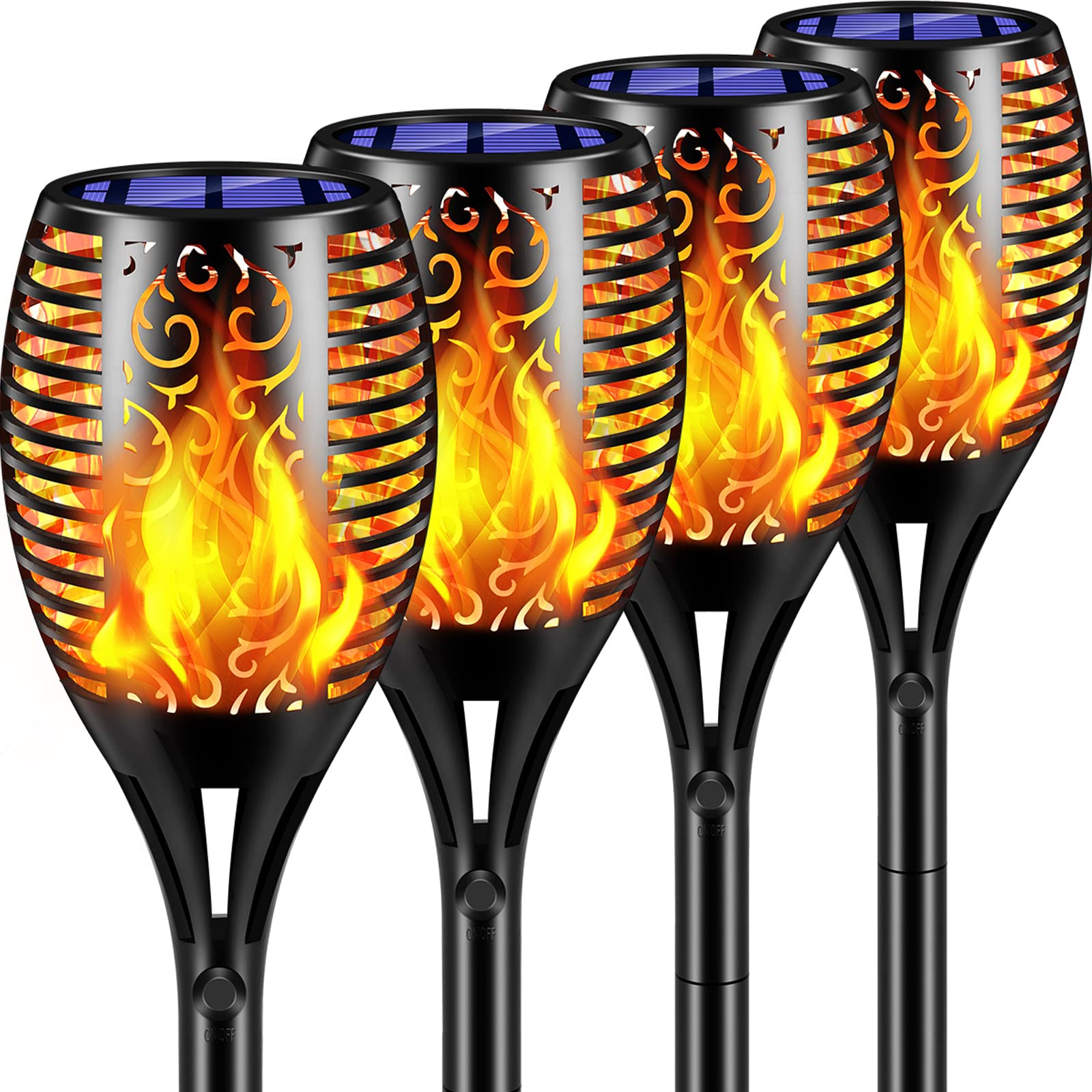
I picked these torches for their convincing flicker, large size, and long advertised runtimes that actually last through the evening when sited in full sun.
Why I picked it: The flame effect looks real at night and the taller heads make them visible from a distance.
Best for: Creating tiki-torch ambiance along walkways and garden borders.
A mid-range decorative option that balances size and runtime.
Pros
- Realistic dancing flame effect
- Large, visible head height
- Long summer runtime listed
- Auto on/off dusk-to-dawn
Cons
- Not very bright for task lighting
- Plastic poles can crack over years
- Switches occasionally fail
My take
I installed these torches along a front walkway to add a tiki-style ambiance and was impressed immediately by the warm, flickering effect. The flame simulation is convincing enough that passersby comment, and the taller head gives good visibility without needing extra fixtures.
In full sun they live up to the stated run times — around ten hours in long summer days and shorter in winter — after a roughly eight-hour charge. The built-in sensor makes them effortless to use; I never have to flip switches at dusk.
On the downside, the poles are plastic and I’ve seen the stake/stand split on one set after heavy use. One unit I’ve had for a while developed a switch problem that required holding the button to keep it lit. For me the trade-off has been acceptable because the visual effect and easy installation are strong positives.
I recommend placing them in direct sunlight and avoiding very loose soil for the stakes. If you want the torch look without wiring, these deliver the ambiance I was after.
2. SIEDiNLAR Solar Post Cap Lights – Best for Posts
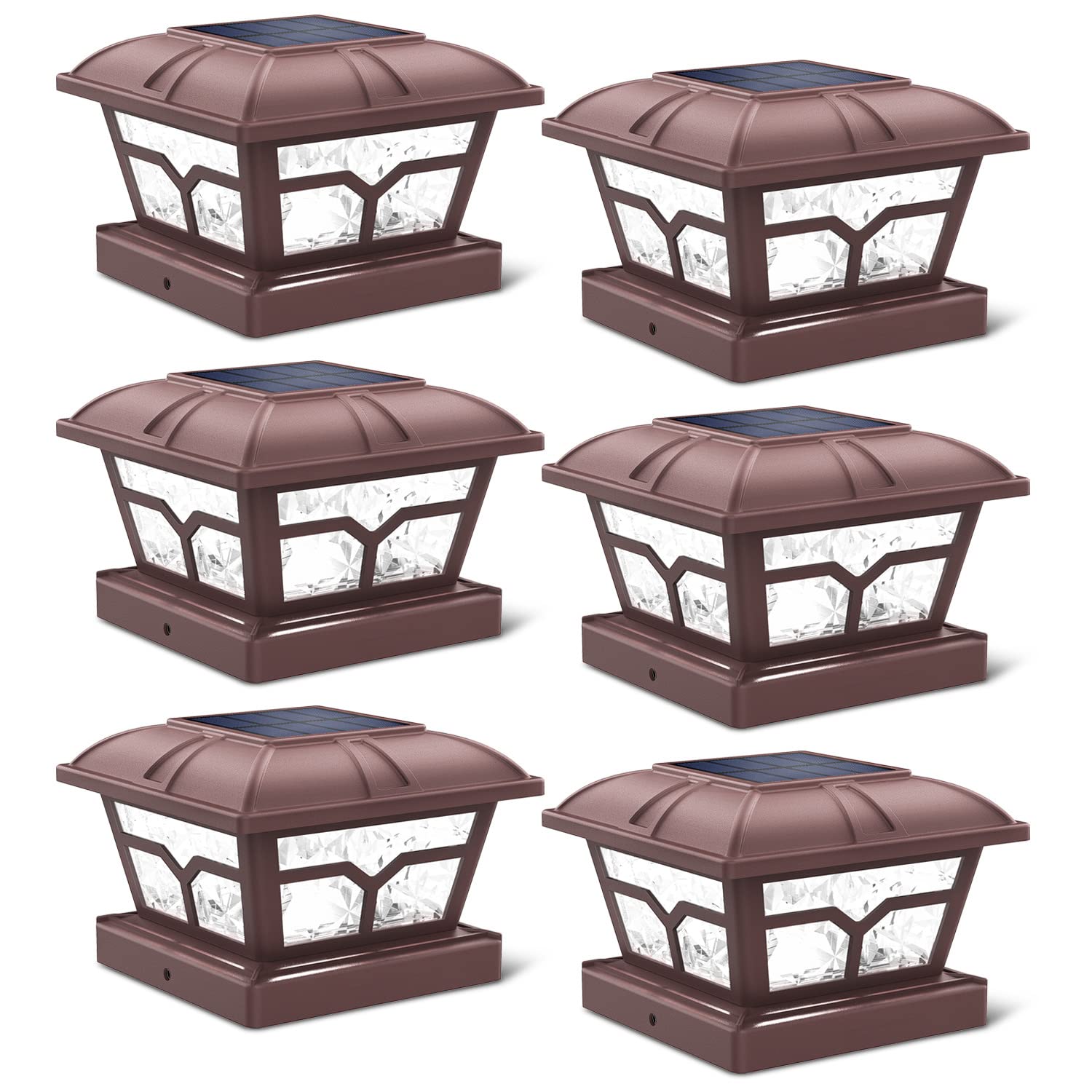
I chose these post caps for neat, snap-on installation and the two color modes that let me toggle warm or cool white depending on the mood.
Why I picked it: They fit common post sizes and give clean, consistent top lighting for fences and decks.
Best for: Deck rails, fence posts, mailbox posts and entrance pillars.
A practical mid-priced set with multi-mode lighting.
Pros
- Two color modes (warm/cool)
- Fits multiple post sizes
- Quick snap-in installation
- IP44 splash resistance
Cons
- White LEDs can discolor over time
- Batteries may need replacement after a year
My take
I installed these on 5" vinyl fence posts and appreciated how simple the inserts made the job—no drilling required if you want to try the fit first. The two color modes are handy: warm white for evenings and cool white when I want a brighter touch.
They put out a steady, decorative glow that reads well from the driveway and gives the whole fence a finished look. The IP44 build stood up through rain and moderate weather during my test months.
After extended outdoor exposure I noticed some discoloration in the white housings on a few units and the internal batteries tended to weaken after about a year of continual use. I keep replacement cells on hand and found the brand’s customer support responsive when I needed a replacement unit.
3. TONULAX Solar Flower Garden Lights – Best Budget
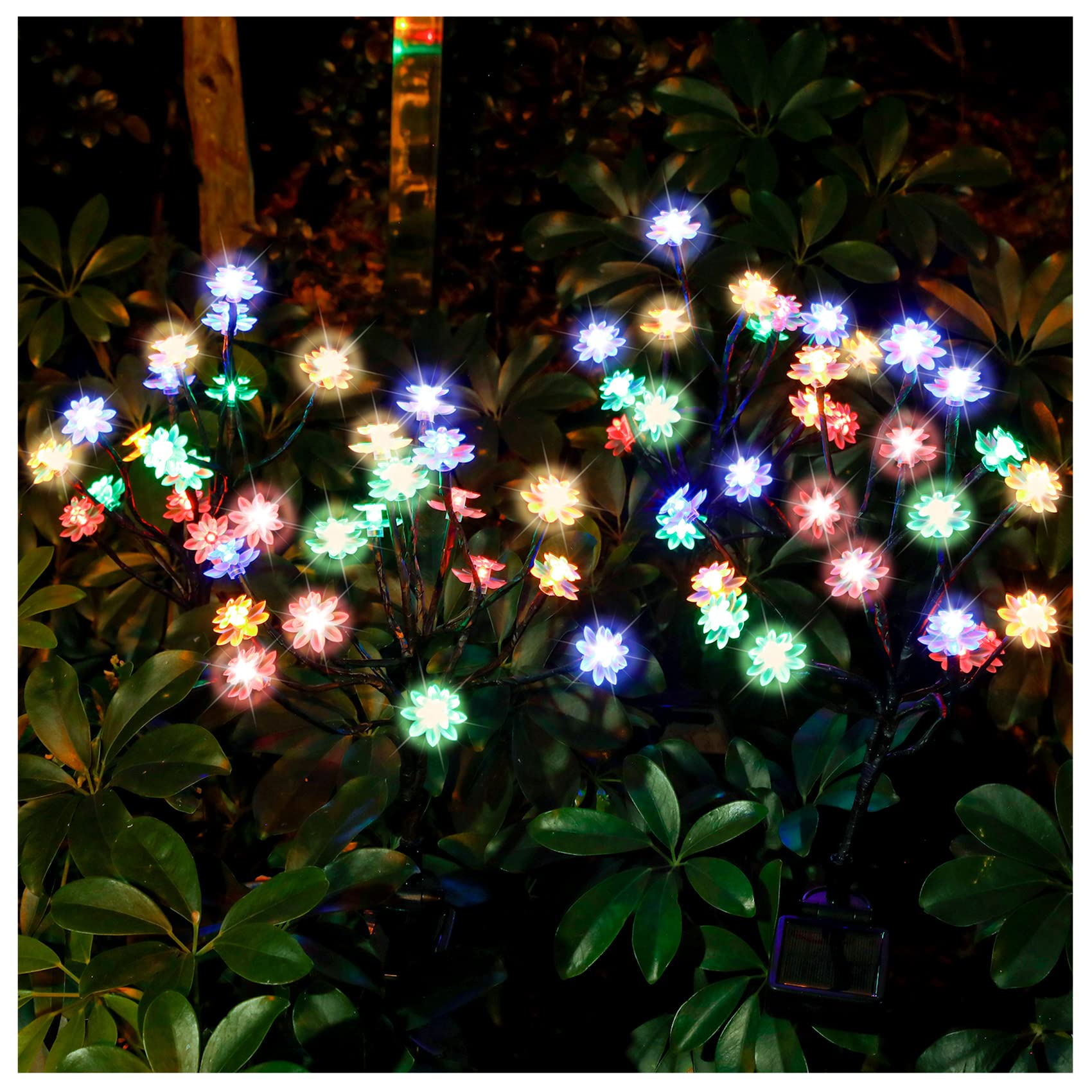
I recommend these when you want a decorative, flexible accent that runs a long time on a charge and can be shaped to suit beds and containers.
Why I picked it: Upgraded solar panel and battery that extend runtime without raising the price much.
Best for: Accent lighting in flower beds, planters, and seasonal displays.
Budget-friendly two-pack with improved solar capacity.
Pros
- Long runtime up to advertised 18 hours
- Bendable wire stems for shaping
- Replaceable batteries
Cons
- Plastic flower covers reduce perceived brightness
- Not bright enough for walkway safety
My take
I used these as accent pieces on my patio and liked that the thicker solar panel and larger battery noticeably outperformed other stake lights I’ve tried. When fully charged they can last through most of the night, especially in summer.
The stems are wire-wrapped and very easy to bend, so I shaped them into bouquets and anchored them in pots. I also tried operating them without the plastic flower heads and found the lamps appear brighter, which is a good trick if you need more output.
For the price they’re a great decorative option. I wouldn’t rely on them for primary pathway illumination, but they make borders and planters look lively after dark.
4. ROSHWEY Solar Hanging Lanterns – Best Hanging Lanterns
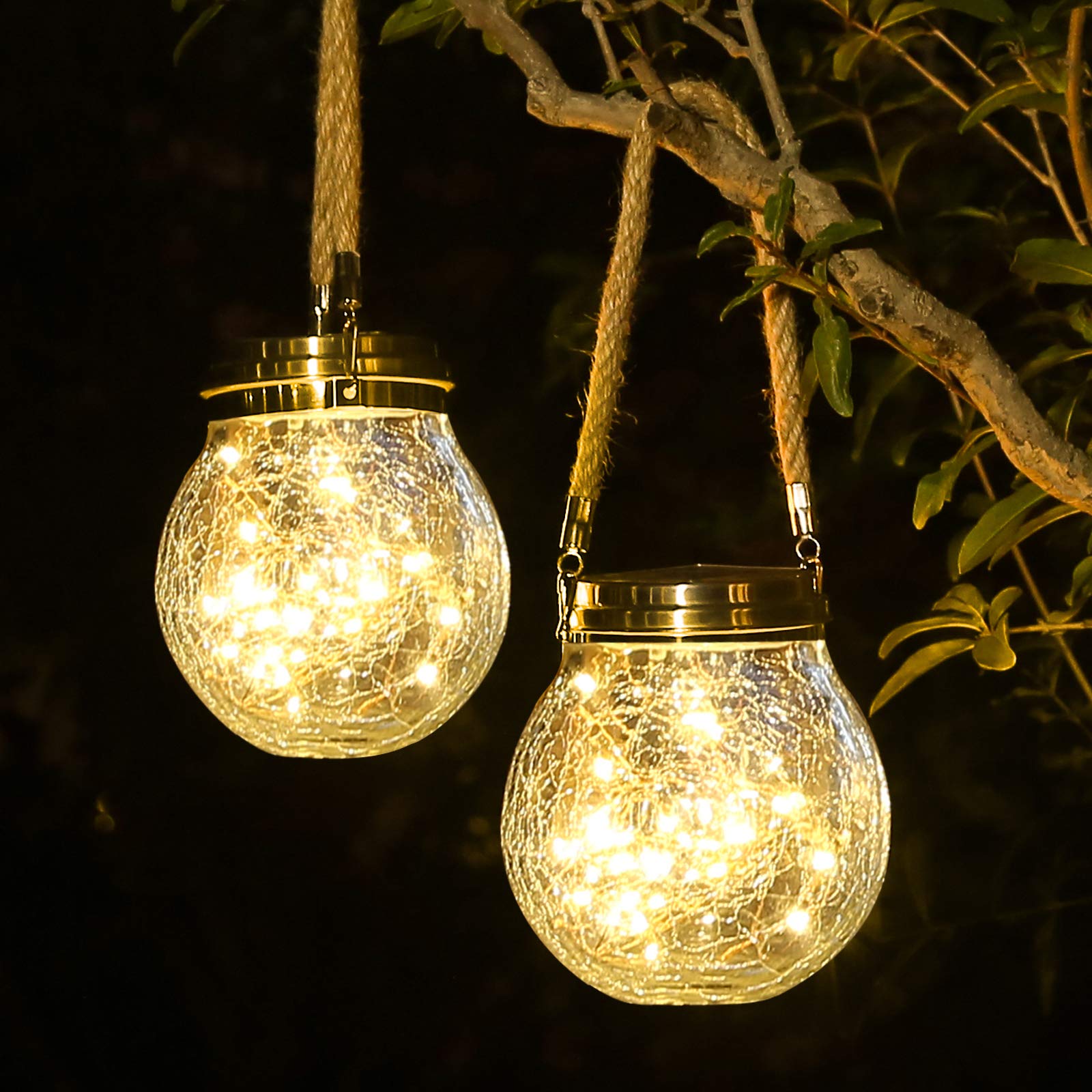
I picked these lanterns for their crackle-glass look, warm glow, and flexible hanging clips that let me move them around easily.
Why I picked it: Warm, decorative glow and clip-straps that adapt to multiple hanging locations.
Best for: Porches, patios, fences and party lighting.
A reasonably priced decorative option with long run times.
Pros
- Attractive crackle glass glow
- Removable clip straps for flexible hanging
- Long evening runtime
Cons
- Glass globe can break if dropped
- Soft glow — not task-bright
My take
I hung these by my gate and on a pergola string, and I liked the warm, fairy-like glow they produce. The crackle glass diffuses the internal copper wire lights into a pleasant amber wash that lasts most nights after a decent charge.
The straps have small clips that unclip from the rope, which made repositioning and winter storage straightforward. In low-sun conditions they still came on bright enough to mark entrances and seating areas.
Be careful where you place them—one glass globe did shatter for me when its clip failed in a gust and the lamp fell onto rocks. The inner string is reusable, though, and I repurposed it around a railing. Overall they’re an attractive, weatherproof choice so long as you hang them away from hard surfaces.
5. TomCare Metal Flickering Flame Torches – Best for Power Users
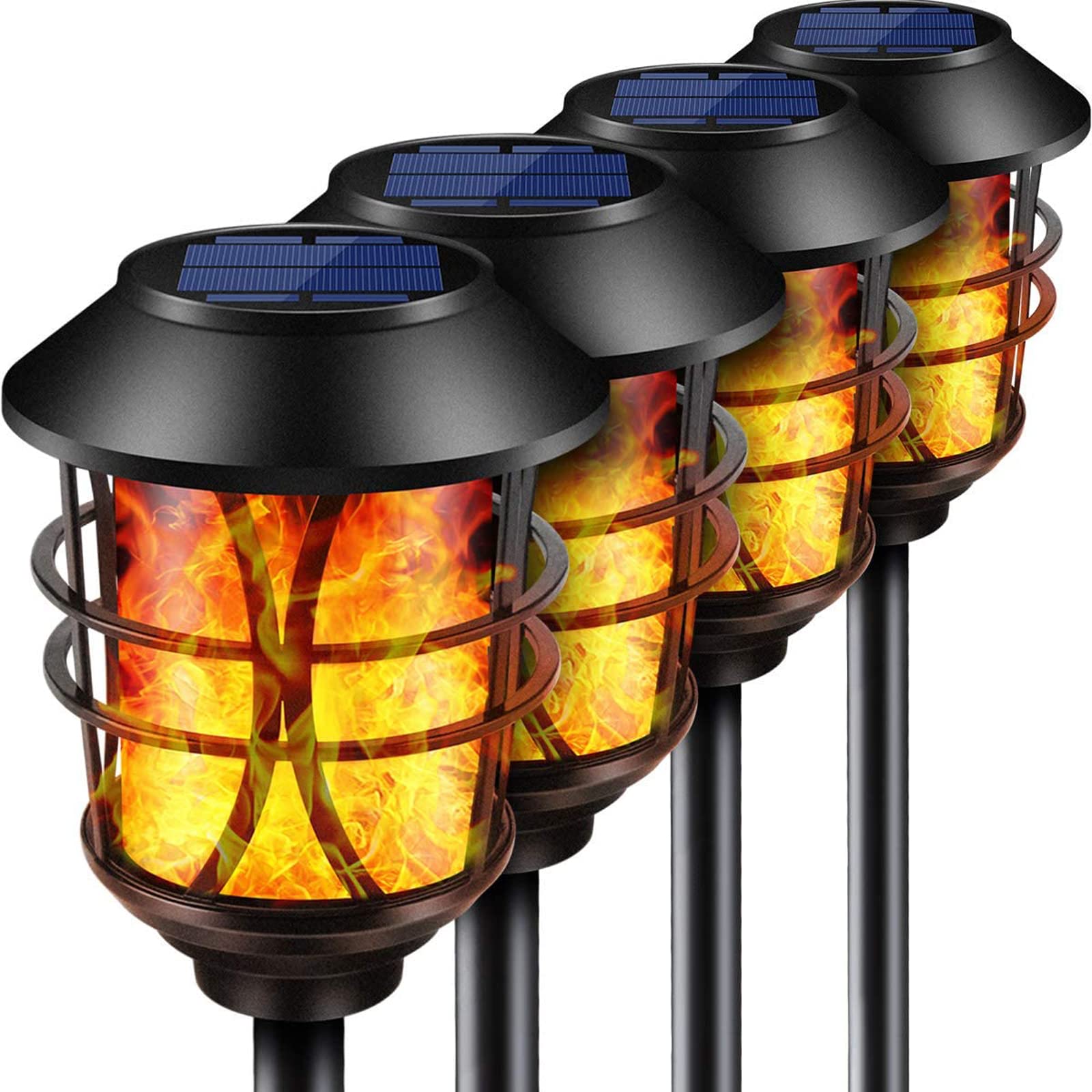
I recommend these when you want a more premium, rust-resistant head with IP65 weather protection and a dramatic flame effect for higher-end landscape installs.
Why I picked it: Metal tops give a more refined look and the IP65 rating adds real weather durability.
Best for: Driveways, formal borders, and properties where a polished look matters.
A pricier, premium-feel option compared with plastic torch versions.
Pros
- Metal head for refined appearance
- IP65 waterproof for harsher weather
- Realistic flicker effect
Cons
- Plastic poles instead of metal
- Stakes can be hard to insert
My take
I installed a set in a rock garden and appreciated the metal head’s finish; it reads as higher quality than the full-plastic torches I’ve tried. The flame effect looks excellent from a distance and gives a welcoming glow to the area.
The IP65 rating proved useful in heavy rain and humid conditions; the lights continued to come on reliably at dusk. They still needed full sun exposure to reach their longest runtimes, which matched the stated 10 hours in summer and fewer in winter.
Two practical caveats: the poles supplied are plastic (I substituted threaded metal conduit for adjustable height), and the supplied ground stakes can be stubborn to get into hard ground — I had to tap them in. Overall they deliver a more premium look and real durability when compared with cheaper plastic torches.
How I Choose Solar Walkway Lights
Key factors I check before I buy
I focus on runtime, weather resistance, mounting method, and the light’s purpose. If I need ambiance, I prioritize appearance and flicker realism. For safety lighting, I choose brighter, white-toned fixtures.
Solar performance varies widely: panel size, battery capacity, and exposure to direct sunlight determine how long a light will run. I always place the panel in full sun for best results.
- Runtime: Look for advertised runtimes and expect shorter nights in winter.
- Weatherproofing: IP44 is fine for splash resistance; IP65 gives better protection in heavy rain.
- Mounting: Snap-on post caps, stakes, and hanging clips each suit different placements.
- Material: Metal heads last and look better; plastic stakes are lighter but can crack.
Placement and installation tips I use
I site each panel so it gets direct sun for most of the day. Avoid panels shaded by tall trees or house eaves.
For stake or torch units, I firm up the ground and, if needed, pre-drill or use a mallet cautiously. For post caps, try the inserts before screwing them down to check sizing.
- Angle the panel toward the sun for maximum charge.
- Avoid hanging lanterns over high wind areas without secure clips.
- Use replacement rechargeable batteries when runtime fades.
Durability and maintenance I recommend
I routinely swap batteries every 12–24 months depending on use and winter conditions. A fresh set of rechargeable cells brings most solar lights back to near-new runtimes.
Wipe solar panels occasionally and remove debris to maintain charging efficiency. In winter, consider indoor storage for fragile glass lanterns.
- Clean panels monthly to maintain charge efficiency.
- Replace batteries with same chemistry (usually Ni-MH).
- Bring fragile glass fixtures inside for storms or freezing cycles.
Frequently Asked Questions
How long will these solar walkway lights run each night?
Run time depends on sun exposure and battery size; in my tests the larger-panel units reached up to 10 hours in summer and the upgraded garden stakes ran as long as 18 hours under ideal sun. Expect shorter nights in winter.
Can I replace the batteries when they die?
Yes — most of the models I’ve worked with use replaceable rechargeable cells (usually Ni-MH). I replace batteries annually or when I notice the evening runtime drop significantly.
Where should I place solar lights for best performance?
I always site panels in direct sunlight for most of the day and avoid deep shade from trees or eaves. For post caps, place them where they get unobstructed sun; for torches, angle the tops toward sun exposure when possible.
Final Take
I tested multiple styles and kept returning to the same conclusion: pick the style that matches your goal. Use torches for ambiance, post caps for consistent deck lighting, lanterns for hanging décor, and wire-stem stakes for flexible accents.
Once you pick a style, focus on sun exposure and battery maintenance. With the right placement and occasional battery replacements, these solar options will keep your walkways and outdoor spaces lit without wiring.
