
I tested a range of cedar stains and sealers — oil and water-based, gel and marine formulas — to find products that protect wood, bring out cedar's warmth, and hold up to weather. Here are the ones I keep reaching for.
I live with a lot of exterior wood — fences, a cedar deck, and trim — so choosing the right stain for cedar has been something I do again and again. In this roundup I focused on products that preserve cedar's grain, resist UV and moisture, and are practical to apply.
I tested oil-based semitransparent stains, water-based marine sealers, and even a gel stain for small interior projects. My goal was to find options that balance protection, appearance, and ease of use for common cedar projects.
I compared these products based on appearance on cedar, how they applied (sprayer, brush, roller), how they handled weather after application, and how much maintenance they required in my projects.
1. Ready Seal Exterior Wood Stain — Natural Cedar – Best Overall
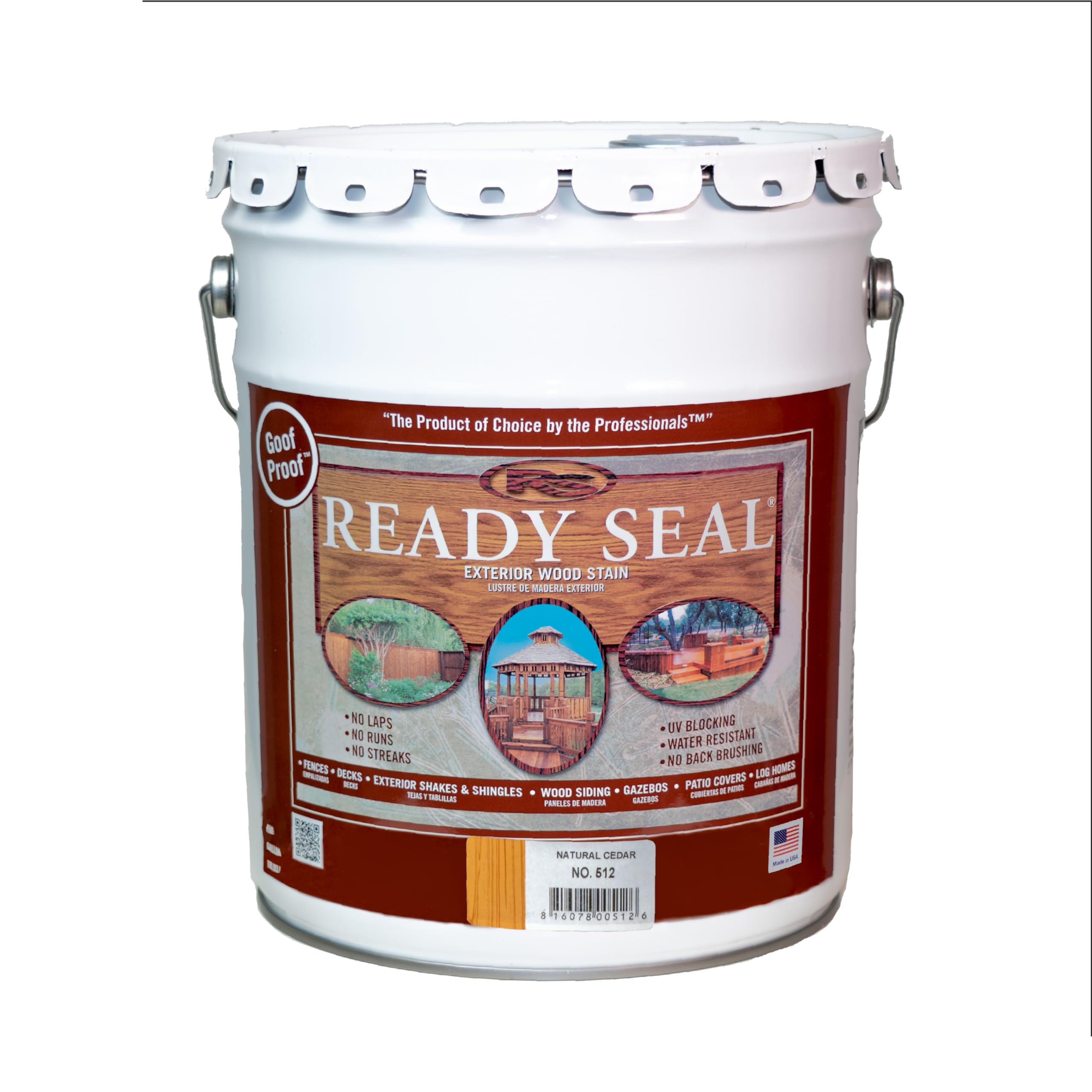
A professional, oil-based semi-transparent stain and sealer in one that penetrates deeply and gives a natural cedar look.
Why I picked it: Goof-proof application and exceptional durability on large fence and deck projects.
Best for: Long fences, large decks, and projects where a natural cedar grain is desired.
Premium, pro-grade option worth the investment for big projects.
Pros
- No lap marks or streaks
- Penetrates deeply for long protection
- Can be applied in sun or varied temps
- Quick rain-readiness
Cons
- Soaks very deep — may need two coats
- Can look odd if wood soaks unevenly
My take
I used Ready Seal on over 1,000 feet of rough-cut cedar fence and on large sections of deck. The goof-proof formulation really matters when you’re spraying and rolling long runs — the product blends itself and I didn’t chase lap marks.
The stain soaks in aggressively; on weathered boards I ended up applying two coats because the wood gobbled it up. The result was a deep, natural finish that retained the grain and resisted the elements extremely well.
Application options are flexible: I sprayed and back-rolled for speed and still had a consistent finish. I also appreciated that it can be applied in direct sunlight and can withstand rain shortly after application.
2. Seal-Once Marine Wood Sealer — Bronze Cedar – Best for Marine Environments
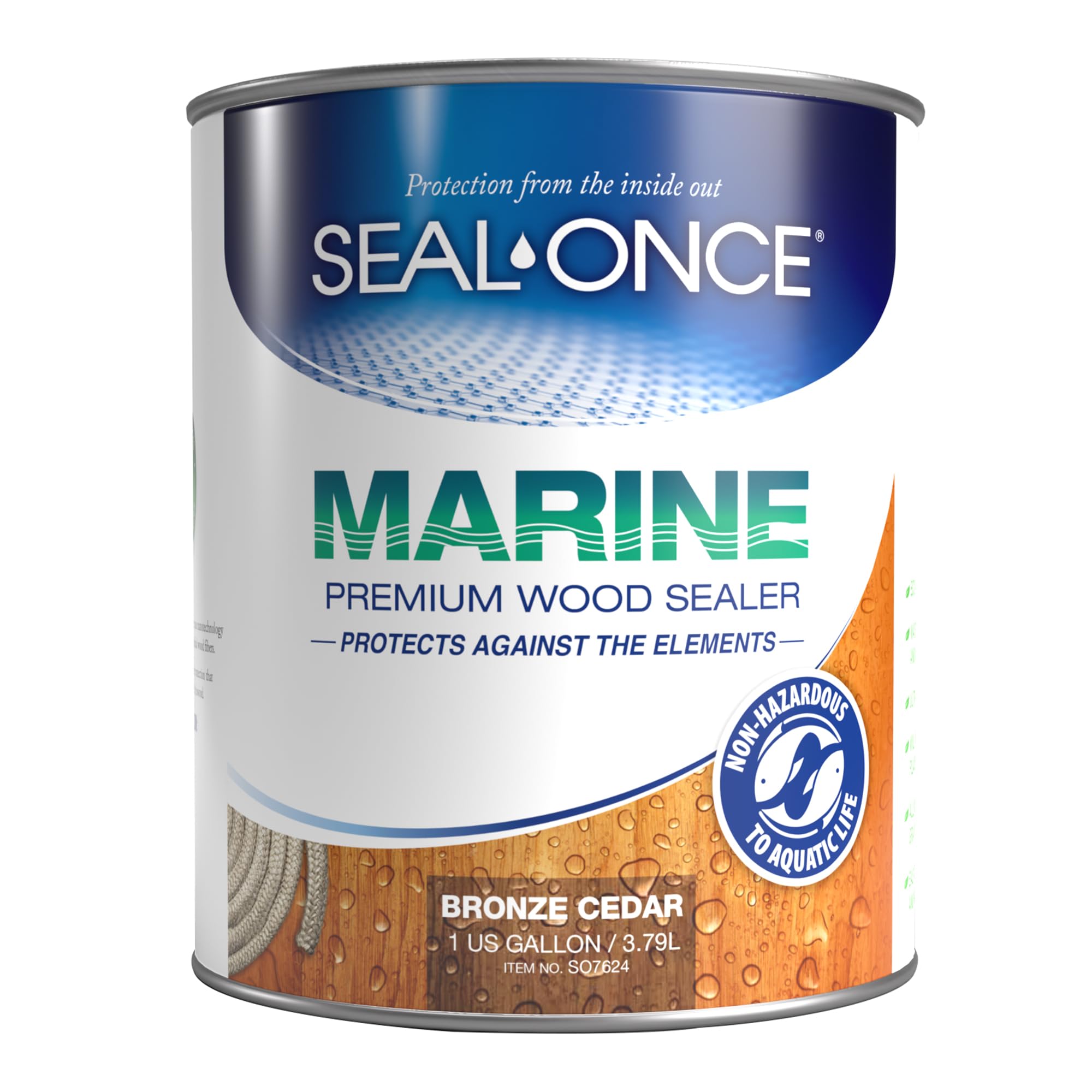
A water-based, ultra-low-VOC sealer designed for constant-moisture settings like docks and waterfront decks.
Why I picked it: Specifically formulated to bead water and protect wood near open water without harming aquatic life.
Best for: Boat docks, waterfront decking, and any cedar exposed to persistent moisture.
Marine-grade sealer — a higher-end, purpose-built choice.
Pros
- Water beads on the surface
- Safe for use over open water
- Fast-drying and easy cleanup
Cons
- Milky on application before drying
- Occasional packaging leakage reported
My take
I applied Seal-Once to a cedar dock and adjacent deck areas. It goes on milky but clears as it dries, leaving a clear, water-repellent finish that really beads water.
Because it’s water-based and low-VOC, cleanup was simple with soap and water, and it felt safer to use near plants and water. I sprayed and rolled, and the finish dried quickly between coats.
For marine or lakeside cedar I prefer a product formulated for that exposure; this one has held up to heavy spray and rain in my experience.
3. SamaN One-Step Interior Wood Seal — Cedar – Best Interior One-Coat
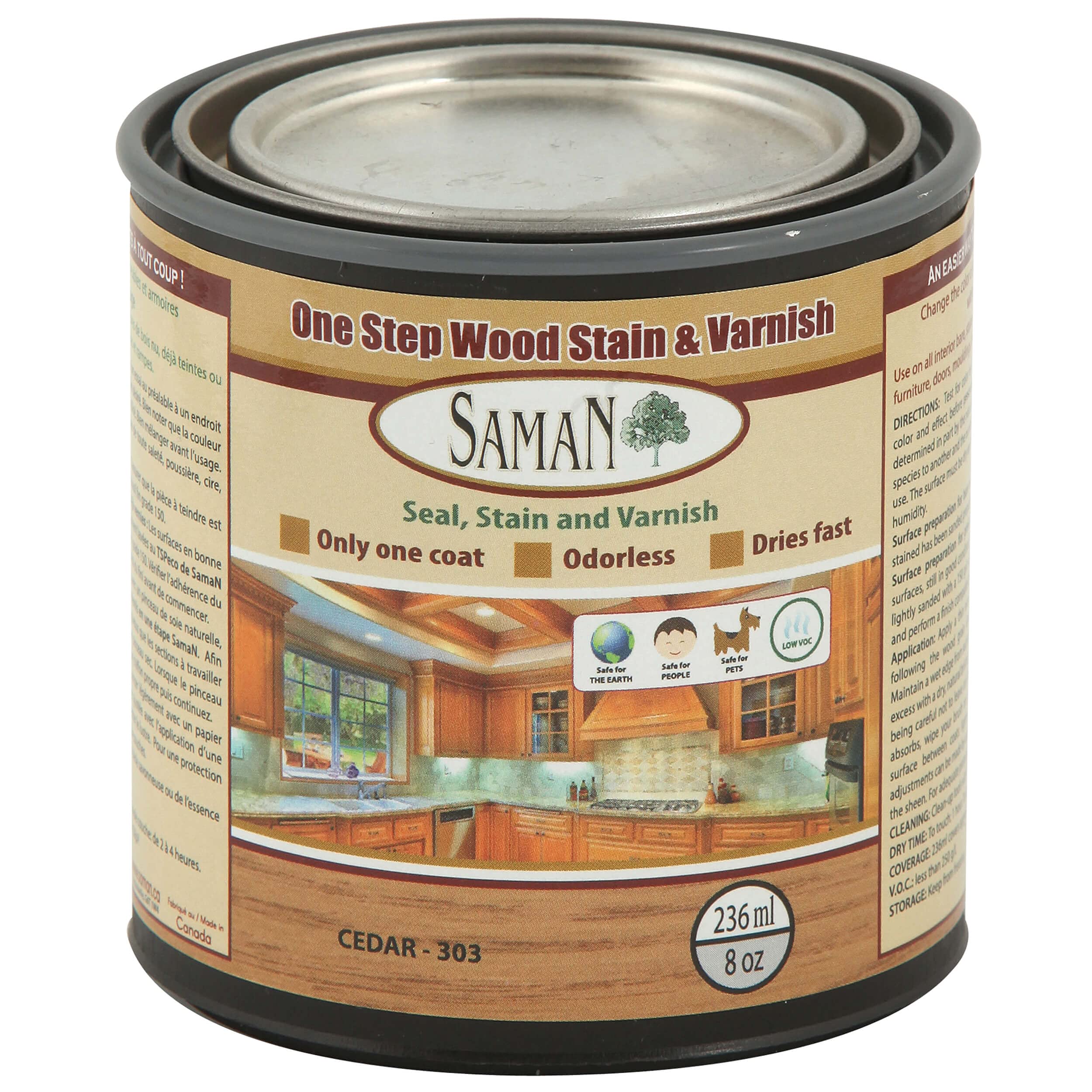
An odor-minimized, one-step interior sealer/stain/varnish great for furniture and trim.
Why I picked it: One-coat convenience and low odor make it ideal for indoor cedar projects.
Best for: Interior cabinetry, furniture, doors, and small cedar restorations.
Economical for small interior projects and touch-ups.
Pros
- Low odor for indoor use
- One-step seal, stain, and varnish
- Fast drying on interior wood
Cons
- May lack final sheen — additional topcoat sometimes needed
- Small cans for small projects only
My take
I like this product for indoor cedar work because it stains, seals, and topcoats in one pass with minimal smell. On a small dresser and baseboards it dried quickly and produced a warm, even color.
Application is straightforward with a lint-free rag or brush; on some very hard woods I found rag-application gave better, less blotchy results than a brush.
Be aware that in a few cases I added a clear topcoat for extra sheen and surface durability, but for most interior pieces this one coats and protects nicely in a single step.
4. Storm System Protector — Cedartone – Best Value Gallon
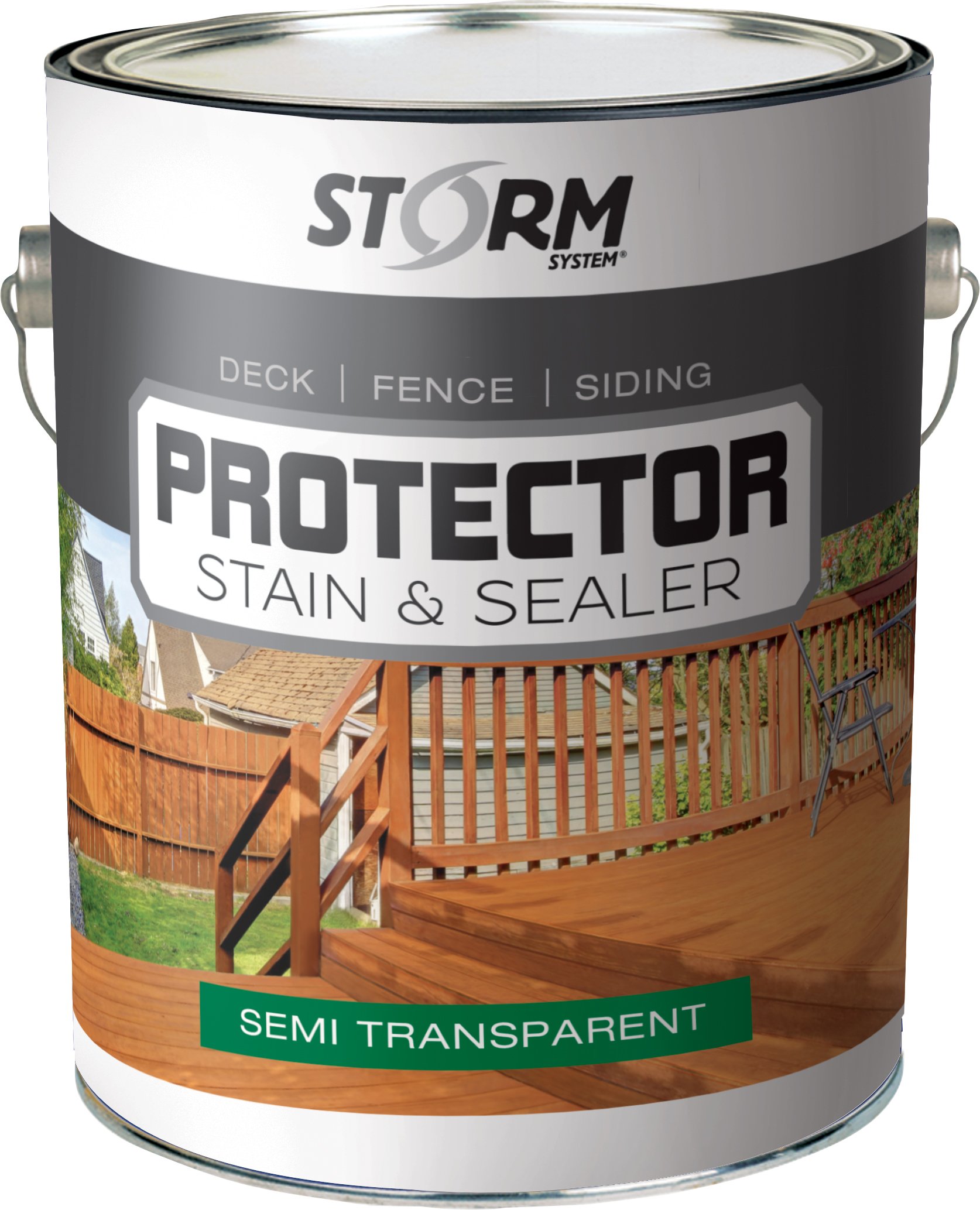
A penetrating, semi-transparent oil-based stain and sealer that highlights grain and offers solid waterproofing.
Why I picked it: Affordable, easy-to-apply option that brings out cedar’s texture.
Best for: Small decks, stairs, fences, and DIY jobs where cost matters.
Budget-friendly gallon packaging for modest projects.
Pros
- Highlights wood grain beautifully
- Good waterproofing and UV protection
- Ready-to-use and easy to apply
Cons
- Runny consistency — watch for drips
- Pigment can settle if not mixed thoroughly
My take
I used Storm System Protector on a small deck and stairs and was impressed by how much the wood grain popped. It’s oil-based, so the finish felt rich and waterproof right away.
Mixing is crucial — the pigment tends to settle and you must agitate the can repeatedly to avoid weak color. Once mixed and applied it dries to a pleasing, durable finish.
For the price and ease of use, this is the go-to when I need a protective look without spending on pro-grade pails.
5. DEFY Extreme Semi-Transparent Stain — Cedar Tone – Best UV Protection
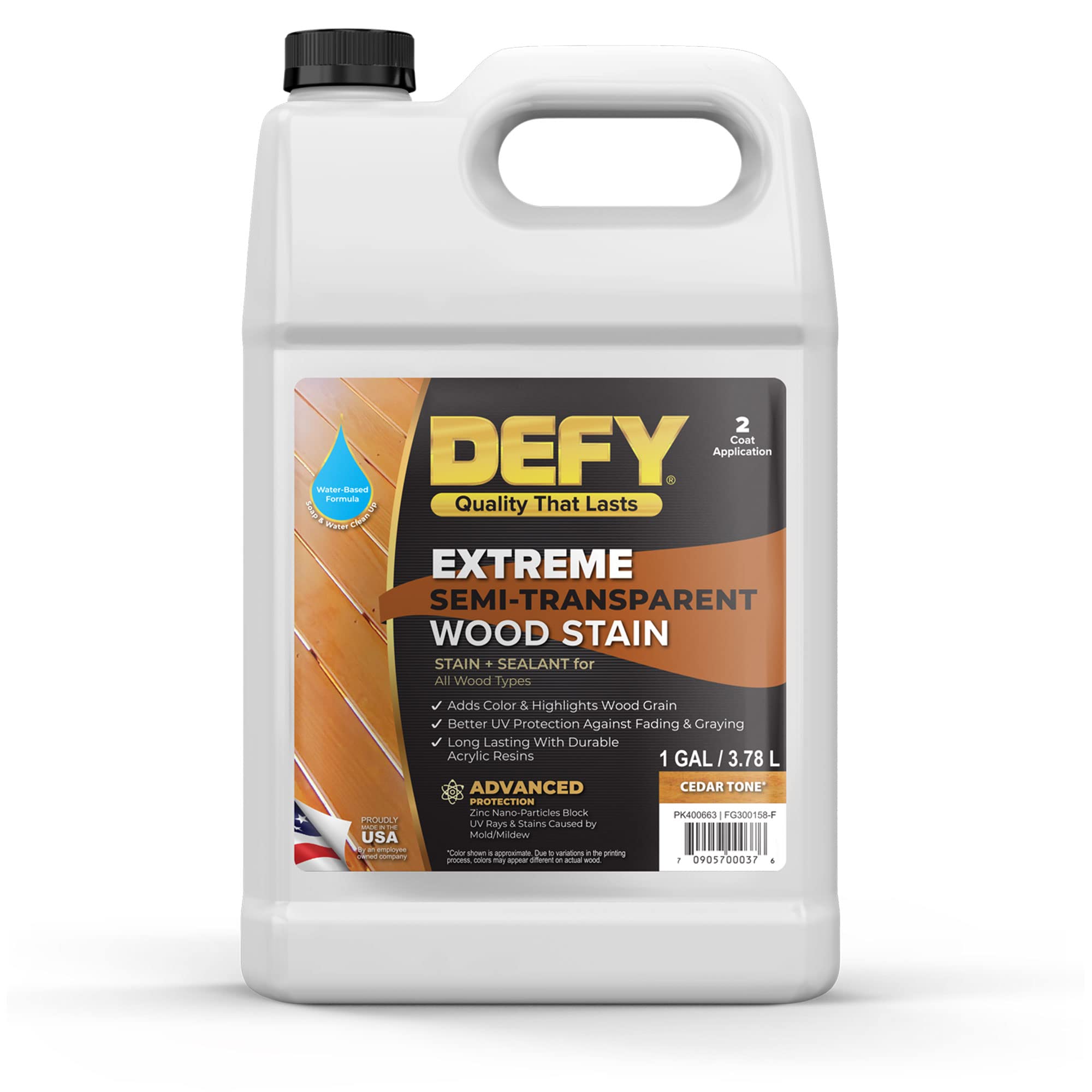
A zinc-nanoparticle-enhanced, water-based semi-transparent stain that focuses on UV blocking and long-term color retention.
Why I picked it: Innovative UV protection and straightforward application on weathered cedar.
Best for: Sun-exposed decks and fences needing long-term color retention.
Mid-to-premium option for UV-focused protection.
Pros
- Zinc nanoparticles block UV
- Waterproofs and beads moisture
- Easy to apply
Cons
- Thin, watery feel — drips possible
- Can quickly stain unintended surfaces
My take
I’ve used DEFY on a sun-exposed fence and was impressed by how consistently it protected against graying. The zinc technology seems to make a real difference in color retention.
The product looks thin when you pour it, but it applies smoothly with a sprayer or brush and beads water once cured. I did find it stains fast — any drips on trim need wiping immediately.
Overall it’s my pick when UV protection is the top priority and I want a natural cedar tone that lasts.
6. SaverSystems #1 Deck Semi-Transparent Stain — Cedar – Best for Damp Wood
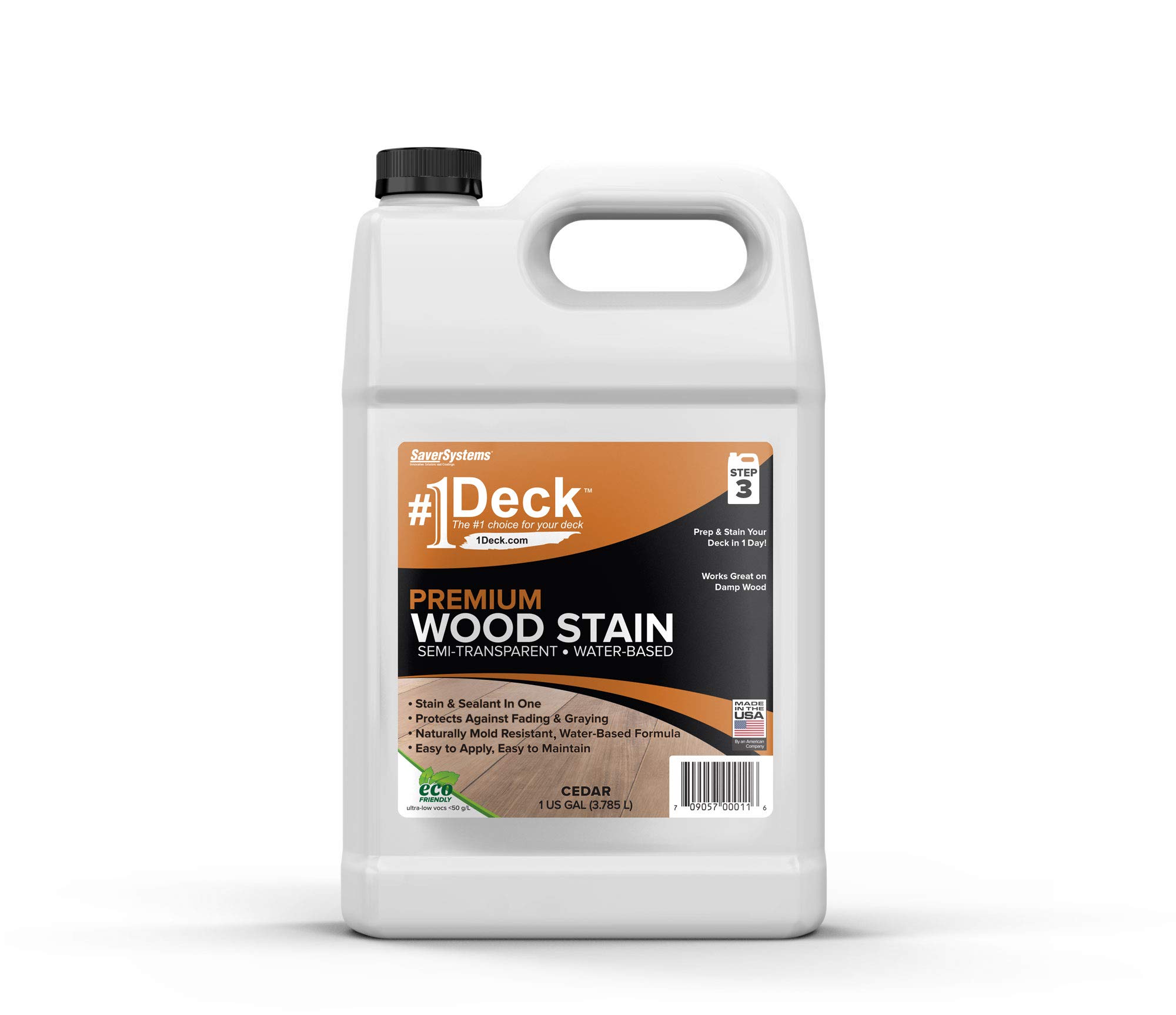
A water-based semi-transparent stain that allows application to damp, recently cleaned wood and gives a natural look.
Why I picked it: Works on visibly dry but still damp wood, speeding up projects after cleaning.
Best for: Decks or siding that were recently power-washed or still slightly damp.
Good mid-range choice with low VOC formulation.
Pros
- Can be applied to damp wood
- Low odor and low VOC
- Natural, flat finish
Cons
- Coverage can be less than advertised
- Thin consistency — may need extra coats
My take
I used #1 Deck on a deck that I had just cleaned and brightened; the ability to apply to visibly dry but slightly damp wood saved me waiting time.
It dries to a flat, natural finish and cleaned up easily. Expect to watch coverage on older or weathered boards — I needed extra product on heavily worn areas.
For routine deck refreshes where quick turnaround matters, this is a reliable, environmentally friendlier option.
7. Olympic Maximum Semi-Transparent Stain — Cedar – Best Quick-Dry
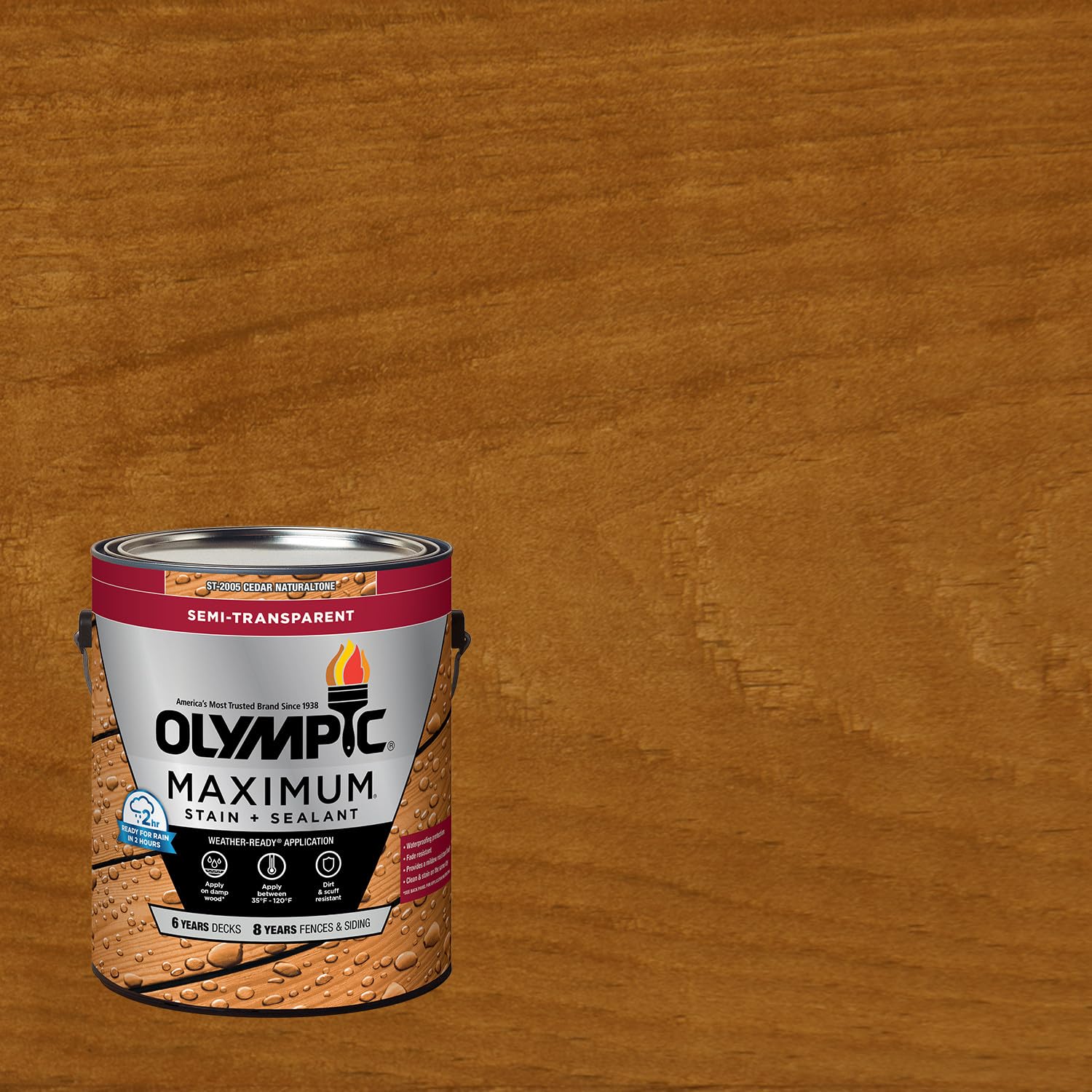
A weather-ready, water-based semi-transparent stain that allows cleaning and staining in the same day and is rain-ready quickly.
Why I picked it: Fast rain-readiness and broad temperature window make scheduling easy.
Best for: Home projects where weather windows are tight or quick recoat is needed.
Solid mid-priced option with fast cure time.
Pros
- Ready for rain in 2 hours
- Applies in cool temps
- Good coverage and finish
Cons
- Liquidy and can drip
- Older wood often needs two coats
My take
I like Olympic Maximum when I need to clean and stain on the same day — on a recent 23-year-old deck I was able to prep and apply without long waits.
The formula flows well and covers accurately; it’s watery enough to drip if you’re not careful but the end result looks even and durable.
If your wood is very weathered, plan on two coats, but for most jobs the fast cure and UV protection make it a convenient pick.
8. Old Masters Gel Stain — Cedar – Best for Small Repairs
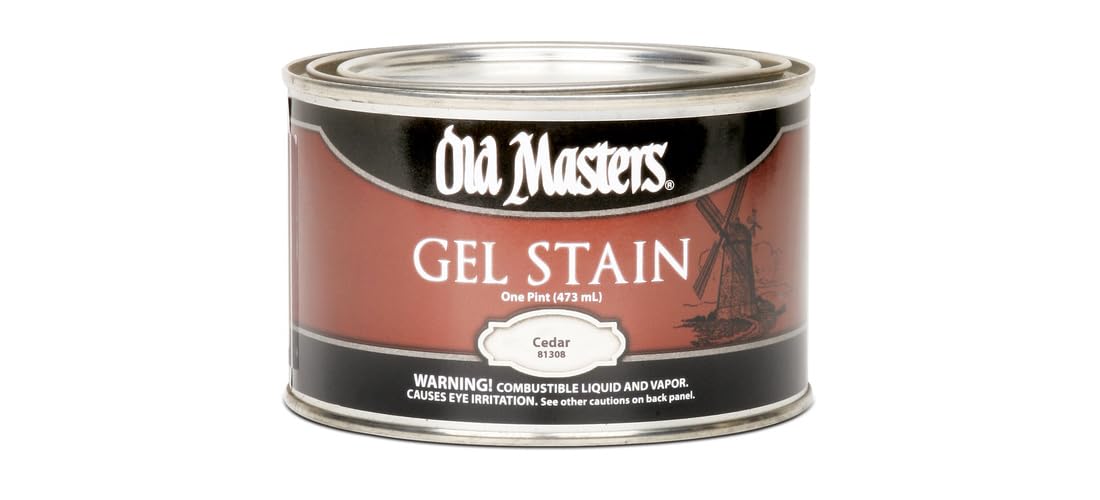
A thick gel stain that’s forgiving for vertical surfaces and great for refinishing furniture or small cedar accents.
Why I picked it: Control and texture — ideal for doors, furniture, and touch-ups.
Best for: Interior furniture, doors, and small cedar touch-ups where drip control matters.
Small cans suited for touch-ups and furniture projects.
Pros
- Thick, easy to control
- Rich, classic colors
- Great for vertical or non-wood surfaces
Cons
- Takes longer to fully dry
- Usually needs a topcoat for durability
My take
I reach for Old Masters gel when I’m refinishing doors and furniture. The gel body gives me time to manipulate color, and it won’t run on vertical surfaces like thin stains can.
The finish is rich and forgiving; on a bathroom vanity and a set of cedar trim it covered evenly and produced a deep tone after two light coats.
Because it dries more slowly, I seal gel-stained pieces with a clear topcoat for surface durability, but the results are worth the extra step.
How I Choose a Stain for Cedar
Match the product to the exposure
I always start by thinking about where the cedar lives. If it’s lakeside or a dock, I use a marine-grade sealer that beads water. For sun-exposed decks I prioritize UV-blocking formulations.
- Constant moisture: choose marine or waterproof sealers.
- High sun: pick stains with UV blockers or zinc additives.
- Interior pieces: favor low-odor, one-step products.
Decide oil vs water-based
Both types have places in my toolkit. Oil-based semitransparent stains give a rich, penetrating look and feel, while modern water-based stains dry faster, are lower in VOCs, and often offer easier cleanup.
- Oil-based: deeper penetration, rich finish, durable on exterior cedar.
- Water-based: quicker cure, easier cleanup, good UV formulas available.
Prep and application tips I use
Preparation is 50% of the job. I clean with a brightener or mild bleach solution, let wood dry, and mix stains thoroughly before applying.
- Always agitate cans — pigments settle quickly.
- Test on a hidden board to confirm color and soak.
- Use sprayer plus back-rolling for large fences to speed the job.
Coverage and maintenance expectations
Expect heavily weathered cedar to absorb more product. I budget extra gallons for old boards and plan for periodic recoats rather than a permanent finish.
- New wood: one coat may be enough for some products.
- Aged wood: plan for two coats or more product.
- Inspect yearly and touch up high-traffic or high-sun areas.
Frequently Asked Questions
Can I stain cedar shortly after power washing?
I usually wait until the wood is visibly dry but some water-based stains handle slightly damp wood; check the product instructions and test a small area first.
Should I choose oil- or water-based stain for exterior cedar?
I pick oil-based for deep penetration and a richer look, but I choose water-based when I want faster drying, lower VOCs, or advanced UV technologies.
How many coats does cedar typically need?
It depends on the product and wood condition. New cedar can often do well with a single coat of a penetrating sealer; weathered wood frequently needs two coats to get even coverage.
Final Take
For large exterior projects where I want a natural finish and long-term durability, Ready Seal earned my top pick. For waterfront work I rely on Seal-Once Marine, and for interior furniture I reach for SamaN’s one-step product.
If you’re on a budget or working on small areas, Storm System and Old Masters gel give great results without overcomplication. Match the product to the exposure, mix thoroughly, and plan on extra product for very weathered boards.
With the right prep and the stain matched to your cedar’s exposure, you can protect wood and keep that warm cedar character for years.
