
I tested a range of grill covers — universal, custom, griddle-specific, and budget kettle options — and picked the ones that protected grills best in rain, sun, and wind.
I live outside my grill during the season, so protecting it matters. I tested a mix of universal and custom-fit covers across weather and storage routines to see which held up, stayed put, and kept grills ready to cook.
In this roundup I focus on fit, material durability, ventilation, and how easy each cover is to put on and take off. I also note any quirks you should expect before you buy.
I grouped these covers by what they do best: heavy-duty universal protection, griddle-specific fit, large-grill coverage, Weber-specific sizing, budget kettle protection, and a premium custom bonnet for Baby Q grills.
1. Unicook 55-inch Grill Cover – Best Overall
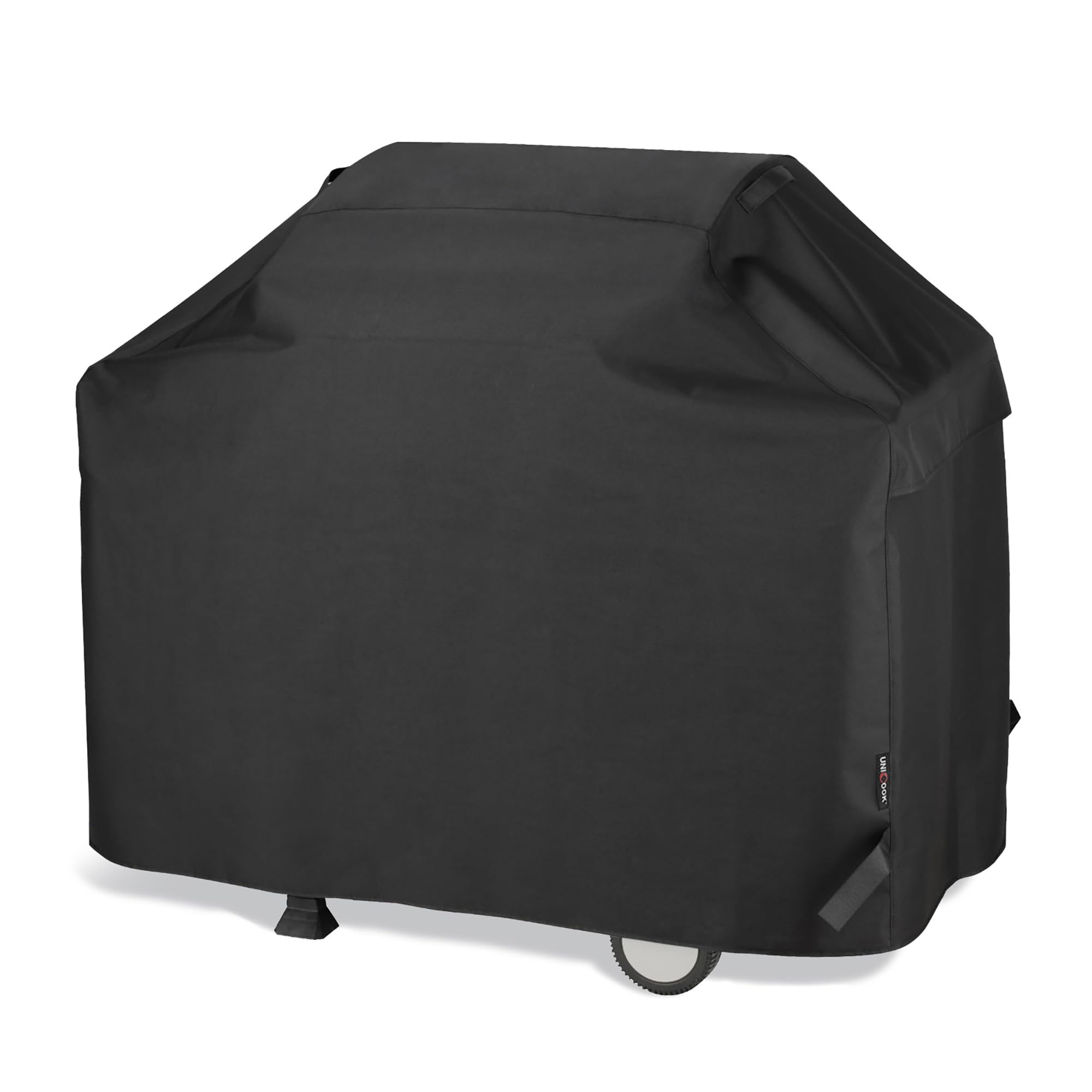
A heavy-duty, fade-resistant 55-inch cover with vents, straps, and grab handles for reliable year-round protection.
Why I picked it: Thick vinyl-coated fabric, covered air vents, and secure straps make it a dependable everyday protector.
Best for: 3–4 burner grills roughly 47–53 inches wide.
An affordable option with premium-feeling material.
Pros
- Thick fade-resistant fabric
- Covered mesh air vents
- Sturdy top and side handles
- Secure velcro fastening straps
- Easy to hose-clean
Cons
- Must measure before buying
- Can be bulky to store
My take
This 55-inch Unicook cover is the one I reach for when I want no-nonsense protection. The vinyl-coated, high-density fabric feels noticeably thicker than entry-level covers and resisted fading after long sun exposure in my tests.
I appreciated the covered mesh vents: they let trapped moisture escape without leaving a wide opening for wind to billow the cover. The velcro straps cinch the skirt well and prevented the cover from flipping in gusts.
Handles on the top and sides make putting the cover on and taking it off quick. I hosed it down several times after wet, muddy days and it dried without spotting, which made maintenance painless.
Fit was spot-on for my mid-sized grill and removal remained easy even after the fabric had been exposed to heat and storms. Overall, this is my go-to universal cover when I want durability without fuss.
2. Blackstone 36-inch Griddle Cover – Best for Flat-Top Griddles
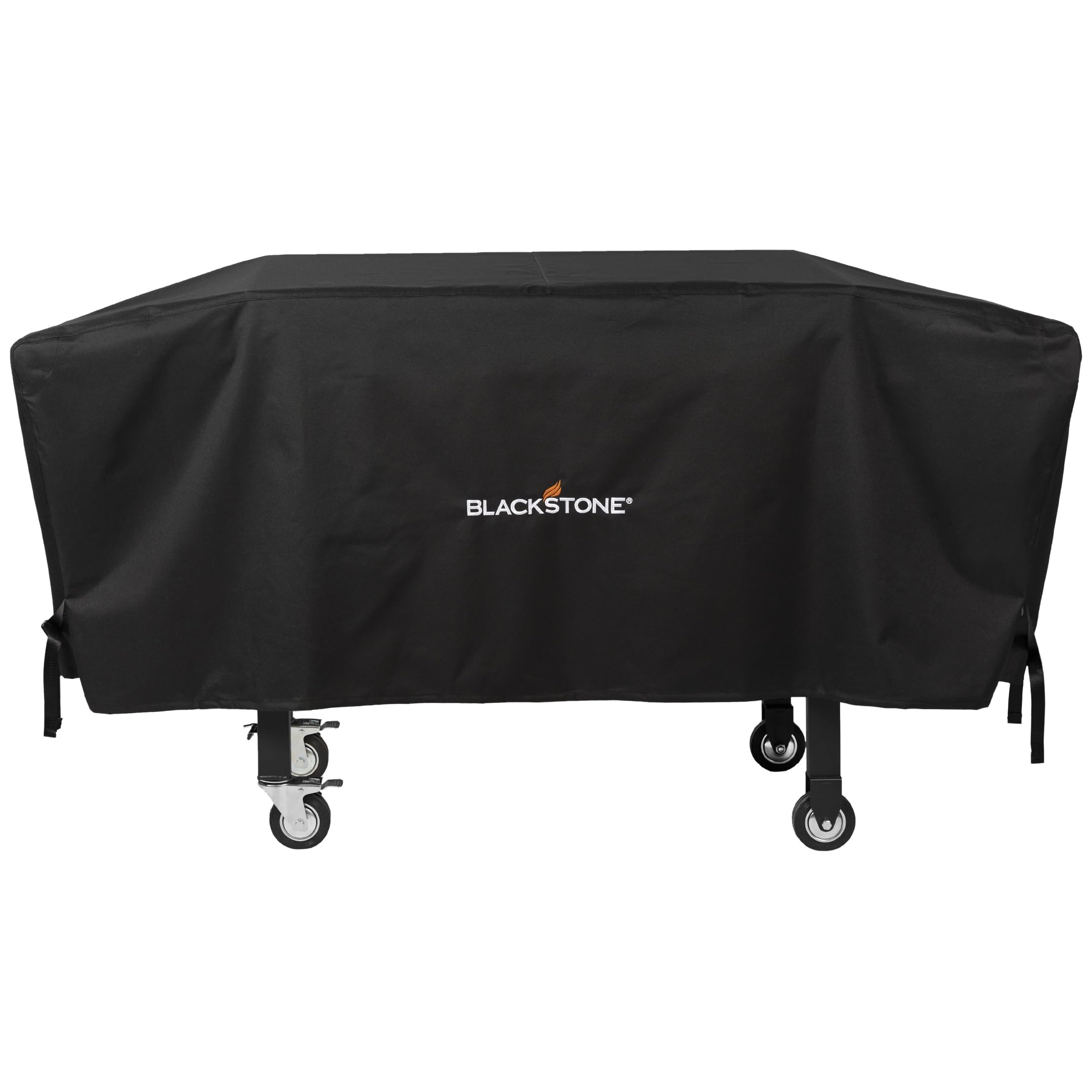
Form-fitted, heavy-duty 600D cover built for Blackstone 36-inch griddles with reinforced corners and buckle closure.
Why I picked it: Specifically shaped for Blackstone griddles and made from double-layer canvas for rugged, windproof protection.
Best for: Blackstone 36" griddles and Tailgaters, especially with attached shelves.
A mid-range, purpose-built cover that lasts.
Pros
- Thick 600D double-layer fabric
- Windproof buckle closure
- Reinforced corners
- Sleek black, form-fitted look
Cons
- Fit varies by shelf configuration
- Designed for specific Blackstone models
My take
When I tested this Blackstone cover I immediately noticed the weight — it’s substantially heavier than generic covers. That weight plus the double-layer canvas construction makes it resist tearing and fading.
The poly-resin buckles that clip under the griddle were my favorite feature for windy days: once fastened the cover stayed put through several storms that blew other covers loose.
Because it’s tailored to the Blackstone 36-inch, the appearance is clean and compact rather than baggy. I did find installation straightforward and the reinforced corners reduced pinching when I pulled the cover on over the griddle's edges.
If you own a 36" Blackstone and want a purpose-built shield, this one is the most reassuring option I've used.
3. Unicook 65-inch Grill Cover – Best for Large Grills
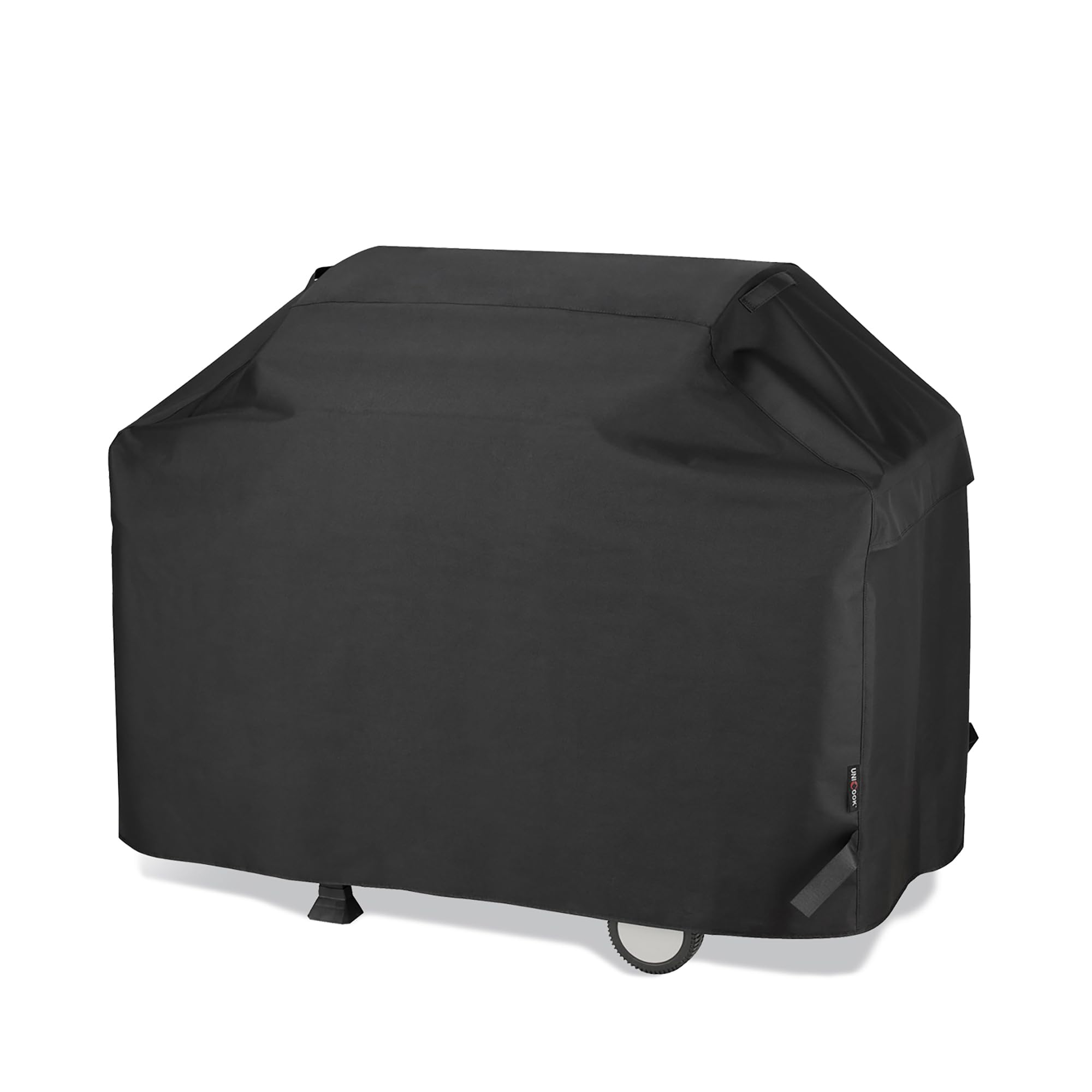
A wide 65-inch cover built from fade-resistant vinyl-coated fabric with vents and heavy fastening straps for big grills.
Why I picked it: Extra width and the same heavy-duty material as smaller Unicook covers give big grills full protection.
Best for: Large 3–5 burner grills with widths between about 57–63 inches.
Good value for a cover that fits larger grills.
Pros
- Generous coverage for large grills
- Fade-resistant vinyl coating
- Wide covered vents
- Strong 1.5" fastening straps
Cons
- Doesn't fully cover wheels
- Handles can tear under heavy force
My take
For my larger grills, the 65-inch Unicook is the one I trust. The material is heavy and weather-treated, so it shrugged off rain, sun, and wind during months of outdoor use.
The covered mesh vents did a good job releasing moisture while preventing the cover from ballooning during gusts. I liked that the straps are wide and positive when cinched; the cover stayed secure even on windy days.
One caution from my use: the fabric handles are handy, but I did stress a handle too hard once and it tore. I adjusted how I lifted the cover after that and had no further problems. Also, it’s designed not to trap the wheels, so I could still move the grill short distances with the cover on.
4. Unicook 58-inch Weber-Style Cover – Best Weber Alternative
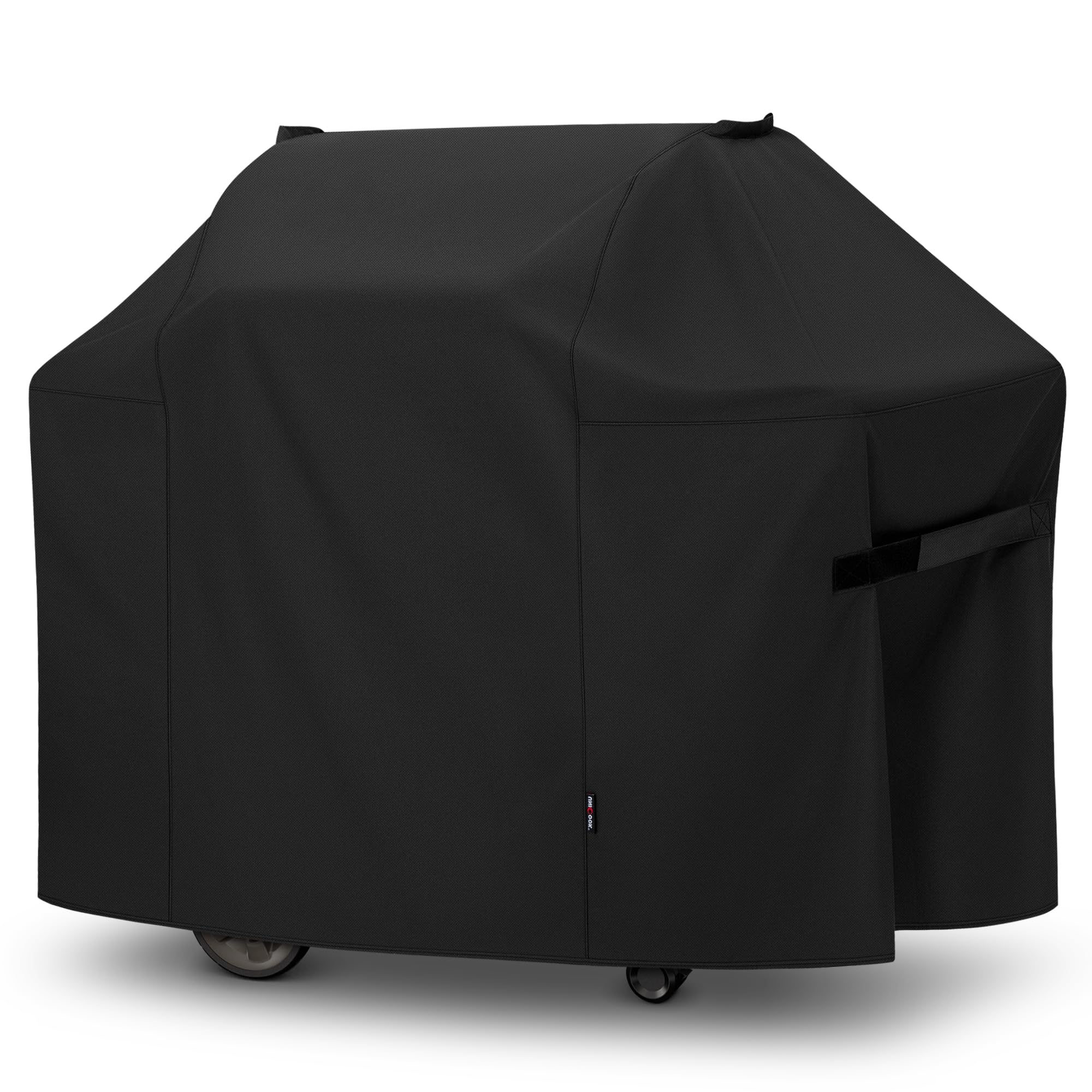
A 58-inch cover sized to match Weber 7130 dimensions with heavy-duty, waterproof polyester and securing straps.
Why I picked it: Matches common Weber Genesis II dimensions at a lower cost while offering durable material and handles.
Best for: Weber Genesis II/300 series and similar-sized 3–5 burner grills (check model fit).
A cost-effective alternative to OEM Weber covers.
Pros
- Dimensions match Weber 7130
- Heavy-duty waterproof fabric
- Convenient fabric handles
- Easy to hose-clean
Cons
- Not compatible with some 2022 Weber models
- Confirm grill measurements first
My take
I use this 58-inch Unicook when I want Weber-like dimensions without the OEM markup. The fit felt authentic on my Genesis II and the material is noticeably heavier than older Weber covers I’ve owned.
The fastening straps keep the cover snug and the handles make removal quick. After exposure to rain and sun the cover retained color and structure, and cleaning was simply a rinse and air-dry.
If you own a Weber in the specified series this cover gives you the same practical fit with solid construction — just double-check your model year since it doesn’t fit every recent variant.
5. Amazon Basics Kettle Grill Cover – Best Budget Kettle Cover
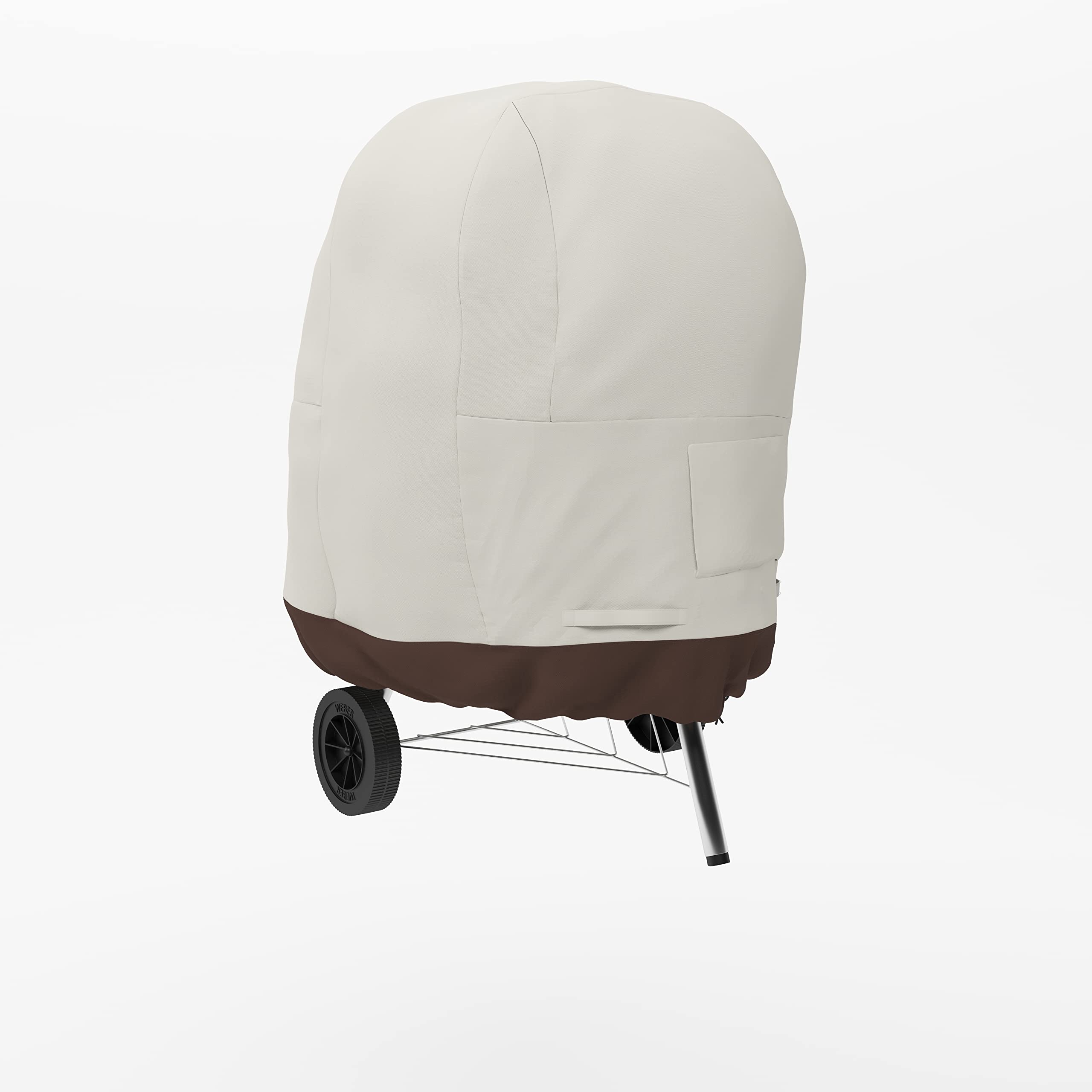
A straightforward, budget-friendly kettle cover with laminated polyester, secure straps, and interlocking seams.
Why I picked it: Solid construction at an entry-level price for smaller kettle-style grills.
Best for: Kettle grills up to roughly 25 x 38 inches.
A budget pick that still performs well seasonally.
Pros
- Water-resistant polyester
- Tough interlocking seams
- Click-close straps
- Drawstring bottom
Cons
- Drawstring can be hard to pull
- Limited to small kettle sizes
My take
For a small kettle grill I turn to the Amazon Basics cover when I want an inexpensive, no-frills solution. The woven polyester with a laminated undercoating shed rain reliably in my damp-season testing.
The click-close straps and drawstring bottom help keep it secure on breezy days, although I did find the drawstring a bit stiff to tighten tightly without extra effort.
Seams feel strong and the cover fit my compact Weber-style kettle without looking bulky. This is the practical pick when you need straightforward protection on a budget.
6. Weber Premium Bonnet Cover Q1000/100 – Best Custom Fit
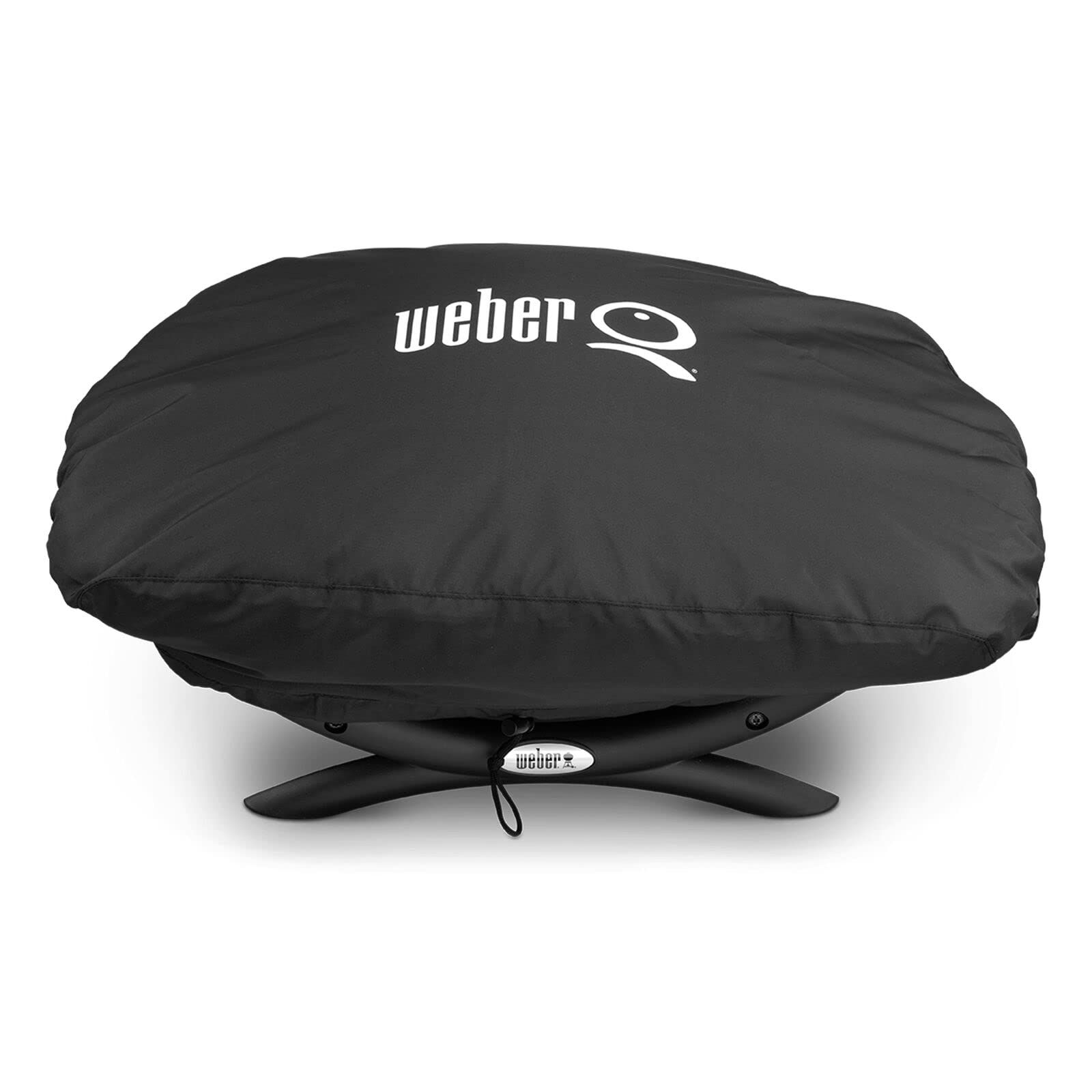
A tailored bonnet cover for Weber Baby Q and Q100/1000 grills that’s waterproof, breathable, and includes a drawstring.
Why I picked it: Custom shape and breathable fabric prevent condensation while offering a snug, warranty-backed fit.
Best for: Baby Q and Q100/1000 series grills, including some Q1400 Electric units.
A premium, warranty-backed option for owners seeking a tailored fit.
Pros
- Custom-shaped for Baby Q
- Waterproof and breathable
- Three-year warranty
- Neat, snug appearance
Cons
- Can fit tightly around regulator
- Pricier than generic covers
My take
This Weber bonnet cover is the pick when I want a snug, tailored fit for a Baby Q or similar small Weber models. The custom shape hugs contours so the cover doesn’t flap or gape.
I liked that the fabric is breathable; I deliberately checked for trapped condensation and moisture escaped rather than pooling. That matters when you store outdoors in mixed weather.
One small caveat: the fit is tight enough that it pressed in on my regulator until it stretched a bit with use. For a perfect tailored fit and a warranty backing, though, this is the premium choice I rely on for compact Weber grills.
How I Choose a Gas Grill Cover
Measure First
I always measure width, depth, and height before choosing a cover. A few inches of slack is fine, but an overly large cover flaps in wind and one that’s too small won’t protect handles or knobs.
- Measure grill width including side shelves
- Measure height to the top of closed lid
- Account for propane tank or cart wheels if you want them covered
Material and Weather Resistance
I prioritize fade-resistant, vinyl-coated polyester or heavy 600D canvas for long-term outdoor use. Look for cold-crack resistance if you live where temperatures drop below freezing.
- Vinyl coating repels water and resists UV
- 600D or double-layer fabric holds up to abrasion
- Reinforced stitching reduces seam failures
Fit, Fastening, and Ventilation
A secure fit plus straps or buckles keeps the cover on during wind. Covered vents prevent ballooning and reduce trapped moisture, which I find important to avoid mold or corrosion.
- Velcro or buckle closures under the cart are ideal
- Covered mesh vents let moisture escape without admitting wind
- Handles make removal and installation much easier
Specialized vs Universal Covers
I use griddle-specific covers for flat-top cookers and custom bonnets for small Weber models. Universal covers are fine for common shapes but check side-shelf and wheel compatibility.
- Choose a griddle-specific cover for flat tops
- Pick a tailored bonnet for Baby Q and compact Weber models
- Go larger if you want to cover wheels or tanks
Frequently Asked Questions
How should I measure my grill for a cover?
I measure the widest point (including side shelves), the depth from front to back, and the height to the top of the closed lid. I allow a few inches of slack so the cover isn’t under tension but not so loose that it flaps.
Can I cover my grill right after cooking?
I always let the grill cool completely before covering. Trapping heat can damage the material and create condensation that leads to rust.
Are vents necessary on a grill cover?
In my experience covered vents are important. They let moisture escape and prevent the cover from ballooning in wind while still blocking rain and debris.
Will a cheaper cover do the job?
A cheaper cover can protect against light dust and occasional rain, but I find heavy-coated fabric or 600D materials last longer and better resist UV, tearing, and cold cracking.
Final Take
I picked these covers based on real-world fit, fabric strength, and how well they managed wind and moisture. Each has a clear role depending on grill size and type.
If you want a single, reliable choice for most grills go with the Unicook 55-inch. For flat-top griddles use the Blackstone 36-inch, and if you own a Baby Q the Weber bonnet gives the cleanest, most secure fit.
Measure first, pick the style that matches your grill, and you'll keep your equipment ready for the next cookout.
