
I tested a range of concentrates, ready-to-use tree treatments, and seed-blocking preventers so you can choose the right weed-control approach for large yards, driveways, and beds.
I work on properties with everything from gravel driveways to multi-acre lots, so I care about weed control that scales. For large areas I focus on three practical approaches: high-strength concentrates that stretch further, extended-control formulas that prevent regrowth, and seed preventers for beds where I want to avoid constant pulling.
In this roundup I compare several products I’ve used extensively—mixing ratios, how fast I saw results, where each product fits best, and the practical trade-offs like application coverage and handling.
I compared fast-acting concentrates, long-lasting preventers, and specialty stump/tree treatments based on coverage per mix, visible speed of kill, and whether the product offers residual prevention.
1. Roundup Super Concentrate – Best Overall
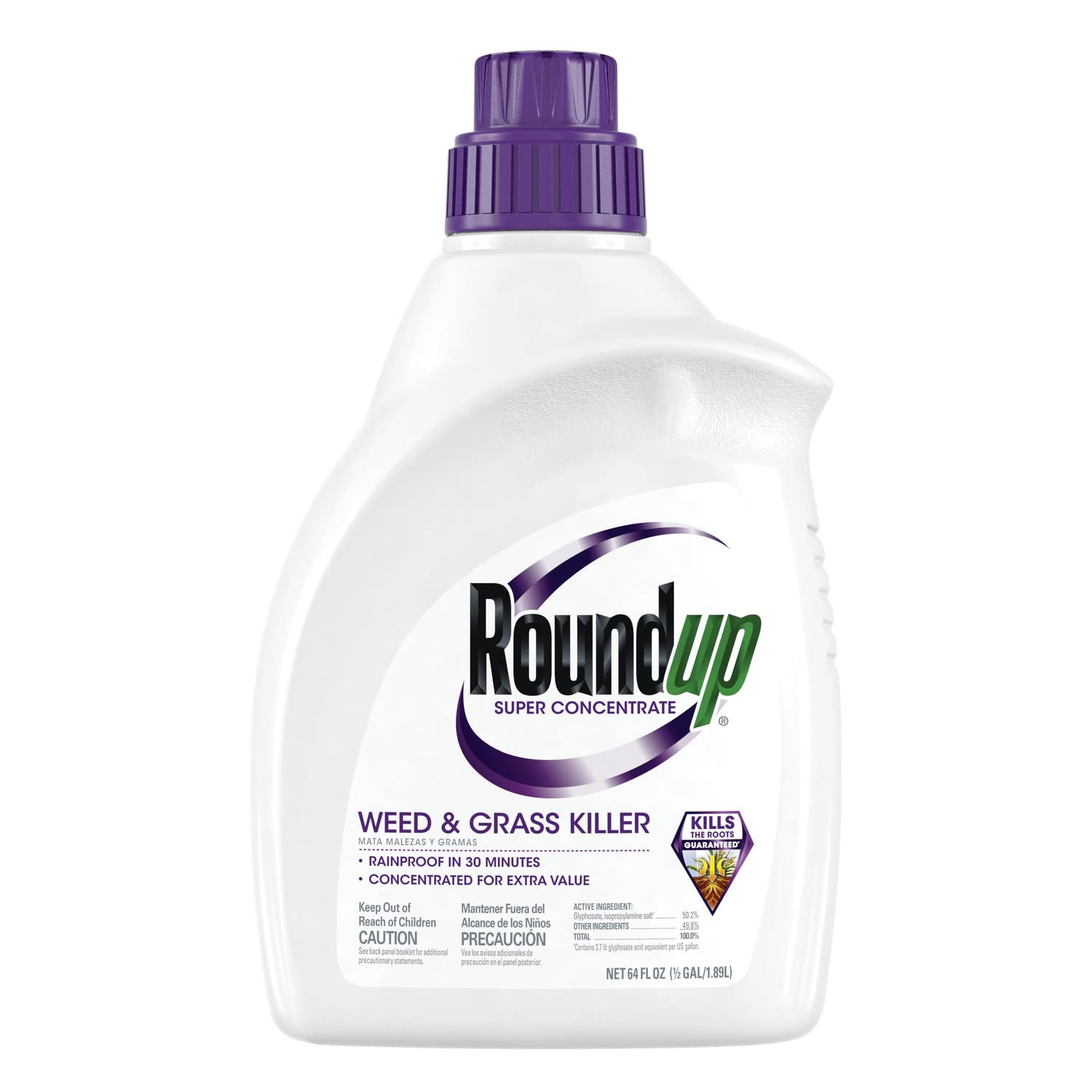
A versatile concentrate I use across large areas—easy to measure, fast to weather-in, and reliable on tough spots.
Why I picked it: Best blend of coverage, reliability, and ease of mixing for widespread weed problems.
Best for: Driveways, gravel, fence lines, lawn replacements, and foundation edges.
Economical concentrate for treating large areas.
Pros
- Good coverage per mix
- Rainproof in 30 minutes
- Works on heavy infestations
- Includes measuring cap
Cons
- Nonselective — will kill desirable plants
- Requires a sprayer
My take
I keep this Roundup Super Concentrate in my shed for big jobs because the built-in measuring cap makes mixing fast and repeatable. I mix at the recommended 2.5 fl oz per gallon into a tank sprayer and cover wide swaths without wasting product.
Results show up predictably: the formula is rainproof in about 30 minutes and I usually see weeds yellow and begin to wilt within 2–4 days. For lawn replacements and gravel drives this consistency is exactly what I want.
My practical tip: don’t over-concentrate — follow the label for best root kill and to avoid unnecessary runoff. I protect nearby flower beds with cardboard and rinse any accidental overspray quickly.
2. RM43 Concentrated Weed Killer – Best for Long-Term Control
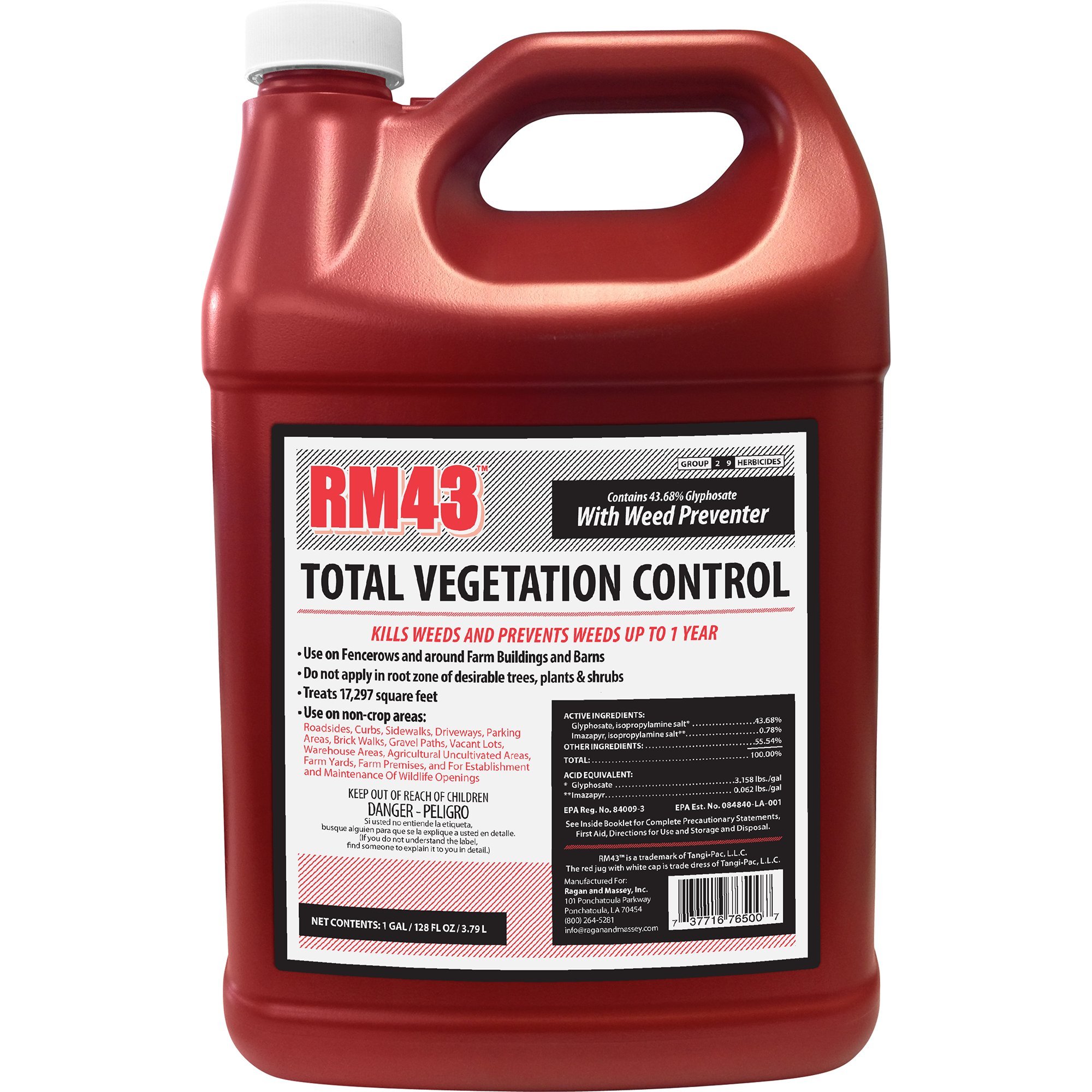
A high-strength glyphosate concentrate I reach for when I want total vegetation control and longer-term suppression.
Why I picked it: Very concentrated formula that attacks roots and offers extended control.
Best for: Large properties, heavy infestations, and areas where I want season-long control.
Premium-priced concentrated option for serious weed control.
Pros
- Penetrates to roots
- Long-lasting control
- Covers large areas efficiently
Cons
- Stronger handling precautions
- Higher upfront cost
My take
When I need the deepest kill I use RM43. It’s a concentrated mix that I dilute into my sprayer; a little goes a long way and it consistently works into the root system rather than just top-growth.
I plan applications for calm, warm weather and then wait the recommended window for results. It’s not instant—results come over several days—but the plants don’t rebound like they sometimes will with weaker formulations.
My hands-on advice: use protective gear and measure carefully. Because it delivers a long-lasting barrier in treated spots, I treat deliberately and avoid any drift onto desirable vegetation.
3. Spectracide Weed & Grass Killer – Best Budget Concentrate
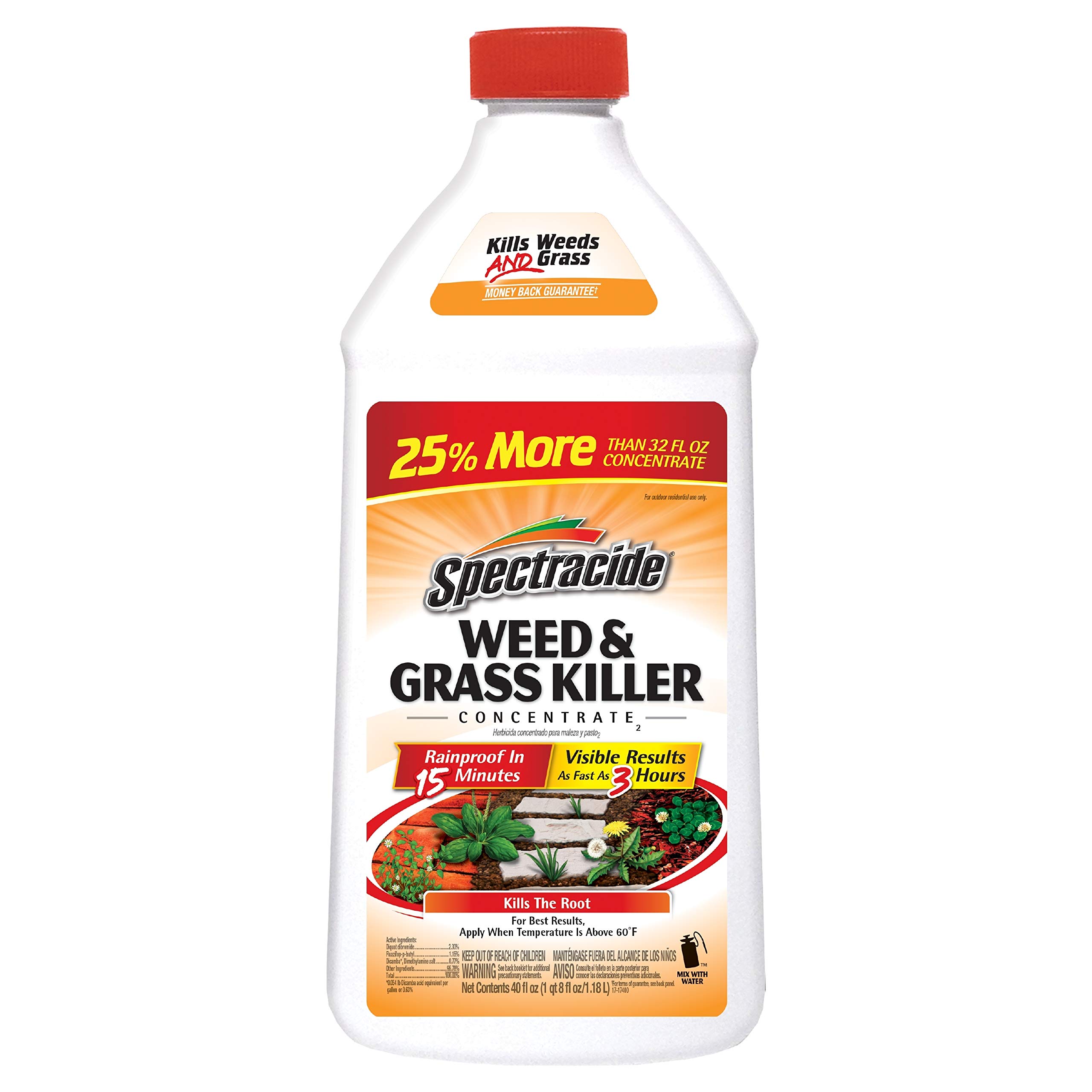
A fast-acting, cost-effective concentrate I use for spot treatments on patios, sidewalks, and edges.
Why I picked it: Fast visible results and good value for spot and edge work.
Best for: Patios, walkways, driveways, and spot treatments around beds.
Budget-friendly option for targeted applications.
Pros
- Very fast visible results
- Rainproof in 15 minutes
- Good value for spot use
Cons
- Requires dilution and a sprayer
- Nonselective — will kill anything it touches
My take
I keep Spectracide around for quick spot jobs: it’s rainproof in about 15 minutes and can show visible action in as fast as a few hours, which is handy when I need fast cleanup.
Because it kills down to the root I’ll use it along driveway cracks and rock beds, applying only to the target leaves and protecting nearby ornamentals. It’s a concentrate, so expect to mix for a tank sprayer and follow the label’s temperature guidance for best results.
My practical note: plan to buy or reuse a decent sprayer. This product is great for fast, local control rather than treating acres.
4. Tordon RTU Herbicide – Best for Tree & Stump Work
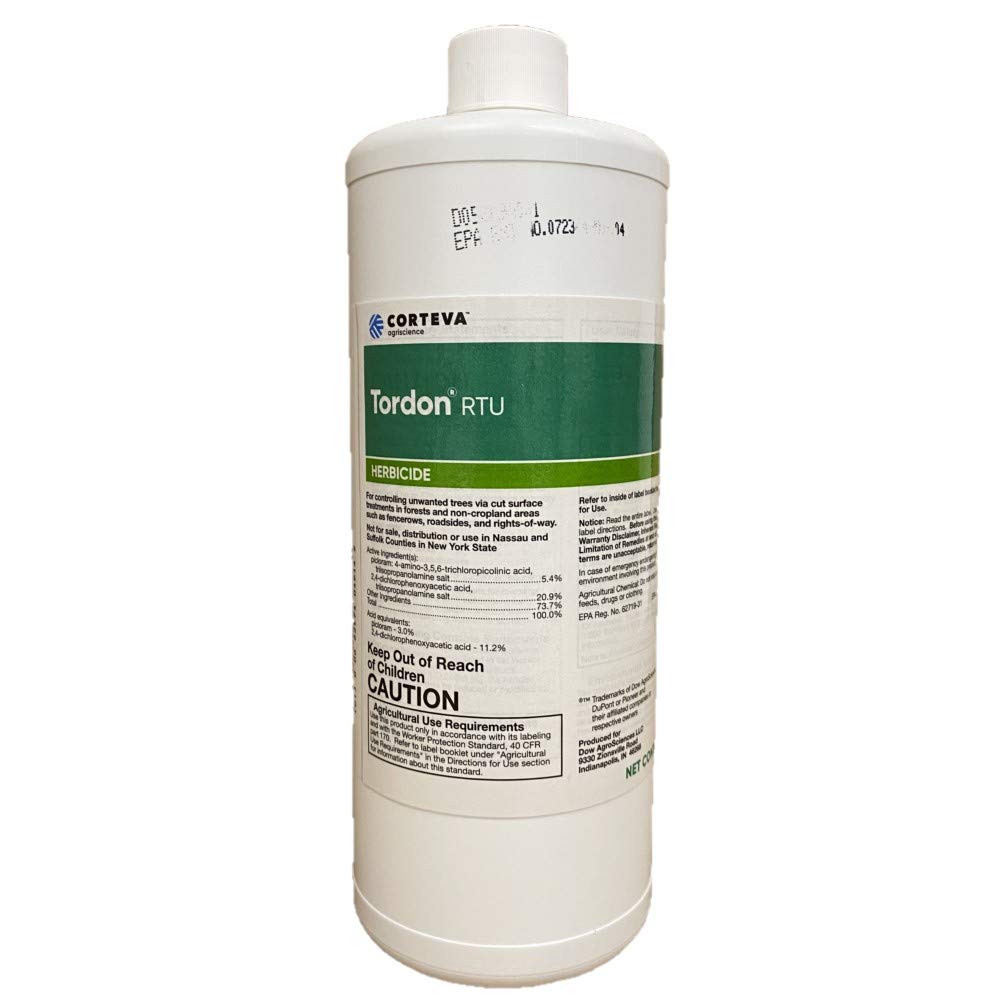
A ready-to-use stump and woody-sprout control I rely on for cut-stump and basal treatments.
Why I picked it: Specialized for stump and woody-plant control; easy to apply directly to cut surfaces.
Best for: Killing cut stumps, treating sapling sprouts, and controlling woody regrowth.
Mid-range specialty product for tree and stump control.
Pros
- Designed for cut-stump treatments
- Effective on woody sprouts
- Easy direct application
Cons
- Very potent — avoid nearby plants
- Not for broadcast lawn use
My take
For saplings and stubborn stump sprouts I use Tordon RTU. I apply a few drops directly to the freshly cut surface or dab it on sprouts after pruning, and the blue dye helps me confirm coverage.
In my experience it’s far more reliable on woody regrowth than broadleaf concentrates; roots rot down quickly and regrowth stops within weeks when applied correctly.
A word of caution from repeated use: this is a powerful product, so I avoid spills and protect surrounding vegetation carefully. For fence rows and rights-of-way this RTU approach saves me hours of follow-up cutting.
5. Roundup Concentrate Plus – Best Fast-Acting
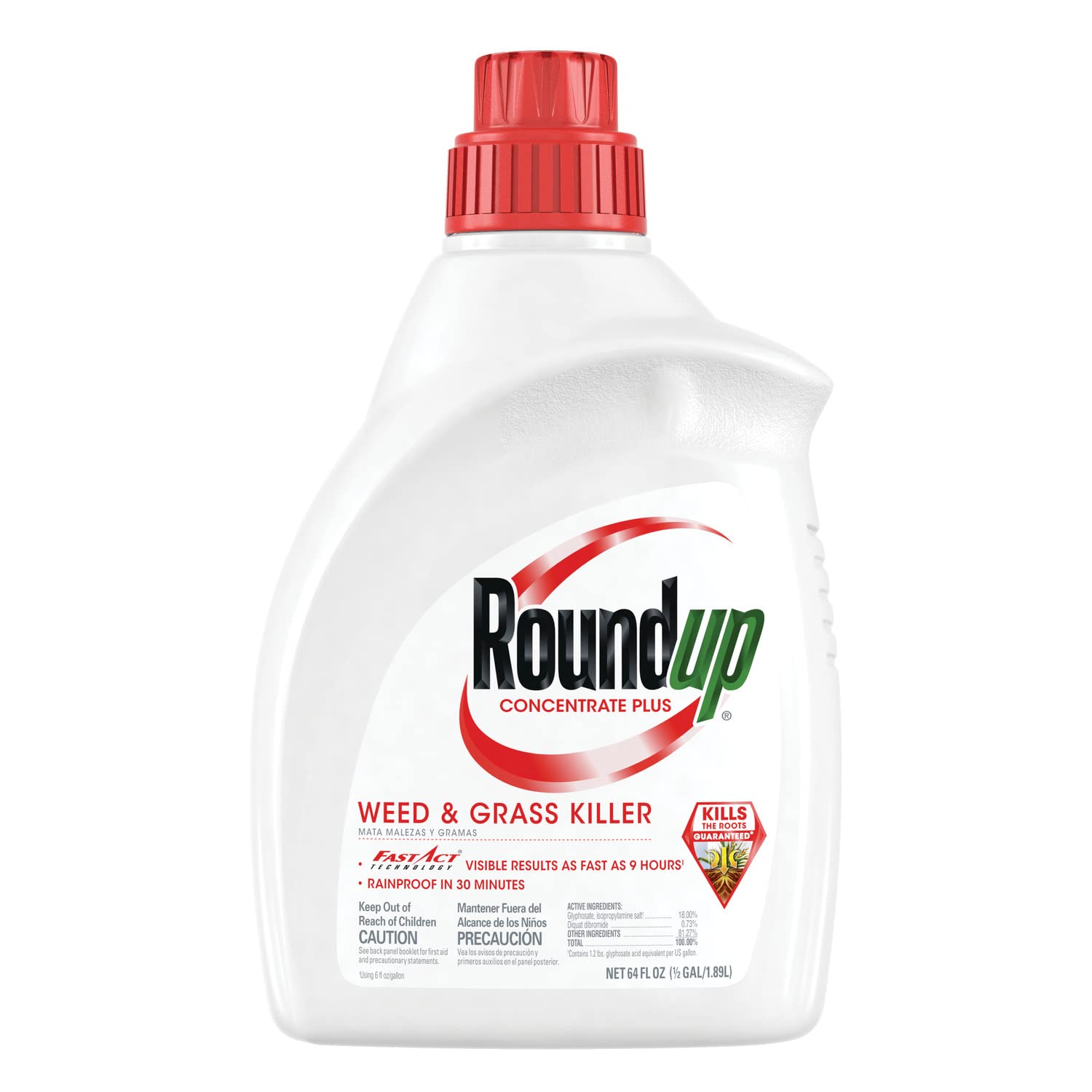
A fast-acting Roundup formula I use when I want quicker visible results with dependable root kill.
Why I picked it: FastAct technology gives visible results quickly while still killing roots.
Best for: Areas where I want visible results quickly and thorough root control.
Mid-range concentrate with rapid action.
Pros
- Visible results in about 12 hours
- Rainproof in 30 minutes
- Good for large pre-landscaping jobs
Cons
- Can be messy to pour
- Nonselective — requires care near plants
My take
I reach for this Roundup Concentrate Plus when speed matters. With FastAct technology I often see leaves discolor within a day and deeper death over the following week.
I mix the labelled 6 fl oz per gallon in a premium sprayer and treat broad areas prior to landscaping projects. It’s reliable on a wide variety of tough weeds and grasses.
Practical tip: the newer container designs can be awkward to pour—transfer to a safer container if you have hand strength issues. Also protect non-target plants since this is nonselective and very effective.
6. Roundup Max Control 365 – Best for Year-Long Prevention
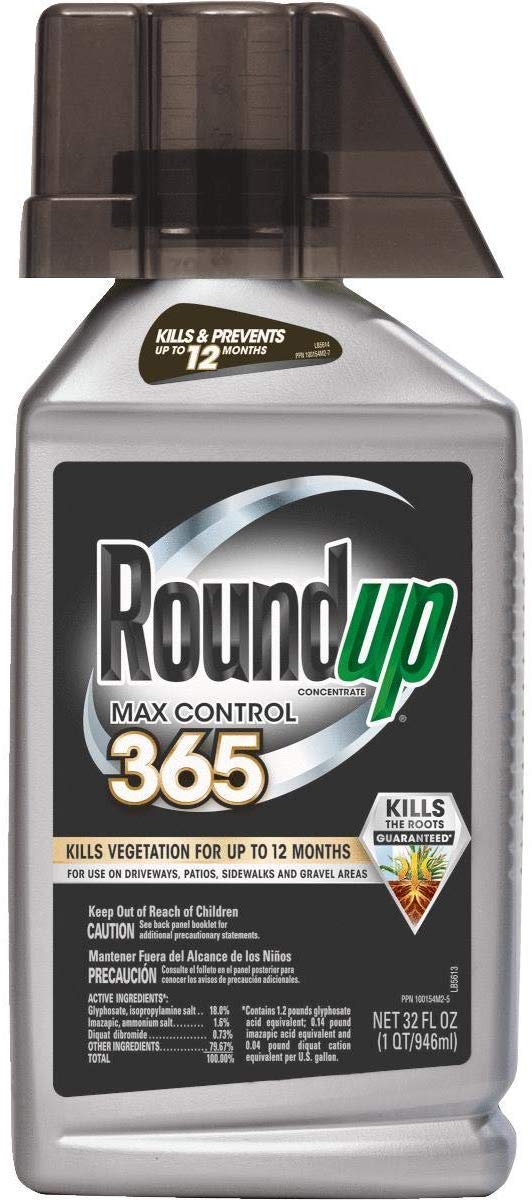
My go-to when I want both immediate kill and a residual barrier that helps prevent regrowth for many months.
Why I picked it: Kills now and creates a soil barrier for extended prevention.
Best for: Driveways, patios, gravel areas where I want long-term suppression.
Higher upfront cost but designed for long-lasting control.
Pros
- Kills and prevents regrowth up to 12 months
- Rainproof in 30 minutes
- Visible results in 12 hours
Cons
- Requires full coverage for prevention
- More costly per treated gallon
My take
Roundup Max Control 365 is the product I use when I want to minimize repeat treatments. It combines an immediate kill with an invisible soil barrier that can prevent weeds for months when applied at the recommended rate.
I learned that prevention depends on full coverage and correct mixing—spot-spraying won’t give the same long-term benefit. For gravel drives and stone beds I apply methodically and have seen seasons with little to no regrowth in treated zones.
If you’re weighing cost, plan applications carefully: using the full recommended concentration and complete coverage is what delivers the long-term payoff.
7. Preen Garden Weed Preventer (13 lb) – Best for Beds (Smaller Area)
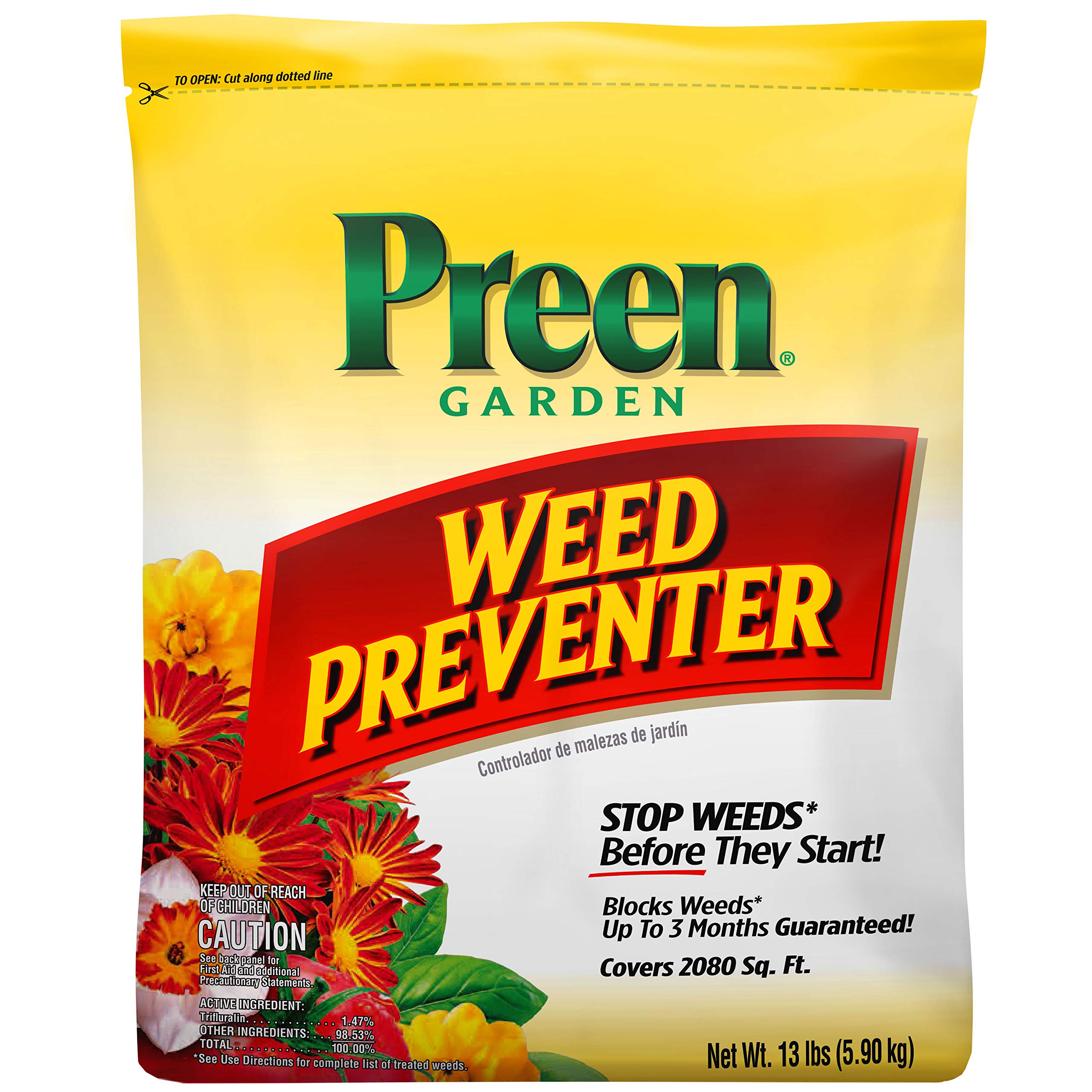
A seed-preventing granule I use in beds to stop weeds from germinating for weeks at a time.
Why I picked it: Prevents weed seeds from sprouting so I spend less time pulling.
Best for: Flower beds, shrub borders, and established plantings (not lawns).
Good value for seasonal bed maintenance.
Pros
- Prevents seed germination
- Safe around many established plants
- Easy to apply
Cons
- Doesn't kill existing weeds
- Needs reapplication every few months
My take
I use Preen in my beds after thorough weeding; it’s designed to stop seeds from germinating and that directly cuts down on the season-long chore of hand weeding.
Application is simple: spread and water it in. I avoid using it on newly seeded areas and watch seedlings when I plan vegetable sowing—apply after seedlings are established where appropriate.
On multiple garden plots I saw far fewer new weeds for the following 8–12 weeks, which lets my ornamentals fill in without constant competition.
8. Preen Garden Weed Preventer (16 lb) – Best Bulk Preventer
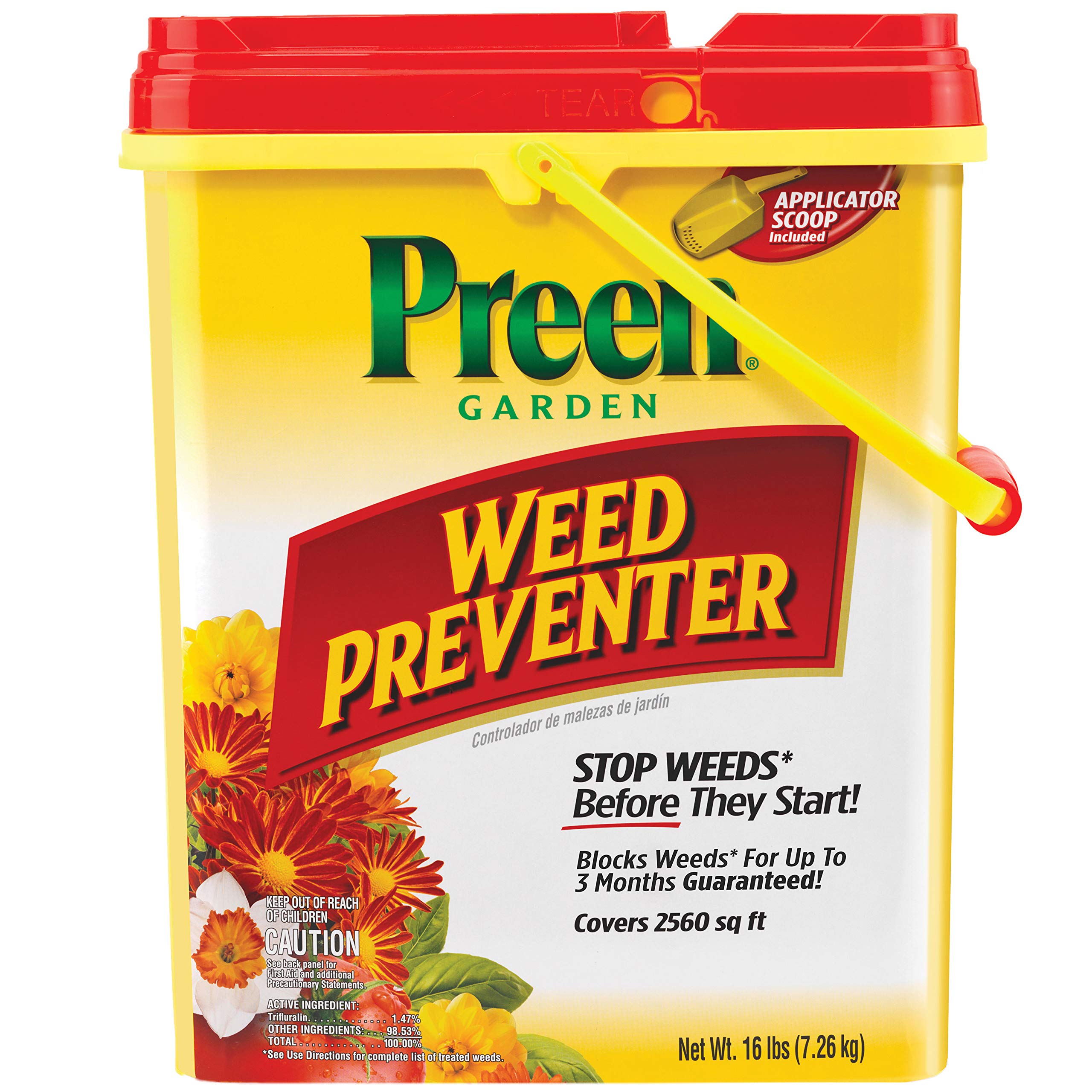
The larger Preen pail I use when I’m treating many beds or a larger landscape area.
Why I picked it: Big coverage for repeated seasonal applications in multiple beds.
Best for: Large garden areas and flower beds that need recurring seed prevention.
Bigger size for better coverage over many beds.
Pros
- Large coverage per pail
- Includes applicator scoop
- Lasts through multiple applications
Cons
- Won’t remove existing weeds
- Careful around newly planted seeds
My take
When I have many beds to cover I buy the larger Preen pail. The included applicator scoop makes spreading easier and I can treat big spaces without frequent refills.
This product never killed existing weeds for me, but it dramatically reduced new germination. In Florida beds where I used it, weed pressure dropped and my perennials had a chance to establish.
I reapply roughly every 9–12 weeks for the best season-long protection and keep pets and kids away from freshly applied areas until watered in.
How I choose a weed killer for large areas
Match the product to the job
I decide if I need immediate kill, long-term prevention, or specialty stump/tree control before I buy. Concentrates are my first choice for broad areas; extended-control products are best where I want fewer repeat applications; RTU stump treatments are ideal for woody regrowth.
- Broadcast large, open areas? Choose a concentrate or extended-control formula.
- Needing to prevent weed seeds? Use a pre-emergent granule like Preen.
- Killing stumps or saplings? Use a targeted RTU stump treatment such as Tordon.
Practical application notes
I always mix precisely, use a pump or tank sprayer for even coverage, and only apply in calm conditions to avoid drift. Follow the recommended ratios—more concentrated mixes won’t necessarily work better and can increase risk to non-target plants.
- Use a quality sprayer and test a small area first.
- Protect ornamentals with cardboard or plastic during application.
- Apply on dry, windless days and avoid watering immediately after unless the label directs it.
Safety and environmental considerations
I wear gloves and eye protection for all nonselective herbicides and keep people and pets off treated surfaces until dry. For beds with edibles, I use seed-prevention or spot-treat carefully to avoid contamination.
- Store chemicals securely and follow disposal instructions.
- Avoid application near desirable plants and water sources.
- Consider targeted spot treatments to minimize chemical use.
Cost versus coverage
I evaluate cost per treated gallon or per area rather than the sticker price. Concentrates can be the most economical over acres, while RTU products and preventers sometimes make sense for small, specific tasks.
- Calculate expected treated area per bottle before buying.
- Buy larger sizes if you plan recurring seasonal treatments.
Frequently Asked Questions
How soon can I replant after using these herbicides?
It depends on the product: some concentrates let me plant in treated areas after a day, while others that create a soil barrier need longer. I follow each label—Spectracide allows planting after one day in treated areas, whereas extended-prevention formulas require waiting longer or being cautious when replanting.
Can I mix different weed killers together?
I avoid mixing different herbicides unless the labels explicitly allow it. Mixing can change effectiveness and increase risk to desirable plants. When I need multiple action types, I schedule separate, well-spaced applications.
Is it safe to use preventers around vegetables?
I use Preen carefully: it’s safe around many established vegetables and ornamentals, but I don’t apply it to freshly seeded areas. I wait until seedlings are a couple inches tall or follow the product guidance for edible crops.
How do I choose between a concentrate and a ready-to-use product?
I choose a concentrate when I need to cover large areas economically and a RTU product for targeted stump or spot work. Concentrates offer better cost-per-area when treating acres; RTU is handy for precise applications without mixing.
Final Take
I recommend matching the product to the task: use concentrated glyphosate formulas for wide-area work, extended-control products when you want fewer repeat treatments, Tordon RTU for stumps and woody regrowth, and Preen to keep beds from reseeding.
My practical approach is to plan applications, protect desirable plants, and treat deliberately—doing so saves time and reduces the need for repeat passes later in the season.
