
I tested six chalk marker sets so I could recommend the best options for signs, fine lettering, neon window art, and white-only needs. Here’s what I relied on and why each set earned a spot on my short list.
I spent hands-on time with six chalk marker sets across chalkboards, glass, windows, and mirrors to find which pens really deliver bright, erasable ink and usable tips. I focused on color intensity, tip control, surface compatibility, and how easily each marker wipes away.
My goal was practical: pick markers that help me produce neat menus, legible shop windows, tidy planner handwriting, and delicate craft details without ghosting or messy cleanup.
I compared markers by tip size (extra-fine to jumbo), ink opacity (neon vs vintage vs white), and real-world behavior like bleeding, dripping, and how easily the marks erase from non-porous surfaces. I kept an eye on reversible tips and priming requirements because those change how quickly I can get to work.
1. Bold Liquid Chalk Markers — 6mm (8-Pack) – Best Overall
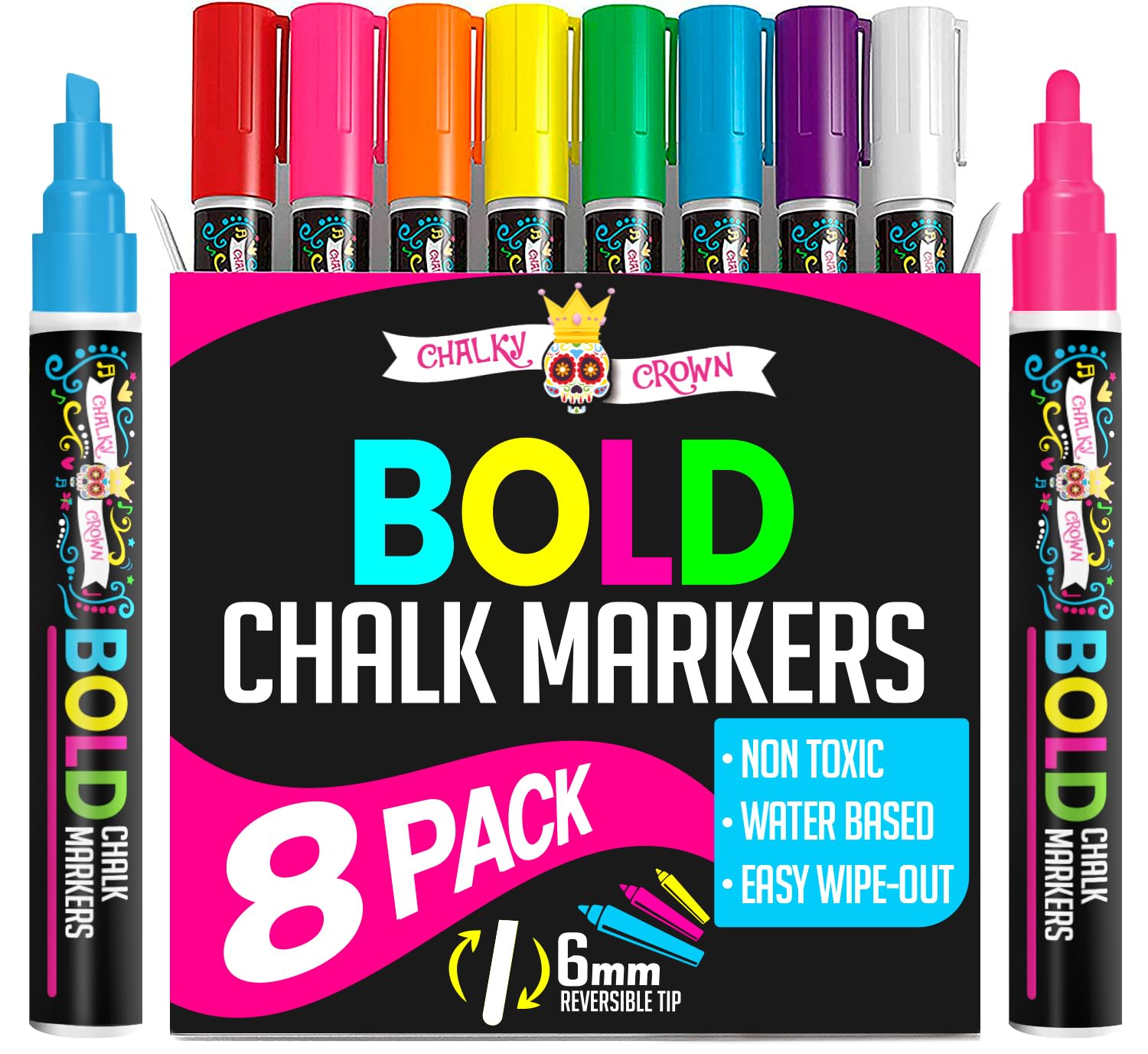
I picked these for consistently vivid color, smooth flow, and easy wipe-off on non-porous surfaces.
Why I picked it: The colors pop, the flow is steady, and cleanup is reliably simple on chalkboards and glass.
Best for: Eye-catching menus, shop windows, and crafts needing bright neon color.
Affordable option for colorful, general-purpose markers.
Pros
- Vibrant neon colors
- Smooth, consistent ink flow
- Wipes off with a damp cloth
- Safe, non-toxic formula
- Good value for multi-use sets
Cons
- Reversible tip can feel loose
- Occasional leaking reported
- Some colors (red) thin when dry
My take
I used this 8-pack on a black glass calendar and a chalkboard menu and appreciated how bold the colors read from a distance. The ink flows smoothly and doesn’t streak in normal use, which made lettering quicker and cleaner than with dusty chalk.
Cleanup was a relief — a damp paper towel removed marks from glass and non-porous boards without ghosting. I did take care not to shake them without caps on, since a few pens can be prone to oozing if handled roughly.
A couple of minor caveats: the reversible tip can feel a bit loose compared with fixed tips, and I noticed one or two colors behave thinner as they dried (red in my set). For general signage, though, these are my go-to for bold, ready-to-read color.
2. Bandle B. Liquid Chalk Markers — 6mm (8-Pack) – Best for Hand Lettering
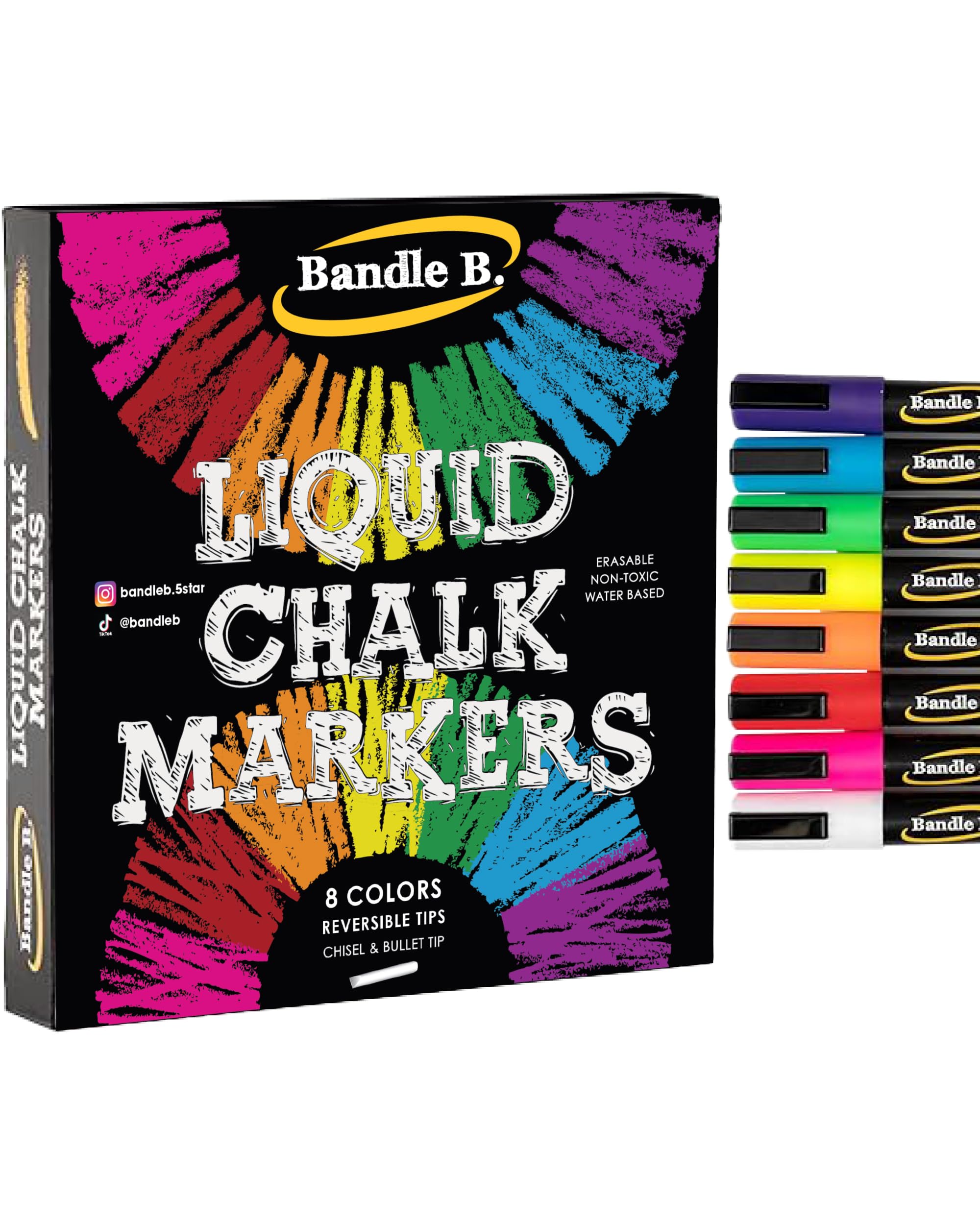
I chose these when I needed versatile tips for bold strokes and smaller fills and the flexibility to use them on many non-porous surfaces.
Why I picked it: Reversible tips and dependable pigmentation make these strong for lettering and window art.
Best for: Hand lettering, calendars, and window displays that need both fine lines and bold fills.
Good midrange pick with flexible tip options.
Pros
- Reversible tip for two line widths
- Bright, usable colors
- Works on many non-porous surfaces
- Easy to erase
Cons
- Some markers can be runny
- Require thorough shaking before use
- Tip priming sometimes takes effort
My take
These markers became my choice for mixed lettering jobs because flipping the reversible tip lets me switch from thick to finer strokes without changing pens. The colors lean vivid without being garish, which helped my window designs look intentional rather than messy.
I made sure to shake thoroughly before priming, and that usually fixed any flow issues. One blue in my set ran a little thin at first, so I dialed back pressure until it settled. Erasing is straightforward on glass and chalkboards with a damp cloth.
If you value the ability to alternate line width while working quickly, these strike a nice balance between control and color pop.
3. Chalkola Extra Fine Tip Liquid Chalk Pens — 1mm (10-Pack) – Best for Fine Detail
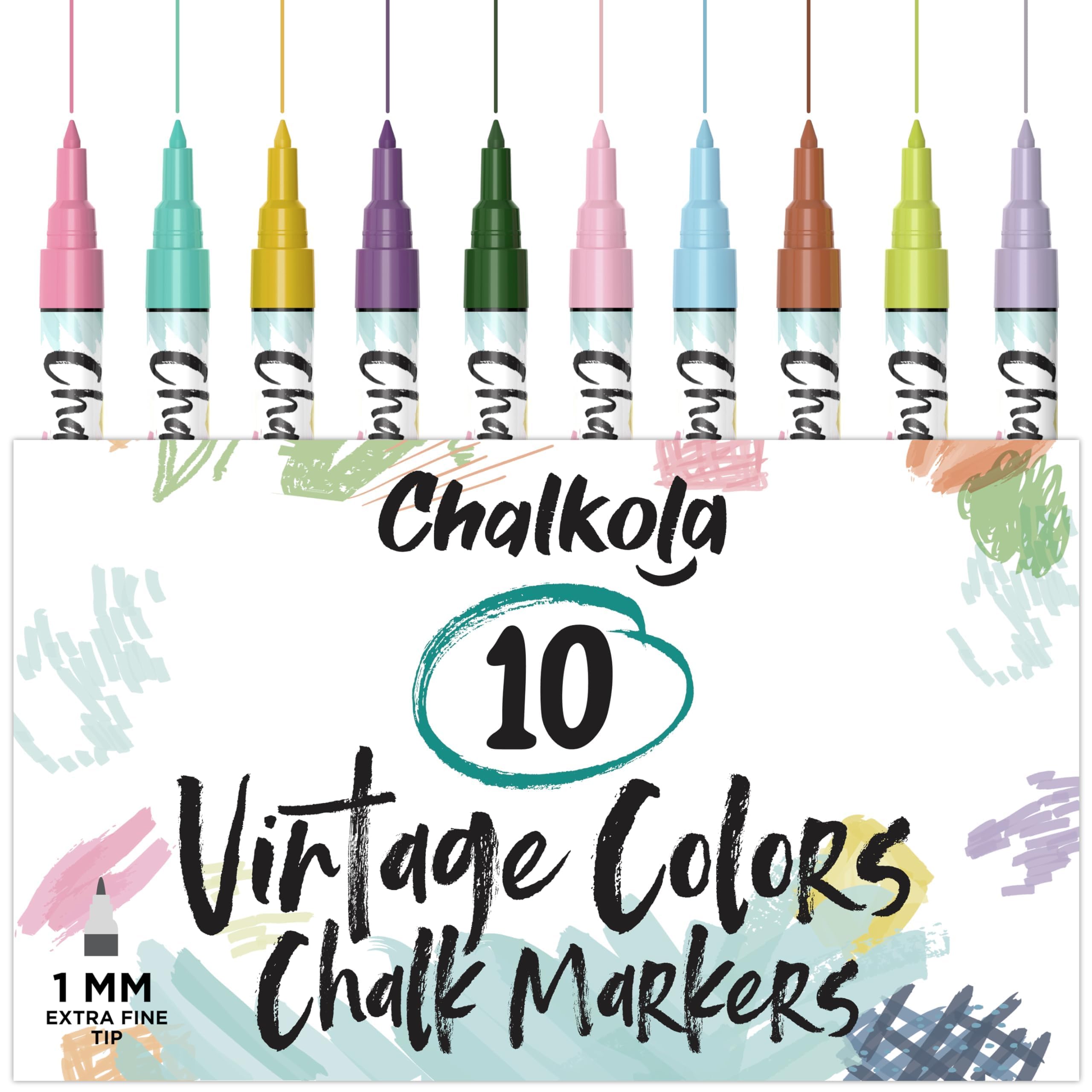
I rely on these when delicate, precise lines matter — journals, small labels, and tight hand lettering benefit from the 1mm tips.
Why I picked it: Extra-fine 1mm tips deliver precise strokes and consistent vintage-inspired colors.
Best for: Small-scale lettering, craft details, and tight calendar grids.
A bit more specialized and great for detailed work.
Pros
- True 1mm fine tip
- Smooth, even ink laydown
- Nice vintage color palette
- Quick-drying on non-porous surfaces
Cons
- Smaller pens may run out faster
- Not ideal for large signage
- Limited bold color intensity
My take
These extra-fine pens are the set I reach for when I need razor-thin consistency — labeling spice jars, drawing fine embellishments, or writing in small planner boxes. The vintage colors are pleasant and not overly bright, which suits more restrained designs.
They draw very evenly and dry fast on glass and blackboards. The trade-off is capacity: these markers feel smaller than chunkier 6mm pens, so I expect to replace them sooner if I use them heavily.
For anyone who values control over giant neon strokes, these are the best fine-tip option I tested.
4. Crafty Croc Neon Chalk Markers — 6mm (10-Pack) – Best Neon Pop
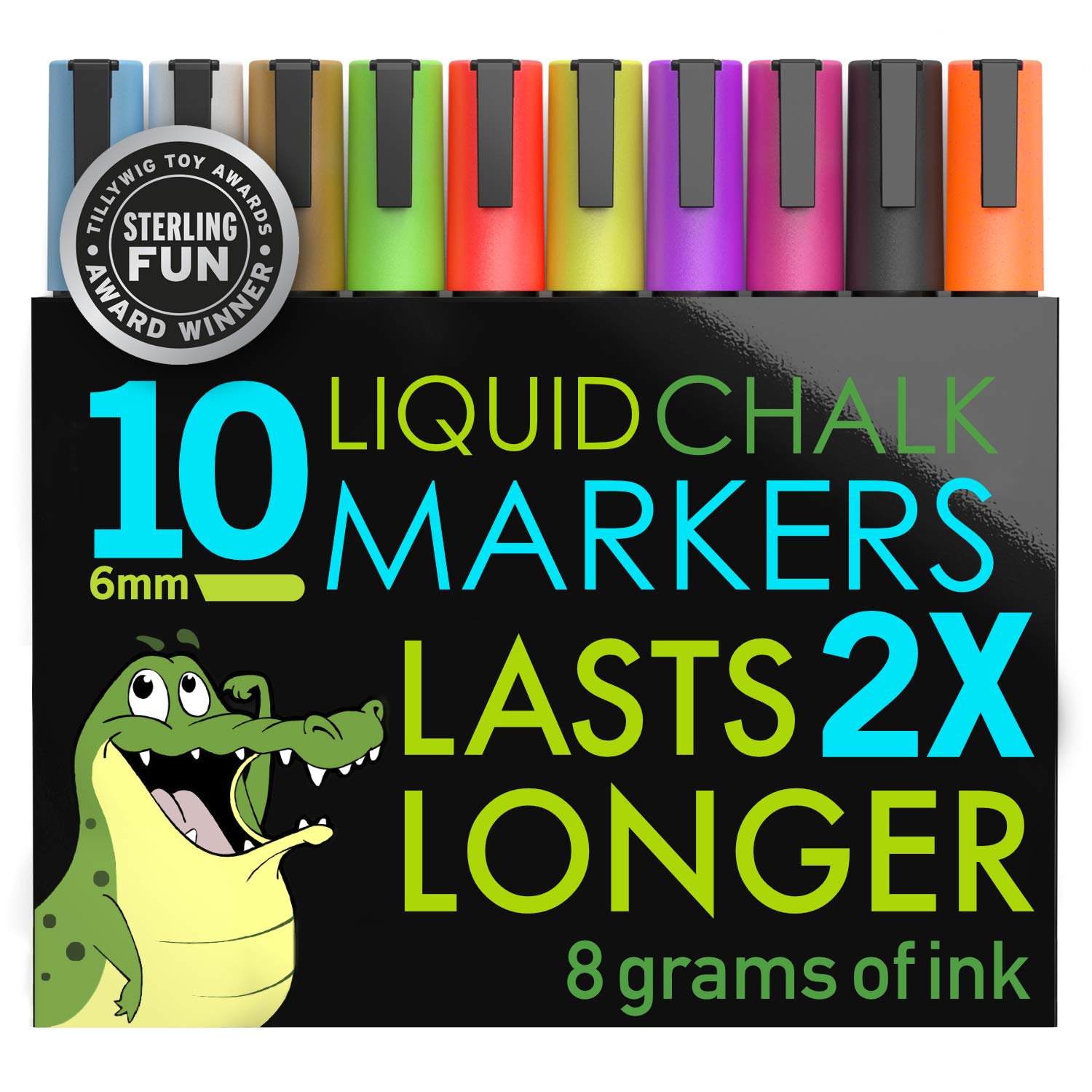
I picked these for maximum brightness — they’re the easiest way I found to make window and A-frame signage scream for attention.
Why I picked it: Ultra-bright neon tones that stand out on glass and windows.
Best for: Retail windows, pop-up market signs, and any display that needs maximum visibility.
A strong pick if you need ultra-bright neon colors.
Pros
- Extremely bright neon colors
- Dual chisel/bullet tip
- Designed for windows and glass
- Non-toxic, kid-safe formula
Cons
- Can be tougher to clean on some surfaces
- Occasional dripping in hot conditions
- Some effort needed to avoid over-pumping
My take
When I wanted maximum visibility for market displays and limo window lettering, these were the most striking markers I used. The neon palette truly pops and reads well from a distance under store lighting.
Erasing generally worked fine with a damp microfiber, but I did have to rub a bit harder on some surfaces and in one case when the surface was warm the ink dripped after pumping. That meant taking care during priming and avoiding writing on very hot glass.
Still, for storefronts and any application where brightness is the primary goal, these produce the most dramatic results.
5. Chalkola White Chalk Markers — Multi-Tip Set – Best White Variety Pack
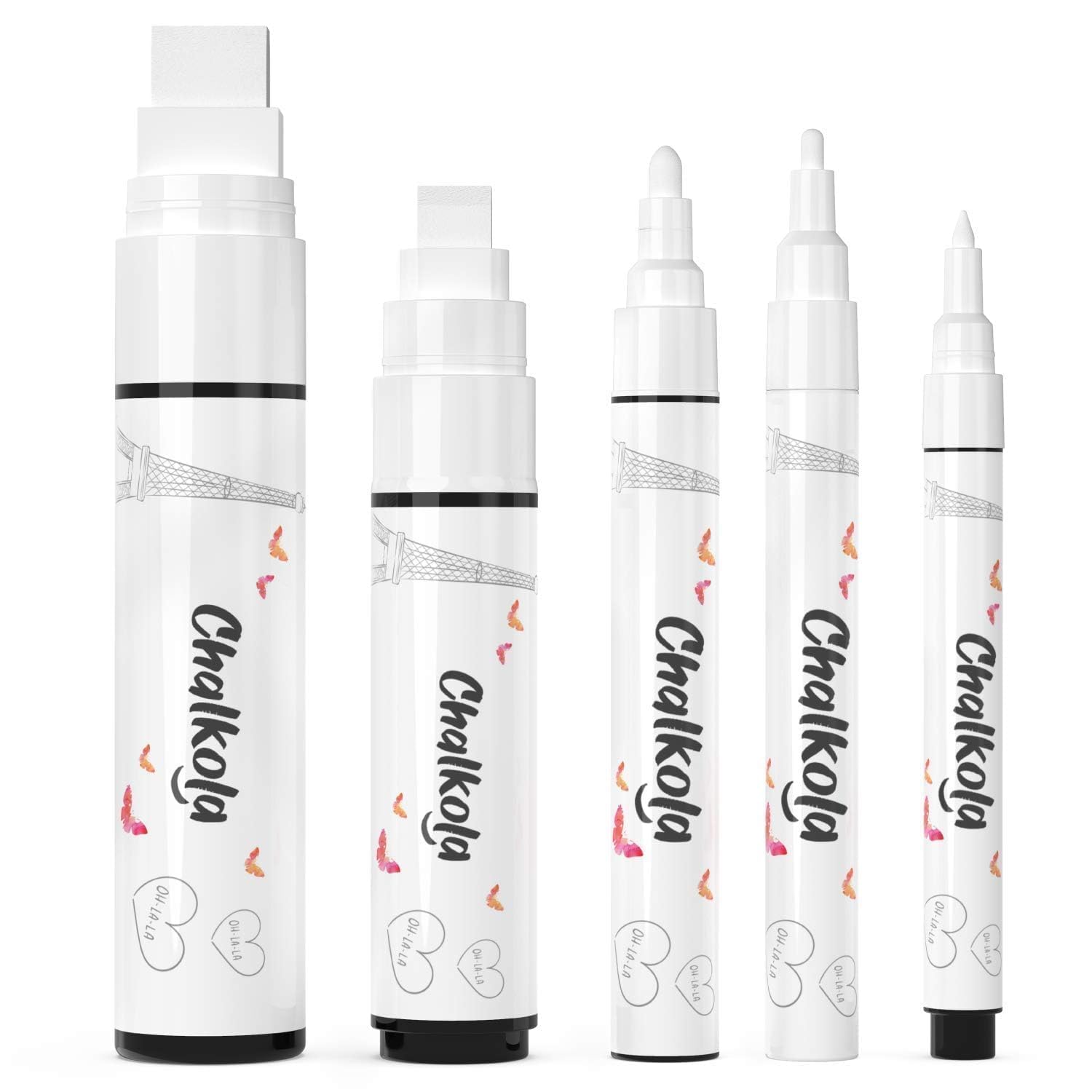
I value this set for how it covers every white-tip need — from hairline details to bold, attention-grabbing strokes.
Why I picked it: Comprehensive tip range in white lets me match line weight to the job instantly.
Best for: Wedding signs, menus, vehicle windows, and projects needing consistent white ink.
Specialized value for white-only, multi-tip versatility.
Pros
- Five tip sizes in one kit
- Rich, opaque white ink
- Washable from non-porous surfaces
- Good longevity compared with single-tip pens
Cons
- Runs slightly in wet/outdoor conditions
- Needs priming before first use
- Not for multicolor work
My take
This white-only pack is what I grab when I need crisp white lettering across different weights — fine accents with the 1mm and bold headers with the 15mm. The opacity is excellent and reads clearly on glass and blackboards.
I used these on a wedding sign and on shop windows; the different tips let me keep consistent white while changing visual emphasis. A small downside is that outdoor exposure and wet conditions can make the ink run a bit, so I tend to avoid using them overnight outside without a protective overhang.
If you want a one-stop white kit for signage and crafts, the variety here makes layout decisions much simpler.
6. Chalkola Extra-Fine White Markers — 1mm (6-Pack) – Best Extra-Fine White
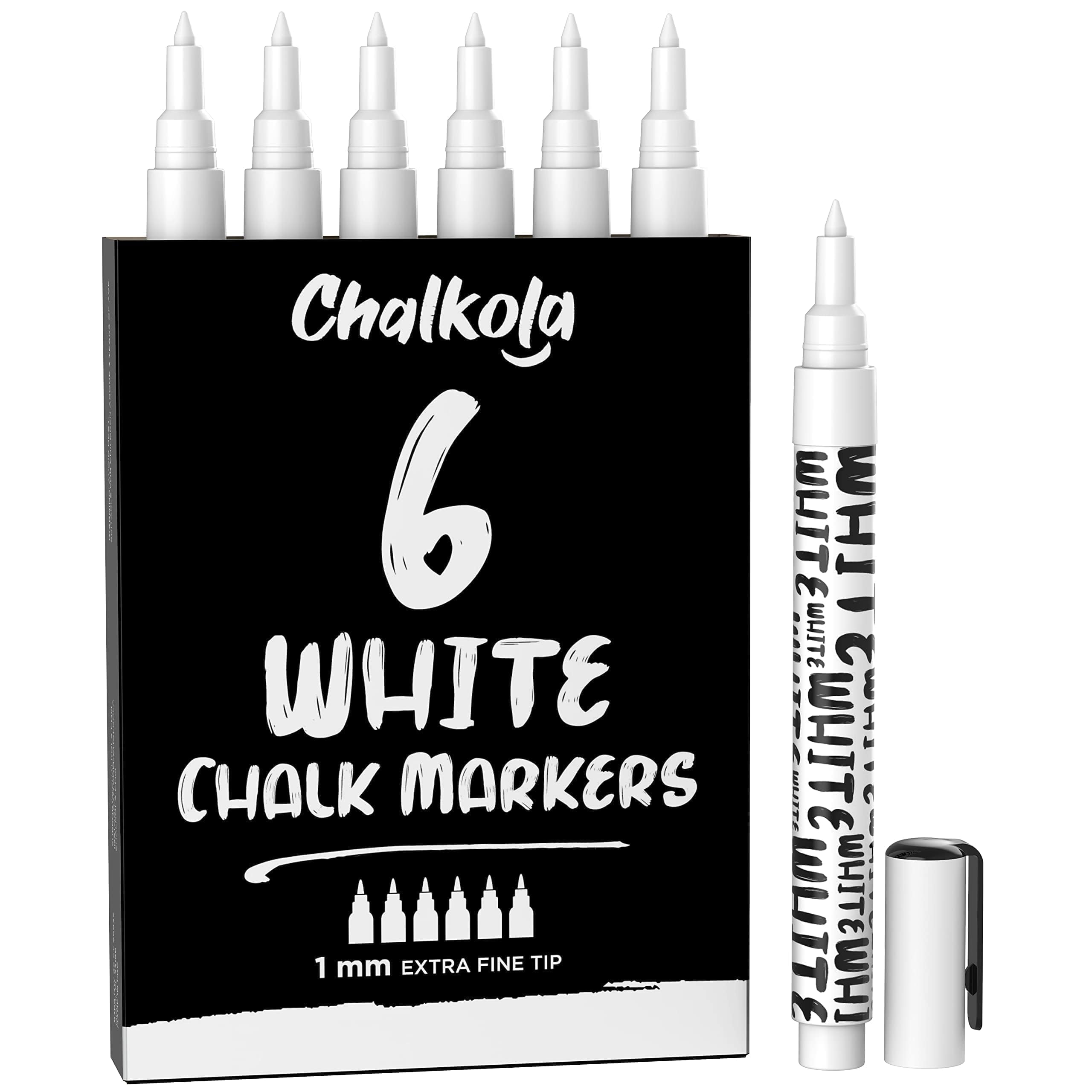
I recommend these for the purest, thinnest white lines — ideal for tight labels and tidy organizing.
Why I picked it: Pure, consistent white in a true extra-fine 1mm point for neat handwriting.
Best for: Labeling jars, small calendar boxes, and delicate craft accents.
Targeted, extra-fine option with good value for the set.
Pros
- Very fine 1mm white tip
- Writes smoothly without dragging
- Great for small labels and organization
- Quick-drying on non-porous surfaces
Cons
- Initial priming can splatter
- Markers feel extra juicy at first
- Not for bold signage work
My take
These 1mm white markers nailed the thin, clean lines I needed for spice jar labels and planner grids. They produce a crisp white that stands out without looking sloppy.
Expect a little splashing the first time you prime a fresh pen — I had that happen, so I started with lighter pressure and the problem disappeared. After that brief break-in, they wrote very smoothly and were easy to erase from glass with a damp cloth.
For anyone doing tight, neat handwriting or fine decorative accents, these are the most precise white markers I used.
How I Choose Chalk Markers
What I look for before I buy
I focus on three practical things: tip size for the job, ink opacity on black or glass, and how cleanly the marker erases from non-porous surfaces. Reversible tips and how a pen primes also change how fast I can work.
- Tip sizes: 1mm for fine detail, 3–6mm for general use, 10–15mm for bold headers.
- Ink base: water-based, non-toxic formulas wipe well; avoid porous surfaces for erasability.
- Priming: shake with cap on and pump gently to avoid drips.
- Cleanup: damp microfiber or paper towel removes marks on glass and sealed boards.
- Storage: store horizontally to help even ink distribution.
Using and caring for your markers
I always shake new markers with the cap on and prime them over scrap paper until the tip fills. When lettering on hot windows or in direct sun, I work faster and pump more cautiously to avoid dripping.
To prevent ghosting, I wipe boards regularly and avoid leaving heavy chalk ink on a surface for weeks. For stubborn residue I use a mild glass cleaner on non-porous surfaces.
- Test on a small inconspicuous area first.
- Avoid porous surfaces like raw wood — ink can become permanent.
- Keep caps on when not in use to stop tips from drying out.
- If a tip feels stuck, soak it briefly in warm water to loosen pigment.
Frequently Asked Questions
Will these markers erase from porous surfaces?
I avoid porous surfaces because these markers will often stain them; they’re designed to be erasable on non-porous surfaces like glass, mirrors, sealed chalkboards, and metal. On porous materials the ink can become permanent.
How do I prime a reversed or reversible tip?
I always shake the pen with the cap on, then press the tip gently to the paper or board until the ink saturates the nib. If the marker feels too juicy at first, I ease up on pressure until flow stabilizes.
Can I use these outside?
I use them outdoors for short-term signage, but I avoid leaving them exposed to rain or strong sun for long periods. Heat can encourage dripping and long-term exposure can make removal harder.
Are these safe for kids to use?
I used non-toxic, water-based formulas from these sets with my family projects and felt comfortable supervising kids. Still, I keep them away from very young children who might open or ingest marker liquid.
Final Take
I chose these six sets because each solves a common chalk-marker need: bold neon windows, flexible reversible tips, extra-fine detail, and comprehensive white options. I keep at least two varieties in my kit so I can switch between bright signage and delicate lettering without compromises.
If you want one versatile pack to start, I’d go with the Best Overall pick for balanced performance. For specialized work — tiny labels or striking neon storefronts — pick the fine or neon sets that match your projects.
