
I tested reel, electric, gas, and string walk-behind mowers across different yards and tasks. Here are the models I’d reach for depending on lawn size, terrain, and how much physical effort I want to put in.
I spent time mowing everything from tidy suburban lawns to overgrown fields so I could compare reel mowers, corded electric machines, gas push units, and a purpose-built string mower. Each machine has a specific strength—precision for reel mowers, lightness and simplicity for corded electrics, raw power for gas, and brush-clearing bite for the string mower.
Below I explain where each mower shines and where I’d avoid it, so you can pick the right tool for the job rather than guessing from product specs alone.
I grouped these mowers by real-world use: low-maintenance reel mowers for tidy lawns, compact electric for small yards, gas push for everyday suburban work, and a heavy-duty string model for brush and tall weeds.
1. Great States 18-Inch 5-Blade Reel Mower – Best Manual Classic
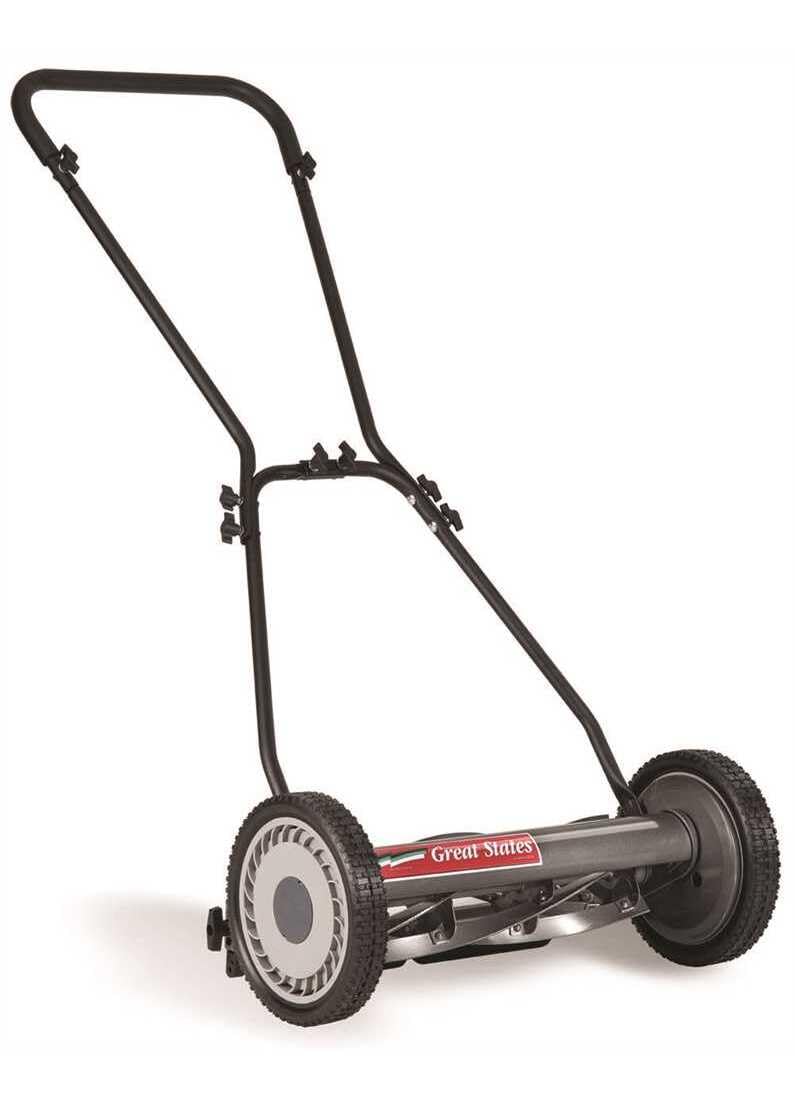
I pick this when I want a quiet, maintenance-light reel mower that gives a haircut-style finish on well-kept lawns.
Why I picked it: Sharp reel blade geometry and easy height adjustment make it fast to trim small to medium lawns precisely.
Best for: Small to medium, regularly maintained turf where a clean reel cut matters.
Very affordable with low long-term upkeep costs.
Pros
- Scissor-like precision cut
- Quiet, no fuel or battery
- Easy tool-free assembly
- Cushioned loop handle for comfort
- Adjustable cutting height
Cons
- Not for very long or weedy grass
- Requires physical effort
- Blades need periodic sharpening
My take
I assembled this in about 30 minutes with no special tools and was mowing the same night. The 18-inch five-blade reel slices grass cleanly—my lawn looked manicured in a way a rotary mower can't match.
Pushing is smooth thanks to ball-bearing blades and 10-inch wheels; I was able to handle a 1/5-acre yard without the exhaustion people warned me about. Dew or slightly damp grass didn't choke the reel during my tests.
If your grass regularly gets tall or you have a lot of weeds, expect extra passes. I sharpen the reel roughly once a season and it keeps cutting like new.
2. Sun Joe 14-Inch Electric Push Mower – Best Lightweight Electric
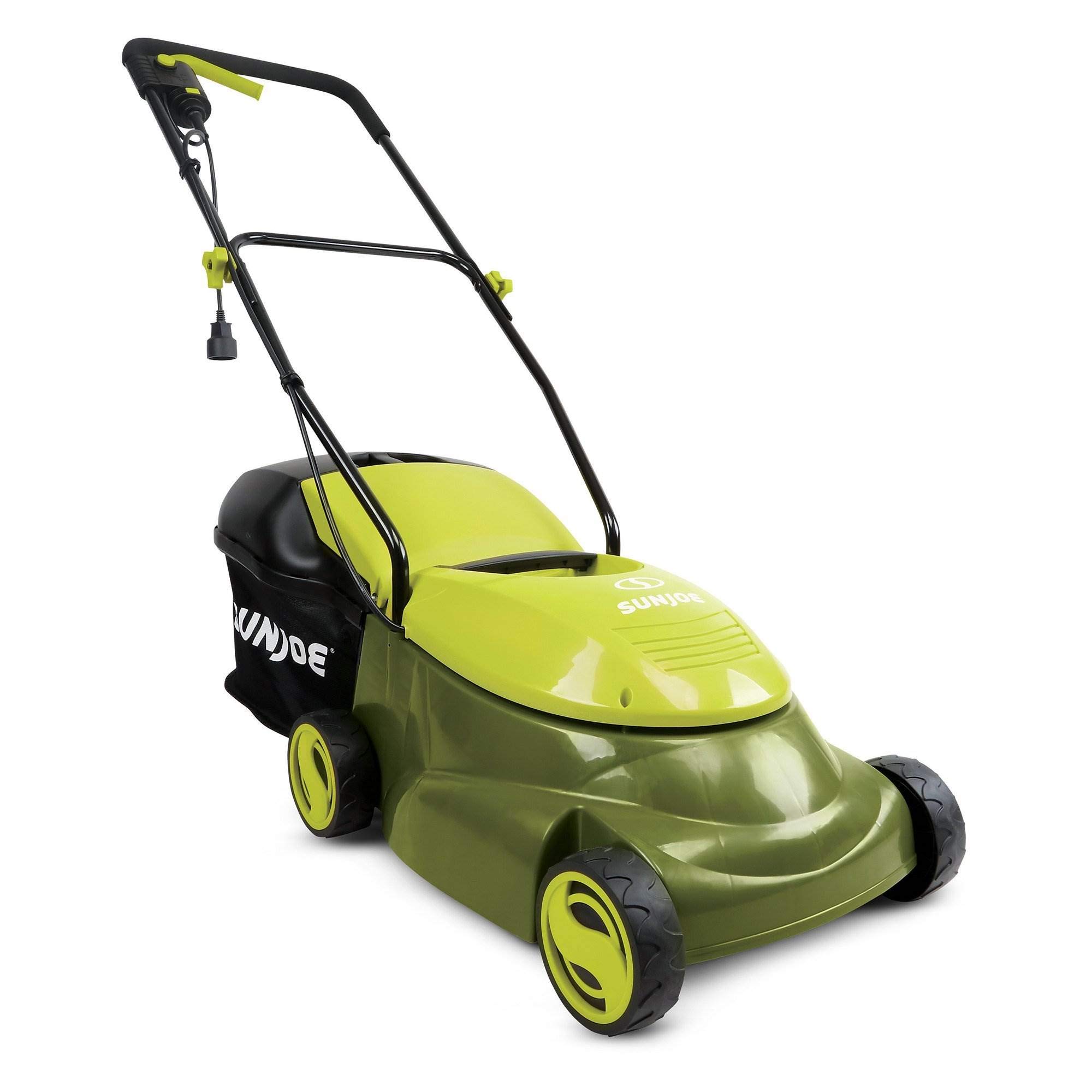
I reach for this compact corded mower when I need a light, quiet machine for small yards and tight spaces.
Why I picked it: It’s light, easy to push, and the detachable bag makes disposal straightforward for small lawns.
Best for: Small, regularly mowed yards and tight areas where maneuverability matters.
An economical choice for small-lot maintenance.
Pros
- Very lightweight and maneuverable
- Quiet electric operation
- Detachable grass catcher
- Three height positions
- Simple maintenance — no gas or oil
Cons
- Cord limits range
- Narrow 14-inch path
- Lowest setting can scalp lawn
My take
This mower surprised me with how easy it is to push. At under 30 pounds it moves into tight corners and stores in small spaces, which I appreciated when I had to carry it to the basement.
The 13-amp motor handles regularly cut turf confidently; I used it on areas up to about a quarter-acre with frequent stops to reposition the cord. I found the height adjustments quick to change and the hard-top rear bag easy to remove.
Take care with the shortest blade setting—on my lawn it tends toward scalping, so I keep it on a mid or high setting for a safer finish.
3. Scotts 20-Inch 5-Blade Reel Mower – Best Wide Manual
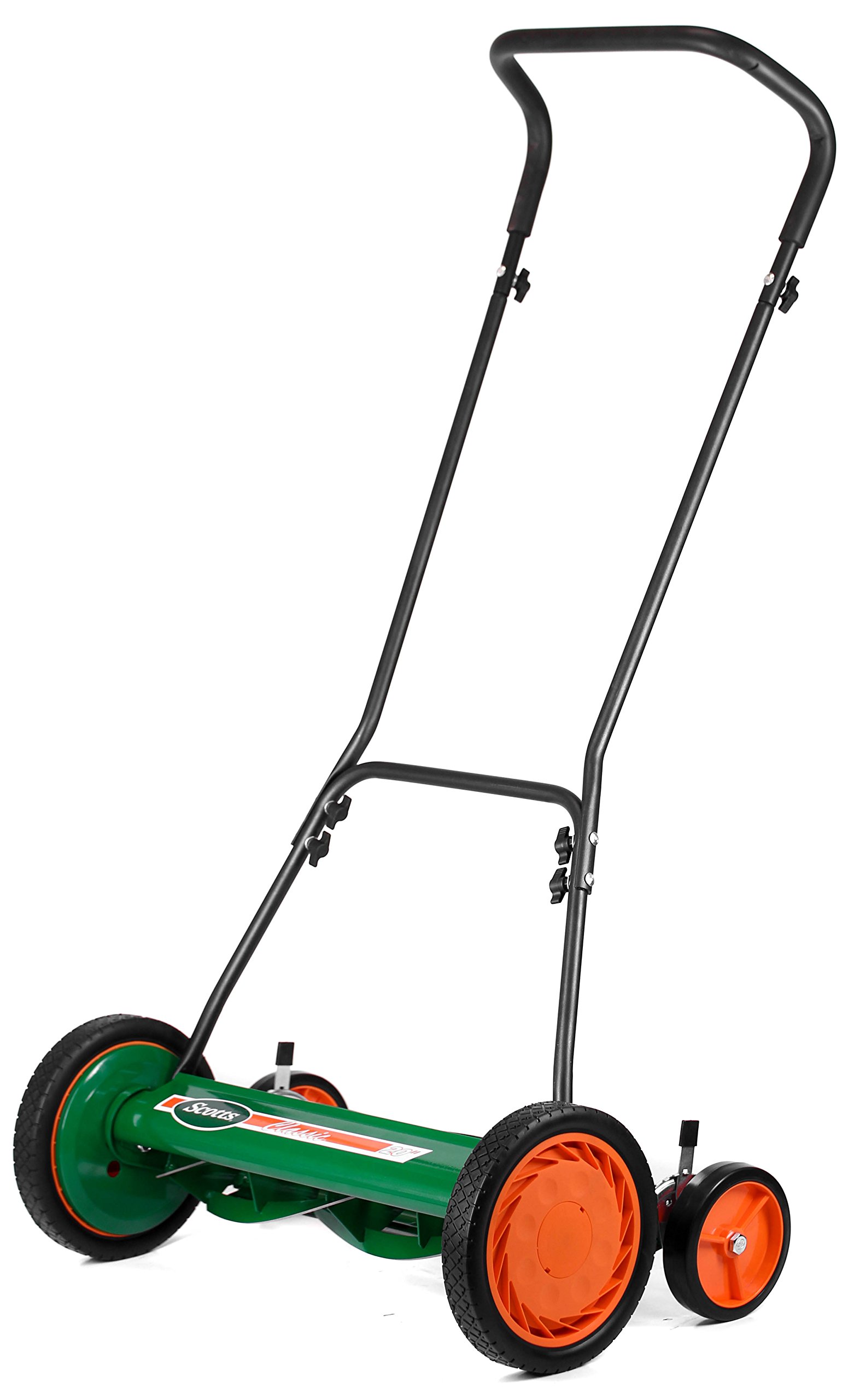
When I want reel mower speed without extra passes, the 20-inch Scotts cuts a wider swath and tracks well over uneven ground.
Why I picked it: Wider cutting width and dual-tracking wheels reduce mow time while keeping that precise reel cut.
Best for: Medium lawns where you want quick, precise passes and lower noise.
A solid mid-range manual mower for efficiency and quality.
Pros
- Wide 20-inch cutting path
- Quick-snap height adjusters
- Dual-tracking wheels boost maneuverability
- Heat-treated alloy blades
- Tool-less assembly
Cons
- No grass catcher included
- Push-only—uphill is harder
- Not for overgrown yards
My take
The 20-inch width makes a real difference: I cut large swaths and reduced the number of passes compared with narrower reel mowers. It assembled quickly and felt well-engineered out of the box.
Blade action is very precise—the kind of cut that leaves grass looking healthy because it doesn’t tear. Dual tracking wheels make it easier to push over slightly uneven spots, though steep uphill sections still demand more legwork.
If your lawn is neglected or full of tall weeds, plan on several passes or trimming before using this reel mower.
4. Scotts 14-Inch 5-Blade Reel Mower – Best for Tight Spaces
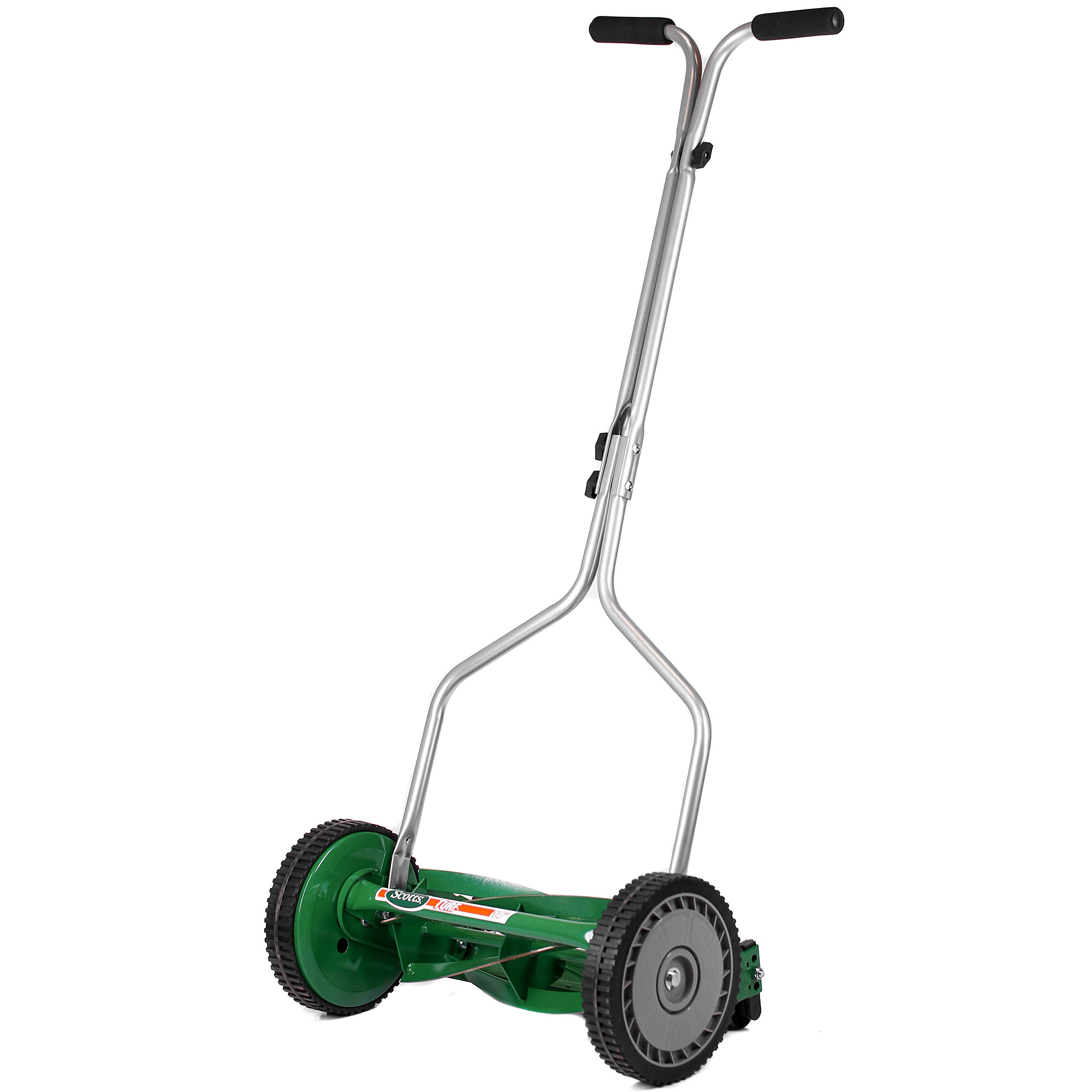
I use this compact Scotts when storage space is tight and the lawn is small and well-maintained.
Why I picked it: Small footprint and T-style handle make it easy to store and maneuver around obstacles.
Best for: Very small yards, narrow strips, and users who prefer the smallest reel mower.
The most budget-friendly reel option for compact lawns.
Pros
- Compact and easy to store
- Heat-treated steel blades
- Comfortable cushioned T-handle
- Quiet operation
- Simple height adjustment
Cons
- Small wheels can jam on debris
- Not for overgrown grass
- Limited cutting width
My take
This little reel mower is a joy for small yards. Assembly took me about ten minutes and it’s light enough to stow in a small shed.
It cuts cleanly on maintained turf and the quick-snap height adjusters make dialing in the right height fast. I did find it can jam on sticks or thick clumps—clearing debris before mowing fixed that every time.
For lawns that grow tall between cuts, expect extra work. Reel mowers work best when you mow frequently.
5. Earthquake 22-Inch Walk-Behind String Mower – Best for Brush & Tough Terrain
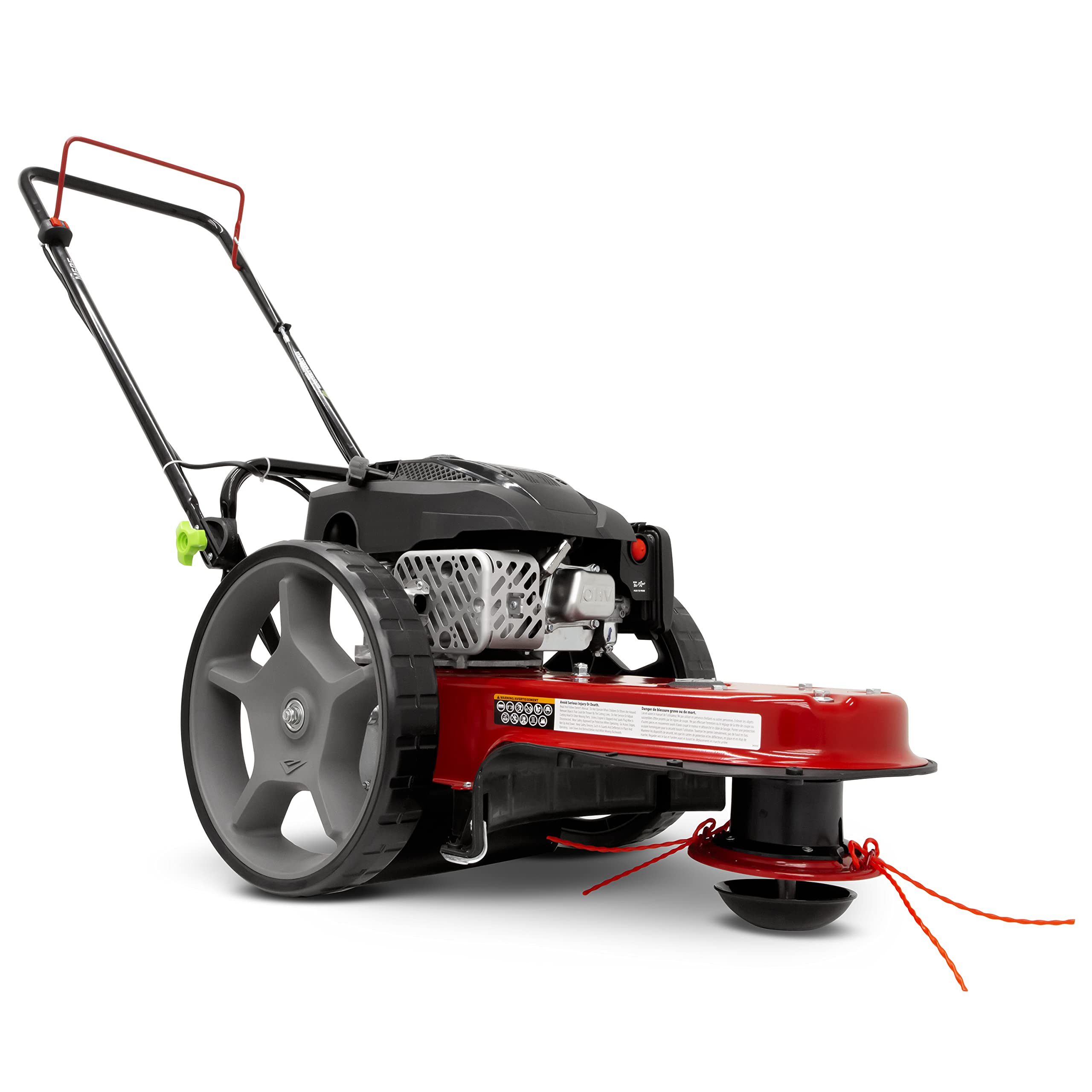
When brush, tall weeds, and uneven ground are the job, I pick the Earthquake string mower for its power and wide clearing swath.
Why I picked it: A 160cc engine, heavy-duty line, and big wheels let me clear woody weeds and dense patches that other mowers stall on.
Best for: Overgrown lots, brush clearing, and properties with nettles or young saplings.
A more expensive option built for heavy-duty clearing rather than trim aesthetics.
Pros
- Powerful 160cc engine
- Wide 22-inch cutting swath
- Large wheels handle rough ground
- One-piece steel deck
- Minimal assembly out of box
Cons
- Heavier than typical mowers
- String can be tough to remove
- Some hardware feels less robust
My take
This machine is pure workhorse—out of the box it required only unfolding the handles and adding oil. The large wheels and torque from the Viper engine let me walk through patches of blackberry and tall weed fields without bogging down.
I used heavier trimmer line and it chewed through woody stalks up to about one-half inch and cleared an acre-and-a-half of overgrown field with steady work. Restringing can be fiddly—I keep needle-nose pliers on me to speed the job.
It’s not a precision lawn mower. If you need to tidy turf, a rotary or reel is better. For reclaiming acreage or mowing brush, this is the tool I depend on.
6. SENIX 21-Inch Gas Push Mower (140cc Briggs & Stratton) – Best Gas Push
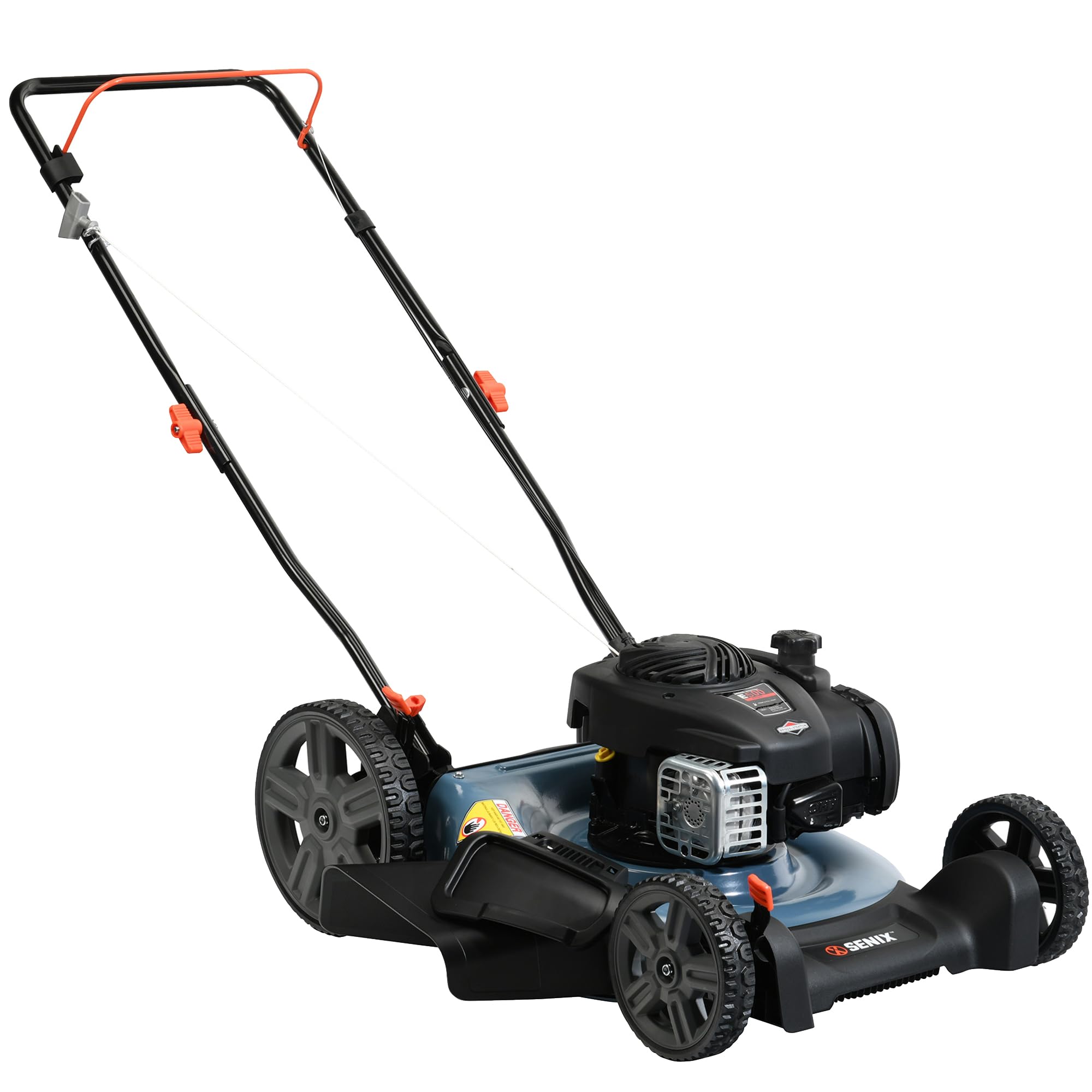
I use this when I want a reliable gas push mower that starts easily and offers mulching and side-discharge options.
Why I picked it: Briggs & Stratton engine, 2-in-1 deck, and foldable handles make it a practical gas-powered workhorse for small to mid yards.
Best for: Homeowners who need gas power for thicker grass but want a compact push mower.
A practical gas option with a good balance of features and value.
Pros
- Briggs & Stratton 140cc engine
- 2-in-1 mulching and side discharge
- Six cutting heights
- Includes starter oil
- Foldable handles for storage
Cons
- Some users report handle fastener wear
- May need air-filter attention after transport
- Requires routine gas maintenance
My take
Out of the box the mower was nearly ready: I added the included oil, attached the handle, and it started on the first pull after a few primer attempts. The 21-inch deck cuts a tidy swath and the dual-lever height adjustments are intuitive.
It feels light but sturdy while I mow a quarter-acre property. I tested both mulching and side discharge; both dispersed clippings without clumping when set correctly.
One time after storage where the unit had been on its side I experienced sputtering; cleaning and drying an oil-soaked air filter corrected the issue. After a year of use I did have the orange handle fasteners strip, which made maneuvering less convenient—so I recommend checking those fasteners periodically and keeping a spare set handy.
7. SENIX 22-Inch Self-Propelled Mower (170cc) – Best Self-Propelled
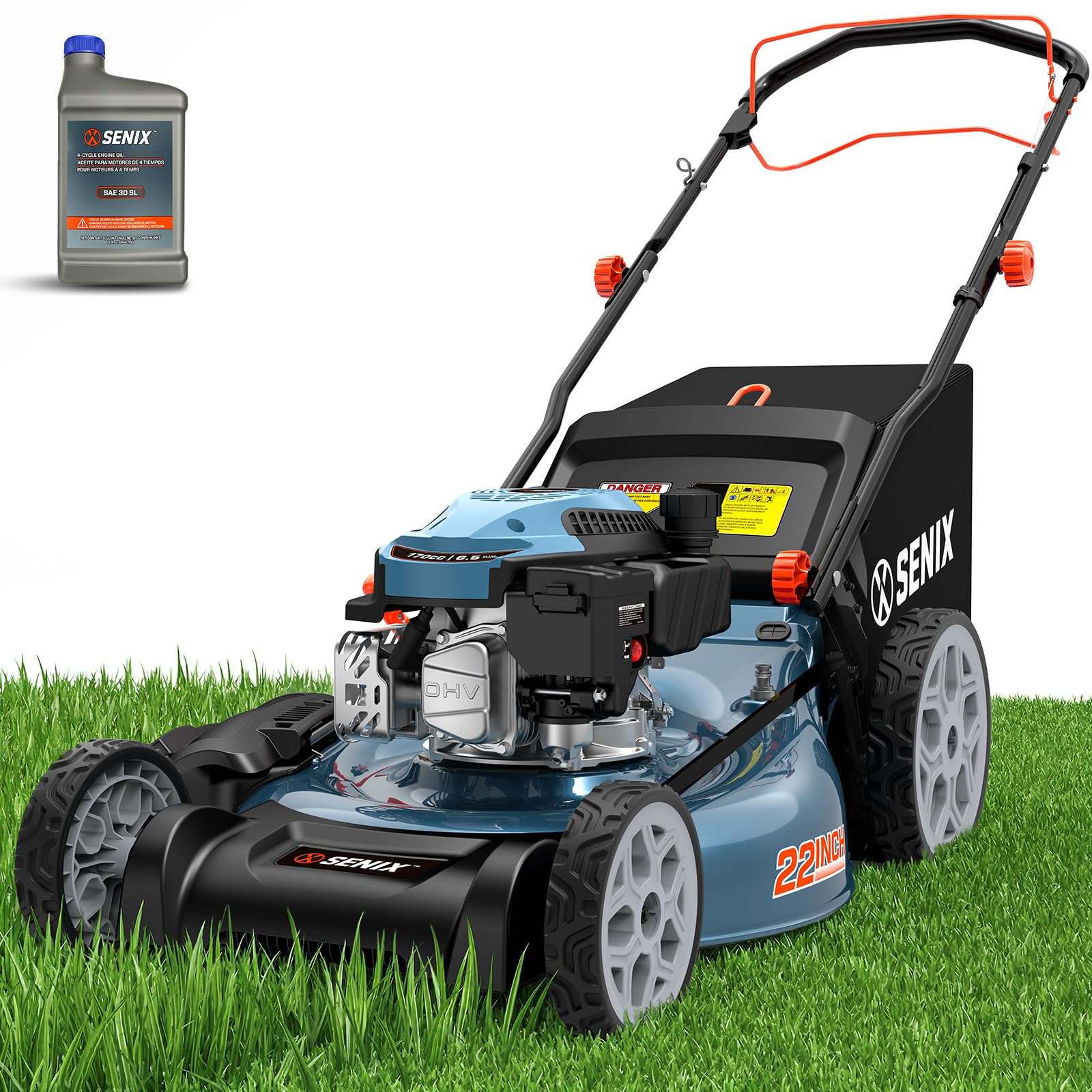
I reach for the self-propelled SENIX when I want a powerful, efficient cut across slopes and larger lawns without pushing as hard.
Why I picked it: Rear-wheel drive, a 170cc OHV engine, and a vortex deck translate into fewer clogs and faster mowing for demanding yards.
Best for: Medium to larger yards, hilly terrain, and users who prefer a push-assist.
A higher-performance option built for faster, less-fussy mowing.
Pros
- Strong 170cc OHV engine
- Rear-wheel drive for slopes
- 22-inch manganese steel blade
- Vortex deck reduces clogging
- Large 11" rear wheels
Cons
- Louder than electrics
- May smoke if overfilled with oil
- Heavier assembly lift
My take
Assembly was simple—four screws and basic setup—and the mower started on first pull for me. The self-propelled rear-wheel drive made tackling banks and pond slopes effortless compared with a push-only mower.
The vortex tunnel deck actually lifted grass into the blade cleanly and I had fewer clogs than with other gas mowers I've used. The 22-inch cutting width and hardened blade accelerated mowing across medium-sized yards.
On one occasion I saw brief bluish-white smoke that pointed to an overfilled oil condition; after correcting the oil level it ran cleanly. For heavy-duty, frequent mowing across variable terrain this model is what I’d choose.
How I Choose a Walk-Behind Mower
Key things I look for before I buy
I start by matching the mower type to the job. Reel mowers give the best, healthiest cut on maintained turf. Corded electrics are light and simple for small yards. Gas push mowers offer power for thicker grass, and string walk-behinds clear brush and overgrowth.
Next I consider cutting width and terrain. Wider decks reduce passes but can be harder to maneuver in tight spots. Larger wheels and self-propel drive help on slopes and rough ground.
I always check serviceability and included items. Mowers that ship with oil or a starter line save time, and accessible filters and blades reduce future headaches.
- Cutting width: wider = fewer passes, narrower = more control
- Power source: manual, corded electric, gas, or string
- Deck type: mulching, bagging, or side discharge
- Wheels and drive: big wheels and RWD help on slopes
- Maintenance: blade sharpening, air filter access, and spare parts availability
Frequently Asked Questions
Can reel mowers handle tall or overgrown grass?
I don’t use reel mowers as a first pass on very tall grass. They excel on lawns I mow regularly. For growth over 3–4 inches I either trim it down first with a rotary or do multiple, progressively lower passes with the reel.
Is a corded electric mower practical for a typical suburban yard?
For small yards and regular cutting, yes—I’ve found corded electrics are light, quiet, and low-maintenance. Expect to manage an extension cord and to make more passes than with a wider gas deck.
When should I choose a string walk-behind over a regular mower?
I choose a string walk-behind to clear tall weeds, brush, or rough acreage where the grass is tangled with woody stalks. It’s not for manicured lawns but is indispensable for reclaiming overgrown property.
How often should reel blades be sharpened?
From my experience, sharpening once per growing season keeps a reel mower cutting crisply. If you notice ragged cuts or poor performance, sharpen sooner.
Final Take
I picked these seven because each excels at a different task: reel mowers for precision, the Sun Joe for light, corded convenience, SENIX push and self-propelled models for dependable gas power, and the Earthquake string mower for heavy brush work.
If you want the lowest upkeep and the healthiest-looking turf, start with a reel mower. If you need raw clearing power, reach for the string model. For everyday suburban mowing where power and convenience matter, a gas push or self-propelled mower is the best compromise.
Use the short summaries and my hands-on notes above to match a mower to your yard and the kind of work you actually do.
