
I tested waterproof coatings, liquid rubber membranes, penetrating stone sealers, and crack fillers so you can pick the right asphalt sealer for your driveway needs.
I tackled a range of driveway and pavement problems while testing these products: water infiltration, hairline cracks, worn aggregate, and the need to preserve natural stone. My goal was to find products that are practical to apply, durable under traffic and weather, and suited to specific tasks—waterproofing, full-surface membranes, penetrating protection, and targeted crack repair.
Below I explain what each product is best for, how it performed in real-world use, and what application details matter if you’re sealing asphalt or treating adjacent concrete and stone.
I compared these sealers by substrate compatibility, application method, odor and handling, coverage per gallon, and durability in outdoor conditions to recommend the right product for different driveway needs.
1. Flex Seal Liquid Rubber Coating – Best for Versatile Waterproofing
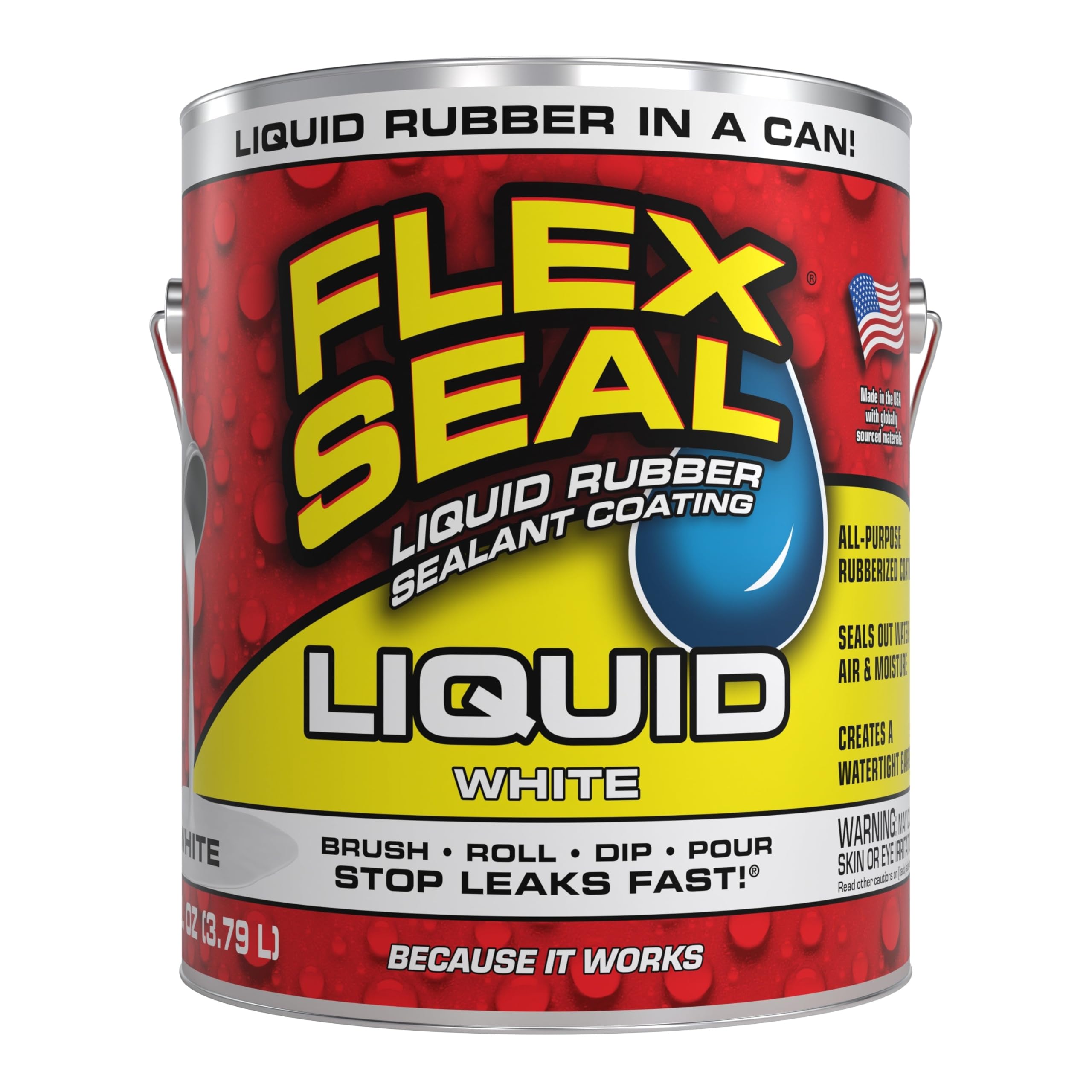
A thick, brushable liquid rubber that makes a flexible, waterproof membrane for localized repairs and waterproofing features.
Why I picked it: I picked this for its roll-or-brush application and true rubberized finish that creates a waterproof barrier on awkward surfaces.
Best for: Waterproofing basins, patching deck leaks, and spot-sealing areas that need a flexible rubber coating.
Gallon size is positioned as a specialty, mid-to-premium option for targeted waterproofing jobs.
Pros
- Brush, roll, pour, or dip application
- Creates a flexible, waterproof rubber membrane
- Self-levels and builds up in one coat
- UV and chemical resistant
Cons
- Strong fumes—needs ventilation
- Very thick—can be slow to spread
- White finish won't match asphalt
My take
When I used Flex Seal Liquid I appreciated that it isn’t just a spray — I could brush and pour it where I needed a real rubber layer. For irregular details and water features this was ideal: it laid down thick, self-leveled in warm conditions, and cured to a flexible, watertight film.
Application felt straightforward with a two-inch brush and some spreading; because the material is viscous it takes a little effort to move, but that thickness is also what gave me confidence the coating would bridge gaps and stop leaks. I noticed strong fumes during application, so I worked with good ventilation and kept pets away until it cured.
I wouldn’t pick this as my color-matched driveway sealer—its white finish and rubber look are better for waterproofing or patching rather than cosmetic asphalt work. For stopping water intrusion and creating a long-lasting rubber skin on odd shapes, though, this product performed very well.
2. Liquid Rubber Waterproof Sealant – Best Heavy-Duty Sealant
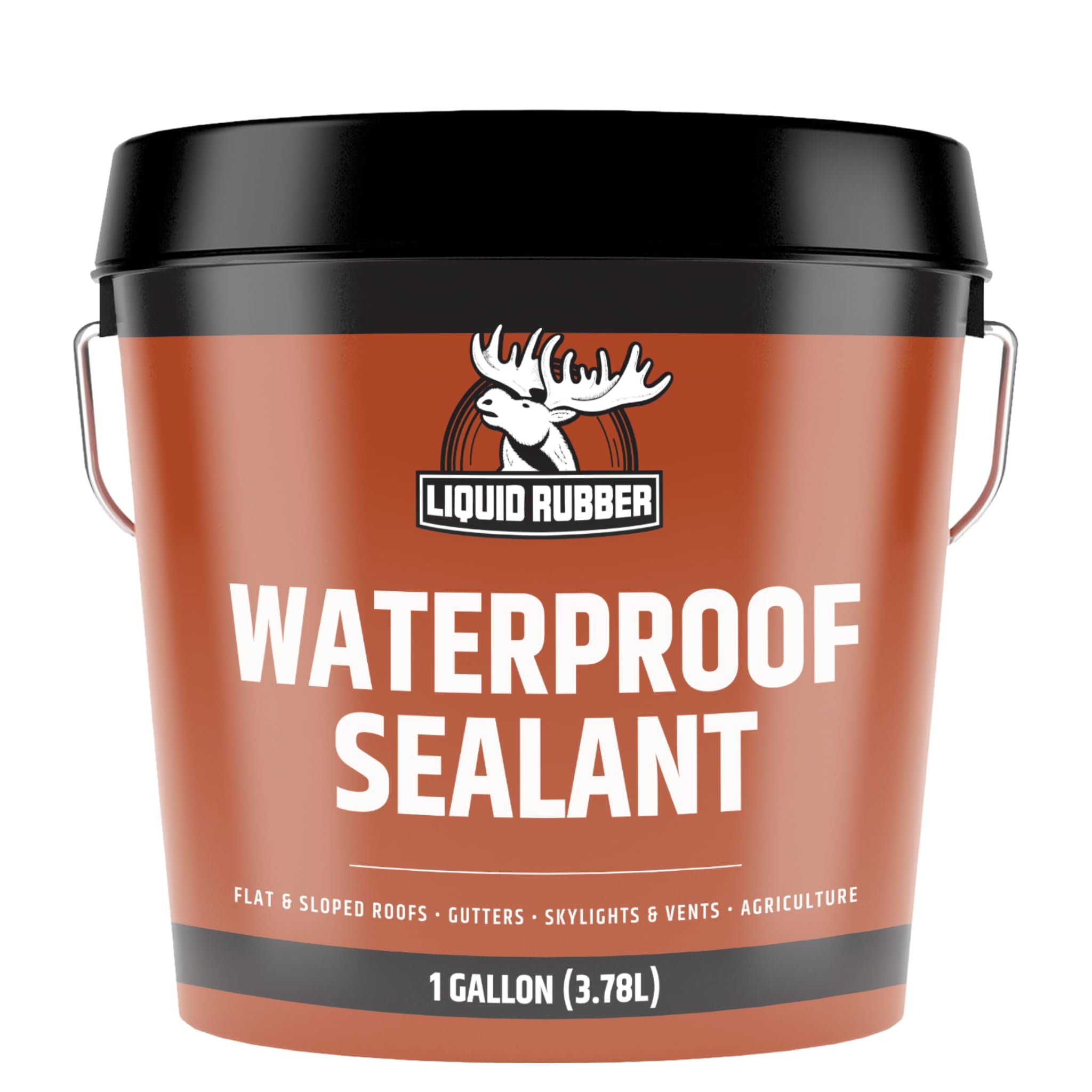
A bitumen-based, water-based liquid rubber that forms a durable membrane for roofs, foundations and standing-water surfaces.
Why I picked it: I chose it for large-area waterproofing where flexibility and professional membrane specs matter.
Best for: Sealing flat or low-slope areas, foundations, and heavy-duty repairs that need a flexible, long-lasting membrane.
Tends toward the premium end but is built for multi-coat, professional-grade applications.
Pros
- High elongation—handles movement well
- Water-based with low odor
- Engineered coverage specs for membranes
- Durable against UV and heat
Cons
- Requires multiple heavy coats
- Higher material cost for full jobs
- Dries black—limited color options
My take
I used Liquid Rubber where I needed a true waterproof membrane. It brushes and rolls like a thick paint and builds up into a unified bitumen-based layer that resists cracking as surfaces move.
The water-based formula was a definite advantage: application produced much less biting odor than solvent-based tars, and it dried predictably. Coverage recommendations are conservative—plan for several coats to reach the membrane thickness you want. On a solar tank I tested earlier, it stood up to high temperatures and prolonged exposure without leaking.
If you’re treating a driveway or adjacent low spots and want a robust, professional-style membrane, this product delivered the durability and flexibility I look for—at the cost of time and multiple coats.
3. Nanoprotect Concrete & Stone Sealer – Best for Preserving Concrete & Stone
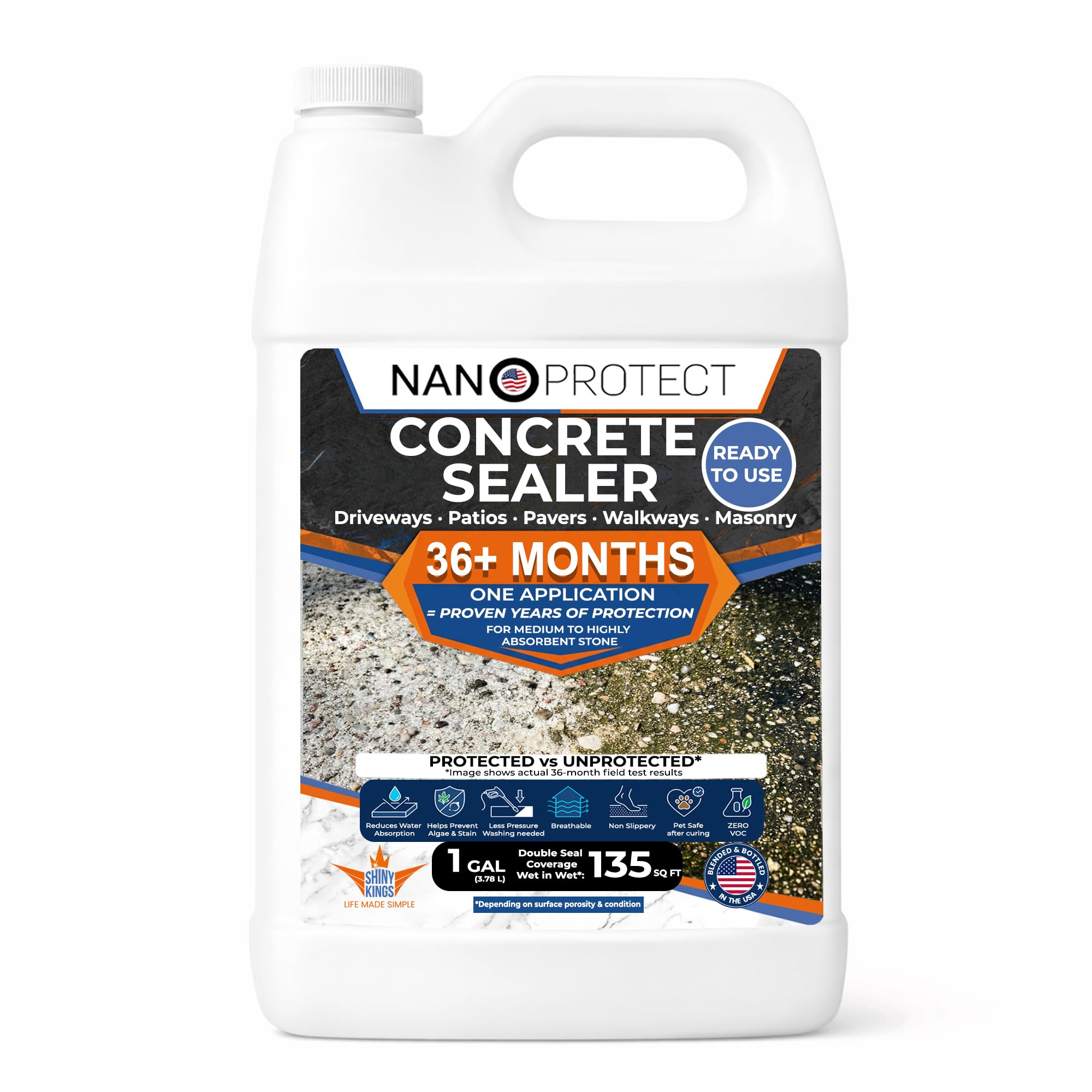
A penetrating sealer for absorbent concrete, pavers, and natural stone that reduces water absorption and staining without changing appearance.
Why I picked it: I selected this for driveways and patios where I wanted internal, invisible protection rather than a surface film.
Best for: Porous concrete, pavers, and natural stone where maintaining the natural look matters.
Ready-to-use gallon provides good coverage for absorbent surfaces—coverage varies by porosity.
Pros
- Deep-penetrating, invisible protection
- Long-lasting field-tested performance
- Maintains natural surface appearance
- Easy spray application
Cons
- Not for non-absorbent surfaces
- Doesn't enhance color or gloss
- Coverage depends on porosity
My take
For my porous concrete and paver areas I wanted a sealer that worked from the inside out. Nanoprotect soaked into the pore structure and left the surface looking unchanged while repelling water. Rain beads were noticeable without any glossy film.
Application with a pump sprayer was straightforward using a wet-on-wet technique. Dry time was reasonable, and the manufacturer’s long-term testing matched my experience: treated surfaces stayed cleaner and resisted staining longer than untreated patches.
This isn’t the product I’d use to darken or gloss a driveway—its strength is invisible, long-term protection for absorbent materials.
4. Red Devil Asphalt Crack Filler – Best for Filling Cracks
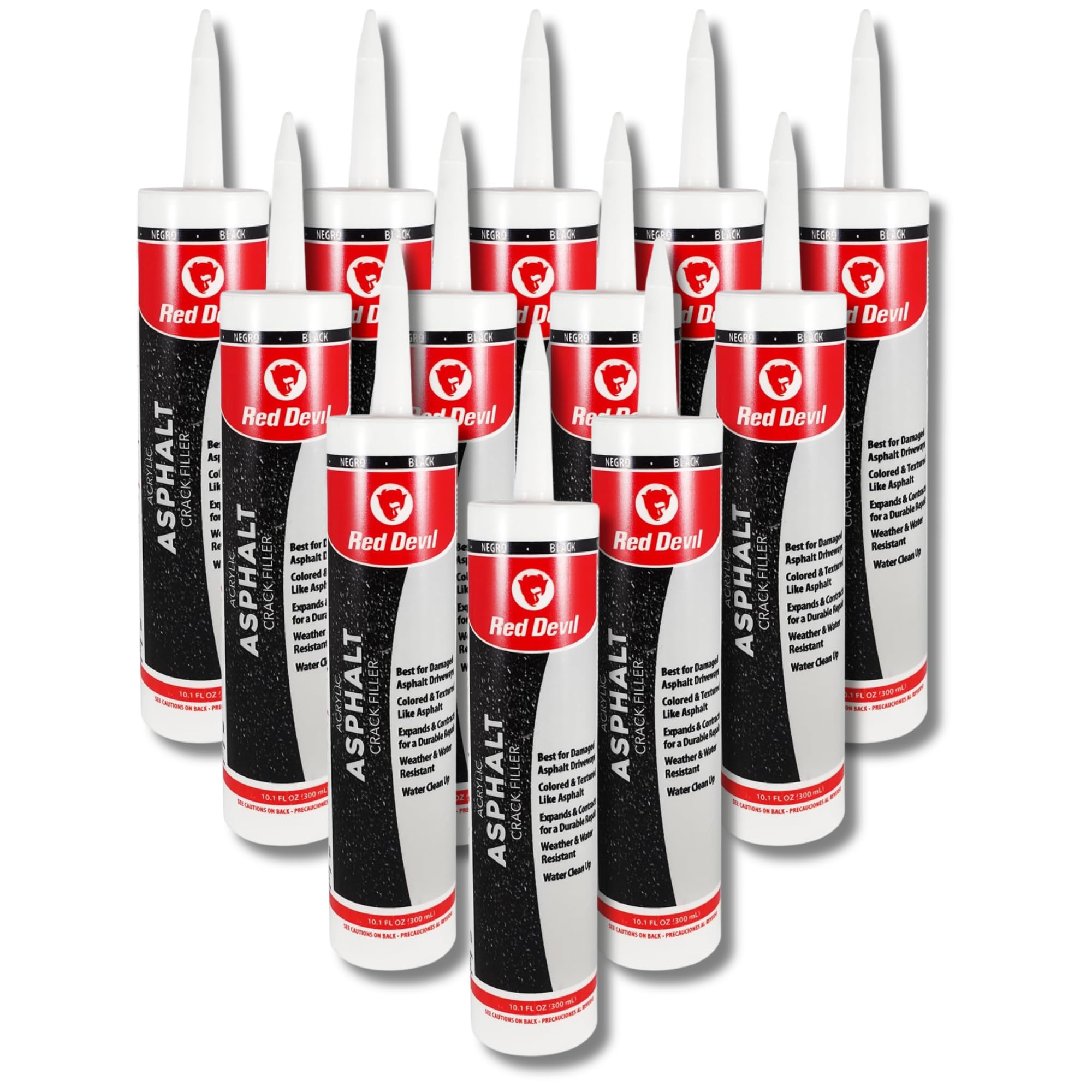
An acrylic, black crack filler in caulking cartridges that matches asphalt texture and adheres to damp surfaces for quick crack repairs.
Why I picked it: I relied on this for fast, cartridge-fed crack filling that blends with asphalt and stays flexible.
Best for: Hairline and medium cracks in driveways where quick, controlled application is needed.
Cost-effective for small repairs; buying tubes in multi-packs makes sense for larger jobs.
Pros
- Asphalt-matching texture and color
- Fits standard caulking guns for precision
- Adheres to damp surfaces
- Remains flexible with temperature changes
Cons
- Small cartridge—many tubes for large jobs
- Initially light gray before darkening
- Tube storage can be tricky after opening
My take
When I filled cracks with the Red Devil cartridges the process was precise and clean—standard caulking guns give excellent control so I could pack cracks without mess. The filler flows steadily and levels nicely.
It blends into the asphalt once cured (it may look light gray at first), and it stays flexible through seasonal movement. For a driveway riddled with cracks I ended up using multiple tubes, which is why I recommend this as the go-to for patching rather than sealing an entire driveway.
Overall, for routine crack maintenance and targeted repairs this product is fast, effective, and easy to use.
How I Choose a Driveway Sealer
Match the product to the substrate and goal
I always start by identifying what I’m treating: porous concrete and pavers, raw asphalt, or a roof/low-slope area adjacent to the driveway. The wrong chemistry can fail quickly—penetrating sealers suit absorbent stone and concrete, while rubberized membranes or bitumen-based products are better for waterproofing and heavy-duty membranes.
If your aim is cosmetic darkening of asphalt, choose a surface resurfacer or color-enhancing sealer rather than a penetrating stone sealer.
- Use penetrating sealers on porous concrete, pavers, and stone.
- Use liquid rubber or bitumen formulas for standing water and membranes.
- Use cartridge fillers for crack-by-crack repairs.
Application method and logistics
I factor in how easy the product is to apply. Pump-sprayers and rollers are great for wide areas; cartridges and caulk guns are essential for precise crack work; brushable rubbers handle detail and verticals.
Ventilation and temperature matter. Water-based formulas let me work with less odor, while thick rubber coatings often need warm, dry conditions to self-level and cure correctly.
- Brush, roll, or pour for detail and odd shapes.
- Spray or roll for large, flat areas.
- Use a caulking gun for cracks and joints.
Durability, coats, and coverage
I read coverage specs and plan coats accordingly. Membrane systems usually require several heavy coats; penetrating sealers often require less material but depend on porosity.
For long-term performance I budget more material than the bare minimum—adding another coat or two often extends service life significantly.
- Check manufacturer coverage per gallon and plan for extra.
- Expect multiple coats for membrane-grade protection.
- Penetrating sealers’ coverage varies with surface porosity.
Health, odor, and cleanup
I consider how intrusive the product will be during application. Water-based products reduce harsh odors and are easier to work with in confined spaces. Thick rubber coatings can have stronger fumes and require PPE and ventilation.
Clean tools promptly after use—many of these products cure into tacky films that are hard to remove once set.
- Use ventilation and PPE for solvent-heavy or strong-odored products.
- Water-based options generally simplify cleanup and reduce smell.
- Have solvent or manufacturer-recommended cleaner available for tools.
Frequently Asked Questions
Can I use a liquid rubber product directly on an asphalt driveway?
I have used liquid rubber on low spots and transitions near asphalt; it forms a waterproof membrane. For cosmetic resurfacing of the whole driveway, though, I prefer asphalt-specific sealers or coatings. Use liquid rubber when you need a durable, flexible membrane rather than a color-matched finish.
How long will these products typically last on a driveway?
From my experience, lifespan depends on product type and traffic: penetrating sealers can protect for multiple years without changing appearance, rubber membranes last longer under standing-water conditions, and crack fillers typically need touch-ups every couple of years in high-traffic areas.
Do I need to fill cracks before applying a full-surface sealer?
I always fill active cracks with a cartridge or patch product first. That gives the surface sealer or membrane a uniform substrate and prevents water from entering and re-damaging the base layer.
Final Take
I recommend choosing by problem type: use Red Devil cartridges for targeted crack repair, Nanoprotect for invisible protection on absorbent concrete and stone, Liquid Rubber for heavy-duty membranes, and Flex Seal Liquid for flexible waterproofing on unusual shapes.
Plan for surface prep, the right application method, and the number of coats—doing that upfront is the best way I’ve found to make any sealer last.
