
I tested a range of corded, cordless, and gas blowers to find tools that actually make yard cleanup faster and less tiring. These five options cover small patios up to acreage work.
I spent time running each blower across patios, driveways, garden beds and larger yards so I could match real-world performance to the spec sheet. I focused on how easy each unit was to handle, the kind of debris it moved well, and what trade-offs I had to accept—weight, noise, and whether I needed batteries or gas.
If you want a lightweight plug-and-play tool for small areas, a powerful cordless for big piles, or a backpack gas unit for acreage, I explain where each blower fits and why I picked it.
I compared airflow (CFM), nozzle control, ergonomics, and power source so you can pick the blower that fits how you actually work in the yard.
1. Sun Joe SBJ597E Corded Leaf Blower – Best for Small Yards
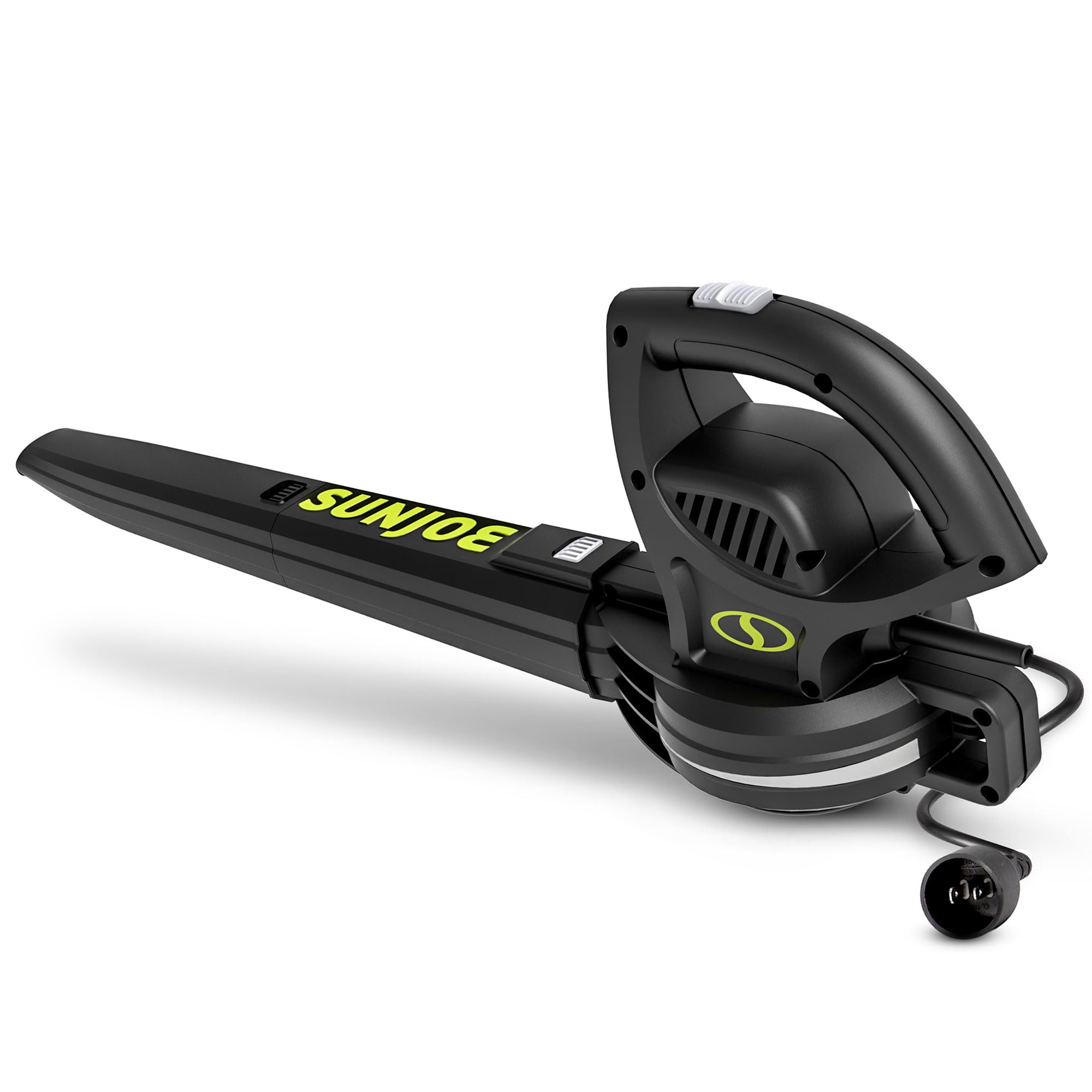
I keep this light Sun Joe on hand for quick cleanups around porches, patios and potted plants where weight and control matter more than raw power.
Why I picked it: It’s incredibly lightweight and easy to wield in tight spaces, so I can clean for longer without shoulder fatigue.
Best for: Small yards, porches, patios, and delicate areas near plants.
Very affordable corded option for occasional cleanup.
Pros
- Very lightweight and easy to handle
- Simple plug-and-play operation
- Gentle enough around flower beds
- Low amperage good with long cords
Cons
- Needs an outdoor extension cord
- Not ideal for heavy, matted debris
- No variable speed control
My take
I used the Sun Joe on a small backyard and around a fenced porch; its 6-amp motor produces a respectable blast for its size and the unit stayed comfortable in my hand during long passes. The short nozzle gives me control around bushes and potted plants without uprooting anything.
Because it’s corded you get consistent power without charging or gas, but you must use an outdoor-rated extension cord. On lighter debris—dry leaves, dirt, birdseed—it performed very well; on sticky cottonwood or deeply matted wet leaves it struggled to clear everything in one pass.
I found it a great value for anyone who needs a lightweight, no-fuss blower for small-scale work. It’s louder than a vacuum but noticeably quieter than many gas units, and the ergonomics make it my go-to for quick touch-ups.
2. BLACK+DECKER LB700 Corded Blower – Best Corded Power
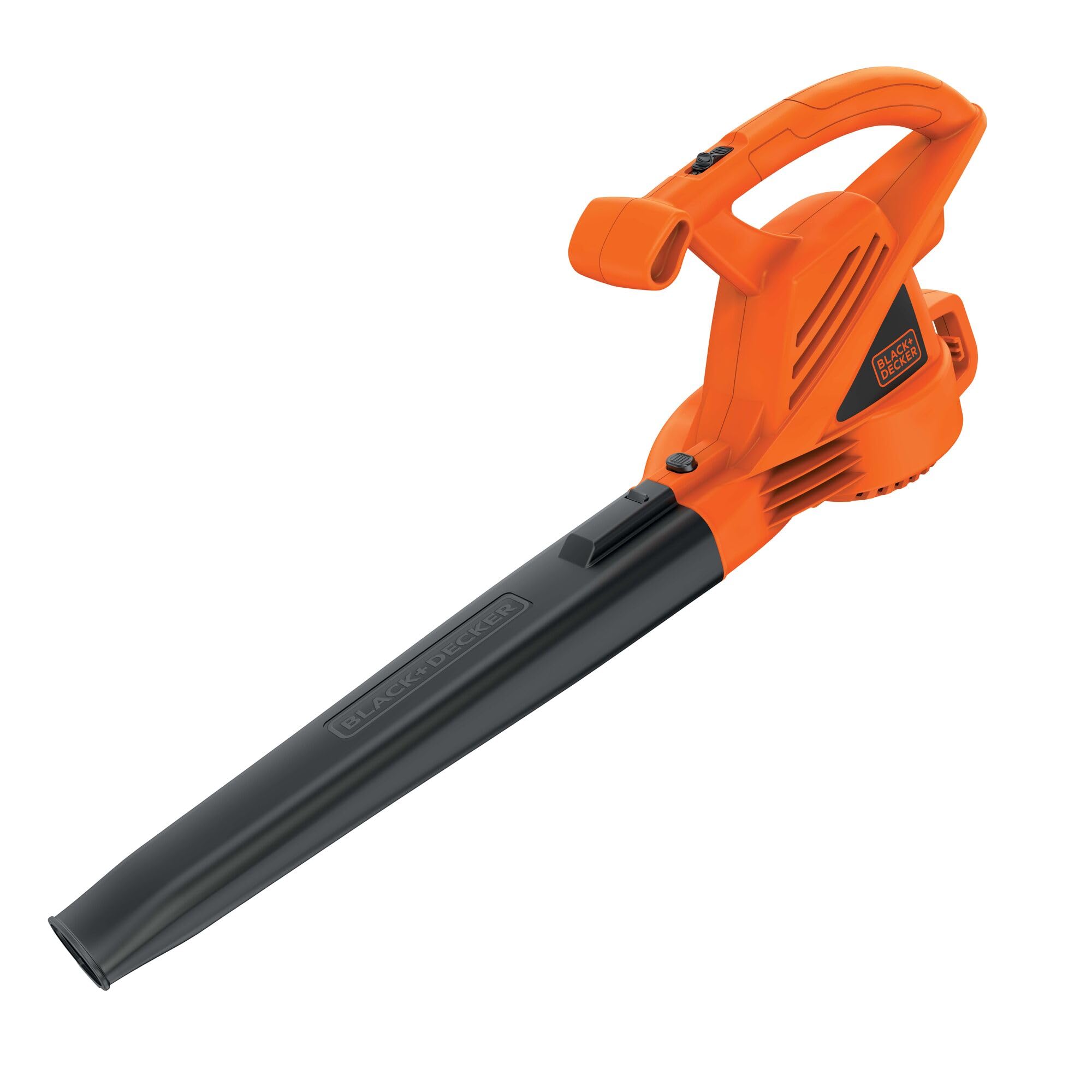
I rely on the LB700 when I want corded performance that still feels handheld—powerful airflow with a surprisingly light chassis.
Why I picked it: It packs a 7-amp motor into an easy-to-maneuver 4.4-pound package and has cord retention so I don't keep stopping to reattach a cord.
Best for: Driveways, sidewalks, patios, and quick landscape cleanups.
A solid mid-range corded choice with good power-to-weight balance.
Pros
- Strong 7-amp motor
- Built-in cord retention
- Very lightweight for its power
- Good for vents and patios
Cons
- Single speed only
- Can be loud in use
- Cord not included
My take
I used the BLACK+DECKER LB700 across concrete, gravel edges, and deck boards and appreciated how quickly it moved debris into piles. The airflow felt stronger than its size suggests, and the cord retention saved me from unplugging when changing direction.
The single-speed design kept operation simple, but I missed having a low-power option for delicate flowerbeds and low-noise work. The blower is light enough that I could work for extended stretches, though I sometimes wore hearing protection for comfort.
For anyone who wants dependable, powerful corded performance without bulk, this unit hits the sweet spot. It’s not a variable-speed luxury, but it gets the heavy lifting done fast.
3. EGO POWER+ LB6150 Cordless Blower – Best Cordless / High CFM
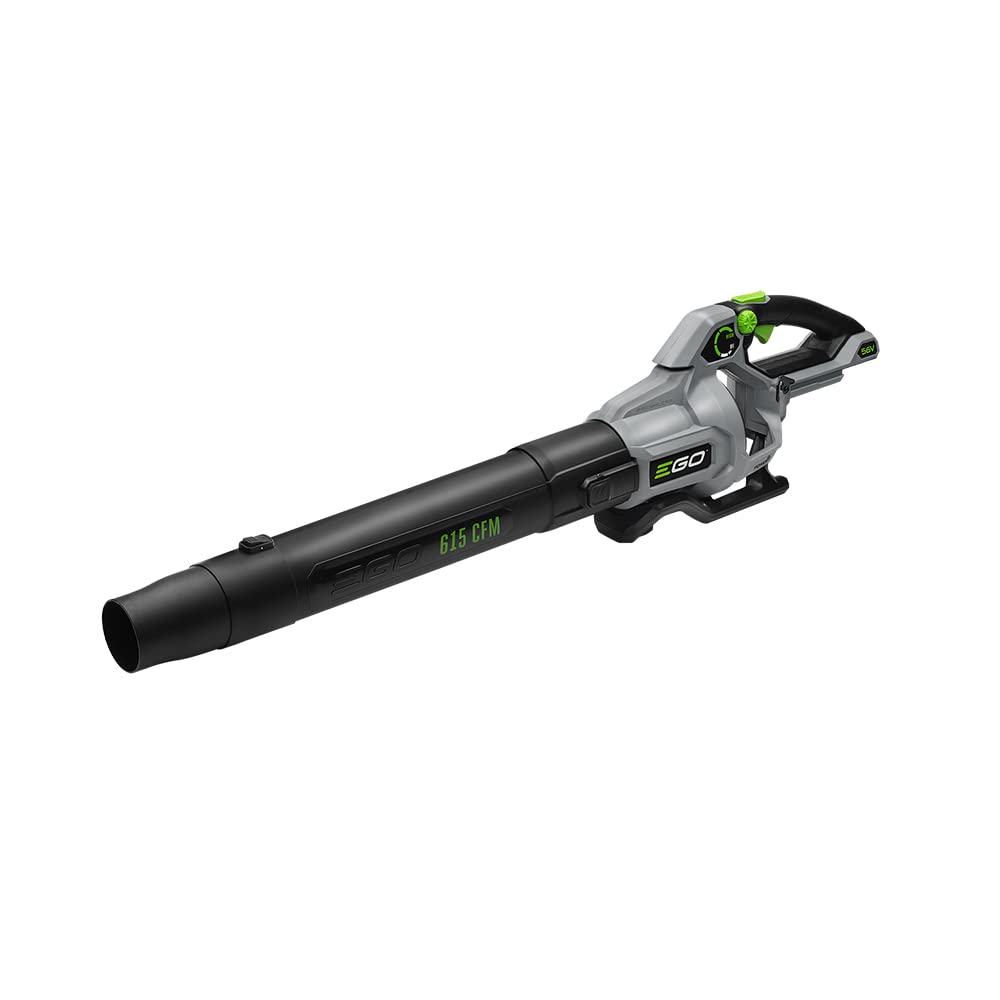
When I need cordless muscle, the EGO stands out: variable speeds, a turbo mode that hits up to 615 CFM, and gas-like performance without fumes.
Why I picked it: Its adjustable trigger with a lock-on dial and a turbo button give me precise control plus a serious burst of power when I need it.
Best for: Large yards, heavy piles, wet leaves, and anyone already invested in EGO batteries.
Premium cordless option; battery and charger are sold separately.
Pros
- Turbo up to 615 CFM
- Variable speed with lock-on
- Brushless motor (low vibration)
- Quieter than comparable gas units
Cons
- Battery and charger sold separately
- Feels heavy with large batteries
My take
I put the EGO through big piles and damp leaves and the turbo mode cleared them with authority. The variable trigger plus the lock-on dial made it easy to dial back power for light jobs and crank it up when I needed to move wet clumps.
Because batteries vary, I tested it with a recommended 2.5Ah pack and got long runtimes for medium work; heavier batteries extend runtime but noticeably change the balance. The brushless motor keeps vibration low and the unit felt more refined than most cordless blowers I’ve used.
If you already own EGO batteries this is a no-brainer. If you’re starting fresh, factor in the cost of batteries—but the cordless convenience and near-gas performance made me ditch a gas blower for most yard tasks.
4. Husqvarna 350BT Backpack Blower – Best Backpack Gas
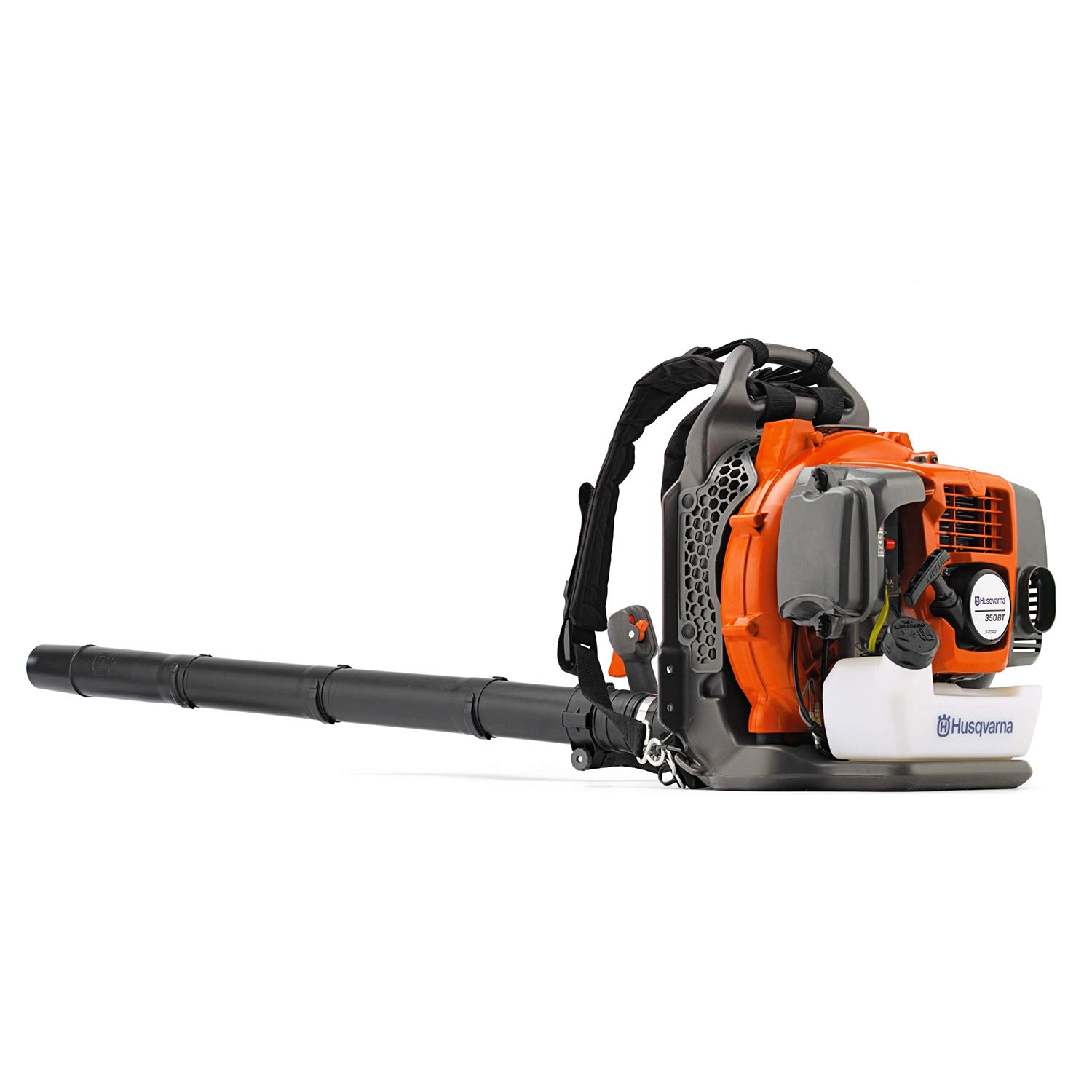
For heavy, continuous clearing on larger properties I reach for the Husqvarna backpack—its engine and harness let me work longer and move massive volumes of debris.
Why I picked it: The combination of a mid-size gas engine, high CFM, and an ergonomic harness makes long sessions much more manageable than a handheld gas model.
Best for: Acres, professional use, and jobs that need extended run time and high blowing force.
Higher-end gas backpack built for sustained heavy work.
Pros
- Very high airflow and clearing force
- Comfortable, adjustable harness
- Easy starting with air purge
- LowVib reduces fatigue
Cons
- Heavier than handheld units
- Requires fuel and routine maintenance
My take
I tested the Husqvarna across a large yard with lots of maple and oak leaves and it cleared them faster than any handheld unit I have. The harness and hip belt do the heavy lifting for you, which makes multi-hour jobs realistic.
Starting was reliable thanks to the air purge system, and LowVib technology made long runs easier on my arms. It’s still a gas engine, so you’ll handle fuel mixing and basic upkeep, but the power and balance are worth it for large lots.
This blower is what I choose when speed and endurance matter more than compact storage or minimal maintenance.
5. BLACK+DECKER BEBL750 Corded Blower – Best Variable-Speed Corded
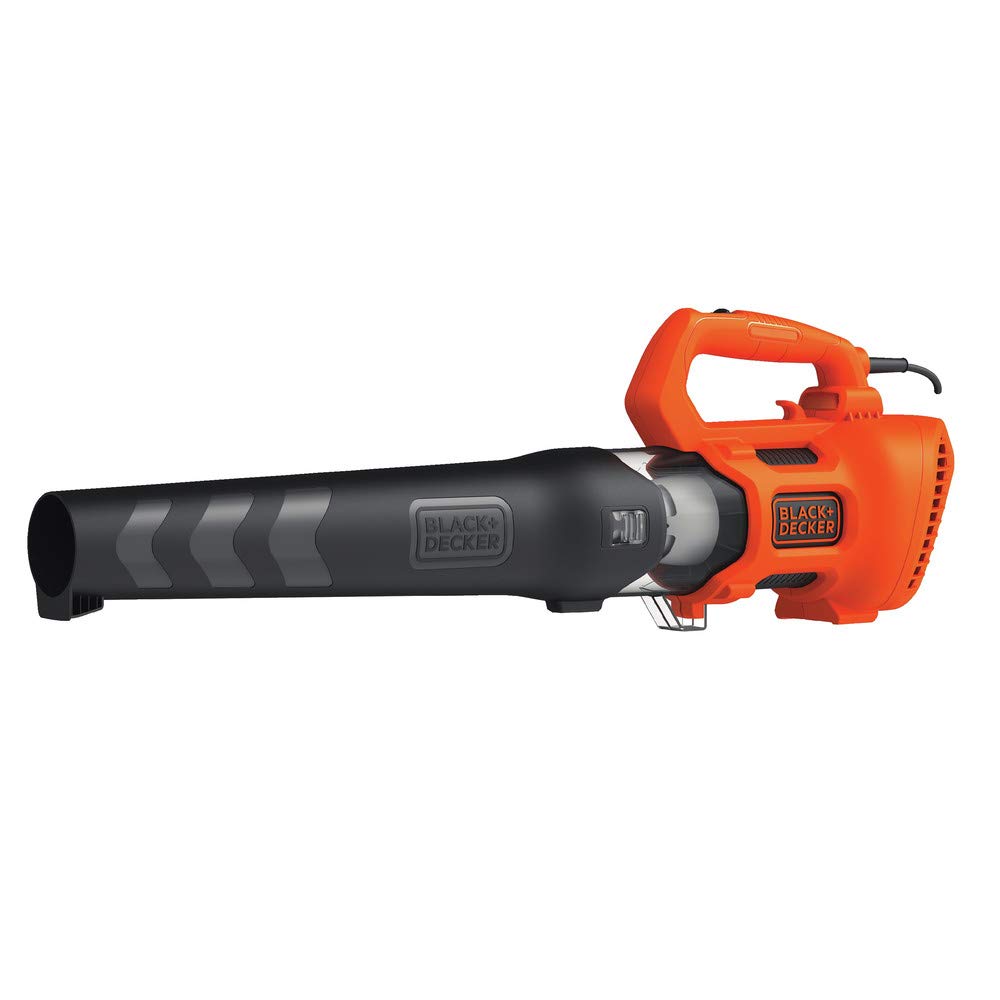
I appreciate this BEBL750 for its two-speed control and built-in scraper—features that make both light and tougher jobs easier than with single-speed plugs.
Why I picked it: Two speeds plus a scraper let me shift from gentle cleanups to stubborn wet leaves without swapping tools.
Best for: Medium yards, patios with stuck debris, and users who want versatility from a corded blower.
Solid midrange corded blower with useful extras.
Pros
- High airflow up to 450 CFM
- Two-speed control for versatility
- Built-in scraper for stuck leaves
- Cord retention for uninterrupted work
Cons
- High setting can feel tiring
- A bit louder on max power
My take
I used the BEBL750 on a mix of wet and dry leaves; the lower speed is genuinely useful for flowerbeds and the higher speed tackled caked layers that other small blowers left behind.
The scraper is a small but meaningful feature—I used it to loosen stubborn wet debris before blowing, which saved time. The blower spools up quickly and feels robust, though long use on high power will fatigue your arm.
For many homeowners who want a single corded unit to cover most yard tasks, this model balances brute force and control well.
How I Choose a Leaf Blower
Power and Performance
I evaluate both CFM and MPH because they tell different parts of the story: CFM moves volume, while MPH adds punch for stuck debris.
If I’m clearing wide open areas or heavy, wet piles I prioritize high CFM and turbo modes. For tight spaces and delicate beds I prefer lower airflow options with good maneuverability.
- CFM (cubic feet per minute) determines how much debris you can push.
- MPH indicates nozzle speed and helps dislodge matted material.
- Variable speed is valuable for control near plants and inlets.
Power Source: Corded, Cordless, or Gas
I picked corded models when I needed consistent power for small-to-medium yards and didn’t want battery upkeep.
Cordless units gave me the best balance of mobility and nearly gas-like power when paired with the right battery, but I account for the extra cost of batteries and chargers.
Gas backpack blowers remain my choice for acreage or professional work because they deliver long runtimes and raw force, at the expense of noise and maintenance.
- Corded: reliable power, lightweight, limited by cord length.
- Cordless: mobility and reduced noise, battery dependent.
- Gas: maximum power and runtime, requires fuel and service.
Ergonomics and Noise
I test how a blower feels after 10–30 minutes of continuous use. Weight distribution and handles matter more than spec sheets when you’re making multiple passes.
Noise matters—if I’m working close to neighbors or for extended periods I wear hearing protection and prefer electric models for lower decibel levels.
- Lightweight handhelds reduce arm fatigue for quick tasks.
- Backpack harnesses are worth it for long sessions.
- Look for LowVib or padded straps to minimize fatigue.
Practical Extras
I value features that reduce hassle: cord retention, scrapers for wet leaves, adjustable nozzles, and lock-on speed for continuous work.
Consider whether a blower requires batteries or special fuel; that affects ongoing cost and readiness.
- Cord retention prevents accidental unplugging.
- Built-in scrapers help with wet or stuck leaves.
- Variable speed and lock-on make extended jobs easier.
Frequently Asked Questions
Do I need a special extension cord for corded blowers?
I always use an outdoor-rated extension cord and choose a heavier gauge for longer runs. Thicker cords keep voltage drop low so the blower runs at full strength and stays cooler.
Is the EGO blower usable without buying more gear?
The EGO blower itself is a high-performing tool, but I treat it as part of the EGO battery ecosystem—battery and charger are sold separately, so factor that into upfront cost if you don’t already own compatible batteries.
When should I pick a backpack gas blower?
I recommend a backpack gas model if you have an acre or more, frequent heavy clearing, or professional tasks. The power and runtime justify the extra weight and maintenance, especially with a comfortable harness.
Final Take
I matched each blower to a use case so you can pick the tool that fits how you actually work. For light, frequent touch-ups I reach for the Sun Joe; for corded power with minimal weight the BLACK+DECKER LB700 is my go-to.
If you want cordless freedom and near-gas performance, the EGO delivered the best balance of power and refinement. For acreage or long jobs the Husqvarna backpack is unmatched, and the BEBL750 is a versatile corded choice when you want variable speed and a scraper.
Decide first how much mobility, maintenance, and brute force you need, and then choose the blower that matches that trade-off—I've used each of these enough to know where they shine.
