
I tested popular propane heaters across campsites, patios, and garages to find portable buddies, heavy-hitters, and compact tank-top units that actually deliver heat and reliability.
I spend cold evenings in tents, on patios, and in my garage, so I’ve tried a wide range of propane heaters to see which actually perform where they say they will.
In this roundup I share the units I keep coming back to: portable radiant heaters for camping, tall patio heaters for entertaining, tank-top units for workshops, and a vent-free indoor option for whole-room warmth.
I focused on real-world heat output, safety features, ease of use, and long-term durability so you can pick the right heater for your space and habits.
I split these heaters into portable radiant units, large freestanding patio heaters, tank-top worksite heaters, and a vent-free indoor model so you can match fuel type, coverage, and safety features to the place you plan to use it.
1. Mr. Heater Portable Buddy 9,000 BTU – Best Portable Heater
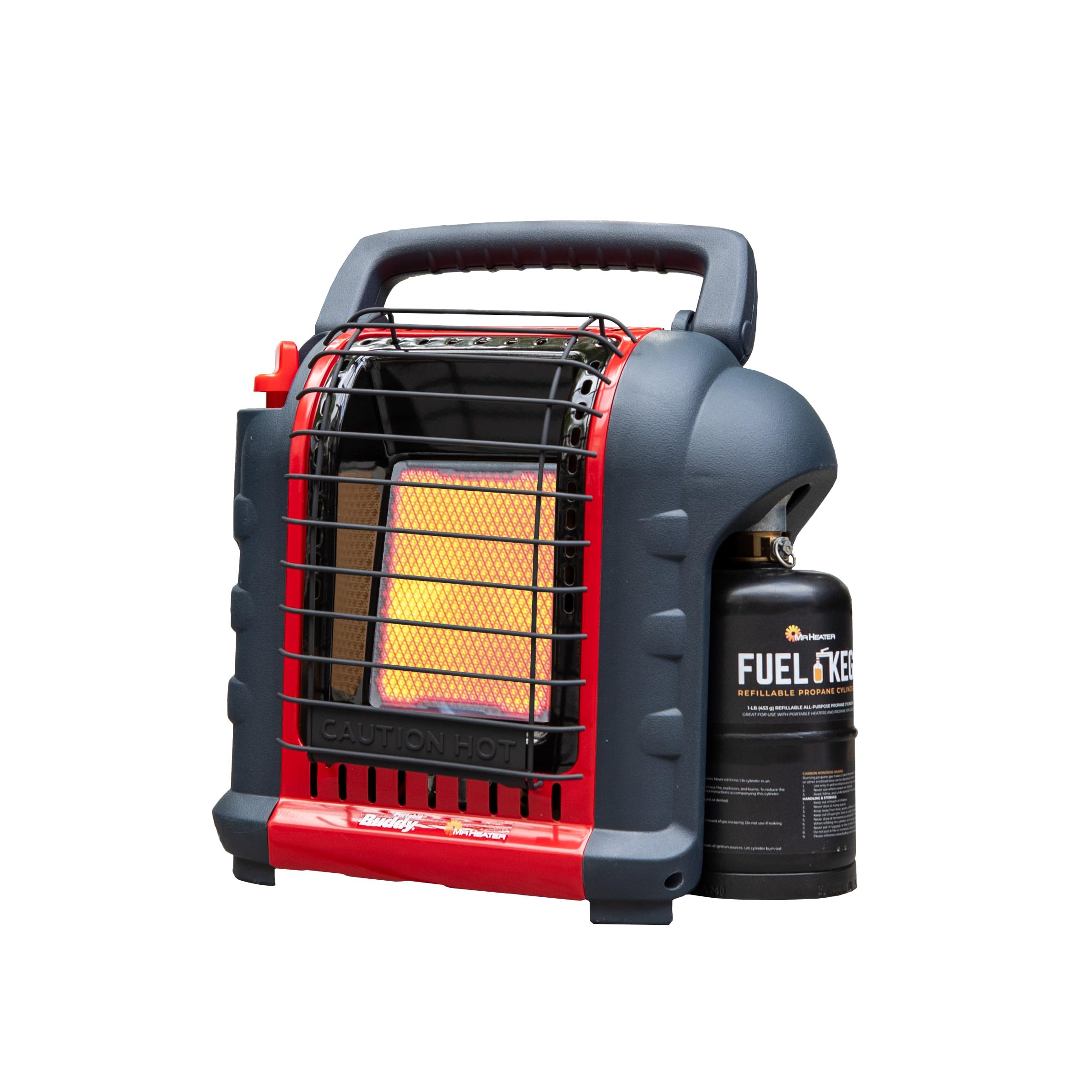
My go-to small radiant heater for camping, RVs, and small canvas tents. Lightweight, simple, and reliably warm.
Why I picked it: Small, rugged, and truly portable with reliable safety features.
Best for: Camping, RVs, short-term spot heating in enclosed tents.
Affordable portable option.
Pros
- Very portable and lightweight
- Radiant 'sun-like' heat
- Indoor-approved with safety sensors
- Two heat settings for flexibility
- Simple hookup to 1-lb or 20-lb tanks
Cons
- Limited coverage for larger spaces
- No remote or timer
- Short runtime on 1-lb bottles
My take
I’ve carried a Portable Buddy in campers and tents for years, and its radiant burner really does feel like a small, portable sun—you feel warmer when you’re in the heater’s line of sight even when ambient air is still cold.
Setup is fast: I can connect a 1-lb cylinder and be producing radiant heat in minutes, or use an adapter for a 20-lb tank when I’m staying put. On a 20-lb tank I’ve tracked long multi-day use on low, so it’s surprisingly economical when plumbed to a larger bottle.
Safety is a key reason I trust this unit indoors: it includes oxygen-depletion sensing, thermal shut-down, and a tip-over switch. I tested the tip-over shut-off and found it responsive; the other protections give me peace of mind when I use it in tents or RVs.
My only real wishes are convenience upgrades—a timer or remote would make it perfect for overnight use—but for hands-on camping and quick spot heating the Portable Buddy is hard to beat.
2. Amazon Basics 46,000 BTU Patio Heater – Best for Patios
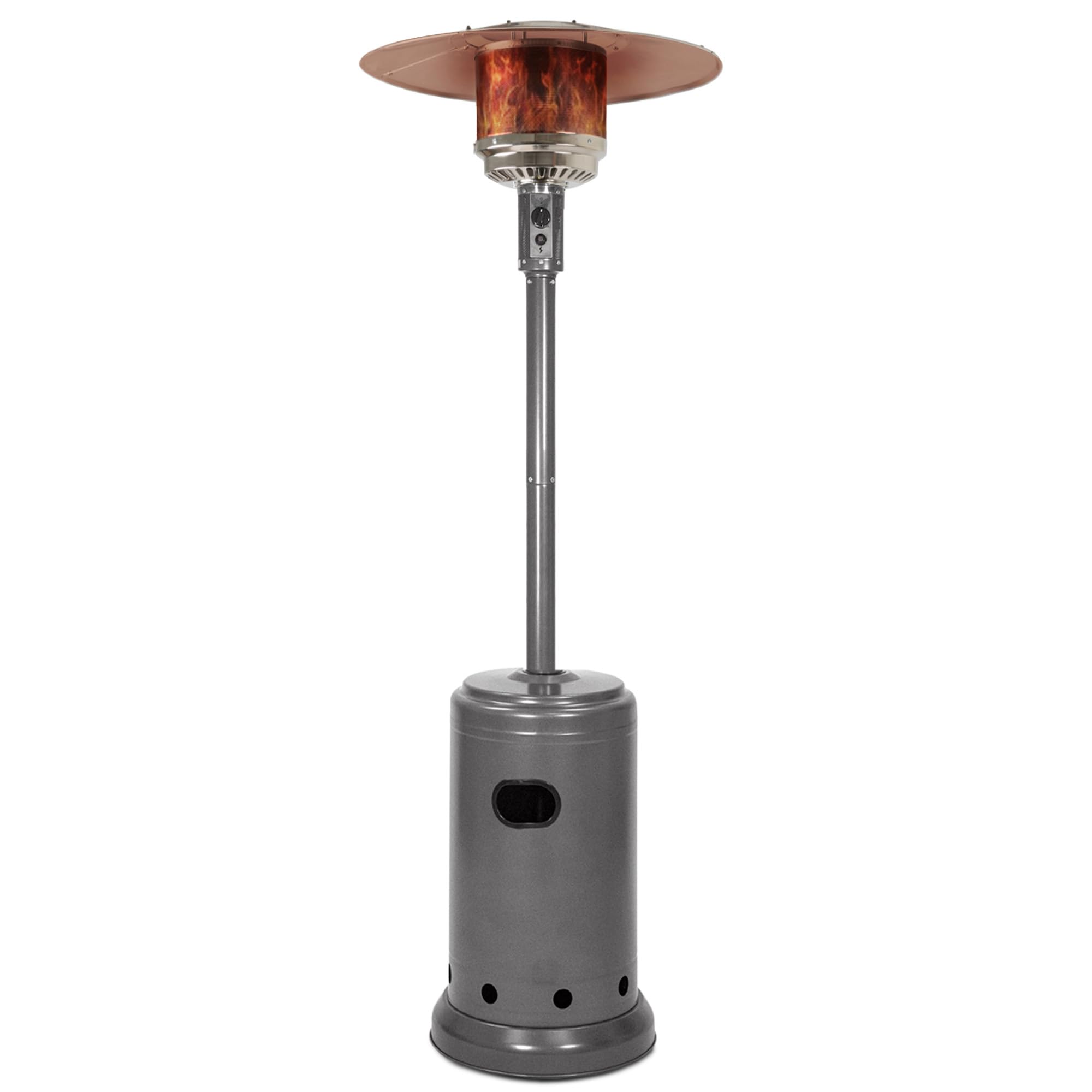
A powerful freestanding patio heater that spreads useful warmth across seating areas and rolls into place when needed.
Why I picked it: High output and mobility make evenings outside comfortable.
Best for: Home patios, cafes, and larger outdoor seating areas.
Solid midrange patio heater.
Pros
- Powerful 46,000 BTU output
- One-touch ignition
- Wheels for easy positioning
- Adjustable heat output
- Sturdy powder-coated finish
Cons
- Assembly takes time
- Wheel assembly can feel flimsy
- Requires a 20-lb tank
My take
I put two of these on my patio to create a warm outdoor living area and they do exactly that—the 46,000 BTU head throws plenty of heat across a seating group so I can stay outside well past sunset.
Assembly took me about an hour and a half from box to first flame; the instructions are clear but you’ll need a bit of patience aligning the heavier pieces. Once assembled, the one-touch igniter and flame control make it effortless to dial in comfort.
The wheels make repositioning straightforward, though I’ve noticed the wheel bracket can feel a bit thin if you muscle the unit across uneven decking. I use covers and a heat shield when wind picks up, and those accessories extend performance and life.
3. Mr. Heater 540° 45,000 BTU Tank-Top Heater – Best for Workshops
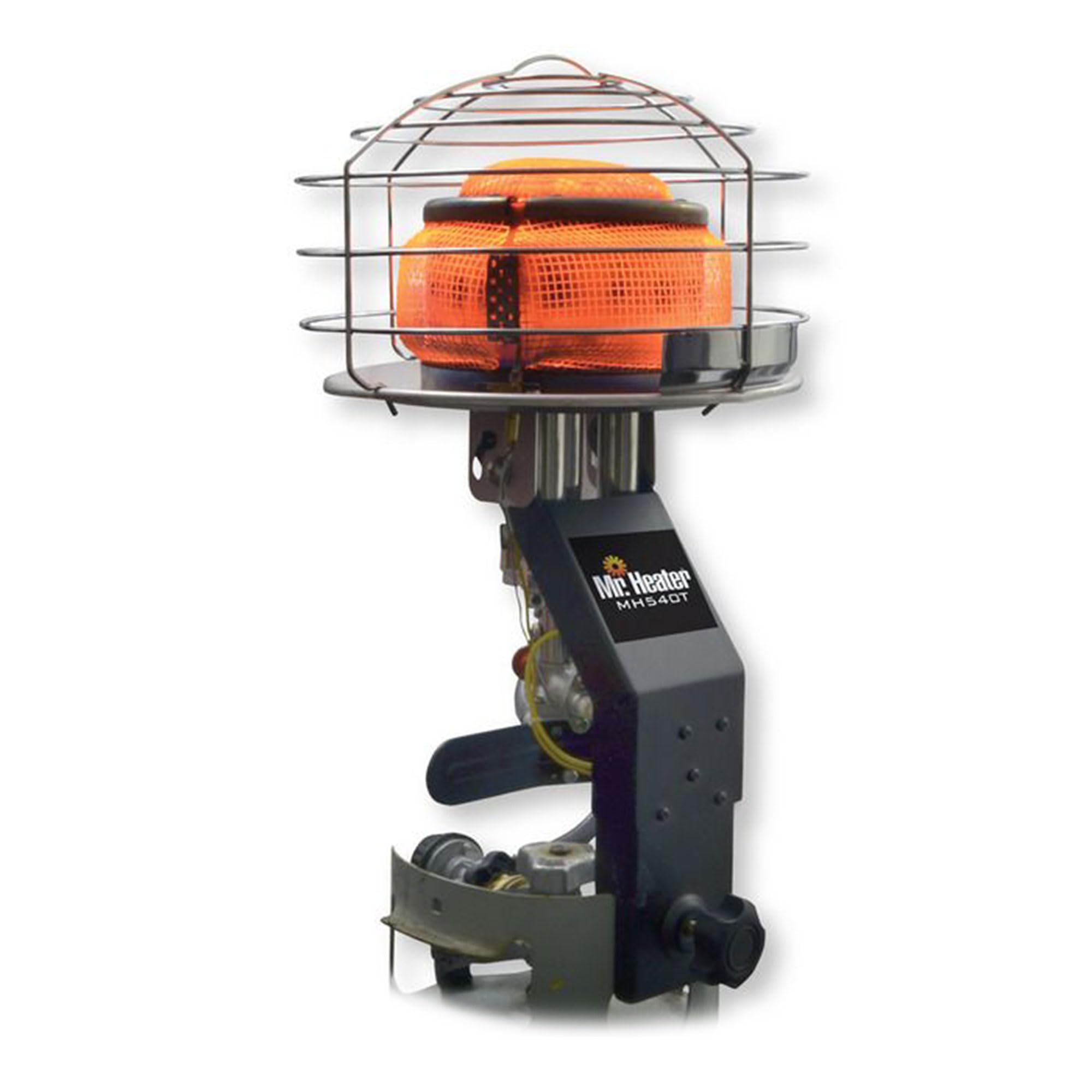
A compact, heavy-duty tank-top radiant heater that I rely on to warm garages and job sites quickly.
Why I picked it: High heat from a compact footprint that mounts to a 20-lb tank.
Best for: Garages, workshops, and outdoor job sites needing fast, directional heat.
Economical high-heat solution.
Pros
- Mounts directly to 20-lb tank
- High, medium, and low outputs
- Multi-directional radiant head
- Compact for small workspaces
- Tip-over safety shut-off
Cons
- Initial lighting takes patience
- Produces initial combustion smell
- Outdoor-use only
My take
I use this tank-top unit in my two-car garage and it consistently warms the space up to comfortable working temperatures much faster than a torpedo heater of similar claimed output.
The first lighting requires holding the gas release until the mantle/screen runs bright, but after that first burn it lights quickly every time. The three-position regulator is genuinely useful for tuning heat output depending on how cold it is.
It’s solidly built and easy to move when mounted to a standard 20-lb tank. Keep in mind it’s designed for outdoor use, so I use it in ventilated garages or covered work spots rather than enclosed living areas.
4. Mr. Heater 30,000 BTU Vent-Free Blue Flame Heater – Best Vent-Free Indoor
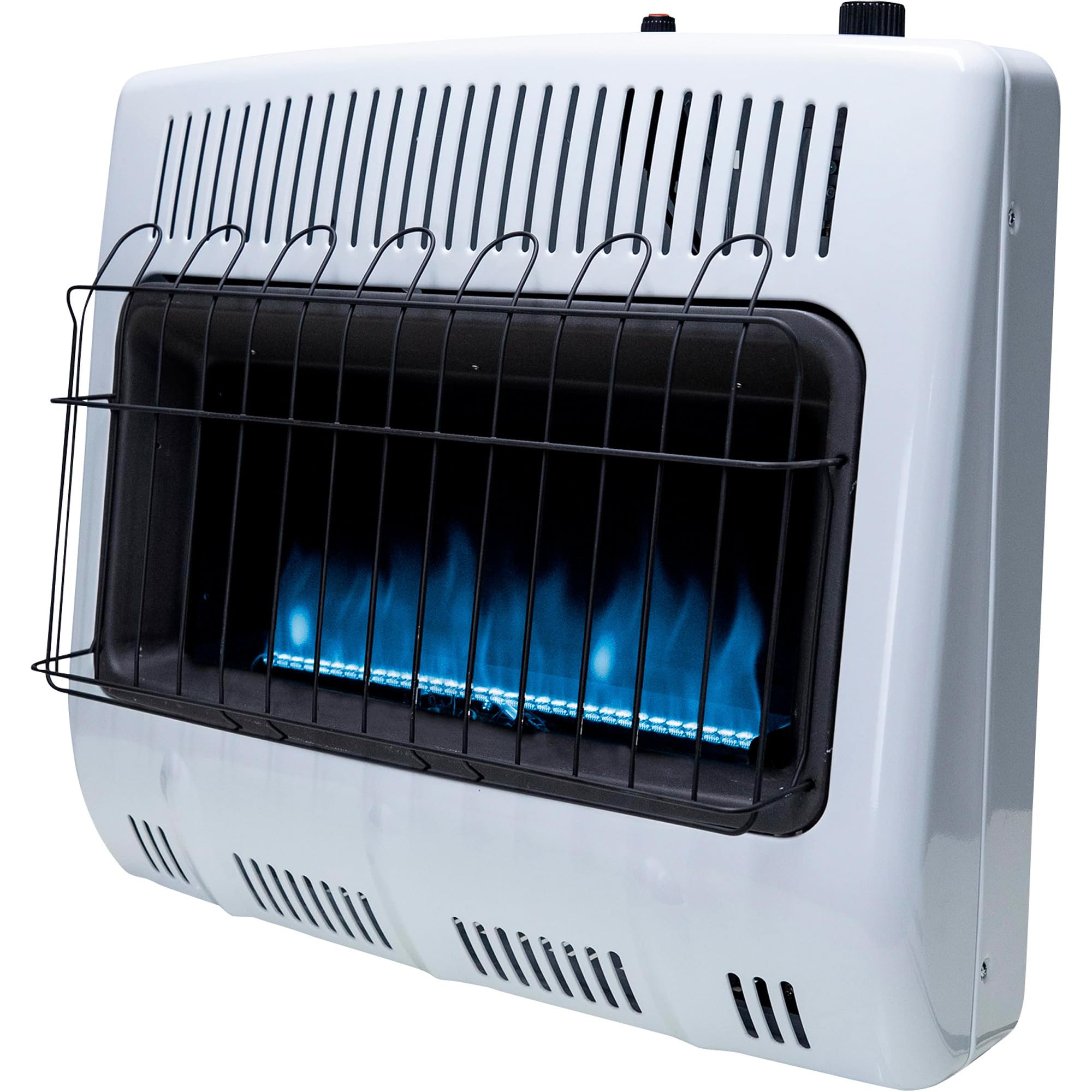
An efficient vent-free blue flame heater I installed for whole-room warmth where venting isn’t practical.
Why I picked it: Convection heating that warms air in a room without needing an outside vent.
Best for: Living rooms, workshops, and areas where venting isn’t available.
Good value for whole-room indoor heat.
Pros
- Heats up to roughly 1,000 sq ft
- Built-in thermostat control
- Battery electronic ignition included
- No external venting required
- Compact wall- or floor-mountable design
Cons
- Included blower is modest
- Requires clean air in dusty shops
- Installation and clearance considerations
My take
I replaced an older vented stove with this 30,000 BTU vent-free unit and was surprised how effectively it warmed my main space—when paired with a modest circulation fan it delivered even warmth across the room.
The built-in thermostat and battery ignition make it user-friendly; I appreciate not needing household electricity to run it. The oxygen-depletion sensor and safety features are reassuring for indoor use.
If you plan to use it in a dusty workshop, I recommend keeping the heater clear of dust and using local dust collection. The optional blower helps a bit, but I prefer a separate fan positioned to move warm air higher and farther into the room.
5. Dura Heat TT-360 360° Tank-Top Heater – Best Compact Tank-Top
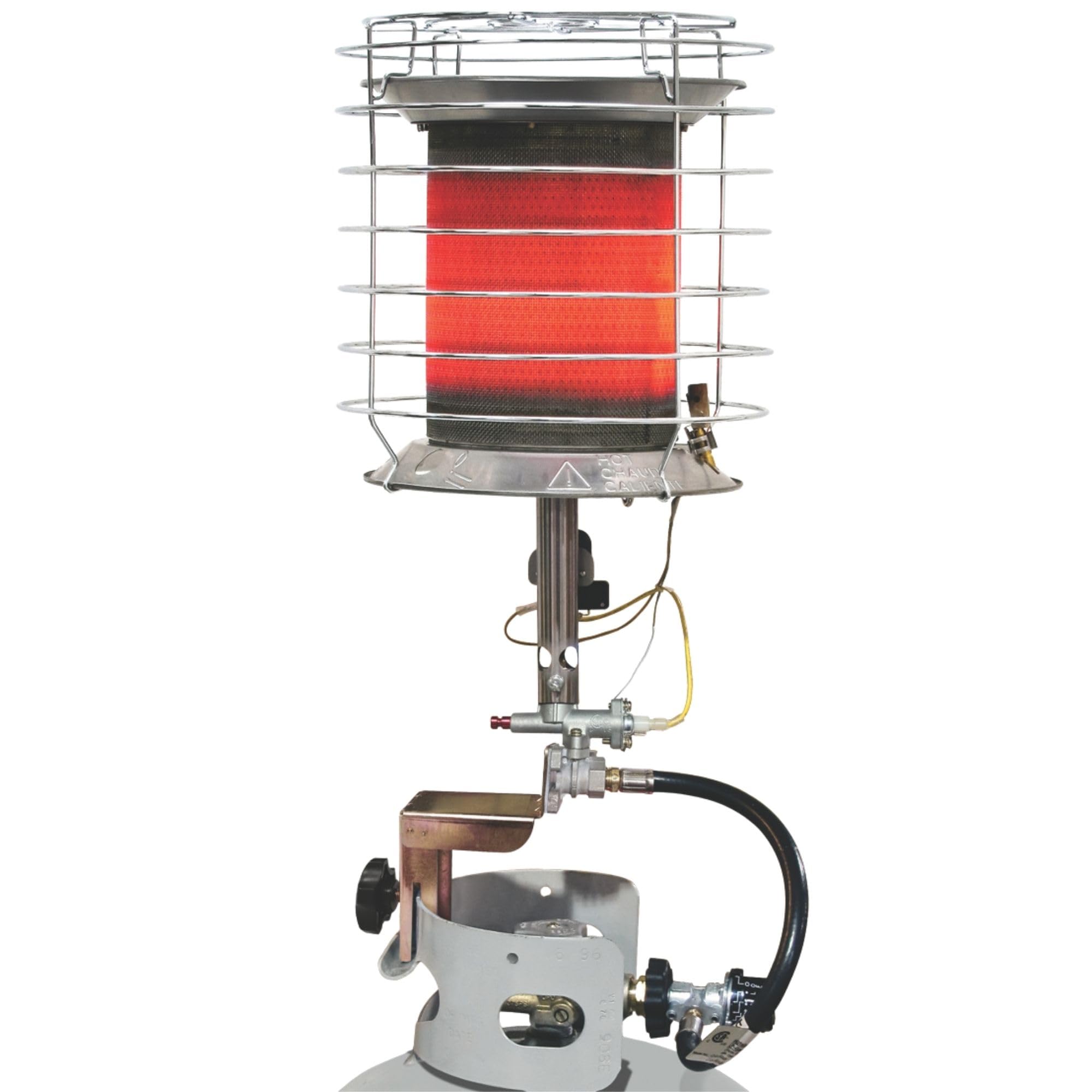
A compact 360-degree tank-top heater I use to add localized warmth on covered patios and smaller outdoor seating areas.
Why I picked it: Compact 360° radiant pattern and simple, rugged construction.
Best for: Covered patios and smaller outdoor spaces requiring low-profile radiant heat.
Budget-friendly tank-top choice.
Pros
- 360° radiant heat pattern
- Compact, low-profile design
- Variable heat settings
- Quiet infrared operation
- Easy storage
Cons
- Match-light ignition only
- Not ideal in strong wind
- Starter guidance is sparse
My take
I started with one of these on my covered patio and liked it so much I bought more to create a multi-source outdoor setup—the low radiant pattern projects heat from a comfortable seated height.
Starting the unit takes a little technique the first time—you hold the control to allow the mesh to ignite and run bright before releasing—but once you’ve done it a couple times lighting becomes quick.
For open, windy spaces this model can struggle, but under a covered patio or near windbreaks it’s an efficient, compact solution that doesn’t dominate a small outdoor living area.
6. East Oak 50,000 BTU Stainless Steel Patio Heater – Best Stainless Steel Patio Heater
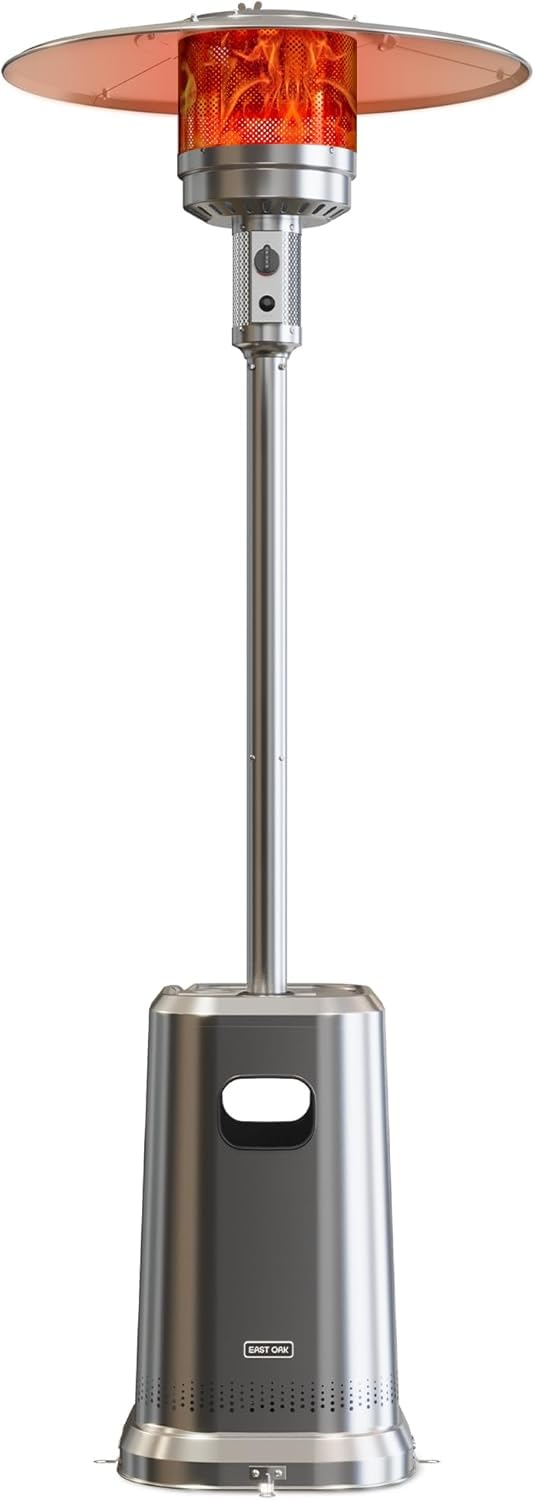
A high-output stainless steel patio heater with a built-in table and robust burner design that I rely on for long seasons outdoors.
Why I picked it: High BTU, durable stainless construction, and practical table top.
Best for: Larger patios, commercial spaces, and homeowners wanting a stainless finish.
Higher-end stainless steel option.
Pros
- 50,000 BTU powerful heat
- Double-layer stainless burner mesh
- Built-in table top surface
- Wheels for mobility
- ETL certified and one-touch ignition
Cons
- Heavy to move without wheels
- Some fading/rust can occur over years
- Replacement parts sometimes needed
My take
I bought two East Oak units and after several seasons they’ve delivered consistently strong heat—the 50,000 BTU rating translates to a wide, comfortable radius on cool evenings.
The stainless steel build and double-layer burner feel substantial. I leave one unit outside year-round and have seen only minor fading on the painted cover; a little surface rust showed up on a unit after long sun exposure, but it didn’t affect performance.
When I had a burner issue the manufacturer sent a replacement part quickly; that kind of support and the heater’s sustained output make this my pick when I want a heavier-duty stainless option.
How I Choose a Propane Heater
Key factors I consider
BTU and coverage: I match advertised BTU to the space I plan to heat—tank-top units and tall patio heaters suit larger outdoor areas, while portable radiant units are best for close-range spot heating.
Heat type: I prefer radiant heaters for targeted warmth (you feel it quickly) and convection/vent-free units for whole-room air heating.
Fuel connection: I check whether a model uses 1-lb cylinders, 20-lb tanks, or both. I favor 20-lb tanks for longer unattended runs and 1-lb cylinders for true portability.
- Safety features: Oxygen-depletion sensor (ODS), tip-over shut-off, and thermal shutdown matter to me.
- Ignition type: One-touch igniters are convenient; match-light requires more technique.
- Durability: Stainless or powder-coated finishes and quality burners last longer in the elements.
- Mobility vs stability: Wheels and a weighted base trade off portability and wind resistance.
- Accessories: Covers, heat shields, and tank locks improve performance and longevity.
Frequently Asked Questions
Can I use tank-top heaters inside my garage?
I don’t recommend using outdoor-only tank-top heaters inside enclosed living spaces. I use them in ventilated garages or open work areas only, and I make sure there’s airflow to avoid buildup of combustion byproducts.
How do radiant heaters compare to patio column heaters?
From my experience, radiant heaters warm people and objects directly and feel instant; column (convection) patio heaters warm the air over a larger area but take longer to feel. I pick radiant for close seating and tall patio heaters for spreading heat across a group.
Are vent-free heaters safe to use in a home?
I trust vent-free models with working oxygen-depletion sensors and proper clearances. I also keep them away from dusty environments and use fans to move warm air—installation and ventilation guidelines from the manual are essential.
What maintenance do these heaters need?
I routinely brush off dust, check burners and connections before the season, cover patio units when not in use, and replace any corroded parts. For indoor units I inspect sensors and vents annually.
Final Take
I recommend the Portable Buddy if you need a lightweight, safe camping heater; the Amazon Basics or East Oak if you want powerful patio warmth for entertaining; and a tank-top unit if your priority is compact, directional heat for workshops.
Match the heater’s BTU and heat type to your space, prioritize safety features, and plan for accessories like covers or wind shields to extend performance.
Those are the propane heaters I keep using and recommending based on years of practical use across tents, patios, and garages.
