
I tested popular water-soluble and slow-release fertilizers so you can pick the right feed for containers, vegetables, and low-maintenance beds.
I’ve worked through a season of feedings and slow-release applications across containers, raised beds, and in-ground plantings to compare what actually delivers steady growth and convenience.
In this roundup I focus on products that are easy to apply, safe when used as directed, and suited to different routines—from weekly watering-can feedings to twice-yearly granular top-ups.
I compared quick-acting water-soluble formulas against time-release granules by looking at how fast plants respond, how long the feed lasts, ease of application, and which plant types each product suits best.
1. Miracle-Gro Water Soluble All Purpose Plant Food – Best All-Purpose Water-Soluble
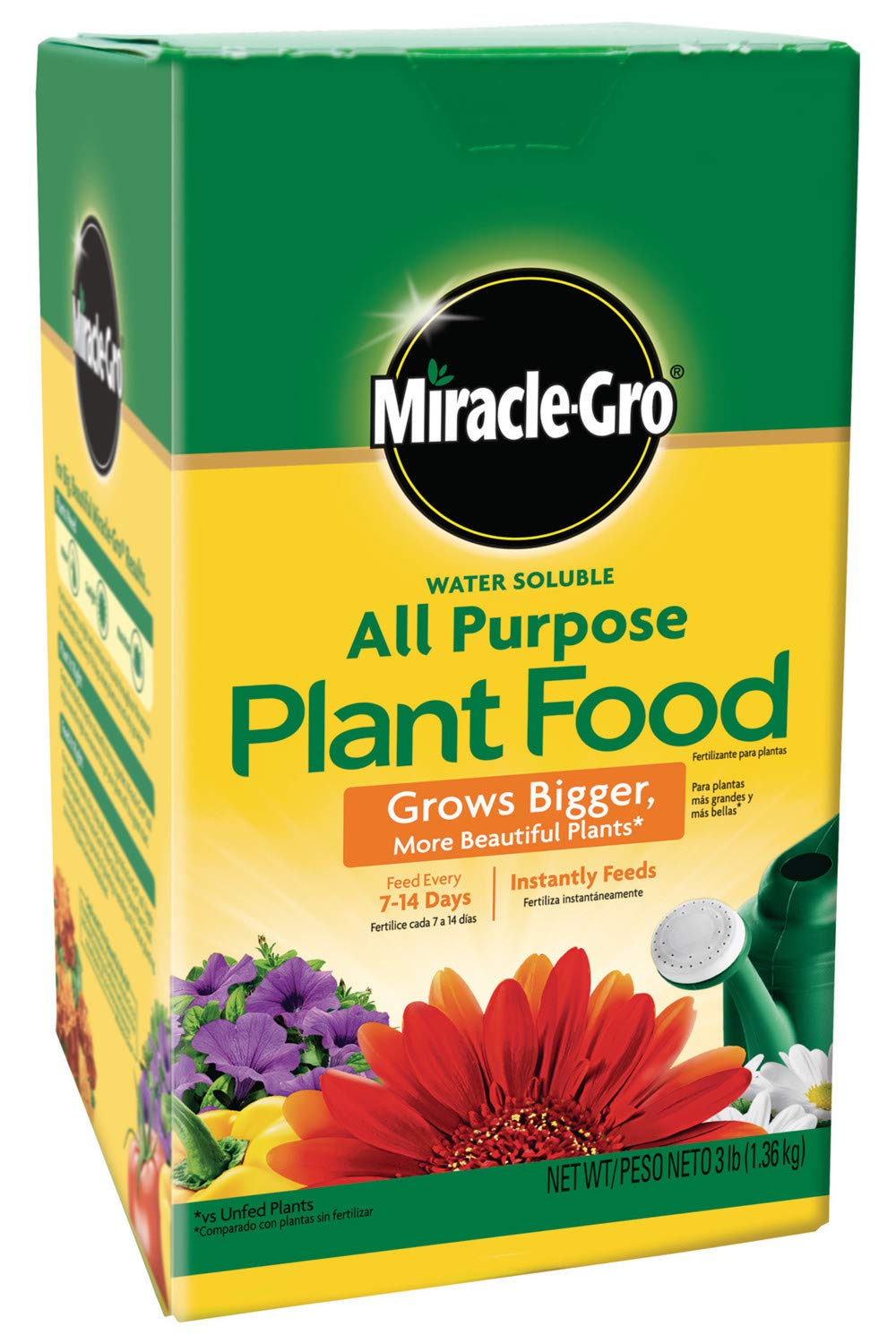
A classic, fast-acting water-soluble feed with a high nitrogen formula that’s simple to mix and use on everything from houseplants to garden beds.
Why I picked it: I reached for this when I wanted instant nourishment and broad coverage without fuss.
Best for: Flowering annuals, vegetables, houseplants, and quick green-up.
Affordable staple that stretches far thanks to concentrated granules.
Pros
- Fast, visible results
- Covers large areas
- Easy to mix
- Works on all plant types
Cons
- Requires frequent reapplication
- Loose packaging can be messy
My take
I use this whenever I want a quick boost; the blue granules dissolve fast and the instructions make mixing straightforward. The 24-8-16 NPK gives plants a noticeable nitrogen-led green-up, which I appreciate on leafy crops and houseplants.
Application is flexible: I mix small amounts for indoor pots and larger mixes for garden beds. Coverage is generous—one container goes a long way in my plot—so it’s an efficient option for routine feedings.
Because this is a water-soluble feed, I apply every one to two weeks during active growth. That frequency delivered steady results in my vegetable starts and flowering pots, but it does mean I keep a feeding schedule.
2. Miracle-Gro Watering Can Singles – Best for Convenience
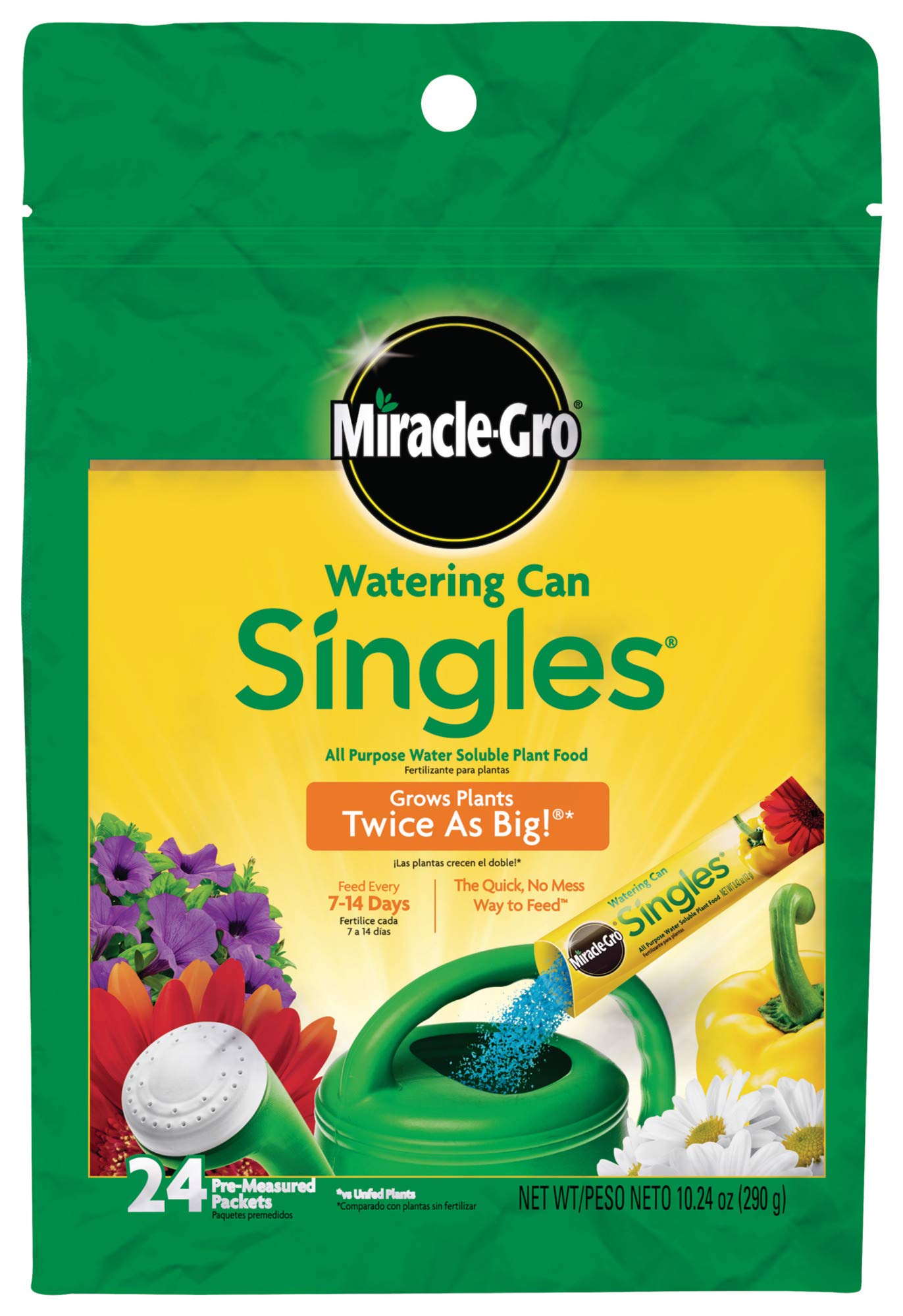
Pre-measured packets of the same trusted formula for fuss-free mixing—ideal when I want no-mess, on-the-go feedings.
Why I picked it: I picked these when I needed a no-measure, portable option for office plants and quick watering sessions.
Best for: Busy plant parents, travel, office plants, small container collections.
Convenient single-use packets reduce waste and measuring errors.
Pros
- Pre-measured, no-mess packets
- Fast acting
- Great for travel or gifting
Cons
- Higher per-use cost
- Limited coverage per packet
My take
I love the simplicity: tear a packet, add water, and feed. That made routine watering much faster in my container garden and saved me from measuring mistakes.
Each packet is calibrated for a set volume of water, so I can mix directly into a watering can or even a water bottle for an instant feed. I used them at my desk and in my patio pots when I wanted speed and control.
Because the packets are designed for quick results, I reapply on a 7–14 day schedule during active growth. For me, they’re a perfect grab-and-go option when I don’t want to deal with bulk containers.
3. Miracle-Gro Shake 'N Feed All Purpose – Best Slow-Release All-Purpose
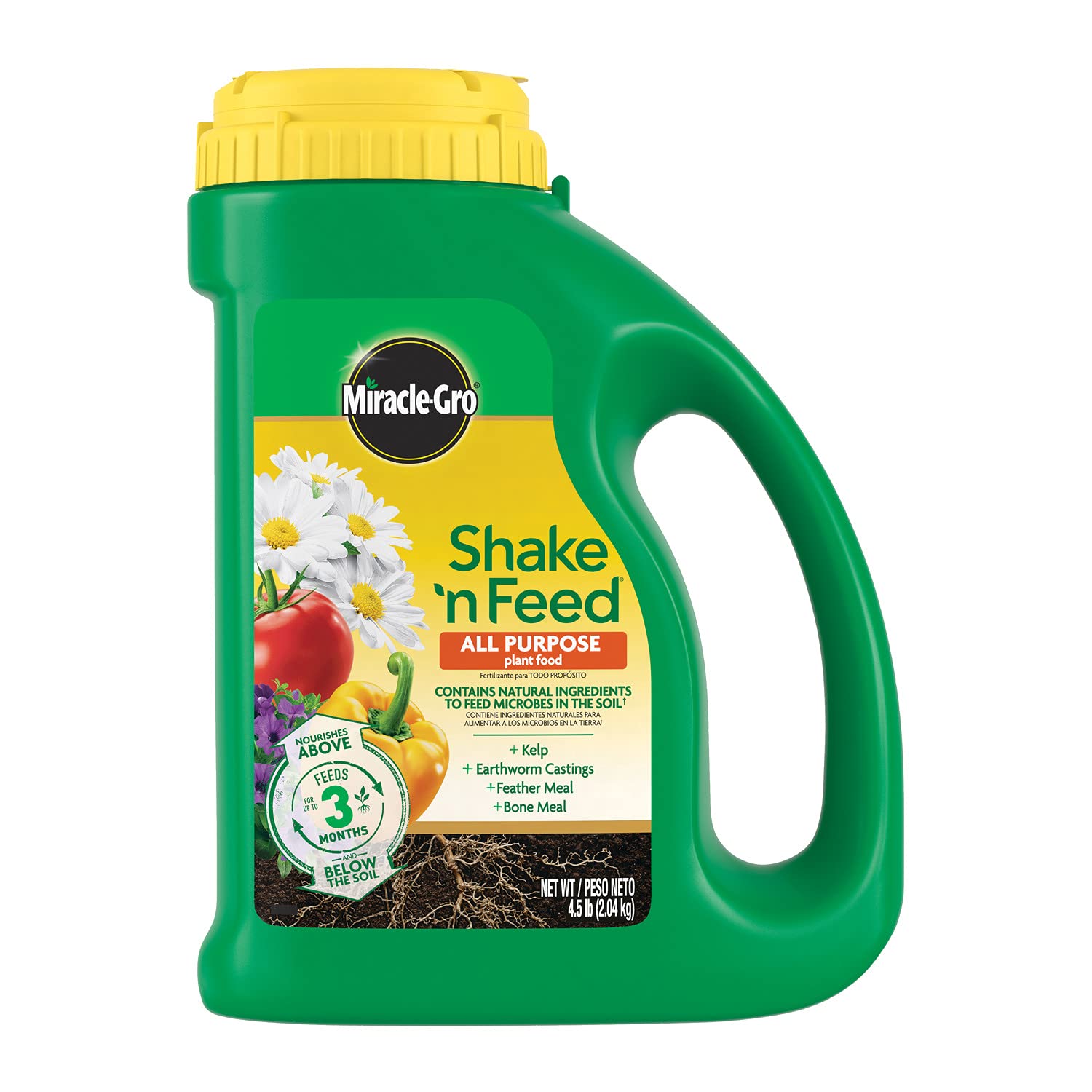
A granular, time-release feed that nourishes soil and plants for up to three months—great when I want low-maintenance, continuous feeding.
Why I picked it: I reach for this when I want predictable, seasonal feeding without weekly mixing.
Best for: Low-maintenance beds, container plants, and busy gardeners.
Midrange option that reduces application frequency.
Pros
- Feeds up to 3 months
- Easy shake-on application
- Supports soil microbes
Cons
- Smaller coverage per container
- Needs reapplication each season
My take
I use Shake 'N Feed on beds and larger containers when I want a set-it-and-forget-it approach. The dry granules feed above and below the soil, and I see fuller leaves and steadier growth without weekly interventions.
Application is simple: I shake it onto the soil, work it lightly in, and water. That routine worked well across herbs, perennials, and my summer annuals, and I liked that it includes micronutrients to round out plant nutrition.
For my schedule, three months of coverage is perfect. I still water normally, but the slow-release formula removed a lot of the feeding chores from my checklist.
4. Miracle-Gro Shake 'n Feed Tomato Fruit & Vegetable – Best for Vegetables & Fruits
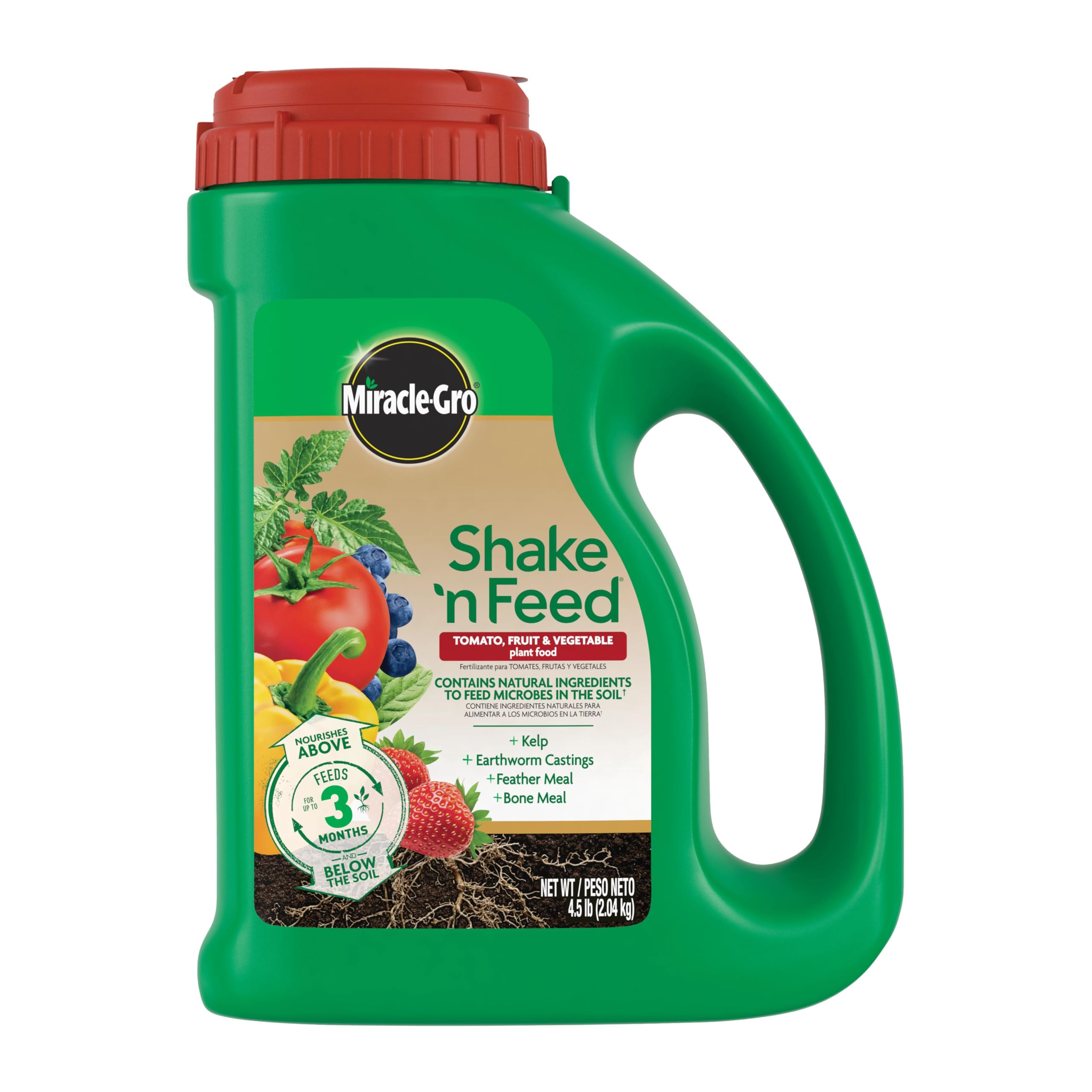
A shake-on, slow-release feed formulated with natural inputs and added calcium to support fruit quality and reduce common deficiencies.
Why I picked it: I used this specifically for tomato and veggie beds that needed reliable, long-lasting nutrition.
Best for: Tomatoes, peppers, fruiting vegetables, and container edibles.
Targeted slow-release feed for higher-quality harvests.
Pros
- Contains calcium for firmer fruit
- Feeds up to 3 months
- Natural ingredient mix
Cons
- Designed specifically for edibles
- Requires incorporation into soil
My take
I applied this around my tomato and pepper plants and appreciated the extra calcium; fruits developed with firmer texture and fewer blossom-end issues than I’ve seen with generic feeds.
The natural ingredient blend—kelp, bone meal, feather meal—feels like a good match for soil biology. I worked it into the top inch or two of soil and watered in; the six- to twelve-week window of feeding fit my harvest cycle well.
If you grow edible crops, this is the product I turn to when I want targeted support for fruit set and overall plant vigor without multiple weekly feedings.
5. Jack's Classic 20-20-20 All Purpose – Best Professional-Strength Mix
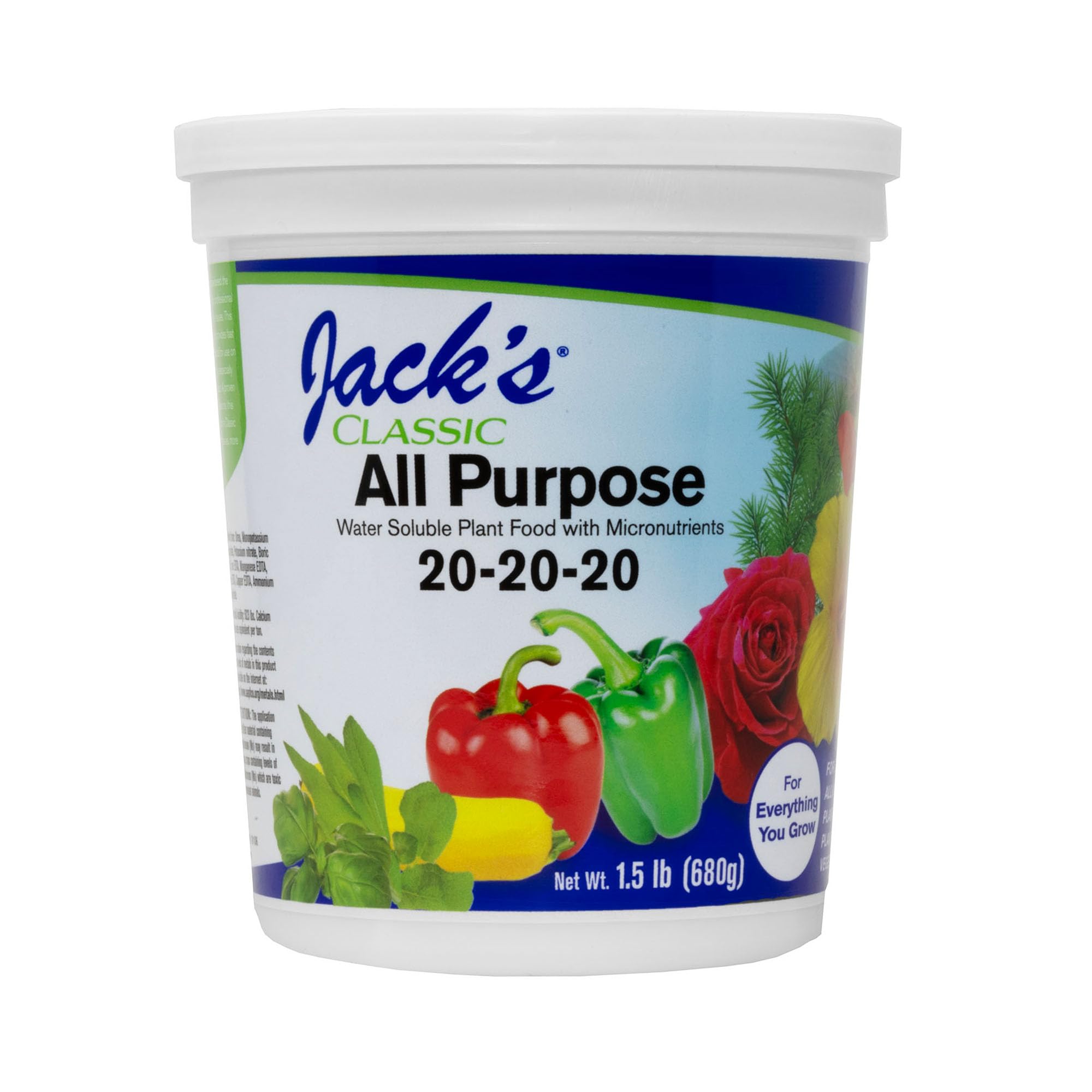
A balanced, professional-grade water-soluble formula with chelated micronutrients that mixes cleanly for foliar or root feeding.
Why I picked it: I used Jack’s when I wanted a uniform, professional feed for transplants and foliar applications.
Best for: Greenhouse starts, transplants, foliar feeding, and continuous feed systems.
Concentrated, versatile formula favored for precise mixes.
Pros
- Balanced 20-20-20 NPK
- Chelated micronutrients
- Good for foliar feeds
Cons
- Requires careful measuring
- Stronger mix needs caution
My take
I relied on Jack’s for young transplants and greenhouse starts where a balanced feed is crucial. It dissolves readily, mixes cleanly, and the chelated micro mix gives plants an even nutrient profile.
Because it works for both foliar sprays and root drench, I used it in a hand sprayer for quick green-up and in a feeding tank for larger batches. The included spoon helped me measure reliably for consistent results.
This is the product I choose when I want professional control over nutrient ratios; it’s less about convenience and more about predictable performance.
6. Osmocote Smart-Release Plant Food Plus – Best Longest-Lasting Release
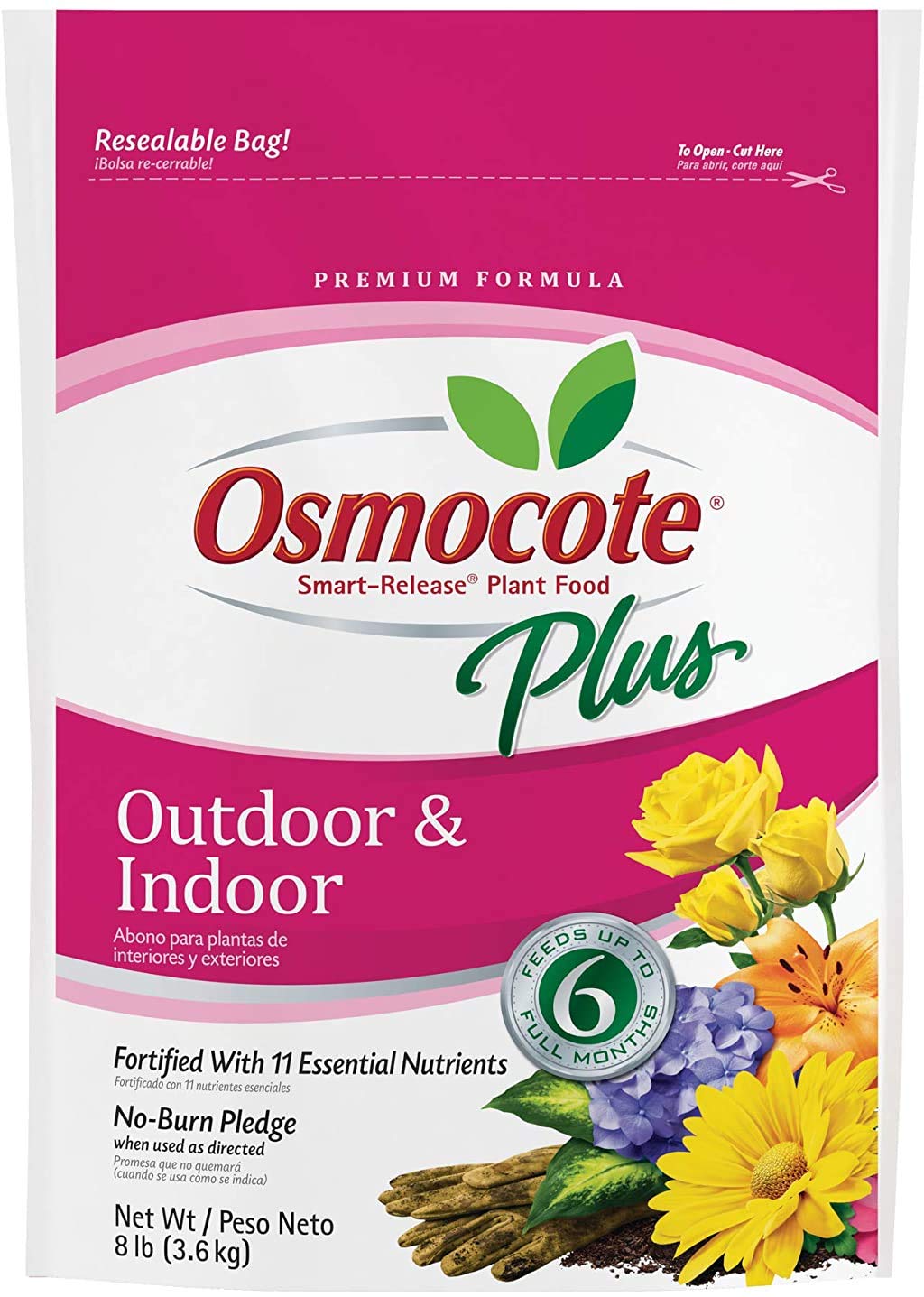
A premium resin-coated granule that releases nutrients on a time schedule for up to six months—excellent when I need long-term, low-maintenance feeding.
Why I picked it: I use Osmocote when I want a single application to feed plants across an entire season.
Best for: Perennials, large containers, and holiday or seasonal plantings.
Premium option that reduces repeat applications.
Pros
- Feeds up to 6 months
- Resin-coated controlled release
- Contains 11 essential nutrients
Cons
- Higher upfront cost
- Smaller coverage per bag
My take
Osmocote’s smart-release beads are the easiest way I’ve found to avoid constant feeding. I applied measured scoops into my larger pots and garden strips and then let regular watering do the rest.
The resin coating releases nutrients in response to soil temperature and moisture, which I found especially helpful for steady growth through variable weather. I also liked that the formula includes a broad suite of micronutrients.
For projects where I don’t want to fertilize multiple times in a season, this product delivers reliable, long-term nutrition with minimal follow-up.
How I Choose Fertilizers
Soluble vs Slow-Release
I pick water-soluble feeds when I want fast results and fine control—they’re perfect for weekly green-ups, transplants, and rapid corrections.
I choose slow-release granules when I want low-maintenance, steady feeding over months without frequent applications.
- Water-soluble: fast, frequent application, great for flats and weekly routines
- Slow-release: feeds for months, ideal for containers and busy gardeners
NPK and Micronutrients
I read the NPK to match plant needs: higher nitrogen for leafy growth, balanced blends for general maintenance, and specialty formulas for fruiting crops.
Micronutrients—and chelated forms—matter for container plants and transplants because they prevent deficiencies that stunt growth.
- Leafy greens benefit from higher nitrogen
- Fruiting crops benefit from calcium and balanced micro mixes
- Chelated micros improve uptake in high-pH soils
Application & Timing
I follow label rates closely: over-application can burn roots even with good products. Soluble feeds typically go on every 1–2 weeks; slow-release granules often last 3–6 months.
For containers, I usually use half the outdoor rate for indoor plants unless the label specifies otherwise.
- Water-in granules after application to start release
- Use pre-measured packets when you want no-mess feeding
- Scale feeding to plant size and growth stage
Safety & Storage
I store fertilizers in a cool, dry place in sealed containers to prevent caking and moisture exposure.
I keep feeds away from children and pets and follow personal protective advice on the packaging when handling concentrated powders.
- Seal packages after use
- Keep away from moisture
- Wear gloves when handling concentrated powders
Frequently Asked Questions
How often should I apply slow-release fertilizer?
I reapply slow-release granules according to the product—typically every three months for Shake 'N Feed types and every six months for Osmocote-style smart-release products.
Can I use water-soluble and slow-release together?
I sometimes use a slow-release base for steady feeding and a light water-soluble boost during peak growth; just avoid overfeeding by following rates closely.
Which feed is best for indoor houseplants?
I prefer water-soluble feeds at half the outdoor rate for indoor plants when I want quick correction, or Osmocote-style beads at half rate for low-maintenance, longer-term feeding.
Will these fertilizers burn my plants?
I haven’t experienced burning when I follow label instructions. Over-application or failing to water in granules can cause stress, so I stick to recommended amounts.
Final Take
Across my tests, the right fertilizer came down to routine and plant type: water-soluble feeds for speed and precision, and slow-release granules for convenience and season-long support.
Use the buying guide above to match product features to your schedule—then apply carefully and enjoy steadier, healthier growth without guesswork.
