
I tested six popular sausage stuffers across capacity, build, and ease of use to find the right machine for hobbyists and small shops.
I spent hands-on time with six sausage stuffers and a jerky gun so I could speak from experience about which tool fits different workflows.
Across vertical and horizontal machines, capacity ranges, and a dedicated jerky gun, I focused on construction, stuffing smoothness, cleanup, and how much meat gets wasted.
Below I break down where each stuffer shines and what to watch for before you bring one into your kitchen or shop.
I compared capacity, materials, nozzle options, and how the mechanisms feel under load so you can match a stuffer to the batches you actually make.
1. HAKKA 7 lb Stainless Steel Sausage Stuffer – Best Overall
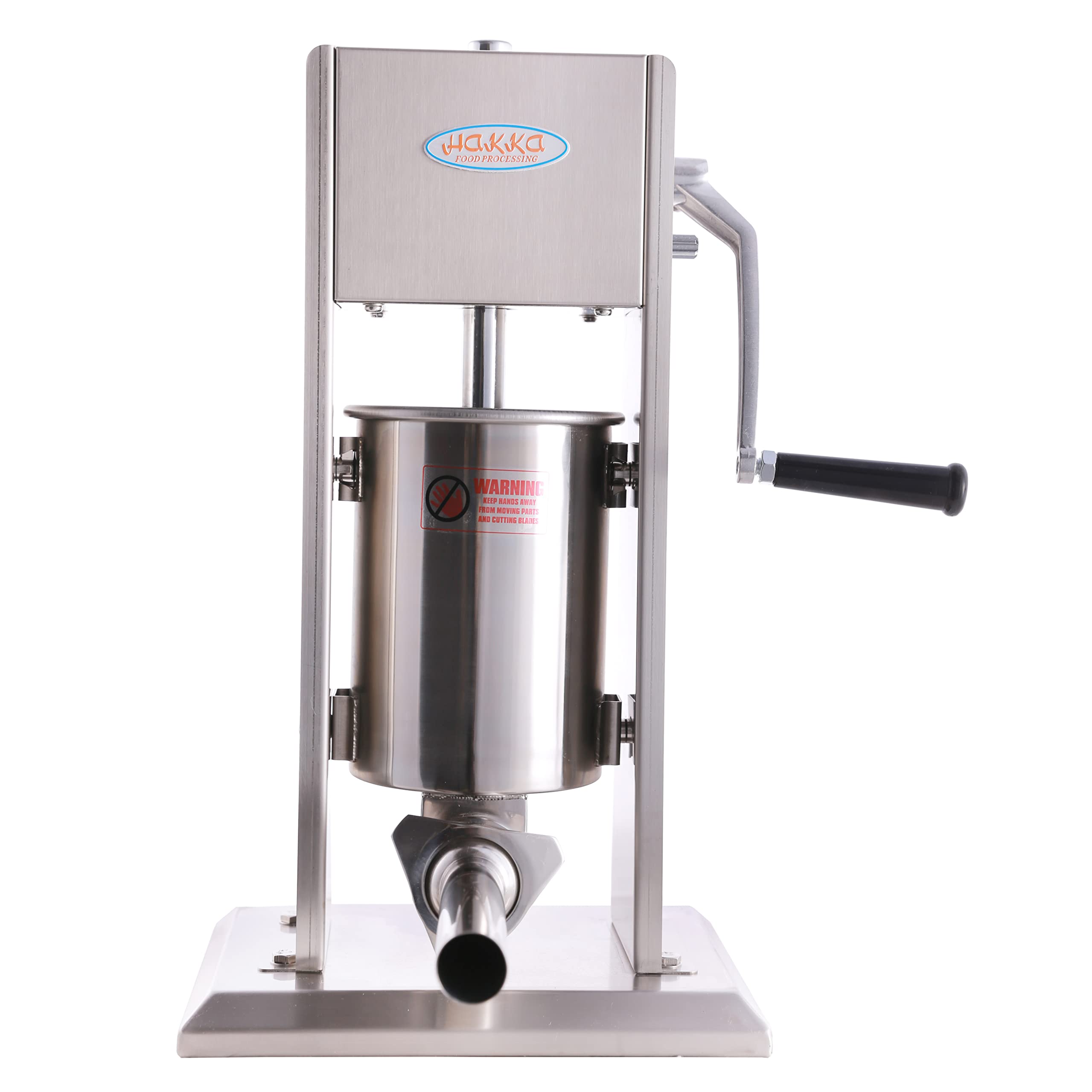
A heavy, all-stainless vertical stuffer with two-speed crank and four nozzle sizes; built for steady, long-term use.
Why I picked it: Sturdy all-steel construction, two-speed crank, and multiple nozzle sizes made it the most reliable in regular use.
Best for: Home cooks who want a durable, heavy-duty vertical stuffer for larger batches.
A solid mid-range investment for a long-lasting, mostly metal machine.
Pros
- Robust all-stainless construction
- Two-speed crank for control
- Four stainless nozzles included
- Easy to clean metal surfaces
Cons
- Base needs clamping during use
- A bit heavy to move often
My take
I found the HAKKA stuffer to be reassuringly heavy and solid — it doesn’t wobble while I’m cranking, which makes longer stuffing sessions less tiring. The two-speed crank is genuinely useful: I use the low speed when I need to control pressure and the high speed to refill quickly.
The all-stainless parts that touch food make cleanup straightforward; I wipe and rinse rather than wrestling with plastic bits that stain. The included nozzle selection handles most link sizes I make, though I do have to clamp the base down with a board on some counters.
In practice the HAKKA gave consistently smooth flow without breaking emulsions, and the air-release piston helped reduce trapped pockets. I left only a small amount of meat at the bottom each run, which I consider acceptable for a vertical stuffer.
2. LEM Mighty Bite 5 lb Sausage Stuffer – Best for Serious Home Use
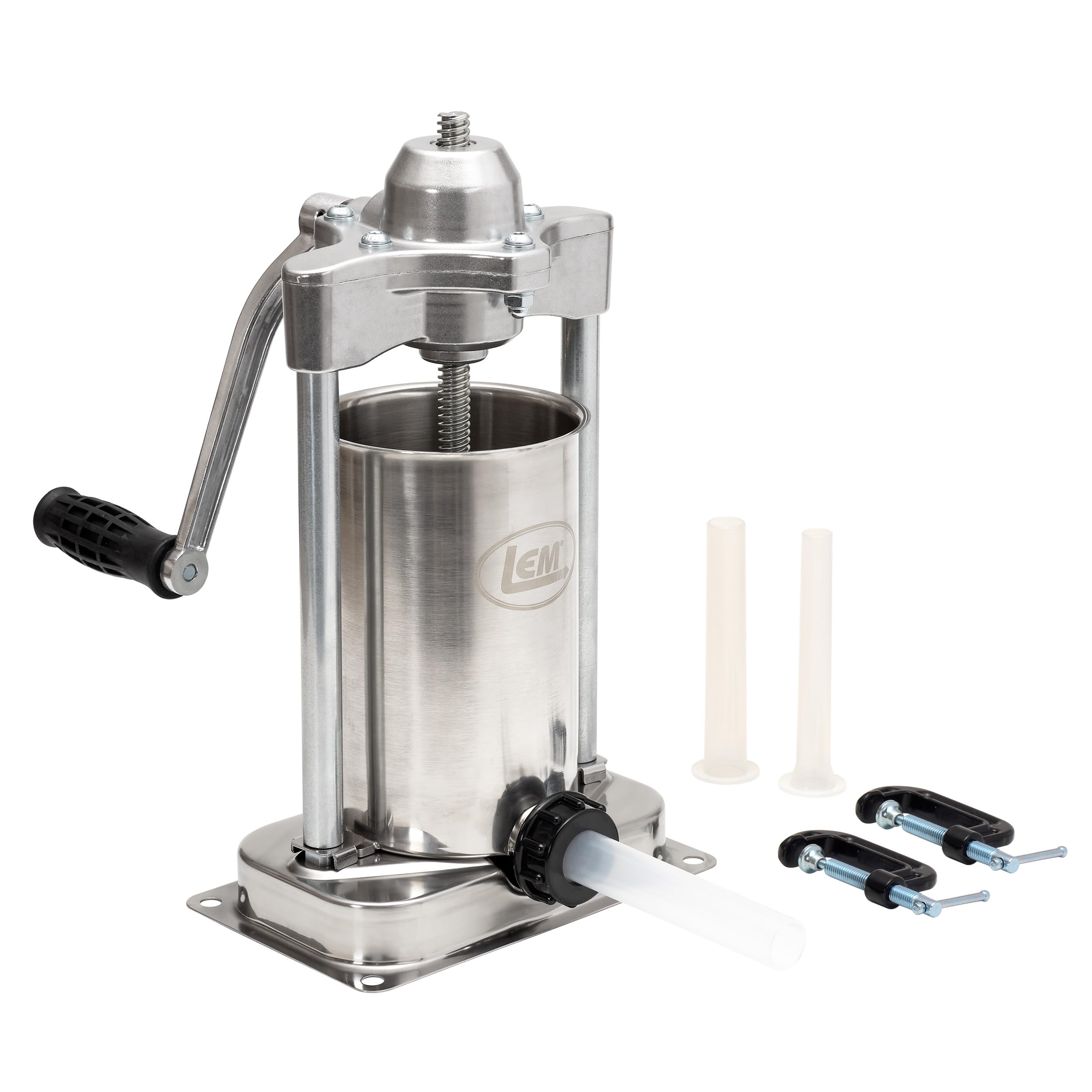
A precision-built 5 lb vertical stuffer with carbon-steel gears, removable cylinder, and a strong warranty/backing.
Why I picked it: Precision gears, removable cylinder, and a thoughtful design made it stand out for frequent home use.
Best for: People who make sausage regularly and want dependable, serviceable hardware.
A step up in dependability and parts availability compared with entry-level units.
Pros
- Precision carbon-steel gears
- Removable cylinder for easy cleaning
- Built-in piston release valve
- Good parts and warranty support
Cons
- Comes with plastic stuffing tubes
- Full 5 lb fill can overflow if not careful
My take
I appreciated how smoothly the LEM handles heavier batches — the gears feel like they were made for long-term use and the protective gearbox cover keeps grime away from moving parts.
The removable cylinder makes filling and cleanup quick, and the piston’s release valve helps me eliminate air pockets without fuss. I do swap in metal tubes for some jobs, but the supplied plastic tubes work fine for most casings.
When I stuffed a full cylinder I left a little headspace rather than packing it to the brim, and the cranking action stayed steady with minimal effort. For regular sausage makers who want support and serviceability, this is the unit I reach for.
3. MASTER FENG 2.5 lb Stainless Steel Sausage Stuffer – Best Small Batch
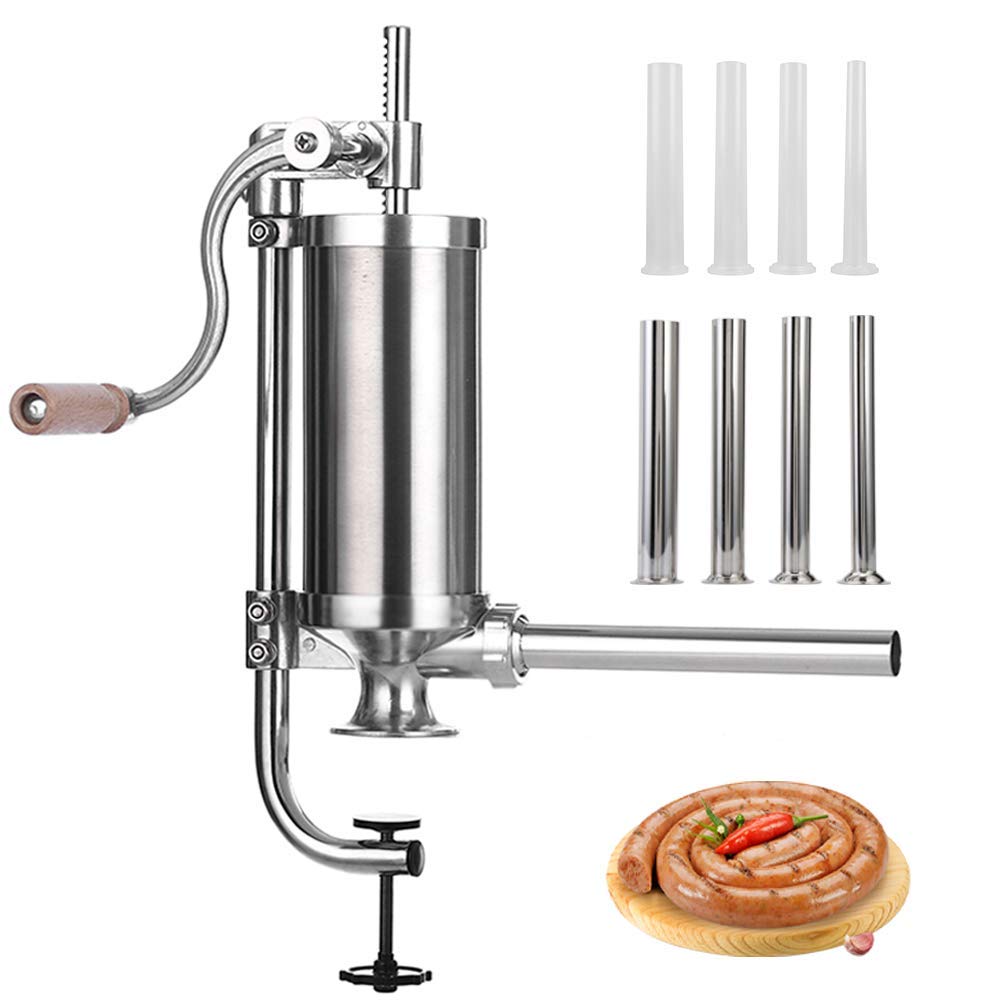
A compact, heavyweight 2.5 lb vertical stuffer that’s surprisingly solid for the price and perfect for small runs.
Why I picked it: Compact footprint with solid metal build made it ideal for hobbyists testing recipes.
Best for: Hobbyists and small-batch makers wanting an affordable, compact vertical stuffer.
An economical choice for experimenting without committing to a larger machine.
Pros
- Heavy-duty feel despite small size
- Good for quick small batches
- Multiple stuffing tubes included
- Easy to clean stainless surfaces
Cons
- Gaskets may need attention on heavy use
- Not ideal for sustained large batches
My take
This little MASTER FENG surprised me with how solid it felt — it’s heavy for its size and easy to handle on a kitchen counter. For test batches and recipe development I prefer its compact capacity because I can iterate quickly.
I ran several small recipes through it and cleanup was straightforward. On one extended session I did notice the gaskets begin to separate toward the end, so I’d avoid very large marathons on this unit or be prepared to check fasteners.
Overall, it gave smooth flow and predictable link formation for breakfast and specialty sausages, and I appreciated the smaller footprint when I don’t want to commit to filling a 5+ lb cylinder.
4. Stainless Steel Jerky Gun / Sausage Shooter (2 lb) – Best for Jerky & Sticks
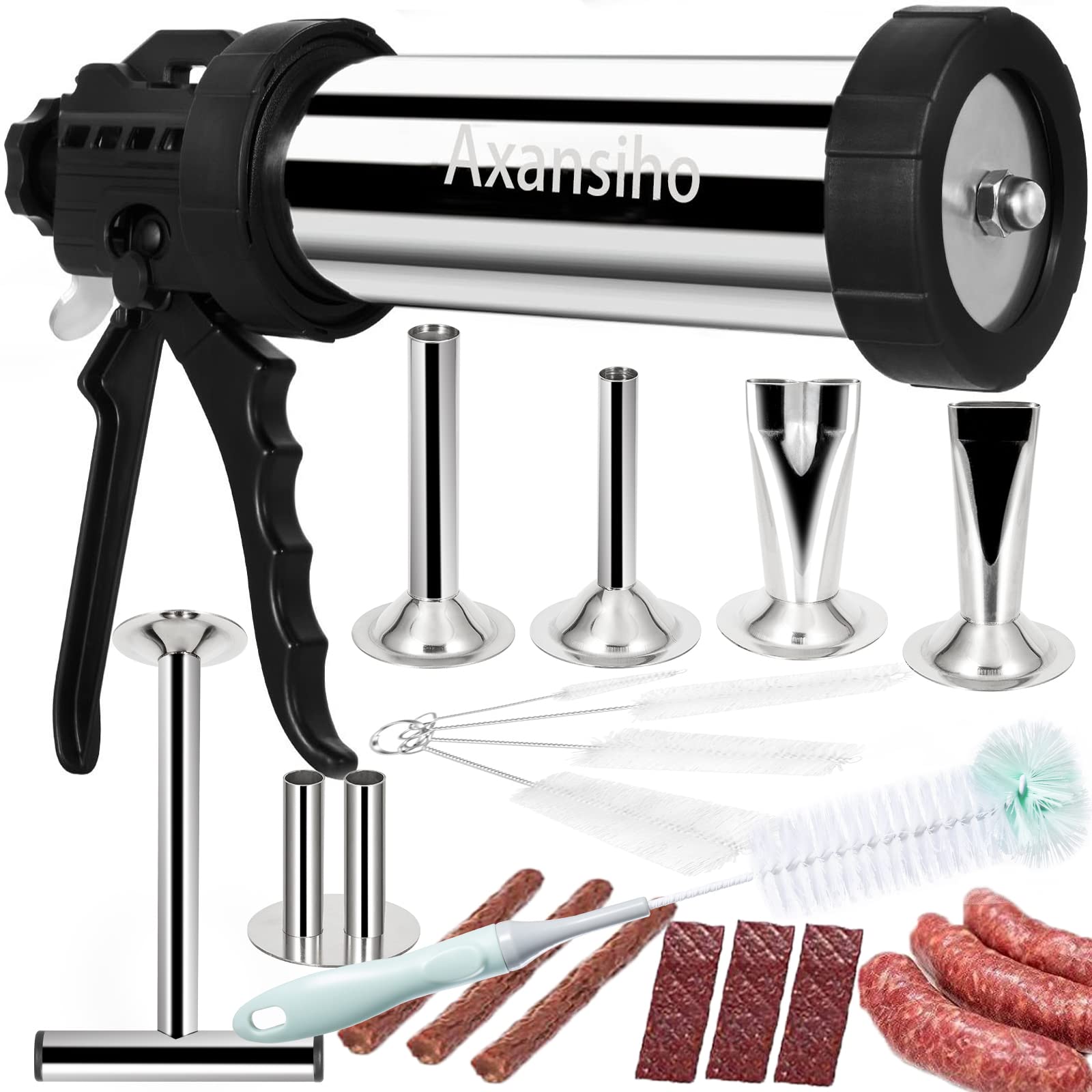
A stainless jerky gun with five nozzles and brushes designed for beef sticks, jerky strips, and snack sticks.
Why I picked it: Stainless tube, multiple nozzle shapes, and included brushes made it my go-to for jerky and meat sticks.
Best for: Making beef jerky, meat sticks, and formation styles that need a shooter-style extruder.
A very affordable tool for jerky fans and gift-worthy for casual makers.
Pros
- All stainless main tube and nozzles
- Five nozzle options included
- Easy to assemble and clean
- Generous 2 lb capacity
Cons
- Some internal unions are plastic
- Plunger design can feel basic
My take
When I want beef sticks or flat jerky strips I reach for this jerky gun — it handles a variety of nozzle shapes and the stainless tube cleans quickly. The included brushes are genuinely handy for the small grooves.
Because the kit is mostly stainless it avoids the fragility I saw in cheap plastic guns; the plunger and some unions are plastic, but they didn’t limit performance in my sessions.
It’s easy to load and I appreciated the meat pusher that lets me pack more into the tube. For casual jerky nights and snack-stick batches this is the quickest way I’ve found to make consistent pieces.
5. Happybuy 3L/7 lb Horizontal Sausage Stuffer – Best Horizontal Design
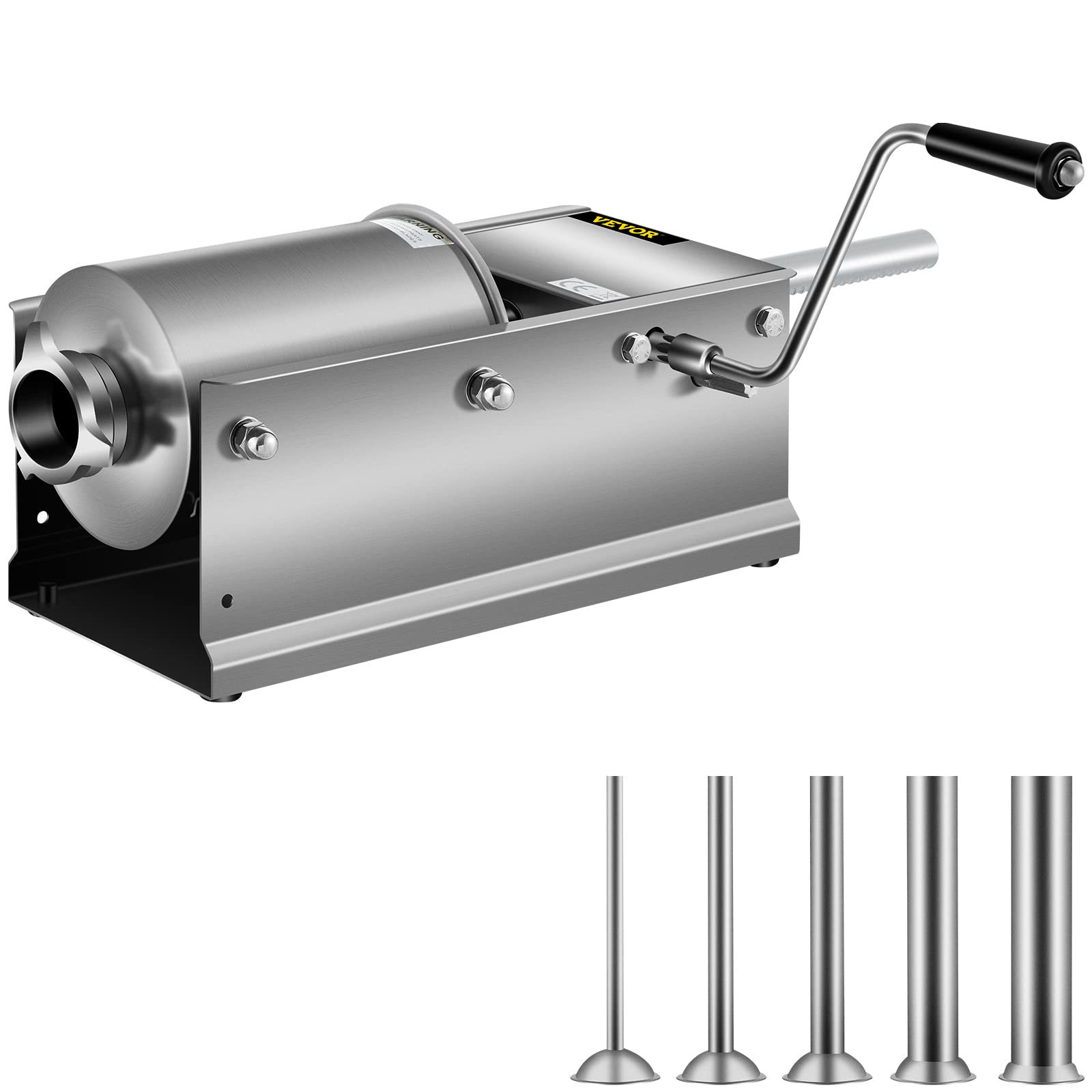
A heavy horizontal stuffer with five stainless filling tubes, a removable cylinder, and a low center of gravity for stable operation.
Why I picked it: Horizontal layout and low center of gravity gave me steady, predictable stuffing with minimal clamping.
Best for: Users who prefer horizontal stuffing or need a stable mid-capacity machine for home or light commercial work.
A value-focused option for those wanting stainless construction in a horizontal format.
Pros
- Horizontal layout reduces tipping
- Five stainless filling tubes
- Solid 3L/7 lb capacity
- Removable parts for cleaning
Cons
- Handle could lock for storage
- A little heavier to move
My take
The horizontal design of the Happybuy keeps the center of gravity low, so I didn’t need elaborate clamping on most counters. That stability makes long stuffing runs easier because I’m not wrestling the unit.
I tested a variety of casings and the five nozzle sizes covered everything I wanted to make, from snack sticks to larger bratwurst. The crank action is smooth and the removable cylinder simplifies cleanup.
If you want a mid-capacity machine that behaves like a pro unit without the footprint of electric stuffers, this is the horizontal model I reach for most often.
6. Lawei 2 lb Horizontal Sausage Stuffer – Best Budget Small Machine
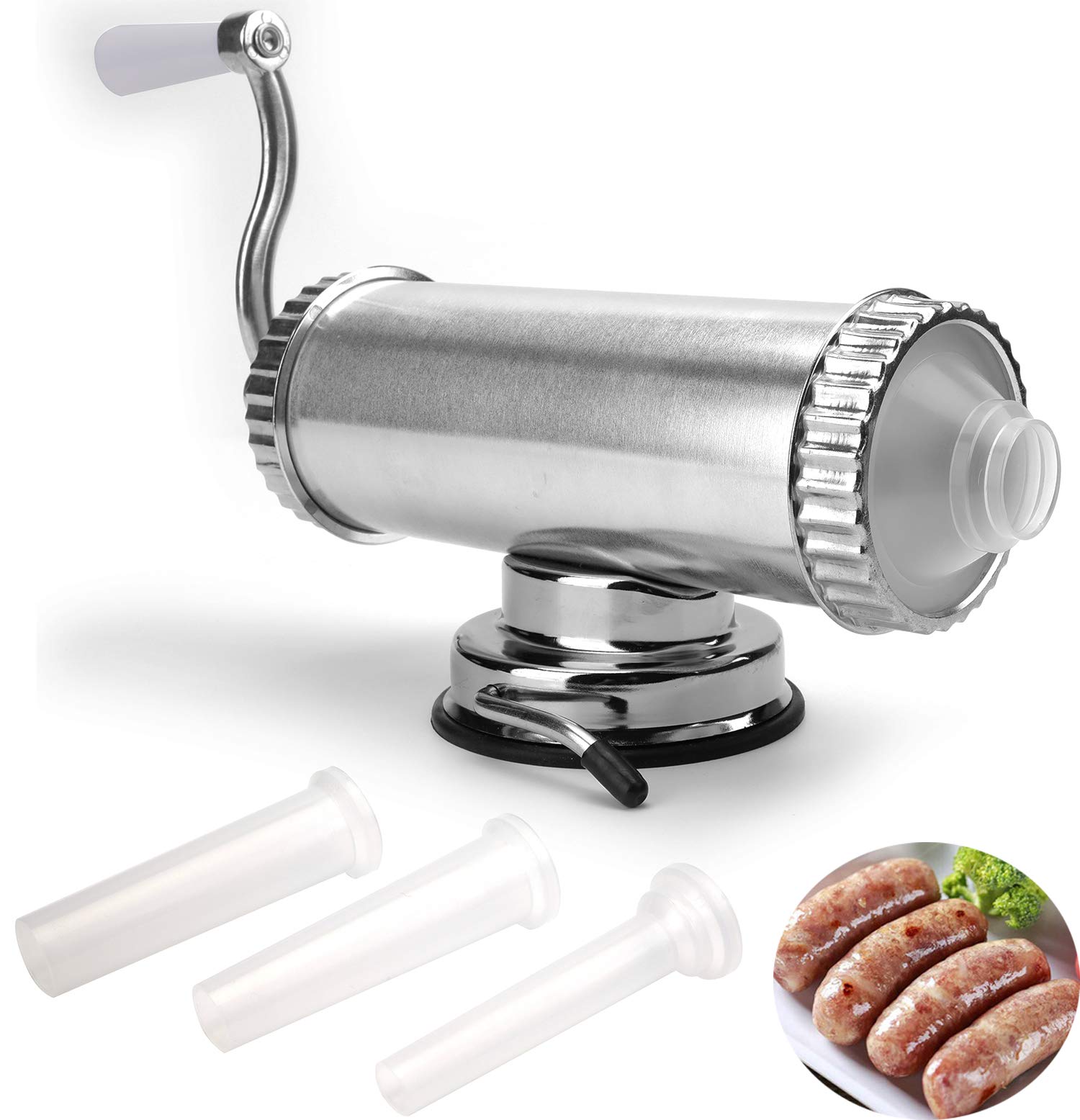
A compact, budget-friendly horizontal stuffer with a suction base and three nozzle sizes — great for first-time makers.
Why I picked it: Compact size, suction base, and simple metal construction made it a reliable entry-level pick.
Best for: Making quick small batches and experimenting without a big investment.
One of the most budget-friendly stainless options for small-batch hobbyists.
Pros
- Compact and lightweight
- Suction base for counter grip
- Three nozzle sizes included
- Simple to clean
Cons
- Limited 2 lb capacity
- Assembly without instructions took trial
My take
I used the Lawei for quick, two-pound runs and found it very straightforward — the suction base helps keep it stable on a countertop and the small capacity is perfect for recipe testing.
Assembly was intuitive once I handled the parts, though the lack of instructions meant a brief learning curve. The stainless body cleans easily and the included nozzles handle most breakfast and snack-sized links.
For beginners who want speed and simplicity without spending a lot, this unit gets the job done and stores away easily when not in use.
How I Choose a Sausage Stuffer
Capacity and Batch Size
I match stuffer capacity to how much sausage I plan to make at once. Smaller 2–3 lb units are perfect for testing recipes; 5–7 lb cylinders suit regular home runs, and larger units are better for semi-commercial workloads.
- Pick a small unit if you mainly test flavors or have limited storage.
- Choose 5–7 lb for frequent home use without refilling constantly.
- Bigger cylinders save time on large batches but take more space.
Construction and Materials
I prioritize stainless parts where food contacts metal because they resist corrosion and clean up faster. Heavy metal frames reduce wobble and let me crank with consistent pressure.
- All-stainless cylinders and nozzles simplify cleaning.
- Metal gears and gearbox covers add longevity.
- Plastic tubes can work, but I swap them for metal if I need durability.
Vertical vs. Horizontal
I choose vertical models when I have limited counter space; horizontal machines give a lower center of gravity and usually need less clamping. Each style affects how much meat remains in the cylinder and how the unit mounts to your work surface.
- Vertical: smaller footprint, may need clamping.
- Horizontal: more stable, often better for tighter mixes.
- Consider how you’ll mount or clamp the unit before buying.
Nozzles, Accessories, and Cleaning
I look for a range of nozzle sizes so I can make links and sticks without buying extra parts. Removable cylinders and included brushes speed up cleanup and reduce downtime between batches.
- Multiple nozzle sizes are handy for versatility.
- Removable cylinders and brushes make cleanup faster.
- Check gasket design and fasteners if you plan marathon sessions.
Frequently Asked Questions
Do I need to clamp a sausage stuffer?
I usually clamp vertical stuffers unless the base is heavy and wide; horizontals often sit stable without clamps, but a clamp or board is a cheap insurance policy.
Which stuffer is best for beef sticks and jerky?
I use a jerky gun or shooter-style extruder for beef sticks and jerky because the nozzle shapes make consistent strips and sticks easy to form.
How do I avoid blowing out casings?
I keep the meat mixture cold, use the low crank speed for starts, and stop to back off pressure if I see bulging casings. Adding a touch more moisture can help dense mixes feed smoothly.
Final Take
After testing these units I know that matching capacity and construction to your routine is the key decision. If you want a dependable all-around machine, the HAKKA and LEM are the most versatile for regular use.
For small test batches or gaining experience, the MASTER FENG or Lawei units get the job done without a large commitment. If your goal is jerky and meat sticks, the stainless jerky gun is the fastest path to consistent shapes.
Pick the stuffer that fits the amount you actually make, and you’ll save time and frustration during every sausage night.
