
I tested cordless systems, decorative payphones, budget cordless handsets, and vintage rotary replicas to find reliable, stylish, and practical house phones for different needs.
I evaluated a mix of modern cordless systems and nostalgic wired phones so you can pick the right house phone for your lifestyle. My testing focused on call quality, setup, practicality, and how each model fits into real homes.
Below I break down the strengths of each model, why I chose them, and which one I recommend depending on whether you want multi-handset coverage, vintage style, a low-cost cordless option, or a true rotary experience.
If you want coverage and features across the whole house, I recommend the Panasonic system. For a conversation-starting decorative piece, the Crosley payphone nails the look. The VTech handset gives the most straightforward value for basic landline use, and the Sangyn rotary is the best pick for nostalgia and mechanical ringer charm.
1. Panasonic KX-TGF575S Link2Cell Phone System – Best Overall
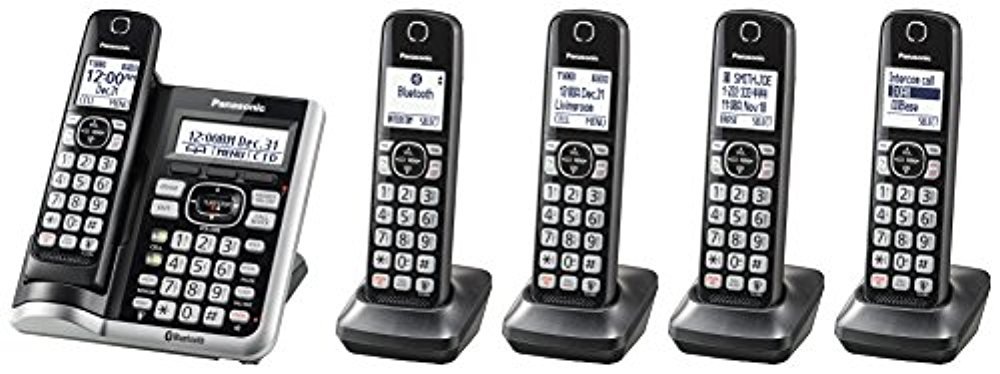
I picked this as my top overall house phone because it pairs broad DECT coverage with Bluetooth Link2Cell, five handsets, and a full answering system — a complete setup for busy households.
Why I picked it: Feature-rich multi-handset system with reliable DECT range and cell-phone pairing.
Best for: Families and home offices that need multiple handsets and strong coverage.
Feature-packed option that sits above basic budget handsets.
Pros
- Pairs with two cell phones via Bluetooth
- Includes five handsets, expandable
- DECT 6.0 for interference-free coverage
- Talking Caller ID in English and Spanish
- Battery backup for power outages
Cons
- Handsets feel lighter than vintage models
- Caller announcement pronunciation can be odd
- Volume control placement is on handset face
My take
Setting this system up was straightforward and I appreciated how seamlessly it paired with my phones via Link2Cell. I used both cell and landline sources and found switching between them intuitive from the handset.
Call quality remained clear across the house thanks to DECT 6.0, and the talking caller ID helped when I couldn't reach the handset immediately. I also liked the call block feature — it made unwanted calls far less intrusive with just a button press on the base or handset.
The built-in answering machine stores a useful amount of messages and the phone book capacity is massive; I moved over thousands of contacts from my phone without trimming names. Voice assistant integration for Siri and Google worked for hands-free dialing in my tests.
A few practical notes: the handsets are lighter than older Panasonic units I’ve used, and I found the volume control awkwardly placed. Still, the overall reliability, paging, baby-monitor convenience, and battery backup make this my go-to pick for whole-house setups.
2. Crosley 1950s Payphone Wall Phone – Best Retro Design
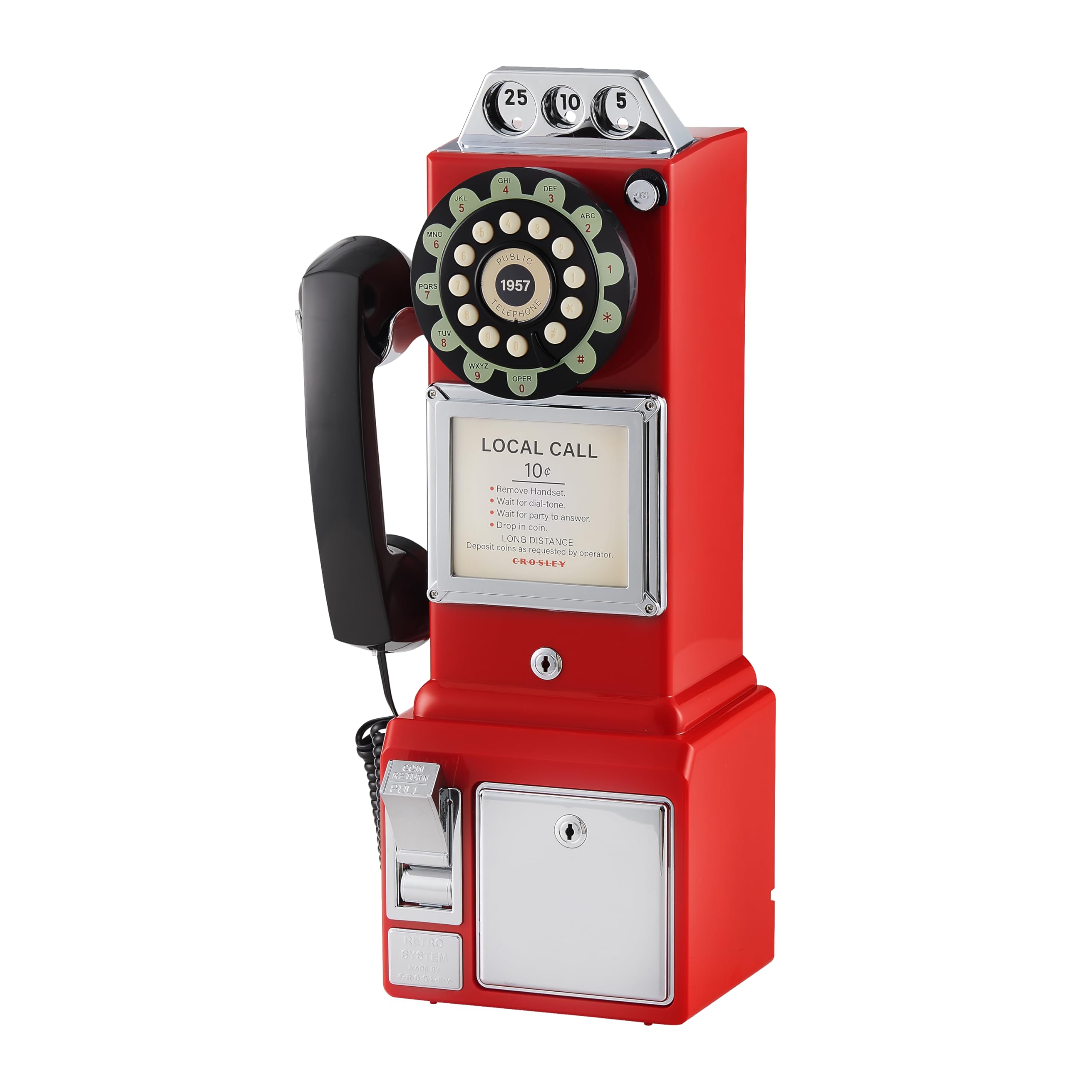
I chose the Crosley payphone for its authentic vintage look that still functions as a practical wall phone — great when you want decor with real utility.
Why I picked it: Striking retro styling with functional push-button dialing and a working coin box.
Best for: Kitchens, themed rooms, and anyone who wants a nostalgic focal point that still makes calls.
Stylish, mid-range novelty that doubles as a usable phone.
Pros
- Authentic payphone styling
- Working coin box for novelty piggy bank
- Push-button dial with rotary look
- Wall-mountable and easy to install
- Adjustable ringer volume
Cons
- Plastic construction feels light
- Not a true rotary mechanism
- Coin chime novelty may fade over time
My take
I mounted this phone on a kitchen wall as a decorative piece and ended up using it regularly. The handset feels reassuringly solid compared with the lighter plastic body, and the cord stretches far enough for comfortable use.
The push-button dial preserves the rotary look while keeping dialing practical. I enjoyed dropping coins into the working coin box as a playful piggy-bank feature — it produces that classic cha-ching sound I remember from old payphones.
Setup was simple: it plugs into a standard landline jack and the ringer volume adjusts easily. Bear in mind the housing is plastic, not heavy metal, so it visually reads as vintage but feels lighter in hand. For a conversation-starting, functional décor piece, this is my favorite.
3. VTech CS6919-16 DECT 6.0 Cordless Phone – Best Value Cordless
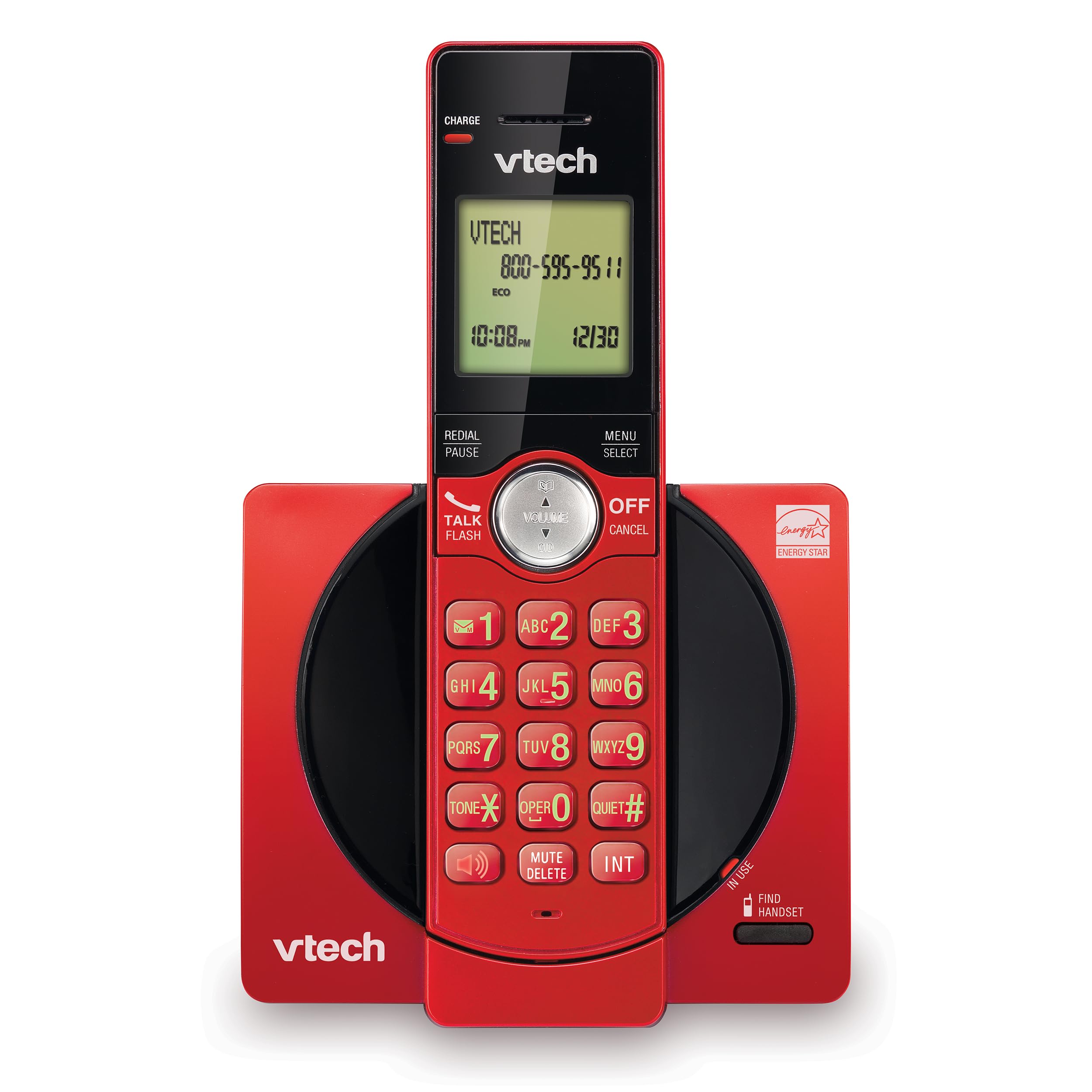
I recommend the VTech as the best value cordless handset when you want dependable landline calling without extra bells and whistles.
Why I picked it: Simple, dependable DECT cordless with good range and essential features.
Best for: Small homes or single-handset needs where budget and clarity matter.
Budget-friendly option with the essential features.
Pros
- Clear full-duplex speakerphone
- Backlit keypad and display
- Quiet mode mutes ringer when needed
- ECO mode extends battery life
- Expandable up to five handsets
Cons
- Limited call history capacity
- Feature set is basic
- Caller ID may require subscription
My take
I put this unit on a desk where we needed a simple landline handset and it performed exactly as I hoped. Calls were clear on both ends and the full-duplex speakerphone made hands-free conversations natural.
The backlit display and keypad are helpful for late-night dialing, and ECO mode helped stretch battery life between charges. I also liked the quiet mode when I wanted to mute ringers temporarily.
Setup took minutes and the range covered my whole house during tests. If you want a straightforward cordless phone that won’t overcomplicate things, this VTech is an easy, dependable choice.
4. Sangyn Retro Rotary Mechanical Ringer Phone – Best Vintage Replica
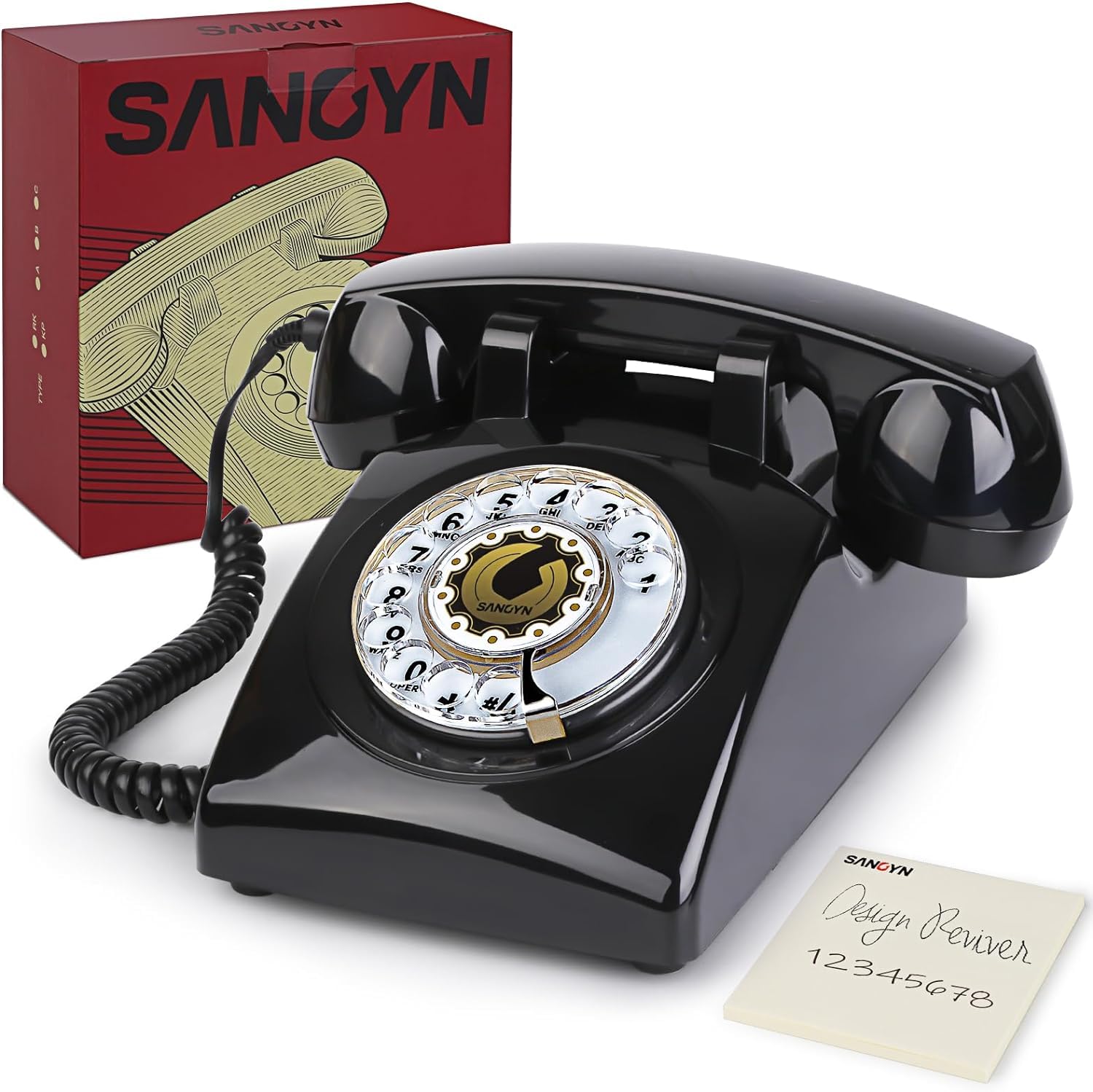
I picked the Sangyn rotary for people who want an authentic-looking rotary phone experience with a real mechanical bell and modern compatibility.
Why I picked it: Mechanical ringer and classic styling that actually works on modern lines.
Best for: Vintage décor lovers and stage/prop needs where a real bell ringer matters.
Moderately priced way to get authentic rotary style without antiques.
Pros
- Genuine mechanical bell ringer
- Sturdy ABS and zinc alloy construction
- No batteries or external power required
- Last-number redial feature
- Adjustable ringer volume
Cons
- Lighter than original vintage phones
- Some units may need minor tweaks
- Handset ringer can be loud
My take
I used this rotary on a standard wall jack and loved the authentic chime of the mechanical bell. The handset and dial feel very close to the original Western Electric look, and the dial includes holes that let it handle modern pound and star tones.
A few units can show small assembly quirks — I encountered a loose spring that I secured quickly — but once adjusted the phone worked well. I also tested it with a Bluetooth gateway and it provided plenty of dial tone for modern setups.
If you want a practical vintage replica that rings like the originals and adds a nostalgic statement to a room, this Sangyn model does the job with minimal fuss.
How I Choose a House Phone
Key considerations before you buy
I focus on four things when choosing a house phone: how you’ll connect (landline vs. Bluetooth), how many handsets you need, whether you want decorative style, and which features you’ll actually use.
Range, call clarity, and power resilience matter for cordless systems. For wired or decorative phones I prioritize mechanical ringer authenticity and build quality.
- Connection type: Do you need landline, Bluetooth Link2Cell, or both?
- Handset count: Buy a multi-handset system for whole-house coverage.
- Call features: Look for call block, answering machine, or intercom if you need them.
- Power needs: Battery backup is useful for outages; wired phones work without power.
- Aesthetics vs. function: Retro phones look great but can be lighter in construction.
Cordless vs. corded — what I recommend
I choose cordless DECT systems when I want freedom to move and consistent range. DECT 6.0 is ideal for homes with thick walls or lots of wireless devices.
For a statement piece or a room where you want a vintage feel, I prefer corded replicas with mechanical ringers because they don’t rely on batteries or power adapters.
- Cordless: Better for mobility and multi-handset setups.
- Corded: Better for authenticity, decor, and power-free operation.
Must-have features I look for
I always check for call-blocking options, battery backup, answering machine capacity, and ease of transferring contacts. If voice assistant integration or Bluetooth pairing is important, confirm pairing limits.
Sound quality and ringer adjustability are easy to test and make a big difference in daily use.
- DECT 6.0 for interference-free cordless calls
- Bluetooth Link2Cell if you want to use your mobile with the base
- Adjustable ringer and volume controls
- Answering machine duration and message storage
- Expandable handset support for larger homes
Frequently Asked Questions
Can these phones work without a landline?
Yes — the Panasonic Link2Cell can operate by pairing to up to two cell phones via Bluetooth so a landline isn’t required. The Crosley and Sangyn units need an active phone line for dial tone unless you use a third-party gateway. The VTech is designed for a traditional landline connection.
Will retro phones fit modern phone systems?
Most modern replicas plug into a standard RJ11 wall jack and will work fine. If you’ve migrated entirely to cellular service, a Bluetooth gateway will provide dial tone to a wired replica like the Sangyn or Crosley.
How many handsets can I add to a multi-handset system?
Expandable Panasonic systems typically support additional handsets beyond the included set; check the specific model limit. The VTech models in this roundup are also expandable up to five handsets.
Final Take
I’ve found each of these phones excels in a particular role: Panasonic for full-house coverage and features, Crosley for nostalgic wall-mounted style, VTech for straightforward value, and Sangyn for authentic rotary charm.
Choose the model that matches how you want to connect and how you use phones at home — whether that’s broad cordless coverage, a decorative focal point, or a simple, reliable handset.
