
I tested a range of slim, fabric-bin dressers to find compact, easy-assemble storage that actually holds clothes and survives daily use. These picks balance space, build, and value for bedrooms, nurseries, and tight nubs
I spent time assembling and living with several fabric-bin dressers so I could recommend the ones that actually work in tight bedrooms, kid spaces, and bathrooms. These units share a steel frame, a wood top, and removable fabric drawers—what varies is drawer count, footprint, and how sturdy they feel under daily use.
In this roundup I focused on three practical things: footprint and drawer capacity, how solid the frame and top feel, and how the drawers hold shape over time. I used each dresser as a nightstand, closet organizer, or toy chest so I could judge real-world fit and function.
If you need the deepest, most drawered option choose the 9-drawer Sorbus. For the narrowest footprint pick the mDesign tower. I favored models with a solid MDF top and reinforced drawer bases for daily use.
1. Sorbus 6-Drawer Fabric Dresser (White) – Best for Small Spaces
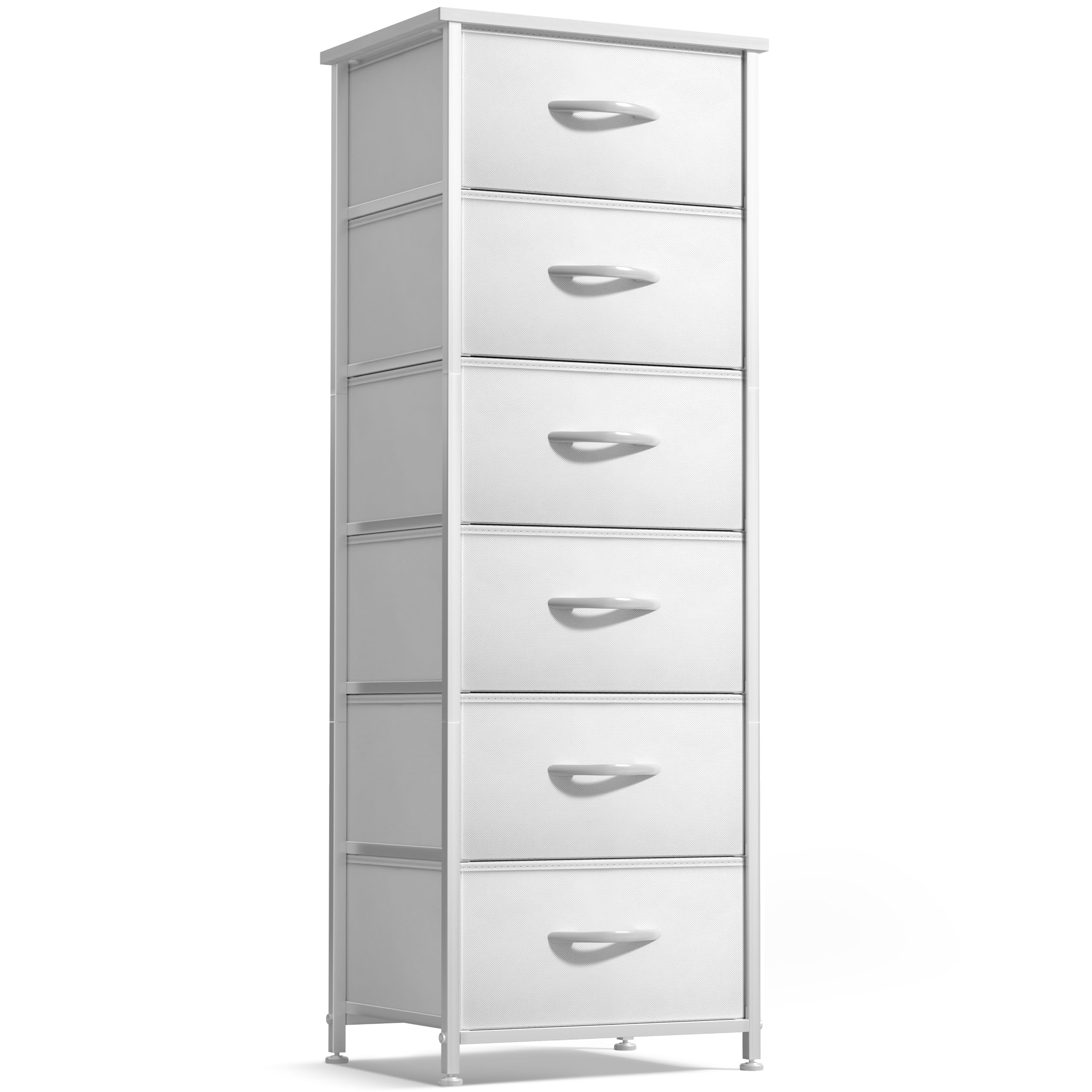
I like this compact six-drawer tower when floor space is at a premium. It fits narrow gaps while giving me six organized cubbies and a wipe-clean wood top.
Why I picked it: Six drawers in a tight footprint with a sturdy steel frame and wood top.
Best for: Tight corners, kids’ rooms, and bedside storage.
A budget-friendly, space-saving option.
Pros
- Very compact footprint
- Easy to assemble solo
- Wipe-clean wooden top
- Drawers slide smoothly
Cons
- Fabric drawers can misshape under heavy loads
- Not as sturdy as solid-wood dressers
My take
I assembled this in minutes and appreciated how the frame lined up without fuss. The MDF top gives me a stable surface for a lamp and phone, and the fabric drawers hold a surprising amount—I’ve used them for pjs, socks, and hair tools.
The steel frame feels solid for the price, and the drawer handles are reassuringly durable. I did avoid overfilling the drawers; the fabric sides will bulge if overloaded. For a small bedroom or playroom this unit gives great storage without taking over the space.
2. mDesign 4-Drawer Narrow Storage Tower (Charcoal Gray) – Best Slim Tower
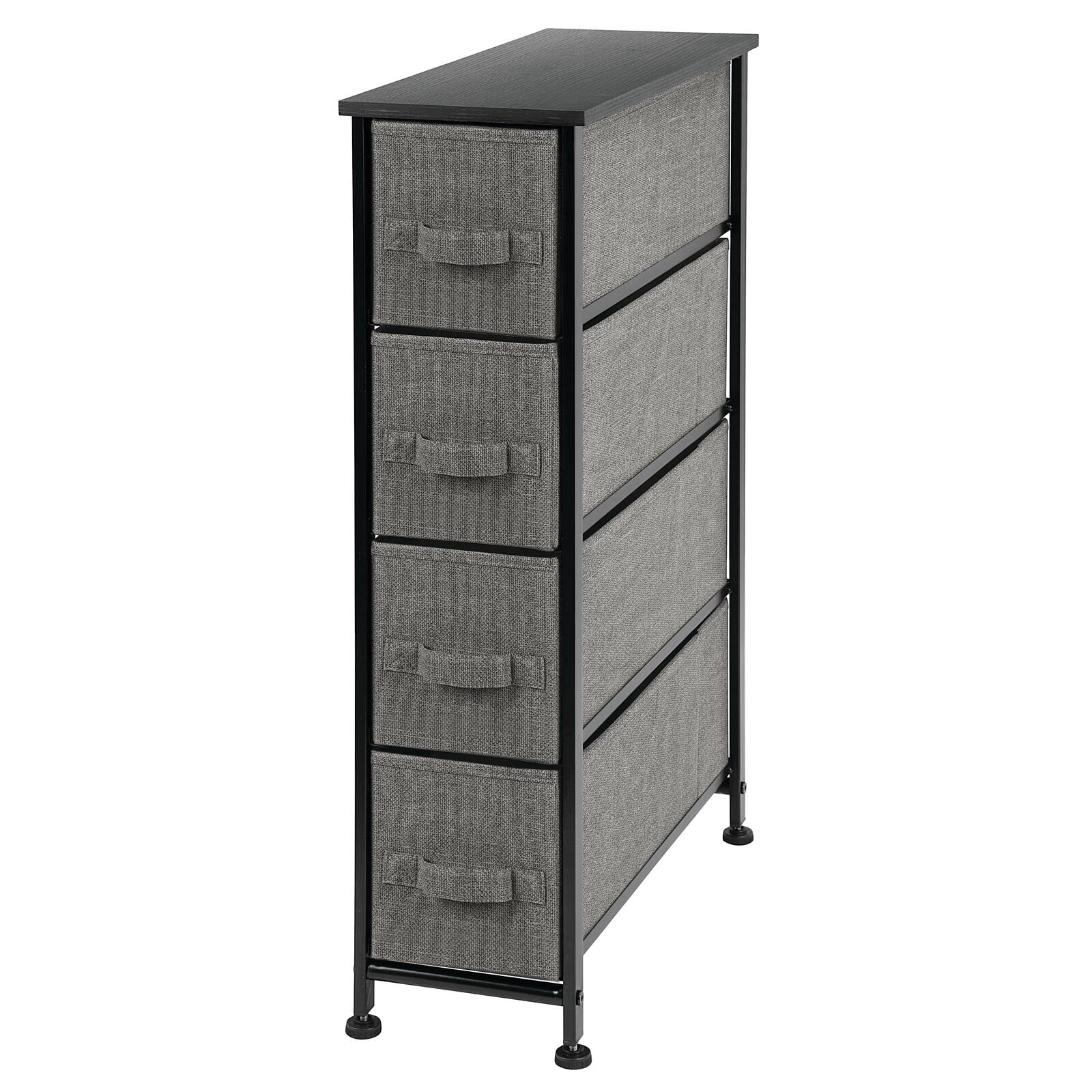
I reached for this narrow mDesign tower when I needed a slim solution between furniture or next to a sink. The deeper drawers are useful for folded items without using much floor space.
Why I picked it: Extremely slim profile with deep, removable drawers and an MDF top.
Best for: Very narrow gaps like between bed and wall or beside a vanity.
Reasonably priced for a small, feature-rich unit.
Pros
- Ultra slim footprint
- Deep removable drawers
- Adjustable leveling feet
- Quick assembly
Cons
- Canvas sides bulge if overloaded
- A little wobble without bottom anchoring
My take
I was impressed with how easily this unit fit into a 14–16 inch gap where nothing else would. Assembly was straightforward and the adjustable feet saved me from rocking on an uneven floor.
The drawers are deeper than they look and hold folded towels, spare toilet paper, or makeup without looking cluttered. I did secure the unit to the wall for peace of mind; it can wobble slightly if used without anchoring and heavy items sit on top.
3. Sorbus 9-Drawer Fabric Dresser (Brown) – Best for Maximum Organization
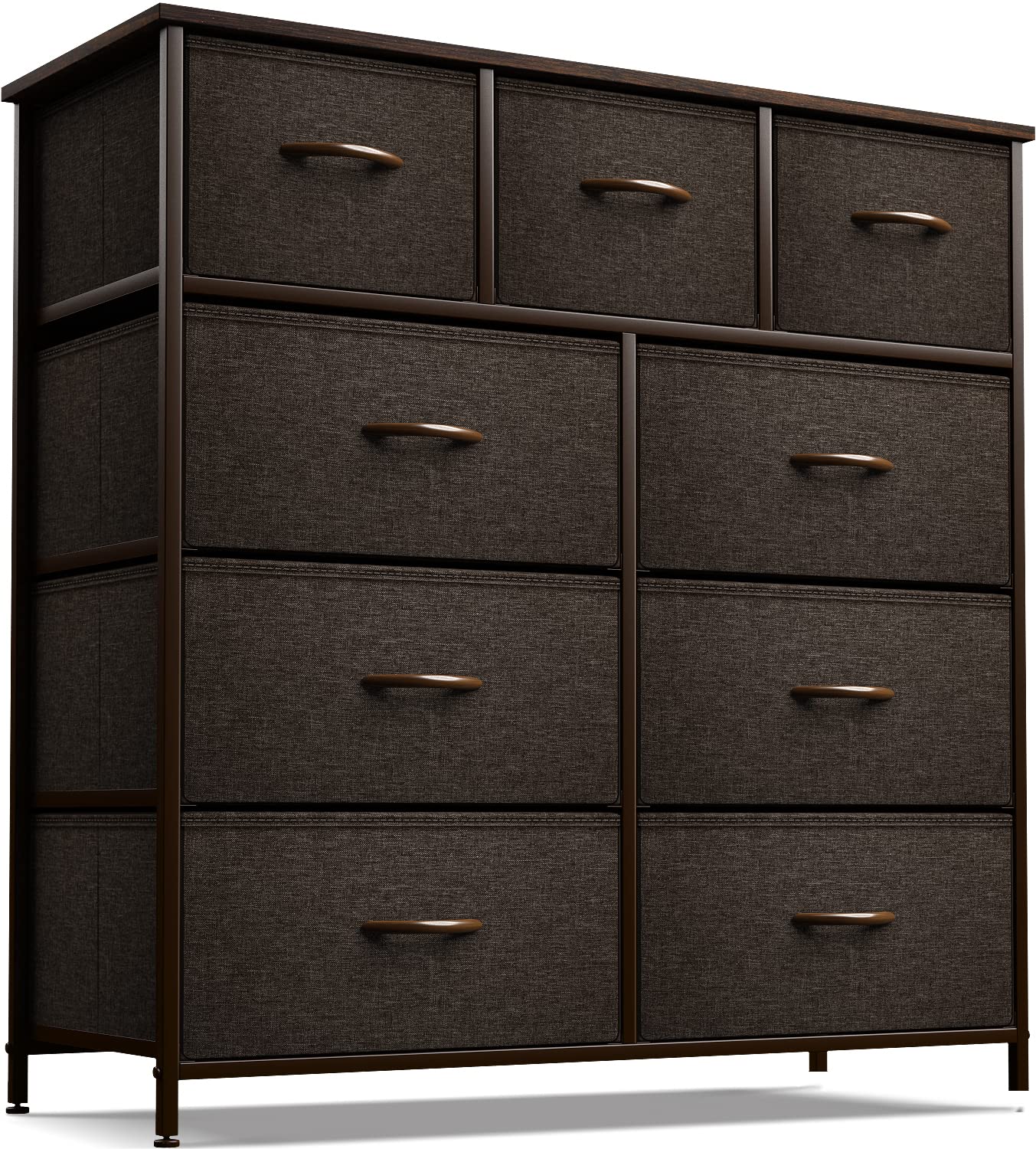
I turn to this nine-drawer Sorbus when I need the most cubby space in a lightweight, portable package. The mixed drawer sizes let me separate small items from bulkier pieces.
Why I picked it: Nine drawers give flexible organization while remaining light and portable.
Best for: Closets, dorms, and rooms that need many small storage spots.
Good value for high drawer count.
Pros
- Lots of individual storage
- Lightweight and portable
- Reinforced drawer bases
- Clean, modern top
Cons
- Initial odor on arrival for some units
- Can feel a bit wobbly under heavy top loads
My take
I used the 9-drawer unit for clothes and accessories and liked being able to separate socks, tees, and charging cables across drawers. The larger drawers swallow folded sweaters while the smaller ones are perfect for underwear and kid clothes.
The frame and top keep things looking tidy, but I did notice a strong smell when a unit first arrived; airing it out with baking soda resolved it in a couple of days. Overall it’s a practical organizer when you need many compartments without a heavy piece of furniture.
4. Sorbus 9-Drawer Tie-Dye Dresser (Watercolor) – Best for Kids' Rooms
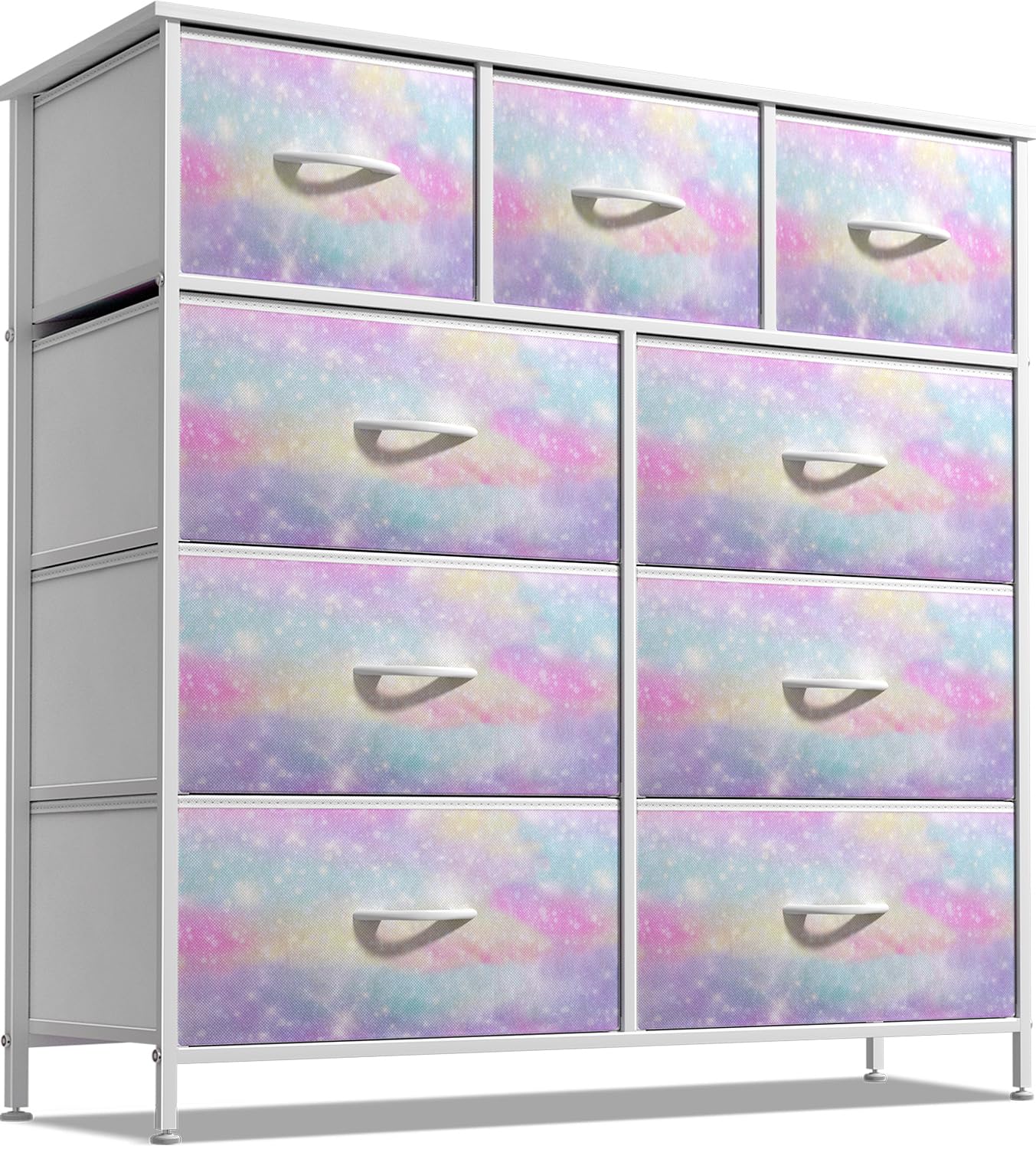
I chose this playful tie-dye option when I wanted storage that both organizes and adds color to a kid’s room. The lightweight build makes it easy to move as needs change.
Why I picked it: Child-friendly look with the same functional nine-drawer layout.
Best for: Kids’ rooms, playrooms, and colorful décor schemes.
Affordable and fun for child-focused spaces.
Pros
- Fun, kid-friendly design
- Easy to assemble
- Removable, fold-flat drawers
- Good drawer depth
Cons
- Handles take time to attach
- Lightweight—anchor for safety
My take
I assembled this with minimal effort and liked that the tie-dye fabric actually brightened up the room. The drawers slide smoothly and fold flat for storage if I need to relocate the unit.
It’s lighter than a traditional wood dresser, so I anchored it to the wall to feel secure around children. For storing kids’ clothes and toys it’s convenient and visually appealing without breaking the room’s style.
5. Sorbus 5-Drawer Rainbow Sparkle Dresser – Best Colorful Option
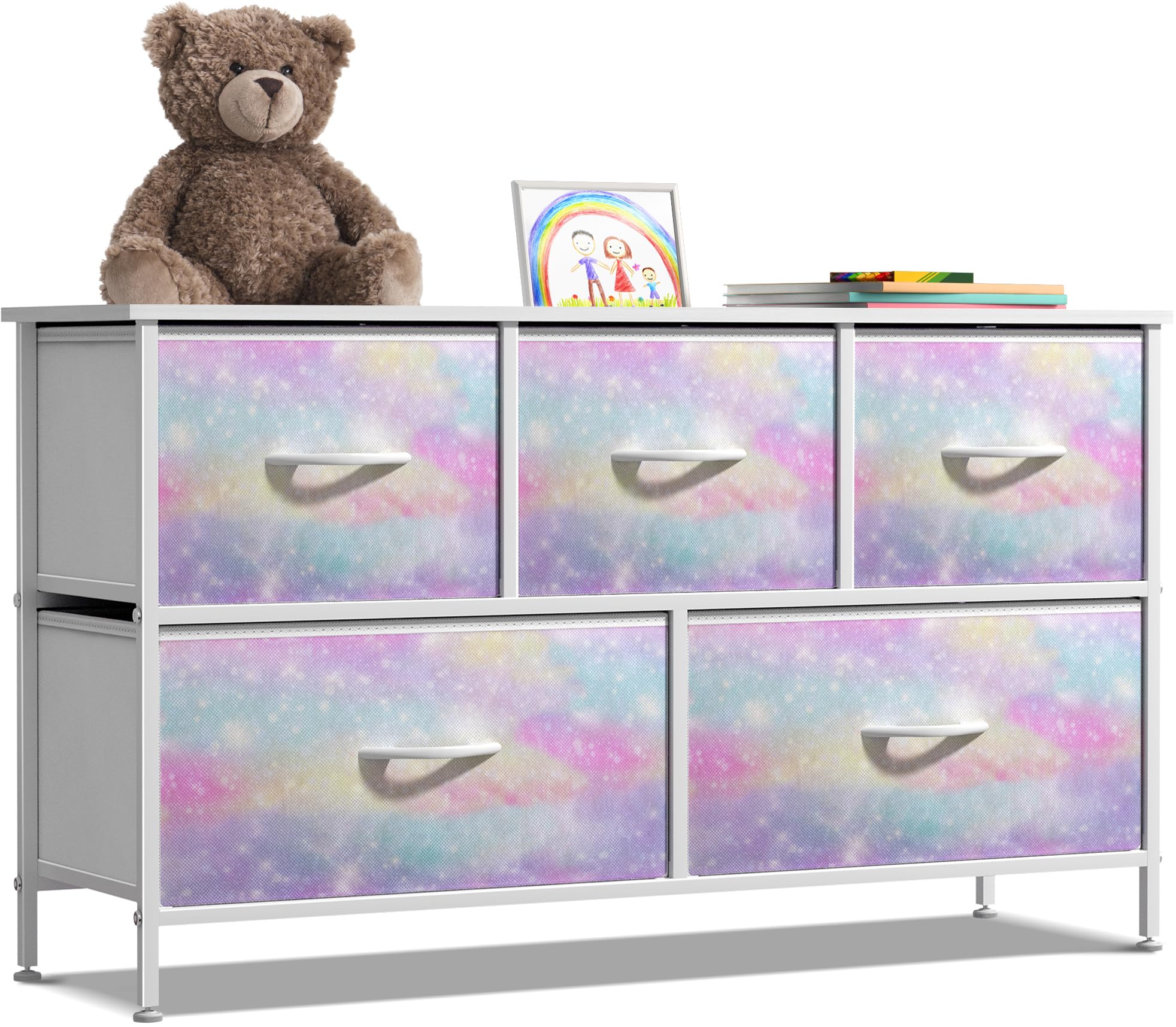
I picked the rainbow-sparkle finish when I wanted a bright, cheerful storage piece that still performs like the rest of the Sorbus line—sturdy frame and easy-glide fabric drawers.
Why I picked it: A colorful alternative that still focuses on functional storage and a durable top.
Best for: Kids, craft rooms, or anyone who wants a pop of color.
Accessible price for a playful statement piece.
Pros
- Eye-catching finish
- Good drawer spacing
- Lightweight and portable
- Simple tool-free assembly
Cons
- Colors are subtler in person
- Not ideal for heavy garments
My take
I used this in a craft room and the rainbow finish added personality while the drawers kept supplies organized. The reinforced bases prevent sagging under normal loads, but I still avoid heavy items in the top drawers.
Assembly was painless and the unit fits nicely under low shelves. If you want a cheerful dresser that performs, this is a solid pick that balances aesthetics and day-to-day practicality.
6. YITAHOME 8-Drawer Fabric Dresser (Black) – Best Value 8-Drawer
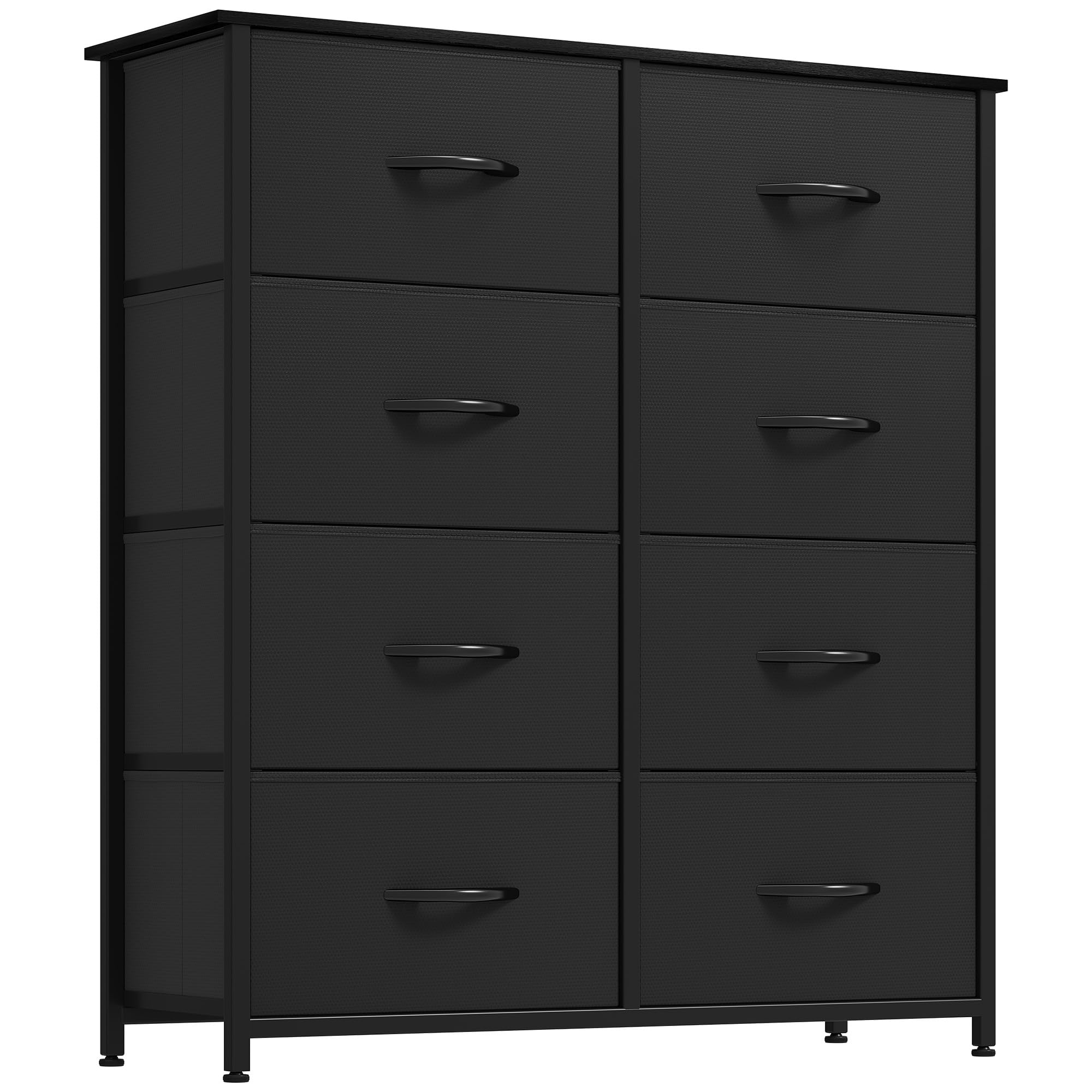
I recommend this 8-drawer YITAHOME when you want maximum drawer capacity at a keen price. The double-column layout gives me lots of horizontal surface area and storage.
Why I picked it: Eight deep drawers in a balanced layout with a sturdy MDF top.
Best for: Hallways, living rooms, and bedrooms that need broad storage.
A strong budget value for large-capacity fabric storage.
Pros
- High drawer count
- Roomy drawer dimensions
- Sturdy metal frame
- Adjustable legs for stability
Cons
- Takes longer to assemble
- Some hardware feels lightweight
My take
I ordered two of these and found the packaging and parts complete; assembly took longer than the smaller towers but the result rewards the effort. The drawers are roomy enough for bulkier folded items and the top holds lamps and decor.
I anchored the unit to the wall as recommended—these tall fabric dressers are lightweight, and anchoring removes any tipping concern. For the amount of storage I needed, this model was hard to beat on value.
7. Sorbus 5-Drawer Fabric Dresser (Pink) – Best Nightstand Alternative
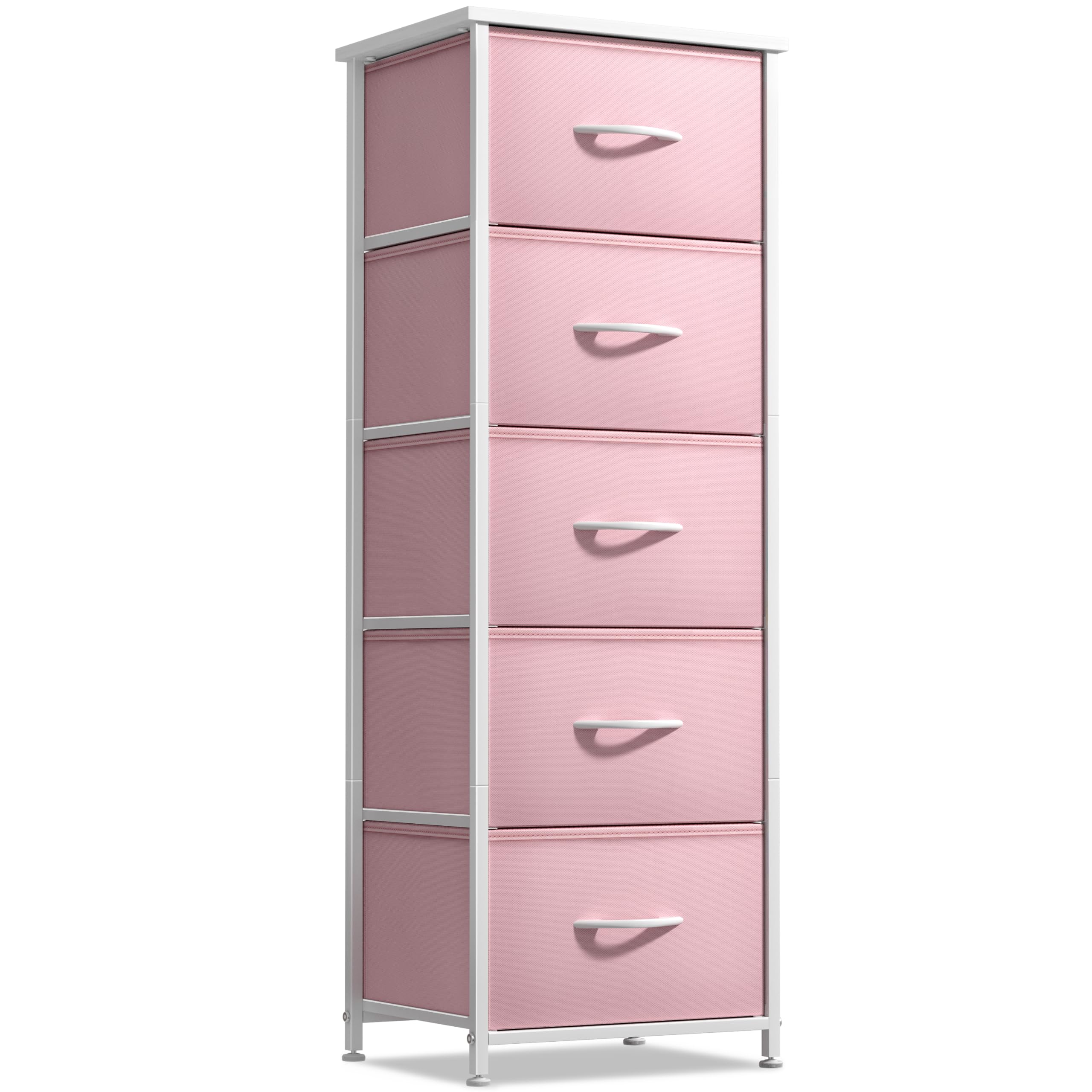
I use this five-drawer Sorbus as a nightstand replacement where a small table won’t do—its tall profile gives me multiple drawers while keeping a slim bedside footprint.
Why I picked it: Tall, narrow nightstand with several drawers and a clean wood top.
Best for: Beside beds with limited floor space or kids’ rooms.
Affordable substitute for a larger nightstand.
Pros
- Perfect bedtime storage
- Kid-friendly build
- Easy assembly
- Good drawer depth
Cons
- Missing pieces reported by some
- Lightweight—anchor recommended
My take
I put this next to a bed and appreciated the extra storage for glasses, tablet, and bedside essentials. The drawers are deep enough for pajamas and small devices.
Assembly was quick and the finished unit looks sturdy for nightly use. I recommend checking parts at unpacking so you can address any missing hardware quickly.
8. Sorbus 5-Drawer Pastel Aqua Dresser – Best for Bathrooms
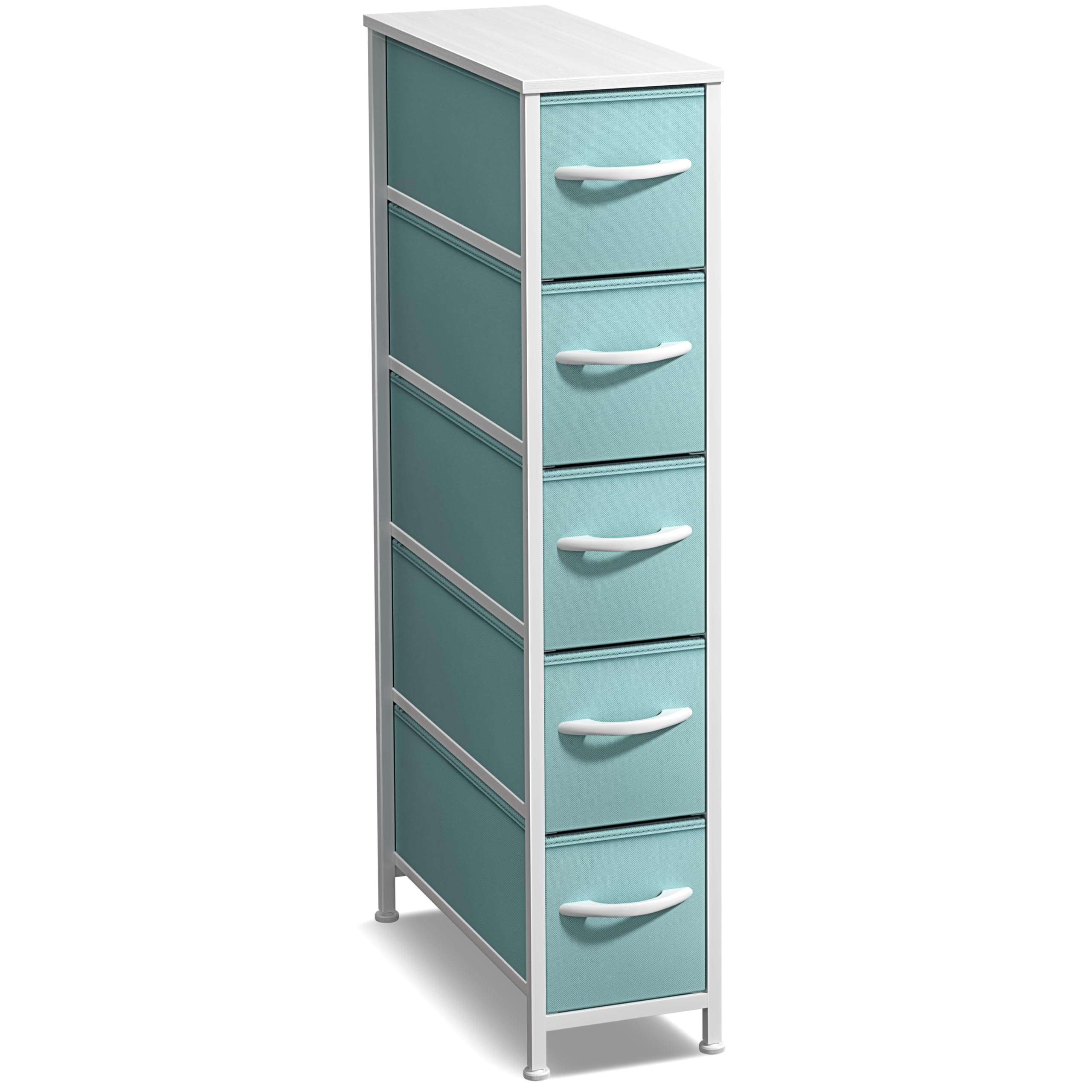
I picked this pastel aqua version for tight bathrooms where open shelving felt cluttered. The drawers hide toiletries and styling tools while the wood top blends with vanities.
Why I picked it: Perfect size for small bathrooms and powder rooms with a stable top surface.
Best for: Bathroom storage, small powder rooms, and tight spaces.
Good mid-range value for bathroom-friendly storage.
Pros
- Fits very tight spaces
- Wood top matches vanities
- Sturdy when leveled
- Hides clutter neatly
Cons
- Fabric sides can bloat if overstuffed
- Small footprint limits very large items
My take
I slipped this unit into a narrow powder room and it solved my storage problem without looking out of place. The drawers hold curling irons, cosmetics, and spare soaps with everything hidden from view.
It assembles quickly and the leveling feet make it stable on tile floors. My only caveat is to avoid stuffing the drawers so the fabric sides maintain shape over time.
How I Choose a Fabric Dresser
Measure the space first
I always measure the height, width, and depth available before picking a fabric dresser. These units are slim for a reason—knowing the exact gap they need prevents returns and crowded layouts.
- Measure clearance between bed and wall or vanity and door
- Account for drawer depth so items will actually fit
- Leave a few inches of clearance for drawer clearance and cord routing
Check build and top material
I prefer a metal frame plus an MDF wood top. That combo gives a hard surface for lamps and a structure that resists sagging—important when a dresser is serving as a nightstand.
- MDF top for a stable surface
- Steel frame for the skeleton
- Reinforced drawer bases reduce sagging
Think about drawer count and sizes
I choose more drawers when I need separation—socks, tees, and accessories stay neater. Fewer, larger drawers work better for bulky sweaters or linens.
- Many small drawers = better separation
- Fewer large drawers = better for bulkier items
- Confirm actual drawer dimensions before buying
Assembly, anchoring, and maintenance
I factor in assembly time and whether I can anchor the unit. Anchoring tall, lightweight dressers is something I always do for safety. For maintenance, a damp cloth cleans the MDF top and drawer fabrics air out easily if needed.
- Check included hardware and instructions
- Anchor taller units to the wall
- Avoid overloading fabric drawers to prevent bulging
Frequently Asked Questions
Are fabric-drawer dressers sturdy enough for nightly use?
From my experience, they’re sturdy enough for bedside use if you use the MDF top for lamps and phones and avoid placing very heavy items on top. I also anchor taller units to the wall for added stability.
Do the fabric drawers keep their shape?
They do if you avoid overstuffing. I found reinforced bases helpful—without them the fabric can bulge over time, so I store heavier items in the bottom drawers.
How hard is assembly?
Assembly is generally quick and manageable solo. The slim towers take 5–30 minutes; larger, multi-column units can take more time but the instructions are straightforward.
Final Take
I picked options here that cover tight spaces, maximum organization, and kid-friendly looks while prioritizing a durable top and reinforced drawer bases. Measure first, anchor tall units, and avoid overstuffing fabric drawers to get the longest life from any of these pieces.
If you need the most drawers, go for the 9-drawer Sorbus. For the narrowest fit the mDesign tower is my go-to. For a colorful kids’ room the tie-dye or rainbow options bring personality without sacrificing function.
