
I tested a range of baby grand-style pianos — from wooden toy grands to full 88-key digital consoles — and I explain which I’d pick for toddlers, beginner players, and anyone who wants a decorative playable instrument.
I spent time assembling and playing seven different baby-grand-style pianos so I could recommend the right option for tiny beginners, serious beginners, and people who want a charming mini instrument.
Across MDF toy grands, wooden mini grands, a portable professional mini keyboard, and a true 88-key digital console, I evaluated build, tone, learning features, and how they fit into a home.
If you want an authentic practice instrument, I recommend the Yamaha Arius console. For preschoolers and first-time players I lean toward the Best Choice, Goplus, or Costzon mini grands for their kid-friendly keys and included benches. For a grown-up novelty with surprisingly good playability I prefer the Kawai; for portability and sound variety the Korg microPIANO stands out. Hape sits between toy and learning instrument with an electronic tone and handy learning book.
1. Best Choice Products 30-Key Mini Grand Piano – Best for Tiny Beginners
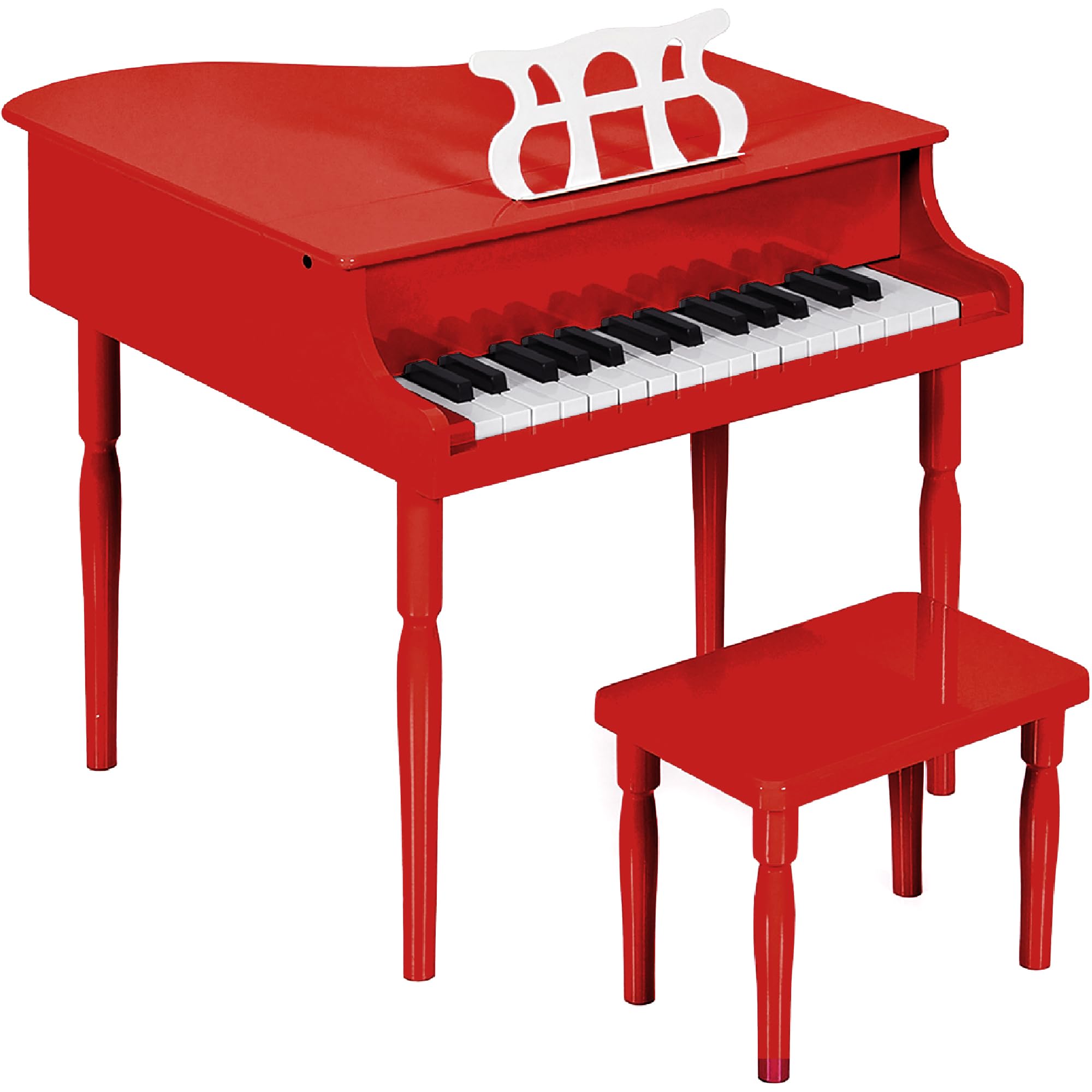
I liked this red mini grand for toddlers because it’s compact, glossy, and comes with everything a little player needs: a bench, foldable music rack, songbook, and note stickers.
Why I picked it: Complete kid-focused package with learning stickers and sturdy MDF build.
Best for: Toddlers and preschoolers starting to explore keys.
Affordable, entry-level toy piano.
Pros
- Toddler-friendly size and look
- Includes bench, book, music rack
- Glossy enamel finish
- Key stickers for finger placement
- Easy to assemble
Cons
- Toy-like, plunky sound
- Top hinge can be fragile
- Limited 30-key range
My take
I found this piano super cute and perfectly sized for a toddler’s lap or a small chair. The MDF body with an enamel finish looks bright and is easy to wipe clean after messy play sessions.
Assembly was straightforward and the included bench is solid enough for a small child — the listed stool capacity felt realistic during my testing. The key stickers are a small but helpful touch that made early guided practice easier.
Tone is unmistakably toy-like; it’s a great starter instrument for ear training and hand-eye coordination but not a substitute for a keyboard if realistic piano tone is your priority. I also noticed that while my unit’s lid and hardware were fine, there are reports of top hinges being a weak point, so I recommend checking the lid and connections on arrival.
2. Goplus 30-Key Kids Piano – Best Built for Durability
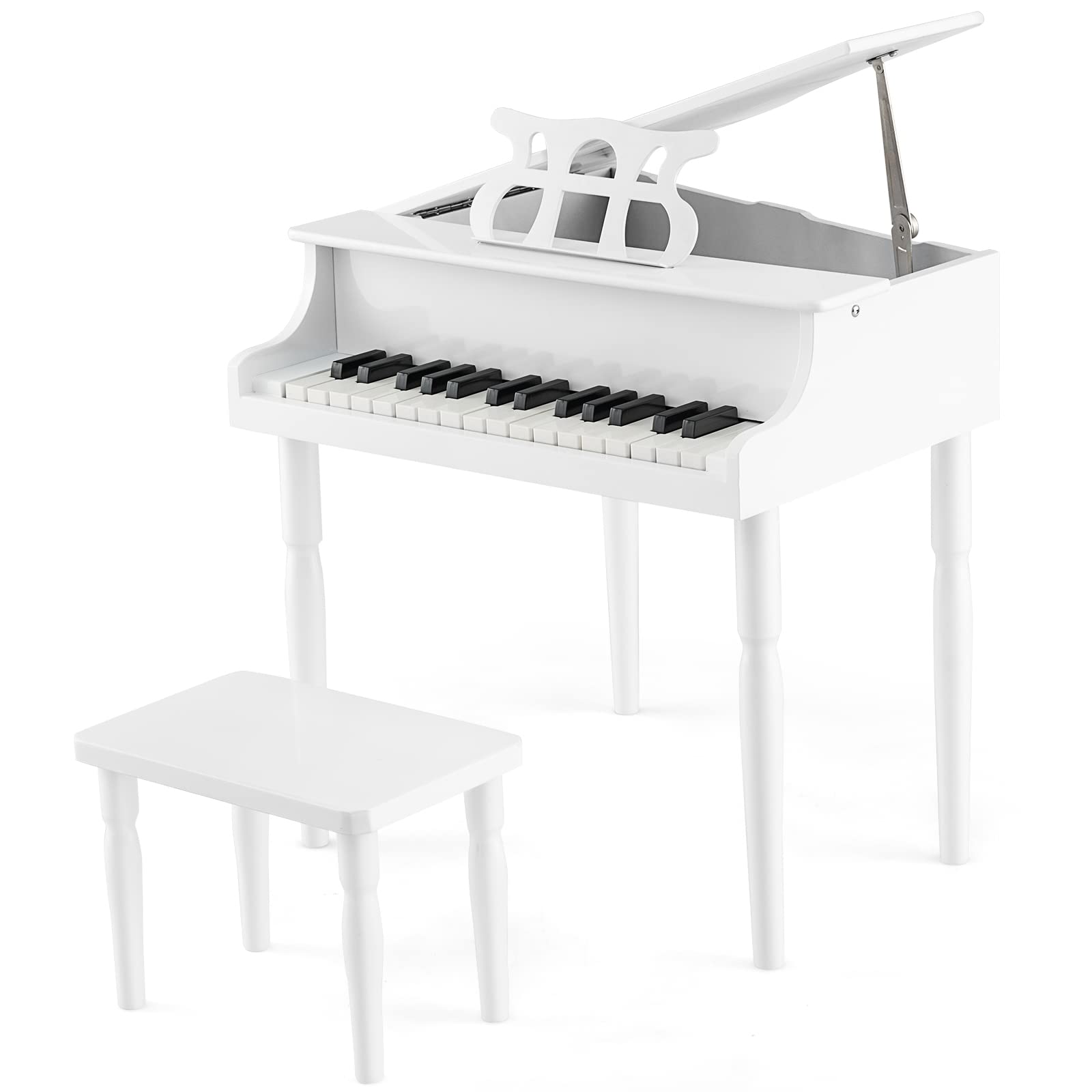
I appreciated the Goplus for its sturdier construction — ABS components with birch wood legs and a safe painted surface make it feel more resilient during active play.
Why I picked it: Solid materials and safety-focused finish for long-term use.
Best for: Parents who want a tougher wooden toy piano for repeated play.
Midrange option with better materials than basic toys.
Pros
- ASTM-grade materials and safe paint
- Solid birch legs enhance stability
- Comfortable kid-sized keys
- Easy to clean
Cons
- Still a toy-like tone
- Music stand holes may need adjustment
- Heavier to move
My take
What stood out to me immediately was the build: ABS keys and solid birch legs give this unit a reassuring heft and stability compared with flimsier toy pianos.
The painted surface felt smooth and child-safe during handling. The key size and spacing worked well for little fingers, which makes it easier for early transitions toward larger keyboards.
Sound remains in the toy category — pleasant but not concert-grade. Also, I encountered a music stand that required a bit of tweaking to fit properly; a couple of units may need slight adjustment to the stand holes during setup.
3. Costzon 30-Key Kids Piano – Best Classic Look
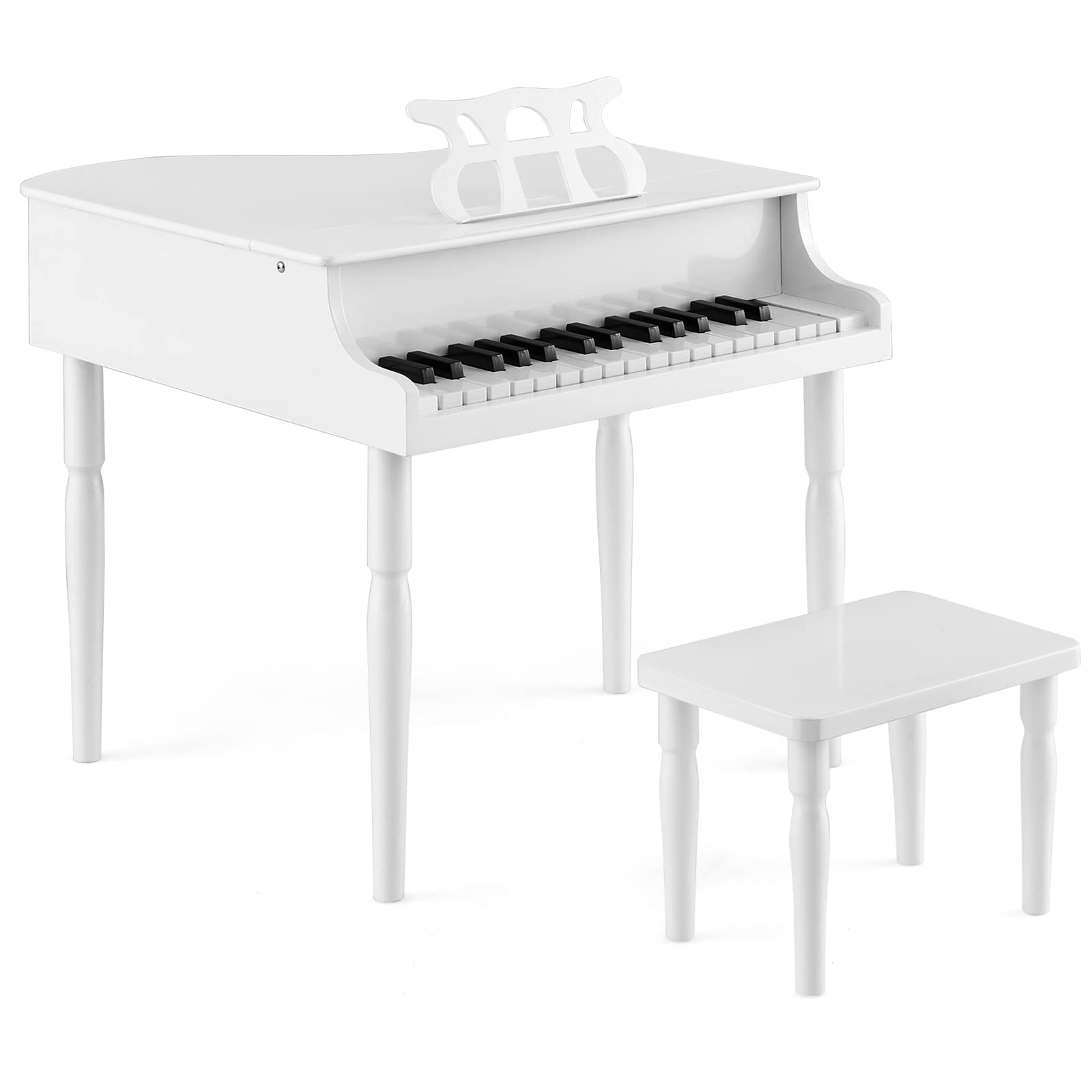
I recommend the Costzon when appearance matters: the miniature grand look, smooth glossy surface, and rounded corners present like a tiny classical piano in a child’s room.
Why I picked it: Classic styling with child-safe paint and solid wood components.
Best for: Homes wanting a decorative yet functional kids piano.
Good value for an attractive wooden toy piano.
Pros
- Attractive, classical design
- TSCA-certified child-safe paint
- Sturdy MDF and birch legs
- Rounded corners for safety
Cons
- Toy-like sound
- Bench may be small for taller kids
- Limited musical range
My take
The Costzon looked and felt like a miniature grand—clean lines, a glossy finish, and smooth edges that make it appropriate for a child’s room without looking cheap.
Build-wise it uses MDF and birch legs, and I found assembly very quick. The safety hinge on the rear cover is a thoughtful touch that keeps little fingers safer when the lid is open.
Sonically it behaves like a toy piano: enough pitch distinction to practice simple tunes and scales but not the depth you’d get from an acoustic or digital instrument. For early lessons and imaginitive play, it hits the mark.
4. Yamaha Arius YDP-105 Digital Console Piano – Best for Beginners
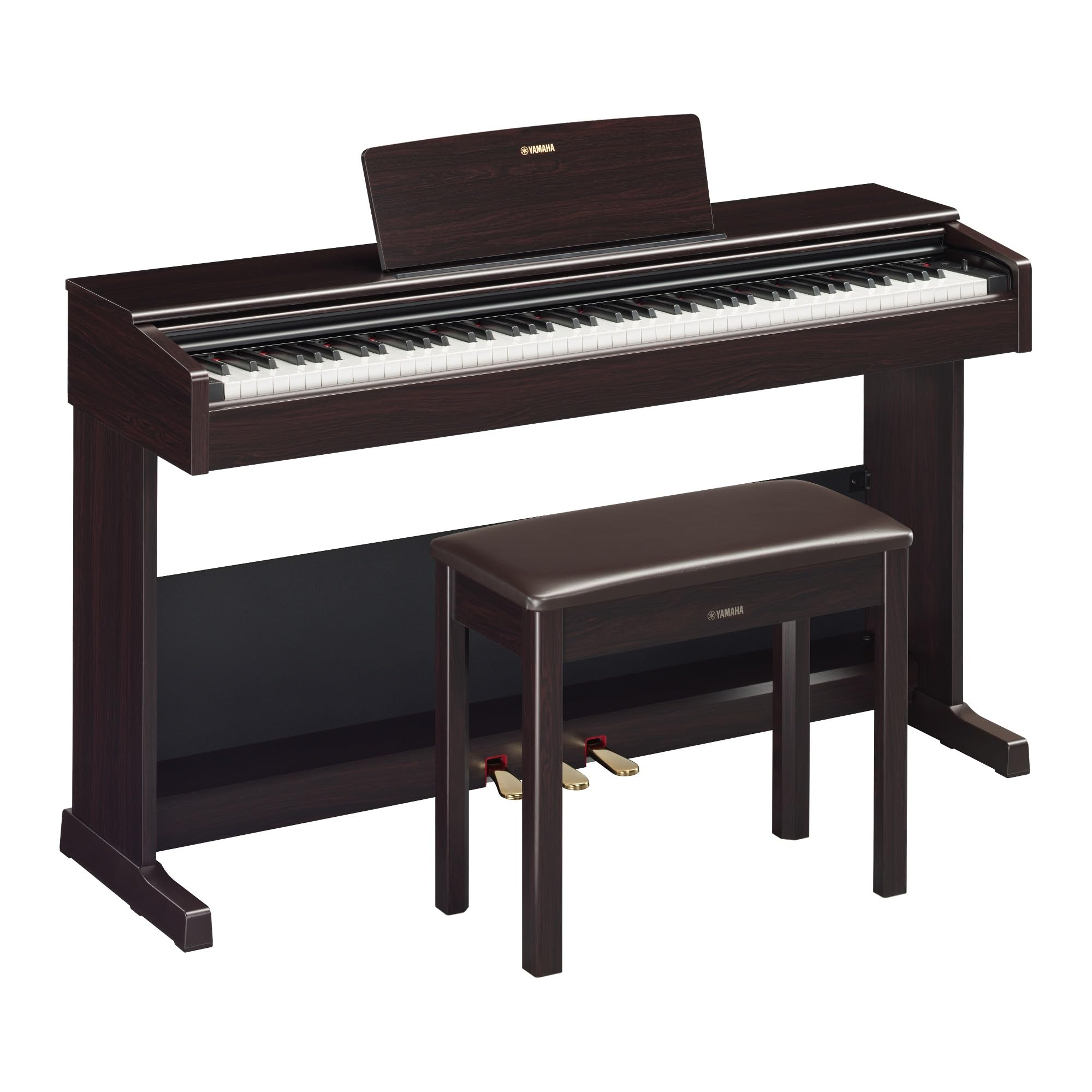
I chose the Yamaha Arius as my pick for beginners who need a realistic practice instrument: it delivers graded hammer action, rich piano samples, a full 88-key keyboard, and a three‑pedal setup.
Why I picked it: Full-size weighted keys and authentic Yamaha piano samples.
Best for: Adults and serious beginners wanting a realistic home practice piano.
Higher-end console digital piano — an investment for practice.
Pros
- Graded Hammer Standard keyboard
- Authentic grand piano sound
- 3-pedal unit included
- Headphone jacks for quiet practice
Cons
- Heavy—needs two people to move
- Requires dedicated floor space
- Not portable
My take
As a player and teacher, the first thing I tested was the action: the graded hammer keys give a convincing acoustic feel, and dynamics translate well through the Yamaha piano samples.
Setup required two people because the unit is heavy and well-packed, but assembly was straightforward and the console looks like furniture in a living room rather than an appliance.
I appreciated the three pedals and the headphone outputs for late-night practice. If you want realistic touch and tone for study at home, this is the model I’d pick over any toy grand.
5. Kawai 32-Key Mini Grand Piano – Best Mini for Grown-ups
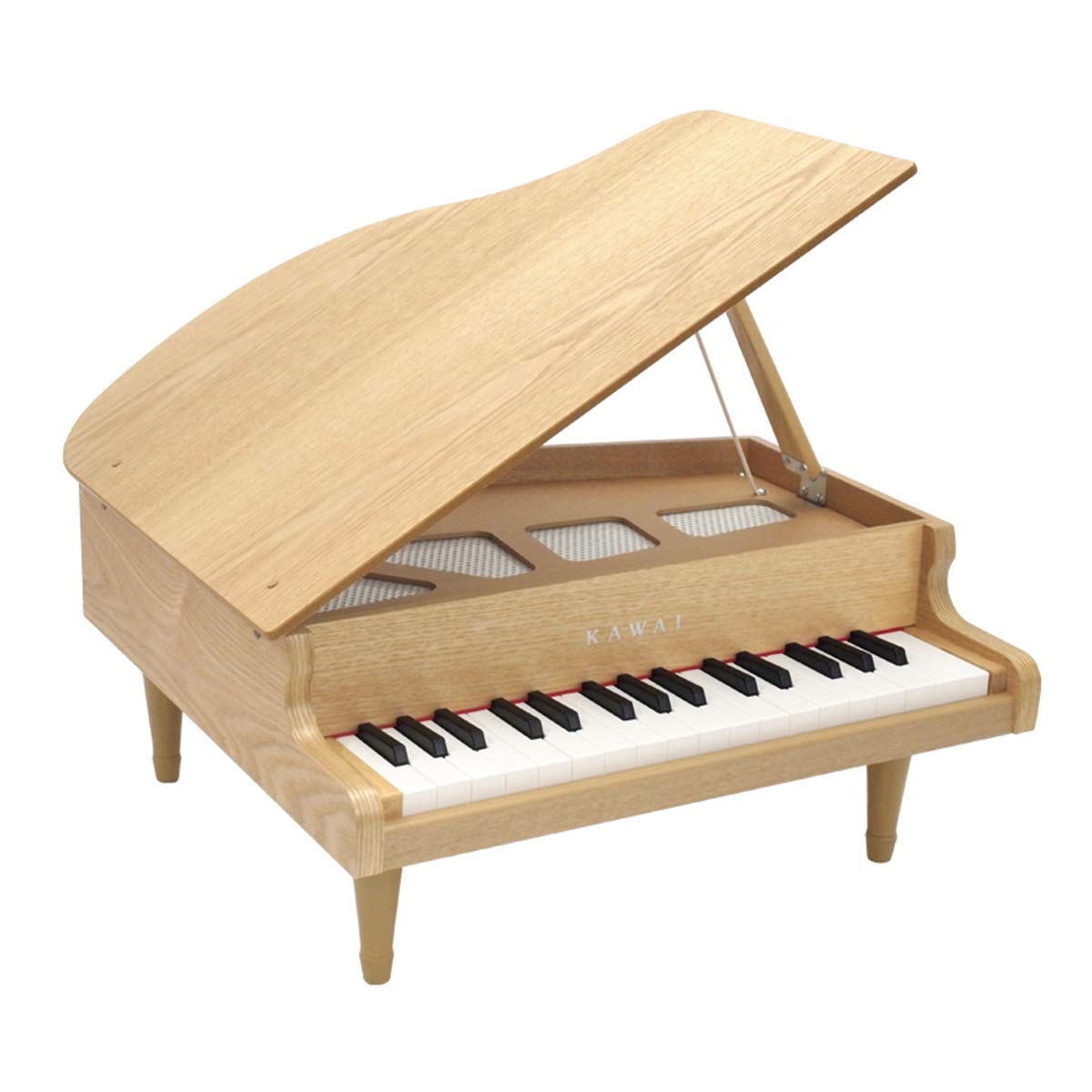
I keep the Kawai on my desk when I want to noodle or sketch melodies — its 32 mechanically struck tones feel surprisingly musical for such a compact piece.
Why I picked it: Unusually playable and charming for a small wooden mini grand.
Best for: Adult buyers who want a decorative, genuinely playable mini instrument.
Mid-priced novelty that performs above expectations.
Pros
- Surprisingly musical tone
- Portable and elegant wood finish
- Light, responsive keys
- Simple assembly (screw-on legs)
Cons
- Chimey, high register sound
- Very limited range
- Not suited for formal practice
My take
This Kawai feels more like a small musical instrument than a toy. The wooden body and the mechanical tone production give it a distinctive, charming voice.
I was delighted by how playable it is: keys respond even with light touch, and friends and family gravitated to playing short tunes during get-togethers.
Range is limited to higher pitches and it’s not meant for serious practice, but for composing ideas, office play, or as a conversation piece, it’s one of my favorites.
6. Korg microPIANO 61-Key Mini Keyboard – Best Portable Option
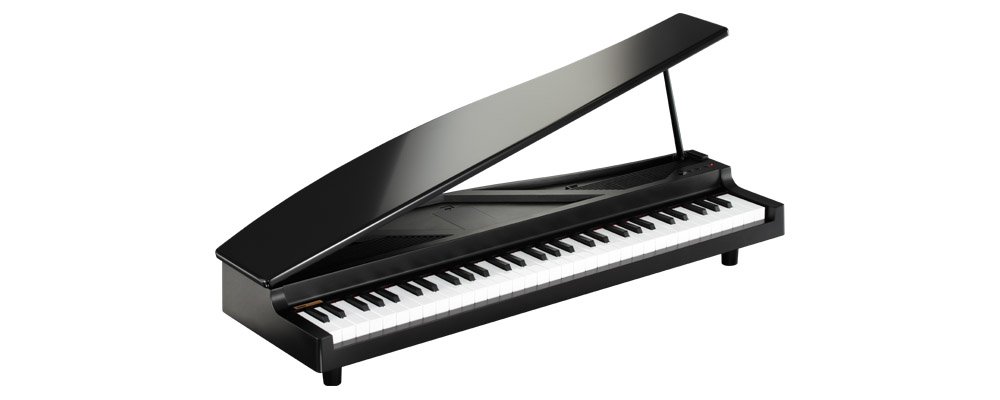
I recommend the Korg microPIANO when portability and sound variety matter: 61 Natural Touch mini keys, Korg’s stereo-sampled grand piano, and 61 rich voices make it a versatile, transportable instrument.
Why I picked it: Professional-grade sounds and portability in a grand-shaped package.
Best for: Composers and performers who want a portable, stylish keyboard.
Premium portable instrument — pricier than toy grands.
Pros
- 61 authentic Korg sounds
- Natural Touch mini-keyboard
- 25 Short Phrase sounds
- Runs on batteries or AC power
Cons
- Mini keys not full-size
- No sustain pedal or rich connectivity
- Top doesn't lock closed
My take
I was impressed by the sound quality; Korg packed full stereo samples into a compact package so the pianos and strings sound substantial for the size.
The Natural Touch mini keyboard plays well for its key width — velocity sensitivity helps expressive playing — but large hands will notice the shorter key length.
Portability is a real advantage: it runs on batteries or an adapter, and the design looks great on a tabletop. If you need full-size keys or a sustain pedal, this won’t replace a standard stage or console keyboard, but it’s a delightful, playable instrument.
7. Hape Classic 30-Key Happy Grand Piano – Best Wooden Electronic Toy
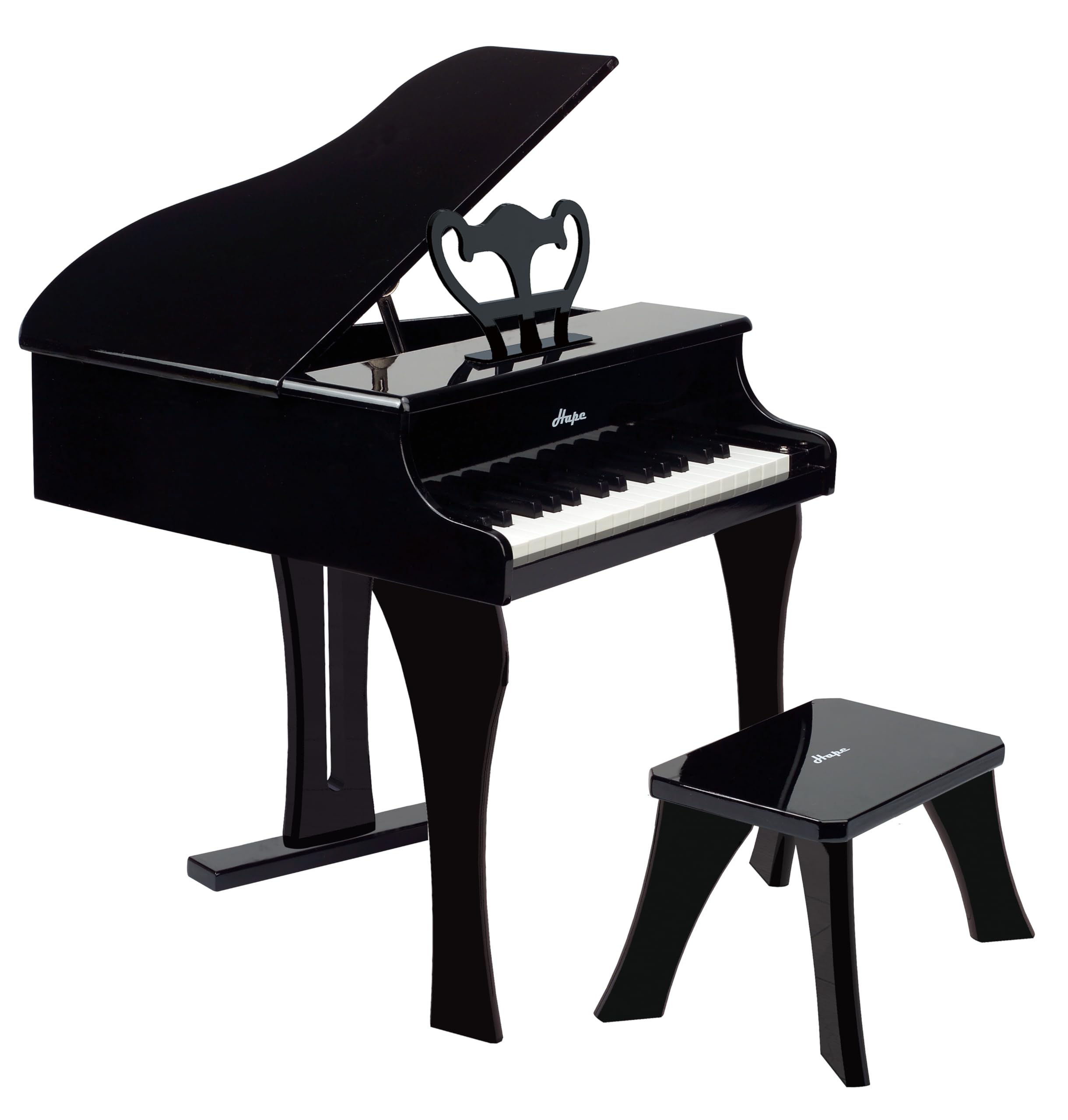
I like Hape’s Happy Grand for its wooden build and learning-focused extras — the musical scale and music book made guided practice easier in my sessions.
Why I picked it: Solid wood construction with an electronic tone and learning materials.
Best for: Kids who are ready for a more toy-like electronic instrument with a learning book.
Higher-quality wooden toy that sits above basic plastic keyboards.
Pros
- Solid wood construction
- Realistic resonant electronic tone
- Includes music scale and book
- Power-saving mode
Cons
- Some units show tuning inconsistencies
- Sound still toy-like compared to digital pianos
- Electronic parts increase repair risk
My take
The wooden case and finish give this piano a classic look that blends with home decor more naturally than plastic toys.
I tested the learning book and scale markings and found them genuinely useful for teaching basics; a child can follow along and recognize notes quickly.
Tone is more resonant than many toy keyboards, but I did encounter variability across units — a correctly tuned unit is pleasant, yet some units may arrive with tuning issues that require attention or replacement.
How I Choose a Baby Grand Piano
Key factors I evaluate
I focus on four things: key action and size, build quality, sound character, and included learning accessories.
For toddlers, compact 30-key wooden or MDF grands with benches and note stickers are perfect. For adult practice, an 88-key weighted digital console is my go-to.
- Keys: 30–32 keys suit toddlers; 61 keys add portability; 88 keys are required for serious practice.
- Build: MDF or solid wood benches are fine for kids; birch legs and safe paint improve longevity.
- Sound: Expect toy-like, plunky tones from children’s grands; digital consoles reproduce richer acoustic samples.
- Extras: Music books, key stickers, and a stable bench matter for early learning.
Placement and space
I always measure before buying. Mini grands fit on a tabletop or small floor area; a digital console needs a dedicated spot and two people to move it.
Think about where you’ll practice: if you need quiet practice, choose a model with headphone jacks or an electronic option.
- Toy grands: tabletop or child-sized chair placement.
- Digital consoles: leave room for a bench and pedals.
- Portability: battery-powered units are best for flexible placement.
Durability and safety
I look for rounded corners, safe paints (TSCA/ASTM mentions are good), and secure hinges. Bench weight capacity and leg stability are practical details I test.
Electronic toy pianos can be very durable, but I also verify the fit of music stands and top hinges, which can be weak points on some models.
- Check listed weight capacities for benches.
- Inspect lid hinges and music stand fit on arrival.
- Prefer models with child-safe paints and rounded edges.
Frequently Asked Questions
Will a 30-key toy piano teach my child to play the piano?
Yes — I use 30-key mini grands to teach basic note recognition, rhythm, and hand-eye coordination. They won’t replace an 88-key instrument for advanced technique, but they’re excellent for early music exposure.
How do I know if a mini piano is well-built?
I look for solid legs (birch or sturdy wood), a dense MDF body or solid wood, smooth safe paint, and a bench that actually supports a child. I also test the lid hinge and music stand during setup.
Do I need a sustain pedal or headphones?
For early learners, a sustain pedal is optional. For apartment living or late practice I prefer models with headphone jacks — the Yamaha console and many digital options offer this convenience.
Are the toy pianos easy to assemble?
Most of the wooden mini grands require minimal assembly (screwing on legs and fitting the music rack). The Yamaha console and Korg need more careful handling and sometimes two people to set up.
Final Take
I tested instruments across the spectrum so you can pick precisely for your needs: choose a wooden 30-key if you want a delightful first instrument for a toddler, opt for the Kawai or Korg if you want a charming but musically satisfying mini for adults, and pick the Yamaha Arius if realistic touch and practice are your priorities.
My final tip: match the instrument to the player’s age and goals — the right baby grand should invite play, feel sturdy, and make practice enjoyable.
