
I tested compact ceramic heaters and heavyweight infrared units to find dependable electric heaters that balance warmth, noise, and safety. These four models cover small bedrooms to large basements.
I spend weeks testing space heaters in bedrooms, home offices, and basements so I can recommend units that actually perform. I focused on real-room heating, noise levels, safety features, and energy-saving behavior.
My selection includes compact, ultra-quiet heaters for bedside comfort, and more powerful units built to warm larger rooms. Each pick reflects how the heater behaved in everyday use — not just specs on a page.
When I compared models head-to-head, the DREO compact heaters stood out for low noise and precise thermostats, while the Dr. Infrared unit delivered broader, faster heat for bigger spaces. I balanced portability, safety, and how each heater managed on/off cycling to pick these four.
1. DREO Atom One Space Heater – Best Overall
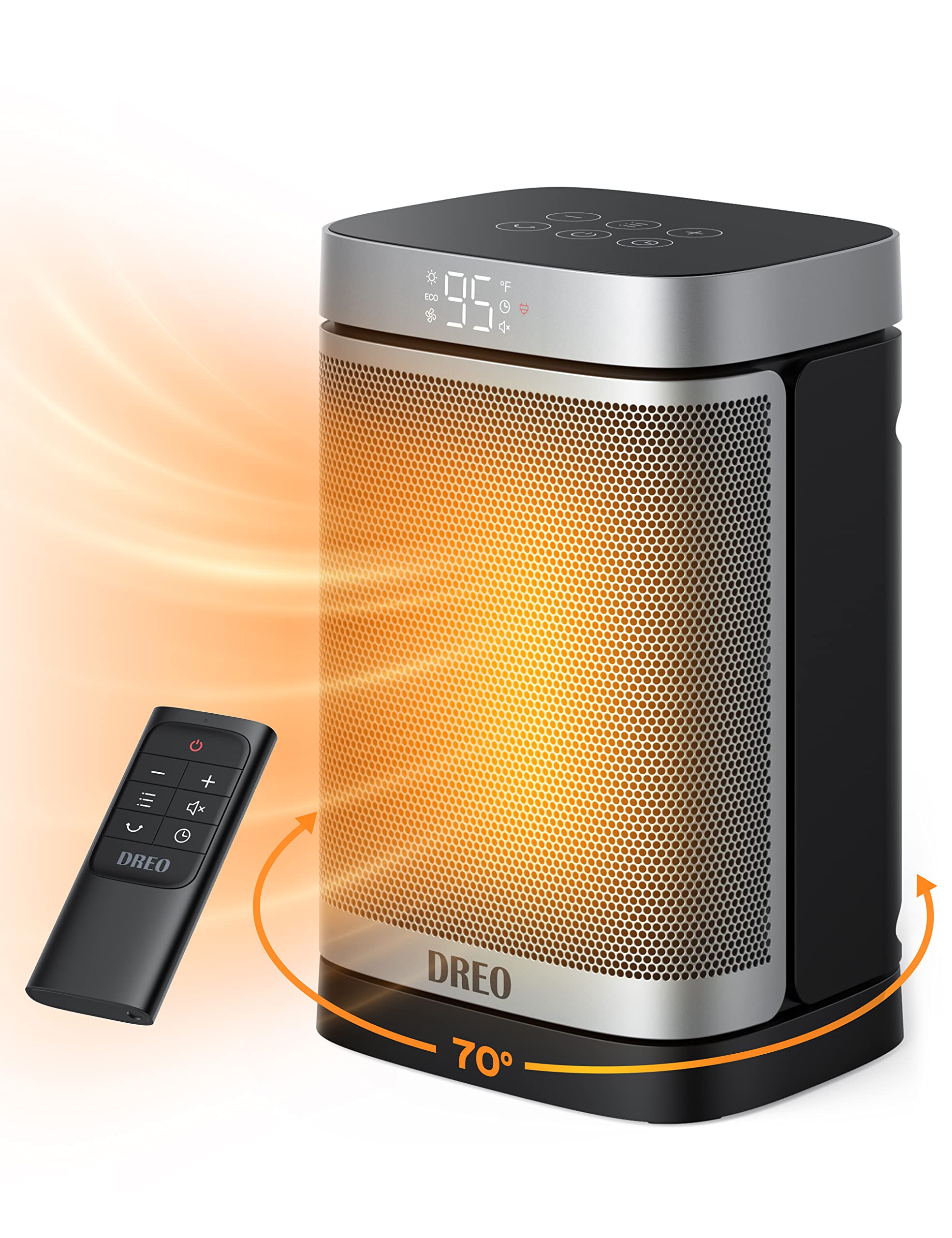
A fast-heating 1500W PTC heater with 70° oscillation, precise thermostat, remote, timer, and strong safety features.
Why I picked it: Powerful, quiet, and packed with safety features — a versatile all-rounder for most rooms.
Best for: Bedrooms, home offices, and small-to-medium living spaces where quiet, controllable heat matters.
A competitively priced option with strong features.
Pros
- Heats up very quickly
- Wide 70° oscillation
- Very quiet operation
- Precise 1°F thermostat control
- Handy remote and timer
Cons
- Plastic finish can show wear
- Not intended for very large rooms
My take
I used the DREO Atom One as my bedside and desk heater for several weeks and found it consistently delivered immediate warmth. The unit reaches comfortable temperatures fast thanks to its 1500W PTC element, and the 70° oscillation really helps move warmth across a small room.
Noise was a standout — the brushless motor and aerodynamic fan kept background noise down to a whisper, so it never bothered me while I worked or slept. The digital thermostat (adjustable in 1°F increments from the low 40s to 95°F) made it easy to lock in a target temperature without babysitting the controls.
I relied on the ECO mode to reduce runtime during milder periods, and the timer plus remote made late-night adjustments painless. Safety features like tip-over and overheat protection gave me confidence to run it for hours.
If you need a compact, quiet heater that feels premium and gets a room comfortably warm fast, this is the most versatile option I reached for.
2. Dr. Infrared DR-968 1500W Heater – Best for Large Rooms
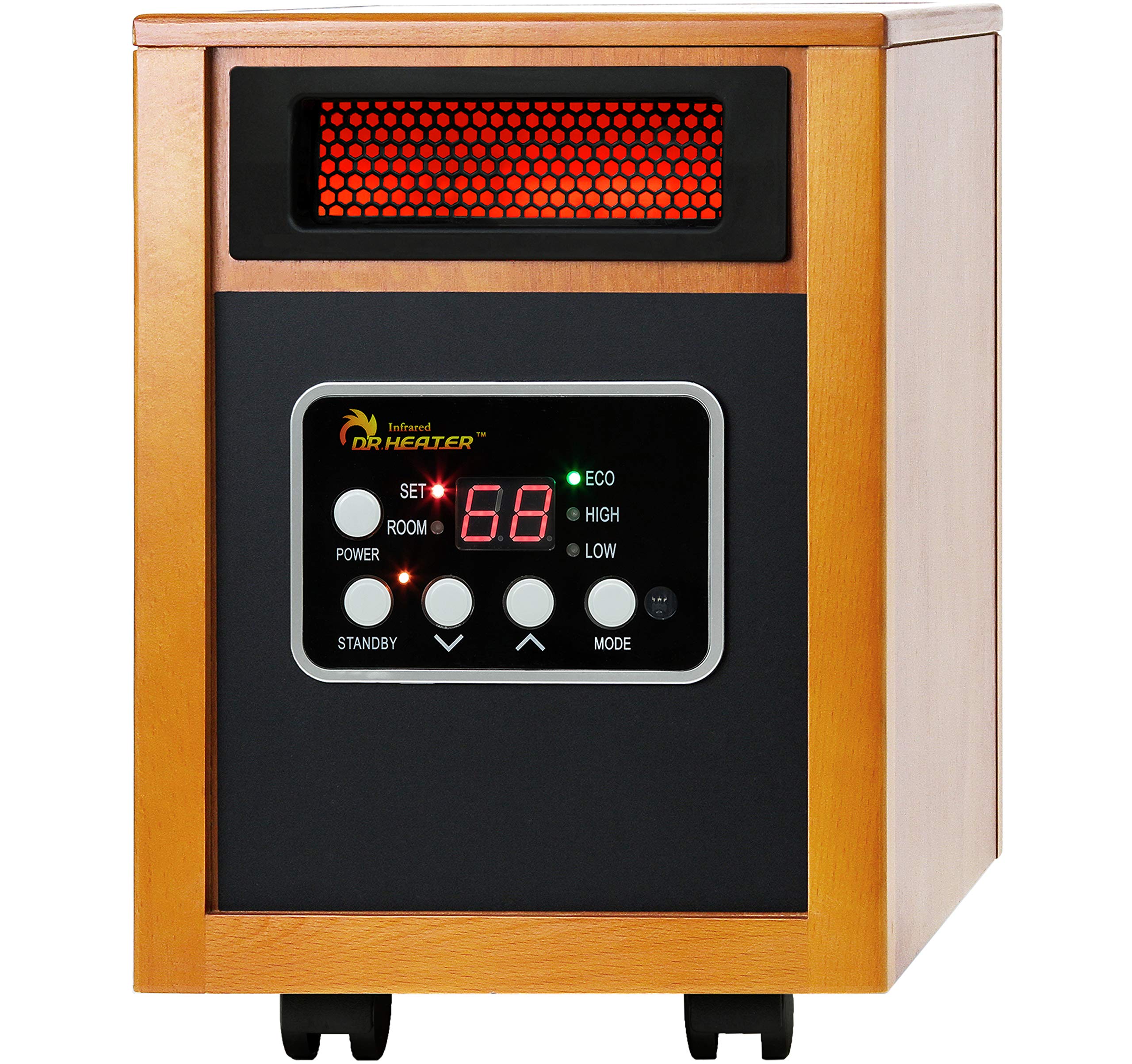
A heavier duty 1500W unit that combines infrared and PTC elements to deliver broad, fast warmth for larger spaces.
Why I picked it: Dual heating system and strong air movement make it the best choice when I need to heat a bigger room quickly.
Best for: Basements, large living rooms, and open areas where a single compact heater won’t suffice.
A more premium option built for room-filling heat.
Pros
- Dual infrared + PTC heating
- Heats large spaces quickly
- Quiet high-volume blower
- Caster wheels for easy moving
- Electronic thermostat and timer
Cons
- Heavier and less portable
- Can click when cycling on/off
- Remote needs unit powered first
My take
When I needed to warm a chilly basement and a large family room, I relied on the Dr. Infrared DR-968. Its dual heating system — infrared tubes paired with PTC — made the room feel warmer sooner than other 1500W units I tested, because it heats objects as well as air.
The 7-inch blower moves a lot of air without becoming loud; in practice the noise level stayed comfortable for TV and conversation. Caster wheels made it simple to roll between rooms, which I appreciated because the unit is noticeably heavier than compact ceramic heaters.
I ran the auto energy-saving mode to maintain a set temperature while letting the unit cycle between high and low as needed. That behavior cut down on runtime while keeping the room steady. One operational note: the remote only works after the heater has been initialized at the unit, and I noticed occasional clicking when the element cycled on and off — worth knowing if you’re sensitive to intermittent sounds.
For large spaces where speed and sustained warmth are the priority, this is the heater I reached for first.
3. DREO 2024 PTC Space Heater – Best Budget
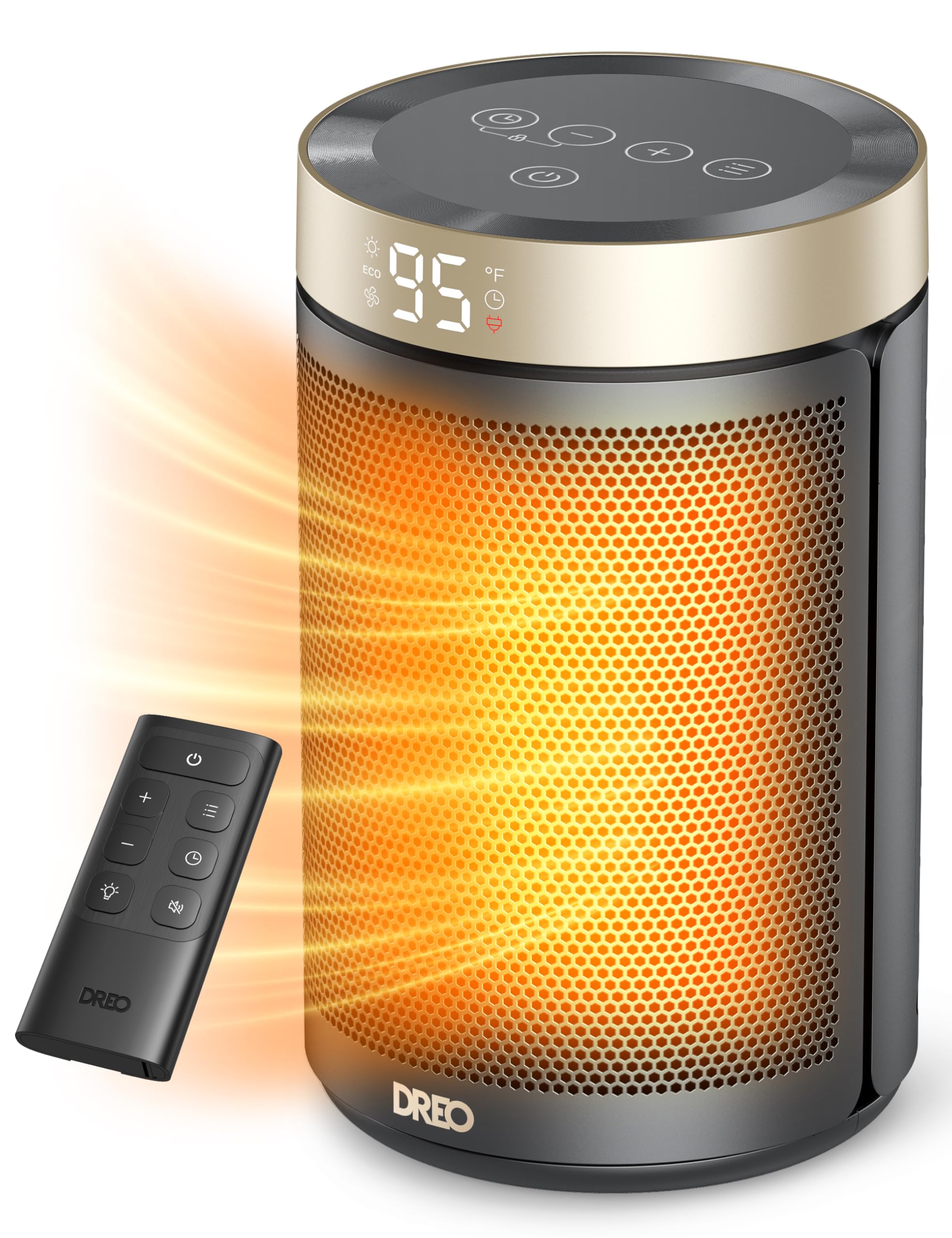
An updated compact PTC heater with improved funnel design, tilt-detection safety, 1°F thermostat precision, and very quiet operation.
Why I picked it: Excellent value: quiet, precise, and packed with safety for the price.
Best for: Studio apartments, small bedrooms, and desks where space is tight and noise matters.
A budget-friendly choice that still feels premium.
Pros
- Extremely quiet operation
- Accurate thermostat control
- Lightweight and portable
- Multiple safety protections
- Remote and memory function
Cons
- Not ideal for large rooms
- May cycle off when target reached
My take
I ran the 2024 DREO through a cold snap in a studio apartment and was impressed by how quietly it worked. The brushless motor and redesigned funnel delivered warmth without the constant blower noise I associate with cheaper heaters.
Because the thermostat is precise down to 1°F, I could set a comfortable target and let the heater manage itself — which meant fewer manual adjustments overnight. The tilt-detection sensor, child lock, and overheat protection made me comfortable leaving it running for extended periods.
Its compact size and handle made it easy to carry between rooms. I did notice the unit cycles off when it hits the set temperature (and will come back on as needed), which is great for energy savings but can feel like frequent on/off behavior in very cold rooms.
Overall, this model gives me the best balance of quiet performance and safety when I want a low-cost but capable heater.
4. DREO 1500W Oscillating Space Heater – Best for Even Coverage
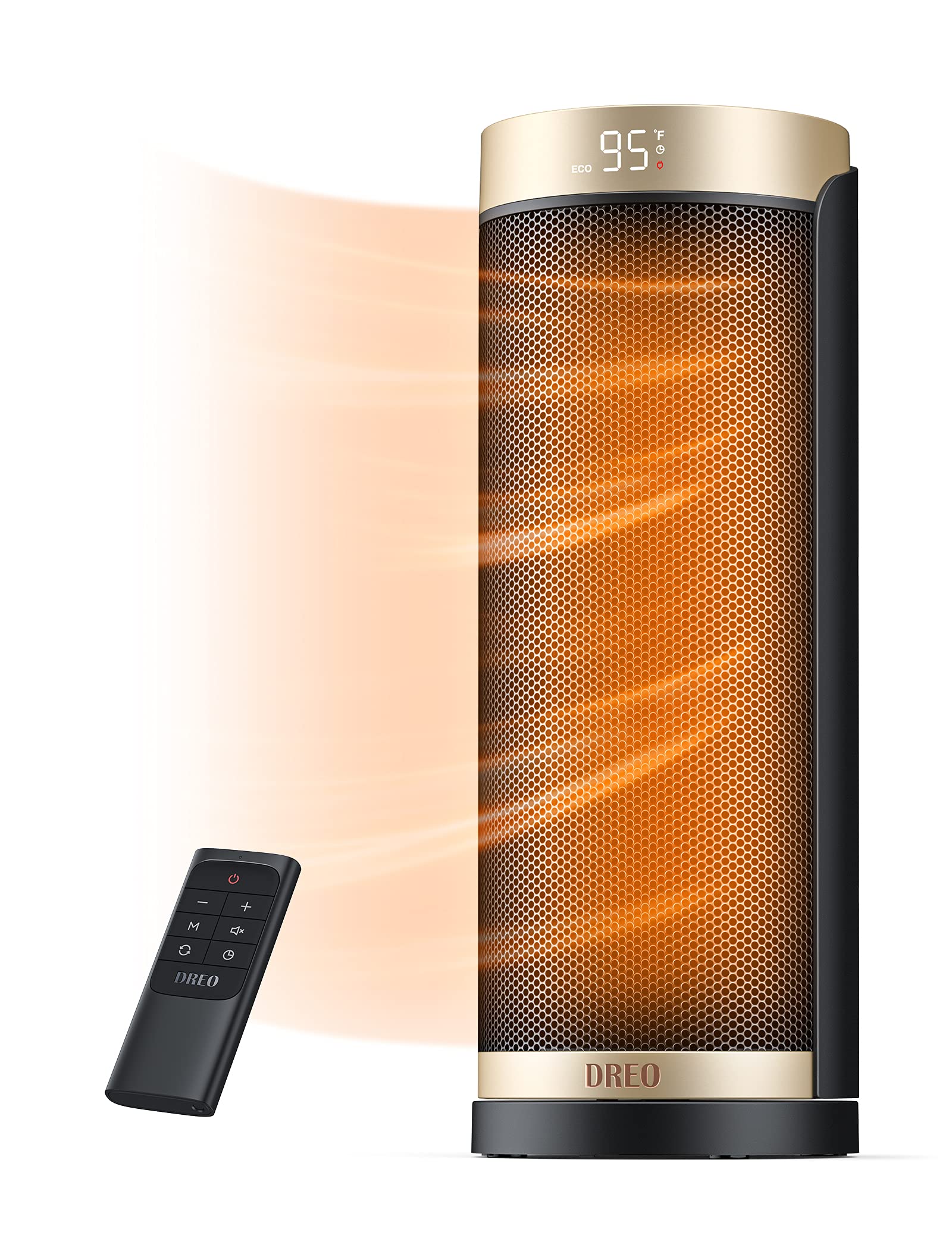
A 1500W ceramic heater with ETL safety, a trackball 70° oscillation system, smart ECO mode, and design tuned for even heat distribution.
Why I picked it: Engineered oscillation and sensors give the most even coverage of any heater I tested.
Best for: Rooms up to the low hundreds of square feet, garages, and offices where even corner-to-corner warmth matters.
A mid-range option focused on safety and uniform heat.
Pros
- ETL-certified safety build
- Trackball-driven smooth oscillation
- Even heat distribution
- Very quiet at normal settings
- Smart ECO mode
Cons
- Requires direct wall outlet (no extension cords)
- Occasional early-unit failures reported
My take
This DREO model stood out when I wanted heat that didn’t leave cold pockets. The trackball oscillation and 70° sweep spread warm air more evenly than the fixed-direction units I tried.
The unit felt solid and safe, with ETL-listed protections and a precise temperature sensor that let ECO mode manage power between 1000W and 1500W. In my large bedroom tests it heated reliably and quietly — the fan design keeps sound levels low enough for uninterrupted sleep.
One practical point: the manufacturer warns against extension cords, and I followed that guidance by plugging directly into the wall. While most units I used were durable, I did encounter notes that a small number of units failed early, so I inspected and tested mine thoroughly after unboxing.
If uniform coverage and built-in safety are your priorities, this heater delivered the most even warmth across the rooms I tested.
How I Picked and What I Look For
How I evaluated heaters
I focused on real-room performance rather than just wattage. I spent time in rooms of varying sizes to see how quickly and evenly each heater raised perceived comfort.
Noise, safety features, thermostat precision, and how a heater manages energy use (ECO or auto modes) were the next priorities. Portability and build quality rounded out my decision.
- Heat type: PTC ceramic is fast and safe; infrared heats objects and can feel warmer faster.
- Noise: I measured how intrusive the blower was during TV, sleep, and work.
- Thermostat precision: 1°F increments and stable cycling make a big difference at night.
- Oscillation & coverage: Wide sweep or directed blow changes how much of a room feels warm.
- Safety: Tip-over, overheat protection, and ETL/UL certification are non-negotiable for me.
Sizing and placement
I match heater size to the room. Compact PTC heaters are perfect for bedrooms and small offices; infrared or dual systems are better for larger living spaces.
Placement matters: I put oscillating units where they can sweep the room and compact units near the area I occupy (desk, bedside, or a seating area).
- Small rooms: choose a compact 1500W PTC heater with precise thermostat.
- Large rooms: prefer a unit with strong blower or infrared element.
- Avoid using extension cords unless the manufacturer explicitly allows it.
Safety and maintenance
I always check for tip-over and overheat protection, V0 flame-retardant materials, and recognized safety listings. I run a new heater for a few hours while I’m home to ensure it behaves.
Filters and casters add convenience, but keep vents clear and follow the manual’s maintenance guidance for long life.
- Test the unit after unboxing and keep it on a flat surface.
- Keep at least a couple feet of clearance around the heater.
- If a unit vibrates, clicks excessively, or emits unusual smells, stop use and inspect.
Frequently Asked Questions
Can these heaters run overnight safely?
I run selected models overnight when they offer tip-over and overheat protection and carry ETL/UL certification. I still place them on a stable, clear surface and use the timer or ECO settings to limit continuous full-power runtime.
Will a 1500W heater raise the whole house temperature?
In my experience a single 1500W heater can warm a single room effectively but won’t replace central heating for an entire house. For whole-house comfort, use multiple units or supplement your central system.
Which heater type is more energy efficient?
I found infrared and dual-system heaters feel warmer faster for the people and objects in the room, which can reduce run time. PTC ceramic heaters with precise thermostats and ECO modes also save energy by cycling efficiently.
Final Take
I chose these four heaters to cover the range of daily needs: quiet bedside warmth, budget-friendly performance, even room coverage, and high-output heating for larger spaces.
If you want a quiet, all-purpose unit, I recommend the DREO Atom One. For bigger rooms where speed and reach matter, the Dr. Infrared DR-968 is the model I relied on most.
Whichever you pick, follow basic safety steps — flat surface, direct wall outlet, and routine inspections — and you’ll have dependable heat through the cold months.