
I tested a range of mineral oils, conditioners, and a large bamboo board to find finishes and care kits that actually protect and revive butcher block countertops. Here are the options I keep reaching for in my kitchen.
I spend a lot of time maintaining wooden prep surfaces, so I focus on products that actually soak in, stop drying and cracking, and leave no greasy residue. In this roundup I cover single‑bottle mineral oils, a two‑piece conditioning set, a bulk jug for heavy use, and a large bamboo board that arrives pre‑oiled.
My selections reflect what I use for regular seasonal maintenance, emergency touch‑ups, and deep restorations. I tested application, absorption, scent, residue, packaging, and the ease of getting good results without fuss.
I grouped products into quick maintenance oils, combination oil + wax kits, and bulk options for heavy use. If you want a simple monthly routine, a small mineral oil or the John Boos set will do. If you manage multiple boards or a big butcher block island, I favor bulk oil for economy and the two‑step Boos set when I want a sealed, waxed finish.
1. Thirteen Chefs Mineral Oil – Best Everyday Mineral Oil
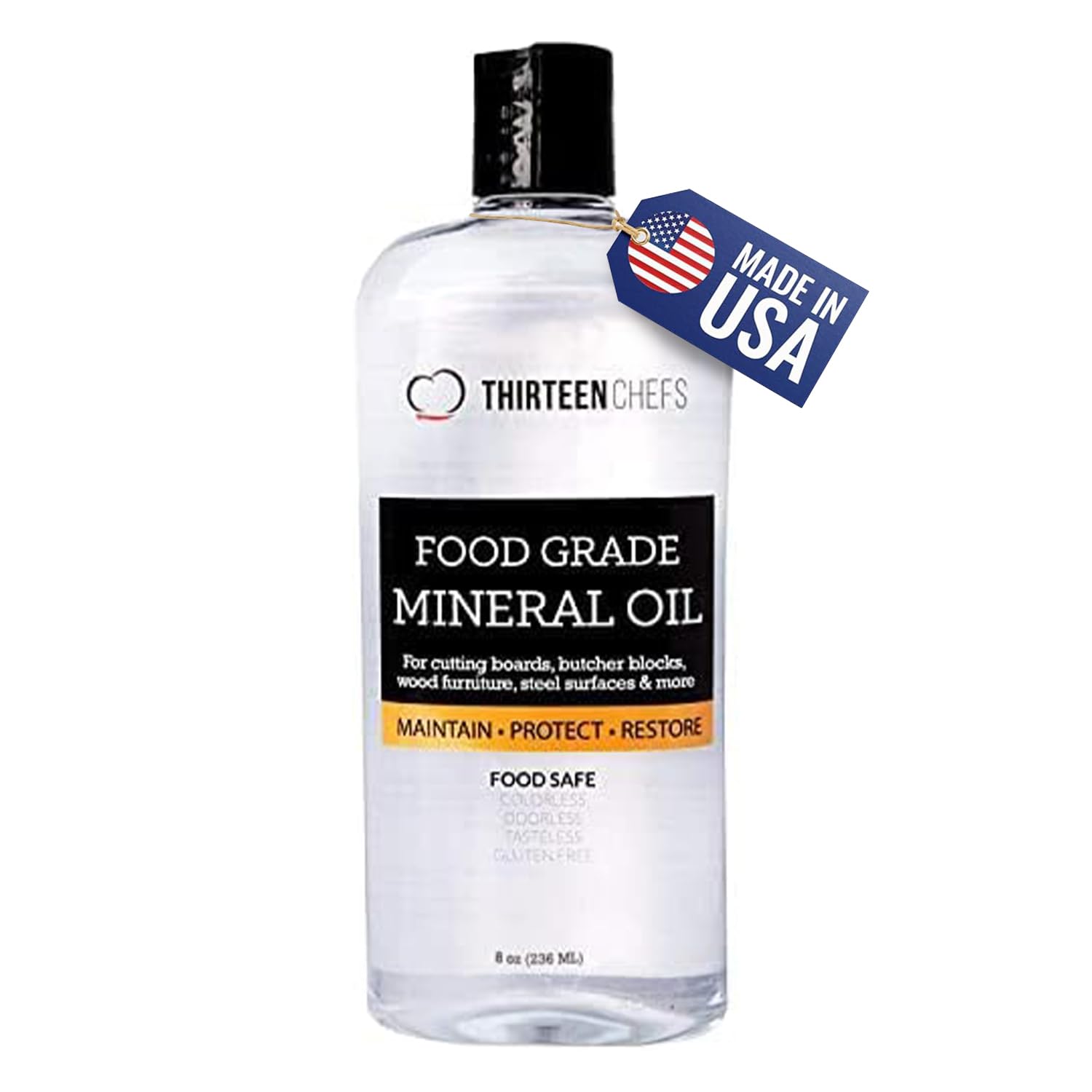
A clear, food‑grade mineral oil that soaks in cleanly and is easy to apply from the squeeze bottle.
Why I picked it: Clear, odorless formula that absorbs without leaving a sticky film.
Best for: Monthly maintenance on cutting boards and smaller butcher block areas.
Affordable small‑bottle option for regular upkeep.
Pros
- Food‑grade and odorless
- Easy push‑applicator bottle
- Absorbs without sticky residue
Cons
- Small bottle for larger surfaces
- Requires repeat applications for new wood
My take
I keep a bottle of this on my counter because the push‑applicator makes touch‑ups simple. The oil is colorless and virtually scentless, so it never affects food or the kitchen air.
On teak and bamboo boards it soaked in quickly and left the grain looking richer without any greasy feel. I followed the recommended wait time and wiped off excess; the surface felt smooth and refreshed. For me this is the go‑to when I want a fast, food‑safe hydrate.
2. Greener Chef 36 x 24 Bamboo Cutting Board – Best for Entertaining
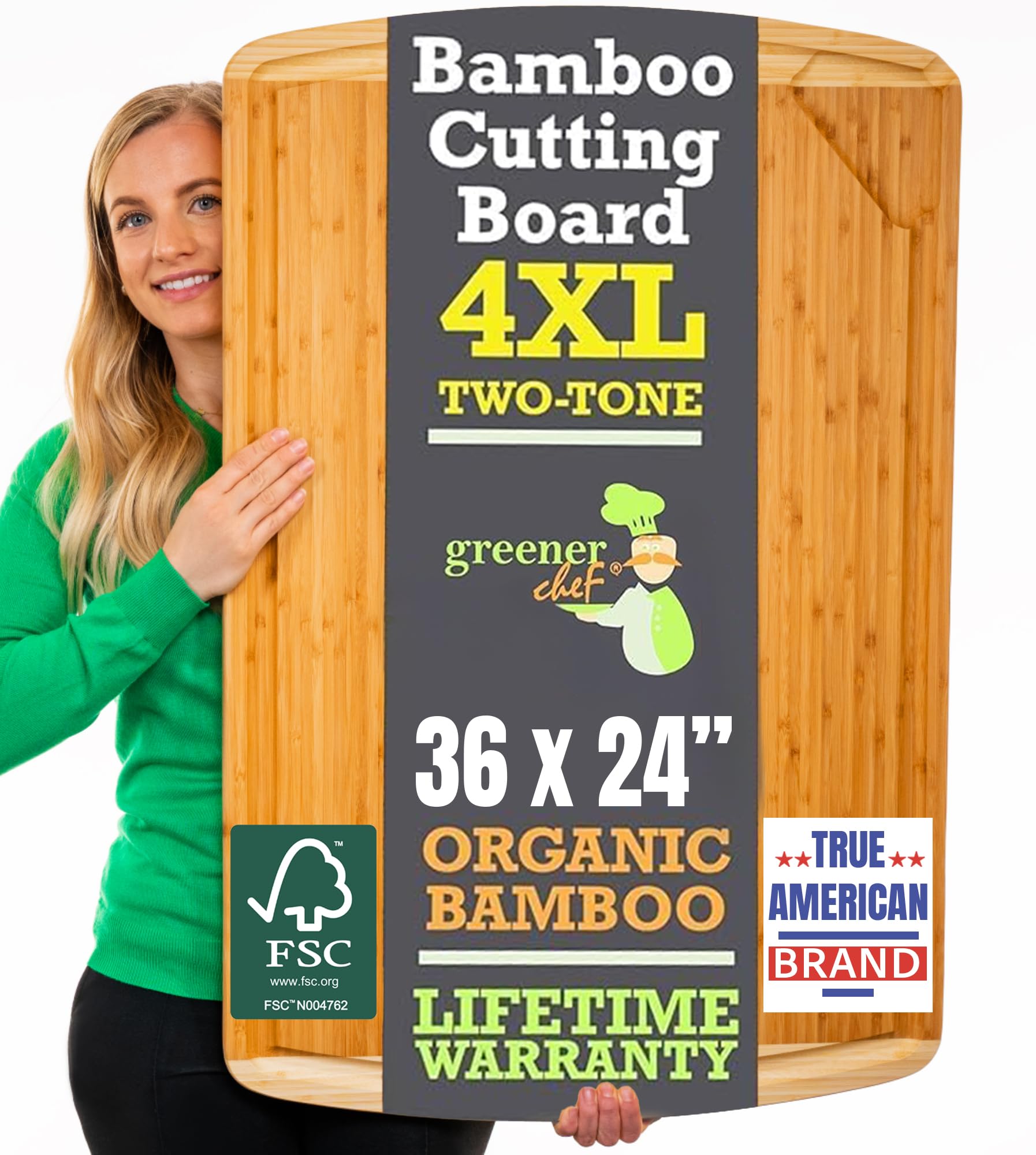
A huge two‑tone bamboo slab finished with food‑safe oil, built for prepping, carving, and serving at parties.
Why I picked it: Massive, well‑finished board that doubles as prep space and a serving centerpiece.
Best for: Entertaining, large roasts, and reclaiming stovetop counter space.
Premium, larger investment compared to a standard board.
Pros
- Huge workspace for big jobs
- Edge grooves catch juices
- FSC sourced and pre‑oiled
Cons
- Hard to store in small kitchens
- No rubber feet included
My take
This board made the biggest immediate difference when I needed more surface area—three feet of bamboo genuinely changes how I prep. The drain grooves around the edge are smart; they keep juices from running off while I carve.
The factory food‑safe oil gives the board a pleasant, ready‑to‑use finish. I treated it with a follow‑up coat of mineral oil after unpacking just to be thorough, and it soaked that in like a champ. If you entertain a lot or need a stovetop cover, this is the board I reach for.
3. Bayes Food Grade Mineral Oil – Best Pour‑Spout Mineral Oil
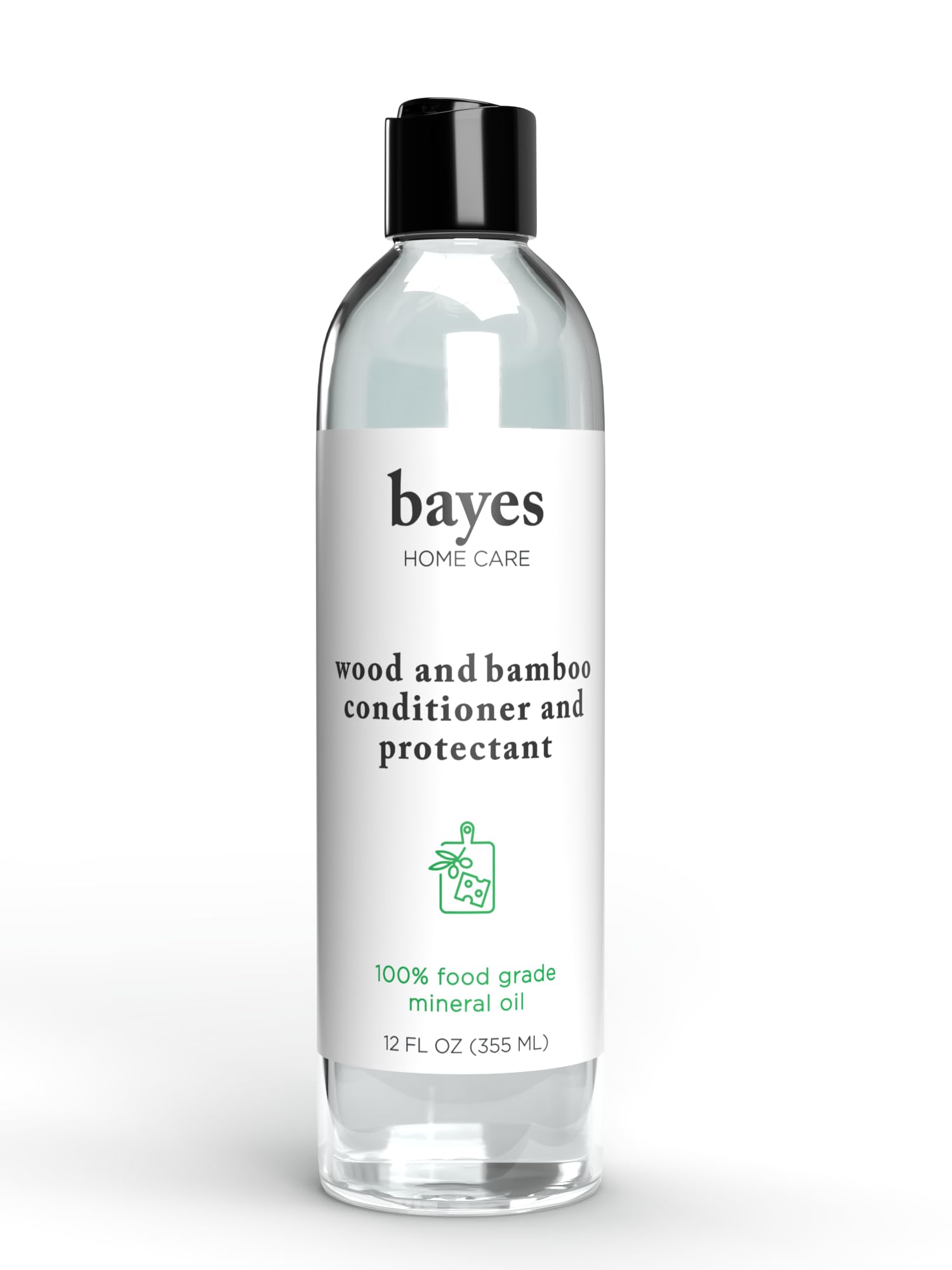
A practical food‑grade oil with a convenient pour spout and clear application guidelines for new and seasoned boards.
Why I picked it: Pour spout and clear directions make initial seasoning straightforward.
Best for: Seasoning new boards and monthly maintenance on bamboo or teak.
Good value single‑bottle option that lasts through many treatments.
Pros
- Convenient pour spout
- Leaping Bunny cruelty‑free
- Clear application instructions
Cons
- Requires frequent initial applications
- Not a sealing wax
My take
I like this one when I’m treating new items. The instructions to oil daily the first week, then weekly for a month, are easy to follow and really hydrate thirsty wood.
The oil is odorless and spreads evenly. Bamboo and utensils soaked it in nicely and the pour spout avoids spills. It’s straightforward, reliable, and I’ve used it to bring life back to older boards.
4. Howard Cutting Board Oil – Best Classic Mineral Oil
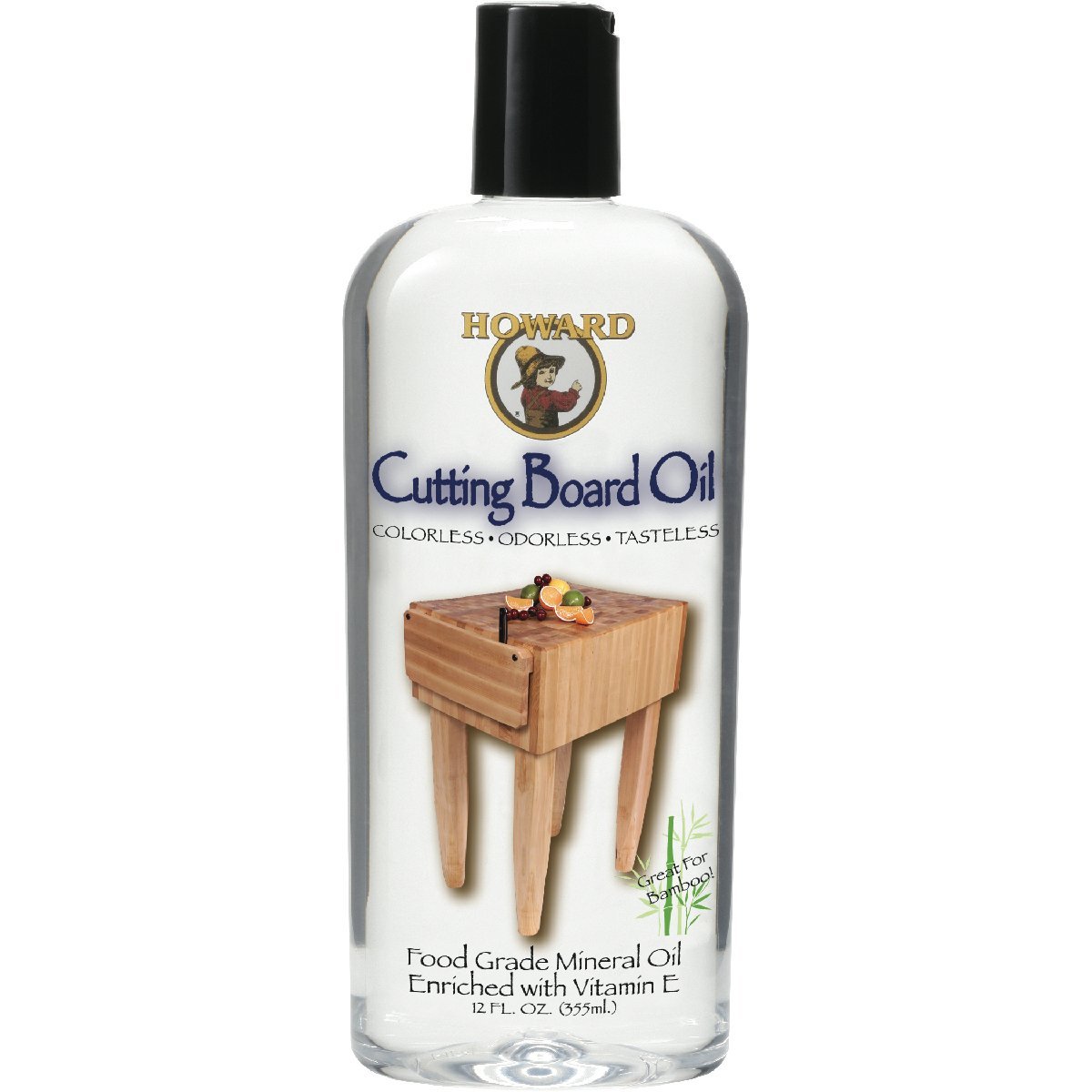
A deep‑penetrating USP mineral oil with vitamin E that’s built for the initial seasoning and long‑term upkeep of wood surfaces.
Why I picked it: Deep penetration and vitamin E help bring out natural wood color.
Best for: Initial seasoning and long‑term maintenance of butcher blocks and islands.
Trusted classic in a standard bottle size.
Pros
- Deep penetrating formula
- Doesn’t go rancid
- Enhances natural wood color
Cons
- Multiple coats needed for new tops
- Not a complete sealing system
My take
This is the bottle I reach for when I’m restoring a dry top. It penetrates well, brings out the grain, and leaves a satin look after I wipe excess away.
I used several coats with short waits between applications and then let it rest overnight. The surface felt nourished, and the vitamin E gives me confidence that the oil won’t go rancid on the wood.
5. John Boos Mystery Oil – Best Professional Choice
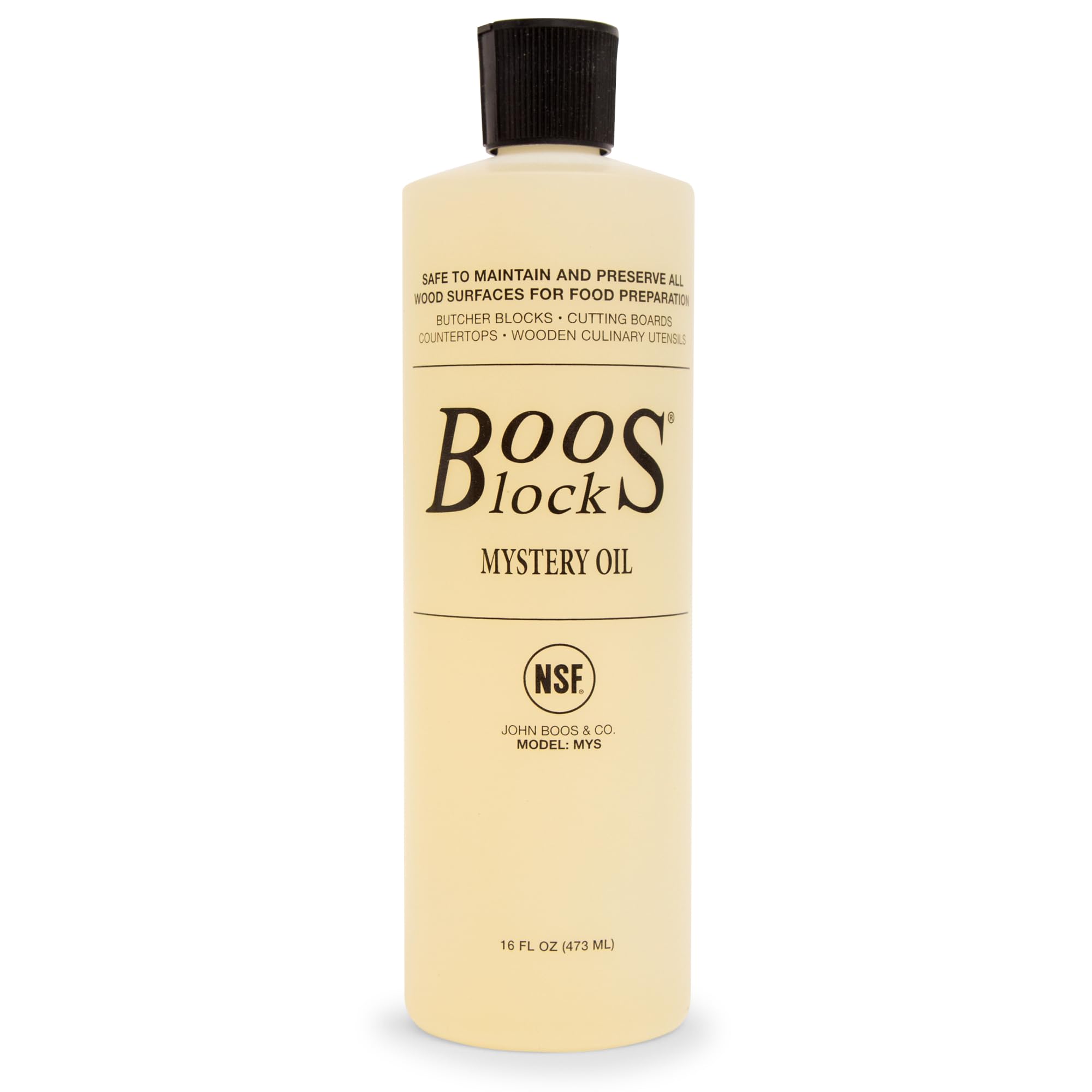
An NSF‑certified mineral oil formulated for pro kitchens, designed to be absorbed overnight and recommended as part of a two‑step care routine.
Why I picked it: NSF certification and proven compatibility with John Boos care products.
Best for: Serious maintenance on high‑use butcher blocks and island tops.
Professional‑grade bottle for routine conditioning.
Pros
- NSF certified food‑safe
- Deep overnight absorption
- Made from natural materials
Cons
- Works best with follow‑up cream
- Takes longer soak times
My take
When I need a thorough conditioning, I pour a liberal coat and let it soak overnight. The difference on an end‑grain board is obvious: the wood looks saturated and resilient.
I use Mystery Oil alongside the Boos board cream when I want a more finished seal. By itself it’s excellent for preventing drying and cracking, and it’s the bottle I recommend for heavy‑use surfaces.
6. UltraPro Food‑Grade Mineral Oil (1 gal) – Best Bulk Option
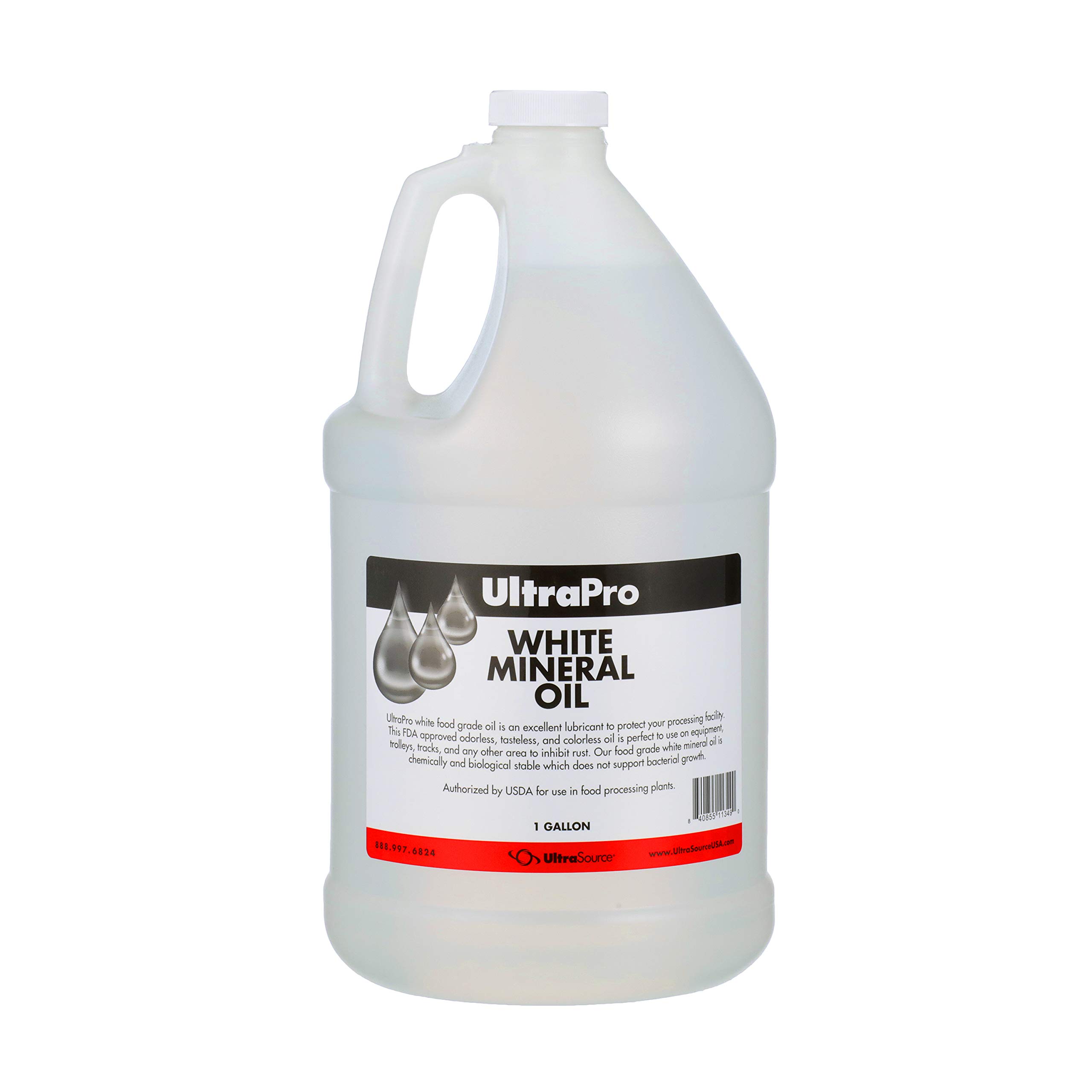
A large, unscented, NSF‑approved jug intended for heavy users who treat multiple boards, equipment, or stainless surfaces.
Why I picked it: Bulk quantity for workshop or busy kitchens where I treat multiple surfaces.
Best for: Large butcher blocks, equipment lubrication, and frequent maintenance.
Best value for heavy users and commercial needs.
Pros
- Food‑grade and unscented
- Versatile for wood and stainless
- NSF approved
Cons
- Large jug can be unwieldy
- Packaging can be less secure
My take
I reach for the gallon when I’m oiling several boards or treating a full island; it’s economical and works equally well on stainless tools and wood.
The oil is clear and odorless. My only gripe is that large jugs require careful handling—I transferred mine to smaller bottles for daily use to avoid spills and to make application easier.
7. John Boos Mystery Oil & Board Cream Set – Best Care Kit
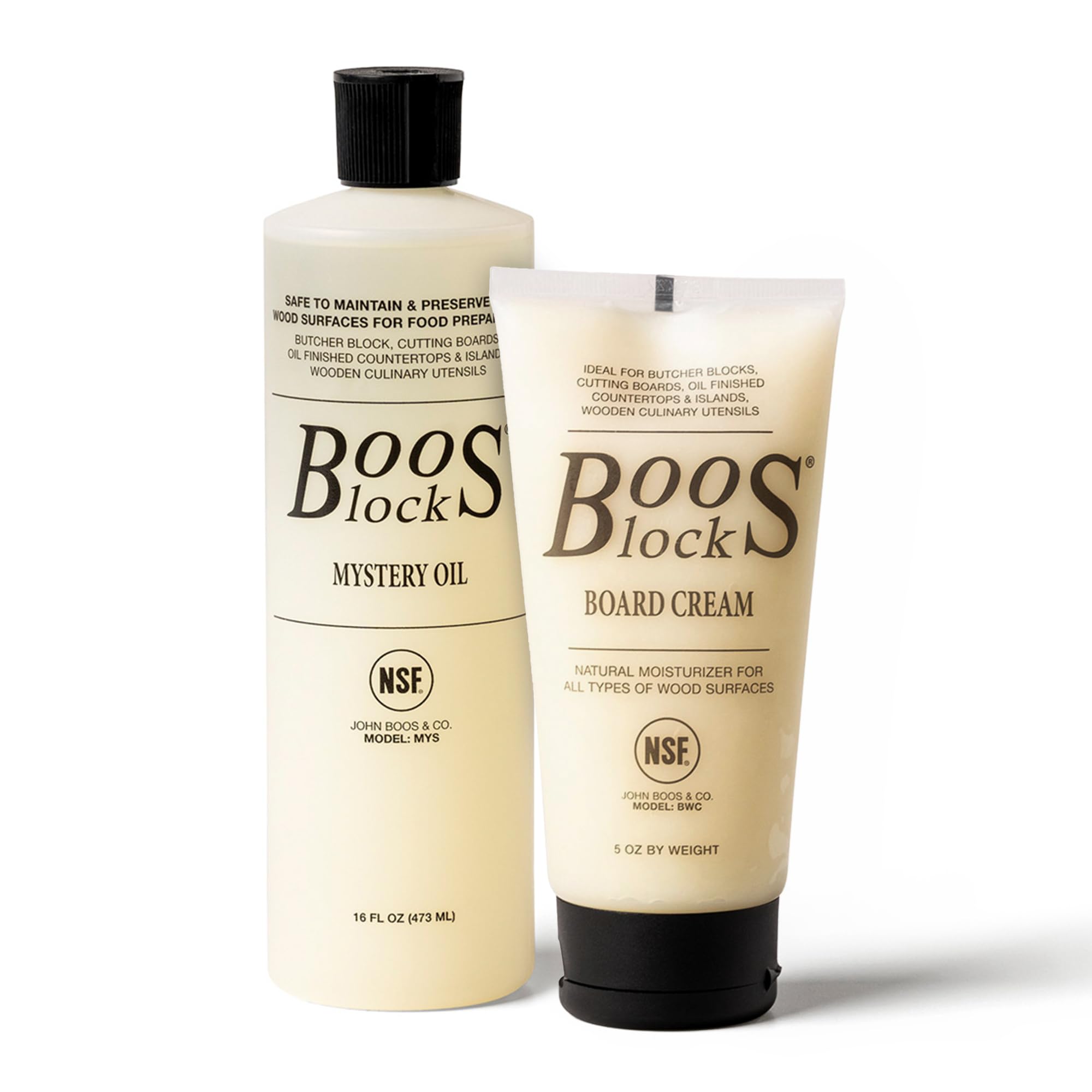
A two‑piece maintenance kit that combines a deep‑penetrating mineral oil with a beeswax board cream for sealing and smoothing.
Why I picked it: Combines oil and wax so I can both hydrate and seal in one routine.
Best for: Owners who want a complete oil + wax maintenance program.
Midrange kit that covers both conditioning and sealing steps.
Pros
- Two‑step system for long‑term protection
- Board cream adds a smooth finish
- Easy to apply
Cons
- Board cream size is modest
- Requires two products and time
My take
This is the kit I use when I want a polished, protected surface. I oil the wood thoroughly, let it absorb, then finish with the beeswax cream. The result is a smooth, sealed surface that resists staining better than oil alone.
The set is straightforward: mineral oil for penetration and cream for sealing. I find the combination worth the extra step when I want a longer‑lasting finish and a soft sheen on my boards and island tops.
How I Choose a Finish for Butcher Block Countertops
Pick the right type of product
I separate finishes into mineral oils, oil + wax combos, and bulk industrial oils. Mineral oil alone hydrates and prevents cracking; an oil + wax combo adds a protective surface film; bulk jugs are best if I’m treating many pieces or equipment.
- Mineral oil: quick soak, food‑safe, reapply monthly.
- Oil + wax: better surface sealing, fewer reapplications.
- Bulk oil: economical for multiple boards and tools.
Look for food safety and certifications
I always choose formulas labeled food‑grade or NSF certified for anything that contacts food. That gives me confidence the product won’t introduce odors or unsafe residues.
- NSF or USP food‑grade labeling is ideal.
- Unscented, colorless oils won’t affect food flavor.
Consider application and absorption
I rate products on how they apply (push cap vs pour spout), how quickly they absorb, and whether they leave a residue. For new wood expect daily or weekly initial treatments, then monthly maintenance.
- Push‑cap bottles for spot work.
- Pour spouts for controlled, larger applications.
- Use small bottles for routine upkeep, gallons for heavy use.
When to use a cream or wax
I add a board cream after oiling when I want a smoother, more sealed surface that resists staining. Wax is not necessary for every board, but it pays off on islands and end‑grain blocks.
- Oil first, then cream for a sealed finish.
- Creams improve water resistance and surface feel.
Maintenance schedule I follow
I oil high‑use boards monthly, more often for new or very dry wood. For heavily used island tops or restaurant workflows I oil more frequently and sometimes rely on bulk oil for convenience.
- New board: daily week one, weekly month one, then monthly.
- Established board: monthly touch‑ups, cream as needed.
Frequently Asked Questions
How often should I oil a butcher block countertop?
I oil cutting boards monthly as part of routine care; newly built or very dry wood needs more frequent treatments—daily during the first week and weekly for the first month.
Can I use mineral oil on all wood types?
Yes—mineral oil works on bamboo, teak, and end‑grain woods. I choose higher‑penetration mineral oils for dense woods and follow with a wax cream if I want extra surface protection.
Do I need a board cream after oiling?
I use board cream when I want a sealed, smooth finish that resists stains. Oil alone hydrates; cream adds a thin protective film and a nicer hand feel.
Final Take
For straightforward, no‑fuss maintenance I keep a small mineral oil at hand for monthly touch‑ups. When I want a more finished surface I use the John Boos oil and follow with the board cream.
If you’re treating several boards or a large island, buy a bulk jug and decant into smaller bottles. For entertaining and big prep jobs, the Greener Chef bamboo slab gives me immediate workspace and a pre‑oiled finish that looks great.
My approach is simple: hydrate first, decide if I need a sealed finish, and then maintain on a predictable schedule. These products are the ones I use when I want reliable, food‑safe results.
