
I tested four headrest office chairs for support, adjustability, and long-hour comfort. These are the ones I kept or recommended for specific needs—from breathable mesh to executive leather and advanced lumbar systems.
I spent weeks assembling, adjusting, and logging full workdays in each chair on this list so I could recommend options that actually make long hours at a desk more comfortable.
My testing focused on headrest support, lumbar performance, armrest flexibility, seat comfort, and overall build quality. I also paid attention to how easy each chair was to tune to my body and workspace.
I compared these chairs by how well their headrests integrate with lumbar support and overall adjustability. I prioritized chairs that let me dial in neck height/angle, offered meaningful lumbar control, and held up over multiple long work sessions—while also noting material and build quality for everyday use.
1. GABRYLLY High-Back Mesh Office Chair with Headrest – Best for Style + Breathability
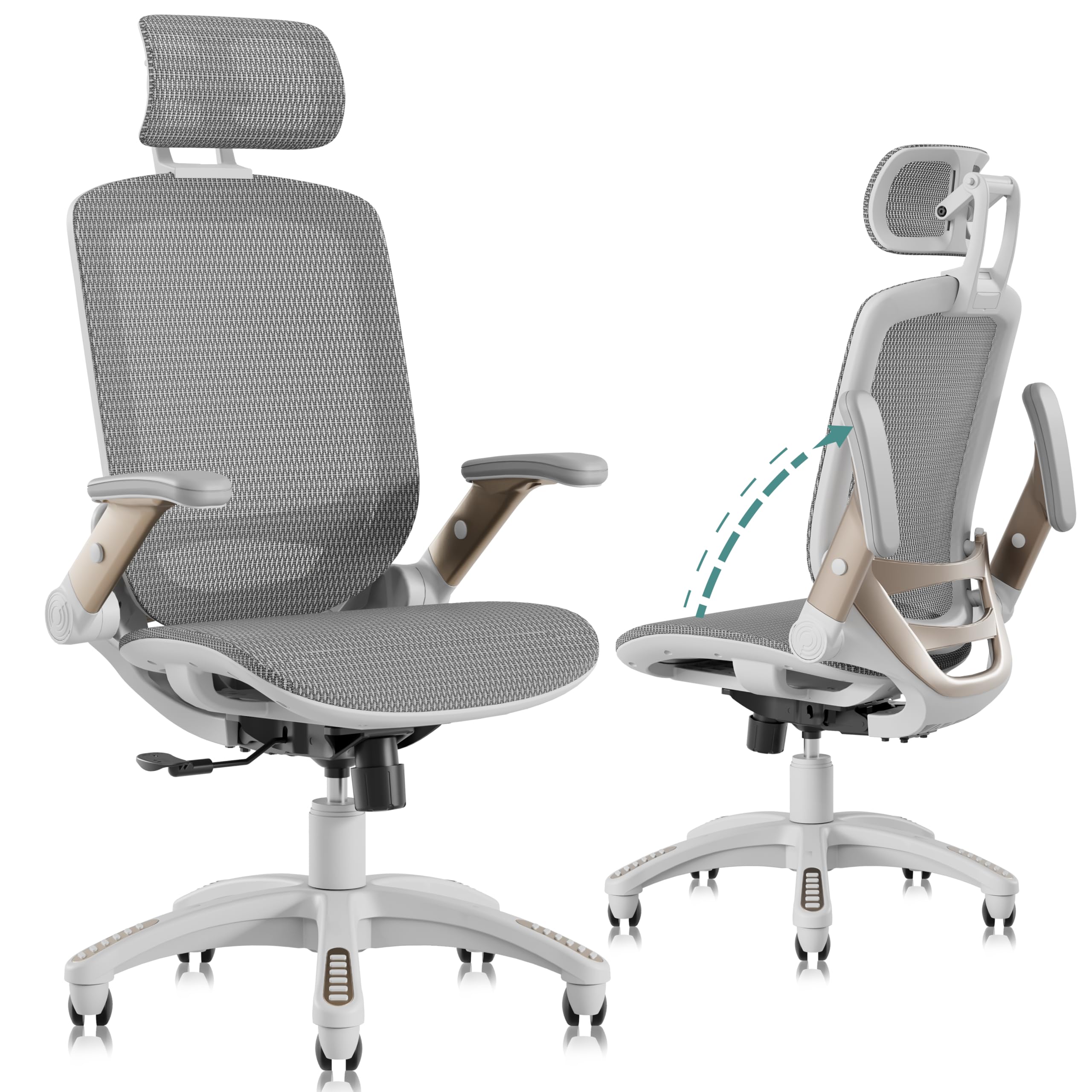
A breathable, upscale-looking mesh chair with flip-up arms and an adjustable headrest that suits a wide range of users up to 400 lbs.
Why I picked it: I liked the two-tone finish, roomy seat, and practical flip-up arms for tight desks.
Best for: People who want a stylish mesh chair with head support and space-saving arms.
A mid-market option that looks and feels more premium than its cost suggests.
Pros
- Adjustable height and angle headrest
- Flip-up armrests for tucking under desks
- Wide seat built for bigger frames
- Breathable mesh back and seat
Cons
- Headrest range can feel limited for some
- Champagne trim may not match every office
My take
I installed this chair in under 30 minutes and appreciated that the parts felt solid straight out of the box. The white frame and champagne accents give it a more intentional, design-forward look than most office chairs in the same category.
The headrest adjusts for height and tilt, which helped me when switching from focused typing to leaning back for calls. The flip-up arms are genuinely useful when I need to slide the chair under a low desk or want to sit closer to the keyboard.
The seat is noticeably wide and the mesh has enough give to stay comfortable for long sessions. I found the overall fit supportive for people in my household ranging from about 5'5" to 6'1", and the rated capacity makes it a solid pick for heavier users who prefer mesh.
If you want a clean, modern look with practical head and arm adjustments and roomy seating, this chair delivered that balance for me. I did find that the headrest doesn't offer an enormous adjustment range—if you need extreme head positioning, check the next options.
2. Amazon Basics Ergonomic Executive Chair (Bonded Leather) – Best Executive Leather
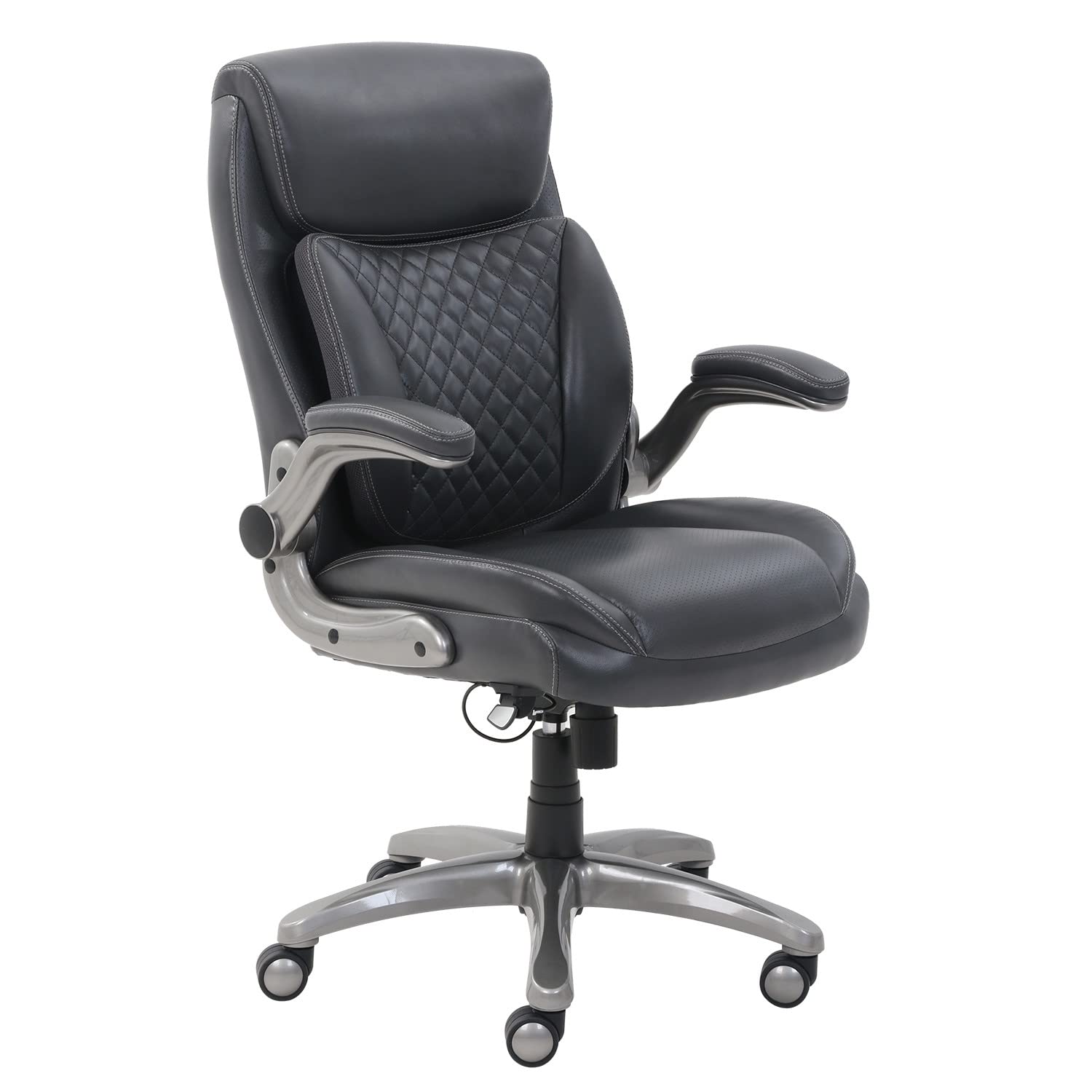
A polished bonded-leather executive chair with integrated lumbar shaping and flip-up armrests for a cleaner desk footprint.
Why I picked it: I valued the executive look and firm lumbar shaping for upright desk work.
Best for: Users who want a refined leather-style chair with simple, reliable adjustments.
A practical choice for buyers seeking executive styling without a premium price tag.
Pros
- Classy bonded-leather upholstery
- Integrated lumbar shaping
- Flip-up arms save desk space
- Sturdy five-point base
Cons
- Arm height isn't adjustable
- Back height may feel short for tall users
My take
Putting this chair together was straightforward and the weight of the parts felt reassuringly solid. The bonded leather looks sharp in a home office and blends well with neutral decor.
I noticed the built-in lumbar shaping immediately—the support keeps my lower back from slumping during focused tasks. The cable-actuated height and tilt made it easy to find a stable working angle, and the flip-up arms are handy when I need to scoot close to the desk.
This is not the most adjustable chair on the list, but for someone who wants an executive aesthetic and dependable lumbar support, it performs really well. I did find that taller users may want a higher back and that the armrests don't offer independent height adjustment.
3. ELABEST T96 Mesh Office Chair – Best Breathable Task Chair
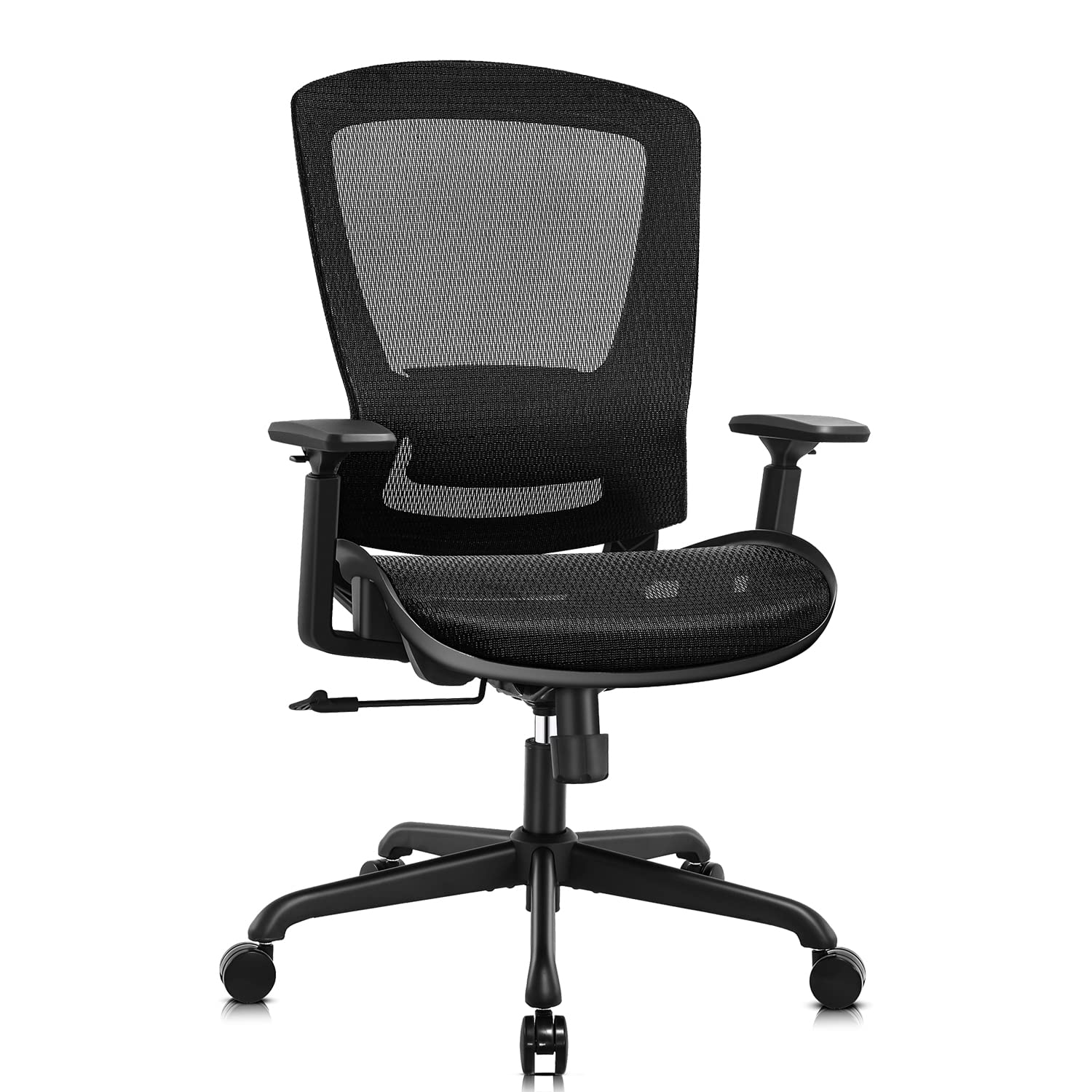
A high-value mesh task chair with adjustable lumbar, synchro-tilt, and 3D armrests—built like a premium chair without the premium price.
Why I picked it: I picked it for the strong mesh support, multi-axis arm adjustments, and dependable tilt system.
Best for: People who want a breathable, highly adjustable task chair for full workdays.
A solid value for buyers who want premium adjustability on a budget.
Pros
- Adjustable lumbar support
- 3D armrests (height/angle/width)
- Synchro-tilt with three lock positions
- Durable, mostly metal construction
Cons
- Seat is slightly narrower than expected
- Designed more for average builds
My take
I’ve used the T96 for months and appreciated that it stayed comfortable after the initial break-in period. Assembly was quick and the parts felt heavier-duty than the price implied.
The mesh back follows my spine well and the adjustable lumbar gives real, usable support when I’m deep into long work sessions. The 3D armrests made it easy to position my arms for typing, reading, or relaxing between tasks.
For someone who previously considered much more expensive chairs, this felt like a pragmatic alternative: strong build, effective ergonomics, and breathable materials that kept me cool during long afternoons at the desk.
If you prefer a seat with a bit more width, check measurements carefully, but for day-to-day productivity the T96 delivered reliable comfort and adjustability.
4. ELABEST X100 Ergonomic Mesh Chair with Footrest – Best for Advanced Adjustability
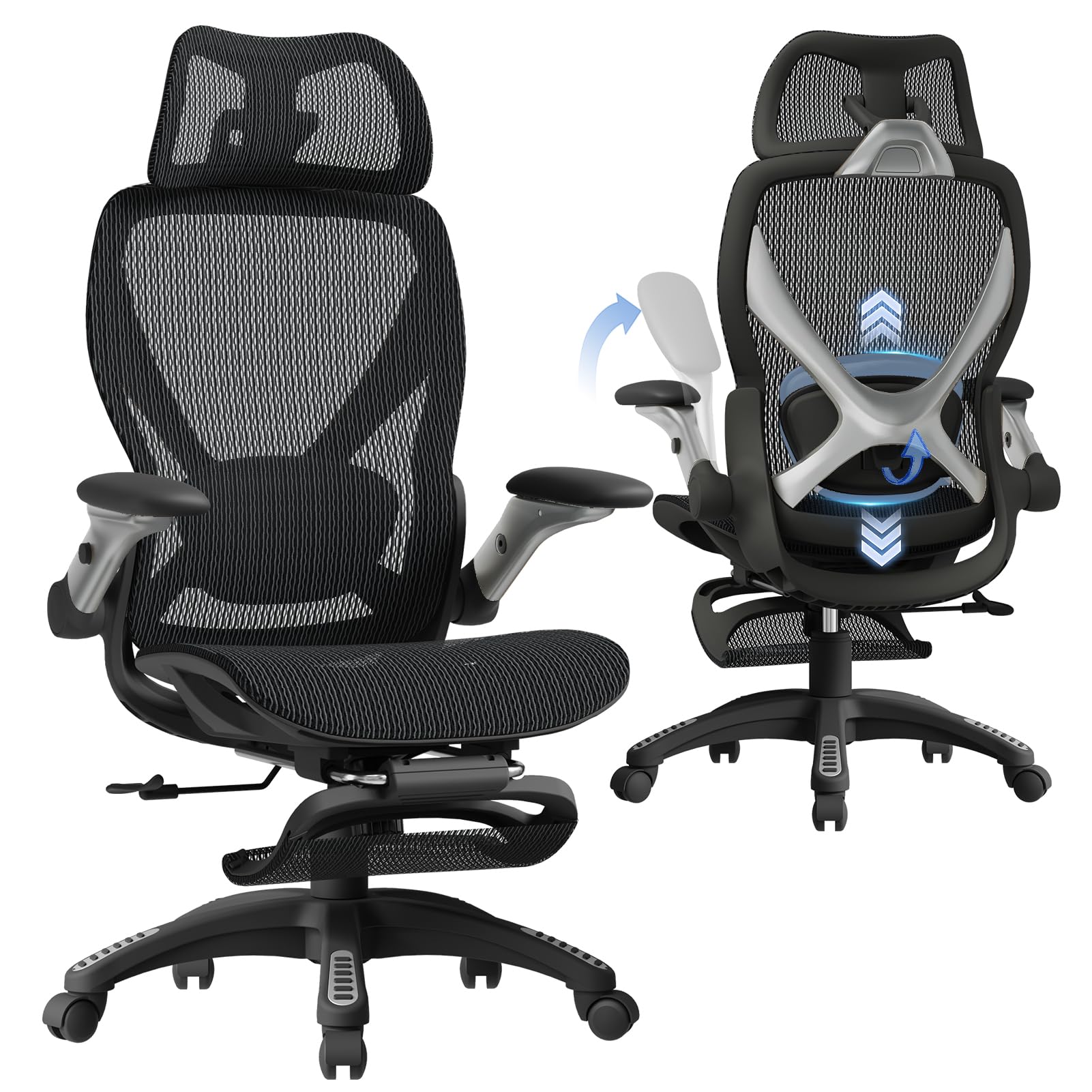
A feature-rich ergonomic chair with 3D lumbar, 5D flip-up arms, an extendable footrest, and an advanced headrest—designed for long hours and recovery-focused support.
Why I picked it: I chose it for its extensive adjustments and orthopedic-informed spine system.
Best for: Users who want a premium-feeling, highly adjustable chair for prolonged sitting and recovery.
A higher-end option in this roundup that prioritizes adjustability and support.
Pros
- Comprehensive 3D lumbar adjustments
- 5D flip-up armrests for precise fit
- Extendable footrest for recline comfort
- Robust mesh with superior airflow
Cons
- More complex setup and adjustments
- Larger footprint than basic task chairs
My take
This chair felt premium the moment I unpacked it: thoughtful packaging, clear instructions, and heavy-duty components that assembled cleanly in about an hour.
The 3D synchro-tilt lumbar system and micro-adjustments let me fine-tune spinal support in ways other chairs here can't match. When I reclined and extended the footrest, the chair transitioned smoothly from focused work to a comfortable break position.
The headrest has a wide, supportive surface and the Dual-Stripe AirMesh keeps me cool during extended sessions. Because there are so many adjustment axes—armrests, lumbar depth, tilt tension—it took me a few sessions to dial in my ideal setup, but once I did the comfort payoff was large.
If you want near-clinic-level adjustability and don't mind spending time configuring it, the X100 is the most mechanically capable chair I tested.
How I Choose Office Chairs with Headrests
Headrest fit and function
I look for a headrest that adjusts both height and tilt so it supports my neck in multiple seating positions.
A headrest that only tilts or only rises is less useful during transitions from typing upright to leaning back for calls.
- Adjustable height and angle for personalized neck support
- Sufficient width to cradle without pushing the head forward
- Breathable material to avoid heat buildup behind the neck
Lumbar support and tilt mechanics
I prioritize chairs with adjustable lumbar depth and a reliable reclining mechanism because lower-back support changes with posture.
Synchro-tilt or multi-position locks let me move through work and rest modes without losing spinal alignment.
- Lumbar depth plus height or firm built-in lumbar
- Tilt tension control and at least one lock position
- Sync or multi-axis tilt for natural movement
Armrests, seat, and materials
I prefer 3D or 5D armrests when I spend long hours at a desk—those adjustments reduce shoulder and neck strain.
Mesh seats keep me cool; leather-style upholstery looks executive but can run warmer. Check seat width and depth if you need extra room.
- 3D/5D armrests for posture tuning
- Mesh for airflow; leather-style for aesthetics
- Confirm seat dimensions for your body type
Durability and warranty
I inspect build materials and base weight rating. Metal components and thicker casters indicate longer life.
I also value a clear warranty or parts support because chairs get the most wear from daily use.
- Metal base and solid casters for longevity
- Weight capacity that matches your needs
- Accessible warranty or parts service
Frequently Asked Questions
Do I need a headrest if I mainly sit upright?
I still recommend a headrest. It gives quick relief during short reclines and helps keep neck muscles relaxed during long workdays.
How important is lumbar adjustability with a headrest?
Very important in my experience: a good headrest and adjustable lumbar together maintain neutral spine alignment whether I'm upright or reclined.
Are mesh chairs better than leather-style chairs for long hours?
I find mesh more comfortable for all-day use because it breathes. Leather-style chairs look polished but can trap heat during extended sessions.
Final Take
After testing, I kept chairs that offered meaningful headrest and lumbar adjustments because those changes made the biggest difference in my comfort.
If you want a balance of style and airflow, the GABRYLLY is my pick. For an executive leather look, the Amazon Basics option performs reliably. The ELABEST T96 is the best value for task-focused adjustability, while the X100 is the choice if you want clinic-grade fine-tuning and a footrest.
Use the buying guide to match adjustability and materials to your body and workspace, then pick the chair that gives you the most comfortable setup. I know the right fit makes long hours far easier to handle.
