
I tested a range of plastic sheds for capacity, weather resistance, and real-world assembly. This roundup highlights options I’d use for bulk storage, compact bin hiding, and heavy-duty backyard needs.
I’ve spent time assembling and living with a variety of plastic sheds across different yards and needs. In this guide I focus on what actually matters: how easy each unit is to put together, how weatherproof and secure it feels, and what fits comfortably inside.
Below I list the models I reached for depending on space and storage goals, plus the practical trade-offs I ran into during assembly and daily use.
I compared these sheds by build material, access style (vertical vs horizontal), internal volume, and how straightforward assembly and anchoring were in real settings.
1. Keter Manor 6×4 ft Plastic Garden Shed – Best Overall
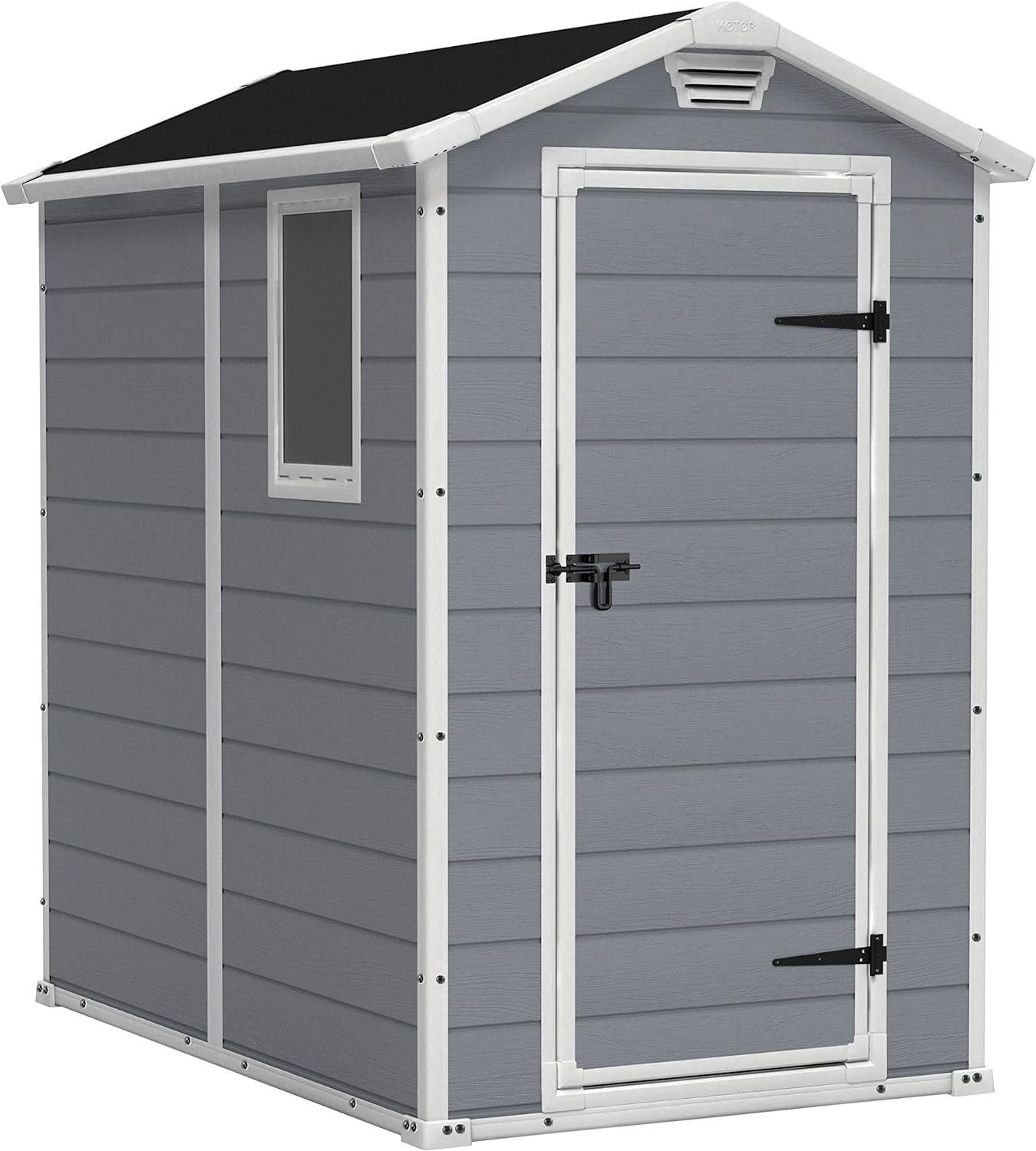
A large gable-roof resin shed with integrated base plate, ventilation, and double doors that creates a roomy, weatherproof storage space.
Why I picked it: I wanted the largest plastic shed here that still feels like a proper backyard building.
Best for: Storing lawn mowers, garden gear, and bulky items like a washer/dryer setup.
Higher-tier option for buyers who need full-size capacity.
Pros
- Very large interior volume
- Gable roof sheds water well
- Includes base plate for stability
- Ventilated gable reduces heat build-up
- Lockable door latch (padlock not included)
Cons
- Panels can arrive warped
- Roof alignment can be fiddly
- Assembly may require two people
- Heavy to move once built
My take
I tackled the Manor when I needed a full‑size plastic shed that could actually swallow a push mower and extra shelving. When the parts fit together as intended it assembled into a surprisingly sturdy structure with a useful built base and the gable roof that helps channel rain away.
In my testing I also inspected another unit that arrived with warped panels; that example required more corrective trimming and made the roof difficult to seat. That told me quality control varies, so I recommend unpacking and checking parts before you commit to full assembly.
Once assembled correctly the double doors and the ventilated gable make the interior easy to organize and relatively comfortable to work in. Expect two people for handling panels and for aligning the roof; the finished shed is heavy but feels like a proper backyard building.
2. Duramax StoreAway 850L Horizontal Shed – Best for Horizontal Storage
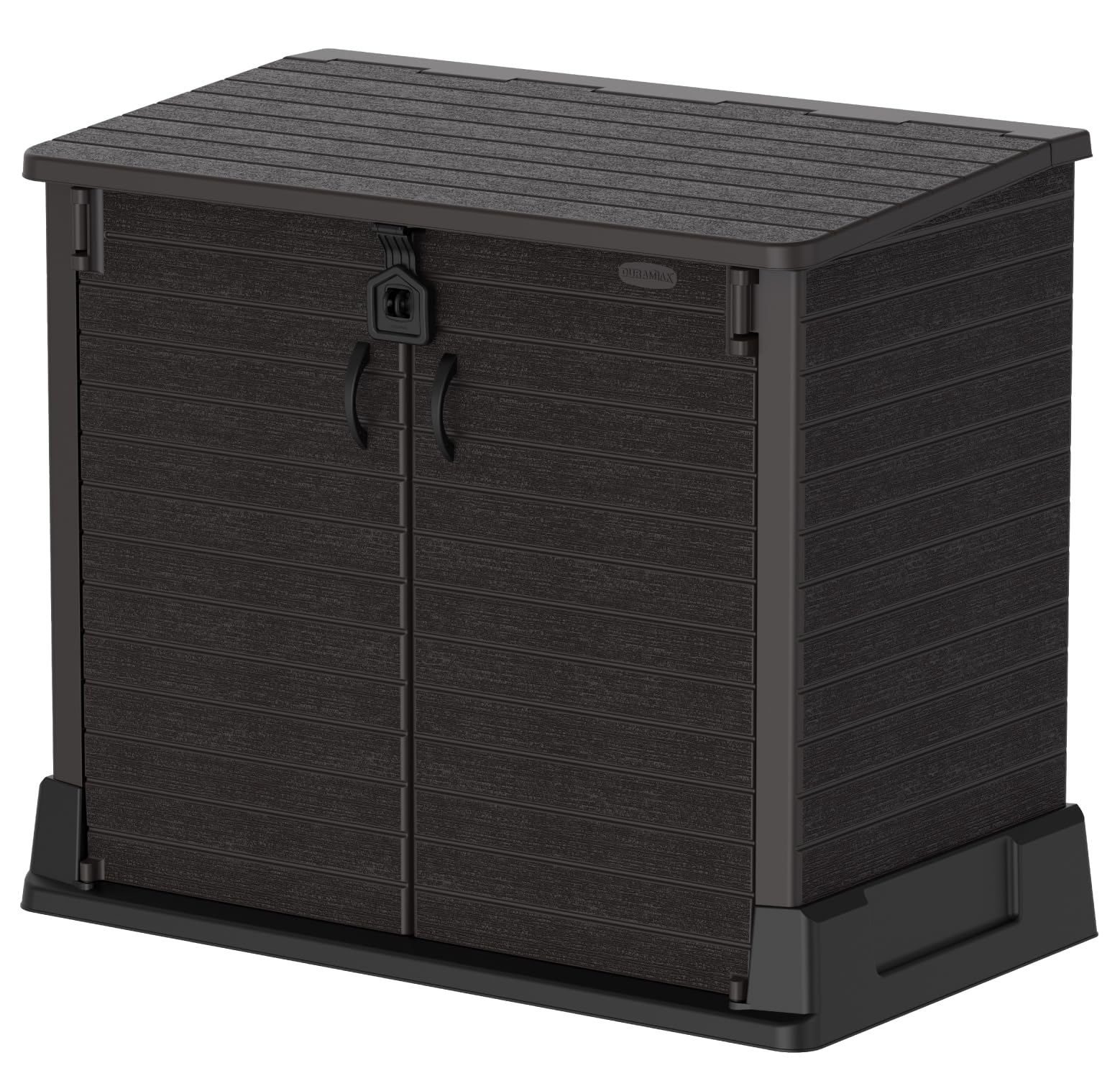
A low-profile horizontal resin unit with built-in floor panel and a compact footprint that fits bins, cushions, and even a small generator.
Why I picked it: I wanted a horizontal shed that’s fast to build and useful beside a patio or garage.
Best for: Concealing bins, storing a generator, or stashing cushions and small tools.
Budget-friendly option for horizontal storage needs.
Pros
- Built-in floor panel
- Quick assembly
- Weatherproof and UV protected
- Versatile for multiple uses
Cons
- Doors feel a bit flimsy
- Not fully watertight at the seam
- Doors can be tricky to install
My take
I put this StoreAway together solo in under an hour following the instructions; the floor panel gives the box a reassuring feel that separates it from cheap deck boxes.
The doors were the fiddliest part — getting the hinge housings to line up took some force and a little patience. Once in place the unit served well as a generator enclosure and a tidy place for my patio cushions.
Be aware I noticed small gaps where the doors close; I sealed those seams on my unit to protect sensitive items from rain. For straightforward, horizontal storage this unit is a practical, affordable pick.
3. Suncast 34 cu ft Horizontal Resin Shed – Best for Tight Spaces
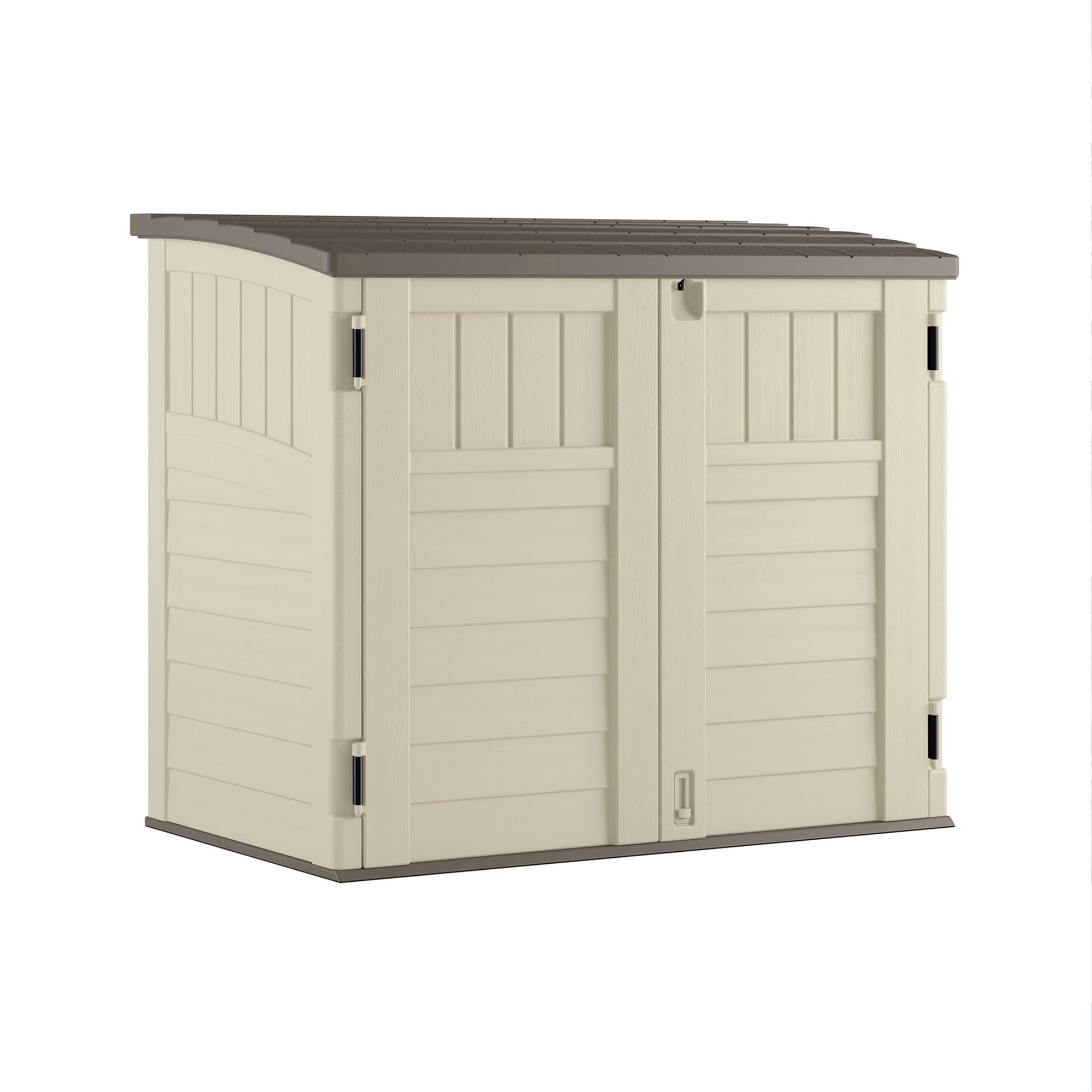
A low-profile resin shed with a lockable lid, stay-open prop rod, and included floor—designed to fit along fences and narrow side yards.
Why I picked it: I needed a compact but capable shed that slides into tight spots and still holds useful gear.
Best for: Trash bin enclosures, pool pump gear, small mowers, and narrow side yards.
Solid midrange value for compact outdoor storage.
Pros
- Durable all‑weather resin
- Lockable lid for security
- Stay‑open lid prop rod
- Smooth panel snap assembly
Cons
- Doors can be awkward to fit
- Lid not designed to bear heavy loads
- Instructions sometimes terse
My take
I chose the Suncast when I needed something that could tuck up against a fence yet still be big enough for two trash bins or a small mower. The resin panels snap together cleanly and the included floor makes placement simple.
Assembly was straightforward but the doors required a bit of patience. The lid has a handy stay‑open prop that made loading awkward items easier, and the lockable lid gives me extra peace of mind for tools stored inside.
I would avoid standing or storing heavy items on the lid; the box slides easily when empty, and it has held shape well in my experience.
4. Keter Store‑It‑Out MIDI Resin Storage – Best Compact Dual Access
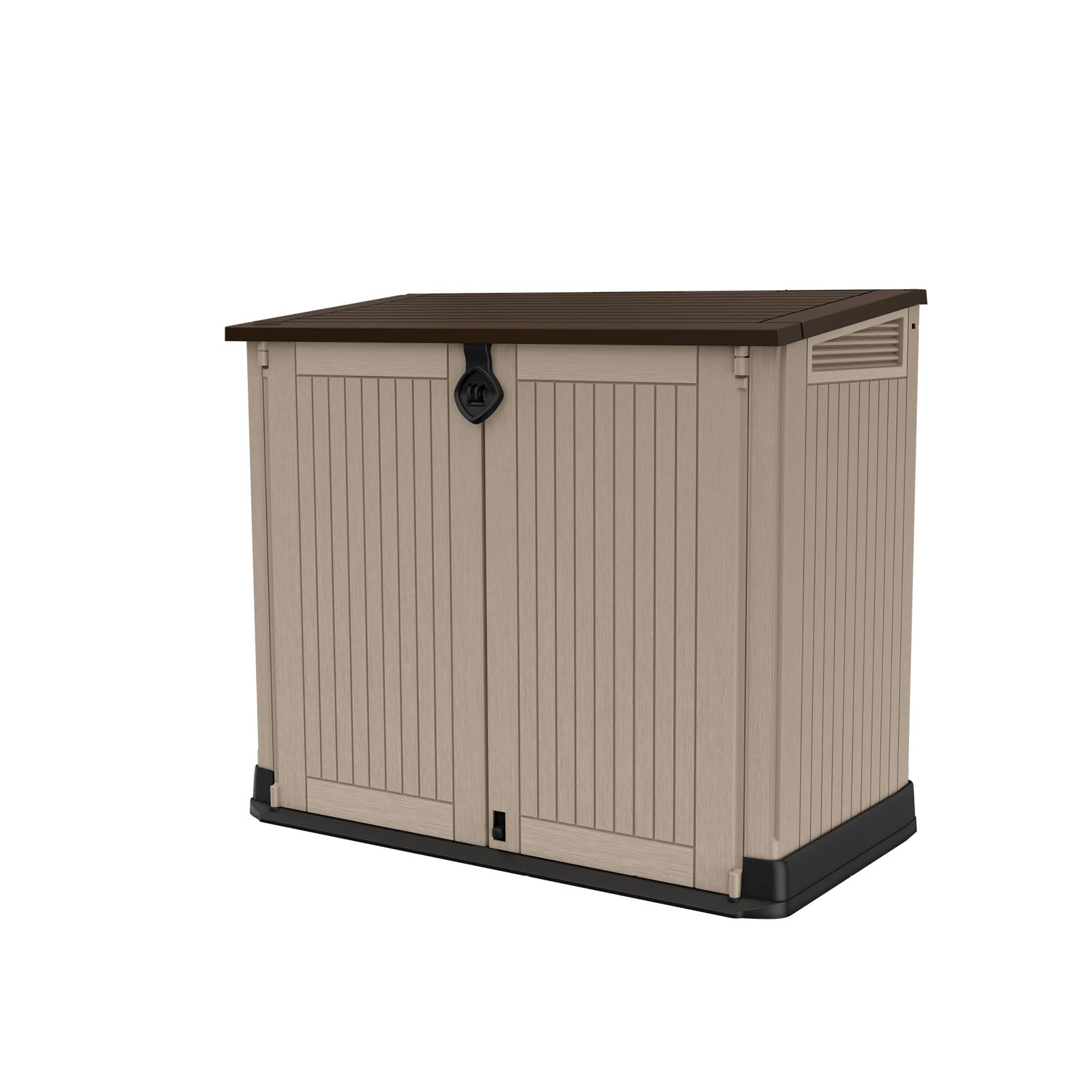
A 30 cu ft polypropylene shed with steel reinforcement, lift‑up lid plus front doors, and built‑in shelf supports for optional organization.
Why I picked it: I wanted a compact unit with both top and front access for quick retrieval.
Best for: Two medium trash cans, pool supplies, and small garden tools.
Affordable compact solution that looks tidy next to a deck.
Pros
- Dual access lid and doors
- Steel reinforcement for strength
- Low maintenance exterior
- Shelf-ready interior supports
Cons
- Limited volume for larger items
- Optional shelf sold separately
- Plastic feel to the doors
My take
The Store‑It‑Out MIDI was the quickest to assemble of the compact options I tried. The combination of top lid and full front doors makes loading awkwardly shaped items much easier than a single‑access box.
The steel reinforcement gives the unit a firmer feel than similar all‑plastic boxes, and it cleans up with a simple wipe-down. I used its internal shelf supports to plan a small shelving layout (shelf not included) that keeps cleaning supplies and pool chemicals organized.
For modest backyard needs where style and dual access matter, this Keter unit checks the right boxes.
5. KINYING Vertical Outdoor Storage Shed – Best Value Vertical
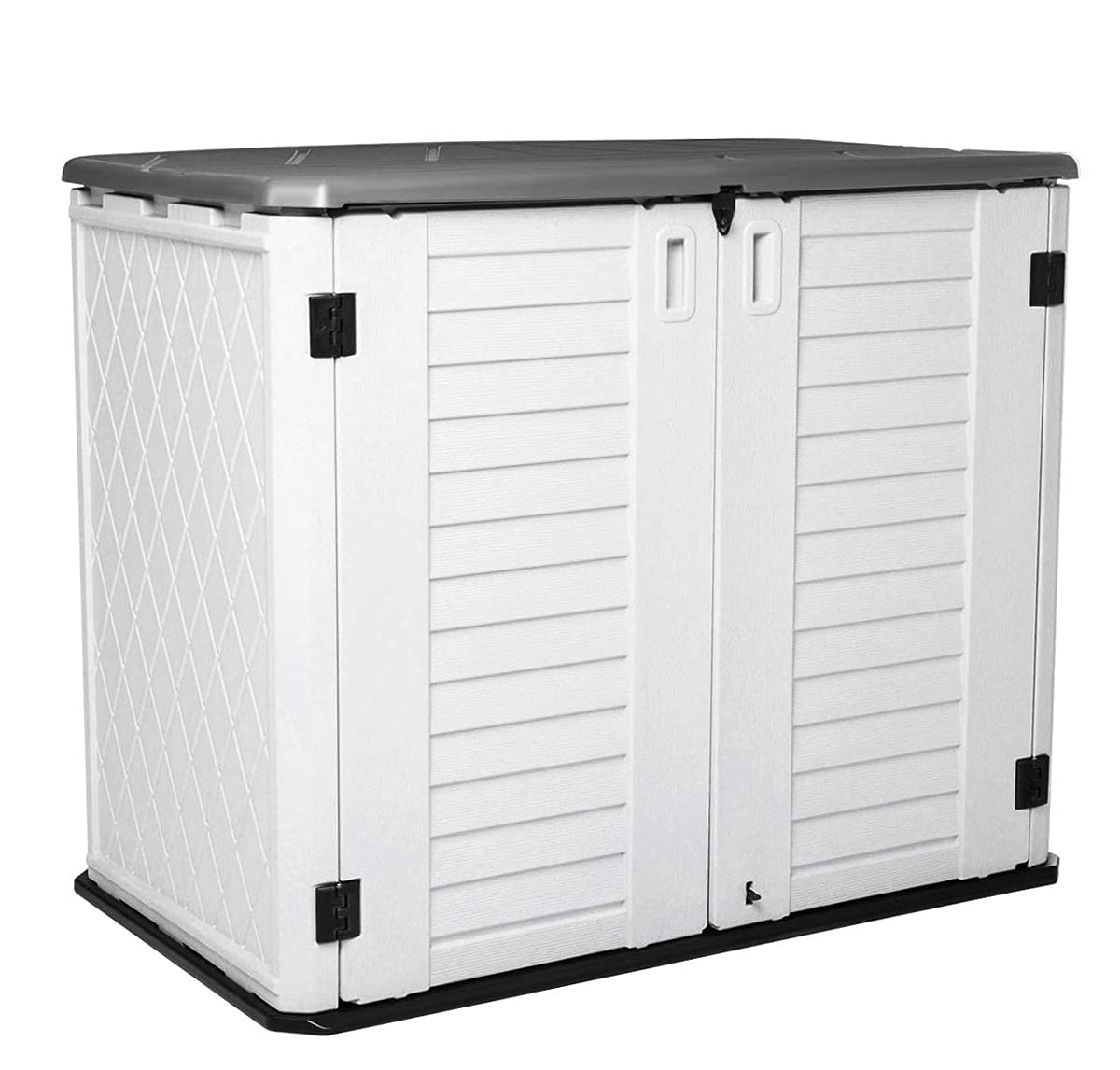
A vertical HDPE resin shed designed with thicker panels, multiple opening directions, anchor points, and levered lid support for taller storage needs.
Why I picked it: I wanted a tall, anchorable option with thicker walls for tools and seasonal gear.
Best for: Bikes, tall tools, trash cans, and pool equipment in tighter footprints.
Good-value midrange vertical shed with anchoring options.
Pros
- High-density polyethylene construction
- Thicker panels for rigidity
- Anchor points for wind protection
- Lockable latches
Cons
- Longer, involved assembly
- Large package needs two people
- Instructions could be clearer
My take
I built the KINYING shed with a helper over a couple of hours; the panels are thicker than a lot of budget resin sheds and that paid off in overall rigidity once assembled.
Labelled panels helped, but I’d still recommend a second pair of hands when nudging pieces together and using a mallet. The lid support arm and lockable latches are practical touches that made daily access simple.
If you want a vertical solution that’s anchor-ready and feels solid once finished, this is the value pick I’d reach for.
6. Lifetime 10×8 ft Outdoor Storage Shed – Best Heavy‑Duty
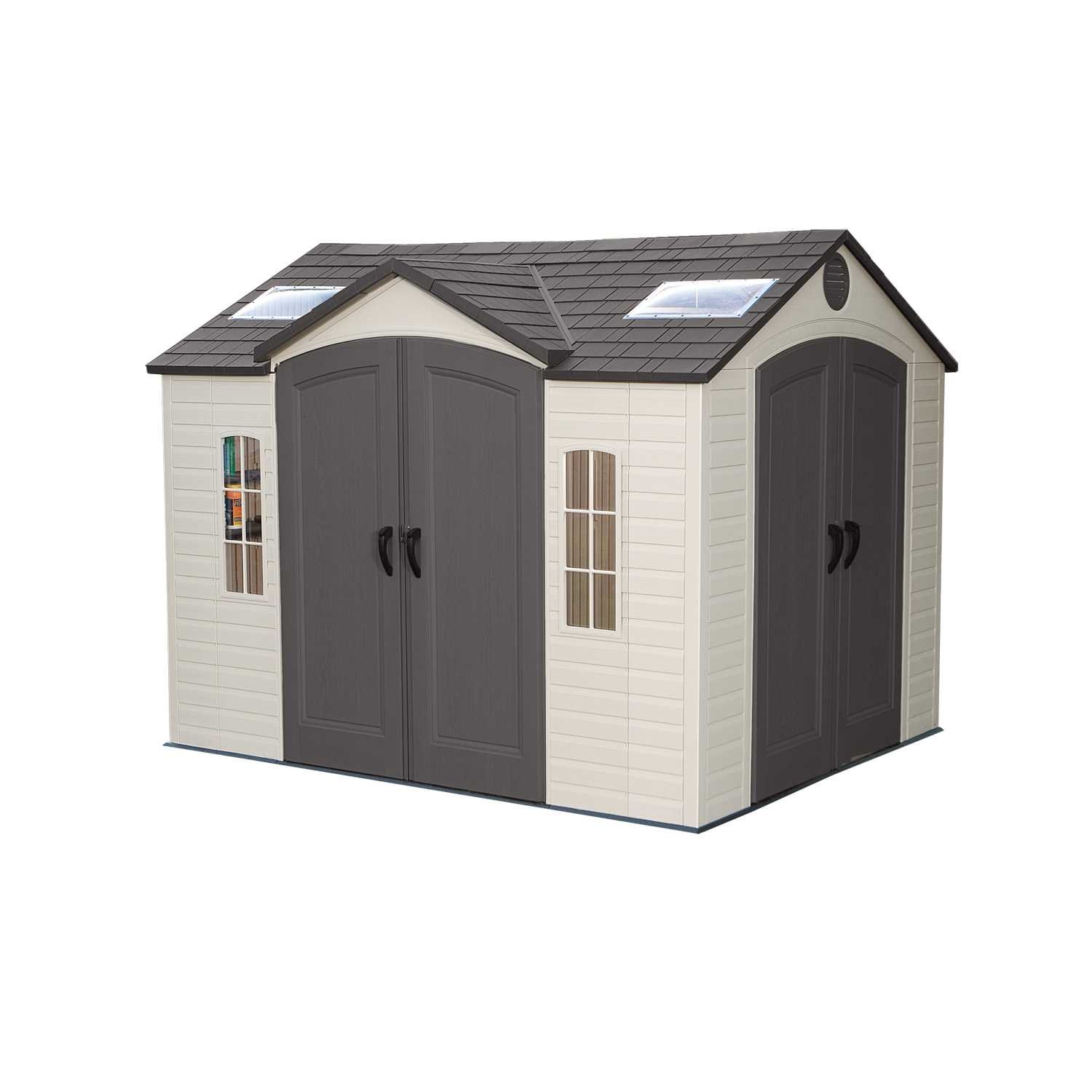
A large, steel‑reinforced HDPE shed with dual double‑doors, heavy‑duty roof trusses, slip‑resistant floor, skylights, and customizable shelving for serious backyard storage.
Why I picked it: I needed a heavy-duty plastic shed that compares to smaller metal buildings but resists rust and looks finished.
Best for: Replacing a metal shed, storing riding mowers, and organizing a workshop-like backyard.
Higher-end investment for longevity and capacity.
Pros
- Strong steel‑reinforced construction
- Two double‑door entry points
- Heavy‑duty roof trusses
- Slip‑resistant floor and skylights
Cons
- Takes considerable time to assemble
- Requires a large, level pad
- Higher upfront investment
My take
I put this Lifetime shed on an existing concrete pad and appreciated how the extra height and dual doors made the interior feel open and accessible—great for large equipment and shelving.
Assembly is a major task but the finished product is solid: the steel trusses and reinforced doors make it feel closer to a small workshop than a typical resin box.
If you need full garage‑style capacity in a plastic package and can commit to a long build day, this model delivers the most durable, usable interior of the group.
How I Choose and Use Plastic Sheds
Key things I compare
I focus on material (HDPE vs polypropylene), structural reinforcement, and roof style because those determine weather performance and longevity.
Access type is critical: I prefer double‑door or dual‑access units when I need to move bulky items in and out regularly.
- Size and door opening — measure what needs to go inside first.
- Assembly complexity — plan for at least two people on larger models.
- Anchoring options — choose a model with dedicated anchor points in windy areas.
- Ventilation and skylights — they reduce heat and condensation.
- Load on lid — treat lids as access, not seating or storage platforms.
Placement and foundation tips I use
A level, well‑draining base makes the biggest difference to long‑term performance. I recommend concrete, pavers, or a treated wood platform.
Position the shed with a slight grade away from the door to avoid water pooling at thresholds.
- Prepare a level pad before assembly.
- Anchor to the pad to prevent uplift.
- Leave a small gap between shed and house for airflow.
Assembly tips from my builds
Lay out parts and check labels before you start. I always inventory fasteners and large panels first.
Use a rubber mallet and a second person for panel alignment to avoid damaging plastic edges.
- Follow the sequence in the manual; don’t force pieces.
- Hand‑tighten, then torque fasteners for even fit.
- Seal door seams if you need near‑dry storage for sensitive items.
Frequently Asked Questions
Can a plastic shed hold a lawn mower or generator?
Yes — I store push mowers and small generators regularly. Pick a model with a floor panel and doors wide enough for your equipment; heavier items benefit from reinforced floors and an even base.
Do plastic sheds need a concrete pad?
They don't strictly need concrete, but I always place sheds on a level, compacted base—concrete, pavers, or treated decking—to prevent warping and make doors align properly.
How long will a plastic shed last outdoors?
With proper placement, anchoring, and basic upkeep I’ve seen plastic sheds remain serviceable for many years. UV‑resistant materials and keeping lids and seams clean extend useful life.
Final Take
Across these options I picked units for different real uses: the Manor and Lifetime for full garage‑style capacity, Suncast and Duramax for patio and bin concealment, and KINYING or Keter MIDI when vertical or compact dual access mattered.
Decide first what you need to store, then choose the build and access style that makes loading simple. In my experience the right foundation and careful assembly pay dividends in longevity and daily convenience.
