
I tested corded, cordless, top-handle, and replacement parts to find professional-grade chainsaws and accessories that deliver on power, control, and reliability.
I've spent time cutting, pruning, and limbing with a wide range of chainsaws and accessories, from compact one-hand pruners to full cordless kits. In this roundup I focus on tools I actually used in the yard and on the job—so you can choose the right balance of power, portability, and practicality.
I prioritized safety features, easy maintenance, and real-world performance. Below I explain which saws worked best for specific tasks and why each one earned a spot on my shortlist.
I compared these options by intended use: pruning and one-hand limbing, lightweight top-handle work, heavy cordless cutting with extended runtime, and practical accessories like replacement bars and transport cases. Power, ergonomics, chain serviceability, and system battery compatibility were my deciding factors.
1. BLACK+DECKER Alligator Lopper LP1000 – Best for Safe Pruning
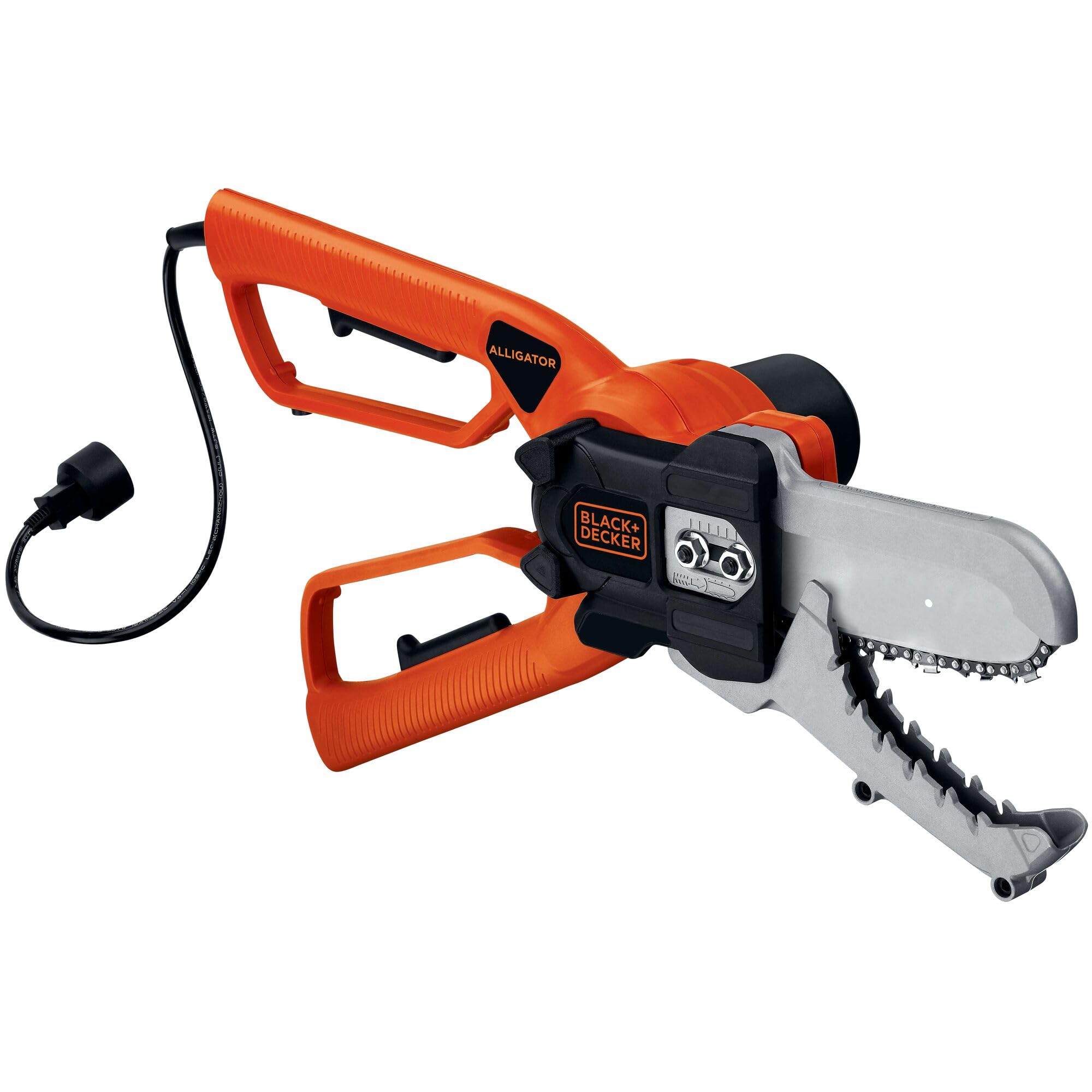
A corded, jaw-style electric lopper that clamps and saws branches up to about 4 inches—great when I want controlled, low-fatigue cuts.
Why I picked it: I picked it for the unique clamping jaws and effortless scissor-like cutting for branches and storm cleanup.
Best for: Pruning, shrub trimming, and cutting fallen limbs without sawhorses.
An affordable, corded option for homeowners and light pros.
Pros
- Clamping jaws for controlled cuts
- Easy one-handed positioning
- Unlimited runtime with corded power
- Auto chain tensioning
Cons
- Limited to ~4-inch branches
- Requires extension cord for distant work
- Not a replacement for full chainsaws
My take
I reach for the Alligator Lopper when I need precise, low-effort cuts on branches that would be awkward with a traditional chainsaw. The jaw clamps the wood and the scissor-like sawing motion stops the tool from skipping, which reduced the physical strain on my arms.
In real use I found it especially good for storm cleanup and chopping limbs into firewood-sized pieces—no need to prop branches up on saw horses because the jaws hold them steady. The metal guards that snap back over the chain feel reassuring when I’m making repeated cuts close to the ground.
Because it's corded I never worried about runtime, and the 4.5-amp motor made fast work of branches in the advertised size range. The main downside for me was the cord—I kept a long extension on hand for remote parts of the yard. Overall, it’s an excellent, user-friendly alternative when a full chainsaw is overkill.
2. Makita DUC254Z 18V LXT Top-Handle – Best Lightweight Top-Handle
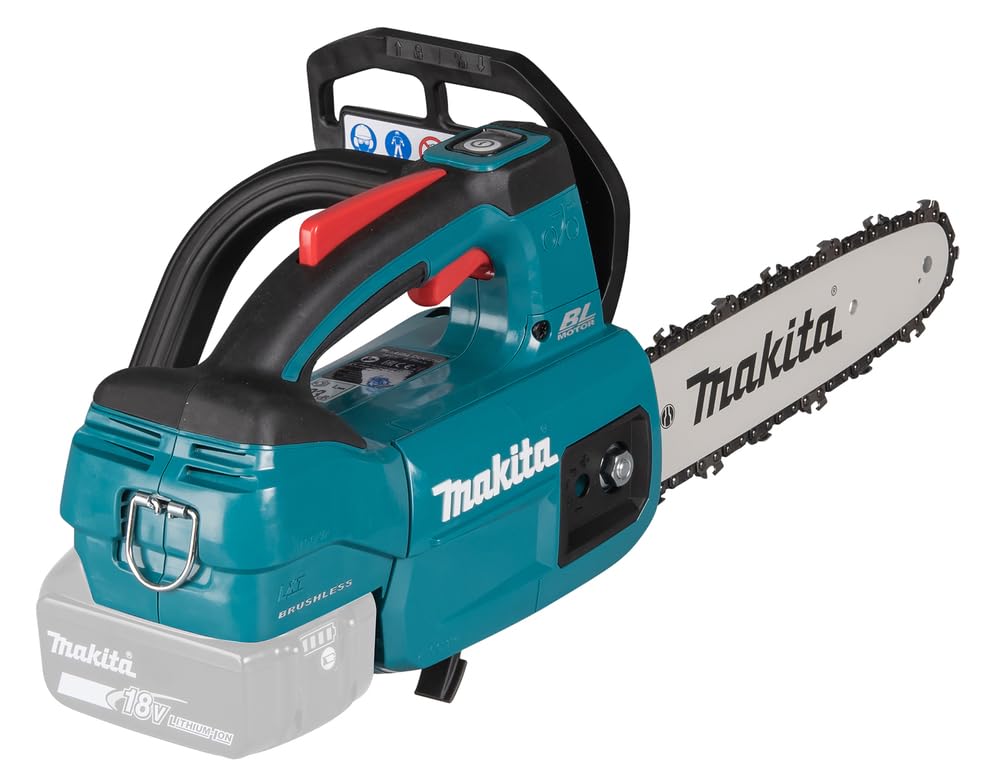
A compact bare unit top-handle saw with brushless motor features and easy chain tensioning—ideal when weight and control matter.
Why I picked it: I picked it for its light feel, electric chain brake, and tool-free tension lever for quick adjustments in the field.
Best for: Arborists and pros needing a nimble top-handle for pruning and ground trimming.
A higher-end bare unit if you already own Makita batteries.
Pros
- Variable speed control
- Tool-less chain tensioning
- Electric chain brake
- Light and maneuverable
Cons
- Not ideal for large trunk cutting
- Battery sold separately
- Slower on very dense wood
My take
I used the Makita DUC254Z mainly on the ground for branch cleanup and light trimming. The saw’s variable-speed trigger gives me great feel, and the constant-speed control helped when I needed steady cutting through thicker material.
I appreciated the new tension lever—changing or tightening the chain in the field was fast and didn’t require a full tool kit. For my work in smaller-diameter limbs it felt nicely balanced and less fatiguing than a larger rear-handle saw.
If I were doing heavy tree removal I’d reach for a larger gas or higher-voltage saw, but for day-to-day pruning and trimming the DUC254Z hit the sweet spot between power and portability.
3. Makita XCU03PT1 18V x2 (36V) 14" Kit – Best for Heavy Cordless Work
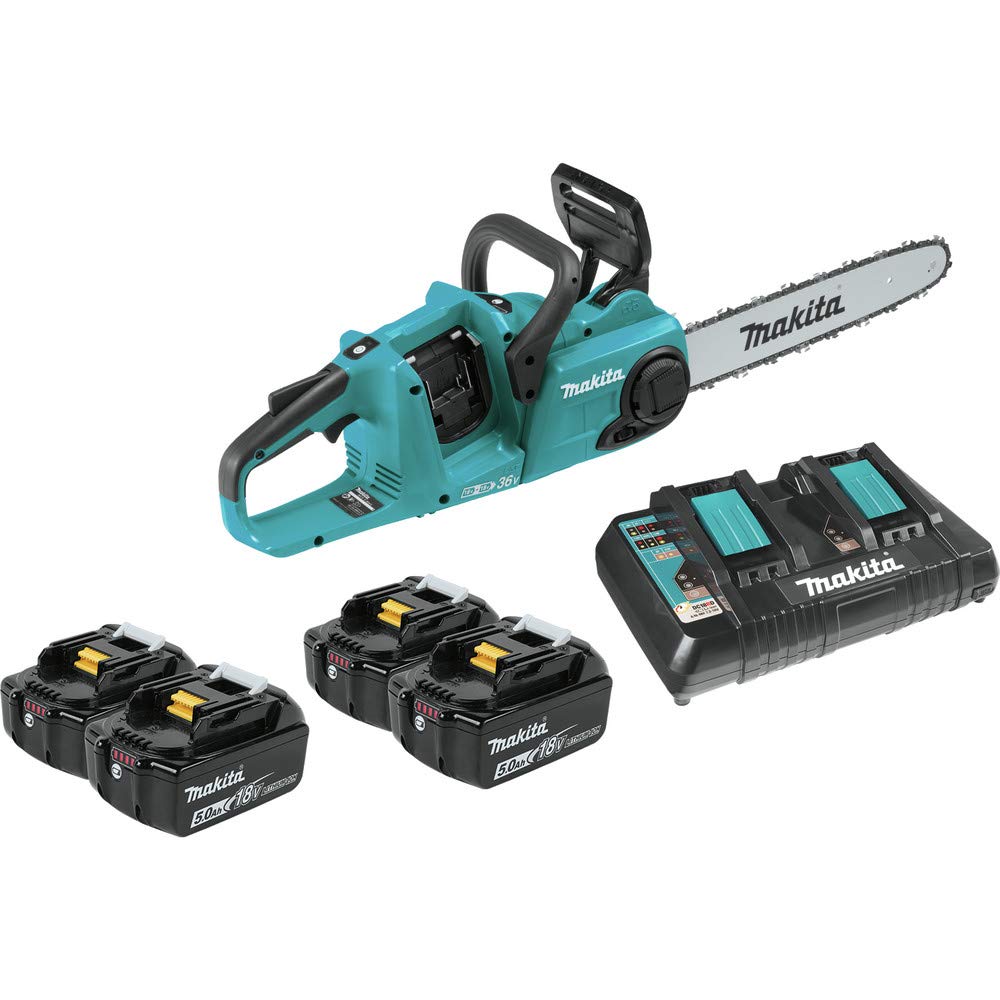
A two-battery 36V brushless kit that delivers gas-like performance and long runtime; built for contractors and landscapers.
Why I picked it: I picked it because the dual-battery platform gave me sustained cutting power close to a small gas saw without the maintenance hassle.
Best for: Contractors and heavy yard work where long runtime and consistent power matter.
A premium kit investment that includes batteries and charger for long work sessions.
Pros
- Gas-equivalent performance
- Four included batteries for long runtime
- Tool-less chain adjustments
- Electric brake and safety features
Cons
- Bulkier kit than single-battery saws
- Higher upfront cost
- More components to manage
My take
This Makita kit became my go-to when I needed cordless power for a full day of cutting. With two 18V batteries installed it runs like a 32cc-equivalent saw—fast chain speed and solid torque on cedar, oak, and hickory.
In practical use I pushed it hard: long cutting days and a lot of small-tree work. The included four 5.0Ah batteries and rapid charger kept me cutting with minimal downtime, which is where the kit really pays off compared with single-battery options.
Tool-less chain adjustment and the LED auto power-off feature made maintenance and battery management straightforward. I found it to be one of the most capable cordless saws I’ve used when balancing noise, emissions, and performance.
4. Einhell FORTEXXA 18/20 TH – Best One-Hand Delimbing Saw
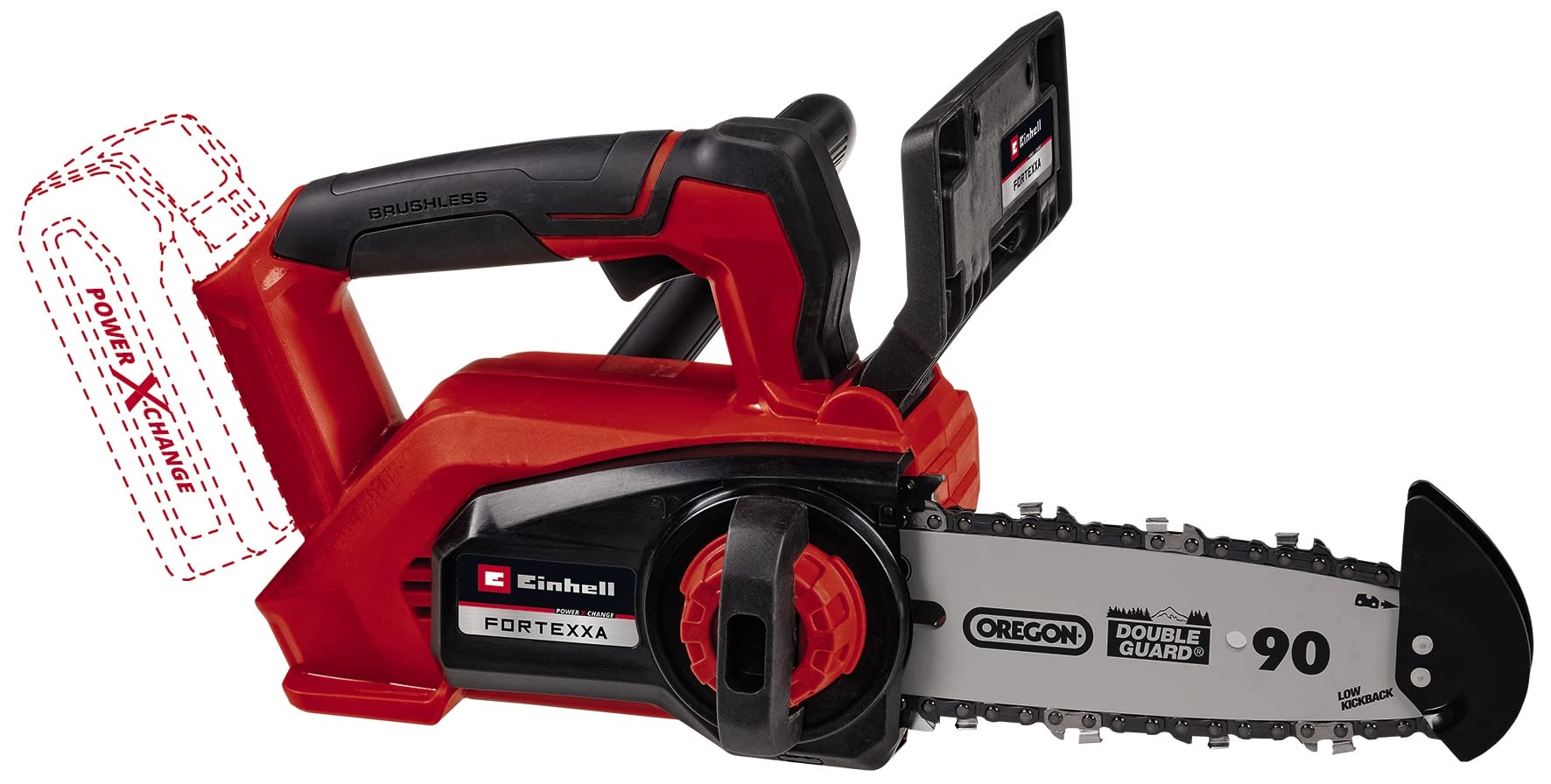
A one-hand, brushless PXC saw with OREGON bar and tool-free chain service—designed for delimbing and quick pruning tasks.
Why I picked it: I picked it for its one-hand design, brushless efficiency, and the convenience of Power X-Change battery compatibility.
Best for: Quick delimbing, limbing from ladders, and users already in the Einhell battery system.
A midrange tool if you already own PXC batteries; battery sold separately.
Pros
- One-hand ergonomics
- Brushless motor for efficiency
- Tool-free chain tensioning
- Oregon bar and chain
Cons
- Delivered without battery or charger
- Smaller bar limits larger cuts
- Tip guard can restrict some cuts
My take
I keep the Einhell FORTEXXA close for quick limbing because it’s remarkably light and easy to handle with one hand. The brushless motor feels punchy for its size and the Oregon chain cut cleanly on the limbs I tackled.
Tool-free chain changes and automatic lubrication simplified maintenance on the job. I used it with a 4Ah PXC battery and saw noticeably better runtime and consistent performance than with smaller cells.
If you’re deep into the Einhell Power X-Change ecosystem this saw is a practical add-on for pruning and delimbing. For heavier felling I still prefer a larger platform, but this one excels at fast, precise work.
5. Makita XCU06Z 18V LXT 10" Top-Handle – Best Compact Pruner
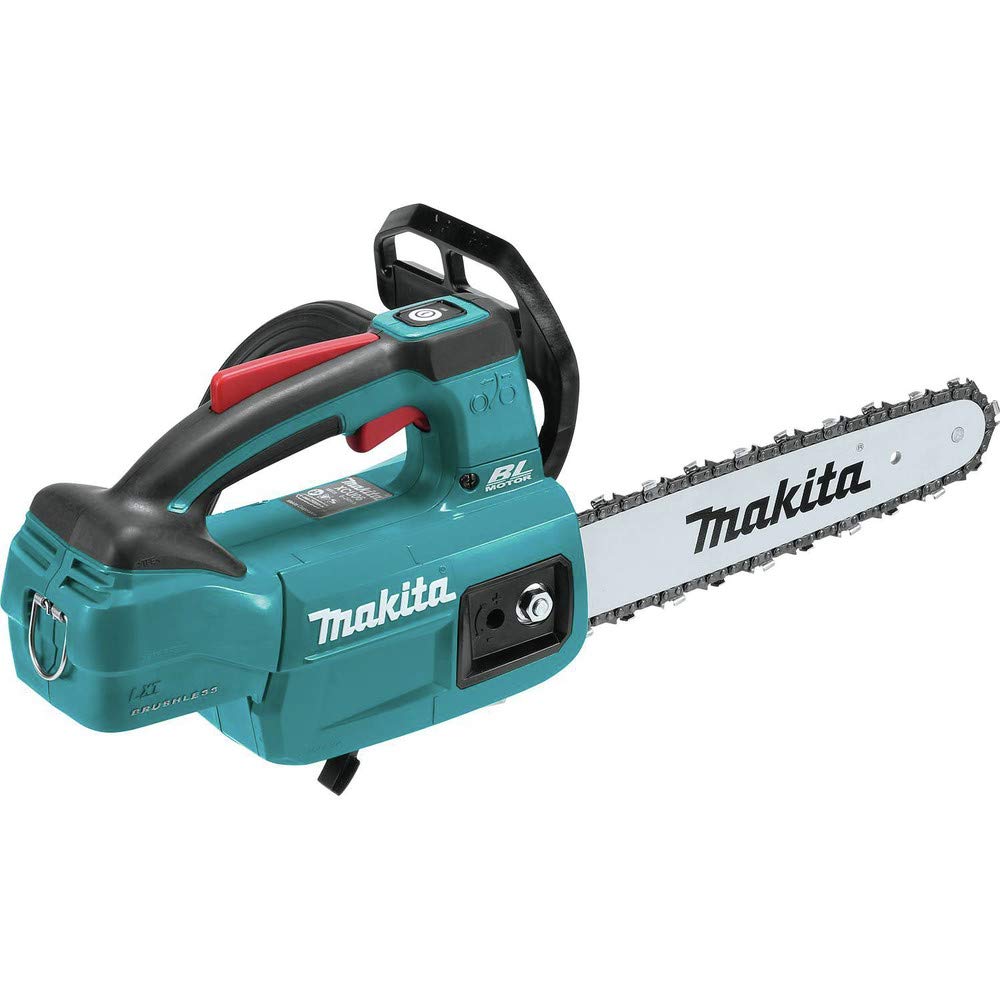
A compact 10" top-handle Makita with torque-boost mode that I use for one-handed pruning and remote jobs where cords won’t reach.
Why I picked it: I picked it because it balances one-hand handling with enough cutting speed to handle 3–4" branches reliably.
Best for: Pruning, trimming, and keeping a lightweight saw on an ATV or trailer.
A bit pricier for a single-battery saw, but worth it for convenience and build quality.
Pros
- Very light for one-handed use
- Torque boost for dense wood
- Captured bar nut for safety
- Good chain speed
Cons
- Battery not included
- Limited bar length for big cuts
- Can tempt overuse beyond intended size
My take
When I needed a small saw that I could handle with one hand, the XCU06Z fit perfectly. It’s light enough for extended pruning sessions and still chews through 3–4" branches without bogging down.
The torque boost mode gave me extra bite when I hit denser spots, and captured bar nuts made re-tensioning less fiddly in the field. On a 5.0Ah battery I hit a long string of cuts before swapping cells.
For homeowners and tree workers who want a true one-hand pruner with real cutting speed, this Makita is worth the investment.
6. Savior 18" Guide Bar & 3 Chains Combo – Best Replacement Bar & Chains
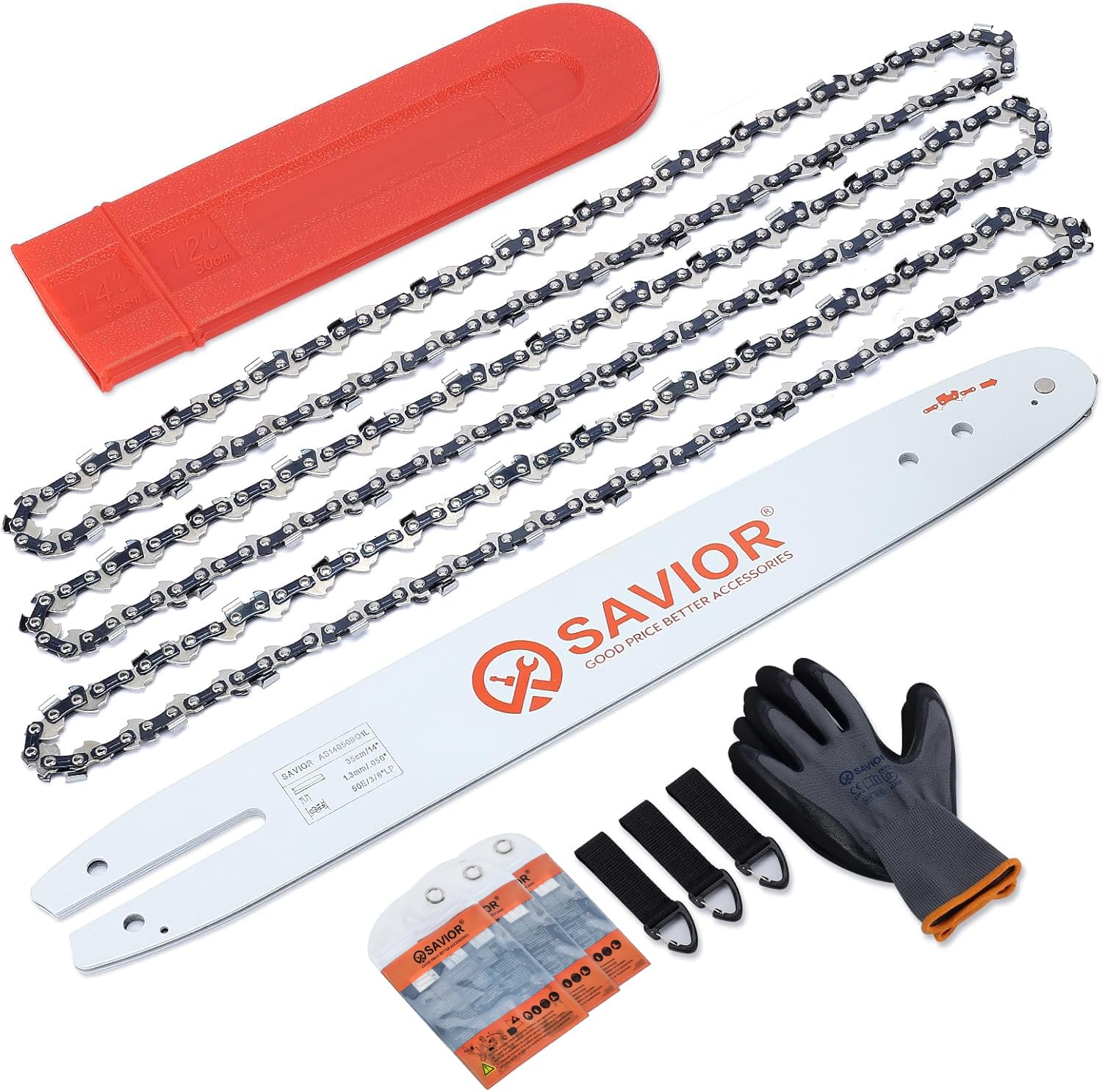
An 18" aftermarket guide bar with three semi-chisel chains that fit many consumer saws—handy spare kit I used for quick replacements.
Why I picked it: I picked this kit for its compatibility with many saw brands and the value of having multiple sharp chains on hand.
Best for: Owners needing an affordable 18" bar and spare chains for mid-size saws.
An affordable replacement parts bundle.
Pros
- Fits a wide range of saws
- Three sharp chains included
- Heat-treated rivets for durability
- Comes with basic accessories
Cons
- Gloves and cover are lower quality
- Aftermarket fit varies by model
- Chains may require break-in sharpening
My take
I installed this Savior bar and chains on a compatible saw when an OEM replacement was hard to source. The fit was straightforward and the chains arrived very sharp—cut oak and other hardwoods without hesitation during my initial tests.
The package is useful: three chains mean I can keep a fresh one on hand during heavier cutting days. The included cloth/cover and gloves are serviceable but not premium—treat them as extras rather than pro-grade gear.
If you need a fast, economical replacement bar and spare chains, this combo saved me downtime and performed well in real use.
7. Chainsaw Carrying Case — Waterproof Fit – Best Case & Transport
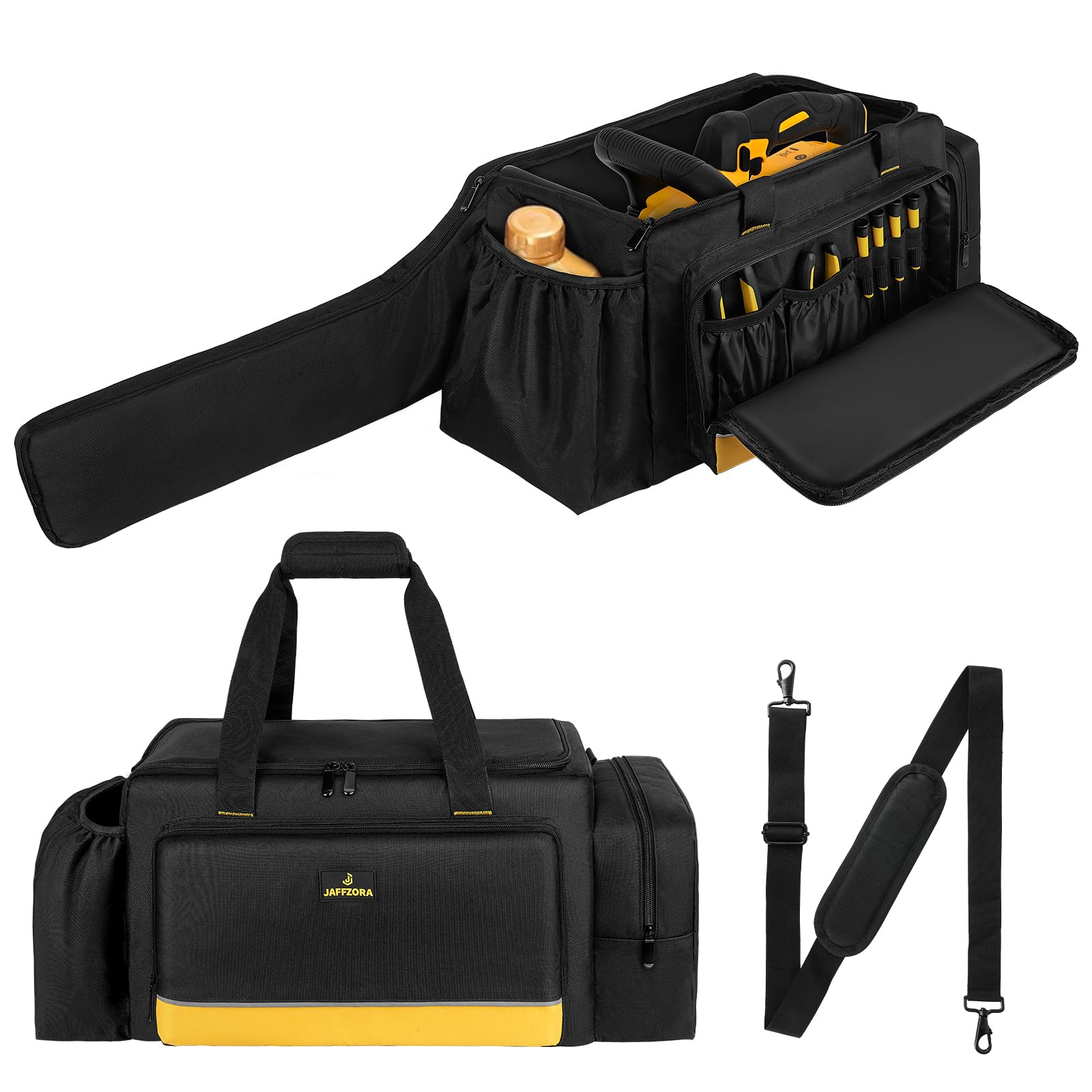
A waterproof, foldable carrying case with pockets that I use to keep saws, batteries, oil, and tools organized for transport.
Why I picked it: I picked it for its roomy pockets, reinforced base, and versatile fit for 14–18" cordless saws.
Best for: Keeping a chainsaw and accessories organized and protected during transport.
A budget-friendly accessory that improves tool organization.
Pros
- Waterproof fabric and reinforced base
- Multiple pockets for batteries and tools
- Detachable shoulder strap
- Fits many 14–18" chainsaws
Cons
- Not a rigid hard case
- Bottom lacks a fully rigid plate
- Measure saws before buying
My take
I started using this carrying case to consolidate my saw, batteries, charger, oil, and spare chains. The big compartment swallowed a 12–16" saw and still left room for a charger and a bottle of bar oil.
The internal pockets make it easy to keep batteries and hand tools separate, and the padded handle plus shoulder strap makes it practical to move from truck to jobsite. It’s not a hard-shell case, but the waterproof fabric and foam base protect gear during transport.
For anyone who hauls a cordless kit around, this bag keeps everything organized and ready to go.
How I Choose a Professional Chainsaw
Key considerations before you buy
I focus on power source, bar length, and intended use first—those choices determine whether a saw excels for pruning, limbing, or felling.
Safety features like chain brakes, kickback protection, and captured bar nuts matter to me because they reduce risk and simplify maintenance.
Battery systems are a big deal: I prefer tools that share batteries with other equipment I already own to save cost and increase runtime flexibility.
- Power source: corded for unlimited runtime, battery for portability, gas for maximum power.
- Bar length: 8–12" for pruning, 10–14" for general property work, 16–18"+ for larger cuts.
- Top-handle vs rear-handle: top-handle for single-hand pruning and arborist work; rear-handle for two-handed felling.
- Maintenance: look for tool-less chain tensioning and easy oil fill windows.
- Safety: electric or inertia chain brakes, tip guards, and kickback protection are non-negotiable.
Battery and runtime tips
I always match battery capacity to the task. If I expect long continuous cutting I use higher Ah batteries or dual-battery platforms.
For cordless pros, having at least two batteries per saw—or a fast charger and multiple batteries—keeps downtime minimal.
- Choose 4Ah or higher for longer runtime on medium-duty tasks.
- Consider dual-battery (18V x2) saws when you need gas-level performance.
- Store batteries at moderate temperature and follow manufacturer charging guidance.
Maintenance and consumables
I plan for chain maintenance: a sharp chain cuts faster and safer. Keep a spare chain or two and a file or sharpener handy.
Bar oil matters—automatic lubes help extend chain life and reduce friction.
- Carry spare chains or a replacement bar if you work remote sites.
- Use the correct pitch and gauge chain for your bar.
- Check chain tension before each session and top up bar oil regularly.
Frequently Asked Questions
Can a top-handle saw handle larger branches?
I use top-handle saws for pruning and smaller-diameter limbs; they’re nimble and great one-handed tools but aren’t intended for sustained cuts on large trunks—choose a longer-bar rear-handle or higher-voltage dual-battery saw for bigger cuts.
How do I extend battery runtime on cordless saws?
I extend runtime by carrying extra batteries, choosing higher-Ah cells, and planning work so I alternate batteries between saws and chargers. For heavy duty I prefer dual-battery platforms that share load across two cells.
Are aftermarket bars and chains reliable?
I’ve used reputable aftermarket bars and chains successfully—fitment and quality vary, so I inspect rivets, chain sharpness, and fit before putting them under heavy load. Keeping a spare OEM or trusted aftermarket chain is a practical backup.
Final Take
I recommend choosing the tool that fits the work you do most often: compact top-handle saws for pruning, dual-battery kits for contractor-level cordless work, and corded or jaw-style loppers for controlled, low-effort cutting.
The right accessories—spare chains, a reliable carrying case, and quality batteries—make the saws more useful and keep me working with less downtime.
