
I tested five stains on pine and other softwoods to find the colors and formulas that give the most consistent, attractive ceiling finishes. I focused on ease of use overhead, blotch control on pine, drying time, and the
I’ve finished a lot of pine ceilings and trim, and picking the right stain color and formula makes the difference between a uniform, warm ceiling and one with blotchy patches and splotches. In this roundup I compare five stains I’ve used on pine and similar softwoods. I explain which colors read warm or cool on pine, which formulas control blotchiness, and which products are easiest to work with when you’re working overhead.
My tests focused on real-world ceiling constraints: working overhead, avoiding runs, blending visible lap marks, and keeping odor low in occupied homes. I note how each stain behaved on sanded pine, how it took to grain, and how easy it was to control during application.
Across these five options I favored oil-based stains for deep, even color and gel stain for overhead control, while water-based stains won for low odor and fast drying when working in occupied rooms.
1. Minwax Wood Finish (Special Walnut) – Best Overall
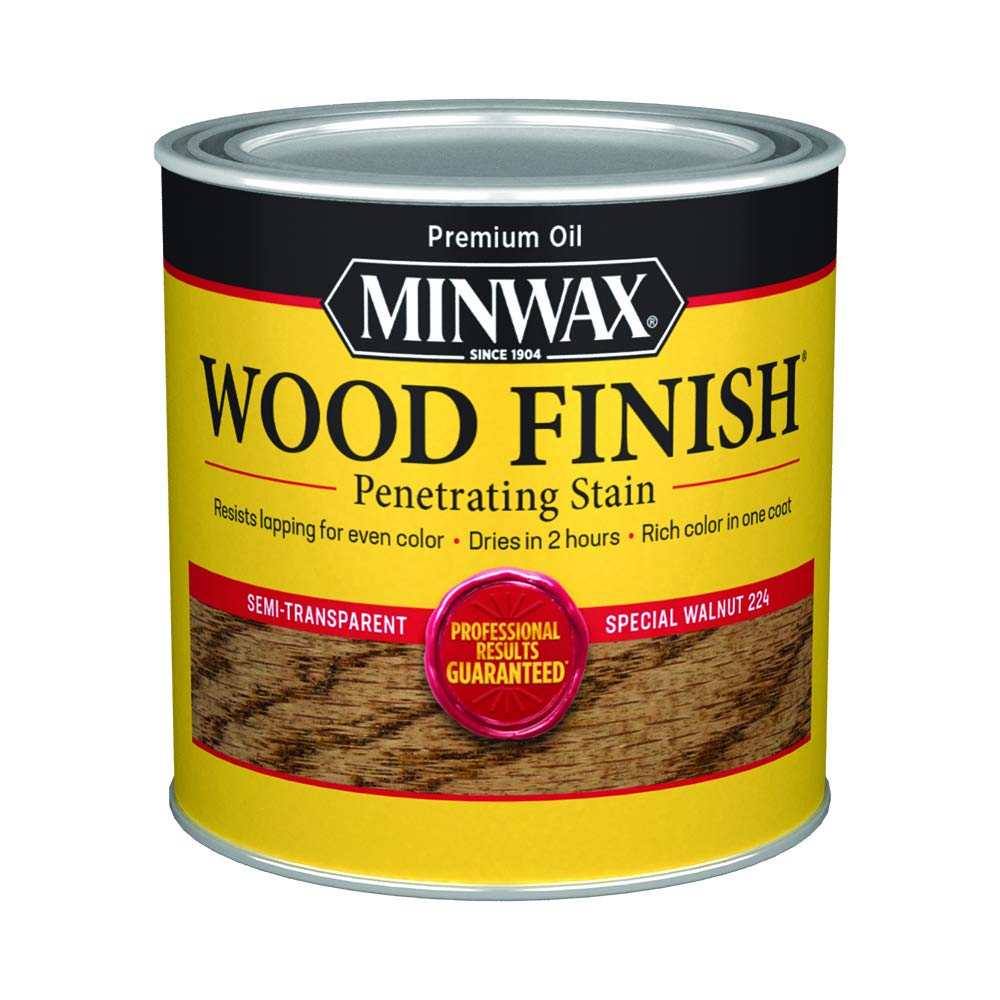
A deep-penetrating oil stain that delivers classic walnut tones and reliable grain enhancement in one coat.
Why I picked it: I picked it because it penetrates pine quickly, gives an even walnut tone, and dries fast enough for ceiling work.
Best for: Interior pine ceilings where I want a warm, classic walnut look and reliable penetration.
Good value for a trusted oil-based stain.
Pros
- Deep-penetrating oil formula
- Enhances grain in a single coat
- Reasonably fast dry time
- Classic walnut warmth
- Easy wipe-off control
Cons
- Requires solvent cleanup
- Can darken softwoods unevenly
- Has noticeable odor
My take
When I stained pine boards with this Special Walnut, the color sank in and produced a rich, even tone that highlighted the grain rather than covering it up. I could control the darkness by how long I left the stain before wiping, and for ceiling panels one coat usually gave the depth I wanted.
On knotty or very light pine I still recommend a quick test patch and a pre-stain conditioner if you want the most uniform look. The stain resists lapping better than many others I’ve used, which helped when I worked across long ceiling runs.
Application felt familiar — cloth or brush, wipe excess — and the roughly two-hour dry time meant I could do multiple sections in a day. Expect oil-based cleanup and stronger fumes, so ventilate well when working overhead.
2. Furniture Clinic Wood Stain (Dark Oak) – Best Low-Odor
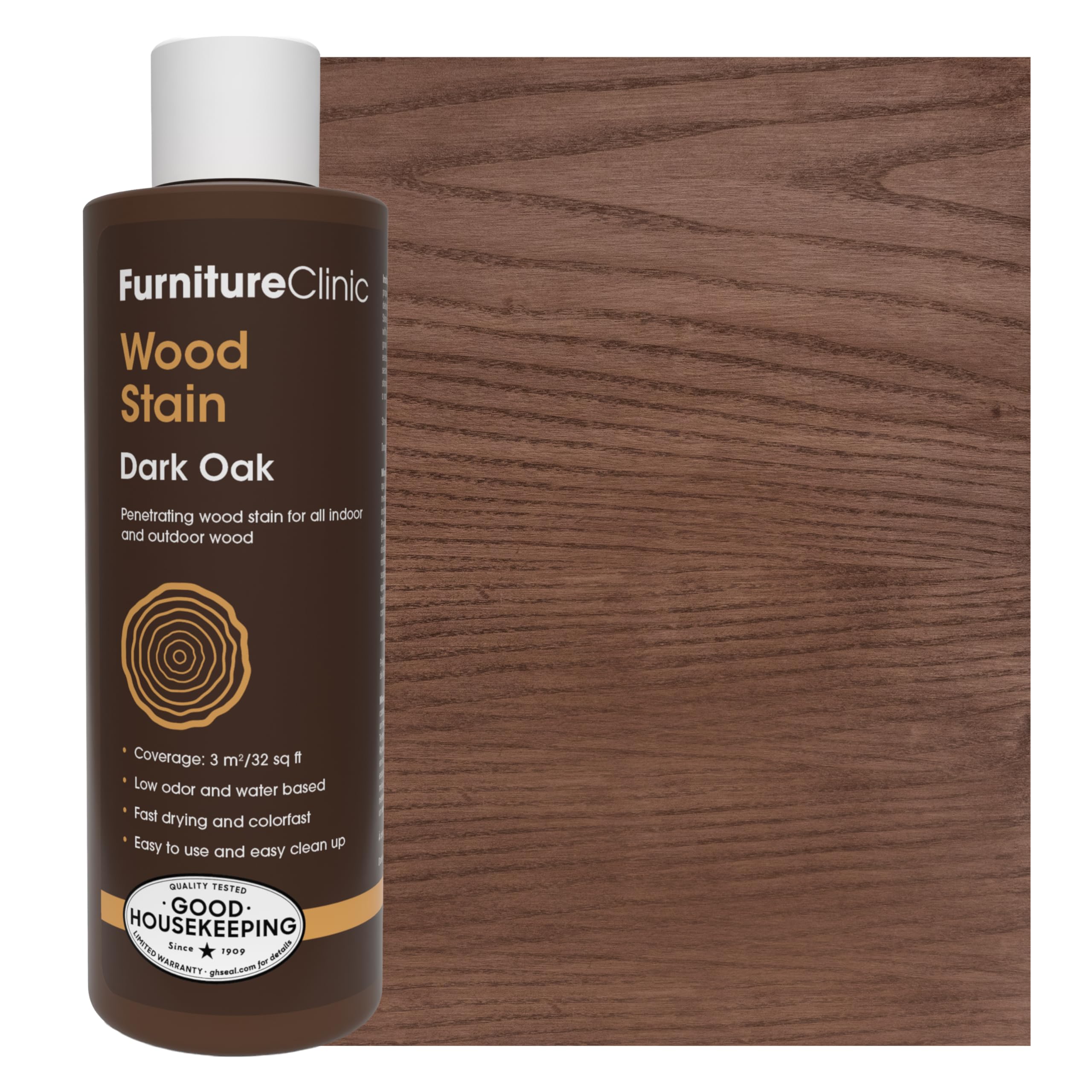
A water-based, low-odor stain that dries fast and gives one-coat coverage with easy cleanup.
Why I picked it: I picked it for low odor, fast dry time, and water cleanup when working inside occupied spaces.
Best for: Occupied homes, quick turnarounds, and projects where ventilation is limited.
Moderately priced and available in many colors.
Pros
- Water-based, low odor
- Fast drying
- One-coat visible coverage
- Easy cleanup
- Environmentally friendlier formula
Cons
- Thin formula can drip
- May need extra coats for depth
- Careful application required
My take
I used the Dark Oak on pine ceiling boards when I didn’t want strong solvent fumes in the house. It dried remarkably quickly and the low odor let me keep the room in use sooner than with oil-based stains.
Because the formula is thinner I worked in smaller sections and watched for drips; quick drying helped prevent runs but also meant I had to blend edges fast. The color leans warm and gives a clean matte look that brightens pine without over-darkening it.
Cleanup was pleasantly simple with water, and I liked that this product comes in multiple sizes so I could match the can size to the ceiling area.
3. Varathane Premium Fast Dry (Dark Walnut) – Best Fast-Dry
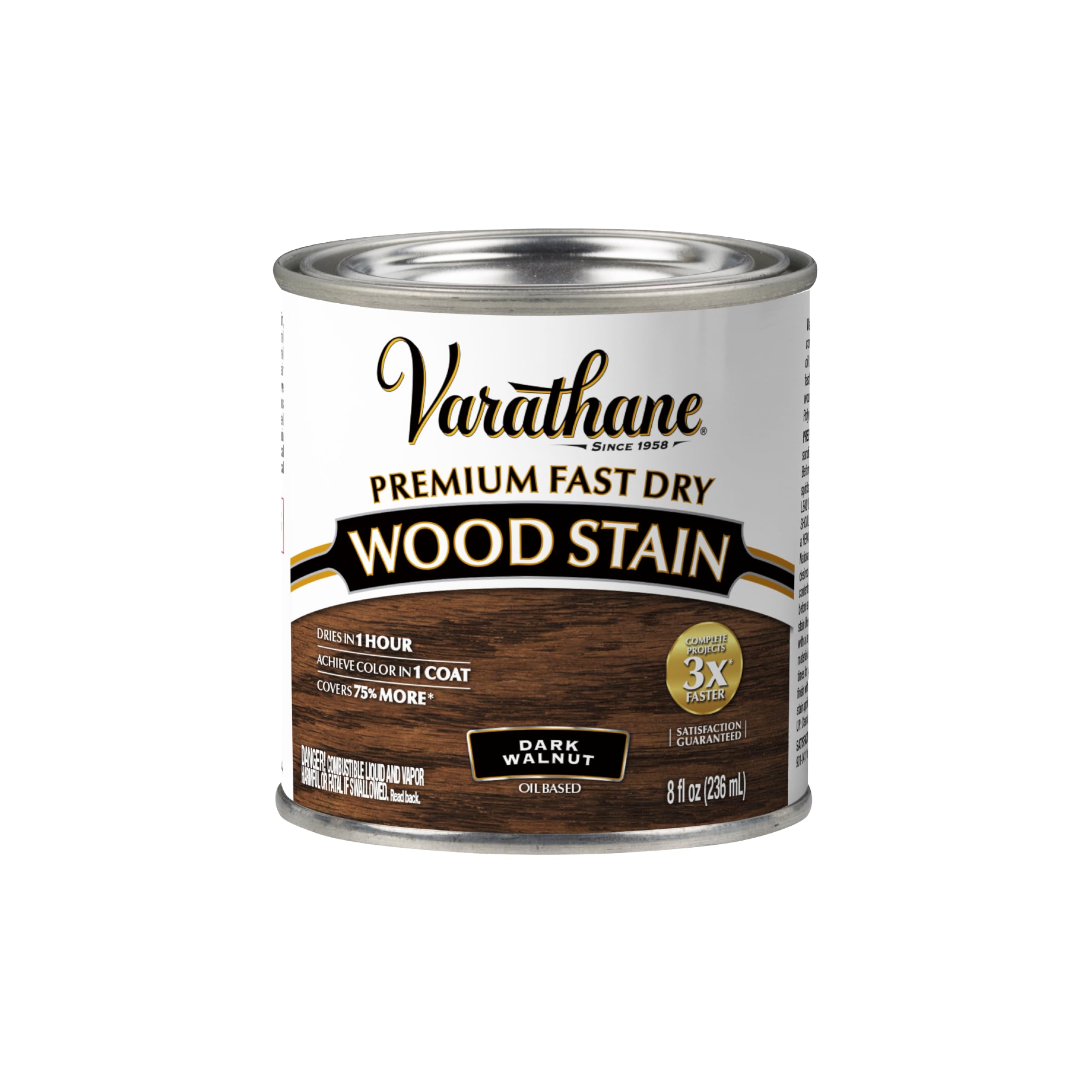
A high-pigment, fast-drying oil stain that gives strong color and grain definition with one coat.
Why I picked it: I picked it for its one-coat color payoff and rapid one-hour dry time when I needed quicker progress.
Best for: Projects where I want strong, even color and fast turnaround on pine ceilings.
A solid mid-range choice for fast results.
Pros
- One-hour touch-dry time
- High pigment for one-coat coverage
- Highlights natural grain
- Brushed on easily
Cons
- Oil-based cleanup required
- May still show blotchiness on bare pine
- Short working time
My take
Varathane’s fast-dry dark walnut gave me instant color saturation on pine boards and emphasized the grain in a pleasing way. I was able to get a touch-dry surface within an hour, which sped up my ceiling schedule.
The nano-pigment formulation produced a uniform color across boards when I applied it steadily. I still recommend testing on a scrap for very knotty pine, since softwoods can absorb pigment unevenly.
Because the stain sets quickly, I focused on working in logical sections and keeping a wet edge while I blended panels on the ceiling.
4. Littlefair's Wood Stain (Light Oak) – Best Eco-Friendly
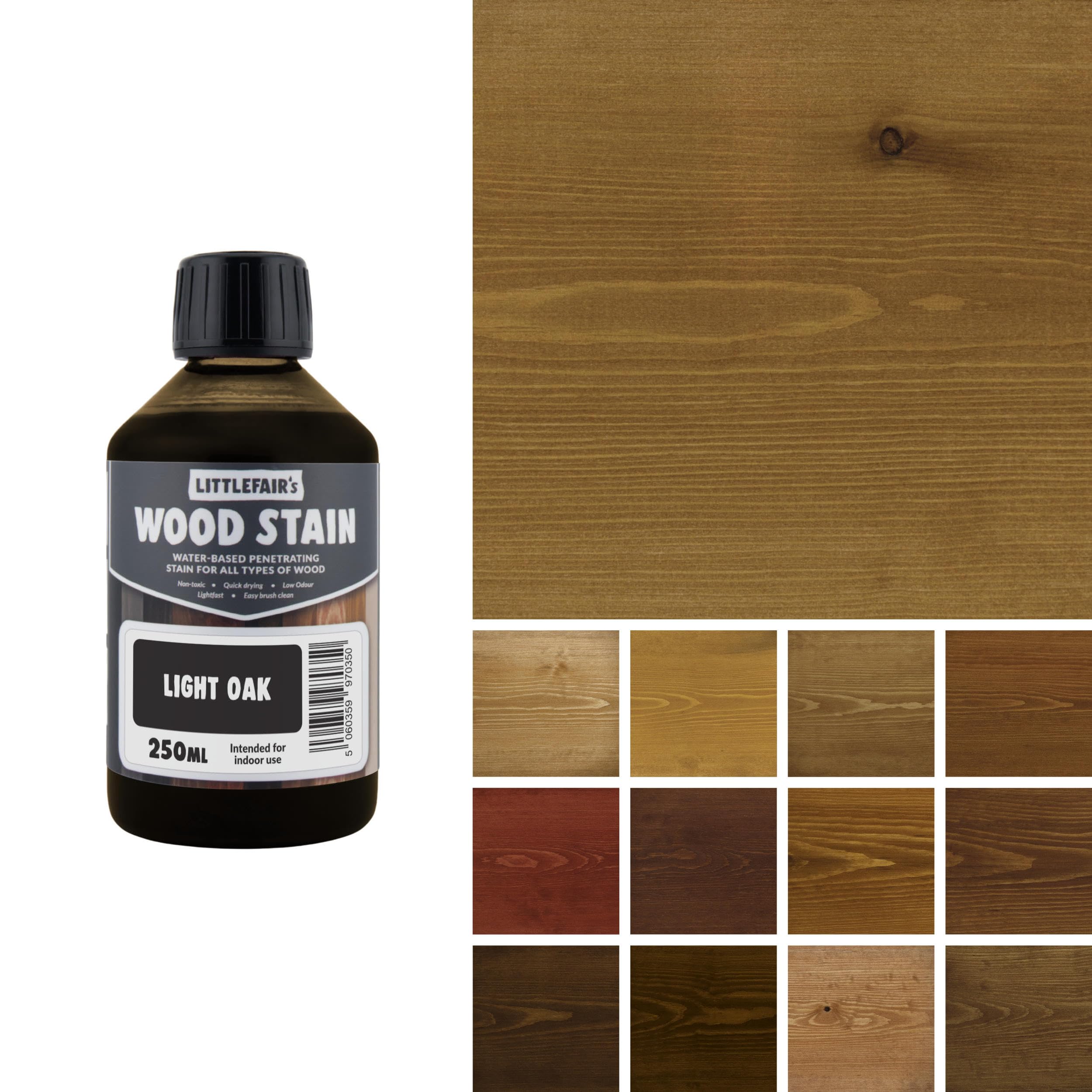
A water-based, low-odor stain that brightens pine and brings out grain detail while being easy to clean up.
Why I picked it: I picked it when I wanted a lighter, natural oak tone with minimal odor and an eco-friendly formula.
Best for: Lightening pine ceilings, craft projects, and rooms where fumes are a concern.
Premium-feel water-based option.
Pros
- Eco-friendly, non-toxic formula
- Low odor and fast drying
- Accentuates wood grain
- Simple cleanup
Cons
- Must apply to bare, sanded wood
- Fast drying needs quick work
- Less weatherproof outdoors
My take
Littlefair’s Light Oak is one of my go-to choices when I want a bright, natural ceiling that still shows the wood’s character. It soaks into well-prepared, sanded pine and dries quickly without leaving strong smells.
The main caveat is prep: the product needs bare, sanded wood to take evenly. When I sanded and worked quickly to blend seams, the result was an even, light finish that lifted the room without looking washed out.
Cleanup and tool care were easy with water, and I sealed the boards afterward with a compatible topcoat for durability.
5. Minwax Gel Stain (Black) – Best for Vertical Surfaces
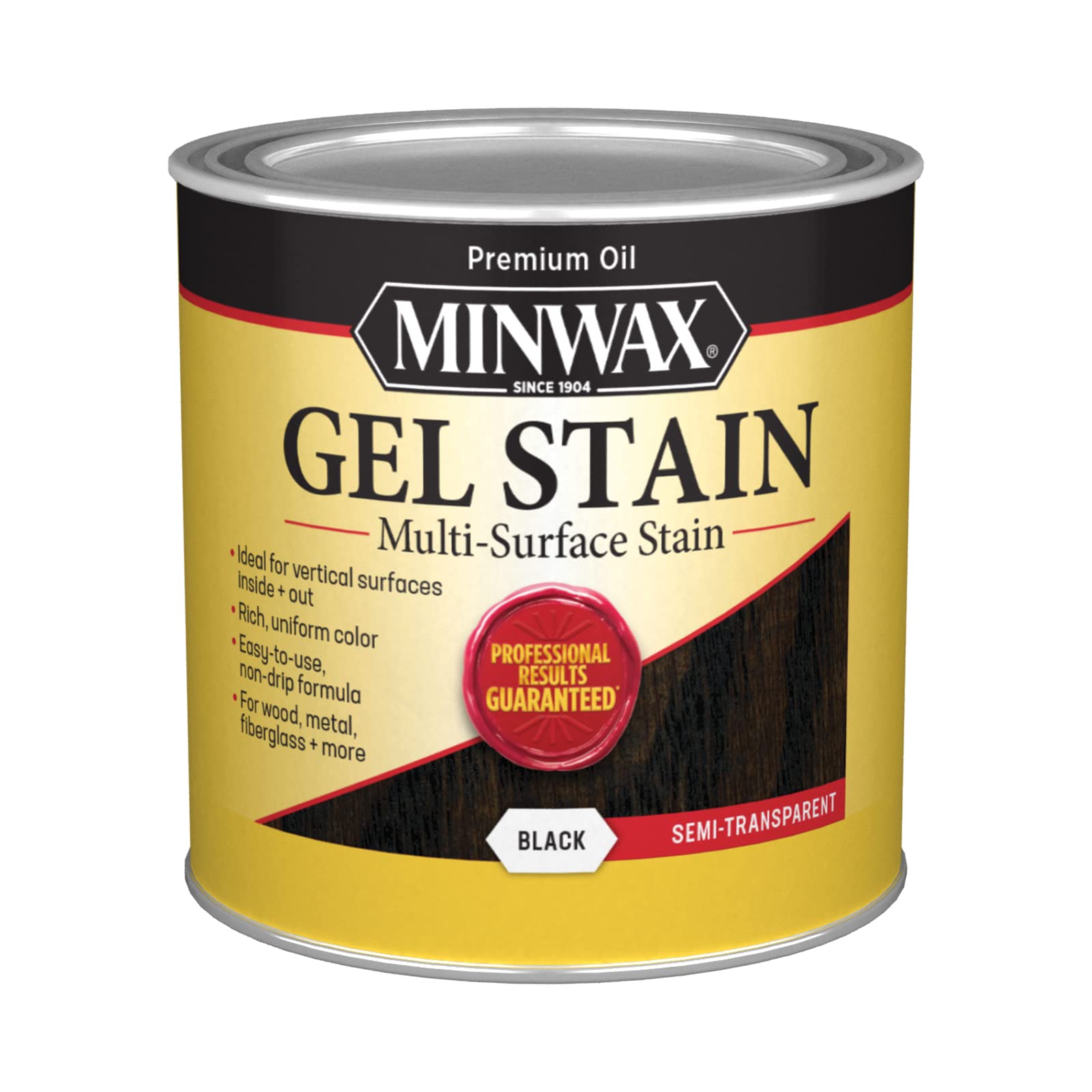
A thick, non-drip gel stain that gives excellent surface control and dramatic color on vertical or overhead surfaces.
Why I picked it: I picked the gel stain when I needed maximum control on an overhead application and wanted to avoid runs.
Best for: Overhead or vertical pine surfaces where non-drip application and surface coverage matter.
Higher-end gel option for controlled application.
Pros
- Non-drip gel formula
- Excellent surface coverage
- Works on varied substrates
- Great for touch-ups
Cons
- Strong fumes during application
- Thick — needs careful spreading
- Best with a topcoat
My take
Using the Minwax black gel stain on an angled pine ceiling section was a different experience — it behaved more like paint, staying put where I applied it. That non-drip quality is invaluable overhead because I could work more deliberately without chasing runs.
The gel gives excellent color control and coverage, and it masked uneven areas well when brushed on. I did notice stronger fumes, so I ventilated thoroughly and planned for a longer time before re-coating or sealing.
For bold, dramatic colors on pine ceilings this is a reliable tool, but I always follow it with a clear protective finish to lock in durability.
How I Choose Stain Color and Formula for a Pine Ceiling
Choose the right base: oil vs water vs gel
I pick oil-based stains when I want deep, even color and strong grain enhancement. They penetrate pine well but bring stronger fumes and solvent cleanup.
Water-based stains are my go-to in occupied rooms because they dry quickly, have low odor, and clean up with water. They can be thinner, so I watch for drips and work in smaller sections.
Gel stains behave like a topcoat paint and are perfect for overhead or vertical surfaces where non-drip application and control matter.
- Oil-based: deep penetration, rich color, solvent cleanup
- Water-based: low odor, fast drying, easy cleanup
- Gel: non-drip, great for vertical or overhead work
Picking the color for pine
Pine has warm yellow undertones and visible knots. I test stain swatches because some walnut or dark tones can read muddy on pine while lighter oaks bring out the grain without overpowering it.
If I want to preserve brightness I choose a light oak or golden tone; for a cozy room I select walnut or dark oak. Black and very dark tones create a dramatic look but will accentuate knots and texture.
- Light oak: brightens and preserves natural look
- Dark oak/walnut: adds warmth and depth
- Black/very dark: dramatic, highlights knots and texture
Prep and application tips I follow
I always sand pine smooth and remove dust before staining. For pine that tends to blotch, I test a small area and consider a pre-stain conditioner if I need the most uniform color.
When working overhead I break the job into manageable sections, keep a wet edge where possible, and use the non-drip or gel options if I want more control.
- Sand and clean surfaces thoroughly
- Test a scrap before full application
- Work in sections to avoid lap marks
- Use pre-stain conditioner on blotchy pine
Sealing and durability
After staining a ceiling I always seal with an appropriate clear finish. Water-based stains pair with polycrylic or water-based varnishes, and oil-based stains pair with oil-based polyurethanes.
I allow the manufacturer-recommended dry times before applying a topcoat to avoid trapping solvents or soft finishes.
- Use compatible topcoat for long-term durability
- Follow recommended dry times before sealing
- Consider satin or matte finishes for ceilings
Frequently Asked Questions
What stain color looks best on pine ceilings?
I find light oak or warm walnut to be the most versatile on pine. Light oak preserves brightness and shows the grain without overpowering the space; walnut adds depth and warmth. I always test a small section because pine’s knots and yellow undertones can change how a color reads.
Do I need a pre-stain conditioner on pine?
I use a pre-stain conditioner when I see uneven absorption in test patches or when working with dark stains. It helps reduce blotchiness on softwoods and gives a more uniform result.
Which formula is easiest for ceiling work?
For overhead work I prefer gel stains for control or quick-drying water-based stains for low odor. Gel stays put and minimizes drips; water-based options dry fast and are kinder indoors.
How many coats should I expect to apply?
I usually get the look I want in one coat with high-pigment stains, but I’ll apply a second coat if I need more depth. Always test first and allow full dry time before adding coats.
Final Take
After testing these five stains on pine, I concluded that no single product fits every ceiling project. I pick oil-based Minwax or Varathane for deep, even walnut tones, choose water-based Furniture Clinic or Littlefair when I need low odor and fast drying, and rely on Minwax gel when overhead control matters most.
My final piece of advice: do a test panel, sand and prep carefully, and plan your work in sections. That approach gives you the best chance of a uniform, professional-looking pine ceiling.
