
I tested six popular drafting and drawing tables to find the most versatile, sturdy, and feature-packed workstations for artists, crafters, and hobbyists. Here are the desks I kept returning to and why.
I spend a lot of time setting up workspaces, so I prioritized drawing tables that let me work comfortably for hours. I looked for tilt range, stability, storage, and how easy the table was to move or adjust.
Across these six desks I evaluated how well each tabletop handled paint, tracing lights, large canvases, and day-to-day drafting tasks. I also paid attention to assembly time and real-world durability.
If you want a true drafting feel, go for a wood or glass top with a full tilt. If mobility matters, pick a model with locking casters. For built-in storage and an included stool, the full kits offer the best immediate value.
1. Yaheetech Adjustable Drafting Table – Best Overall
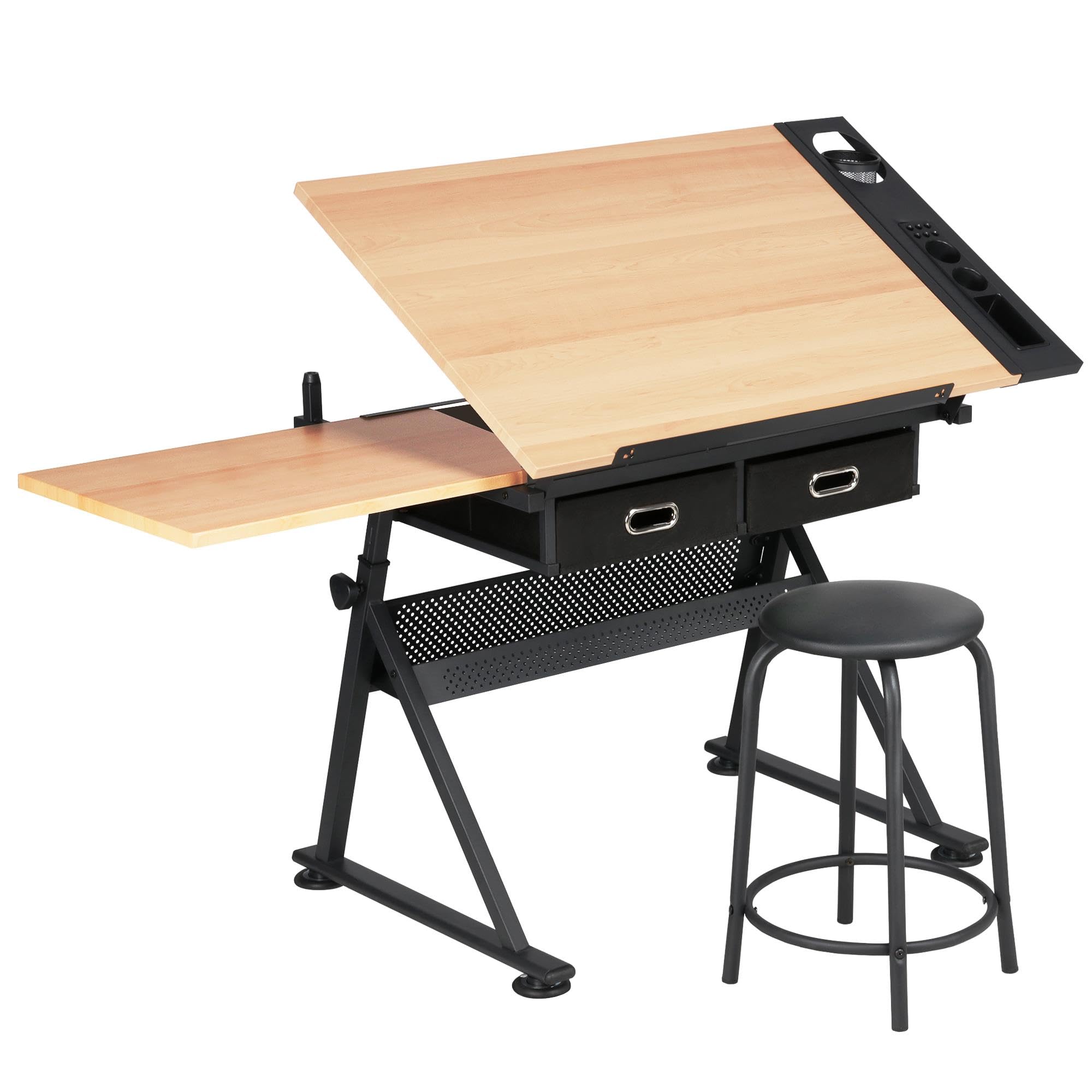
A flexible, all-in-one drafting set with good tilt range, built-in storage, and an included stool.
Why I picked it: Versatile height and tilt plus useful storage and a matching stool make this my go-to for mixed tasks.
Best for: Home artists who want a ready-to-use drafting station with storage.
Budget-friendly complete set with stool included.
Pros
- Height and tilt adjustments
- Included cushioned stool
- Durable metal pencil ledge
- Plenty of storage trays and drawers
- Relatively easy assembly
Cons
- Side shelf fixed to one side
- Nonwoven drawers aren’t heavy-duty
My take
I chose this Yaheetech model because it hits the practical sweet spot: a wide tilt range (0–60°) with a height range that makes both seated and taller setups usable. The pencil ledge locks solidly and keeps tools from rolling off when the top is angled.
The set arrived well packaged and I assembled it myself in roughly 90 minutes. The parts are labeled and the included hardware and simple tools make the process straightforward. Two people help when lifting the top into position, but most steps are solo-friendly.
Storage is the feature that sold me: a detachable side tray, retractable board, two fabric drawers, and a lower metal shelf keep supplies organized. I didn’t overload the cloth drawers—treat them as reach-in organizers rather than heavy storage.
The included round stool is surprisingly comfortable for shorter sessions and matches the desk visually. I would have liked the side shelf to be configurable for right- or left-handed setups, but I found workarounds by relocating small items to the tray.
2. ZENY Adjustable Drafting Table (Wood Top) – Best Wood-Top
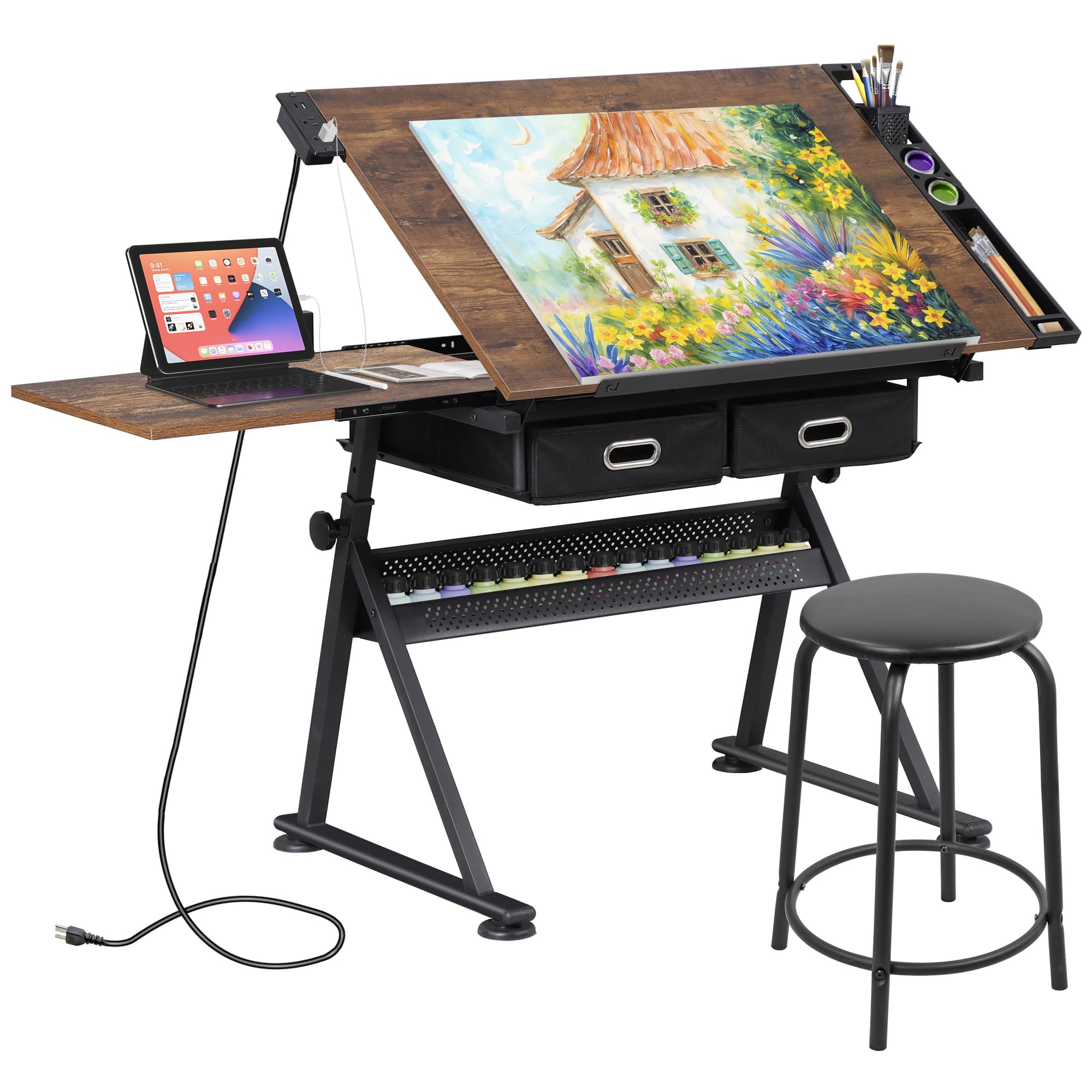
A solid steel-and-wood table with a double tabletop, slide-out tray, and a built-in outlet for tools and lamps.
Why I picked it: The wooden top and slide-out secondary surface make it feel more like a traditional drafting desk with modern convenience.
Best for: Artists and designers who want a warmer wood surface and extra workspace.
Mid-range choice with heftier finishes.
Pros
- Solid steel frame and wood top
- Height and tilt both adjustable
- Slide-out secondary tabletop
- Built-in outlet for lamps
- Triangle legs for stability
Cons
- Plastic feet feel cheaper
- Stool padding could be thicker
My take
I liked this ZENY for its wooden tabletop and the extra slide-out surface that acts as a secondary work area or laptop spot. The 0–60° tilt and 28–35.8 inch height adjustment let me find comfortable positions whether I’m sketching or using a light pad.
Assembly took me a couple of hours—nothing exotic, but I recommend clearing space and following the steps in order. The large adjustment knobs make it easy to tweak height quickly without wrestling with the top; you can raise or lower it precisely and lock it in.
The built-in outlet is a practical touch for a lamp or charging station; I used it for a desk lamp and a charging cable without adding another power strip. The feet are the weakest aesthetic touch—functional but not premium—so add a small rug or floor protectors if you want a cleaner finish.
3. Yaheetech Tempered Glass Drafting Table – Best Glass Top
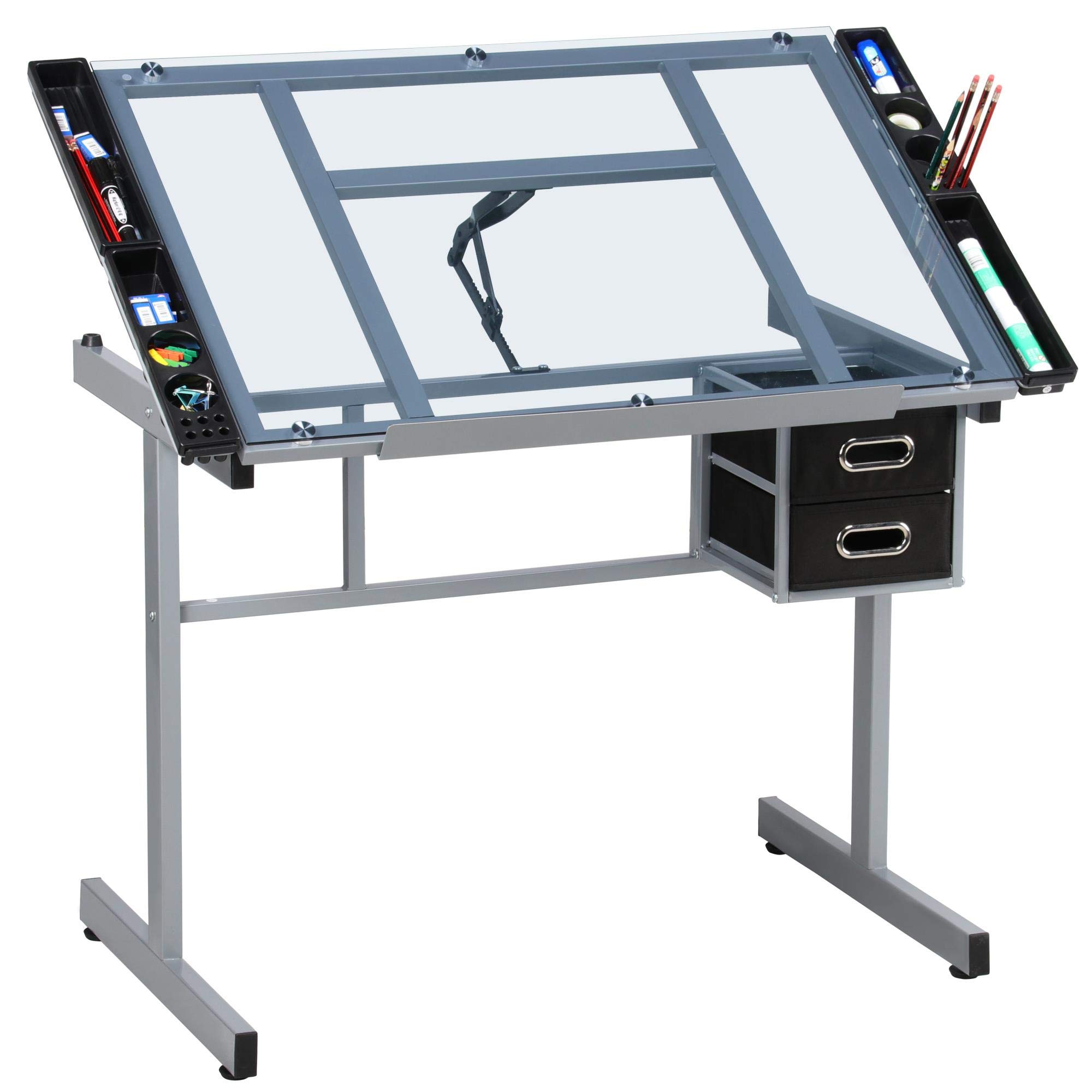
A glass-top drafting desk with optional wheels, embedded trays, and a surface that doubles as a light-table for tracing.
Why I picked it: Tempered glass works great with under-table light pads and gives a clean working surface for tracing.
Best for: Illustrators and comic artists who use light pads or tracing frequently.
Moderately priced and versatile for tracing setups.
Pros
- Tempered glass surface ideal for tracing
- Option to use wheels or fixed feet
- Embedded, configurable trays
- Sturdy powder-coated steel frame
Cons
- Small cloth drawers can sit crooked
- Instructions require careful attention
My take
I appreciate the tempered glass top for tracing—paired with a light pad, it softens and spreads light nicely so I can trace without hotspots. The tabletop adjusts from flat to about 60°, and the pencil ledge holds papers securely when tilted.
A standout is the replaceable feet: swap in the locking casters when I want mobility, or screw in the flat feet for added stability. That flexibility made it easy to reposition the table when I moved my workspace between rooms.
Assembly requires patience and attention to orientation; I had to re-check front/back indicators to avoid crooked drawers. The drawers themselves work for small supplies, but I wouldn’t load them with heavy jars—think brushes, pens, and tape instead.
4. ZENY Drafting Table with Casters – Best Mobile
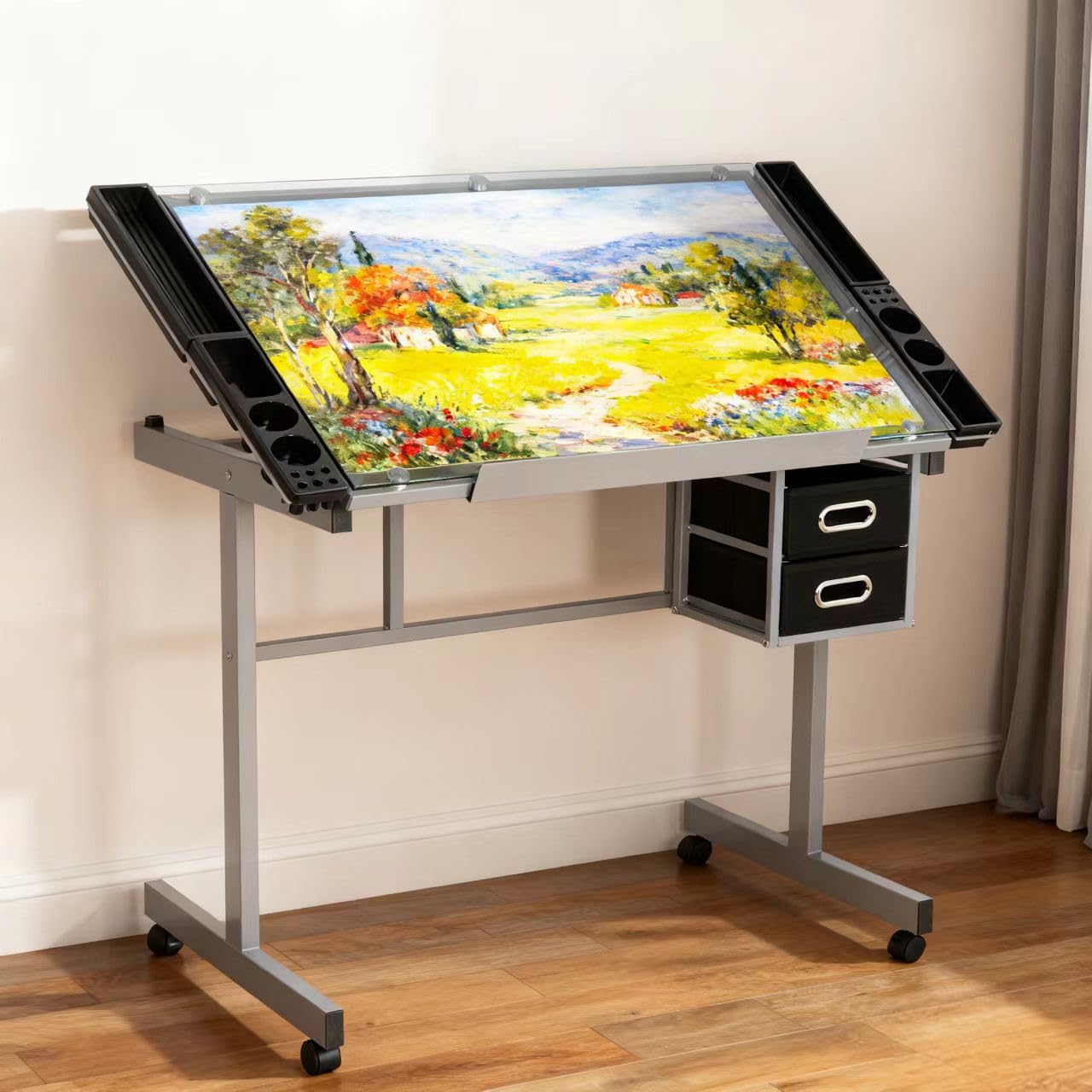
A mobile glass drafting desk equipped with 360° swivel casters (two locking), tempered glass top, and organized storage pockets.
Why I picked it: The locking wheels and generous glass surface make it the easiest table to move and lock into place.
Best for: Artists who need a movable workstation for shared spaces or studio rotation.
Affordable option with great mobility features.
Pros
- Four swivel casters, two lockable
- Tempered glass that’s easy to clean
- Multiple compartments and trays
- Stable when locked in place
Cons
- Canvas drawers aren’t weighty
- Instructions are a bit terse
My take
I relied on this ZENY when I needed a table I could roll from my studio to the living room. The casters swivel smoothly and the two locking wheels keep the table rock-steady while I work on angled pieces.
Because the glass top has real heft, I learned to steady the base with a foot while changing the tilt—once locked in position the adjustment mechanism holds firmly. The metal frame is lighter than some all-steel options, which helps when I need to move the desk.
I assembled the table in one sitting using the included hardware; you will need a Phillips screwdriver. The canvas drawers are convenient for frequently used tools but I keep heavier supplies on the lower shelf to avoid sagging.
5. Yaheetech Compact Drafting Desk – Best Value
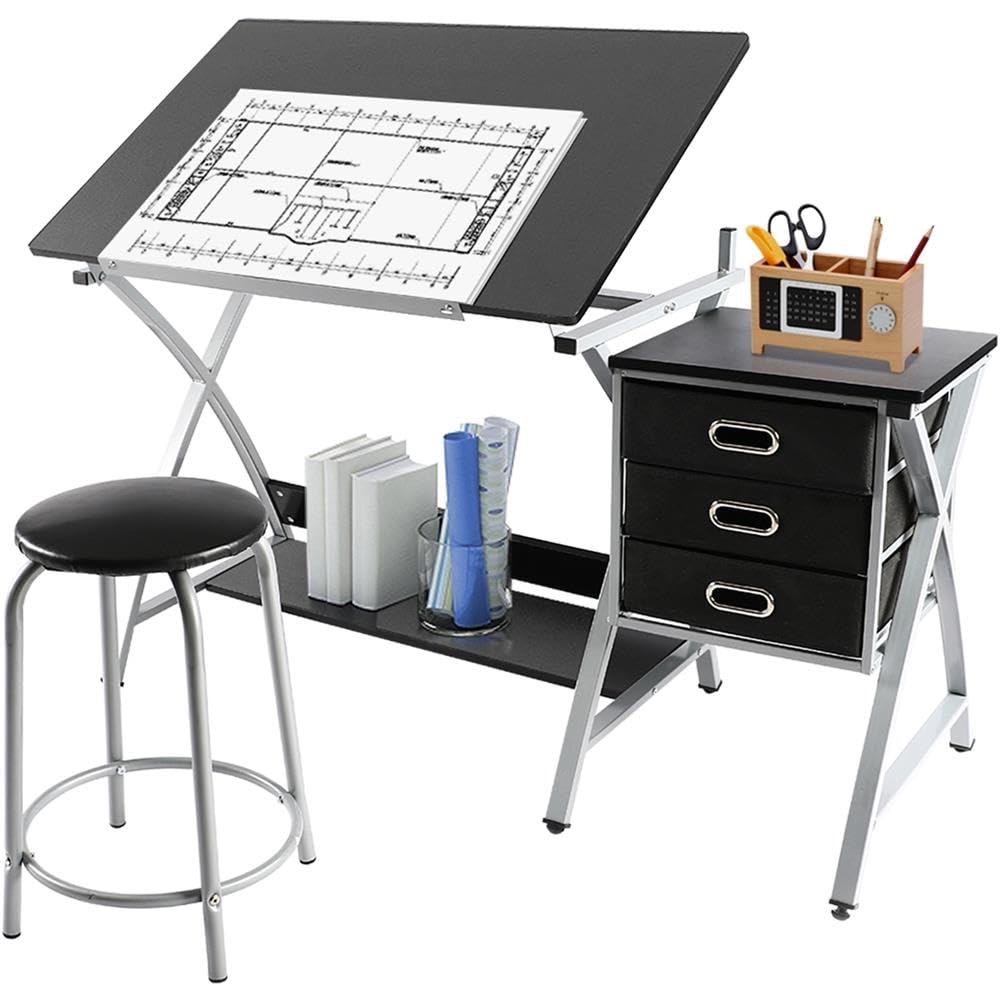
A compact drafting desk with an adjustable tabletop, auxiliary side table, three drawers, and an included stool—great for small studios.
Why I picked it: Strong value because it ships with a stool, decent storage, and a solid tilt mechanism for the price.
Best for: Budget-conscious artists who want a functional drafting setup with included seating.
Value-oriented pick with included stool and storage.
Pros
- Adjustable tabletop angle
- Auxiliary side table for laptop or cups
- Three handy storage drawers
- Comes with a matching stool
Cons
- Top drawer lacks a rail
- Drawers not for heavy items
My take
This Yaheetech model is what I reach for when space is tight. The main top tilts to angles useful for sketching and painting, and the auxiliary right-hand table is perfect for a laptop or reference materials.
Assembly is quick—I put mine together in about an hour without help. The included stool positions me well for a variety of angles and feels comfortable for shorter sessions; for all-day work I prefer a padded chair but the stool is perfectly usable.
Storage is thoughtful for the size: three drawers and a lower shelf carry my basics. I do keep heavier supplies on the lower shelf to avoid stressing the smaller drawers.
6. Studio Designs Vintage Rustic Drafting Table – Best Vintage
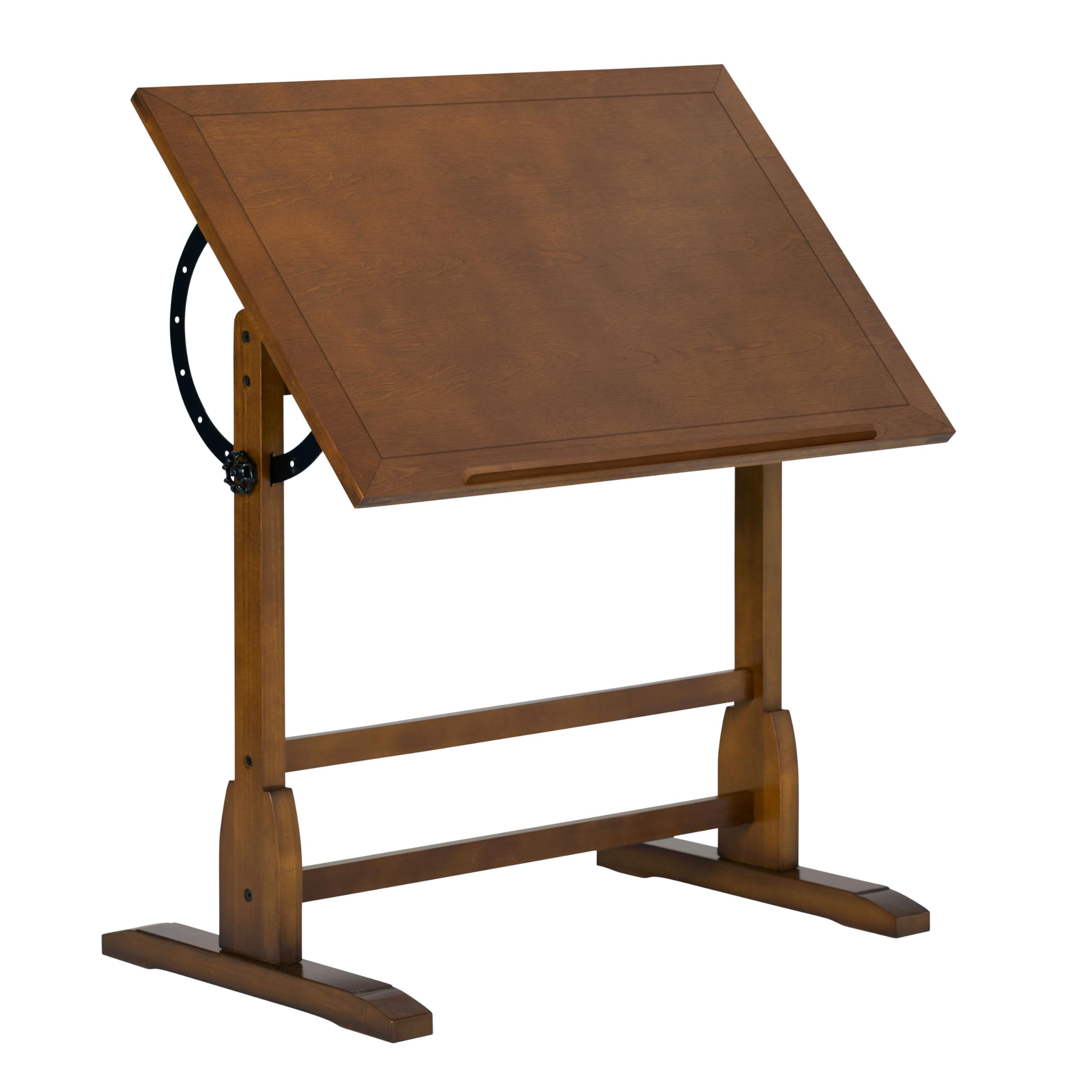
A solid wood drafting table with a classic look, deep pencil groove, and a top that tilts up to 90° for storage.
Why I picked it: The antique styling and real wood frame make it a standout piece that’s also practical for serious work.
Best for: Artists who want a traditional wood drafting surface and vintage aesthetics.
Higher-end look without boutique pricing.
Pros
- Authentic vintage design
- Solid wood frame and build
- Tilts to 90° for upright storage
- Fast, simple assembly
Cons
- No vertical height adjustment
- Slightly heavier to move
My take
I bought the Studio Designs vintage table when I wanted a piece that reads like furniture as much as a workspace. The wood finish is attractive and the built-in pencil groove and ledge are genuinely useful when I’m blocking in drawings.
Assembly was pleasantly quick—my partner and I had it ready in under 30 minutes. The top adjusts to several preset angles and goes all the way to 90°, which is handy for upright storage or when I need a vertical easel surface.
This table doesn’t offer height adjustment, so I pair it with an adjustable chair when I need a different working height. For someone who values classic looks and solid wood construction, it’s a lovely, stable option.
How I Choose a Drawing Table
Key features to prioritize
I narrow choices by checking tilt range, build material, and whether the table supports a light pad or heavy media. A full 0–60° tilt covers most needs; having a ledge to stop paper is essential.
Mobility matters if you share space—locking casters let me roll the desk away and secure it when I work. For a permanent studio, fixed feet and a heavier frame feel more stable.
- Tilt range: 0–60° is versatile; 90° is useful for storage or vertical work
- Surface material: glass for tracing, wood for texture and warmth
- Stability: steel frames or solid wood reduce wobble at steep angles
- Mobility: lockable casters for flexible studios
Storage and extras that matter
I give extra weight to desks with built-in trays, drawers, and lower shelves. They keep my most-used tools in reach and reduce clutter on the top.
Extras like a slide-out secondary surface, a power outlet, or a detachable side tray make a table feel finished and studio-ready.
- Nonwoven/canvas drawers are fine for tools, not weighty jars
- Slide-out trays double as laptop surfaces
- Look for pencil ledges that lock or adjust
Assembly and real-world durability
I always set aside time for assembly—expect anywhere from 30 minutes to a couple of hours depending on complexity. Follow front/back indicators carefully on modular tables to avoid rework.
Watch how drawers are mounted; some budget drawers can sit crooked if parts are misaligned. The tabletop material should be easy to clean if you use paints or inks.
- Keep a Phillips screwdriver handy; many kits include allen keys
- Protect glass tops during setup and use a light pad that fits the surface
- If you need height flexibility, confirm the supported range
Frequently Asked Questions
Are glass tops safe for tracing with a light pad?
Yes. I use tempered glass tops with light pads frequently—the glass softens and distributes light evenly. Just confirm the glass thickness and place the pad so it’s fully supported.
Can I use these tables standing up?
Some models offer height adjustment; I use those for taller setups. If the model lacks vertical adjustment, pairing it with a taller stool or an adjustable chair works fine.
How heavy can the tabletops support?
Most desks here are engineered for typical art loads—paints, light lamps, and drawing materials. I keep heavy jars and equipment on lower shelves rather than in fabric drawers or on the tilt surface.
Do I need two people to assemble a drafting table?
I assembled several solo, but having a second person helps when lifting and securing the top. Expect assembly times from 30 minutes to a couple of hours depending on the model.
Final Take
I keep the Yaheetech adjustable drafting table in my studio when I want a practical, all-in-one solution with storage and a comfortable stool.
If I need a warmer surface and a secondary workspace, the ZENY wood-top table is my pick. For tracing or working with light pads, the tempered glass Yaheetech desk performs best.
For mobility, the ZENY with casters makes moving between rooms effortless. And when aesthetic and solid wood build matter more than height adjustment, the Studio Designs vintage table is the piece I choose for a finished studio look.
