
I tested large-capacity compressor units, gun-safe rods, and rechargeable desiccant canisters so you can pick the right humidity control for basements, large rooms, and enclosed storage.
I spend a lot of time matching dehumidifier performance to real-world problems — mold-prone bathrooms, sweating windows in airtight houses, damp basements, and moisture in safes and vehicles. For this roundup I evaluated powerful compressor units alongside compact powered rods and rechargeable silica canisters so you can decide by space, power availability, and maintenance preference.
My testing focused on how quickly each option removes moisture, how they handle continuous drainage or reactivation, and whether smart features or energy efficiency make a practical difference in daily use. I also considered low-temperature performance and noise, because those are the factors that determine whether I leave a unit running 24/7.
Below are the options that worked best for me in different roles — from whole-house scale moisture control to keeping firearms and collectibles rust-free in tight enclosures.
When I compared these units I prioritized real-world coverage (square footage), moisture removal capacity under realistic conditions, energy efficiency and certifications, low-temperature reliability, drainage options (pump vs. gravity hose), and portability. I also separated powered solutions from passive desiccants because each has distinct use cases.
1. hOmeLabs Wi‑Fi Dehumidifier (50 Pint, 7,000 sq ft) – Best Overall
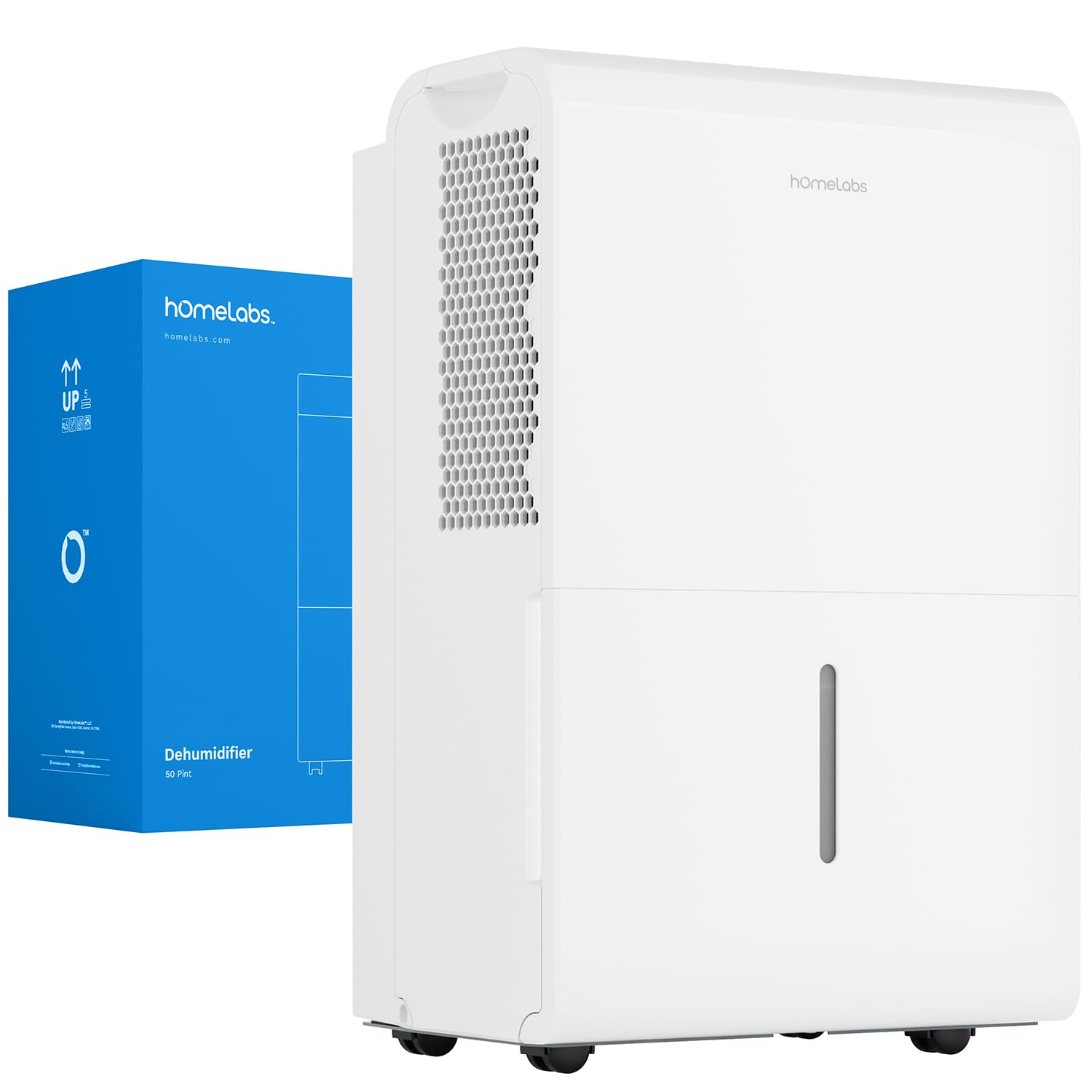
A roomy, Wi‑Fi enabled compressor dehumidifier with pump-style performance and a Turbo mode that handles large, damp spaces.
Why I picked it: I chose it because it combines wide coverage, remote control, and a strong extraction rate for large spaces.
Best for: Large basements, open-plan areas, and whole-floor moisture control.
A full‑feature, midrange option for serious moisture problems.
Pros
- Wi‑Fi remote control and monitoring
- Covers very large spaces
- Turbo mode for fast extraction
- Built on wheels for portability
- Tank auto shutoff with hose outlet
Cons
- Tank design can fill before pump starts
- A bit noisy for a bedroom
My take
I used this hOmeLabs unit in a large bath and adjoining rooms and appreciated how quickly it pulled moisture out of the air. Running on Normal and Turbo I saw meaningful drops in relative humidity, and overnight it emptied a substantial amount of water without tripping off.
The Wi‑Fi control is genuinely useful for me — I can dial down humidity from my phone while I’m away and check status without walking into a damp basement. The unit rolls easily and the handles make placement simple in tight spaces.
On the downside, I noticed the collection bucket sometimes fills quicker than the pump will engage when using the internal outlet; if you rely on the pump for continuous drainage, plan your placement so the hose connection is straightforward. Noise sits in a tolerable range for basements and utility rooms, but I wouldn’t run it inside a bedroom overnight if you’re a light sleeper.
2. AEOCKY RHEA-001 Dehumidifier (ENERGY STAR Most Efficient) – Best for Efficiency
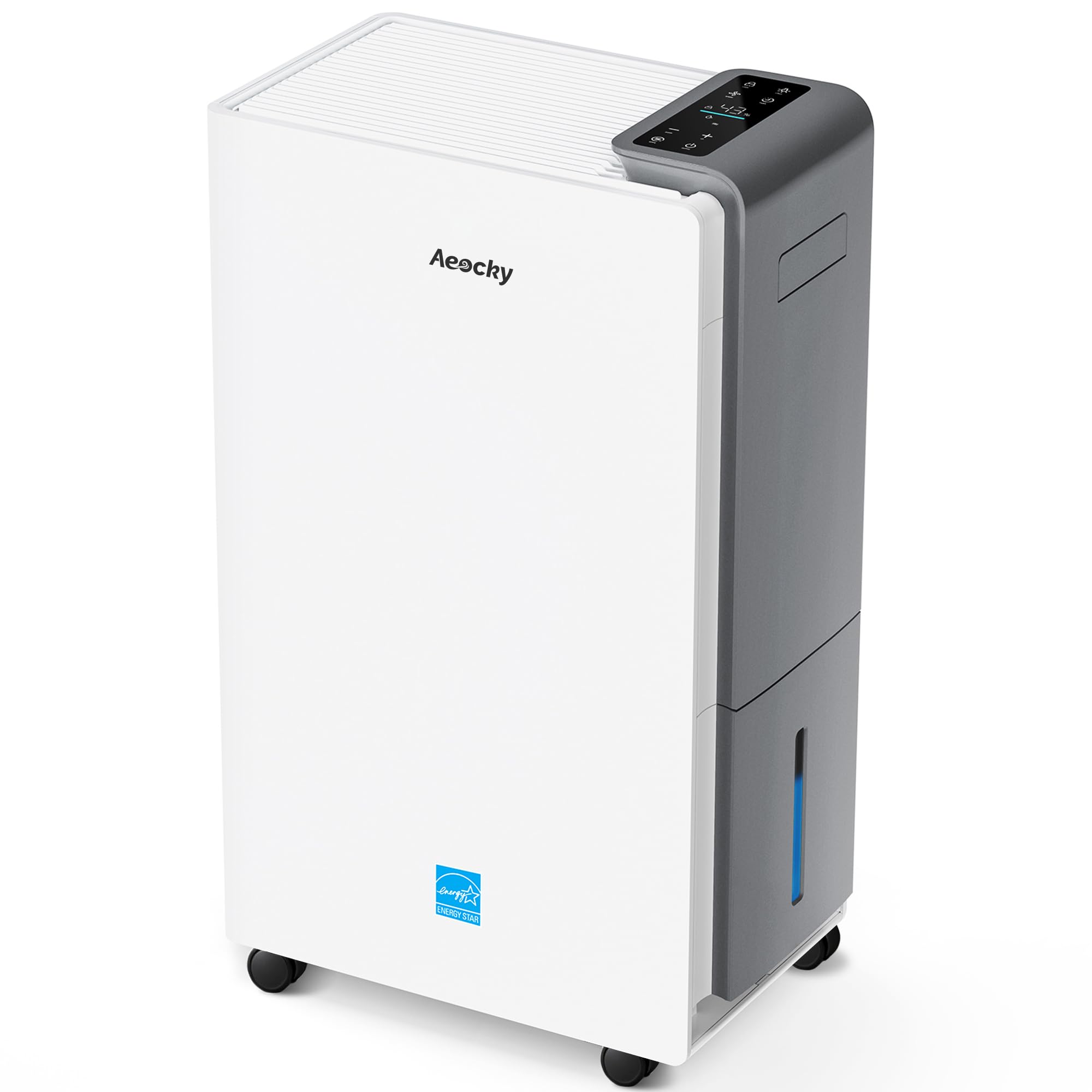
A high-capacity compressor dehumidifier built for energy efficiency, precise humidity control, and reliable low‑temperature operation.
Why I picked it: I picked it for its genuine ENERGY STAR Most Efficient credential and strong low‑temp performance.
Best for: Tight, energy-conscious houses, basements that run cool, and continuous-use installs.
A premium efficiency choice that pays back through lower energy use over time.
Pros
- Top-tier ENERGY STAR efficiency
- Very strong moisture removal
- Precise smart humidistat
- Good low‑temperature performance
- Power‑off memory function
Cons
- Larger and heavier to move
- Tends to be a more expensive option
My take
In my airtight house I used the AEOCKY to stop windows sweating and to remove shower moisture, and it delivered immediately — no more puddles on window sills after long showers. Running this unit replaced my need for constant towels or temporary fans.
The real difference for me is energy use: this model runs steadily without the electricity penalties of older, inefficient compressors. That makes it the dehumidifier I reach for when I want continuous operation without a large utility spike.
I also appreciated how the smart humidistat felt more responsive than cheaper units — humidity held within the range I set without wild cycling. If you need dependable performance in cool basements, its defrost and low‑temp capability kept it working where other compressors would frost up.
3. Lockdown Dehumidifier Rod 12" – Best for Gun Safes
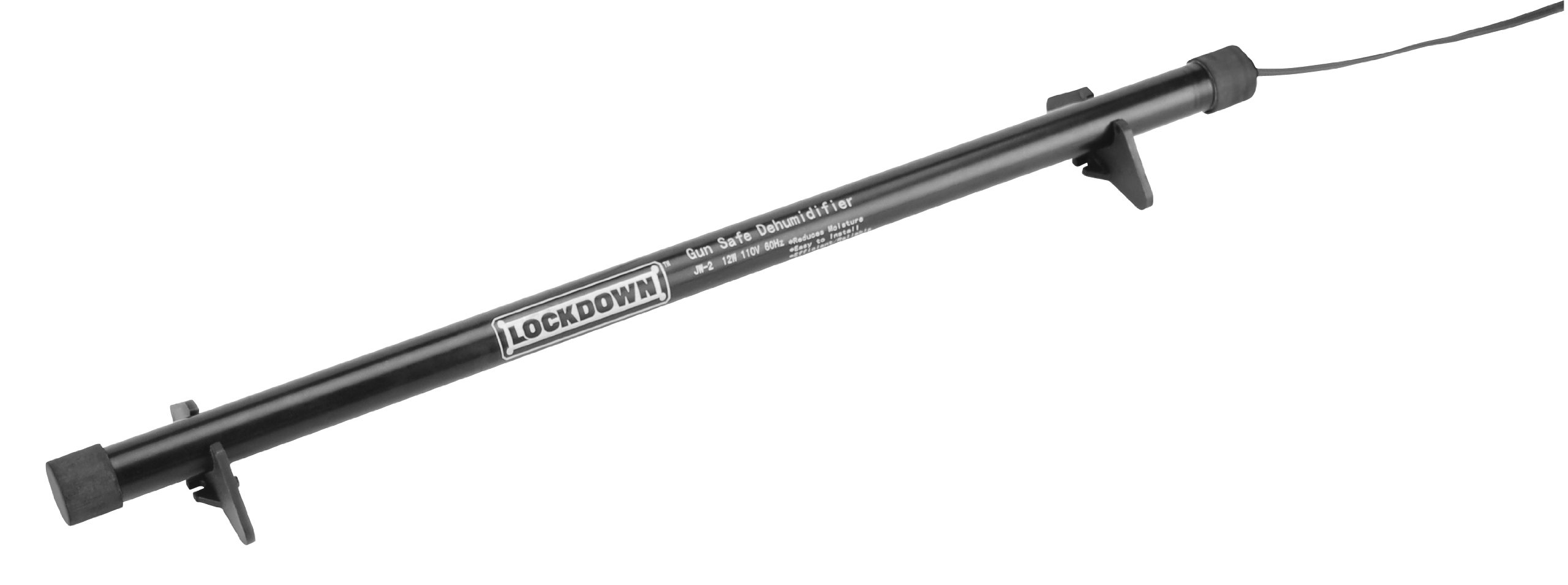
A compact, powered dehumidifier rod that fits inside safes and small enclosures to prevent rust and condensation.
Why I picked it: I picked it for simple, continuous protection in gun safes and small cabinets where space is limited.
Best for: Gun safes, ammo cans, and small enclosed storage up to about 100 cu ft.
A low-cost, practical powered option for enclosed spaces.
Pros
- Compact, installs inside safes
- Easy plug‑in setup
- Keeps humidity stable
- Continuous powered protection
Cons
- Covers only small volumes
- Requires an outlet inside or near the safe
My take
I installed the 12‑inch Lockdown rod in a standard gun safe and it was plug‑and‑play — the attachable legs and quick plug make routing the cord straightforward. Within days the humidity settled into the mid‑40s and I stopped seeing condensation.
Compared to passive desiccants, this powered rod maintains humidity without recharge. For me that means less maintenance and more confidence that firearms and optics aren’t slowly rusting in storage.
If your safe has no nearby power, this rod isn’t a fit. But where an outlet is available, it’s one of the easiest, most reliable ways I’ve found to keep enclosed spaces dry.
4. Wisesorb 900g Silica Gel Canister – Best Desiccant
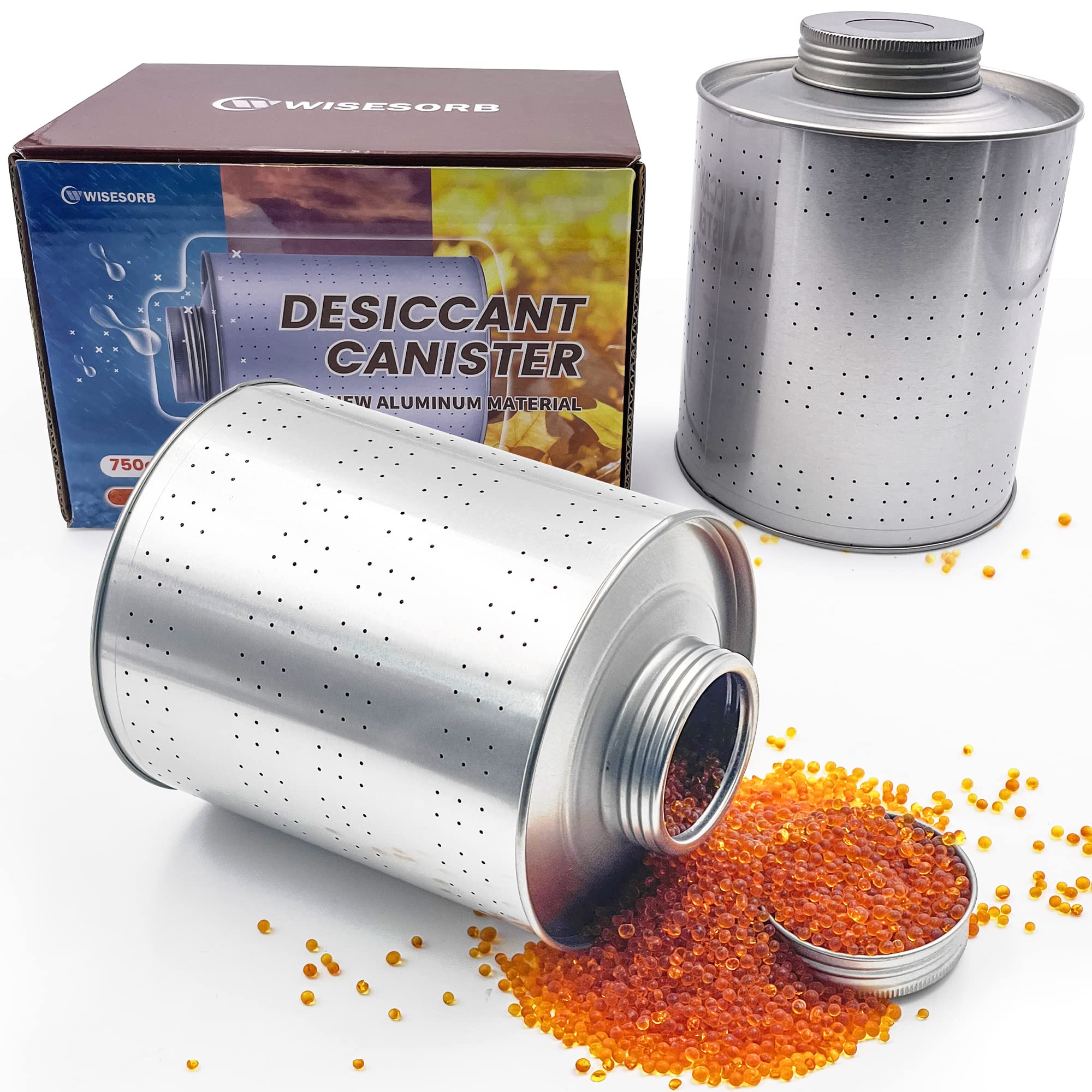
A large, rechargeable silica gel canister with a color indicator window — ideal for safes, closets, vehicles, and non-powered spaces.
Why I picked it: I picked it for its capacity, durability, and the visible color indicator that signals when to recharge.
Best for: Safes, closets, cars, and storage boxes where electricity isn’t available.
A reusable desiccant that’s economical to maintain over time.
Pros
- Large 900g capacity
- Clear window color indicator
- Rechargeable in an oven
- No electricity required
Cons
- Needs periodic oven reactivation
- Slower than powered dehumidifiers
My take
I placed the Wisesorb canister in a gun safe and watched the beads change color as humidity levels dropped. The see‑through window makes it easy to know when it’s time to regenerate.
When it finally saturated, I reactivated the beads in the oven as suggested and got strong absorption again. For safes and vehicles where power is unavailable or undesirable, this canister is a robust, low‑maintenance solution.
Keep in mind that passive desiccants work more slowly than powered units and require scheduled recharging, but their silent operation and flexibility make them indispensable for many of my storage needs.
How I Pick Dehumidifiers — Key Factors I Use
Match capacity to the space and the problem
I start by estimating the square footage and how damp the space gets. For basements and very damp rooms I choose higher capacity compressor units; for safes and small enclosures I go with a rod or desiccant canister.
- Large open rooms and basements: compressor units with high pint/day ratings.
- Tight, enclosed spaces: powered rods or silica canisters.
Energy efficiency and long‑term running costs
If I expect continuous operation I prioritize certified, energy‑efficient models — they cost more up front but reduce running expenses and stay cooler in year‑round use.
- Look for ENERGY STAR or equivalent efficiency credentials.
- Consider 'Most Efficient' models if you need 24/7 operation.
Drainage, pump, and placement
I check whether a unit supports gravity hose drainage, an internal pump, or just a tank. A pump or easy hose outlet saves me daily emptying when I run a machine continuously.
- Pump-equipped units let you place the unit lower than your drain point.
- Gravity drain requires a downward slope to the drain.
Low‑temperature performance
Basements and garages often fall into temperature ranges where standard compressors frost up. I prefer units with proven low‑temp defrost control for cold environments.
- Choose models that advertise low‑temp operation if temps dip below roughly 65°F.
- Desiccants and rods aren’t affected by coil frosting — good for cool safes.
Controls, connectivity, and convenience
Smart controls and accurate humidistats matter to me when managing multiple spaces. Wi‑Fi control is a convenience I appreciate for remote monitoring.
- Smart humidistats let you set precise target RH.
- Wi‑Fi is helpful for remote scheduling and alerts.
Maintenance and reactivation
I factor in filter cleaning, tank emptying, and for desiccants, oven reactivation. A quick maintenance cycle keeps performance reliable.
- Empty tanks or hose connections weekly if heavily used.
- Recharge silica beads per the manufacturer when color indicates saturation.
Frequently Asked Questions
Do I need a compressor dehumidifier or a desiccant?
I use compressor units for large rooms and continuous moisture removal. For safes, vehicles, or places without power I prefer desiccants or a powered rod because they don’t rely on a condensing coil.
How do I decide capacity for my space?
I match the unit’s coverage notes to my square footage and humidity severity — higher pint/day ratings for basements and damp areas, smaller solutions for enclosed storage. When in doubt, upsize if the space gets very wet.
Can I run a compressor dehumidifier in a cool basement?
I’ll choose a model with low‑temperature defrost if the basement routinely sits below about 65°F. Otherwise the unit may frost and stop extracting efficiently.
How do I set up continuous drainage?
I route a hose from the outlet to a floor drain or a condensate pump. If the unit has an internal pump I place the dehumidifier where the pump can discharge uphill to the nearest drain.
How do I recharge a silica gel canister?
I follow the supplier’s oven instructions: remove the lid and heat at the recommended temperature until the indicator beads return to their dry color, then allow the canister to cool before returning it to storage.
Final Take
I choose the hOmeLabs when I want a feature-rich, Wi‑Fi‑managed solution for very large spaces, and I reach for the AEOCKY when energy efficiency and low‑temp reliability matter most.
For safes and cars I alternate between a powered rod and a large silica canister depending on whether I have power available or want a silent, passive option. Each option in this list solved the moisture problems I tested it on, so pick the type that matches your space and power constraints.
