
I tested a range of dry and dry-capable irons—corded, cordless, travel-size, and craft-focused—to find irons that deliver heat, glide, and reliability for everyday ironing and sewing projects.
I spend time ironing shirts, pressing quilt seams, and doing quick touch-ups around the house, so I evaluated irons for real-world use rather than specs alone.
My focus was on how well each iron heats, how it glides, whether steam (when present) is reliable, and how practical the design is for sewing and travel.
Below are four irons that stood out in different ways: sturdy classics, cordless convenience, craft-friendly dry plates, and compact travel models.
I compared these irons by using them on cotton shirts, linen, and quilting cotton, timing heat-up, testing glide across seams, checking for water spit or residue, and assessing practicality: cord length, weight, soleplate finish, and portability.
1. BLACK+DECKER Classic Iron F67E-T – Best Overall
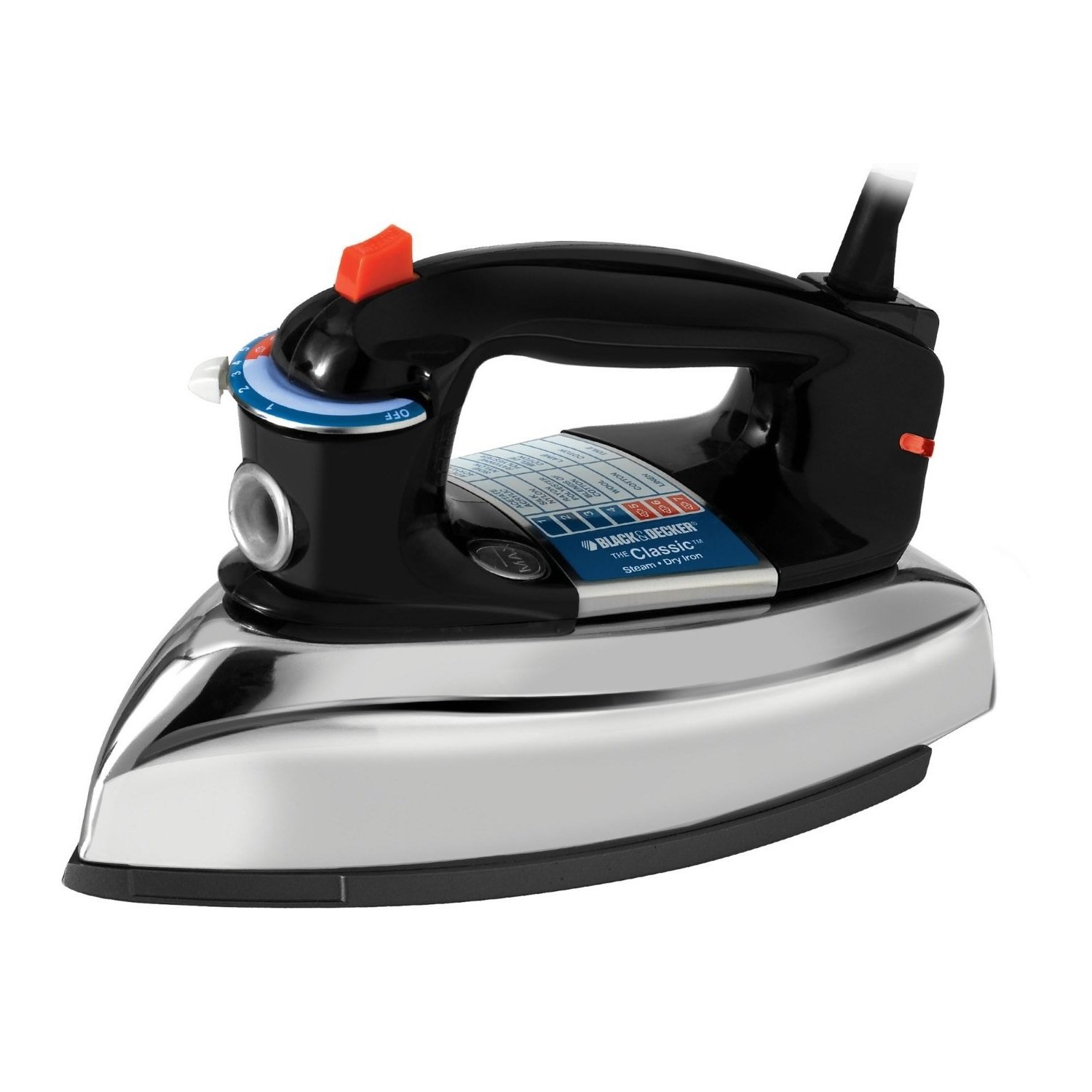
A no-frills 1100W iron with an aluminum soleplate, steam or dry modes, anti-drip protection, and an extra-long 10' cord for reach and mobility.
Why I picked it: Weighted soleplate and simple controls that make everyday ironing easy.
Best for: Daily shirts, pants, and sewing tasks where steady heat helps press seams.
Affordable and built like older, dependable irons.
Pros
- Substantial weight does the pressing for you
- Simple, reliable controls
- Anti-drip feature prevents spotting
- Extra-long 10-foot cord
Cons
- Heavier and smaller than modern irons
- Aluminum soleplate can show wear over time
My take
This Black+Decker felt like a workhorse the first time I used it. The iron's weight does much of the work, so I rarely had to press down hard when smoothing shirts or flattening seams.
The aluminum soleplate glides well on both dry and dampened fabrics. I used the steam function occasionally and appreciated the anti-drip system—no unexpected wet spots on my cotton shirts.
Controls are straightforward: seven temperature settings cover everything from synthetics to high-heat cotton. The 1100W heater gives a steady temperature without long waits.
Practical features matter to me: the 10-foot cord lets me move around a bigger ironing board without wrestling with extensions, and the unit feels durable—I've had it running frequently with no fuss for months.
2. Panasonic NI-WL700A Cordless Steam/Dry Iron – Best Cordless
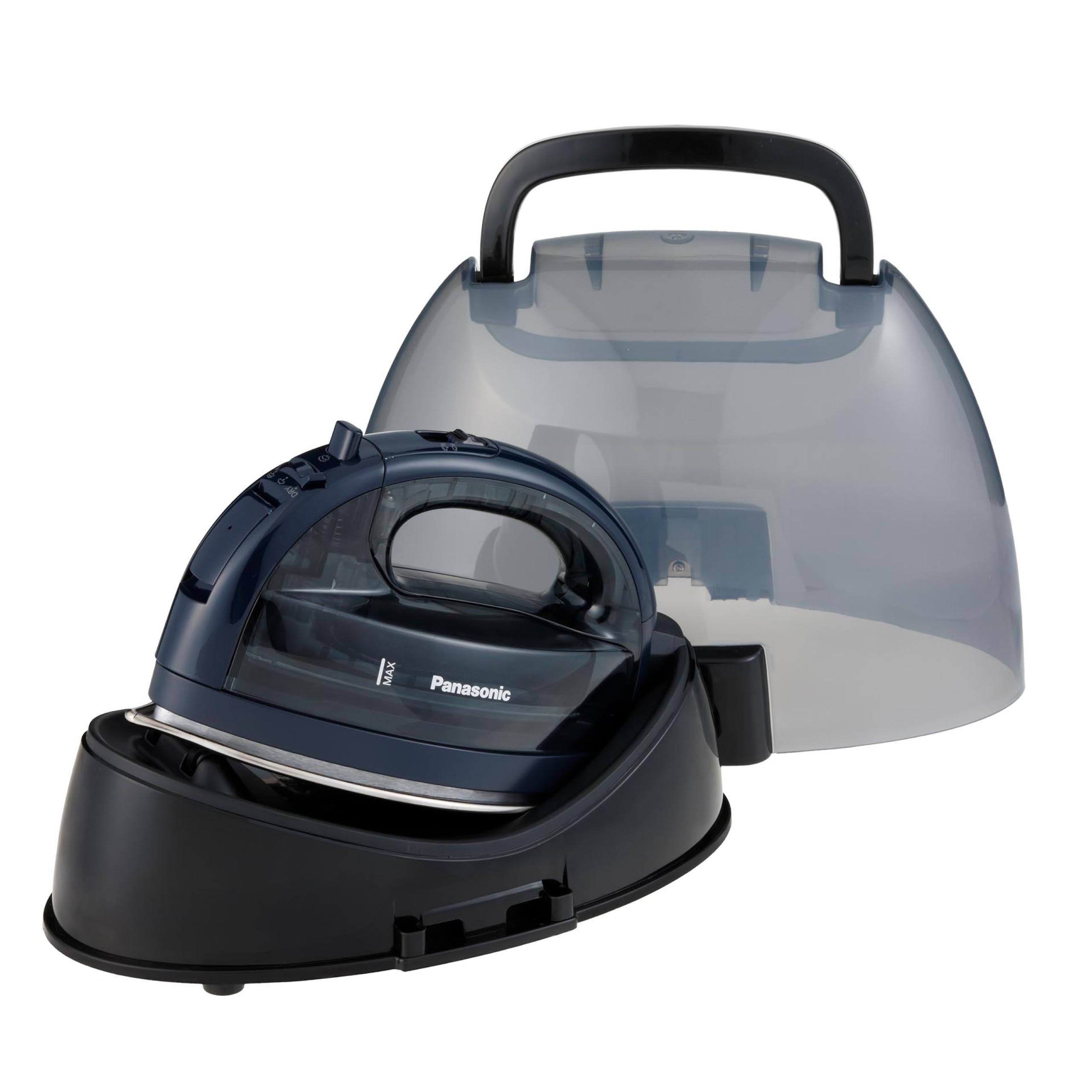
A cordless 1500W iron with a stainless-steel 360° contoured soleplate, very fast heat-up, and a portable design with a carrying case and base reheat station.
Why I picked it: Cordless freedom, fast heat, and a truly multi-directional soleplate.
Best for: Quick touch-ups, vertical steaming, and anyone who values portability.
A more expensive choice for cordless convenience and travel-ready design.
Pros
- Cordless convenience eliminates drag
- Heats up very quickly
- 360° contoured stainless soleplate
- Portable with heat-resistant case
Cons
- Limited steam time per charge
- More moving parts to worry about
My take
Going cordless changed how quickly I get through a pile of shirts. The NI-WL700A heats to working temperature in well under two minutes, so there's almost no waiting.
The stainless-steel soleplate is smooth and lets me iron forward, backward, and side-to-side without catching seams. That freedom speeds up precise work around collars and pleats.
Battery-backed steam is best for short bursts—I get about a minute of steam per charge and longer dry ironing segments between re-docking. For heavy loads I set the iron back on its base to reheat and keep going.
I appreciated that it didn’t spit or leak during normal use, and the carrying case makes storage neat when I travel. It’s lighter than my old heavy corded irons, which helps for longer sessions, but I do keep a corded iron for bulk pressing when I need sustained high steam.
3. Panasonic NI-A66 Dry Iron – Best for Quilting
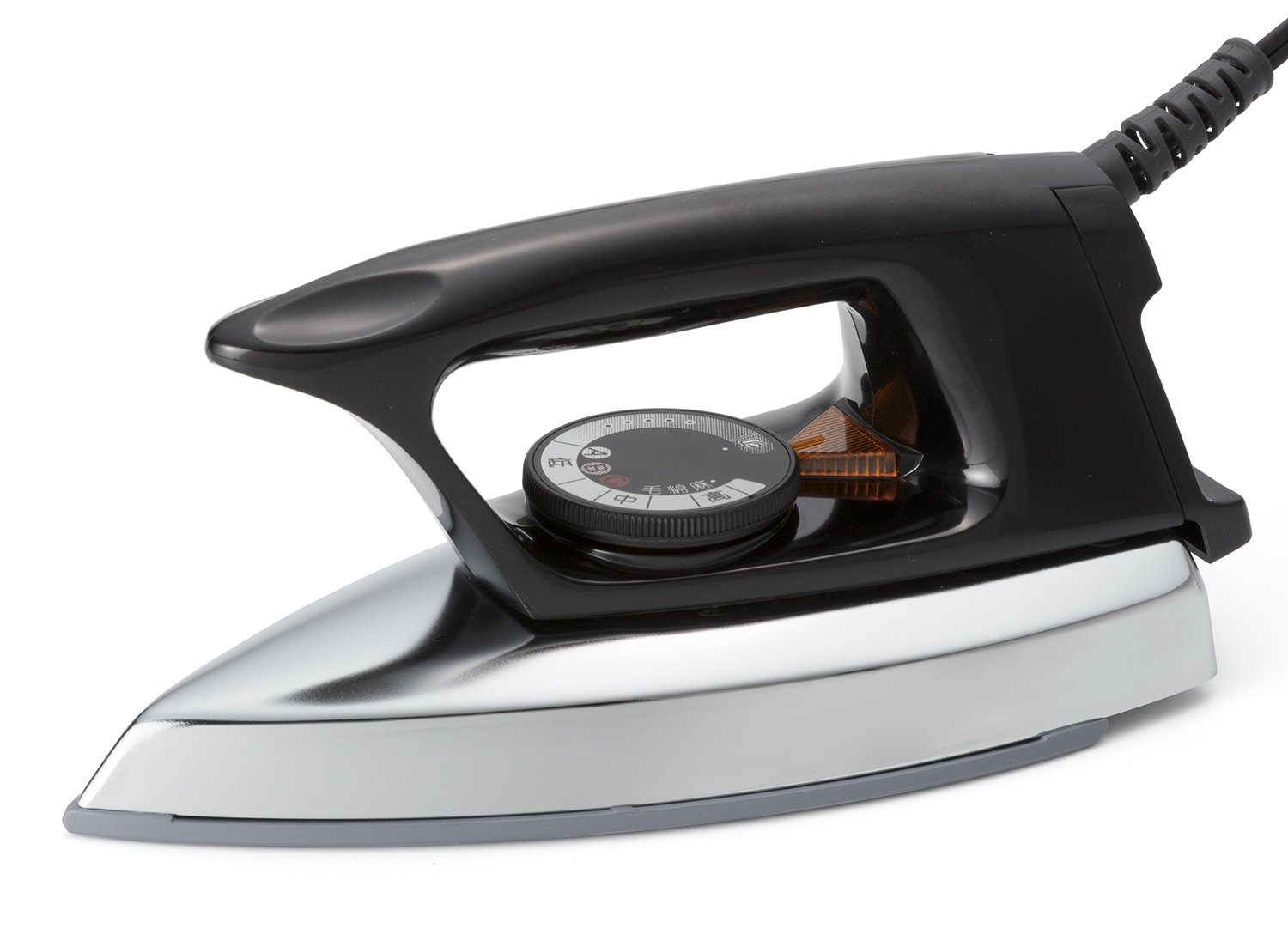
A compact dry iron with a flat, smooth soleplate, lightweight balance, and enough heat for fusibles and frequent craft use—no steam required.
Why I picked it: Flat soleplate and lightweight balance for precise sewing and pressing.
Best for: Quilting, crafts, and pressing fusibles where a flat plate matters.
A craft-focused, moderately priced option that prioritizes control over steam.
Pros
- Flat, smooth soleplate ideal for quilting
- Lightweight and well balanced
- Heats up quickly and gets very hot
- Simple, steam-free design
Cons
- No steam option for tasks needing moisture
- Soleplate coating may show wear over time
My take
I keep this Panasonic on my sewing table because its flat soleplate gives true, even contact across seams—exactly what I want when piecing quilt blocks.
It’s surprisingly hot for a 700W iron and reaches working temperature quickly. When I need moisture I mist fabric with a spray bottle rather than rely on steam, which avoids the leakage issues steam irons sometimes bring to delicate craft work.
The compact size and balance make it easy to use for long sessions without arm fatigue. That said, I’ve seen signs that the soleplate coating can wear after heavy use, so I handle it carefully and clean it regularly.
4. Ivation Mini Travel Iron – Best Travel
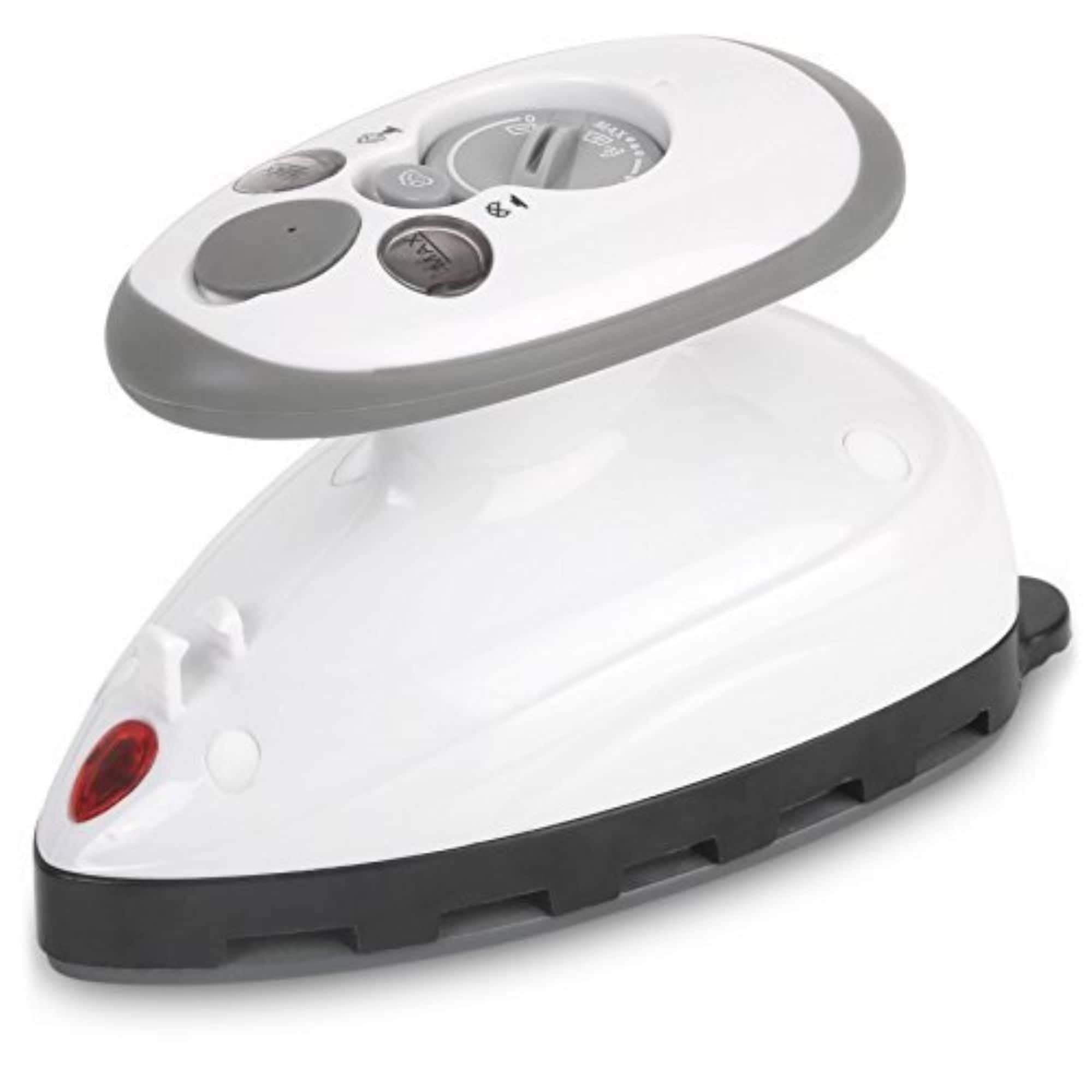
A compact 420W travel iron with a nonstick ceramic soleplate, three heat levels, rapid 15-second heat-up, dual voltage, and a long cord that wraps around the handle.
Why I picked it: Tiny footprint, fast heat, and travel-friendly voltage and cord design.
Best for: Travel, quick touch-ups, and small sewing or craft work.
An affordable, compact choice for on-the-go pressing.
Pros
- Heats in about 15 seconds
- Compact for travel and small jobs
- Non-stick ceramic soleplate
- Extra-long cord that wraps neatly
Cons
- Very light—prone to toppling
- Small plate not suited for big loads
My take
This little Ivation is what I grab for overnight trips or to press small seams at my machine. It heats almost instantly and the ceramic soleplate glides nicely on cotton.
Dual-voltage support means I can pack it confidently, and the long cord wraps and clips around the handle for tidy storage.
Its small size is exactly why I love it for crafts, but be aware it’s so light that it can feel tippy on a narrow surface. For full wardrobe jobs I still reach for a full-size iron, but for quick fixes and travel this one is perfect.
How I Picked These Dry Irons
What I look for first
I start by testing heat-up time, soleplate glide, and how well the iron maintains temperature under continuous use.
Weight and balance are next: a heavier, well-balanced iron can press flatter with less effort, while a lighter iron is easier for long sessions or travel.
- Heat-up time: faster gets me through chores sooner
- Soleplate finish: stainless or ceramic for smooth glide
- Weight: helps press without excessive force
- Cord length or cordless design affects mobility
Steam vs dry—when I choose dry
For sewing and quilting I often prefer dry plates and a separate spray bottle so I avoid leaks and residue on fabrics.
If I need vertical steaming or heavy wrinkle removal, I choose irons with reliable steam systems or a cordless model with vertical steam capability.
- Dry irons give cleaner contact for fusibles and seams
- Steam irons work best for big laundry loads and curtains
- Anti-drip systems help prevent water spots during low-temp use
Corded, cordless, or travel
Corded irons deliver continuous power for big jobs; cordless models add convenience for touch-ups and portability.
Travel irons should be compact, quick-heating, and ideally dual-voltage if you plan to take them overseas.
- Corded: steady power for long pressing sessions
- Cordless: excellent mobility, but check steam duration
- Travel: look for rapid heat and dual-voltage support
Durability and maintenance
I inspect soleplates for coatings that might flake and clean them periodically to prevent buildup.
When steam is used, I prefer distilled water to reduce mineral deposits, even if a manual allows tap water.
- Wipe soleplate after cooling to remove residue
- Use distilled water to minimize scale in steam tanks
- Store irons on heat-resistant mats or in their travel cases
Frequently Asked Questions
Do I need distilled water for a dry-capable iron?
I use distilled water in irons that produce steam to minimize mineral buildup and reduce the chance of spitting or deposits, even when the manual doesn’t require it.
Can a dry iron handle delicate fabrics?
Yes—when an iron has accurate temperature settings and a smooth soleplate, I can safely press delicate fabrics on low heat and use a pressing cloth for extra protection.
Is a cordless iron as effective as a corded model?
Cordless irons are very effective for quick jobs and offer great freedom of movement, but I keep a corded iron for heavy-duty pressing because it provides continuous high heat without re-docking.
What soleplate material do I prefer?
I favor stainless steel or ceramic for smooth glide; aluminum works fine too but may show wear faster, so I clean it regularly.
Final Take
I chose these four irons because each solves a real problem: a reliable everyday iron, a cordless convenience model, a craft-focused dry plate, and a compact travel option.
If you want a single versatile iron, that BLACK+DECKER balances weight, steam, and durability. For portability and speed, the Panasonic cordless earned my pick. Quilters and crafters will appreciate the flat, precise Panasonic dry iron, and the Ivation mini is my go-to for travel and tiny jobs.
Whichever path you take, pick the iron that matches the fabrics and projects you do most often, and keep basic maintenance—cleaning the soleplate and using filtered water—part of the routine.
