
I tested a range of indoor bug traps—from Zevo cartridge refills to clear window sheets and plant sticky cards—to find the most effective, low-maintenance options for kitchens, houseplants, windows, and garages.
I’ve tried almost every indoor bug trap I could find so I could figure out which types actually work in real homes. Over a few months I ran cartridges, glue boards, clear window sheets, and yellow plant cards in kitchens, on windows, around houseplants, and in my garage. Each style has a clear role: some are discreet and maintenance-free, others are cheap bulk workhorses for plants, and a few are best when you need heavy-duty stickiness for bigger pests.
Below I explain which traps I put where, why I kept using them, and the caveats I learned while living with them. If you want a quick win for houseplants, a tidy window solution, or a refill for an electric trap, I cover that here.
I compared traps by ease of setup, targeted pests (gnats vs house flies vs rodents), discreetness, maintenance needs, and overall value for long-term use.
1. Zevo Replacement Cartridges (3-pack) – Best for Zevo Owners
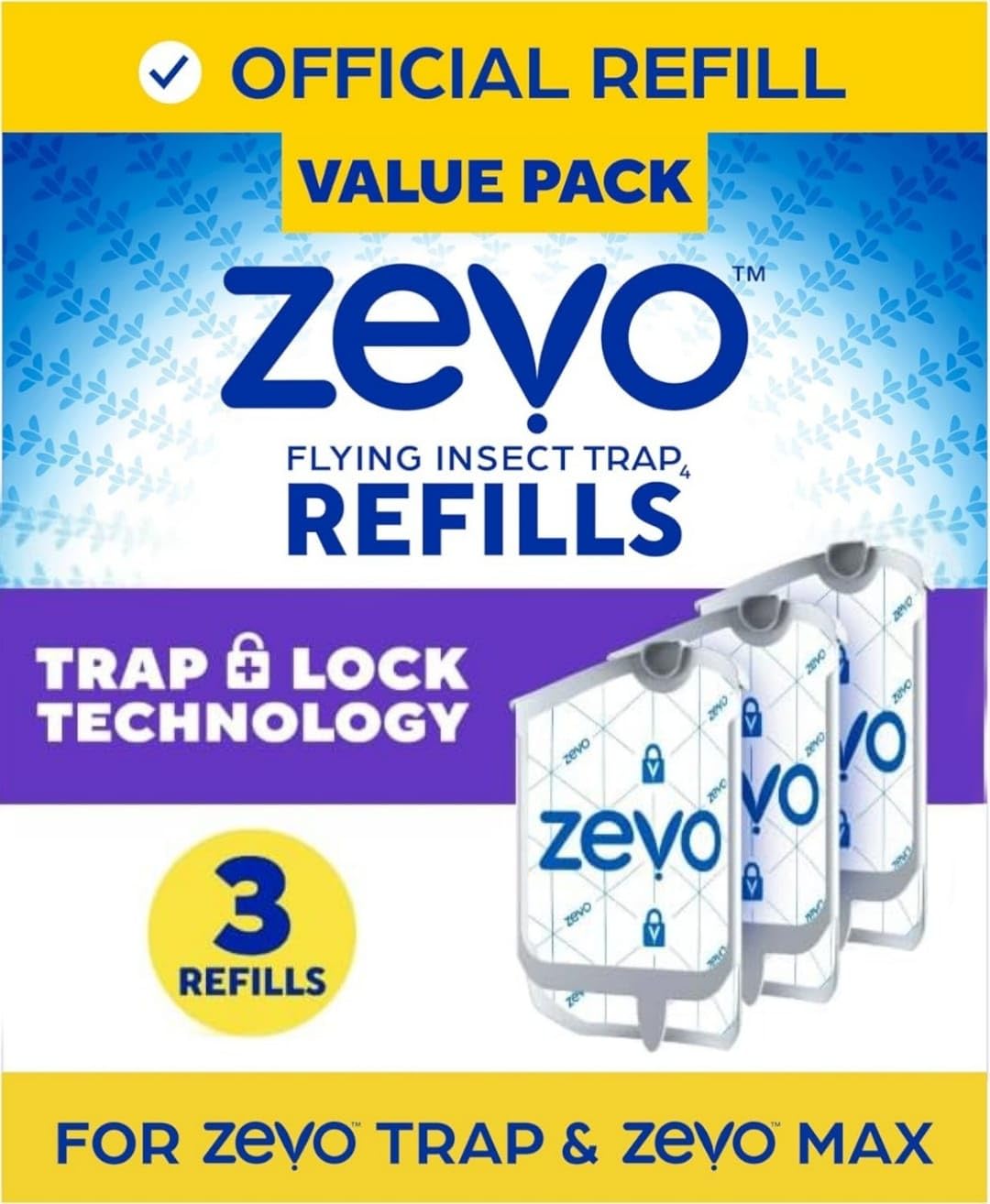
Official refills designed for Zevo indoor flying insect traps; snap-in cartridges that quietly trap gnats, flies, and mosquitoes.
Why I picked it: They fit Zevo units perfectly and deliver fast, no-mess bug capture.
Best for: People who already own a Zevo trap and want a discreet, low-maintenance refill.
Good-value refill pack for a reusable trap base.
Pros
- Tool-free, seconds-long installation
- No sprays, no mess
- Effective on gnats and flies
- Fits both standard and MAX models
Cons
- Requires a Zevo base unit
- Light can be noticeable in very dark rooms
My take
I rely on Zevo cartridges when I want a set-and-forget approach in living areas. Swapping a cartridge takes seconds and there’s no sticky residue or chemical spray in the air.
Within hours I usually see trapped gnats and small flies, and over a day the difference around my plants and kitchen sink is obvious. The cartridges are discreet—contained and out of sight—so they work without making the room feel like a pest-control zone.
I prefer the official refills to off-brand alternatives because the fit is perfect and performance stays consistent. If you already own the Zevo light station, these are the most convenient way I’ve found to keep flying insects under control.
2. Catchmaster Clear Window Fly Traps (12-pack) – Best Peel-and-Stick Window Traps
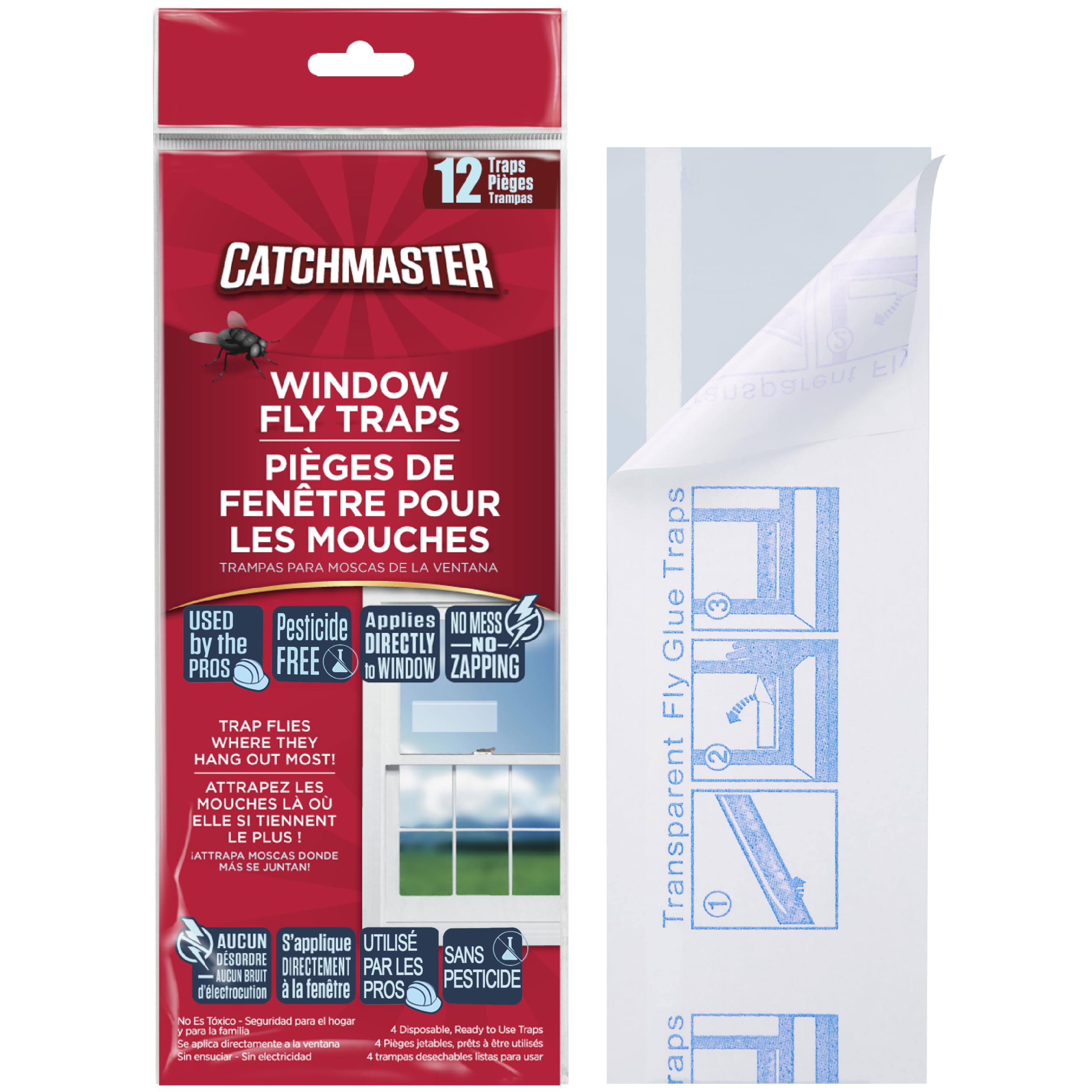
Peel-and-stick transparent window traps that are waterproof, pesticide-free, and easy to deploy on sills and glass doors.
Why I picked it: They’re ready to use, discreet on glass, and reliable where flies head for the light.
Best for: Windows, sliding doors, and areas where you want an unobtrusive trap.
Affordable multi-pack for targeted window placement.
Pros
- Quick peel-and-stick application
- Transparent and discreet
- Waterproof and durable
Cons
- Unpleasant to look at when full
- Can leave marks after repeated use
My take
I use these on windows and glass doors because flies instinctively head for the light; placing the trap on the upper edge of a sun-facing window is where I see the best pickup.
Application is foolproof: peel the liner and press in place. The transparency keeps the trap unobtrusive until it’s time to replace it.
One hiccup to remember is that repeated application in the same spot can leave slight marks on glass, so I rotate placement or clean the glass between uses. For me, the speed and simplicity outweigh that drawback.
3. Trapper Max Glue Boards (12-pack) – Best for Heavy-Duty Stickiness
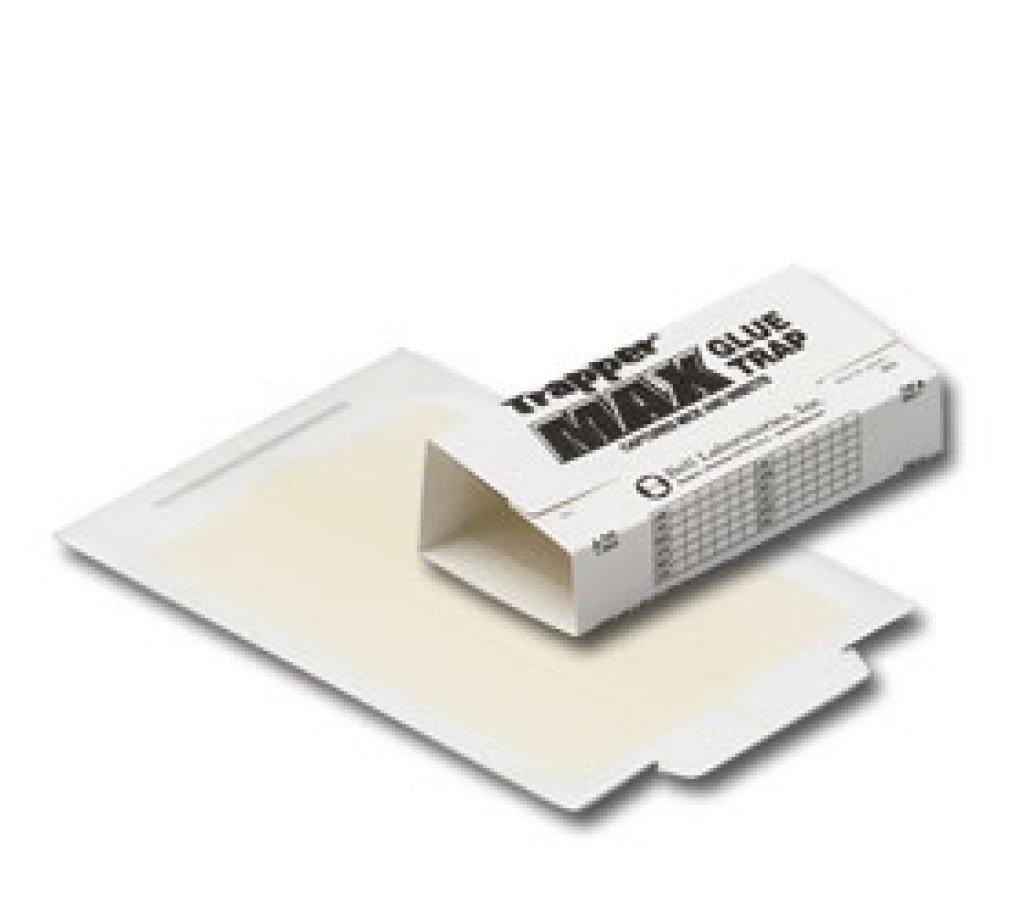
Versatile glue boards with a large sticky surface and peanut-butter scent; can be used flat or folded to trap rodents and insects.
Why I picked it: Extremely sticky and versatile for garages, behind appliances, and anywhere larger pests roam.
Best for: Garages, basements, and behind appliances where mice, roaches, and big insects appear.
Economical way to get professional-strength stickiness.
Pros
- Very high stickiness
- Works on rodents and insects
- Can be folded or laid flat
Cons
- Noticeable scent at first
- Messier disposal than sealed traps
My take
When I needed something with real grip, these glue boards delivered. They caught mice, large spiders, and cockroaches that smirked at lighter sticky traps.
The peanut-butter scent is noticeable when you open the pack, and I leave a window open for a short time if I’m sensitive to odors. Once placed, they do their job silently and reliably.
I avoid using them outdoors where lizards or beneficial wildlife might wander into them, but inside the garage or tucked behind a refrigerator they’re one of my go-to heavy-duty solutions.
4. Stingmon Yellow Sticky Plant Traps (96-pack) – Best Bulk for Plants
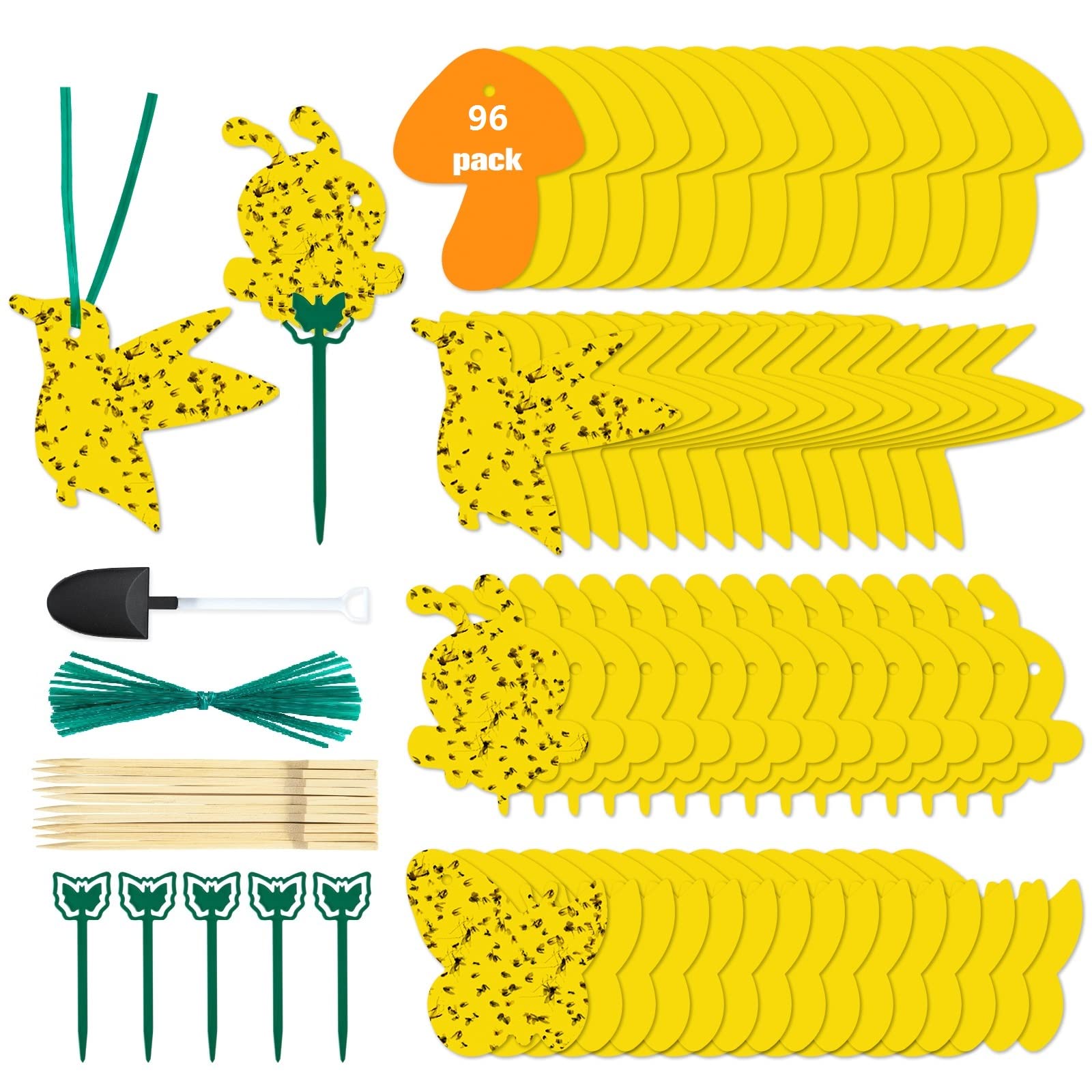
Bright yellow sticky cards designed to attract and trap fungus gnats and other plant pests; waterproof, UV resistant, and sold in a large value pack.
Why I picked it: Huge quantity and reliable attraction for plant-heavy spaces.
Best for: Greenhouses, collections of potted plants, and anyone needing many traps to break breeding cycles.
High-value pack for long-term plant protection.
Pros
- Very large quantity
- UV resistant and waterproof
- Pesticide-free and family-safe
Cons
- Can stick to potting soil if handled carelessly
- Glue may soften in heat
My take
I put one of these in nearly every pot when I had a bad gnat season and the difference was dramatic—many cards were full within a day or two.
The bright yellow really draws adult gnats away from soil and leaves them stuck long enough for me to throw the card away and break the life cycle.
A practical tip I use in summer: keep the cards cool before placing them if your home gets very warm, since high heat can soften some adhesives. For protecting lots of plants, this pack is a no-brainer.
5. Dual-Sided Yellow Sticky Plant Traps (40-pack) – Best Mid-Size Plant Trap
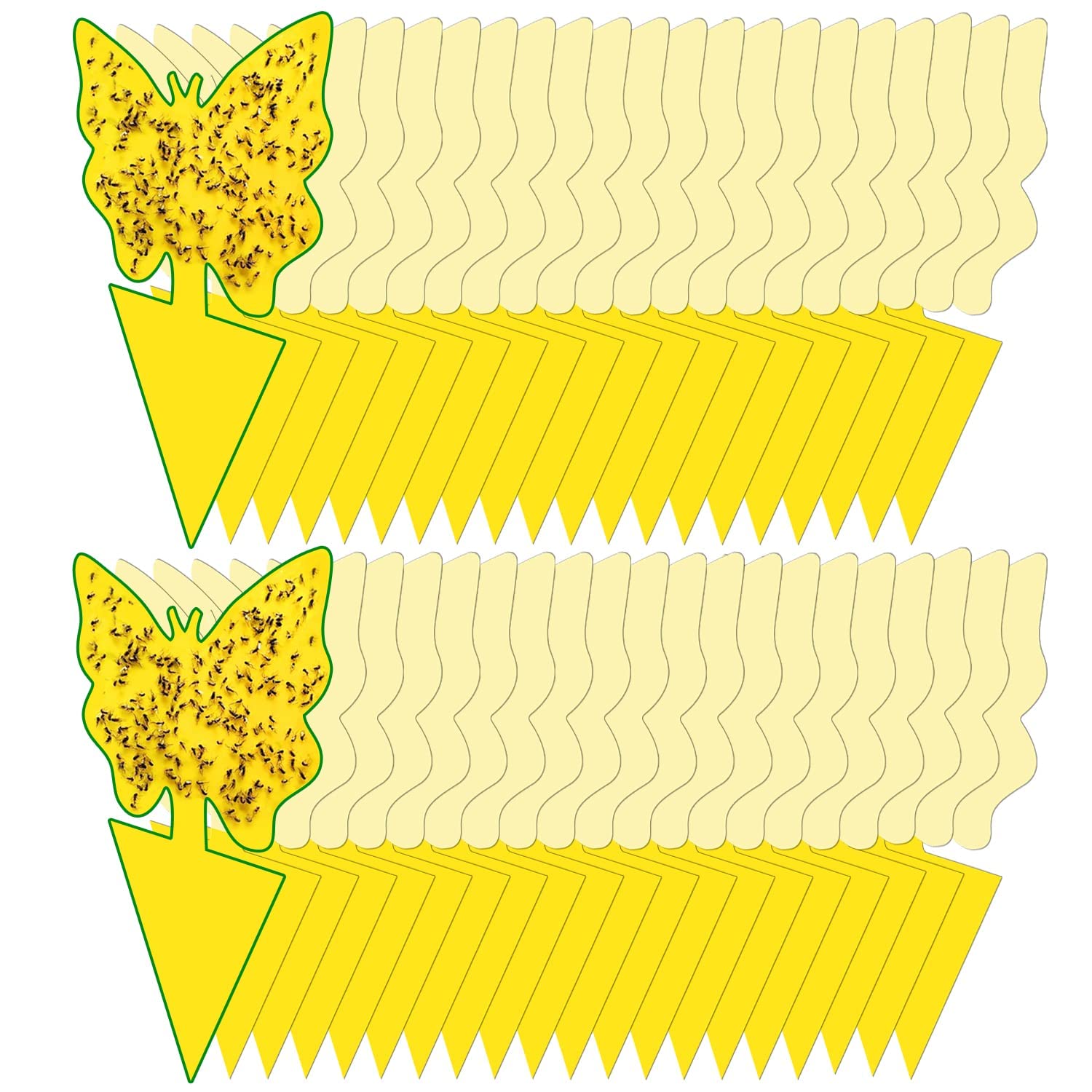
Dual-sided yellow sticky traps with sharp bottoms for soil insertion; includes a tiny shovel for easy placement.
Why I picked it: Includes a handy shovel and a design that inserts neatly into pots.
Best for: Houseplant owners who want a tidy, easy-to-install solution for gnats.
Solid mid-range value with useful accessories.
Pros
- Dual-sided adhesion
- Comes with a small shovel
- No chemical odor
Cons
- Bright yellow can be visually obtrusive
- Thin spear can bend during insertion
My take
I appreciated the little shovel that comes with this pack—digging a small slot and sliding the trap into the soil is clean and fast.
They’re extremely sticky, so I’m careful not to let the card touch loose dirt during placement. These are great for catching adults, but I pair them with soil treatments when I want to go after larvae as well.
If aesthetics matter, know these are bright. For pure effectiveness around potted plants, they work exactly as advertised.
6. Kensizer Transparent Window Fly Traps (30-pack) – Best Transparent Window Option
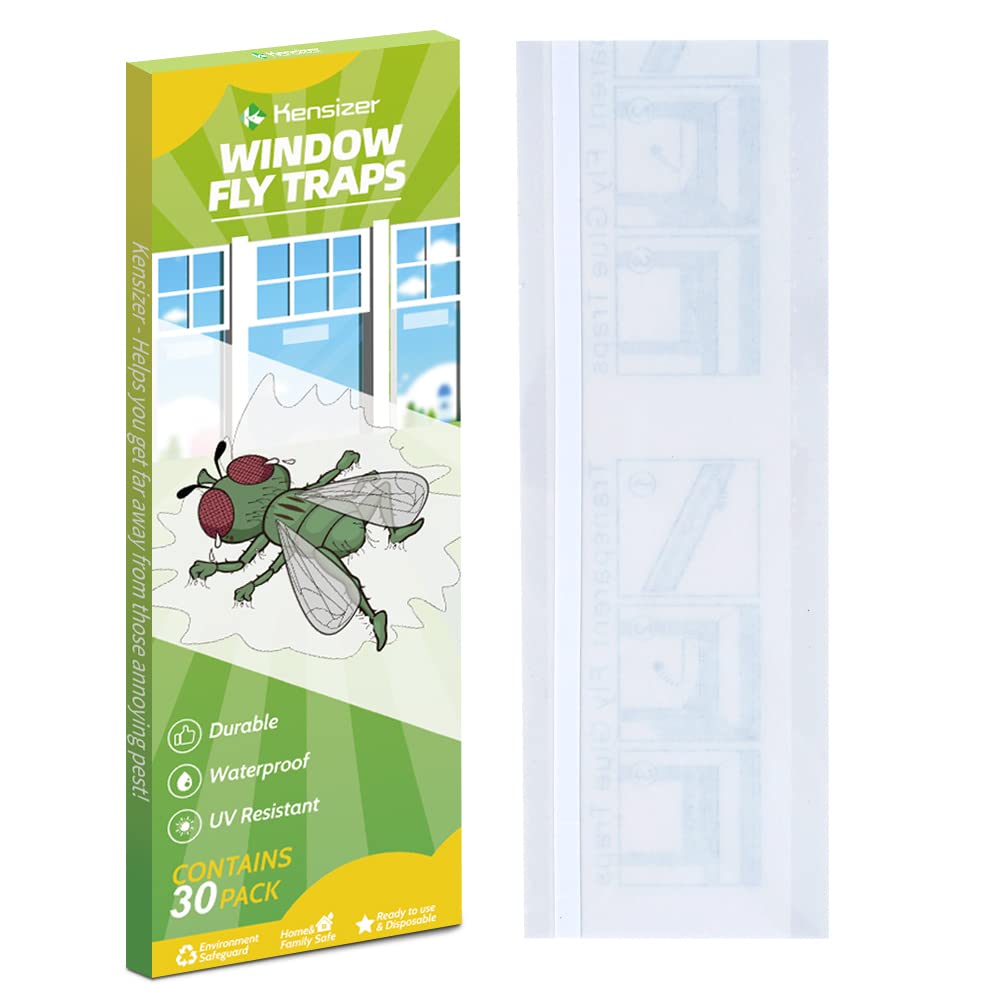
Clear window sheets that blend into glass while delivering strong adhesive capture without odor or trace when removed.
Why I picked it: Transparency keeps sight lines clean while catching a lot of small flies.
Best for: Homeowners who want a discreet window trap with strong adhesion.
Affordable clear option for multiple windows.
Pros
- Almost invisible on glass
- Leaves no residue when removed
- Odorless and non-toxic
Cons
- Very gross when filled
- Can stick to you if mishandled
My take
I use these on windows where I don’t want anything obvious: they let light through and are barely noticeable until they’ve trapped insects.
They’re ridiculously sticky—so much so that I fold them onto themselves when removing to avoid touching trapped bugs or getting adhesive on my hands.
They last a long time in my experience, and because they’re clear they’re my go-to when I want fly control without changing the room’s look.
7. Clear Window Fly Traps (100-pack) – Best Bulk Clear Sheets
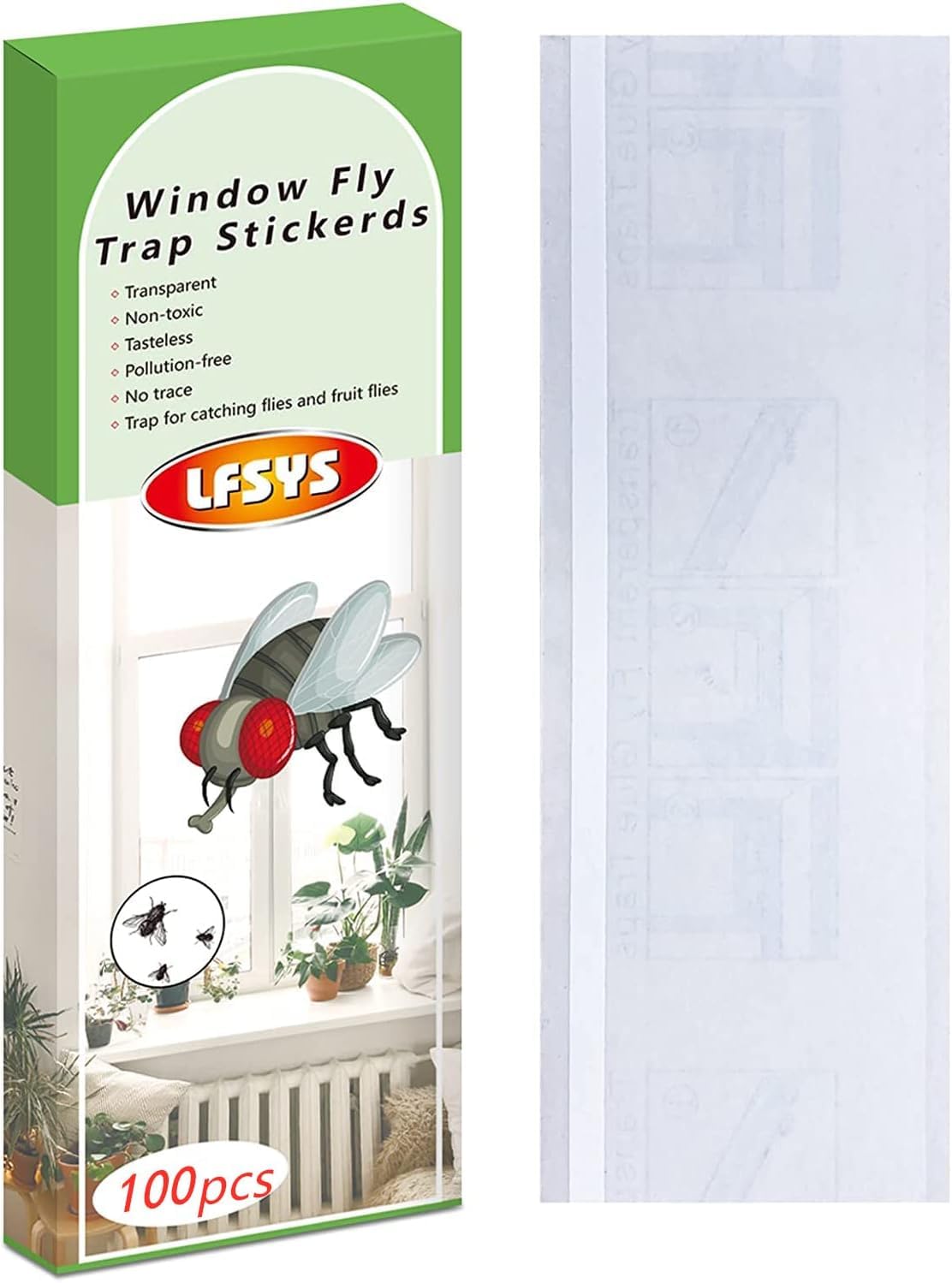
Bulk clear sticky sheets for windows and flat surfaces that offer a non-toxic, easy-to-apply solution for widespread fly problems.
Why I picked it: Large bulk pack that’s useful around kitchens, pet areas, and outdoor feeding spots.
Best for: Large homes, pet owners, or anybody who needs many disposable clear traps.
Bulk value for heavy seasonal use.
Pros
- Huge quantity for ongoing use
- Clear and unobtrusive
- Non-toxic and odorless
Cons
- Glue can transfer if stepped on
- Pets’ tails can get stuck if placed carelessly
My take
I keep these on hand for the areas where flies congregate—kitchen windows, near trash, and by pet feeding stations—and the sheer quantity means I don’t have to ration them.
They’re clear and low-odor, which makes placement flexible and unobtrusive, but I do caution folks to place them out of reach of pets and foot traffic because the adhesive is tenacious.
When removal leaves any sticky residue, a little mineral oil on a cloth removes it quickly; that’s my standard cleanup trick.
How I Choose Indoor Bug Traps
Match the trap to the pest
I always start by identifying what I’m trying to catch. Gnats and fruit flies respond well to yellow sticky cards placed near plant soil or fruit, while house flies and mosquitoes congregate at windows and entry points where clear window sheets or peel-and-stick traps excel. For rodents or large crawling pests, heavy-duty glue boards are the tool I reach for.
- Use yellow sticky cards for plant pests and adult gnats.
- Use clear window sheets where you want discretion and light transmission.
- Use glue boards for larger insects and occasional rodent problems.
Placement matters more than quantity
I’ve found small changes in placement radically improve capture rates. Place window traps at edges where insects try to escape; put plant cards directly in the soil near watering areas; and tuck glue boards behind appliances or in corners where mice travel.
- For windows, try upper edges on sun-facing panes.
- For plants, place cards near moist soil where adult gnats emerge.
- For glue boards, set them perpendicular to walls in high-traffic corridors for rodents.
Safety and pets
I treat sticky traps as potentially hazardous to curious pets. I keep plant cards and glue boards out of reach of cats and dogs and use clear window sheets higher up or behind screens if pets spend time near doors.
- Avoid floor placement in pet areas.
- Use sealed or elevated placements when children are present.
- Always check traps daily if you suspect pets can access them.
Maintenance and disposal
I dispose of full traps promptly to avoid odor and mess. For window sheets, I fold the sticky side onto itself and use gloves if the trap is particularly gross. For cartridges and sealed systems, I follow the manufacturer’s swap procedure to keep things tidy.
- Replace plant cards when covered or every few weeks during peak season.
- Rotate window trap locations to avoid residue buildup on glass.
- Fold used glue traps inward for safer disposal.
When to buy bulk vs small packs
If you have lots of plants or a big seasonal fly problem, I buy bulk packs to avoid repeated ordering. For targeted or occasional use, smaller packs and cartridges save space and reduce storage clutter.
- Bulk is best if you protect many plants or multiple windows.
- Smaller packs suit single-room problems or trial runs.
- Consider storage conditions—heat can soften adhesives, so keep spares cool.
Frequently Asked Questions
Are sticky traps safe around pets and kids?
I consider sticky traps safe if placed thoughtfully. I keep cards and glue boards out of reach and use window-mounted or elevated options when pets or children are present. If a pet gets stuck, oil or vegetable oil usually releases adhesive quickly—act calmly and avoid pulling.
How long do these traps remain effective?
In my experience, window sheets and clear traps can last weeks in normal conditions; plant cards stay effective until covered with insects or dust. Glue boards remain active as long as their surface stays exposed and tacky. Heat can shorten lifespan by softening adhesives, so I store extras in cool areas.
Do sticky traps leave residue on glass or surfaces?
I rarely see residue from quality clear window traps, but repeated use in the same spot can leave marks. When I get residue I remove it with a dab of mineral oil or a standard glass cleaner and a little elbow grease.
Will plant sticky cards solve a gnat infestation on their own?
I use plant cards to dramatically reduce adult counts, but they only catch adults. To break an infestation fully, I pair sticky cards with soil remediation—drier topsoil, repotting with sterile mix, or a larvicide if needed.
Final Take
I keep multiple trap types on hand because they each solve different problems: Zevo cartridges for tidy indoor living spaces, clear window sheets for discreet window control, heavy-duty glue boards for garages and big pests, and yellow plant cards for protecting plants.
If you want a single recommendation: use the style that matches the pest and placement. For plant collections go bulk with sticky cards, for windows choose clear sheets, and for broad, heavy-duty capture pick a glue board.
I’ve relied on these traps through real infestations and seasonal spikes; used thoughtfully they make indoor pest management low-maintenance and predictable.
