
I tested spikes, granular blends, and slow-release formulas so you can pick the easiest, most effective fertilizer for your citrus, avocado, and fruit trees.
I grow a handful of citrus and other fruit trees and have tried different fertilizer formats to see what actually moves the needle. In this roundup I cover targeted spikes, season-long granular blends, and organic options so you can match the feed to your trees and schedule.
My focus was on ease of use, nutrient mix, release profile, and how each product performed in both in-ground and potted plants. Below I explain when I reach for spikes, when granular or shake-and-feed is smarter, and which organic choice I use when soil health matters most.
I found spikes deliver the most hassle-free, root-targeted feeding; granular and shake‑and‑feed products offer broader soil coverage and different release times; organics prioritize soil biology and safety.
1. Miracle-Gro Fruit & Citrus Plant Food Spikes – Best Overall
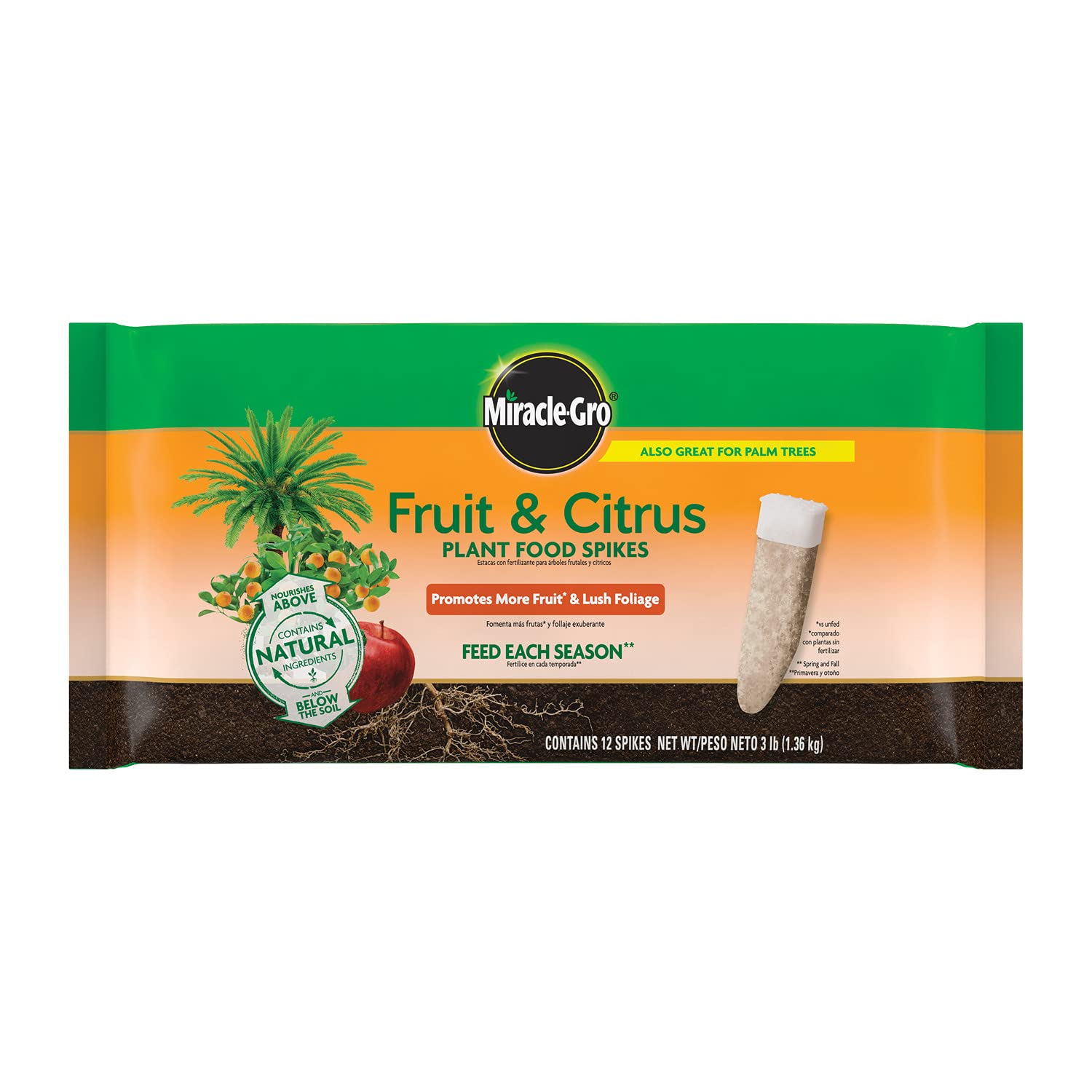
Easy-to-use 10-15-15 nutrient spikes that feed at the root zone with two seasonal applications.
Why I picked it: Targets roots, simple twice-a-year application, and noticeable results on my trees.
Best for: Home growers who want low-effort feeding for established citrus and fruit trees.
Good value for a fuss-free, twice-yearly feeding routine.
Pros
- Direct root-zone delivery
- Only two applications per year
- Formulated for fruit and citrus
- Simple, no-mess installation
Cons
- Some spikes can crack during installation
- Limited to spot feeding around the dripline
My take
I reach for these Miracle-Gro spikes when I want a no-fuss feeding that goes straight to the root zone. The 10-15-15 formula supplies a balanced boost that I noticed in greener foliage and improved fruit set over a couple of seasons.
Application is ridiculously simple: I place the spikes around the dripline in early spring and again in mid-fall. That seasonal schedule has kept my lemon and lime trees consistently productive without frequent maintenance.
In practice the spikes release slowly where roots are active, which is exactly what I want for mature trees. They also work on palms and other fruit trees I manage in the yard.
A practical caveat: I have encountered a few cracked spikes in one box, so I always inspect each spike before planting. When installed correctly with a mallet or by stepping on them, they perform well and save me the hassle of mixing liquids or measuring granules.
2. Jobe's Fruit & Citrus Fertilizer Spikes – Best for Heavy Feeders
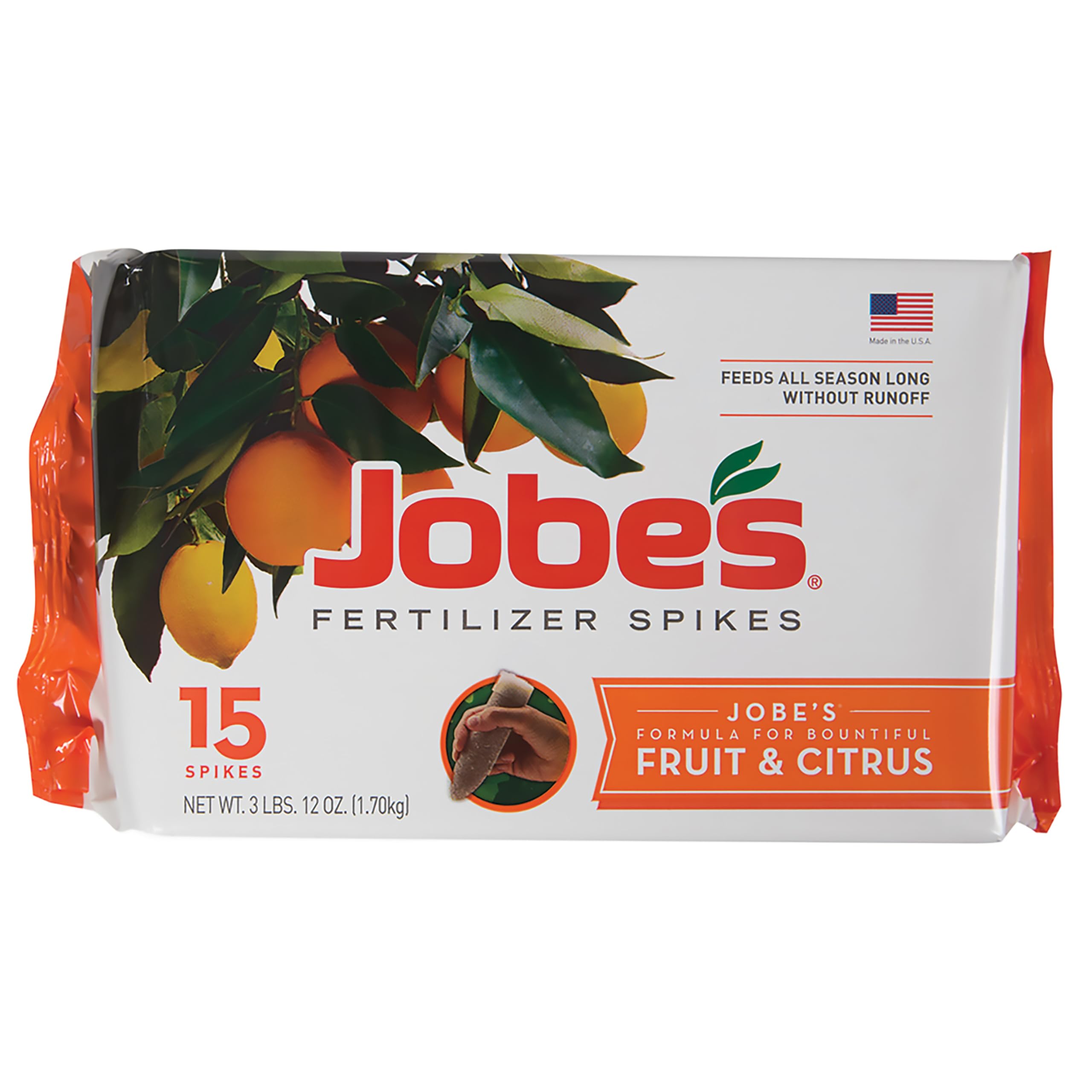
9-12-12 slow-release spikes designed to keep fruit and citrus trees fed all season long.
Why I picked it: Season-long slow release and measured nutrient dosing that revived a struggling tree in my yard.
Best for: Trees that need steady, long-term feeding without frequent attention.
A practical option when you want season-long nutrition and easy placement.
Pros
- Season-long slow release
- Measured nutrients reduce overfertilizing risk
- Easy insertion around the dripline
- Formulated for fruit, citrus, and nut trees
Cons
- Can require a pilot hole in hard or sandy soil
- Less convenient for containers
My take
I used Jobe's spikes on a loquat and an older orange tree that were struggling, and both showed clear improvement a few months after application. The 9-12-12 formula offers steady feeding that seems to steady vigor without flash growth.
Insertion is straightforward around the dripline, though in very sandy or compacted soil I make a small pilot hole with a screwdriver or trowel to avoid breaking the spike. Once in place the slow-release action lasts through the season, which I appreciate on larger specimens.
Because the spikes meter nutrients below the surface, I’ve seen less wasteful runoff and a cleaner installation compared with surface-applied granules. I treat Jobe’s spikes as my go-to when I need a reliable, low-touch feed for trees that require regular nutrition.
3. Miracle-Gro Shake 'N Feed Citrus Plant Food – Best for Containers & Long-Lasting Feed
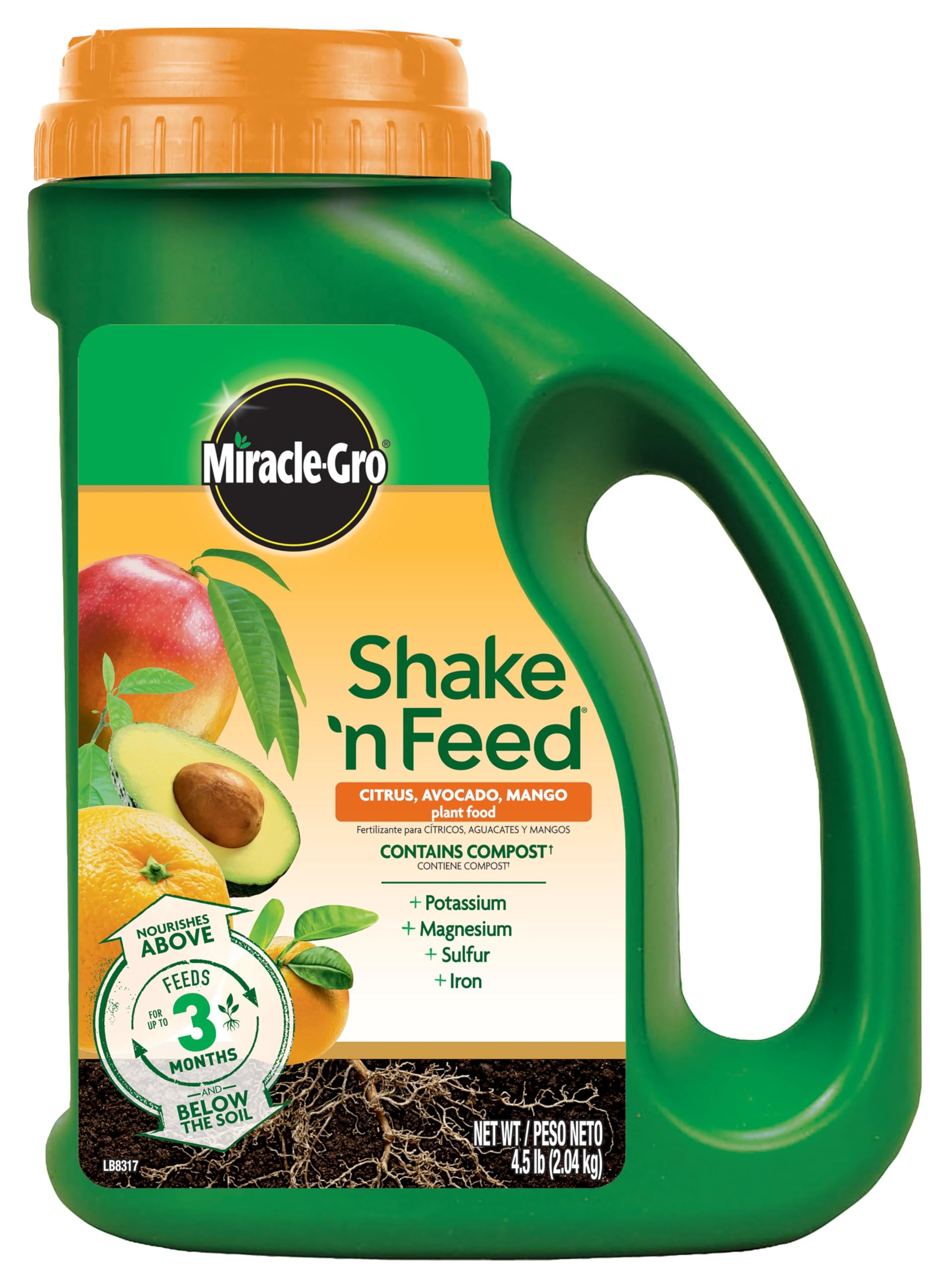
Slow-release granular formula with added potassium, magnesium, sulfur, and iron; feeds up to three months.
Why I picked it: Broad soil coverage and added micronutrients that corrected deficiencies in my potted citrus.
Best for: Potted citrus, avocado, and mango plants or gardeners who prefer periodic surface applications.
Midrange option that pays off with quarterly applications instead of weekly feeding.
Pros
- Feeds up to three months
- Includes potassium and micronutrients
- Works for in-ground and container plants
- Easy surface application
Cons
- Needs reapplication quarterly
- Must avoid contact with trunk and foliage during application
My take
I use Shake 'N Feed on my potted lemons and container avocados because the formula includes potassium, magnesium, sulfur, and iron—nutrients I’ve found important on container specimens.
Application is straightforward: I shake it onto the soil within the branch spread, work it into the top inch or two, and water. My Meyer lemon began blooming just days after an application, which convinced me to keep it in my regular rotation.
This product feeds for about three months, so I reapply quarterly. For gardeners who don’t want to deal with spikes or frequent liquid feedings, this granular approach hits a good balance between convenience and consistent nutrition.
4. Jobe's Organics Fruit & Citrus Granular Fertilizer – Best Organic
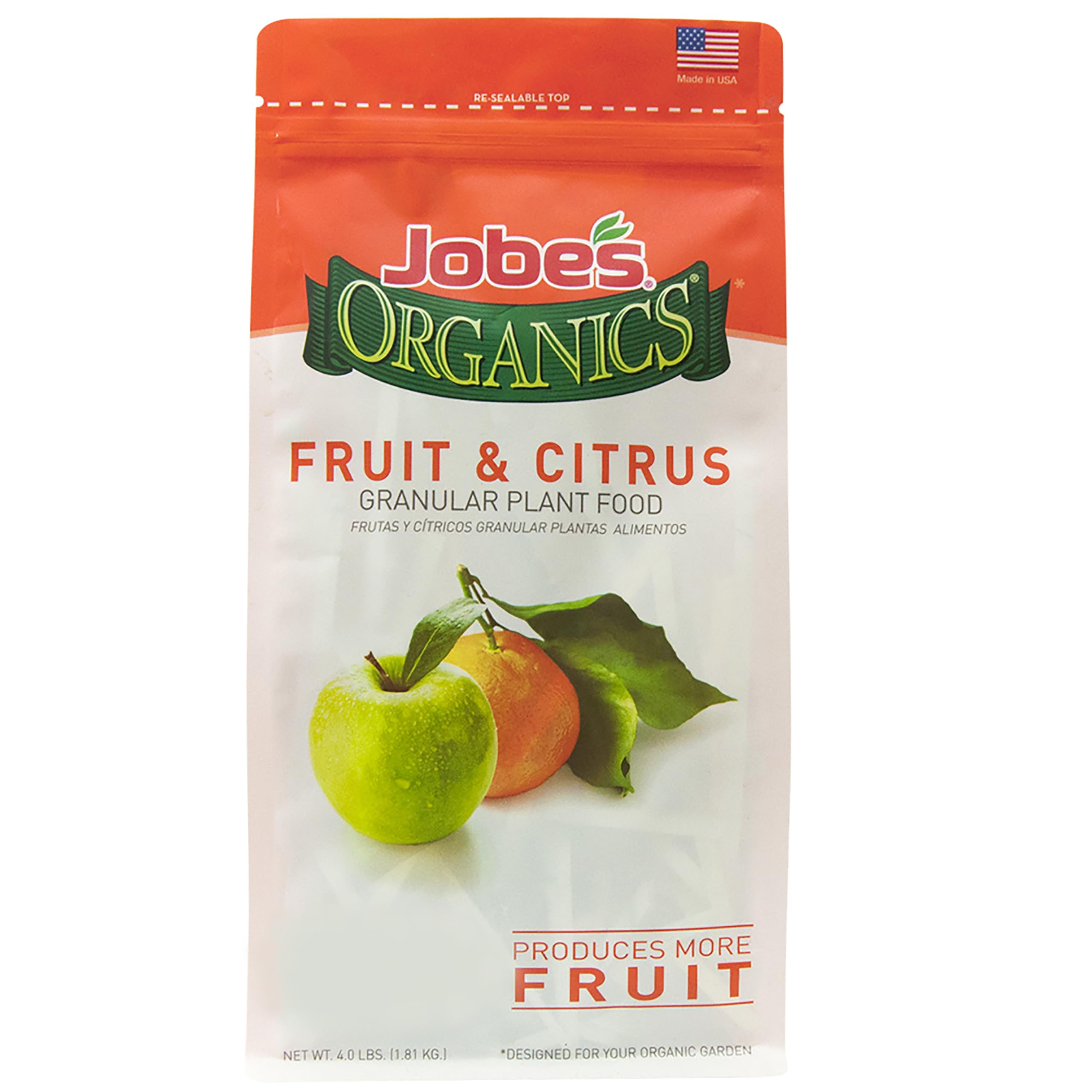
OMRI-listed organic granular fertilizer with a 3-5-5 NPK, suited for certified organic gardening.
Why I picked it: OMRI listing and organic formula that improves soil biology while feeding fruit trees.
Best for: Growers focused on organic practices and building long-term soil health.
Good organic value; pay for certified organic ingredients and soil benefits.
Pros
- OMRI listed for organic gardening
- Supports soil biology
- Safe for use around kids and pets
- Useful on a range of fruit trees
Cons
- Strong initial odor
- Requires repeat applications every 4–8 weeks
My take
I use Jobe’s Organics when I want to prioritize soil health and organic certification. The 3-5-5 formula is gentler and focuses on long-term vigor rather than fast, flashy growth.
It’s definitely stinky at first—something to keep in mind if you’re feeding potted plants indoors or in tight spaces. Despite the smell, my lime and lemon trees responded well with greener leaves and steady new growth after monthly feedings during the season.
Because it’s OMRI listed, I rely on this granular blend when organic inputs matter. I follow the label and apply every 4–8 weeks as needed; the ongoing boost to the soil microbiome is the main reason I keep a bag on hand.
How I Choose Citrus Fertilizer
Key considerations before you buy
I weigh nutrient needs, release type, and application method before I choose a fertilizer for citrus. Matching the product to your tree size and whether it’s in-ground or in a pot makes a big difference in results.
I also factor in how much time I want to spend feeding. Spikes are the lowest-effort option for established in-ground trees; granular and shake-and-feed formulas give broader soil coverage and are often better for containers. Organic products prioritize soil biology and certification when that matters to me.
- Check the NPK: citrus benefit from balanced NPK and added potassium.
- Choose release profile: spikes (seasonal), slow-release granules (quarterly), organics (regular but soil-friendly).
- Match format to planting: use spikes for established in-ground trees; use granules or shake-and-feed for containers.
- Follow spacing: place spikes around the dripline; spread granules evenly under the branch spread.
- Avoid trunk contact: keep fertilizer off trunk and foliage to prevent burn; water after application.
Frequently Asked Questions
How often should I apply spikes versus granular feed?
I apply spikes twice a year—early spring and mid-fall—while slow-release granules like Shake 'N Feed I reapply about every three months. Organic granulars I usually apply every 4–8 weeks during the growing season.
Can I use spikes in container citrus?
I generally avoid spikes in small pots because they’re sized for in-ground root zones. For containers I prefer Shake 'N Feed or measured granular organics that I can mix into the potting soil or sprinkle on the surface.
What NPK should I look for on citrus fertilizer?
I look for a balanced formula that includes sufficient potassium; many citrus-focused products fall in the mid-range for nitrogen with extra phosphorus and potassium to support fruiting. Micronutrients like magnesium and iron are also helpful if you see deficiency symptoms.
Are organic fertilizers safe around pets and kids?
I choose OMRI-listed organic options when safety and certification matter. Even so, I keep pets and kids away until granular or organic material is watered in and incorporated, because strong smells can attract animals.
Final Take
I lean toward spikes for low-effort, targeted feeding on established in-ground citrus, and I pick Shake 'N Feed for containers or when I want quarterly maintenance.
When organic practices are a priority, I rely on Jobe’s Organics to build soil health even if it needs more frequent applications. Choose the format that matches your trees, schedule, and gardening philosophy, and follow label directions for the best results.
