
I tested grow bags from compact 5-gallon packs to heavy 40-gallon containers. Here are the ones I keep coming back to for potatoes, from small harvests to big, bushy plants.
I grow potatoes in containers every season, so I’ve tried a wide range of fabric pots to see what actually works in real gardens.
This roundup focuses on durability, drainage, handles, and the right sizes for potato harvests so you can pick the best bag for your space and goals.
I tested options from value bulk packs to extra-large fabric pots to cover everything from small patio crops to big in-ground substitutes.
I evaluated bags by fabric weight, handle construction, drainage, and practical size for potatoes — from quick, portable 5-gallon bags to heavy-duty 40-gallon planters for large tuber yields.
1. VIVOSUN 5 Gallon Grow Bag – Best Overall
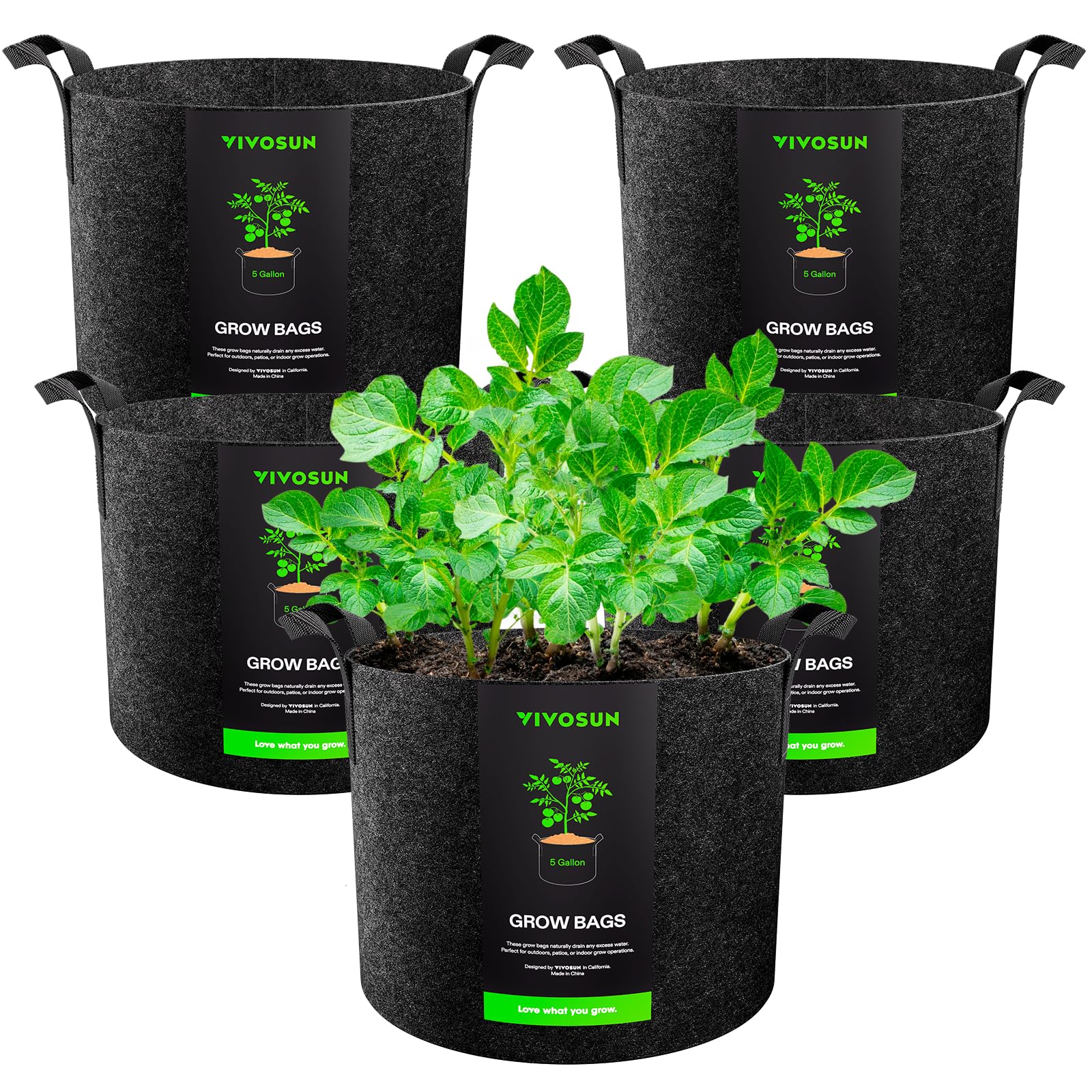
A reliable, well-stitched 5-gallon fabric bag that balances durability and portability for small potato plantings.
Why I picked it: Stitched, reinforced handles and 300g fabric give dependable strength and breathability.
Best for: Small to medium potato crops and easy seasonal storage.
Excellent value for a sturdy multipack.
Pros
- Thick 300g nonwoven fabric
- Reinforced serger-stitched handles
- Good drainage and aeration
- Lightweight and portable
- Reusable across seasons
Cons
- Smaller than some expect
- Needs more frequent watering in heat
My take
I use VIVOSUN grow bags when I want a no-fuss container that handles regular movement. The 300g fabric feels robust and breathes well, so my potato roots didn’t circle and stayed healthy.
The handles are actually useful — they’re sewn on with a serger stitch rather than just being a fabric continuation, so I could move filled bags without worrying about the straps tearing.
Drainage with these bags is consistent; excess water doesn’t pool and the soil dries evenly, which reduces rot risk. At the end of the season I fold them flat, hose them off, and pack them away for next year.
2. JERIA 10 Gallon Grow Bag (12-Pack) – Best Value (Bulk)
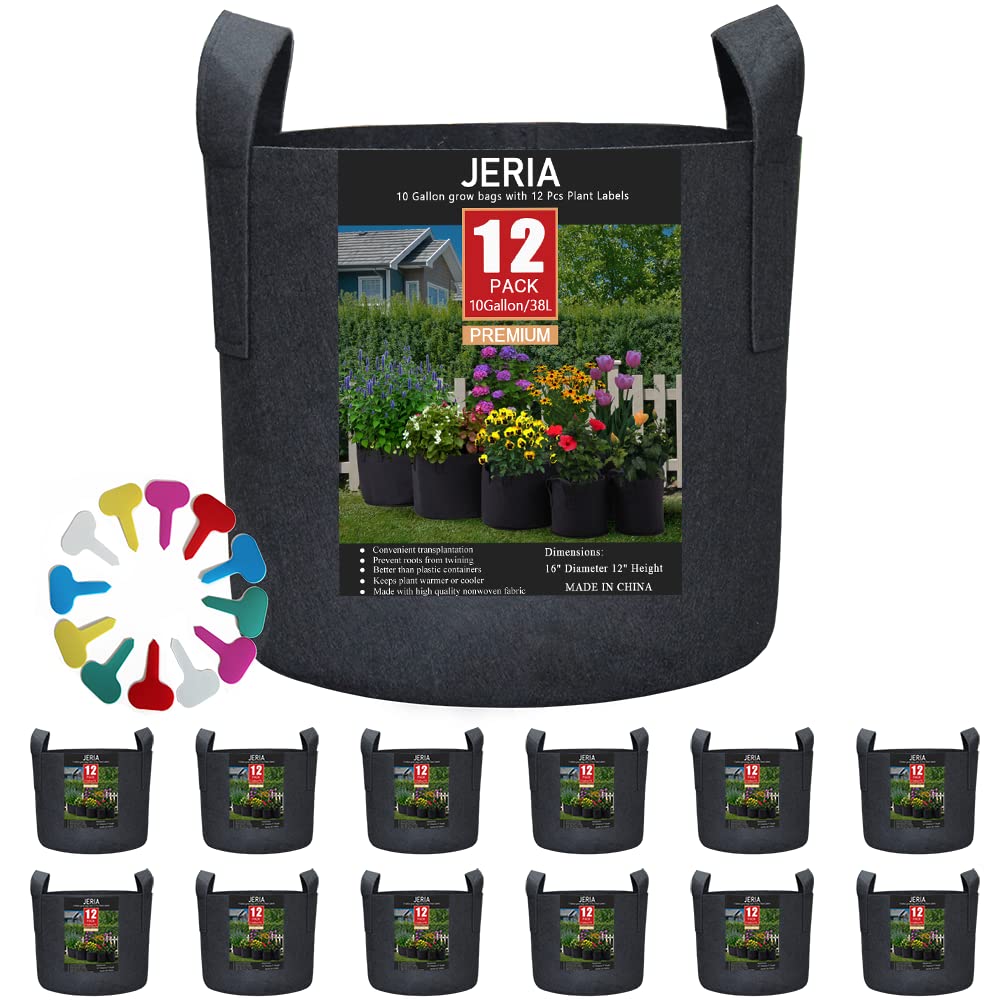
A true 10-gallon bulk pack with labels — ideal when you need a lot of consistent containers for potatoes.
Why I picked it: Quantity and accurate 10-gallon dimensions make planning large runs simple.
Best for: Gardeners planting many potato plants or rotating crops in containers.
Smart bulk option for mass planting.
Pros
- 12-pack with plant labels
- True 10-gallon dimensions
- Durable nonwoven fabric
- Quick drainage
- Foldable for storage
Cons
- Heavy to move when full
- Requires careful watering in heat
My take
When I needed multiple bags for a large potato patch, the JERIA 12-pack simplified layout and crop rotation. Each bag measures about 16" diameter by 12" high, which gives roots room to bulk up.
The fabric balances breathability and structure; I moved filled bags occasionally and the handles held up when I lifted carefully.
Because these are 10-gallon containers, they hold a lot of soil and water — plan how you’ll move them or position them where you want them to stay for the season.
3. Gardzen 10 Gallon Grow Bag (10-Pack) – Best for Durability
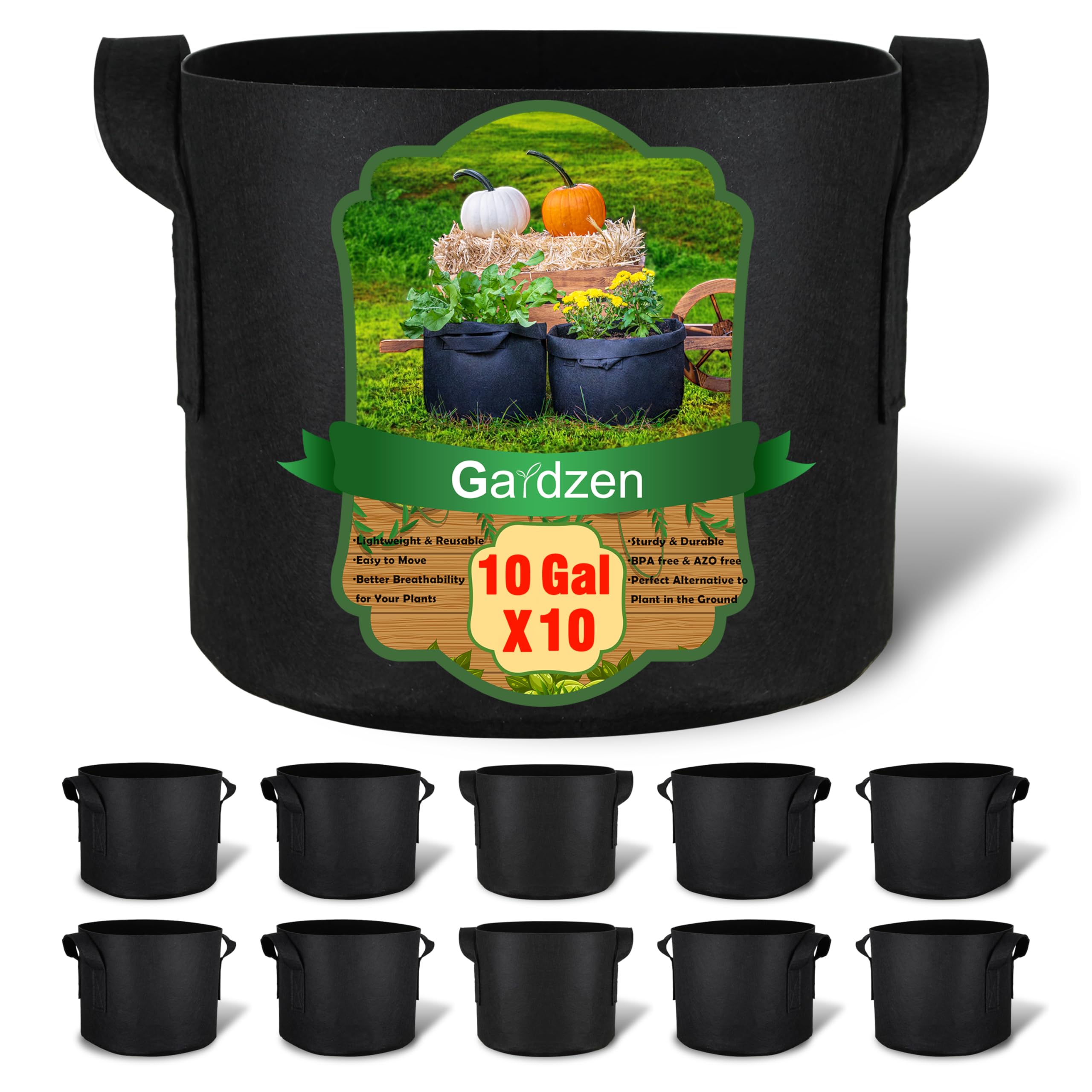
A sturdy 10-gallon option built for repeated seasons and tougher handling.
Why I picked it: Double-stitched handles and a consistent construction that lasted through repeated moves.
Best for: Growers who reuse bags year after year and need dependable construction.
Midrange option with long-term value.
Pros
- Washable and reusable
- Double-thick, double-stitched handles
- Good aeration for roots
- Accurate sizing
Cons
- Can require daily watering in intense sun
- Tough to lift when fully loaded
My take
I’ve put Gardzen bags through multiple seasons and they keep their shape. The fabric has a pleasant hand feel and the stitching on the handles is reinforced, which makes a real difference when moving heavy, soil-filled pots.
Aeration and drainage are excellent; the root ball stays healthy and avoids circling, which I want for tuber development. If you garden in hot climates, I paid closer attention to watering frequency, as the bags do dry faster than rigid pots.
For durability and reuse, these have been one of my go-to choices when I’m planting potatoes and other heavy-feeding vegetables.
4. Gardzen 5 Gallon Grow Bag (20-Pack) – Best for Small Crops
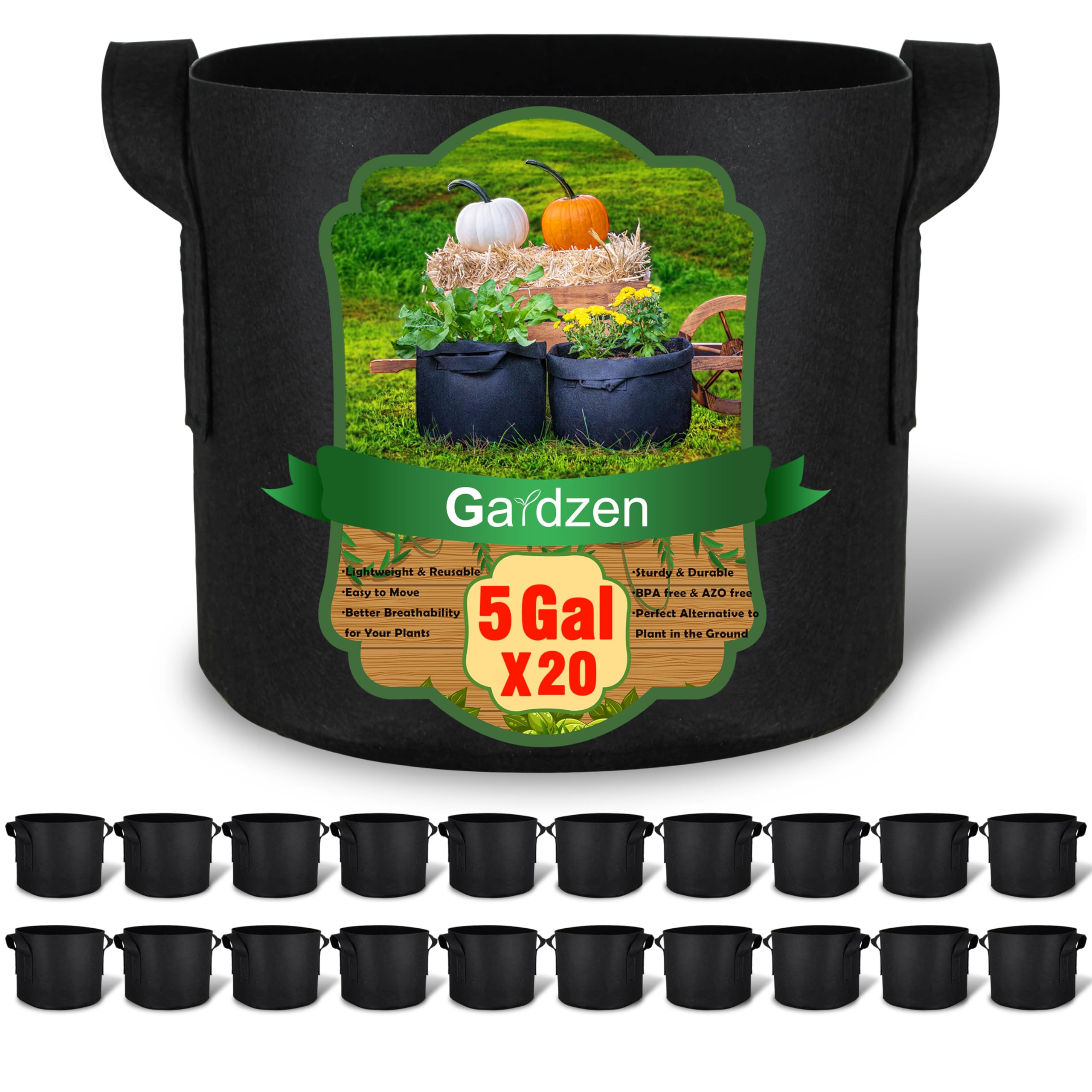
A large-count 5-gallon pack that’s perfect for massing small potato plants or side vegetables.
Why I picked it: Quantity and a three-year warranty make it easy to outfit a whole patio or bed.
Best for: Cherry potatoes, small russets, and row-style container setups.
Great for planting multiple small crops affordably.
Pros
- Large 20-pack quantity
- Comes with a 3-year warranty
- Lightweight and storable
- Double-stitched handles
Cons
- Dries out faster than larger bags
- Limited capacity for large tubers
My take
I use the 5-gallon Gardzen bags when I want a tidy, space-efficient run of potato plants. They’re easy to handle and store when empty, and the pack gives me consistency across dozens of pots.
The double-stitched handles are reassuring when I move them, and the fabric drains well. For larger harvest goals I opt for a bigger bag, but these are excellent when I’m planting many small potatoes or running a compact container row.
5. 247Garden 40 Gallon Grow Bag – Best for Large Plants
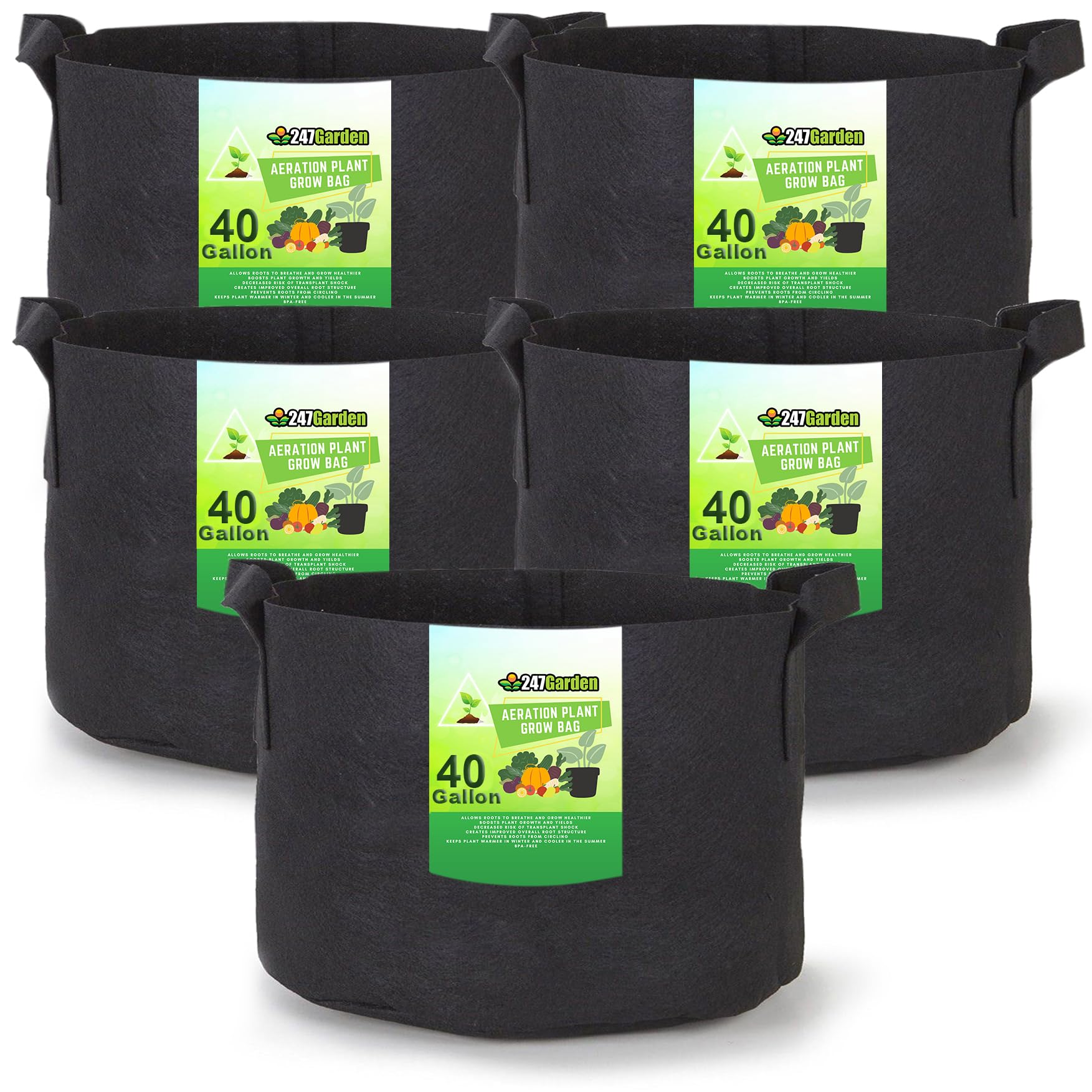
A heavy-duty 40-gallon bag with thick 260 GSM fabric built for big plants and large potato harvests.
Why I picked it: Thick 260 GSM material and transferable design support large root systems and transplanting.
Best for: Tall plants, trees, and big potato crops needing deep soil volume.
Premium large-size option for big yields.
Pros
- Thick 260 GSM fabric
- Transferable to ground
- Good temperature buffering
- Stands open for easy filling
Cons
- Extremely heavy when full
- Very porous—drains quickly
My take
When I planned a large potato bed in containers, the 247Garden 40-gallon bag gave the deep soil column I needed. The 260 GSM fabric feels substantial and the construction stood up to repeated fills and moves.
One feature I appreciate is the transferable nature — you can set the bag in place and, if needed, set the plant and bag into the ground later with minimal transplant shock.
These aren’t casual carry bags; once filled they’re heavy, so place them where you want them or prepare a dolly. For big potatoes or small trees, the volume and insulation really benefit growth.
How I choose grow bags for potatoes
Key factors I look for
I focus on fabric weight, handle strength, and size when choosing a grow bag for potatoes.
Fabric GSM tells me how durable and insulating the bag will be — higher numbers mean thicker, longer-lasting material.
Handles and stitching determine whether I can move filled bags safely without tearing.
- Size: 10–20 gallons fits most potato varieties; 5 gallons works for small runs.
- Fabric weight: 200–300 GSM is good; 260 GSM or above is best for large plants.
- Drainage: Nonwoven fabric should let excess water escape and keep roots aerated.
- Handles: Look for double-stitched or serger-stitched straps for safe lifting.
- Reusability: Washable fabric and strong seams extend a bag’s life.
Practical tips from my experience
I position larger bags where I won’t need to move them often. Smaller bags are great if I plan to shift plants for sun or storage.
Expect fabric bags to dry faster than plastic pots — I water more frequently during heat waves.
If you expect heavy harvests, choose a 20–40 gallon bag to give tubers room to expand.
- Group small bags together to simplify irrigation.
- Use plant labels included with bulk packs to keep varieties organized.
- Place bags on a breathable surface to prevent bottom sogginess.
Frequently Asked Questions
What grow bag size do I need for potatoes?
I usually pick 10–20 gallons for a standard potato plant; 5 gallons works for small varieties or compact spaces, and 40 gallons is ideal if I’m growing very large plants or want a big single harvest.
How often should I water potatoes in fabric grow bags?
Fabric pots dry faster than rigid containers, so I check moisture daily in hot weather and water more often. The bags drain quickly, which I prefer to avoid soggy soil.
Can I reuse grow bags year after year?
Yes. I wash sturdy fabric bags and air dry them between seasons. Thicker fabrics and reinforced stitching last longer through multiple plantings.
Are handles reliable for moving full bags?
Handles that are serger-stitched or double-stitched have held up for me. Even so, I lift filled bags carefully or use a dolly for very large sizes.
Final Take
I match the bag to the harvest: pick 5-gallon packs for many small plants, 10-gallon bags for most potato varieties, and 40-gallon containers when I want a heavy yield.
For everyday use I rely on reinforced handles and higher-GSM fabrics; they make planting, moving, and reusing bags straightforward.
If you want a single versatile pick, I reach for a well-stitched 10-gallon bag. For scale, choose a bulk pack or a large 40-gallon option depending on your space and harvest goals.
