
I tested a range of compact wood stoves for backpacking, car camping, backyard cooking, and hot-tent use. Here are the small, portable stoves I trust for fast boils, durable cooking platforms, and reliable heat in the bo
I spent time using these compact wood stoves in real situations—beach cookouts, car-camping weekends, cold-weather hot-tent sessions, and short backpacking runs. Each stove earned a spot here because it solved a specific problem: extreme heat, weight limits, packability, or reliable long burns.
My goal was simple: find stoves that actually cook well and are realistic to carry or store. Below I compare features I test every time—materials, burn efficiency, setup, fuel flexibility, and how easy the units are to clean and pack away.
I compared these stoves for weight, materials, burn style (rocket vs. box), and real-world performance so you can match a stove to how you camp—light-and-fast hikers, car campers who want power, or hot-tent users who need steady heat.
1. REDCAMP Folding Stainless Steel Camp Stove – Best Compact Stove
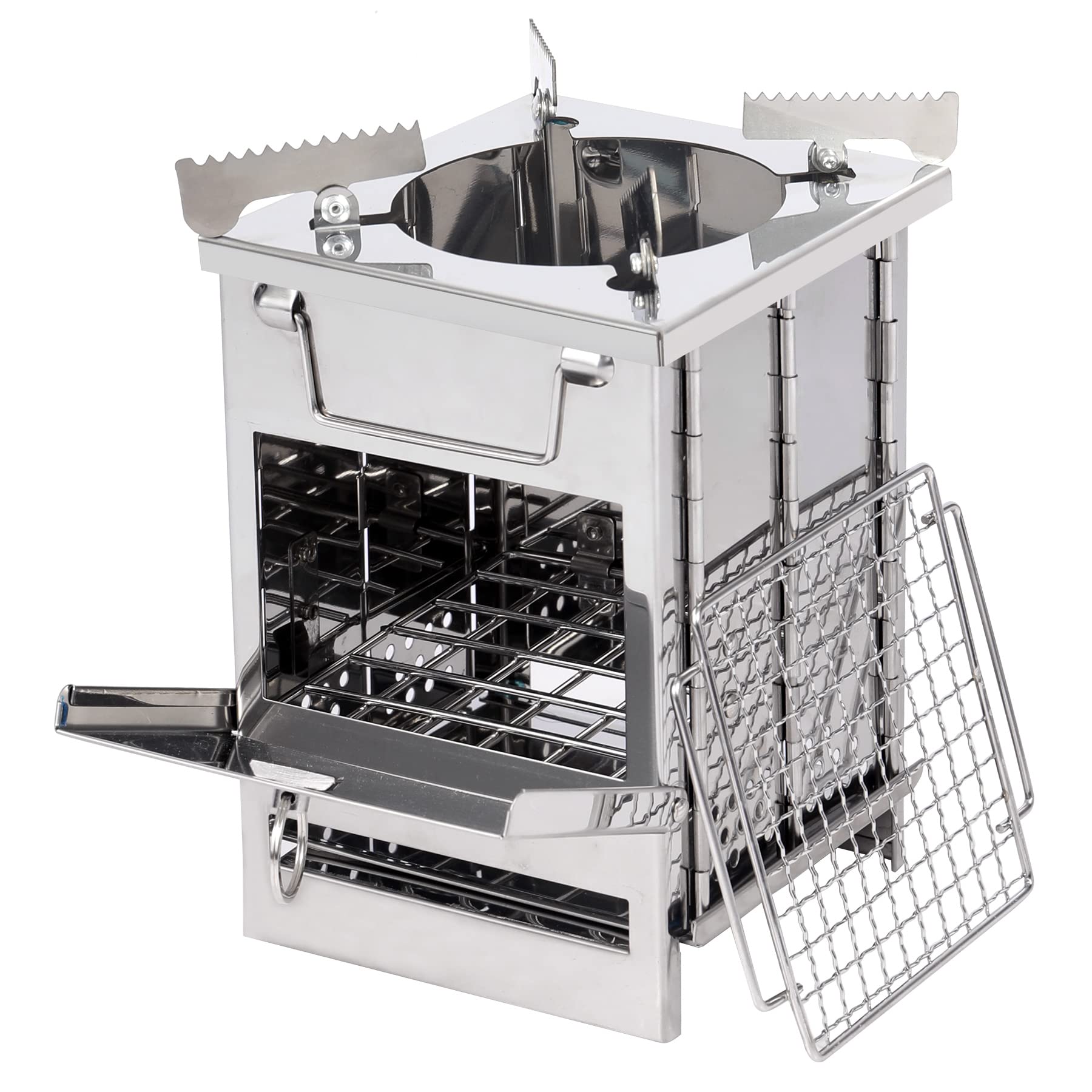
A pocketable stainless-steel folding stove that packs small, cooks reliably, and doubles as a tiny grill or fire pit.
Why I picked it: I chose it for pocketable size and multi-fuel flexibility—great when space is tight.
Best for: Motorcycle or short car-camping trips and emergency kits.
Budget-friendly choice for two-person cooking.
Pros
- Folds down flat for easy storage
- Works with twigs, charcoal, or alcohol burners
- Stainless steel cleans up quickly
- Includes carrying bag
Cons
- Small cooking surface
- Some hinge parts can be fragile
- Surfaces get very hot
My take
I carried this little stove to the beach and in windy conditions it performed far better than I expected—the folding body shields the fire enough to light with a simple lighter and keep a steady flame.
The grill surface is small but perfectly sized for two people or a single skillet. It cools down fast after use, and the stainless finish wipes clean without fuss.
A few notes from use: the latch area and certain pins feel less beefy than heavier stoves, so I handle folding and unfolding deliberately. Also, the oven-door style latch gets hot—I always use gloves or tuck the handle down to lock it.
If you want a compact, inexpensive cooker that doubles as a tiny firepit, this is one of the most practical options I’ve carried.
2. Steel Rocket Stove for Camping – Best for Fast Boil
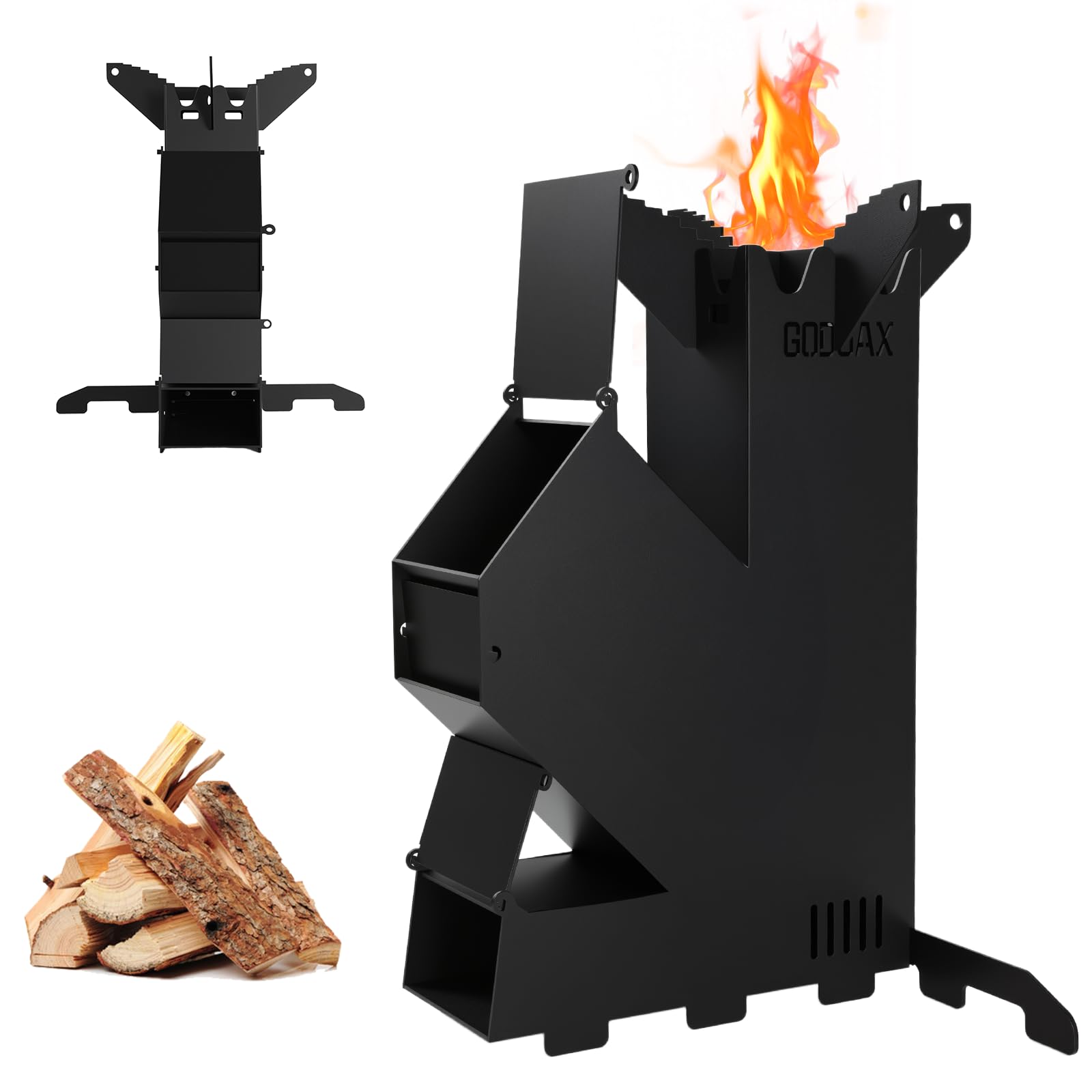
A true rocket-style stove built from thick steel that channels air for rapid, efficient combustion and high heat output.
Why I picked it: I picked it for powerful, fast-boil performance and proven rocket airflow design.
Best for: Car camping, fishing trips, and basecamp cooking where fast heat matters.
Midrange, heavy-duty build for reliable performance.
Pros
- Chimney effect produces intense flame
- Thick steel structure resists warping
- Easy ash removal during use
- Stable platform holds heavy pots
Cons
- Heavier and bulkier to carry
- Too large for long-distance backpacking
My take
I used this rocket stove to boil water in under five minutes on my first outing—once the fire got going it pushed a huge amount of heat with a very small fuel load.
Assembly is straightforward: the pot holder and anti-tip bar lock in place fast, and the tilted ash channel makes topping up wood clean and simple.
This stove feels like a small workhorse. It’s stout enough to support heavy pots and steady cooking for multiple people, but it’s clearly a car-camp or basecamp tool, not a pack-on-your-back choice.
For anyone who wants a compact unit that outperforms tiny folding stoves in speed and sustained heat, this is the one I reach for when weight isn’t the highest priority.
3. Lineslife Cast Iron Camp Stove – Best Heavy-Duty Cast Iron
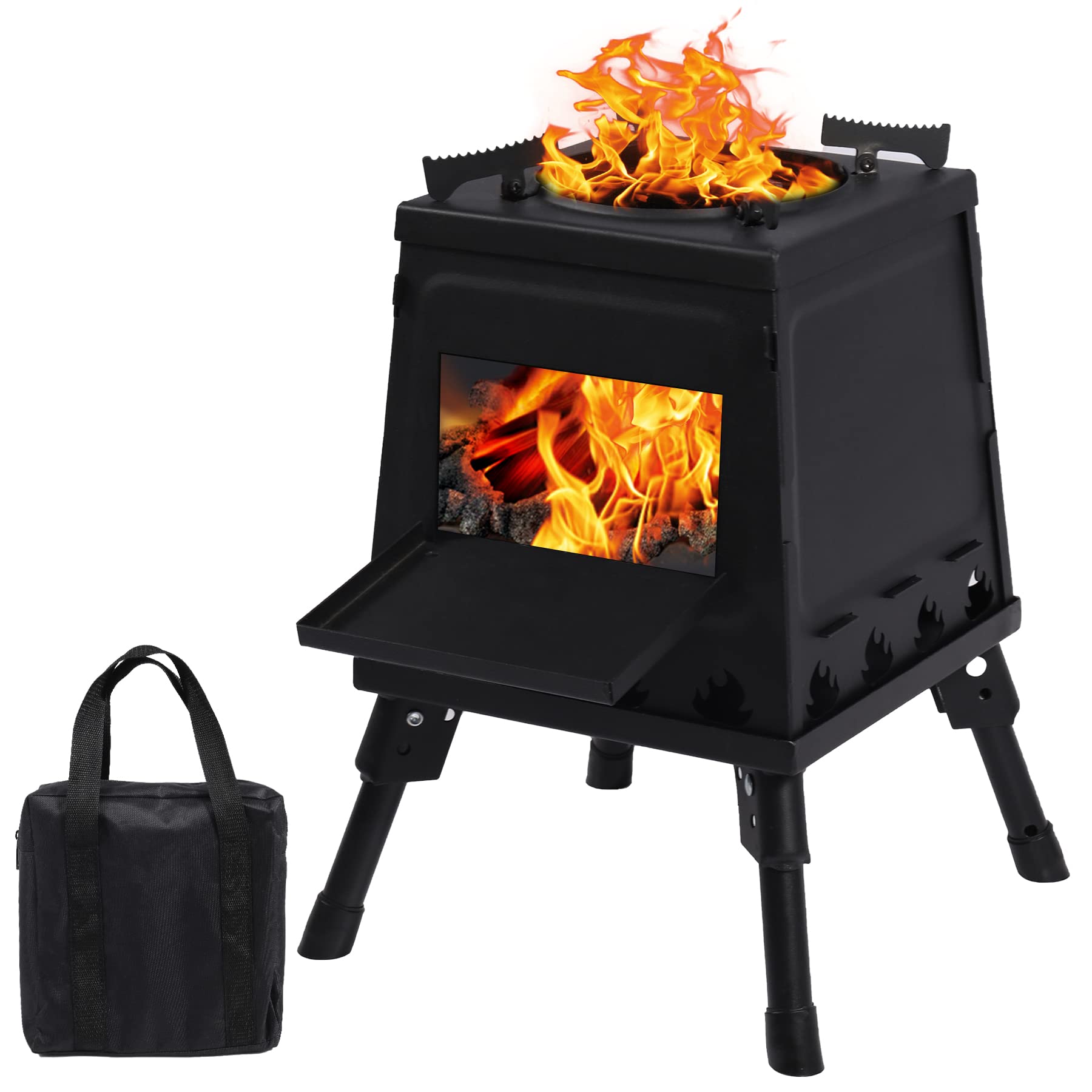
A sturdy cast-iron stove with lots of ventilation and adjustable pot holders—built to last and to hold heat well.
Why I picked it: I wanted a durable, steady burner that holds heat and stands up to repeated use.
Best for: Semi-off-grid use, backyard cooking, and anyone who values longevity over ultralight weight.
A bit heavier but delivers long-term value.
Pros
- Robust cast-iron construction
- Long burn time per load
- Adjustable pot holders
- Includes carrying bag and tools
Cons
- Heavier than stainless alternatives
- Initial setup has a short learning curve
My take
I’ve used this cast-iron stove for boiling water, simple meals, and quick heat while semi-off-grid—the weight is noticeable but it rewards you with stability and excellent heat retention.
The 16 air vents make the burn efficient even on breezy days, and the combustion chamber will happily run for 40–60 minutes on a filled load of small wood.
Setup took a minute the first time but now I can assemble it in short order. I carry a small fire mat beneath it when I use it on a surface that needs protecting.
If I want something that behaves more like a little solid cookstove than a backpacking toy, this is the one I reach for.
4. Zento Deals Folding Stainless Steel Stove – Best Budget
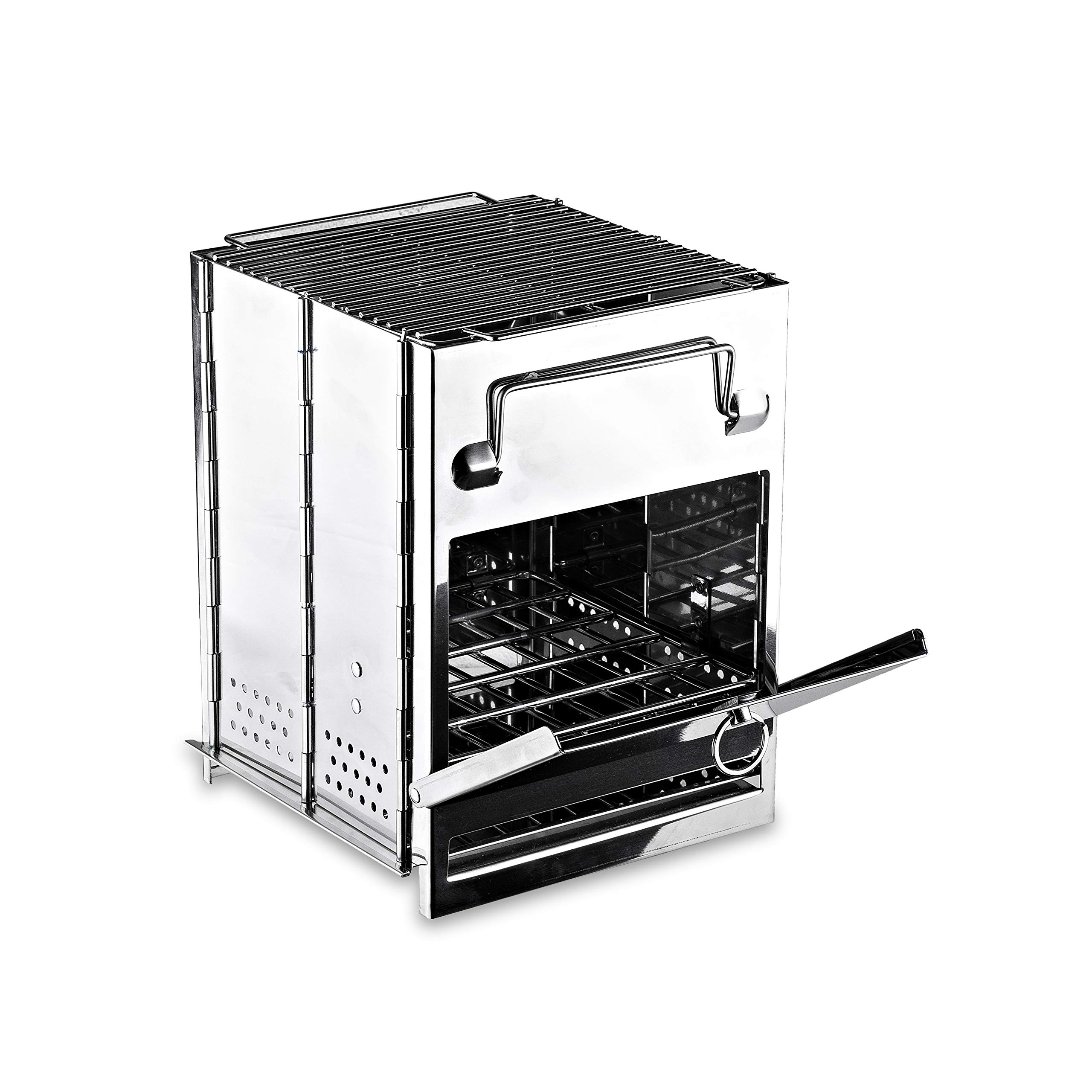
The most affordable stainless folding option I tested—lightweight and functional for short outings or as an emergency cooker.
Why I picked it: I wanted the cheapest folding stove that still delivered usable cooking performance.
Best for: Budget-conscious campers, short trips, and backup cooking kits.
Lowest-cost option among stainless folding stoves.
Pros
- Very lightweight and foldable
- Accepts various fuel types
- Stable box design for pots
Cons
- Residual protective film can be hard to remove
- Some sharp edges out of the box
My take
This stove surprised me with how robust it feels for the price—thick-gauge stainless held up to multiple 20–30 minute burns without warping.
My main frustration was the protective blue film left in tight spots; removing it took effort and I nicked my hand once on a raw edge. After cleaning that up the unit performed very well.
It’s light enough to toss in a car kit and large enough to accommodate medium pots, but I wouldn’t call it a backpacking stove for long treks.
For short trips and anyone who wants a functional stove without spending much, this is a practical pick if you don’t mind doing a little prep out of the box.
5. DANCHEL Titanium Tent Stove – Best for Hot Tents
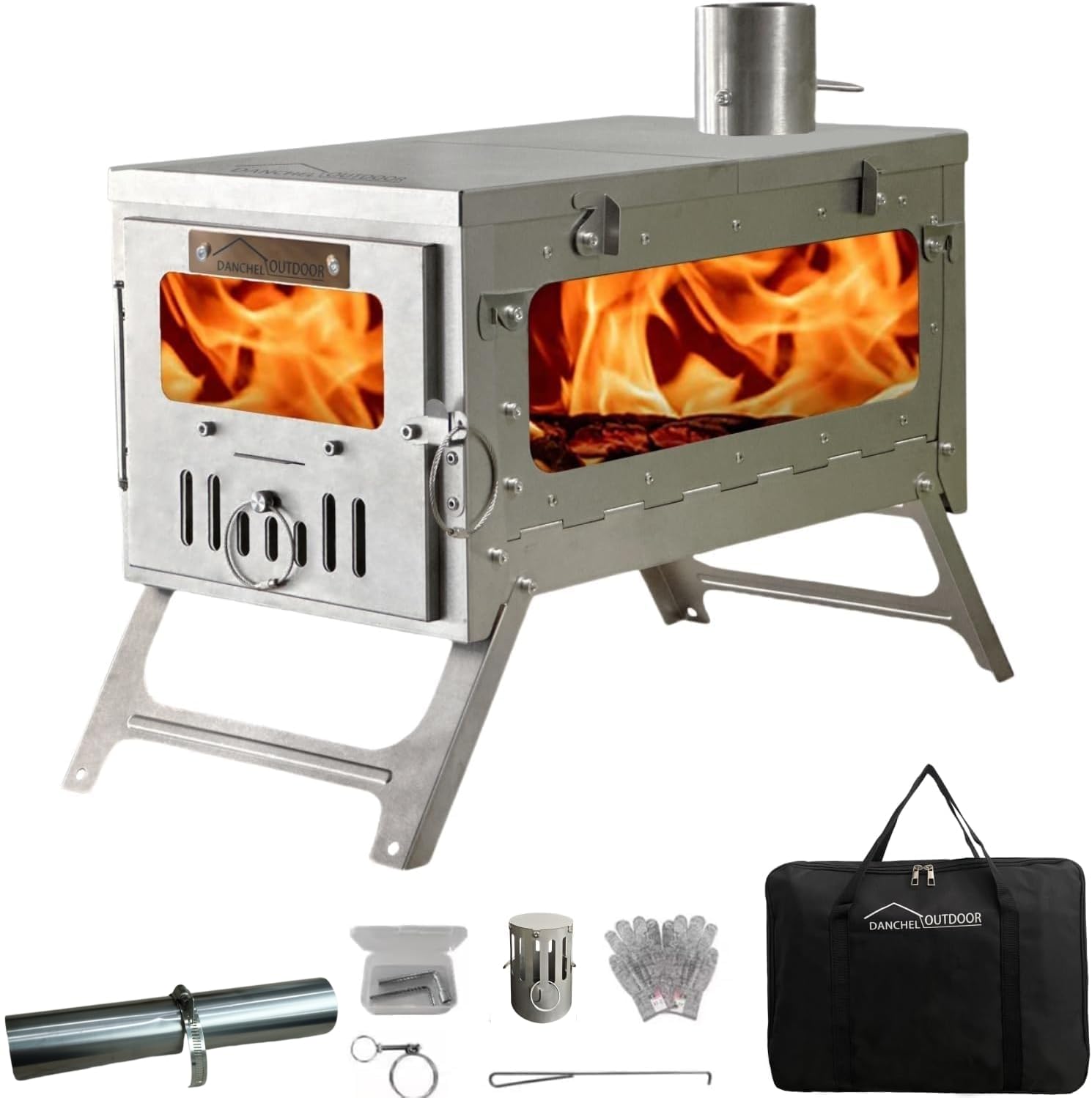
A roll-up titanium tent stove built for hot-tent use—lightweight, fast to conduct heat, and supplied with a full kit for safe tent heating.
Why I picked it: I picked it for tent heating performance and lightweight titanium construction.
Best for: Hot tents, cold-weather camping, and small-group winter trips.
Premium-material option for serious cold-weather use.
Pros
- Light titanium build for portability
- Roll-up chimney included
- Adjustable air intake and damper
- Complete kit with spark arrestor and gloves
Cons
- Thin stove pipe (design-intended)
- Requires careful chimney setup first time
My take
I used this stove inside a hot tent and watched it warm the space quickly—the titanium conducts heat fast and I had to crack a door a few times because it got surprisingly hot.
The roll-up chimney is clever and packs small, but you do want someone to help the first time you unroll and secure it. Once dialed in, the adjustable damper and intake let me control burn time and output reliably.
The package includes practical extras—gloves, spark arrestor, and a carrying bag—so I could deploy it straight away. I’ve run two-hour burns between reloads when I matched wood size to the firebox.
This is the stove I reach for when tent warmth is the priority and I want a complete kit that doesn’t take up a lot of storage space at home.
How I choose a small wood stove
Key factors I check before I buy
Weight and packability: If I’m backpacking, every ounce matters. I favor folding stainless or titanium for light loads and choose cast iron or steel when I’m car-camping and want durability.
Burn style and efficiency: Rocket stoves channel air to concentrate heat—great for fast boils. Box-style stoves hold fuel better for longer burns and steadier cooking or heating.
Materials and durability: Stainless steel resists rust and cleans easily. Cast iron holds heat and lasts, but it’s heavy. Titanium balances weight and strength but usually costs more.
- Fuel flexibility: I prefer stoves that accept twigs, charcoal, and fuel tabs so I don’t have to carry custom fuel.
- Cooking vs heating: For hot-tent use choose a stove with a chimney and spark arrestor; for cooking pick a wide, stable top that fits your pots.
- Setup and maintenance: Look for simple assembly and easy ash removal—those features save time at camp.
Safety and campsite considerations I follow
I always place stoves on a heat-resistant pad or stand and keep a safe perimeter. Even small stoves can radiate heat to the ground beneath.
Ventilation is non-negotiable. When I use any stove inside a tent, it’s a model designed for that use with a proper chimney and spark arrestor.
Regular cleaning extends stove life—cool completely, empty ash, and wipe down surfaces before packing.
- Use a spark arrestor or screen when required.
- Bring gloves for handling hot parts and pot lifters for safer cooking.
- Practice setup at home so you aren’t fumbling in the dark.
Frequently Asked Questions
Can I use these stoves inside a tent?
I only use stoves designed for hot tents—ones with a proper chimney and spark arrestor (like the titanium tent stove). Most folding or rocket stoves are for outside use; I keep them outside or in ventilated vestibaries to avoid carbon monoxide risks.
What fuel works best with small wood stoves?
I use small dry twigs, compressed wood sticks, charcoal, or a spirit burner depending on the stove. Rocket and box stoves burn small-diameter sticks very efficiently; folding stainless units will also accept small charcoal or fuel tabs.
How do I care for and store a small wood stove?
I let the stove cool fully, dump the ash, and wipe down the interior. For stainless units I remove any protective film before first use; for cast iron I lightly oil surfaces occasionally and store in a dry place to avoid rust.
Final Take
I picked these five stoves because each excels at a different job: compact cooks, high-heat rocket burners, heavy-duty cast-iron units, budget folding stoves, and a dedicated hot-tent option.
Decide what matters most to you—weight, raw heat, or tent heating—and I’ll usually recommend the stove above that matches your priorities. In my experience, carrying the right stove makes cooking and warmth easier and more reliable on any trip.
