
I tested eight practical, budget-friendly storage picks—from shoe racks and heavy-duty shelving to moving bags and bamboo organizers—and I'm sharing which ones worked best for specific rooms and needs.
I live in a compact home and I’m always looking for storage solutions that actually fit real life, not just a product photo. Over the past few months I put eight different organizers through everyday use: assembly, loading, moving, and long-term storage.
In this roundup I focus on what I use them for, how they handle weight and wear, and the simple trade-offs I ran into so you can pick the right solution for your space quickly.
I organized these options by use case—entryway and closet, garage and heavy loads, moving, kids’ toys, and drawer-level organization—so you can match capacity and materials to the spot you need to tidy.
1. Simple Houseware 3-Tier Shoe Rack – Best for Entryways
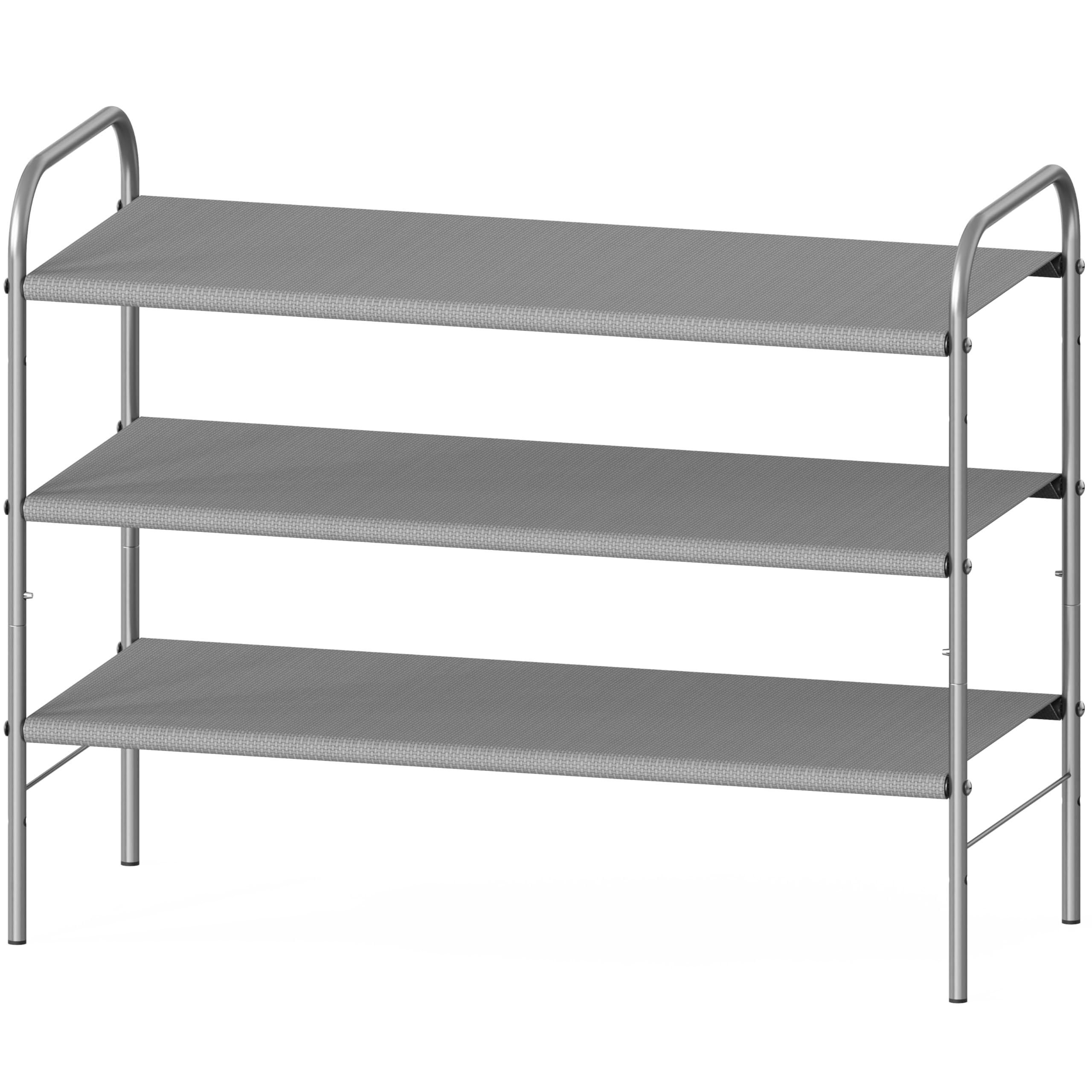
Compact three-tier shoe organizer with metal frame and washable 600D polyester shelves; configurable as two- or three-tier and holds roughly three pairs per shelf.
Why I picked it: I chose it because it’s space-saving, quick to assemble, and configurable to fit narrow closets or entryways.
Best for: Narrow closets, apartment entryways, mudrooms where floor space is limited.
Affordable, good value for basic shoe storage.
Pros
- Very compact footprint
- Removable panel for 2- or 3-tier use
- Washable polyester shelves
- Each shelf supports about 30 lbs
Cons
- Shelves feel a bit thin
- Limited width for bulky boots
My take
This shoe rack was one of the easiest pieces to assemble in my closet—just a few minutes and one person can do it. I measured beforehand and the width fit my narrow closet perfectly.
Once built it feels sturdy enough for daily use; I typically get three pairs of shoes per shelf and the shelves hold that load without sagging. The washable polyester helps with mud and dust at the front door.
If you need heavy-duty shelving or space for tall boots, this isn’t the solution. But for compact, tidy entryway storage and a low-cost setup that’s configurable, it worked well for me.
2. Amazon Basics 4-Shelf Wire Unit – Best for Heavy Loads
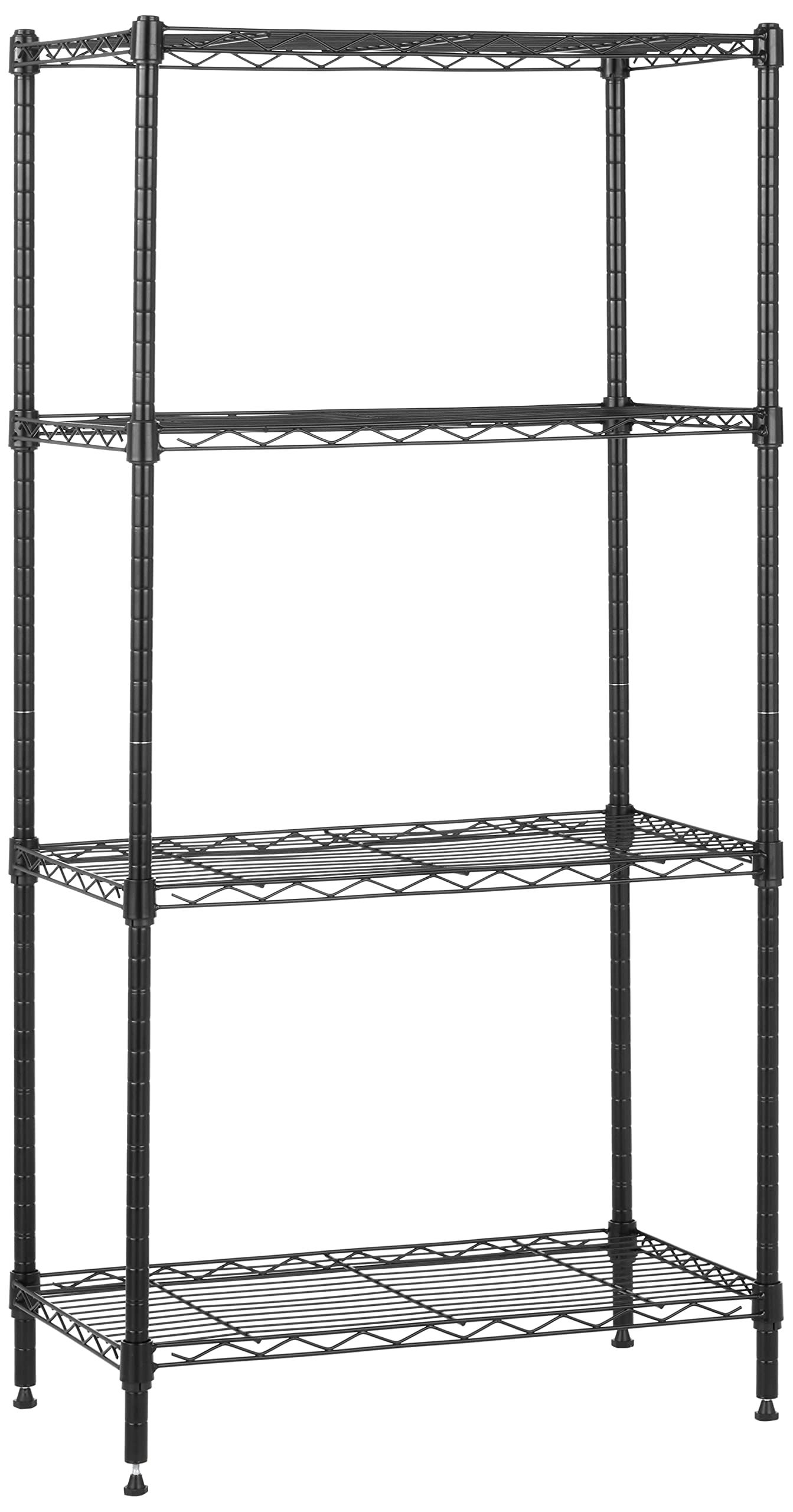
Four adjustable wire shelves built from steel; each shelf supports heavy loads and the heights adjust in one-inch increments with leveling feet for stability.
Why I picked it: I picked it because it handles heavy bins and tools while still being easy to assemble without tools.
Best for: Garages, basements, storage rooms, or anywhere you need high-capacity shelving.
A solid value for heavy-duty shelving.
Pros
- High per-shelf capacity
- Tool-free, quick assembly
- Adjustable shelf heights
- Leveling feet for uneven floors
Cons
- Wire shelves dent if mishandled
- Takes up more floor space
My take
Putting this unit together took me about half an hour and the process was straightforward. The modular poles and simple slotted shelves make layout changes painless.
Once loaded the rack feels very stable. I used it for storage bins, a few potted plants, and some toolboxes—each shelf ate the weight without a problem.
My only practical notes: inspect shelves for bends when unboxing and leave a little clearance around the unit. For a garage or utility area where capacity matters, this is my go-to.
3. VENO Heavy-Duty Moving Bags (2-Pack) – Best for Moving
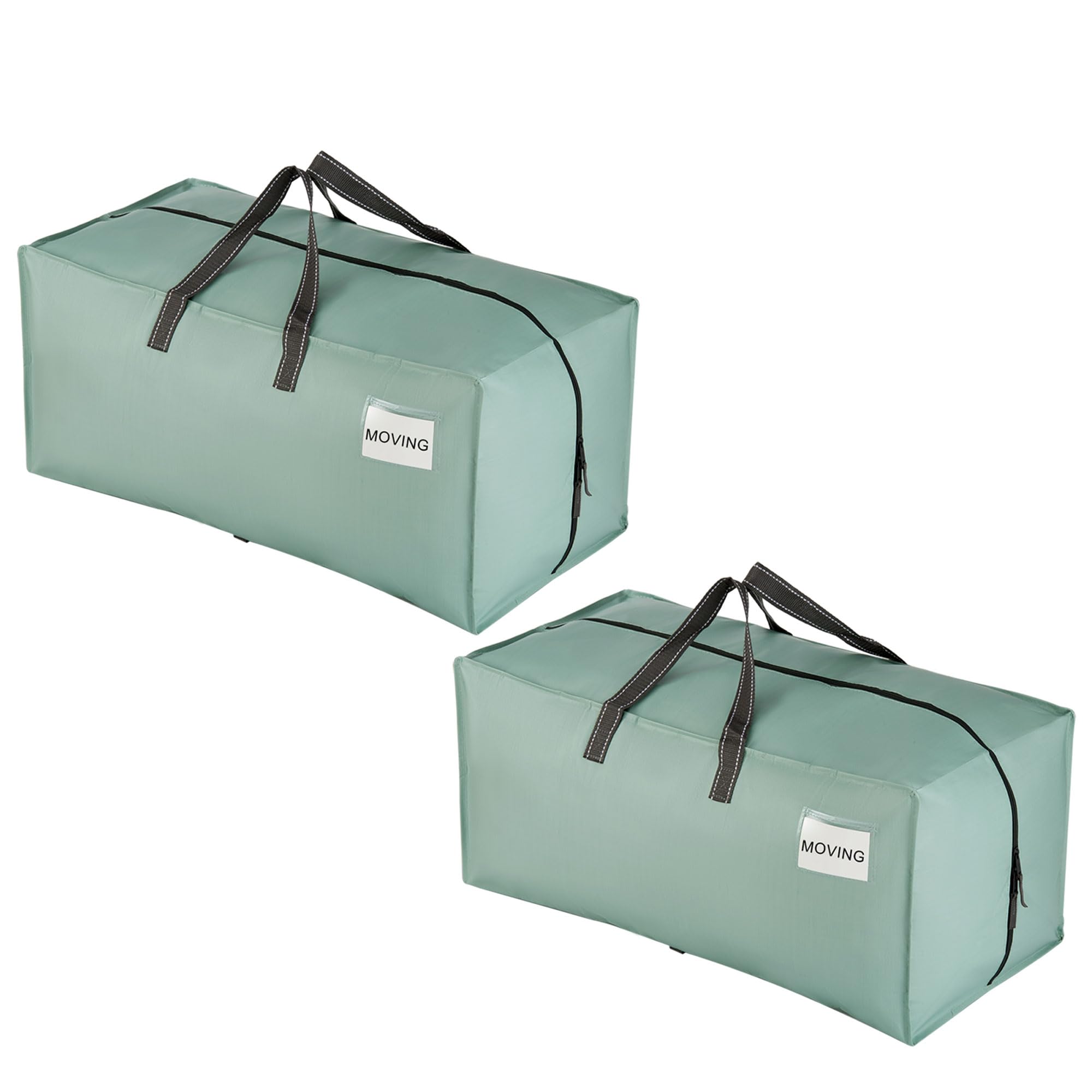
Extra-large, reinforced moving bags with backpack straps, heavy-duty zippers and handles—designed to replace bulky boxes for clothes, bedding, and dorm moves.
Why I picked it: I picked these because they carry more than a box, fold flat for storage, and the backpack straps make stairs much easier.
Best for: Moves, dorms, seasonal bedding storage, and situations where you need soft, stackable containers.
Budget-friendly alternative to moving boxes and rigid bins.
Pros
- Very large capacity
- Built-in backpack straps
- Reinforced handles and zippers
- Reusable and foldable
Cons
- Plastic material can be noisy
- Not rigid like a box
My take
I replaced many cardboard boxes with these bags during a move, and they performed better than I expected. I could fit bulky comforters and stacks of clothing into a single bag and carry them using the backpack straps.
The zippers and handles held up through multiple trips and the bags fold away when not in use, which made storing extras effortless.
They do make that typical plastic crinkle noise and won’t protect fragile items the way a rigid box would. For clothes, linens, and things that tolerate compression, they’re a big win in my experience.
4. Humble Crew 9-Bin Toy Organizer – Best for Kids
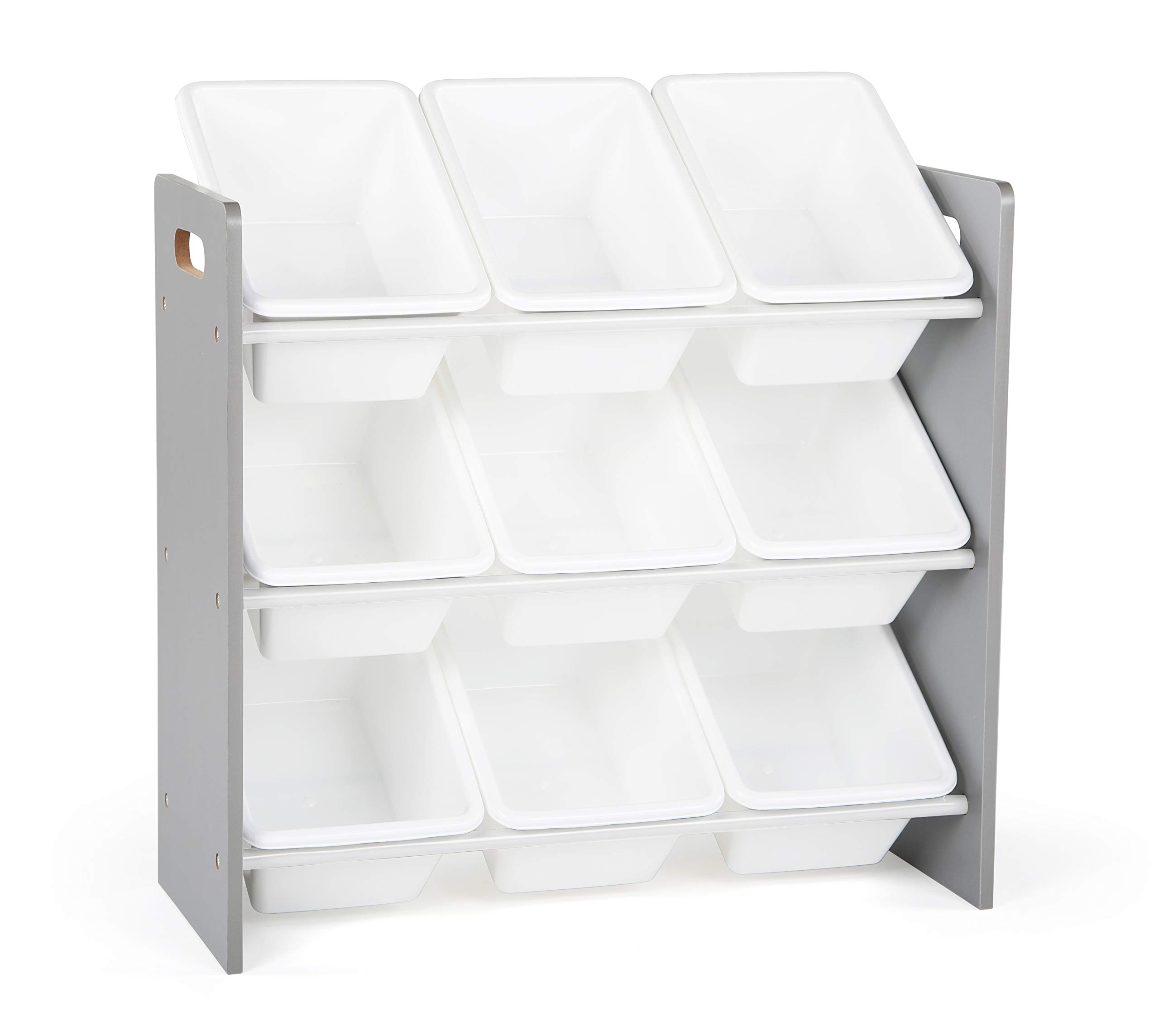
Three-tier organizer with nine removable BPA-free plastic bins and an engineered wood frame; compact footprint perfect for playrooms and classrooms.
Why I picked it: I liked how kid-height bins and removable tubs make cleanup easy and independent for little hands.
Best for: Playrooms, nurseries, preschool classrooms, and child-height storage needs.
Moderately priced for kids’ furniture and storage.
Pros
- Perfect height for children
- Nine removable bins
- Sturdy engineered wood frame
- Neutral, kid-friendly look
Cons
- Bins are small for larger toys
- Unit is compact—limited total capacity
My take
Assembly took me under 20 minutes and I had everything labeled and in place quickly. The frame feels stable and the steel dowel reinforcements give it real durability for daily toddler use.
The bins are easy to pull out and put back, which I found useful for teaching my little one to tidy up. The unit is light enough to move but heavy-duty enough that it didn’t tip when my child opened a bin.
If you need storage for big ride-on toys or oversized sets, go for a larger solution. For sorting action figures, blocks, and stuffed animals, this unit does exactly what I wanted.
5. AUJEN Expandable Silverware Organizer – Best Budget Drawer Organizer
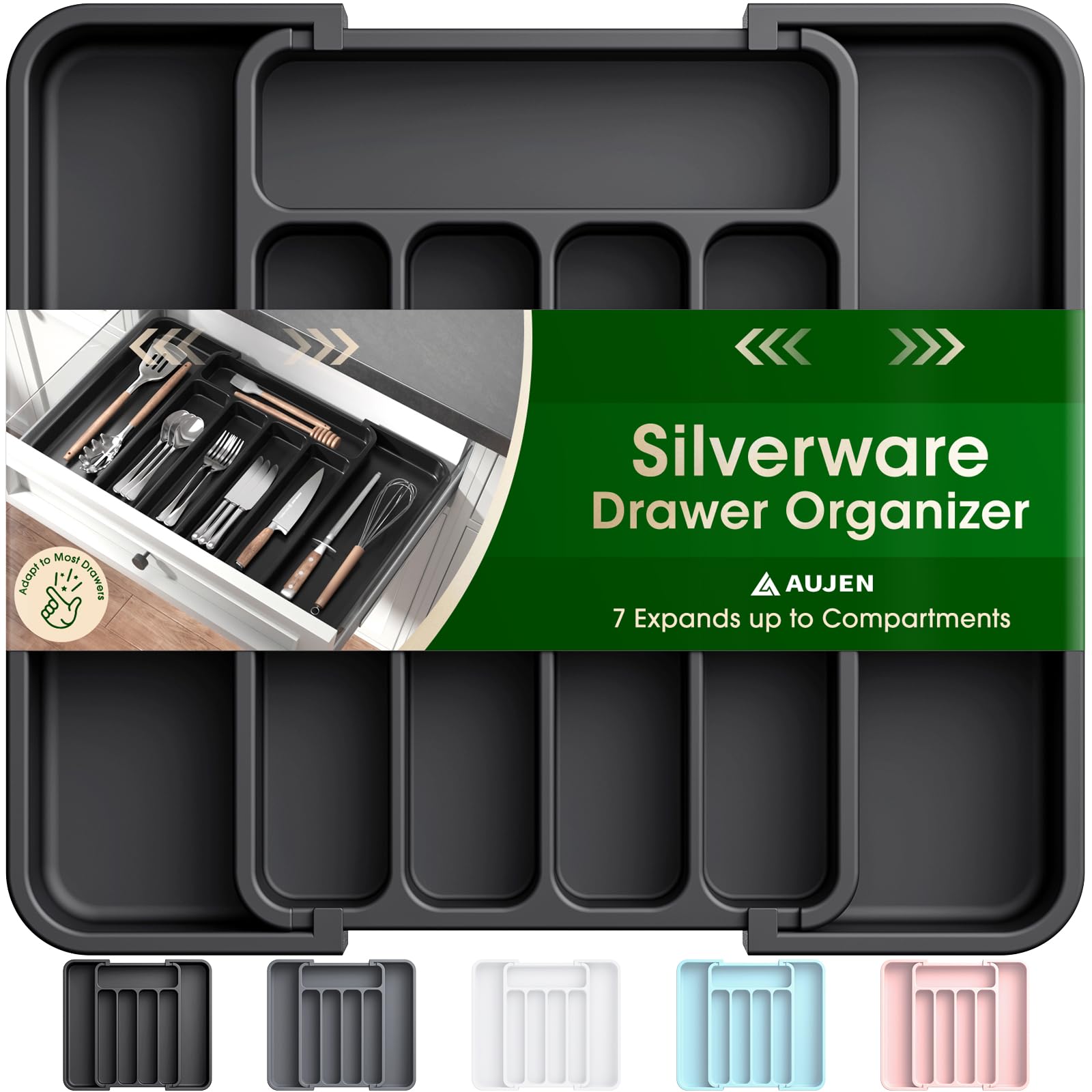
Expandable PP silverware tray that adjusts to fit a range of drawer widths, with anti-slip pads and 5–7 compartments for utensils and small tools.
Why I picked it: I use it for quick wins—one placement fixes a messy drawer without tools or installation.
Best for: Standard kitchen drawers, utility drawers, and small countertop storage.
Very affordable and convenient for immediate drawer fixes.
Pros
- Expandable to fit many drawers
- Easy to clean—wipeable plastic
- Anti-slip pads keep it in place
- No installation required
Cons
- Lightweight plastic
- Not ideal for oversized utensils
My take
This organizer transformed my silverware drawer in minutes. The expandable sides let me get a snug fit and the compartments keep forks, spoons, and larger utensils separated.
It’s easy to wipe clean and the anti-slip pads keep it from shifting when I open the drawer. For quick, low-cost organization I reached for this one repeatedly.
If you prefer natural materials or need deeper compartments for bulky tools, there are sturdier options. For everyday cutlery, this is a practical choice.
6. Bellsal Bamboo Silverware Organizer – Best Deep Drawer Option
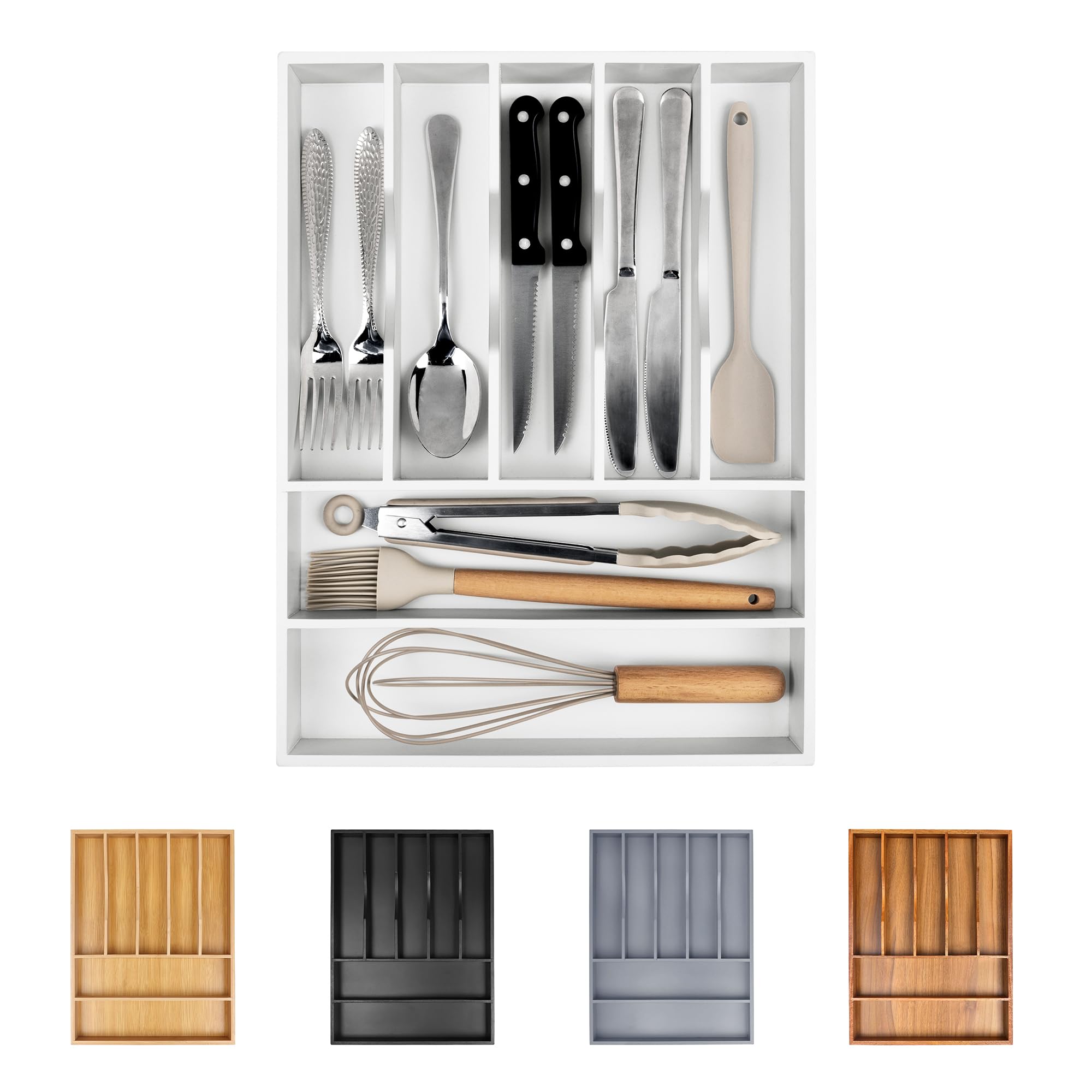
Handcrafted bamboo tray with seven deep compartments and reinforced base; matches kitchens that need deeper slots and a natural look—measure drawer before buying.
Why I picked it: I picked the bamboo organizer when I wanted a premium, durable look and deeper slots for larger utensils.
Best for: Deeper or wider kitchen drawers where appearance and sturdiness matter.
A bit pricier than plastic but more durable and aesthetic.
Pros
- Premium bamboo finish
- Deep 1.9" compartments
- Reinforced base for durability
- Versatile beyond the kitchen
Cons
- Must measure drawer carefully
- Won’t expand front-to-back
My take
The bamboo finish elevated my kitchen drawer visually and functionally. The compartments are deep enough for spatulas and heavier utensils, and the reinforced base prevents warping under weight.
It fit perfectly in my drawer after I measured, and I appreciated the natural, splinter-free surface. I’ve used a second one in a bedroom drawer to organize small accessories.
This is the one I reach for when I want an attractive, long-lasting organizer rather than a disposable plastic tray.
7. IRIS USA Blanket Ladder Rack – Best for Display & Throws
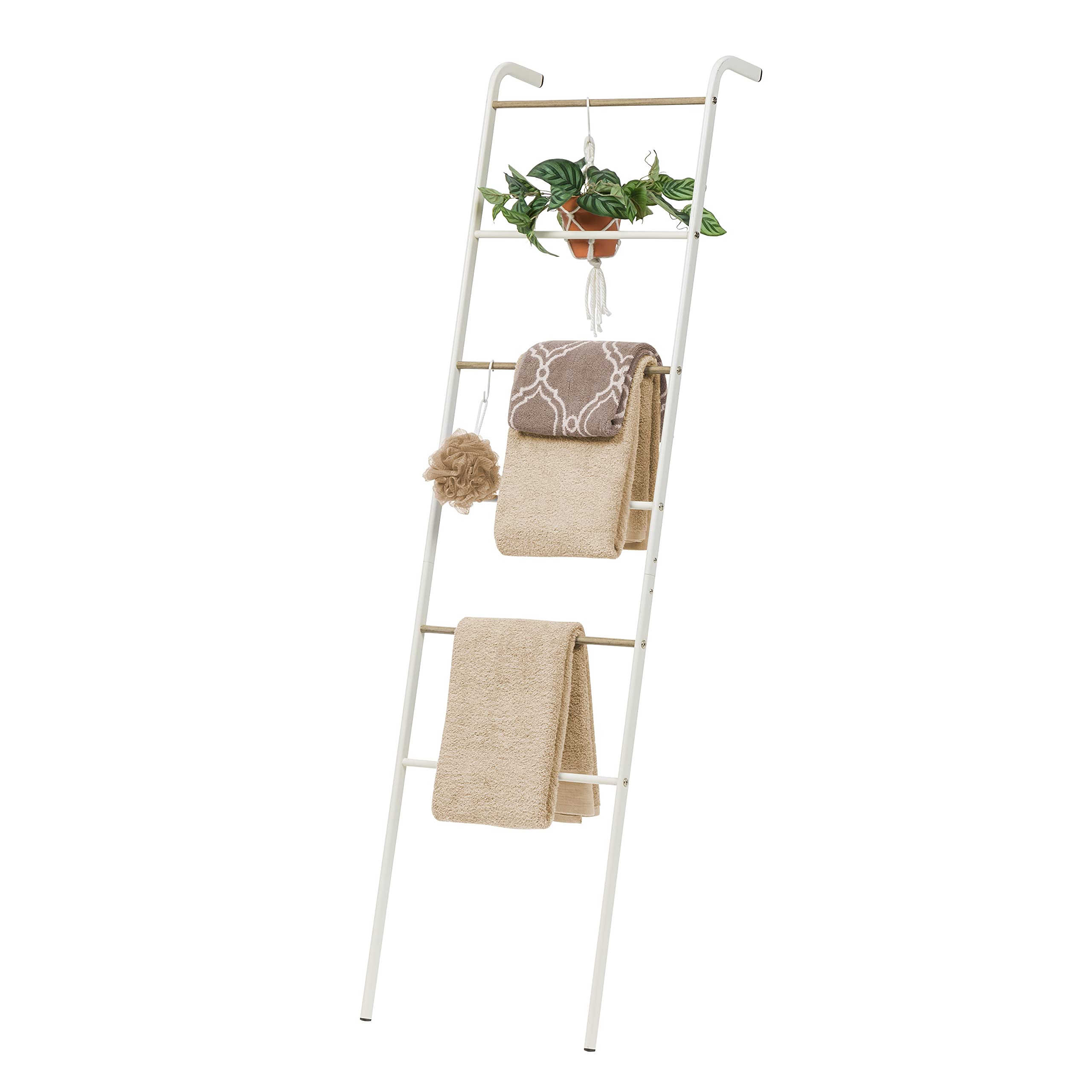
Standing metal ladder rack with a pearl white finish and wooden accents; designed to display and store blankets, towels, and throws in tight spaces.
Why I picked it: I used it where I wanted storage that doubles as decor—displaying throws near the sofa or towels near a bathtub.
Best for: Apartments, bedrooms, bathrooms, and small-space displays.
Mid-range decorative storage piece.
Pros
- Stylish modern look
- Space-saving vertical design
- Versatile display uses
- Easy assembly with basic tools
Cons
- Particle board shelves are thin
- May require two people to assemble
My take
I put this ladder up near my couch and it instantly made the room feel more intentional. The cream pipes and light wood accents look more upscale than I expected.
Assembly was straightforward but easier with two people; the included hardware and neat packaging made setup quick. The boards are on the thinner side, so I wouldn’t overload them.
If you want a piece that’s both storage and decor, this one hit the sweet spot for me; for heavy storage needs I’d pick a sturdier shelving unit.
8. Royal Craft Wood Bamboo Drawer Organizers (8-Pack) – Best for Small Items
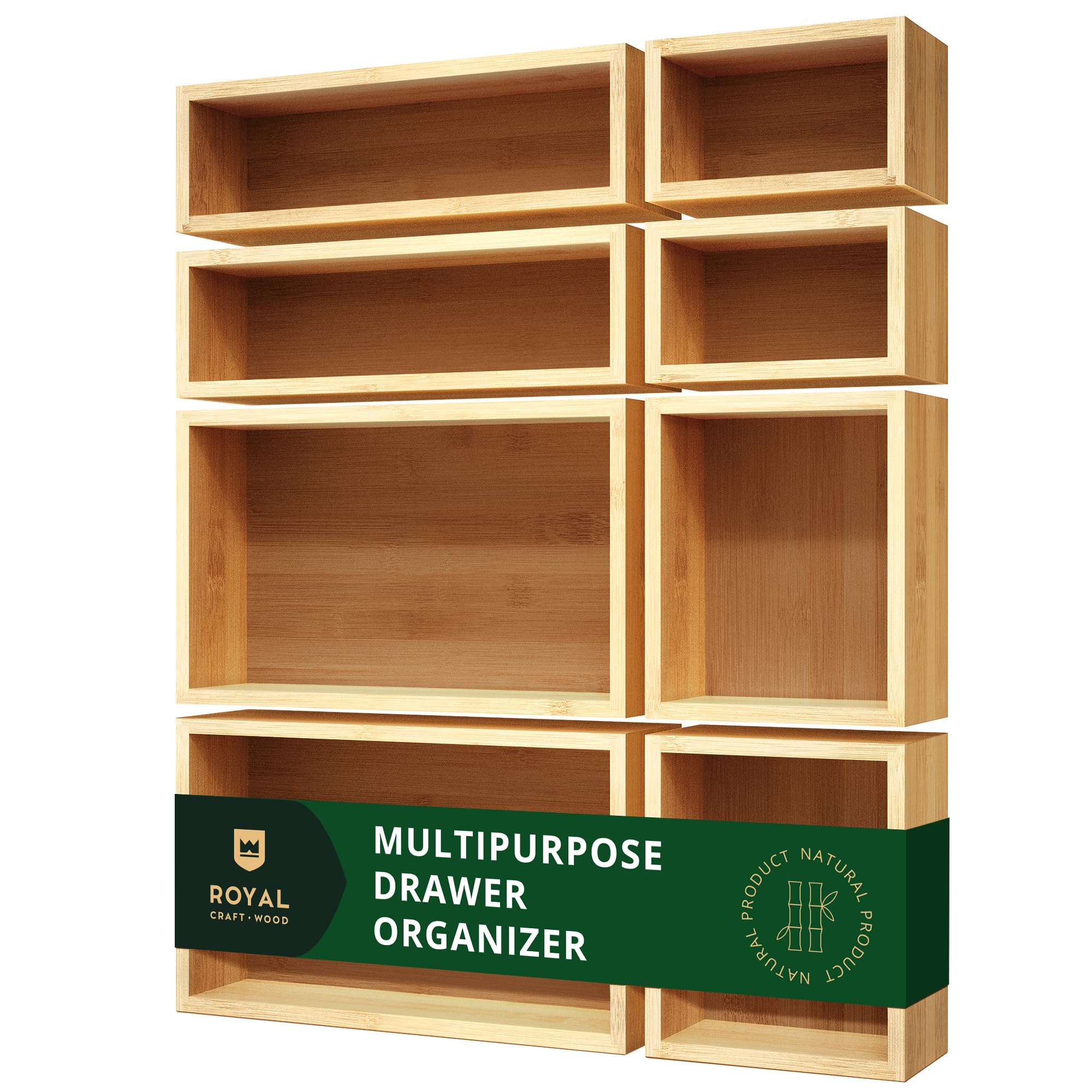
Eight assorted bamboo trays that pop into drawers or sit on counters for organizing small items; biodegradable, mix-and-match sizes for flexible layouts.
Why I picked it: I bought these to tame junk drawers and tiny vanity drawers where single-piece organizers never fit right.
Best for: Jewelry, makeup, electronics accessories, and small kitchen or desk items.
Moderately priced for a full set of bamboo organizers.
Pros
- Assorted sizes for flexible layouts
- Durable bamboo construction
- Mix-and-match for any drawer
- Natural aesthetic
Cons
- Measure drawers to avoid wasted pieces
- Best for small items only
My take
These trays gave me the modular control I wanted—some pieces went in a skinny drawer, others into a wider one. The bamboo looks clean and holds up to daily use.
I used them across my bathroom and kitchen drawers to separate small items like chargers, lipstick, and spare keys. The result felt tidy and intentional.
If you need to organize large tools or bulky items, these aren’t the right fit. For corralling little things, they’re my preferred painless option.
How I Choose Storage Solutions
Start with the problem, not the product
I always begin by naming the storage problem—too many shoes at the door, seasonal bedding in a closet, or a messy utensil drawer. That focus tells me which type of organizer to buy.
Measure the available space before anything else. Drawer depth, closet width, and ceiling clearance matter more than the listing’s mood photos.
- Assess weight needs: light items vs heavy bins or tools
- Measure width, depth, and height before buying
- Decide between rigid (boxes/shelves) and flexible (bags/trays)
- Choose materials that match moisture conditions (bamboo for dry, metal/plastic for damp areas)
Practical checks I run through
I check assembly requirements—do I need a second person or special tools? Simple snap-together shelves are great for quick wins.
Think about multipurpose use: will the item work in another room or fold away when not needed? I prefer versatile pieces that serve multiple roles.
- Look for adjustable shelves or expandable organizers for flexibility
- Prefer washable or wipeable fabrics for entryway or laundry use
- Choose removable bins for kids to encourage independent cleanup
- For aesthetics, match finish to nearby furniture when visible
Frequently Asked Questions
How do I know if a shelf can handle heavy storage?
I look at the stated per-shelf capacity and what I plan to store. For garages and tool storage I favor metal shelves with high per-shelf weight limits; for shoes and linens, lighter fabric or engineered wood is usually fine.
Are moving bags really better than cardboard boxes?
For clothing, bedding, and soft goods I prefer these bags because they hold more and fold away after use. For fragile items, I still use boxes with padding—bags won’t protect breakables as well.
What’s the best way to choose a drawer organizer?
I measure drawer dimensions first and then pick an organizer that matches those measurements. If a product expands or comes in modules, that flexibility saved me multiple times when drawers came in odd sizes.
Final Take
I tried options across utility, décor, and budget categories so you can match a solution to the exact spot that needs help. For heavy duty storage pick a sturdy metal shelf; for small-item control pick modular bamboo trays; for moves and flexible storage, the reinforced moving bags are the easiest win.
If you measure carefully and match capacity to purpose, it’s surprisingly simple to reclaim floor and drawer space in a way you’ll actually maintain.
