
I tested four Dixie disposable plate options to find which sizes and strength levels work best for daily meals, parties, and heavy-duty needs — from a 220-count everyday pack to Dixie Ultra for the heaviest dishes.
I rely on disposable plates whenever I want the convenience of no-sink cleanup without sacrificing performance. Over multiple meals, parties, and camping trips I used each of these Dixie options so I could compare real-world durability, microwave performance, and pack sizes.
This roundup focuses on how the plates handle heavy or saucy foods, whether they stand up to a knife, and which packs make sense depending on how often I use them.
I compared strength, soak resistance, pack size, and compostability. For everyday use I prefer the large 220-count for its value and dependability; for more eco-focused needs the compostable 150-pack is a sensible middle ground; the 8.5-inch 90-count is ideal for snacks and smaller portions; and Dixie Ultra is my go-to when I need near-plate performance for the heaviest meals.
1. Dixie Large 10" Paper Plates (220 ct) – Best Overall
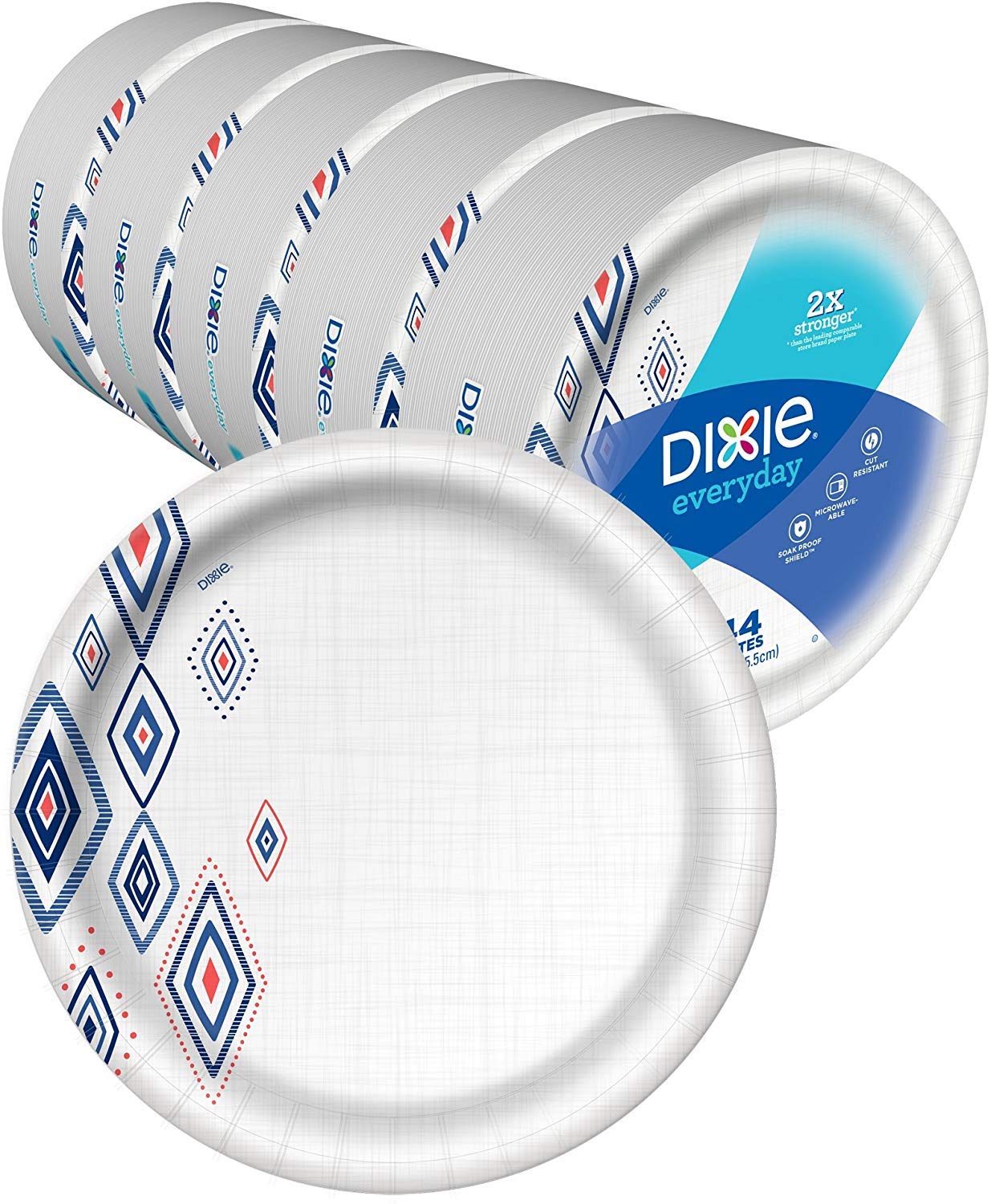
I keep a box of these 10-inch Dixie plates on hand for everyday meals because they balance strength, capacity, and a generous 220-count pack that lasts.
Why I picked it: Dependable, large dinner plates that handle heavy, saucy foods without bending.
Best for: Daily family meals, casual dinners, and occasions when I need lots of plates.
Bulk count delivers strong value for frequent use.
Pros
- Soak-proof Shield coating
- Holds heavy, saucy foods
- Microwave-safe
- Cut-resistant rim
- Large 10-inch dinner size
Cons
- Not fully leakproof for very saucy dishes
- Large pack takes storage space
My take
These 10-inch plates quickly became my go-to for weekday dinners and weekend gatherings. The soak-proof coating really works — I heated saucy pasta in the microwave and never had soggy bottoms or leaks. The raised rim keeps food from sliding off, which made them useful for burgers, steaks, and salads alike.
Sturdiness is the standout. I cut a steak on them with a real knife during a backyard meal and the plate didn’t cave in or tear. That cut resistance plus the microwave safety means I can reheat and serve on the same plate without second-guessing.
The 220-count pack is ideal if I’m stocking up for a household that uses disposables regularly. The plates are plain and versatile enough for everyday use or a quick gathering, and they feel noticeably more substantial than basic paper plates.
My only caveat is realistic: they’re not magic — extremely liquid-heavy dishes can occasionally soak through if left a long time. For normal family meals and typical party food they perform admirably.
2. Dixie Large 10" Paper Plates, Compostable (150 ct) – Best Compostable Option
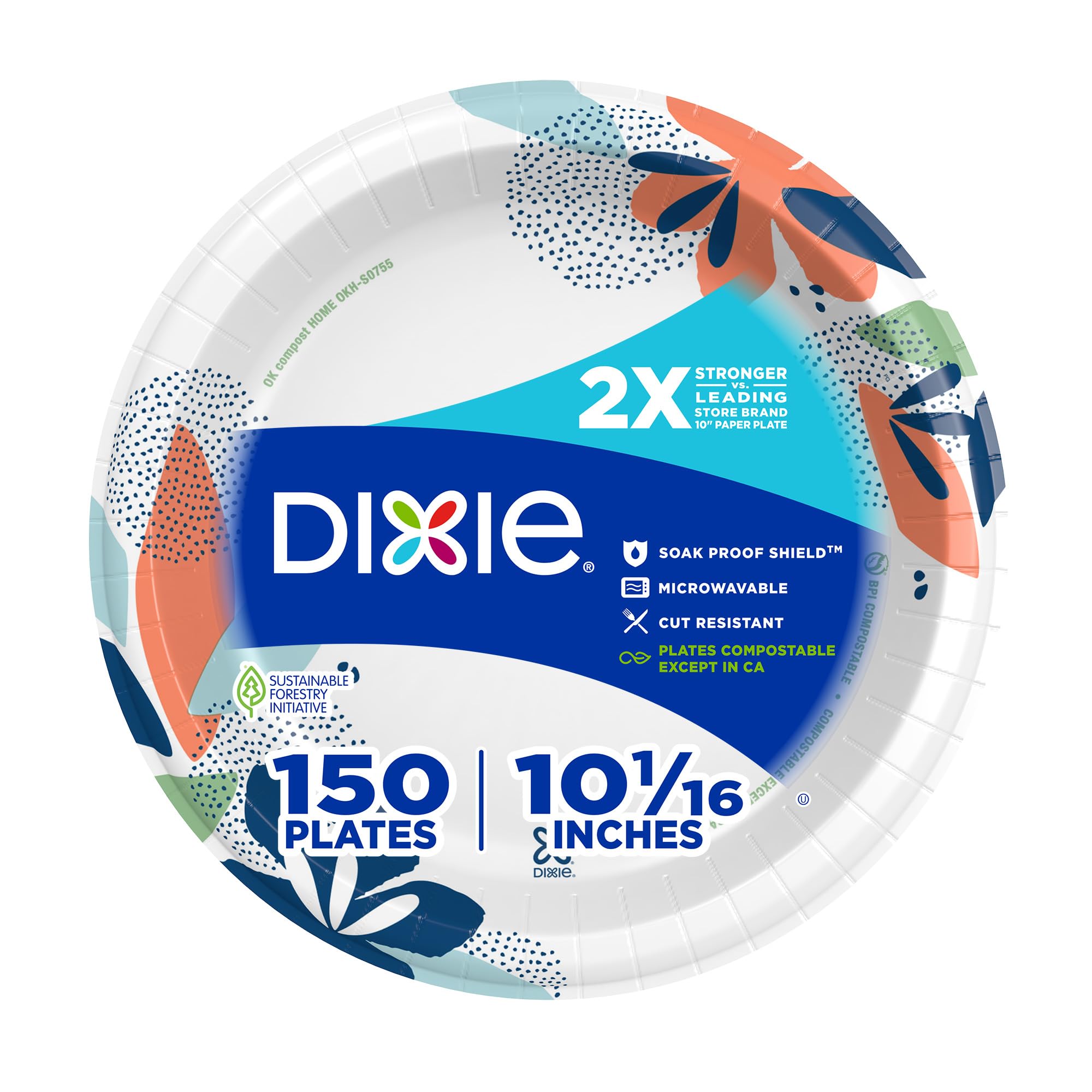
I like this pack when I want the strength of a Dixie plate but also the added benefit of being compostable where facilities accept them.
Why I picked it: Same reliable strength as Dixie, with compostable materials for greener disposal.
Best for: Backyard barbecues, events with composting access, and households that balance disposability and sustainability.
Mid-size bulk that balances performance with sustainable disposal options.
Pros
- Commercially and backyard compostable (where accepted)
- Soak-proof Shield
- 2X stronger than basic plates
- Microwave-safe
Cons
- Compost options vary by region
- Smaller pack than the 220 option
My take
I turned to this 150-count pack when I wanted something a bit more eco-conscious without losing performance. The plates still feel sturdy and handle saucy or greasy foods without collapsing, so the compostable construction didn’t compromise strength in my experience.
Heating leftovers directly on the plate worked fine, and the plates resisted knife cuts during typical mealtime use. The compostable claim matters to me when there’s a facility nearby or if I’m doing backyard composting — otherwise they perform like the standard Dixies.
If I’m hosting a neighborhood cookout where composting is available, I grab these. They strike a practical balance between environmental considerations and the kind of durability I expect from a 10-inch disposable plate.
3. Dixie Medium 8.5" Paper Plates (90 ct) – Best for Snacks & Small Meals
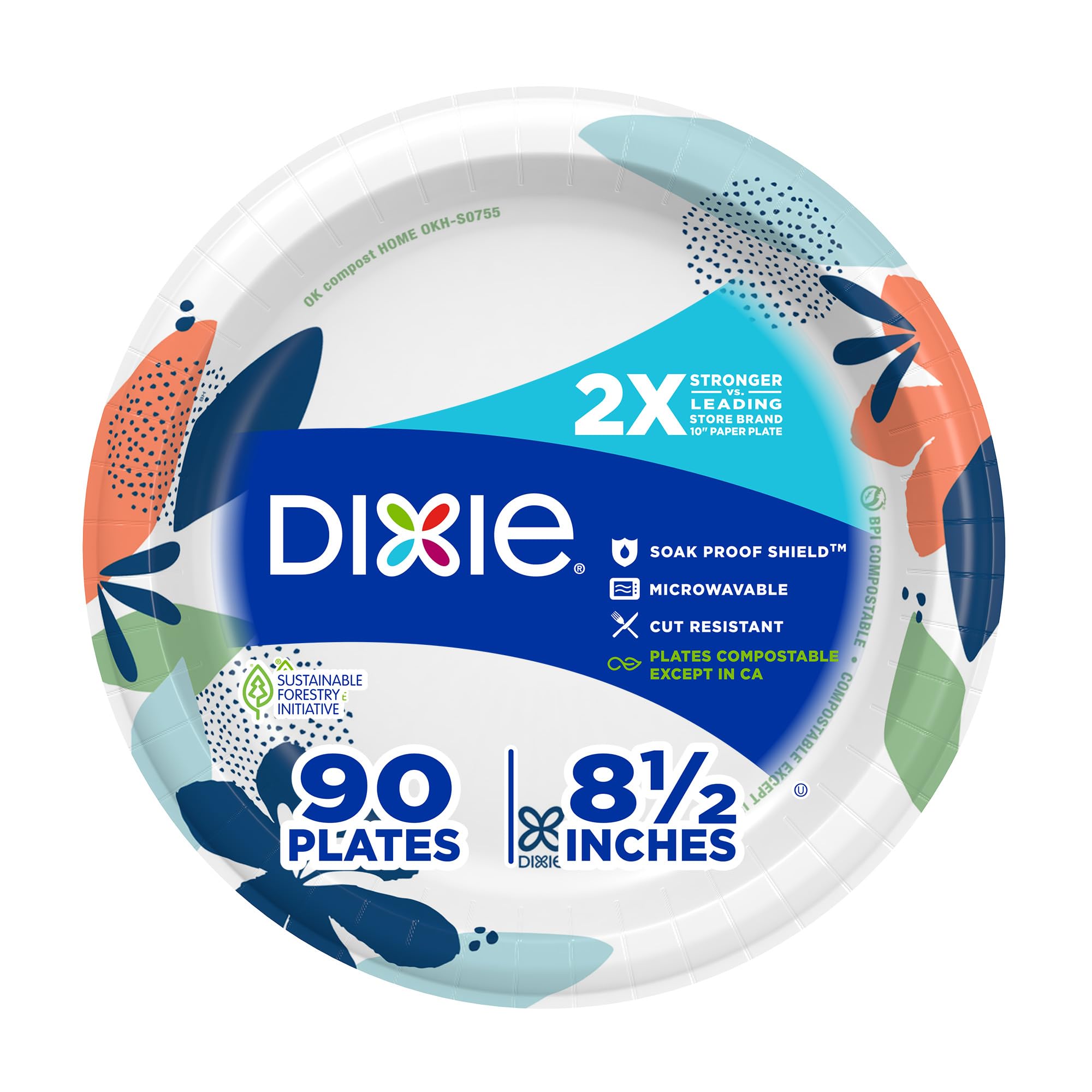
I use the 8.5-inch plates for breakfasts, kids’ snacks, and smaller portions where a full dinner plate would be overkill.
Why I picked it: Perfect medium size that still offers the same soak-proof durability.
Best for: Breakfasts, desserts, snacks, and smaller portions.
Smaller pack suits lighter, less frequent disposable needs.
Pros
- Compact 8.5-inch size
- Soak-proof Shield
- 2X stronger than basic plates
- Microwave-safe
Cons
- Less surface area for large meals
- 90-count may run out faster for big households
My take
These medium plates are my go-to when I want disposable convenience but don’t need a full dinner plate. They handle everything from scrambled eggs to sandwiches without bending, and I routinely warm things on them without issue.
The strength surprised me — they truly feel more robust than typical lightweight disposables. That makes them useful for family mornings and small gatherings where heavier foods aren’t the focus.
Because the pack is 90 plates, I reach for these when I want a smaller, easier-to-store supply. They save me from over-serving and are perfect for portion-controlled uses like desserts or kids’ plates.
4. Dixie Ultra Large 10" Paper Plates (172 ct) – Best for Heavy-Duty Use
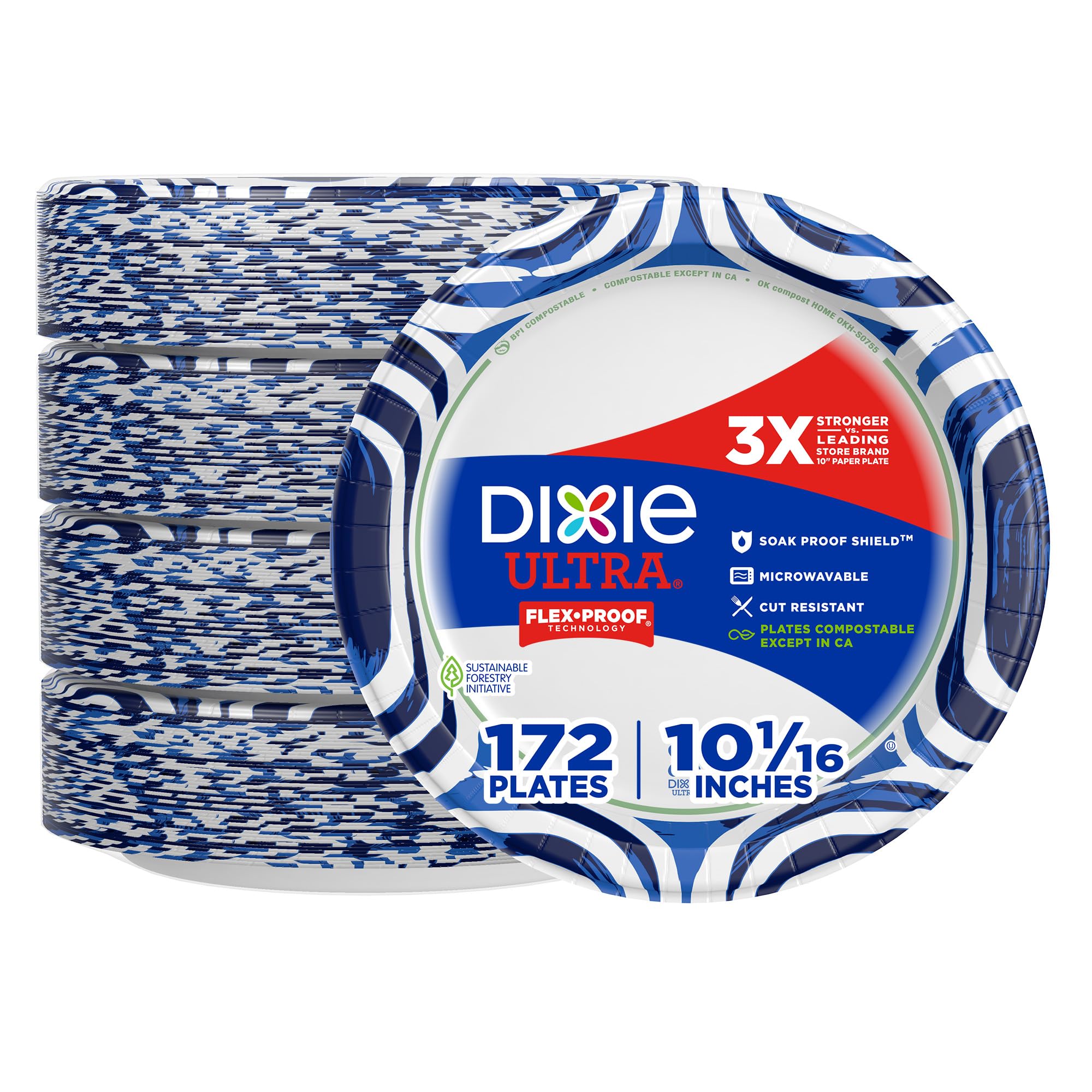
When I need the strongest disposable plates for BBQs, camping, or anyone who needs extra durability, Dixie Ultra is my top pick.
Why I picked it: Extra-thick construction handles the heaviest, messiest meals without buckling.
Best for: Barbecues, camping, heavy portions, and users needing extra plate strength.
Premium-strength option — higher performance for heavier meals.
Pros
- Flex-Proof Technology — very strong
- 3X stronger than standard store brand
- Good for heavy, saucy foods
- Microwave-safe and cut-resistant
Cons
- Bulk pack is sizable
- Heavier construction may cost more
My take
Dixie Ultra is what I reach for when I expect heavy, saucy plates of food. I used them at a camping weekend and they stood up to steaks, loaded baked potatoes, and generous servings without bending or leaking.
The plates feel noticeably thicker and deeper than the standard Dixies, which makes a real difference when you’re serving messy or dense dishes. Cutting on them and reheating both worked fine during my tests.
Because of that extra strength they’ve earned a regular spot in my stash for parties and trips where I don’t want to babysit plates. They’re heavier and a bit bulkier to store, but for heavy-duty use they’re a tradeoff I accept.
How I Choose Disposable Plates
Size and portion needs
I pick plate size based on how much I plan to serve. Ten-inch plates cover full meals; 8.5-inch plates are better for snacks, desserts, and kids.
Consider storage and frequency: larger bulk packs are great if you use disposables often; smaller packs save space.
- 10-inch: full meals and parties
- 8.5-inch: snacks, desserts, kids
- Choose pack size to match household usage
Strength and performance
I always check for soak-proof coatings and cut resistance if I’ll be serving saucy or knife-cut foods. Technology like Flex-Proof or Soak-Proof Shield makes a real difference.
For heavy plates or camping, opt for the Ultra/3x strength type to avoid soggy bottoms and collapsing.
- Soak-proof coating prevents grease seep-through
- Cut-resistant rim holds up to knives
- 3X strength options for the heaviest meals
Microwave and reheating
I prefer plates labeled microwave-safe so I can reheat and serve on the same plate. That saves time and reduces dishes.
Even microwave-safe plates have limits; avoid prolonged heating with very high-fat foods.
- Microwave-safe for reheating leftovers
- Avoid long, high-heat cycles
Compostability and disposal
If composting matters to you, check whether plates are marketed as commercially or backyard compostable. I only count that as an advantage when local facilities accept them.
Otherwise, prioritize sturdiness and then decide disposal method that works for your household.
- Commercial composting availability varies
- Backyard compostable where specified
- Balance sustainability with performance needs
Frequently Asked Questions
Are these Dixie plates microwave-safe?
Yes — in my testing the plates in this roundup are microwave-safe and held up well when reheating leftovers. I avoid long, high-heat cycles and very oily foods for best results.
Can I compost these plates at home?
Some Dixie plates are marketed as commercially and backyard compostable except where noted (for example, not in CA). From my experience, compostability is useful only if local facilities or backyard systems accept them.
Which Dixie plate is best for heavy or saucy foods?
I reach for Dixie Ultra when I expect heavy, saucy meals because its Flex-Proof Technology and thicker construction resist bending and leaking better than standard options.
Final Take
If I need everyday convenience and the best value, the 10-inch 220-count pack is my top choice. For a greener option I choose the compostable 150-pack when facilities are available. I keep 8.5-inch plates on hand for snacks and smaller servings, and I reserve Dixie Ultra for heavy-duty meals, camping, or when extra strength is non-negotiable.
No matter which pack I grab, I find that soak-proof coatings and microwave-safe construction are the features that make disposable plates genuinely useful rather than disposable compromises.
