
I tested five portable solar ovens across weight, capacity, and speed. Here are the models I kept using—depending on whether I was backpacking, feeding a group, or cooking fast meals under full sun.
I’ve cooked eggs, potatoes, soup, and even tender pork using only sunlight, and I picked these solar ovens because each solves a different problem for off-grid cooking.
In my testing I judged portability, peak temperature, how predictable the cooking time was, and how simple each oven made it to get a usable meal without fuel.
If you want something to toss in a daypack, a roomy family model, or the fastest tube-style stove, I’ll tell you which I reached for and why.
I evaluated evacuated-tube stoves separately from panel/bag-style ovens: tubes heat fast and reach higher temps, while panel/bag ovens offer larger capacity and gentler, more forgiving cooking.
1. GoSun Go Portable Solar Stove – Best for Backpacking
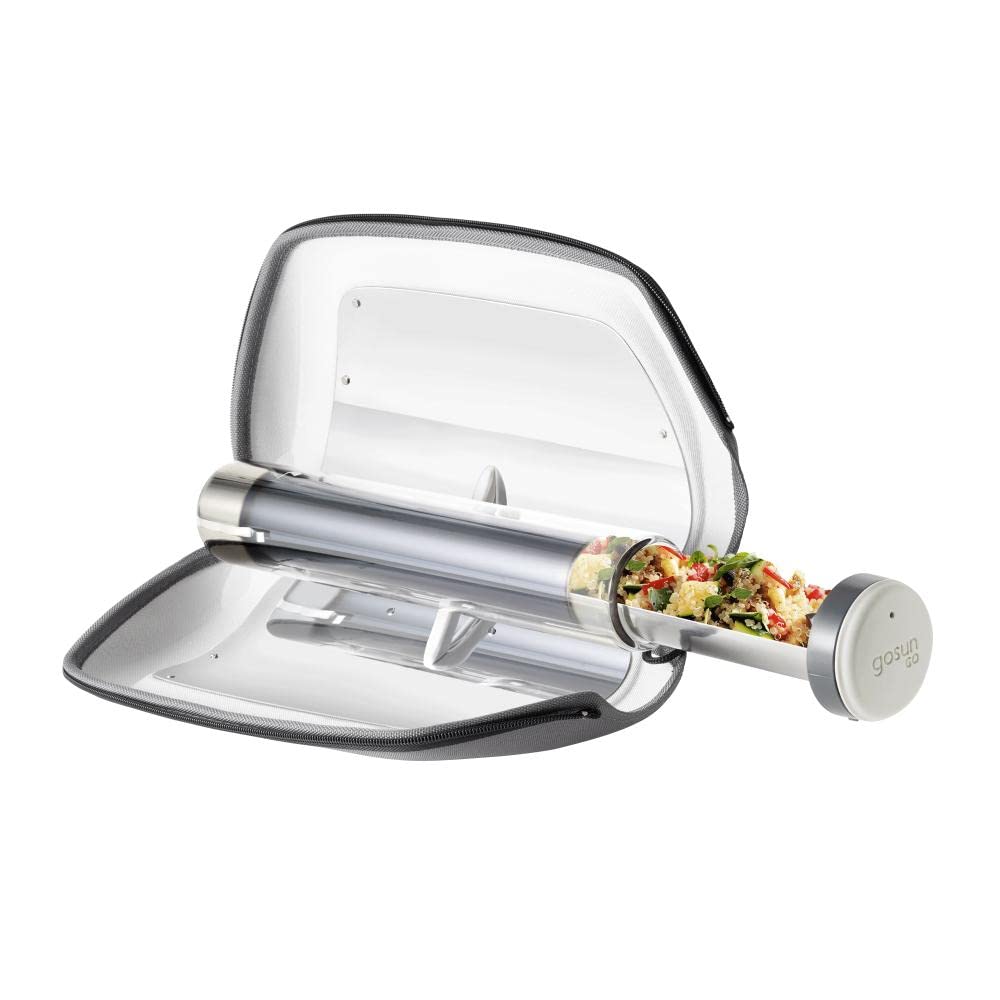
A featherweight evacuated-tube cooker that delivers surprising heat for its size and is easy to pack for hikes or day trips.
Why I picked it: I kept this when weight and stowability mattered most—real heat in a tiny package.
Best for: Solo campers, hikers, and quick hot snacks on the trail.
Portable, light, and a strong value for compact solar cooking.
Pros
- Extremely light and packable
- Very fast heating in full sun
- Includes cooking tray and dial
Cons
- Only fits small portions
- Glass tube needs careful handling
My take
I carry the GoSun Go whenever I want a no-fuss hot meal without adding weight. At just a couple of pounds it fits easily in my daypack and sets up in seconds.
In direct sun I saw water approach boiling and have baked potatoes and heated ramen; one session with chicken took about 45 minutes from my setup. For eggs I’ve gotten perfect results in roughly the same range when sunlight was strong.
Because the oven uses an evacuated glass tube, it runs hot inside while staying cool outside. That makes it safe to leave unattended for a long simmer, but I treat the tube like thin glass—don’t drop it and avoid rapid temperature shocks.
Capacity is the obvious trade-off. It feeds one comfortably, maybe two if you’re conservative with portions. For solo adventures, though, I found it unbeatable for its weight and speed.
2. Energy Wise Portable Solar Oven – Best for Families
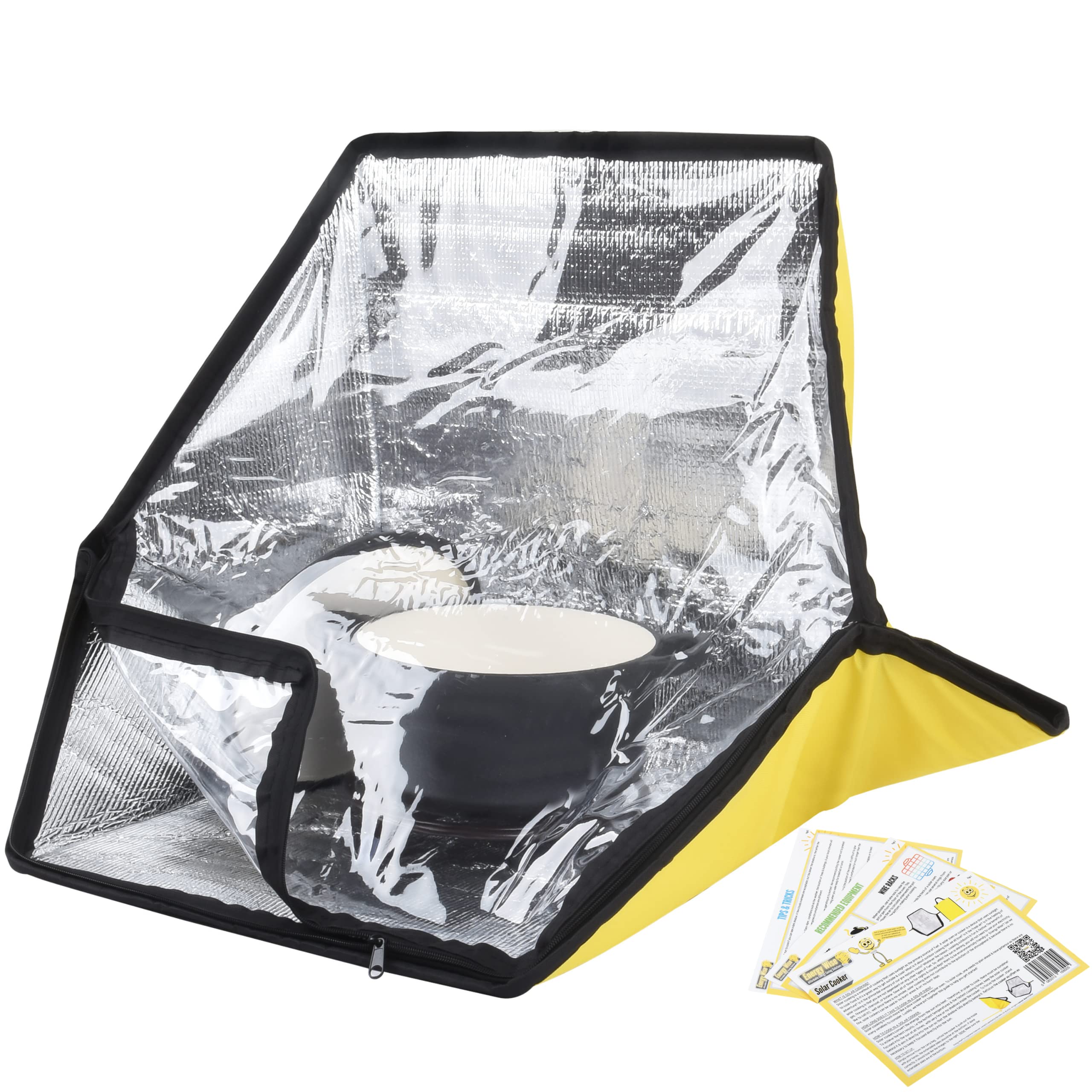
A roomy, reinforced panel-style oven that takes advantage of a larger interior to cook family-size meals or multiple pots.
Why I picked it: I chose it for volume and stability—it lets me cook normal pans and larger batches.
Best for: Group trips, basecamp cooking, and emergency food prep.
A practical midrange option for larger-capacity solar cooking.
Pros
- Large interior fits standard cookware
- Included support rods prevent sagging
- Useful printed cooking guide included
Cons
- Slower to reach peak temperatures
- Heavier and less packable
My take
When I needed to feed more than one person, this was the oven I reached for. The interior accepts common pans, and I could bake a 9×9 cake and warm several cans at once.
I measured food temperatures in the range of about 190–208°F under good sun, and typical cook times ran from one to several hours depending on density. Dense meats took longer, while casseroles and baked goods finished more predictably.
The added inner support rods matter. They keep the lid from sagging onto food and help maintain consistent temperatures across the cooking chamber.
Expect a learning curve: I used an oven thermometer to pace recipes and learned to position the unit for maximum sun exposure. For a family-style solar oven that doesn’t require special cookware, this is the one I reach for.
3. GoSun Sport Solar Oven – Best Performance
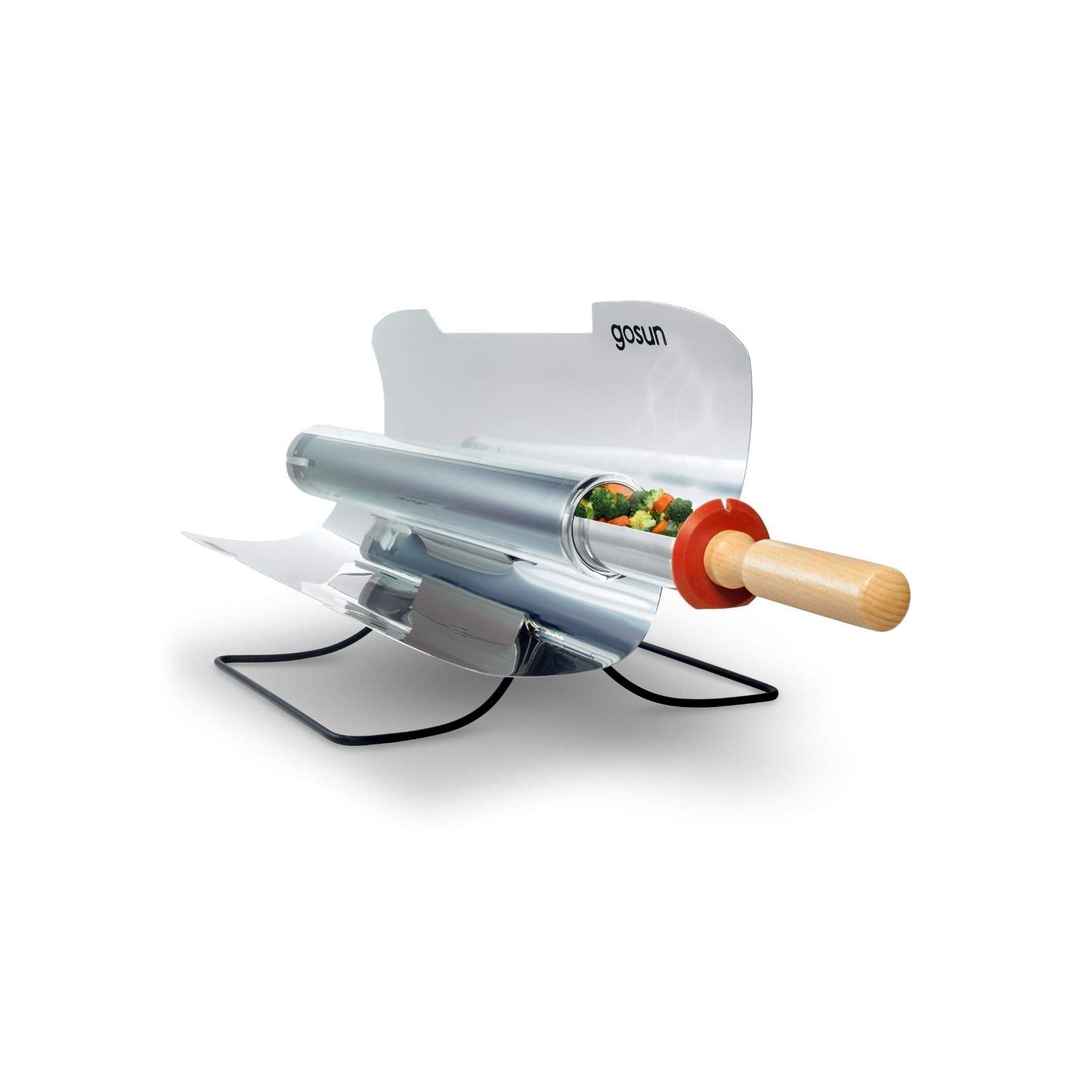
The sport model balances fast heat with rugged design—my go-to when I wanted rapid results and dependable insulation.
Why I picked it: I relied on it when speed and reliable high temps were my priorities.
Best for: Campers who want fast cooking and durable construction.
A higher-performance option for frequent solar cooks.
Pros
- Heats very quickly
- Insulated tube keeps exterior cool
- Sturdy, travel-ready build
Cons
- Small tube limits quantity
- Tube vulnerable to thermal shock
My take
The GoSun Sport is the fastest unit I tested. I’ve cooked eggs to perfection in about 15 minutes under strong sun and produced crispy small items like taquitos and hot dogs faster than the larger bag ovens.
Its vacuum tube design converts sunlight efficiently and keeps heat focused on the cooking chamber while the shell stays cool to the touch—useful when I’m juggling other campsite tasks.
Capacity is its constraint. I usually plan for two servings at most and split larger meals across sessions. Also, I once experienced a tube failure when introducing very cool food into a hot tube; the company’s warranty was useful, but I now let the tube cool between loads to avoid thermal shock.
Overall, when I want speed and don’t need big portions, this is the device I pick.
4. Sunflair Portable Solar Oven Deluxe – Best Versatile Kit
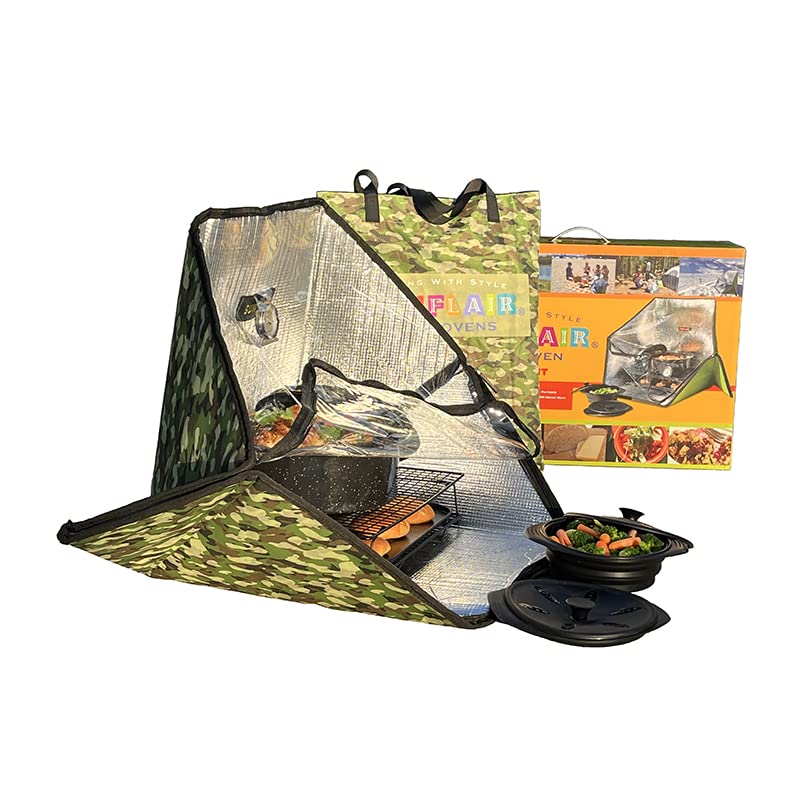
A highly versatile panel/bag oven that ships with cookware, racks, and accessories so you can start cooking right away.
Why I picked it: I appreciated the full kit and the option to bake, dehydrate, or simmer.
Best for: Camping cooks who want built-in cookware and multi-use capability.
Feature-rich and well suited for multi-task outdoor cooking.
Pros
- Comes with cookware and thermometer
- Great for dehydrating and baking
- Lightweight and portable
Cons
- Zipper and vents require careful handling
- Condensation can affect cooking
My take
I used the Deluxe when I wanted the flexibility to bake, dry fruit, or cook a pot of rice without hauling extra gear. Out of the box it includes trays, silicone pots, racks, and a thermometer that I found genuinely useful.
There’s a learning curve with the zipper and ventilation: I kept wiping condensation during an early cook and learned to manage covered vs. uncovered placements depending on whether I wanted moist or drier results.
My best cooks included tender pork and well-cooked squash; I could move the oven short distances with food inside, which made repositioning for the sun convenient.
If you want an all-in-one kit for varied outdoor cooking, I appreciated how complete this package felt—just be mindful of the small operational quirks early on.
5. Sunflair Mini Portable Solar Oven – Best Compact Value
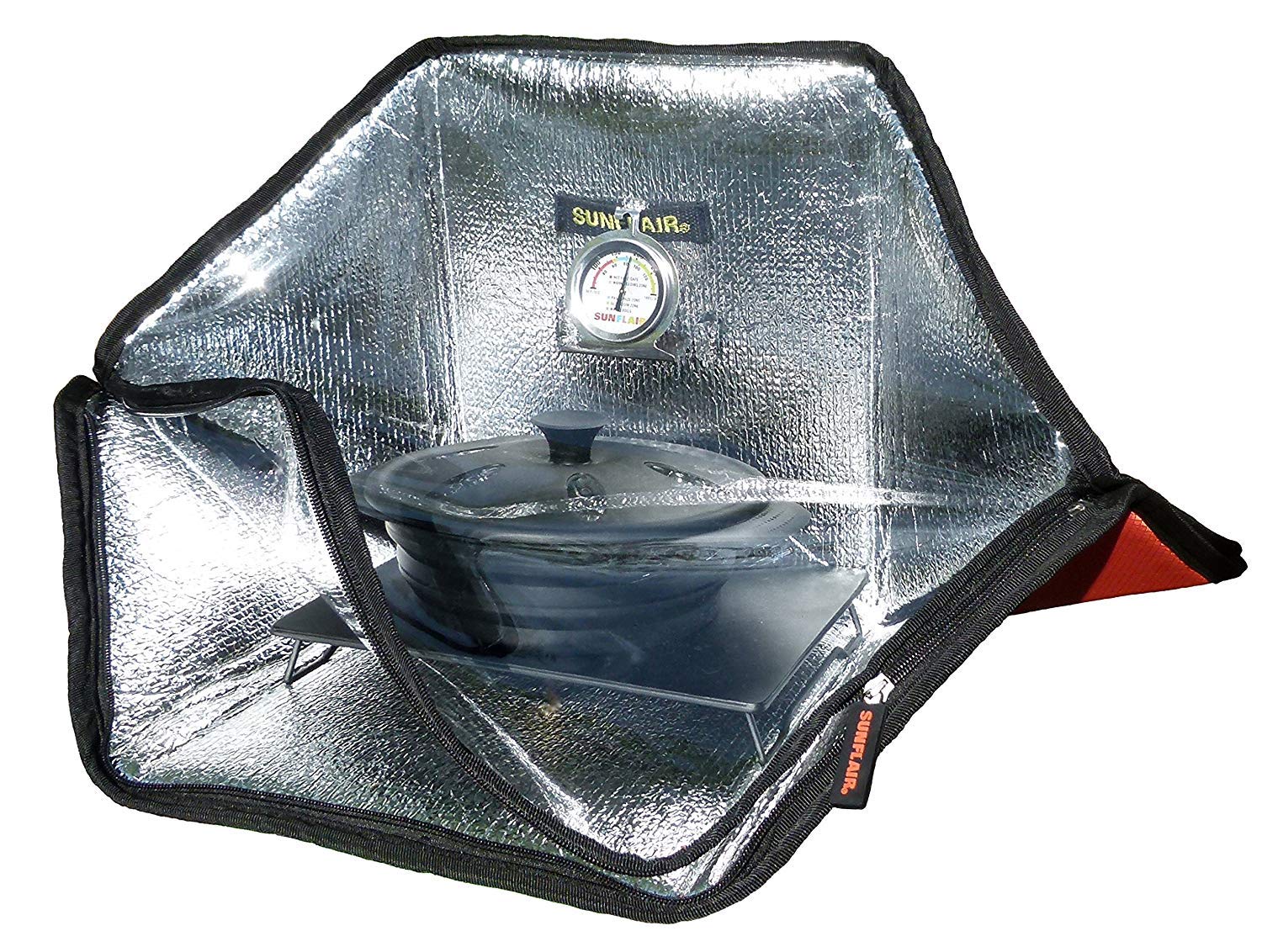
The lightest, most compact Sunflair that still produces usable heat for single-person meals and emergency kits.
Why I picked it: I carried it when ultralight and simplicity beat capacity.
Best for: Hikers, boaters, or emergency kits where space matters most.
Affordable, ultralight option that folds small for packing.
Pros
- Small and ultra-portable
- Heats quickly in ideal sun
- Includes silicone pot and trivet
Cons
- Silicone pot collapses with mitts
- Performance varies with conditions
My take
The Mini is my pick when pack weight is the top priority. It folds to about the size of a laptop and is simple to set up.
I hard-boiled eggs in cold weather using this unit—under two hours on a low winter day—and on a warm day it climbed to around 210°F in short order. Results vary a lot by sun angle and ambient temperature, so I always expect longer cook times in marginal conditions.
One practical snag: the collapsible silicone pot is handy for storage but awkward to manipulate with oven mitts; I often swap it for a rigid container when possible.
For what it is—a tiny, efficient cooker for one person—the Mini earns a spot in my pack.
How I Choose a Solar Oven
Key factors I look for
I evaluate four things: peak temperature, capacity, portability, and durability.
If I need quick searing or baking, I prioritize evacuated-tube designs. For batch cooking or dehydrating, I pick larger panel/bag ovens.
- Peak temperature: Tubes can hit much higher temps and cook faster.
- Capacity: Think meals per cook—tube = one or two servings, bag = family-sized.
- Portability: Consider packed size and weight for backpacking.
- Durability: Check construction and how fragile the glass or zippers are.
Practical tips from my field tests
I always use an oven thermometer until I know a unit’s timing and quirks.
Positioning matters: I re-aim the oven every 20–40 minutes for best results, depending on sun movement.
Avoid thermal shock with evacuated tubes—let them cool a bit before inserting very cold foods.
- Use dark, shallow pans to speed heating.
- Cover moist foods to retain heat; uncover for crisping.
- Bring basic tools: oven mitts, foil, and a thermometer.
What to cook first
Start with forgiving, single-dish items: rice, beans, root vegetables, and baked fruit are reliable on day one.
Once I learned my oven’s timing I moved on to eggs, fish, and breads.
- Easy starters: hard-boiled eggs, baked potatoes, stews.
- Try quick items: steamed veggies and thin sausages.
- Avoid: large frozen blocks or thick roasts until you know timings.
Frequently Asked Questions
How long does solar cooking take?
Cook times depend on sun strength and oven type. In strong sun a tube cooker can finish some items in 15–45 minutes; panel or bag ovens often take one to several hours. I always plan more time than conventional ovens and check internal temperature rather than just elapsed time.
Can I use insulated tube ovens safely?
Yes—these tubes stay cool on the outside while getting very hot inside, which makes them safe around a campsite. I avoid thermal shock by letting a hot tube cool before inserting cold items and I handle the glass carefully.
Will a solar oven work on cloudy days?
Solar ovens need sunlight to perform. I’ve seen slow heating on hazy days and near-boiling only when a defined shadow was visible. For reliable results, plan on at least partial sun.
What maintenance do solar ovens need?
I keep reflectors and the cooking chamber clean and store soft-sided ovens dry to prevent zipper issues. For tube models I inspect the glass for chips and avoid sudden temperature changes.
Final Take
I own different solar ovens for different jobs: a tube oven for fast, hot cooking, and panel/bag ovens for larger batches and dehydrating.
If I’m packing light I opt for the GoSun Go or the Sunflair Mini; if I’m feeding a group or want a true kit, the Energy Wise or Sunflair Deluxe is what I reach for.
Whichever model you choose, expect a learning curve. Start with simple recipes, use a thermometer, and enjoy the way sunlight changes your approach to cooking.
