
I tested a range of portable dehumidifiers — from powerful Wi‑Fi units to disposable absorbers — and I share which ones worked best in basements, closets, safes, and travel storage.
I live in a humid climate and have dealt with mold, damp storage, and steamy windows for years, so I put several portable dehumidifiers through real-world use. This roundup covers the machines and passive absorbers I actually ran in basements, bathrooms, safes, and moving pods.
Below I explain which units I reached for in different situations, why they stood out, and the trade-offs I noticed between active dehumidifiers and passive moisture absorbers.
If I need high-capacity, whole-room drying and remote control I grab the hOmeLabs. For tight spaces and storage I prefer rechargeables like Barska or Hornady. When I want a cheap, disposable option for closets or moving pods, the Vacplus boxes are my go-to.
1. hOmeLabs Wi‑Fi Dehumidifier (32‑pint) – Best Overall
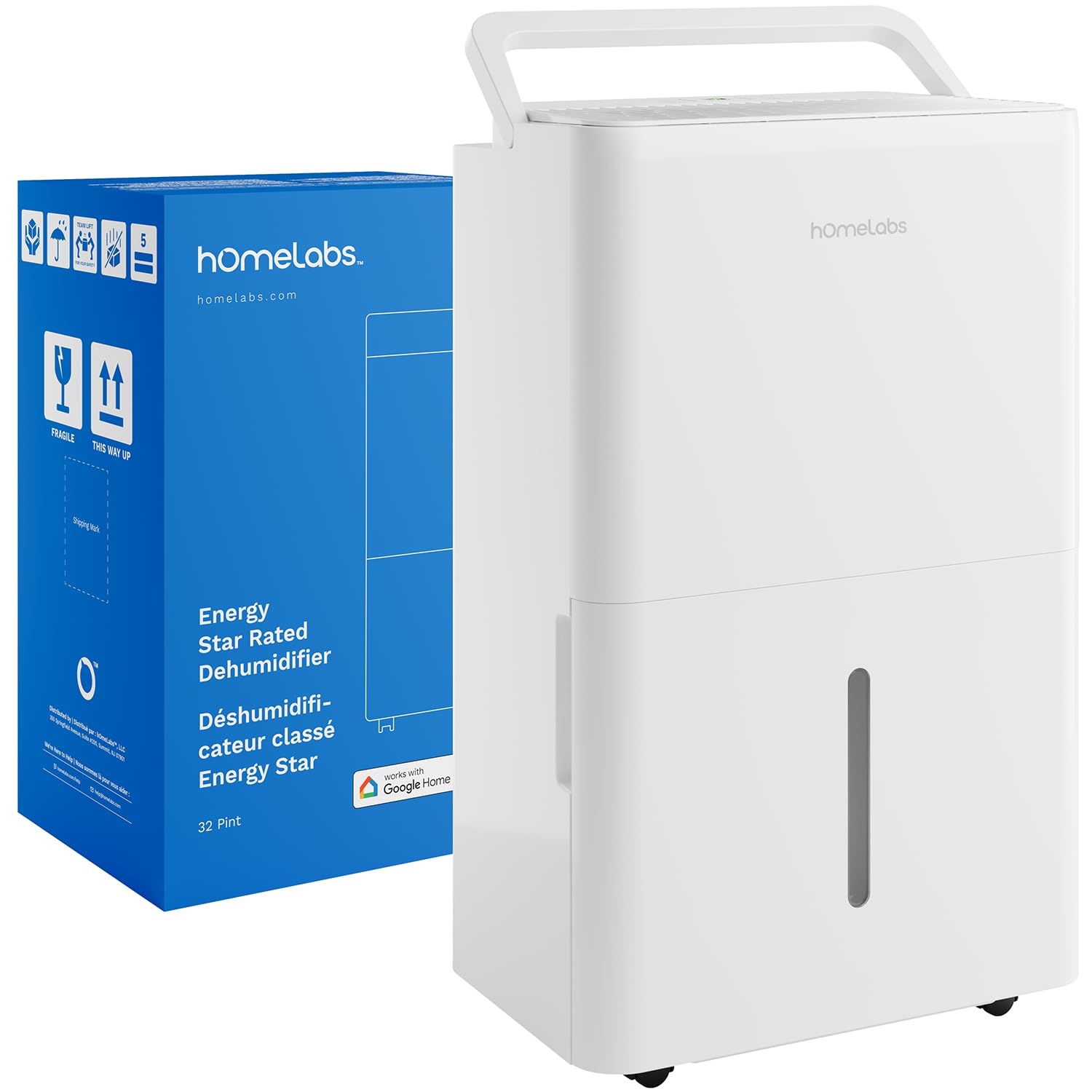
A high‑capacity, Wi‑Fi enabled dehumidifier that covers large areas, offers continuous drain, and runs quietly enough for shared living spaces.
Why I picked it: I valued the combination of large extraction capacity, smart control, and continuous drain option for whole‑area humidity control.
Best for: Basements, large bathrooms, and open living areas up to several thousand square feet.
A more substantial investment than a small unit, but built for high capacity and smart features.
Pros
- Strong moisture removal at standard conditions
- Wi‑Fi and voice control support
- Continuous drain option with hose
- Relatively quiet for its size
- Large coverage area
Cons
- Tank fills frequently in very humid conditions
- Not ideal for tiny rooms
- Larger footprint than compact units
My take
I put this hOmeLabs model in a damp basement and ran it overnight on low and turbo settings. It pulled a serious amount of water—enough that the one‑gallon tank reached about halfway after a single night in heavy humidity. When I switched to the continuous drain hose, I stopped worrying about emptying the bucket altogether.
The Wi‑Fi control was genuinely useful. I monitored humidity and toggled modes from my phone, and it worked with voice assistants so I could change settings without walking into the basement. For whole‑house spillover (I left bathroom and bedroom doors open) the unit noticeably lowered neighboring room humidity by several percentage points.
Noise stayed at a respectable level for a compressor dehumidifier; I keep it in my basement and rarely notice it from the main floor. The unit is on the heavier side but still portable enough to move between floors when needed.
If you need sustained drying for large areas, the trade-off—more size and occasional bucket emptying in extreme humidity—is worth it. The energy efficiency seems solid for the capacity, and the auto shut‑off and drain outlet reduce maintenance chores.
2. Vacplus Moisture Absorber Boxes (6‑Pack) – Best Budget
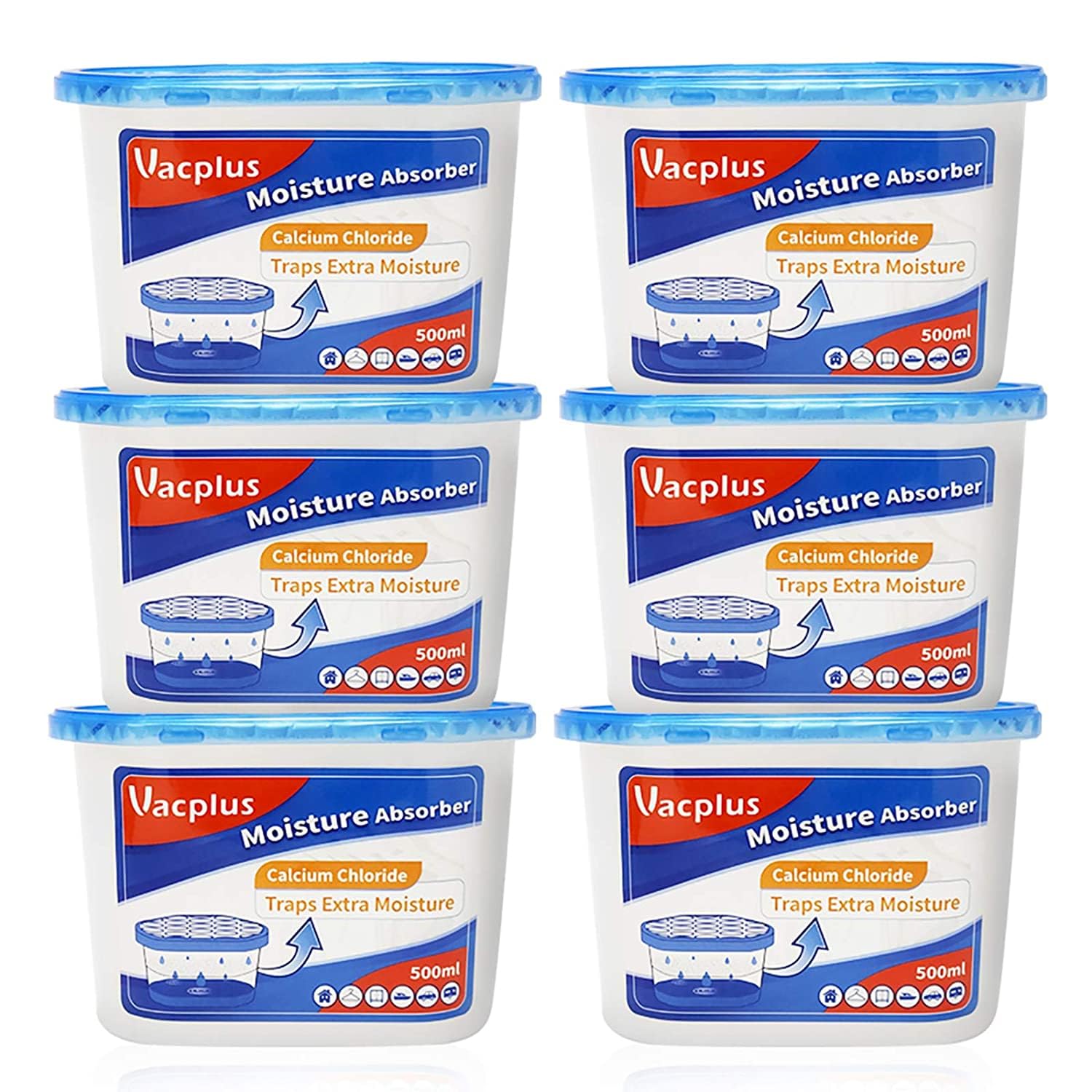
Disposable calcium‑chloride boxes that quietly capture moisture without fragrance and show a visible water level as they work.
Why I picked it: I reach for Vacplus when I want a no‑fuss, low‑cost way to protect closets, storage pods, or cars from humidity.
Best for: Closets, moving pods, cars, small storage spaces, and short‑term humid climates.
A very affordable disposable option that performs well for short to medium durations.
Pros
- Fragrance‑free, no chemical smell
- Visible water collection window
- Simple peel‑and‑place setup
- Good value in multipacks
Cons
- Works slowly compared to powered units
- Disposable—requires periodic replacement
- Limited effect in open rooms
My take
When I packed household items into a moving pod for a Florida summer, I placed several Vacplus boxes around the cargo. Months later the containers were full of liquid and my belongings were dry—proof the absorbers kept moisture at bay during storage.
Setup is trivial: remove the seal, snap the lid, and put the box where you need it. The clear reservoir lets me see progress and know when a unit is spent.
These aren’t a substitute for an electric dehumidifier in a whole room, but for closets, trunks, or temporary storage they’re inexpensive and effective. I appreciate that they’re fragrance‑free; there’s no odd scent left behind.
3. Barska Rechargeable Desiccant Dehumidifier – Best Rechargeable
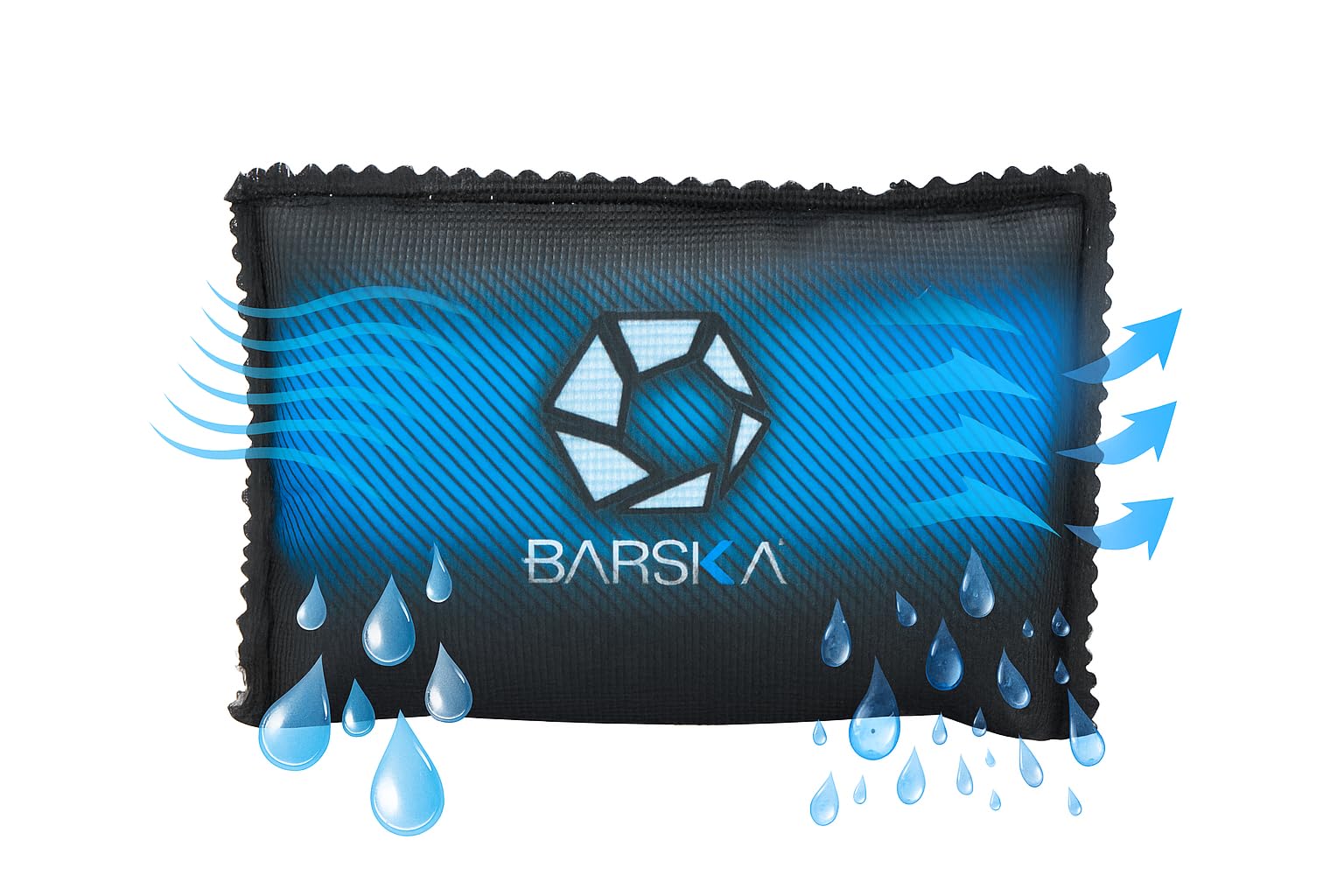
A microwave‑rechargeable silica gel pack with a color indicator — ideal for safes, fridges, and other small sealed spaces.
Why I picked it: I liked that I could renew the unit by microwaving it and reuse the same pack for months.
Best for: Safes, small cabinets, fridges, toolboxes, and cars where you need a compact, renewable absorber.
A low‑cost, reusable choice that avoids repeated disposables.
Pros
- Microwave‑rechargeable and reusable
- Color indicator for saturation
- Compact, safe for enclosed spaces
- No batteries or wiring needed
Cons
- Indicator can degrade after many cycles
- Not suitable for large rooms
- May develop slight odor after long use
My take
I used the Barska pack in a fridge with a poor door seal and saw pooling stop after I placed the unit inside. It eliminated visible condensation where I had previously had water collecting.
The blue‑to‑pink indicator gives a clear signal when it’s time to recharge. In practice I microwaved the pack every few months depending on humidity and storage conditions; recharging is simple and gets the unit back to working capacity quickly.
A couple of times I noticed a faint smell after extensive use, which told me it was time for a recharge. For small, moisture‑sensitive spaces where power‑free protection is important, this reusable pack offers a compact, cost‑effective solution.
4. Hornady Rechargeable Dehumidifier (95900) – Best for Gun Safes
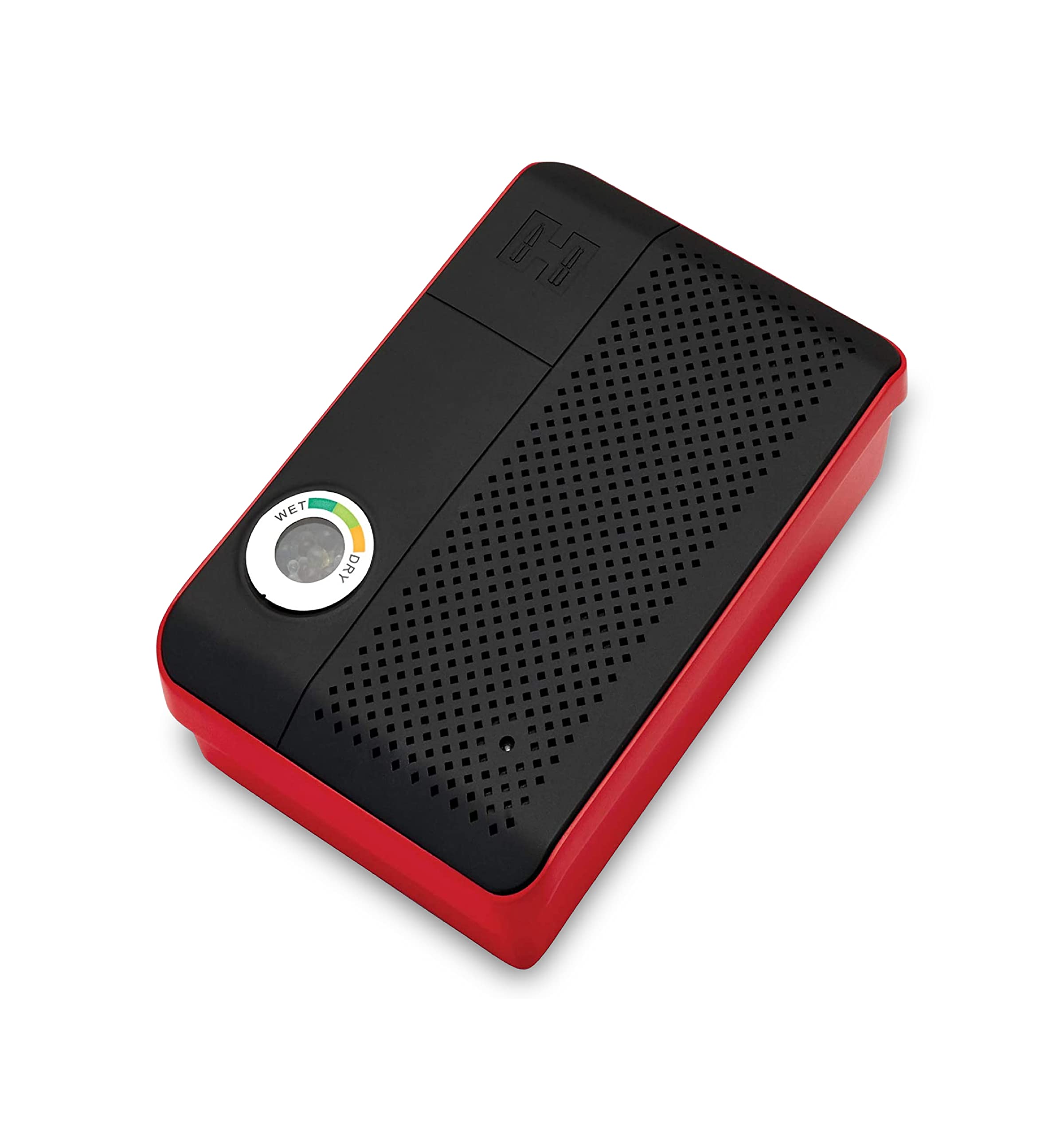
A compact, mountable desiccant unit designed for gun safes and other enclosed areas, featuring a color‑change indicator and simple recharge.
Why I picked it: I appreciated the mountable design and the ability to recharge the crystals using a standard outlet rather than consumable replacements.
Best for: Gun safes, lockers, cabinets, and any enclosed storage where corrosion is a concern.
A practical rechargeable option that balances compact size with replaceable cycles.
Pros
- Designed for safes and enclosed spaces
- Mounting bracket included
- Rechargeable via standard outlet
- No batteries or chemicals needed
Cons
- Takes time to fully recharge
- Small coverage compared to powered units
- Indicator wording can be confusing
My take
I mounted the Hornady unit inside a rifle safe and monitored humidity over a season. It helped keep levels stable near my target, and the unit’s compact form fit easily on the shelf using the included bracket.
Recharging is simple—plug it into a 110V outlet and the crystals dry out over the course of a day. That convenience means I don’t have to replace disposable absorbers every month.
The color indicator is useful, though the packaging text was slightly confusing about which color means dry in one instance. In daily use the Hornady unit gave me consistent protection for firearms and metal parts.
How I Choose a Portable Dehumidifier
Key factors I consider
I size a dehumidifier to the room and the level of humidity. Small desiccants work for safes and closets; compressor units are necessary for basements and whole rooms.
I look at drainage and maintenance. Continuous drain is a must if I can’t empty a tank daily. Rechargeable desiccants or microwave packs cut consumable costs in small spaces.
I weigh noise and placement. If a unit will run near living areas or bedrooms, quieter operation matters more than absolute capacity.
- Capacity vs. space: match pints/day to square footage.
- Drain options: tank, pump, or continuous hose.
- Power vs. passive: active units dry faster; passive absorbers are silent and cheap.
- Rechargeability: reusable silica packs lower long‑term cost.
- Smart features: Wi‑Fi and timers help when I can’t access the unit daily.
Placement and maintenance tips I follow
I place dehumidifiers away from walls and obstructions for better airflow and faster drying.
I clear lint and dust from filters regularly and check seals around windows or fridge doors to reduce workload.
- Keep a few inches clearance on all sides.
- Empty or set up continuous drain before long trips.
- Recharge silica or desiccant packs as indicators show saturation.
Frequently Asked Questions
How do I choose the right size dehumidifier for my room?
I start by sizing to the square footage and humidity level: tiny sealed spaces need a small desiccant or passive absorber; basements and open living areas need a high‑capacity compressor unit with continuous drain if humidity is heavy.
How often do I need to empty tanks or replace absorbers?
It depends on humidity. In very damp spaces I emptied tanks daily until I hooked up a drain. Disposable absorbers last weeks to months; rechargeable silica usually needs renewing every few months depending on conditions.
Can I recharge desiccant packs myself?
Yes—microwaveable packs like the Barska unit are designed to be renewed in a microwave, and other rechargeable units dry out when plugged into a household outlet per the manufacturer’s instructions.
Are passive moisture absorbers safe around pets?
I keep absorbers out of reach. The calcium‑chloride or silica contents are effective but should be inaccessible to pets and children; place units on high shelves or inside closed cabinets when needed.
Final Take
I keep a mix of solutions on hand: a powerful Wi‑Fi dehumidifier for large, damp spaces; rechargeable desiccants for safes and fridges; and disposable boxes for closets and storage pods.
Decide based on the space you need to protect and how hands‑on you want to be with maintenance—each option I tested has a clear role depending on those priorities.
