
I tested silicone, teak, and stainless sets to find versatile, durable utensils that protect pans and make cooking easier. Here are the ones I reach for most often.
I’ve cooked with dozens of utensil sets and keep coming back to a few that actually make everyday cooking easier. In this roundup I focused on build quality, heat resistance, how gentle the tools are on nonstick surfaces, and how each set stores and ages over time.
My goal was practical: find sets that cover real kitchen tasks, stand up to regular use, and don’t force me to baby them after every dish. I used these sets across sautés, sauces, baking, and wok cooking so I could judge utility and durability.
I compared each set by materials, how they perform on nonstick cookware, heat resistance, ease of cleaning, and whether the kit includes useful extras like measuring tools or storage. I emphasize real-world use—what I actually reached for on busy weeknights versus special occasions.
1. Fungun 24‑Piece Silicone Utensil Set – Best All‑Around
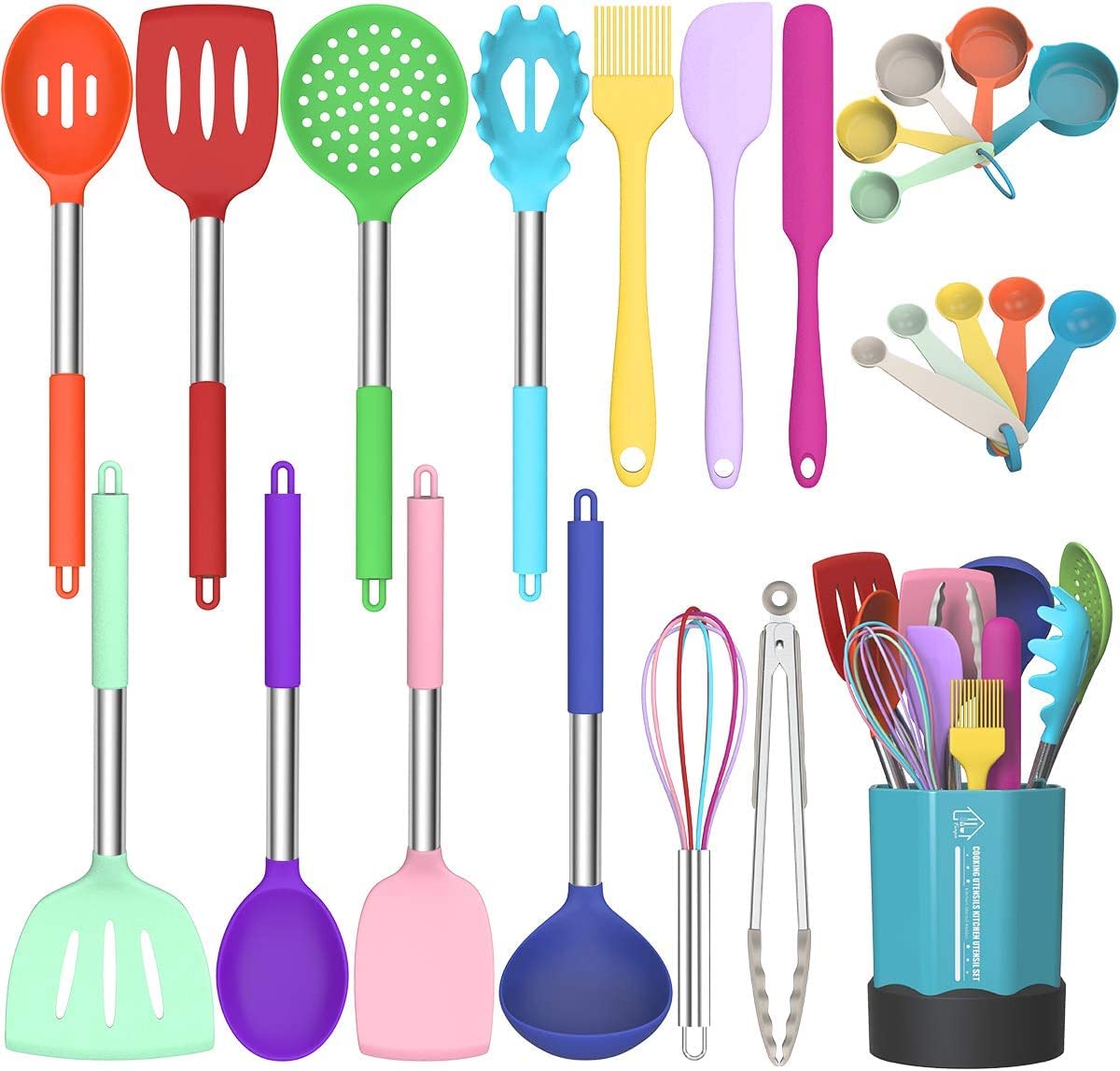
This is the set I grab when I want one kit that does everything — measuring, stirring, flipping, and serving — without risking my nonstick pans.
Why I picked it: I wanted a single, complete kit for everyday cooking and baking; this 24‑piece collection delivers with stainless cores and heat‑resistant silicone heads.
Best for: Home cooks who want a complete, nonstick‑friendly utensil collection.
Affordable full set that covers all tasks without needing add‑ons.
Pros
- Complete 24‑piece assortment
- Heat resistant up to 230°C
- Stainless‑steel core resists warping
- Won’t scratch nonstick pans
- Includes measuring cups and spoons
Cons
- Holder has arrived missing for some buyers
- A lot of pieces for minimalists
My take
This is the set I use when I’m cooking multiple dishes and want one go‑to container of tools. The silicone heads are soft enough to protect nonstick and ceramic coatings but firm enough to flip and stir without flopping. I tested them from delicate omelets to thicker tomato sauces and the silicone didn’t cling or stain.
The stainless‑steel cores give these utensils a confidence that cheap plastic sets lack — they don’t bend when I scrape a pan. I started hand washing, then tried the dishwasher occasionally and saw no obvious warping. The measuring cups and spoons are the practical bonus I actually use every week.
Heat tolerance is real in my experience; I left a spatula in a hot pan briefly and it came through fine. The holder is handy, though a few sets have been reported without the base — I’d double‑check the box if you need that organizer. Overall, this is the most versatile set I keep on the counter.
2. Woodenhouse Teak 8‑Piece Utensil Set – Best Natural Wood
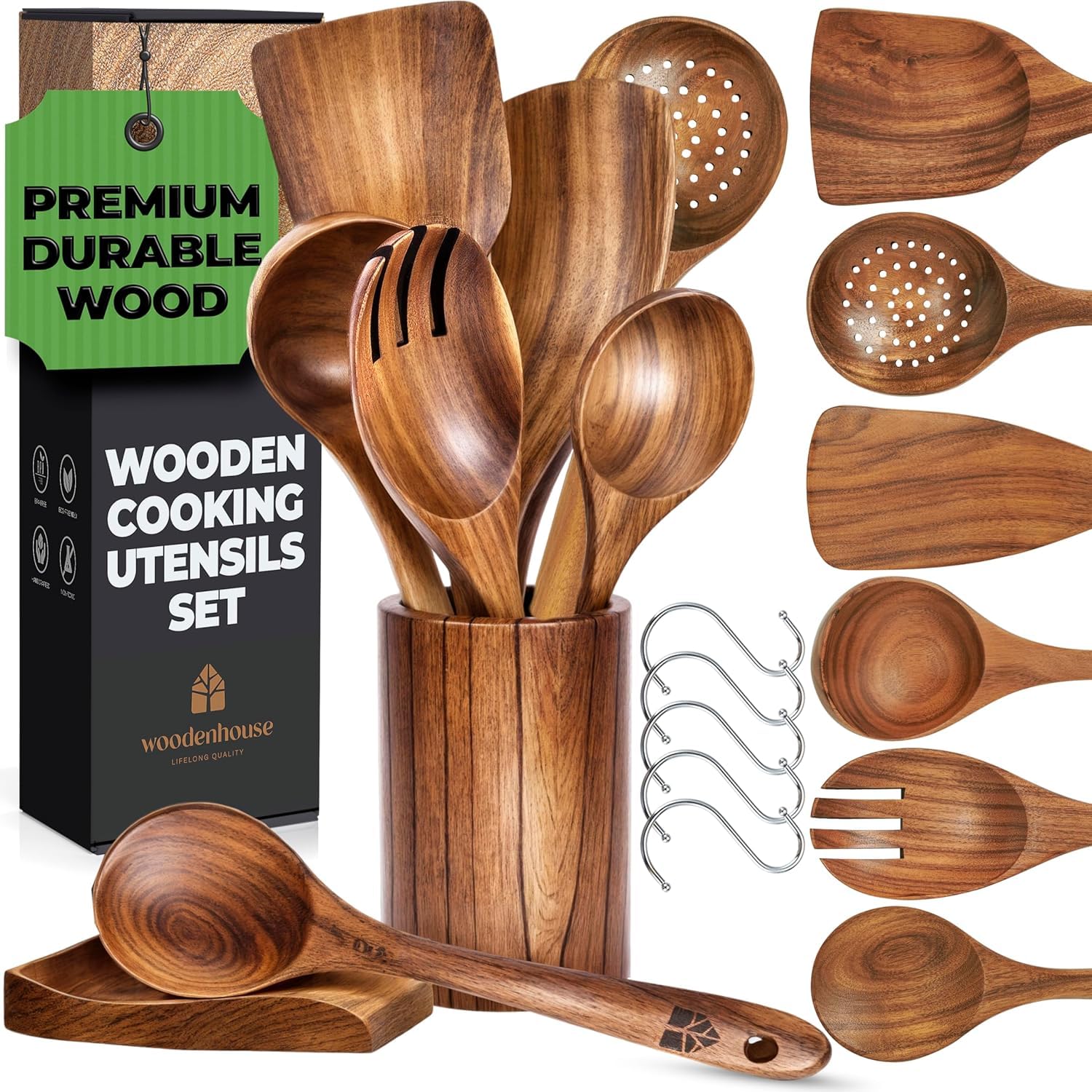
When I want warm, natural tools that won’t scratch my cookware, this teak set with a holder and spoon rest is the one I reach for.
Why I picked it: I needed sturdy, toxin‑free utensils that feel good in hand; one‑piece teak construction and thoughtful storage made this my wood pick.
Best for: People who prefer natural materials and non‑scratch tools for everyday cooking.
Midrange—built to last and worth the care it needs.
Pros
- 100% teak, one‑piece construction
- Includes holder and spoon rest
- Heat resistant and non‑scratch
- Easy to maintain with mineral oil
- Hooks included for hanging storage
Cons
- Requires hand washing and occasional oiling
- Shade varies due to natural wood
My take
I use this set when I want tools that look as good as they work. The teak is smooth, nicely weighted, and the finish holds up to daily stirring and serving. The holder with drainage holes and included spoon rest keep the counter tidy — I like that attention to storage.
Teak’s natural oil content makes these pieces water‑resistant compared with other woods, but I still hand wash and dry them to preserve the finish. Occasionally rubbing them with mineral oil keeps the wood feeling like new and prevents drying or small cracks.
These are gentle on all my pans, including expensive nonstick and copper‑lined skillets. If you want a set that’s solid, attractive, and easy to display, this teak kit is one I consistently use.
3. Zulay Kitchen 6‑Piece Teak Utensils – Best Compact Set
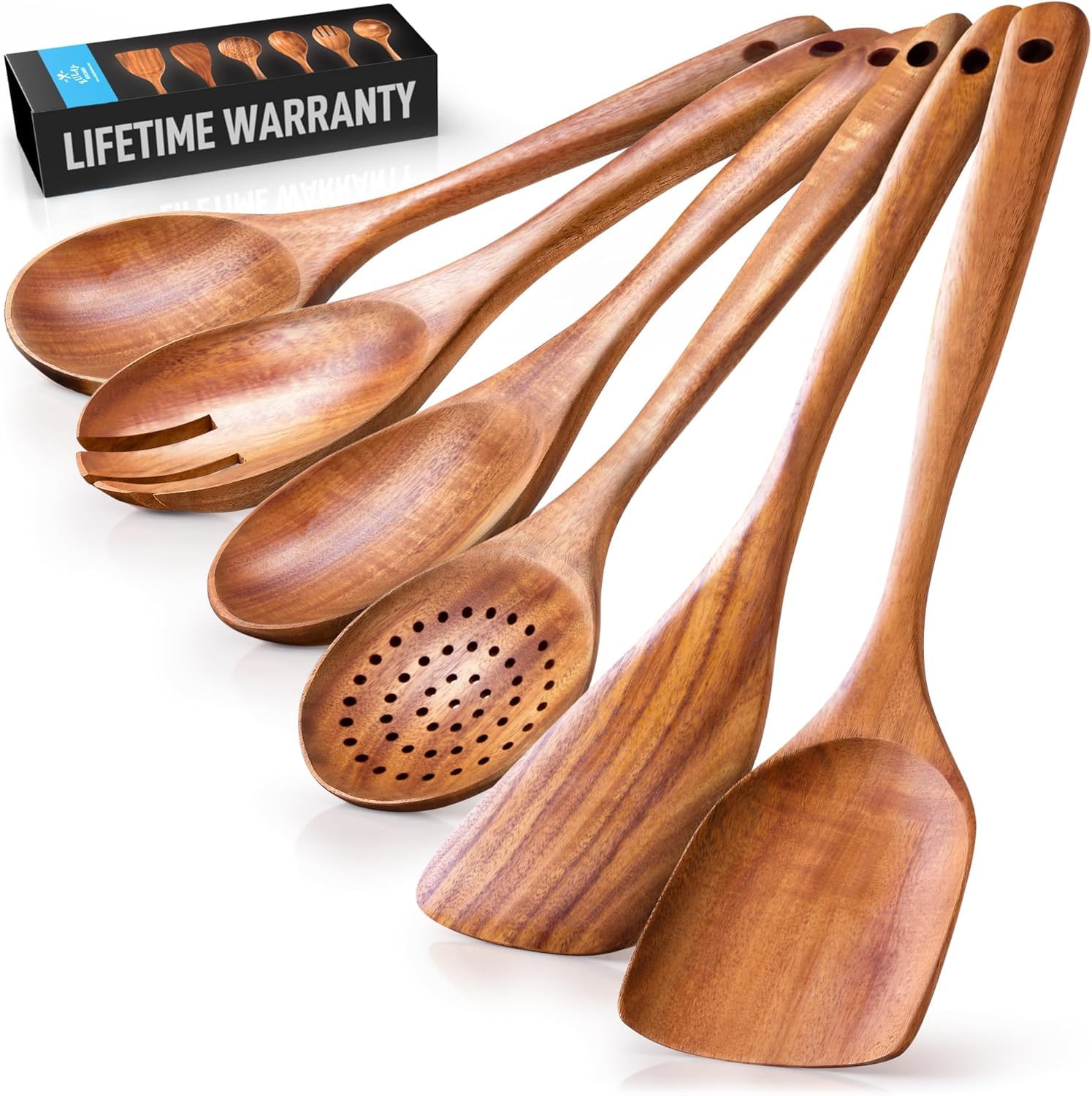
A simple, well‑crafted six‑piece teak set that’s ideal when you need only the essentials and a polished finish.
Why I picked it: I keep a compact, coated teak set on hand for quick cooking tasks and gifting; the lacquered finish and balanced weight sold me.
Best for: Small kitchens, gifting, and cooks who want a no‑fuss basic set.
Affordable, compact set with a refined finish.
Pros
- Smooth lacquered finish
- Durable teak wood
- Good weight and balance
- Safe on nonstick pans
Cons
- Some handles are shorter than expected
- Hand wash recommended to preserve finish
My take
This 6‑piece set became my default when I was preparing quick dinners or serving salads. The lacquered polish gives the utensils a glossy look and makes them easy to wipe clean after a sauce or vinaigrette. They feel solid in the hand and have a reassuring heft.
I appreciate the compact footprint — these fit into a small crock or drawer without crowding. I follow the care advice and hand wash, which keeps the finish intact. For a simple, elegant set that does the basics very well, this is the one I reach for most often in a pinch.
4. 304 Stainless Steel Utensil Set with Wooden Handles – Best for Power Cooks
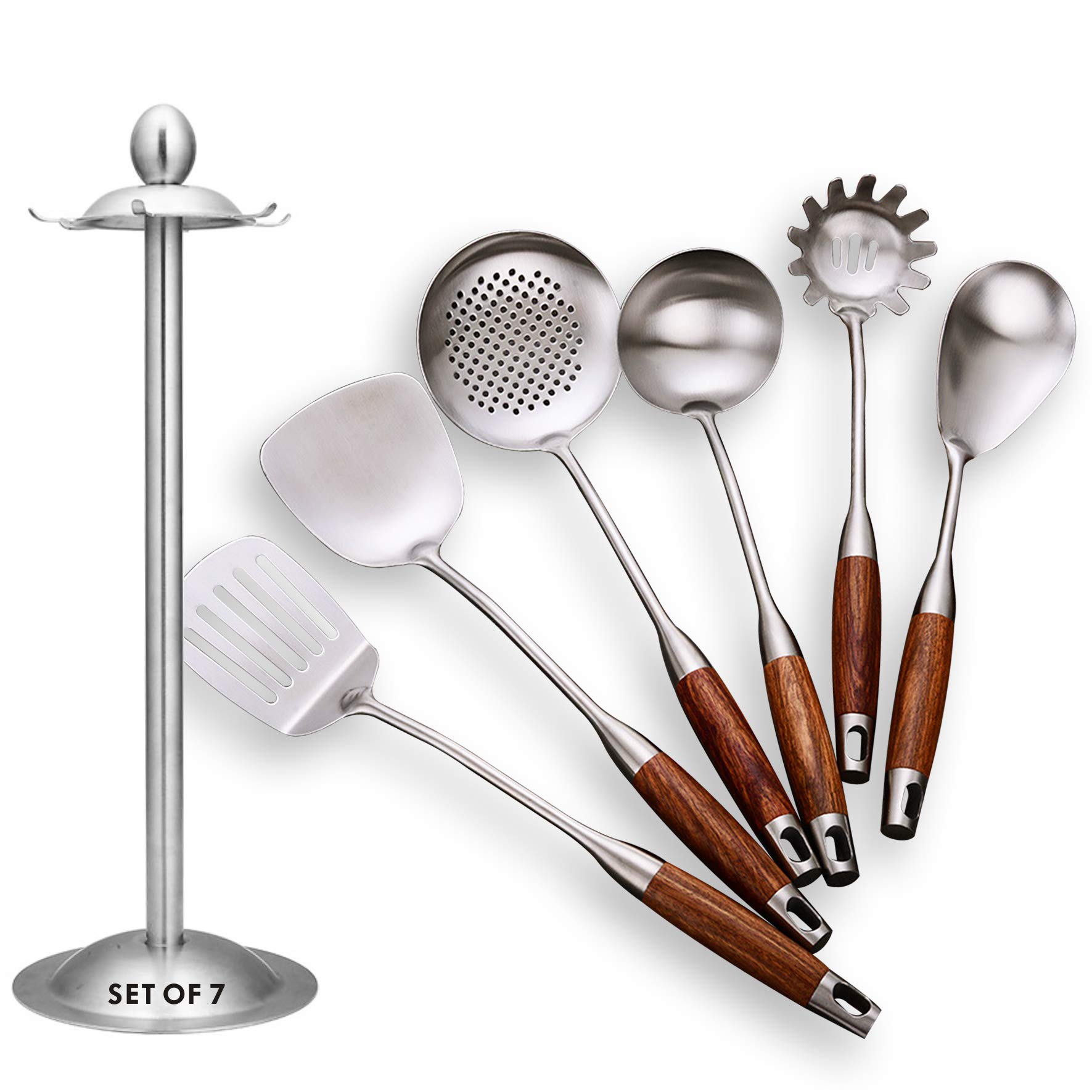
When I’m pushing a wok or handling heavier pans, this thick 304 stainless set feels built for the job.
Why I picked it: I wanted heavy‑duty metal tools that stand up to high heat and rigorous use; thick 304 stainless plus comfortable wooden handles deliver on durability.
Best for: High‑heat cooking, woks, and cooks who prefer metal tools.
A more expensive, premium option built for hard use.
Pros
- 304 stainless construction
- Ergonomic wooden handles
- Includes wok spatula and ladle
- Dishwasher‑safe design
Cons
- Metal heads can be harsh on nonstick surfaces
- Wood handles benefit from hand drying
My take
This is the set I reach for when I’m searing, tossing a wok, or moving heavy portions. The thicker 304 stainless feels durable and doesn’t bend under pressure. The wooden handles are comfortable and keep the tools cool in my hand during long cooking sessions.
I particularly like the wok spatula in this set — it’s well formed for tossing and scraping, and it handles high heat without worry. I did notice the head‑to‑handle angle felt a bit acute for my style, so I tweaked it slightly; that may not be necessary for everyone.
Although the manufacturer calls these dishwasher safe, I usually hand wash and dry the wooden handles to preserve them. If you need metal tools that won’t deform or stain, this is the heavy‑duty set I use.
How I Choose a Cooking Utensil Set
What matters most to me
I focus on material, heat resistance, how gentle the tool is on my cookware, and whether the kit includes practical extras (measuring tools, holders, hooks). I also consider how much care I’m willing to give the set — hand‑wash only wood needs a bit more attention than dishwasher‑safe silicone or stainless.
For daily cooks, versatility and durability beat novelty pieces. I prefer sets where the handles feel secure and the working end matches the tasks I cook most often.
- Material: Silicone for nonstick safety, teak for a warm, natural feel, stainless for heavy work
- Heat resistance: Look for silicone rated for at least ~200°C/400°F
- Care: Hand wash and oil wood; silicone and stainless tolerate dishwashering better
- Set size: Get a comprehensive kit if you cook many different dishes, or a compact 6–8 piece set for basics
- Storage: A holder or hooks keeps tools accessible and dry
Frequently Asked Questions
Are silicone utensils safe on nonstick pans?
Yes — I use silicone heads specifically to protect nonstick and ceramic coatings. Choose silicone rated for high temperatures so you don’t worry about melting during normal cooking.
How do I care for teak wooden utensils?
I hand wash teak with warm soapy water, dry them upright, and rub them occasionally with mineral oil to keep the wood from drying out and to preserve the finish.
Can stainless steel utensils damage nonstick cookware?
They can if you scrape hard or use sharp metal edges. I reserve stainless tools for stainless‑steel or cast‑iron cookware and use silicone or wood on nonstick surfaces.
Final Take
There’s no single perfect utensil set for every kitchen, but I’ve found that choosing by material and intended use makes decision‑making simple. For broad everyday use I prefer the versatile silicone kit; for a natural look and gentle cookware care I use teak; for heavy, high‑heat cooking I rely on 304 stainless. Choose the set that matches the cookware you own and the level of care you’re willing to give — that decision has made my cooking smoother every day.
