
I tested five white duvet covers across fabrics and styles so you can pick the one that actually works for your bed and sleeping habits. From budget-friendly boho to luxury washed linen, here’s what I’d choose and why.
I spent nights swapping inserts, washing cycles, and styling beds to find white duvet covers that actually perform. I looked for honest factors that matter in everyday use: fabric hand, breathability, how well an insert stays put, and whether the look holds up after washing.
Below I’ve rounded up five covers that excel at different things—boho texture, cotton sateen sheen, floral charm, linen luxury, and linen-like washed cotton. Each pick includes what I liked, where it shines, and a short, practical take on who it’s best for.
I compared weave, feel, and construction across polyester, cotton, and linen options. If you want soft sheen and patterns, go cotton sateen; if you want a lived-in, breathable summer sleep, pick linen or washed cotton; for a budget textured look, polyester tufted styles deliver visual interest without fuss.
1. JELLYMONI Boho Striped Duvet Cover (Queen) – Best Boho Look (Budget)
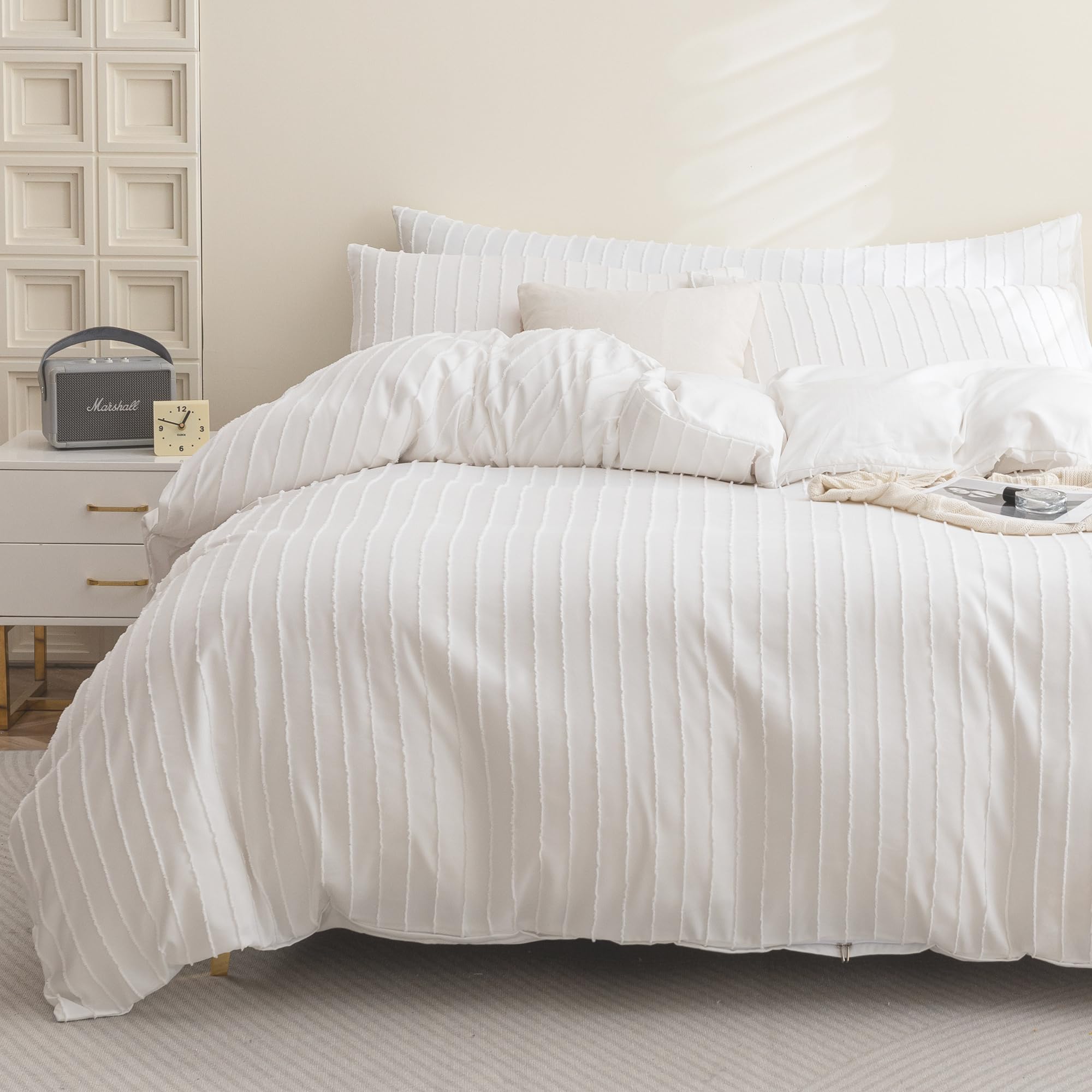
I chose this for its tufted stripes and textured boho look that dresses up a bed without breaking the bank.
Why I picked it: Textured embroidery gives an elevated look at an affordable price.
Best for: Anyone who wants boho texture and easy care on a budget.
An affordable option that mimics higher-end tufted styles.
Pros
- Chic striped tufted embroidery
- Hidden zipper and corner ties
- Soft, low-maintenance polyester
- Comes with two pillowcases
Cons
- Polyester lacks natural breathability
- White may lean slightly off-white after washing
My take
I reached for the JELLYMONI when I wanted a boho, textured vibe without splurging. The tufted striped embroidery is what sold me; it adds depth to a plain white bed and photographs well in natural light.
Putting the duvet on was simple thanks to the hidden zipper and corner ties—my insert stayed put through the night. The polyester feels surprisingly soft out of the package and softened a bit more after a wash.
If you’re a hot sleeper, note polyester won’t breathe like cotton or linen. For styling and durability on a budget, though, this cover delivers consistent results and washes easily on a gentle cycle.
2. MILDLY Cotton Sateen Duvet Cover (King) – Best Cotton Sateen Pattern
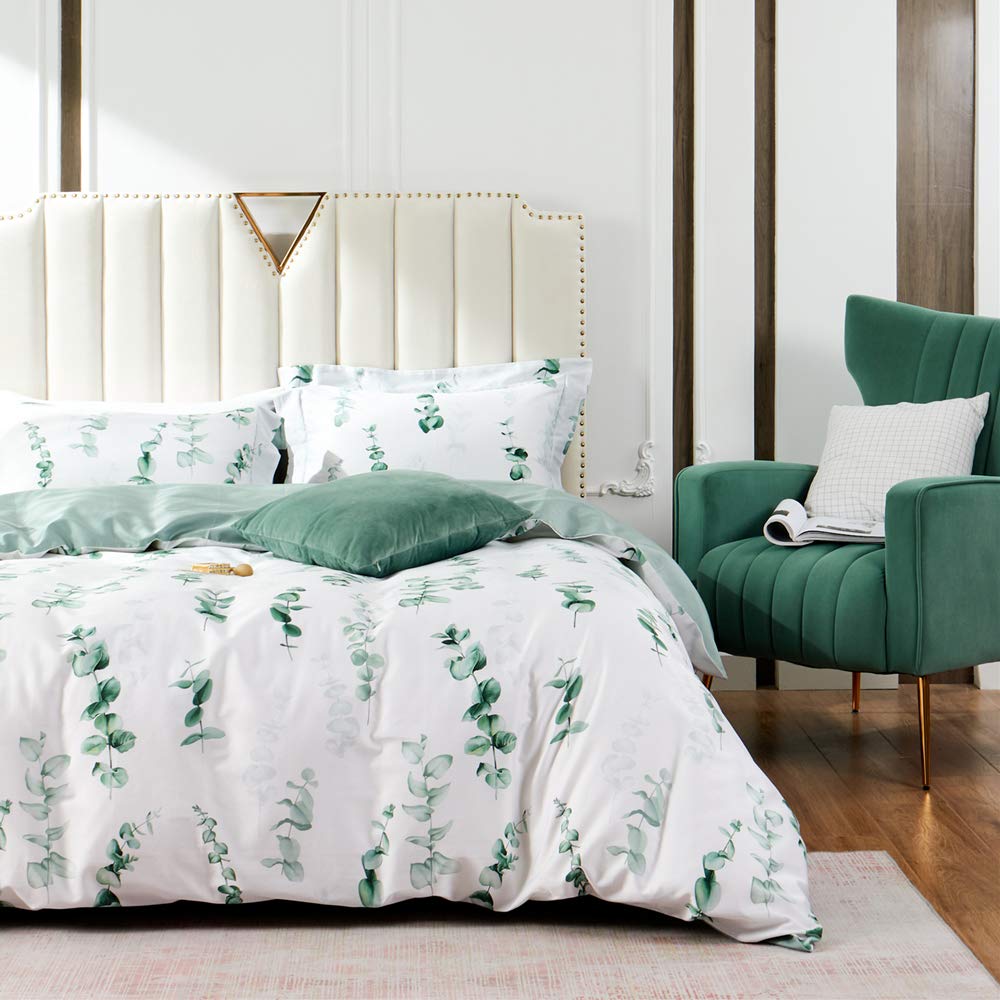
I picked this for its long-staple cotton sateen, detailed print, and solid construction—my favorite when I wanted pattern without sacrificing a smooth hand.
Why I picked it: Long-staple cotton and a sateen finish for silky feel and vivid prints.
Best for: Those who prefer smooth, breathable cotton with designer patterns.
A midrange pick for a durable, silky-feeling cotton option.
Pros
- 100% long-staple cotton
- Sateen weave feels silky
- Invisible zipper and corner ties
- OEKO-TEX certified fabric
Cons
- Shams feel a bit lightweight
- May need gentle drying to avoid wrinkles
My take
I reached for the MILDLY when I wanted a pattern that felt grown-up. The 100% long-staple cotton with a sateen weave gives a smooth, slightly lustrous finish that still breathes at night.
The print stayed vivid after multiple washes, and the invisible zipper made swapping the insert painless. I did find the internal ties a touch lightweight—so I knot them securely when I insert a down comforter.
Overall it’s a reliable midrange choice when you want cotton comfort with designer surface detail and responsible fabric certification.
3. AMWAN Pink White Floral Cotton Duvet Cover (Queen) – Best Floral/Cottagecore
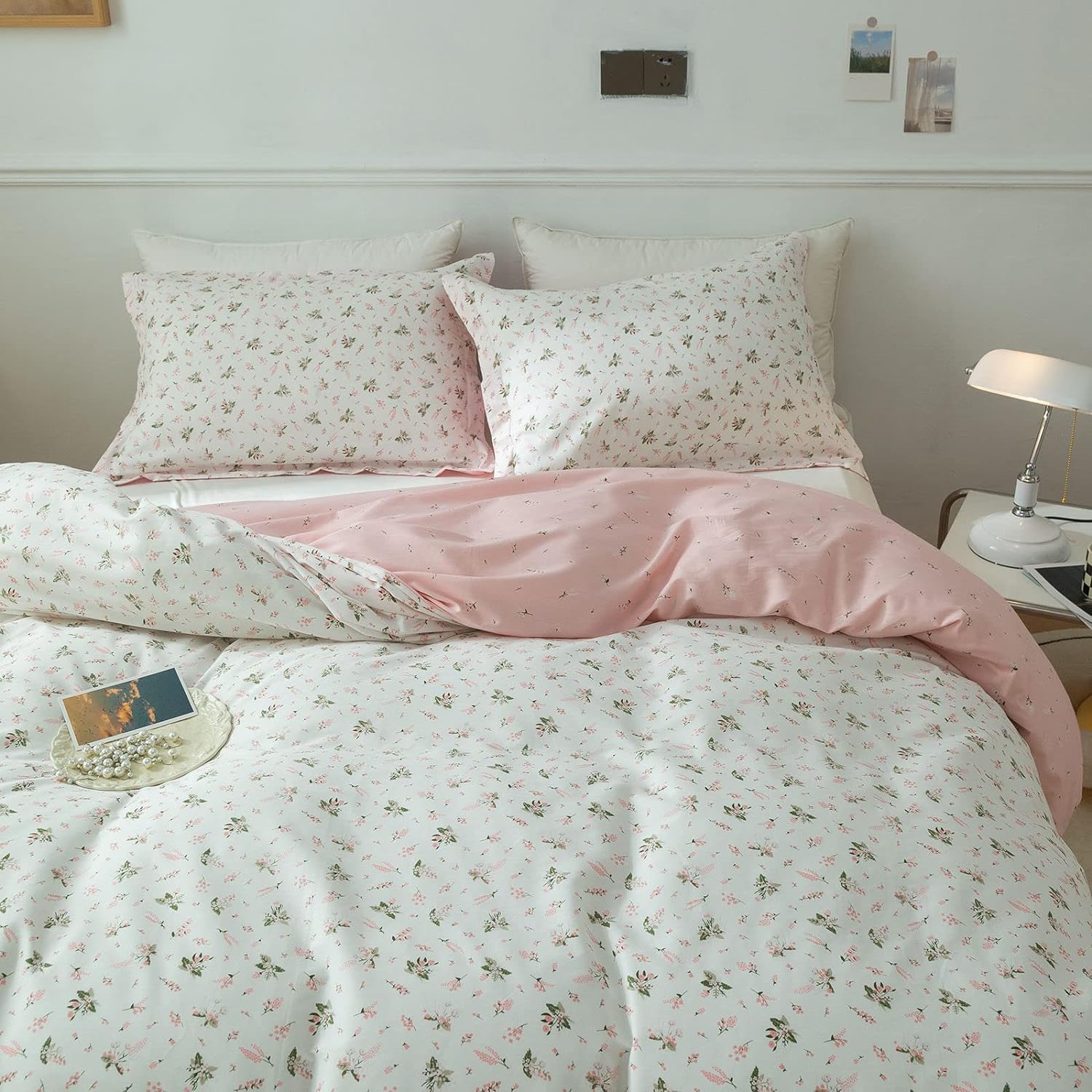
I picked this for vintage floral charm in 100% cotton—perfect when I wanted a softer, cottagecore look that’s comfortable year-round.
Why I picked it: 100% cotton floral print with a reversible design and easy zipper.
Best for: Fans of cottagecore, floral patterns, or breathable cotton bedding.
A budget-friendly cotton option with a pretty floral print.
Pros
- 100% cotton, breathable
- Pretty reversible floral print
- Hidden zipper and corner ties
- Machine washable
Cons
- May be slightly heavier autumn weight
- Colors vary slightly from photos
My take
I used the AMWAN when I wanted bedroom charm. The cotton feels authentic—substantial and not paper-thin—and the floral print reads softer in person than online images, which worked well for my aesthetic.
The hidden zipper and four corner ties kept my insert centered through regular use. It washed up well without noticeable shrinkage and held the print color through several cycles.
If you prefer lighter summer-weight covers you might find this a touch cozy, but for an all-season floral duvet that looks handmade and comfortable, this was a delight to sleep under.
4. Simple&Opulence Washed Linen Duvet Cover (King) – Best Linen Luxury
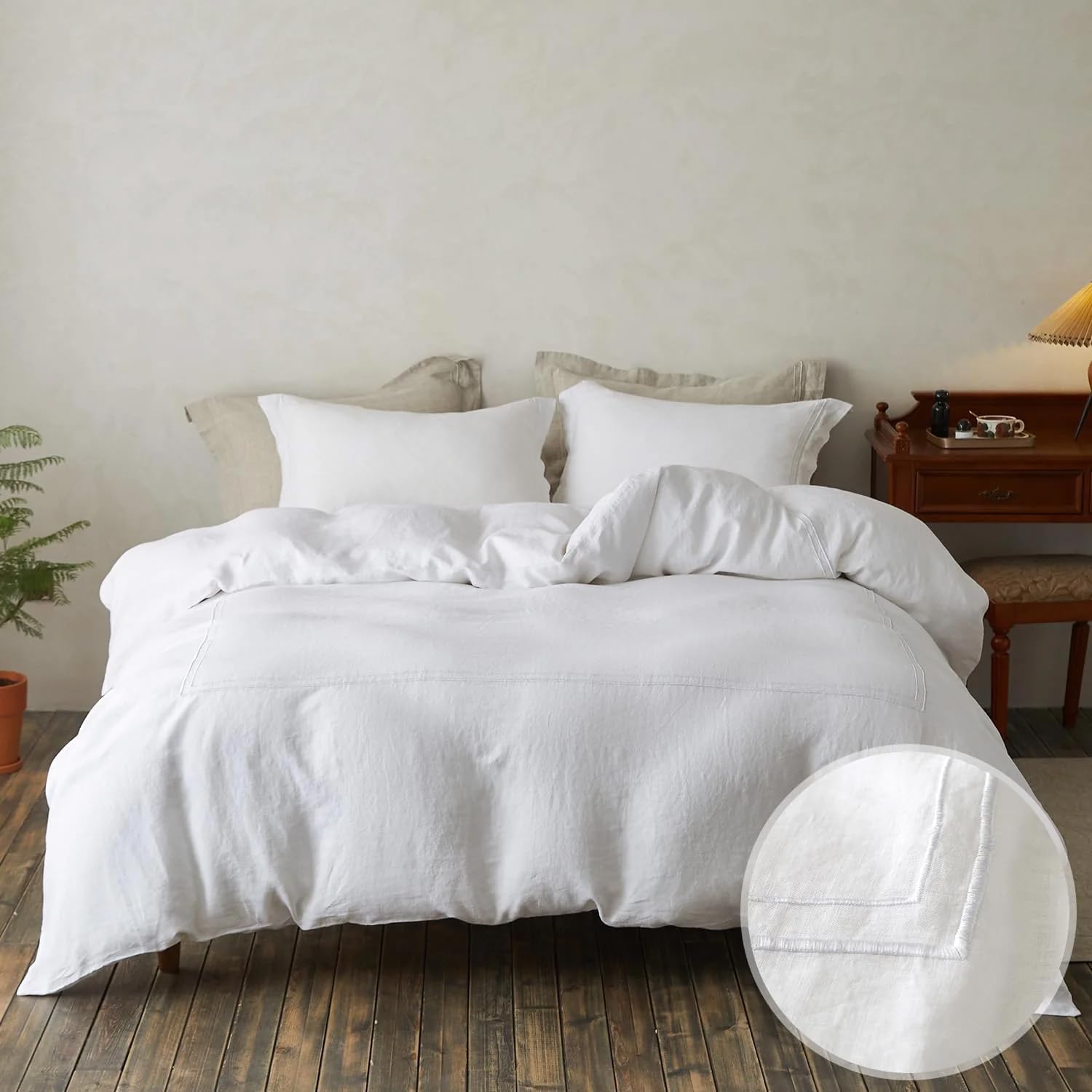
I reached for this linen when I wanted natural breathability and a relaxed, high-end bed that gets better with age.
Why I picked it: 100% European flax linen with a stone-washed finish for breathable luxury.
Best for: Hot sleepers and anyone who prefers natural, temperature-regulating bedding.
A higher-end linen investment for long-term comfort and texture.
Pros
- 100% European flax linen
- Stone-washed, softens over time
- Seven corner ties for stability
- OEKO-TEX certified
Cons
- Natural wrinkles are part of the look
- Requires gentler washing to preserve fibers
My take
I turned to the Simple&Opulence linen when I wanted a breathable summer option that still feels cozy in cooler months. The stone-washed European flax has that dry, lived-in hand that becomes softer after each wash.
Seven internal ties and a button closure kept my comforter stable and the hidden fasteners keep the look seamless. I treated it gently in the wash and found the fabric relaxed rather than pilled.
If you want a high-end natural fiber that moderates temperature and improves with use, linen is worth the extra attention—and this one earned a permanent spot on my bed rotation.
5. MooMee Washed Cotton Striped Duvet Cover (King) – Best Linen-Look Cotton
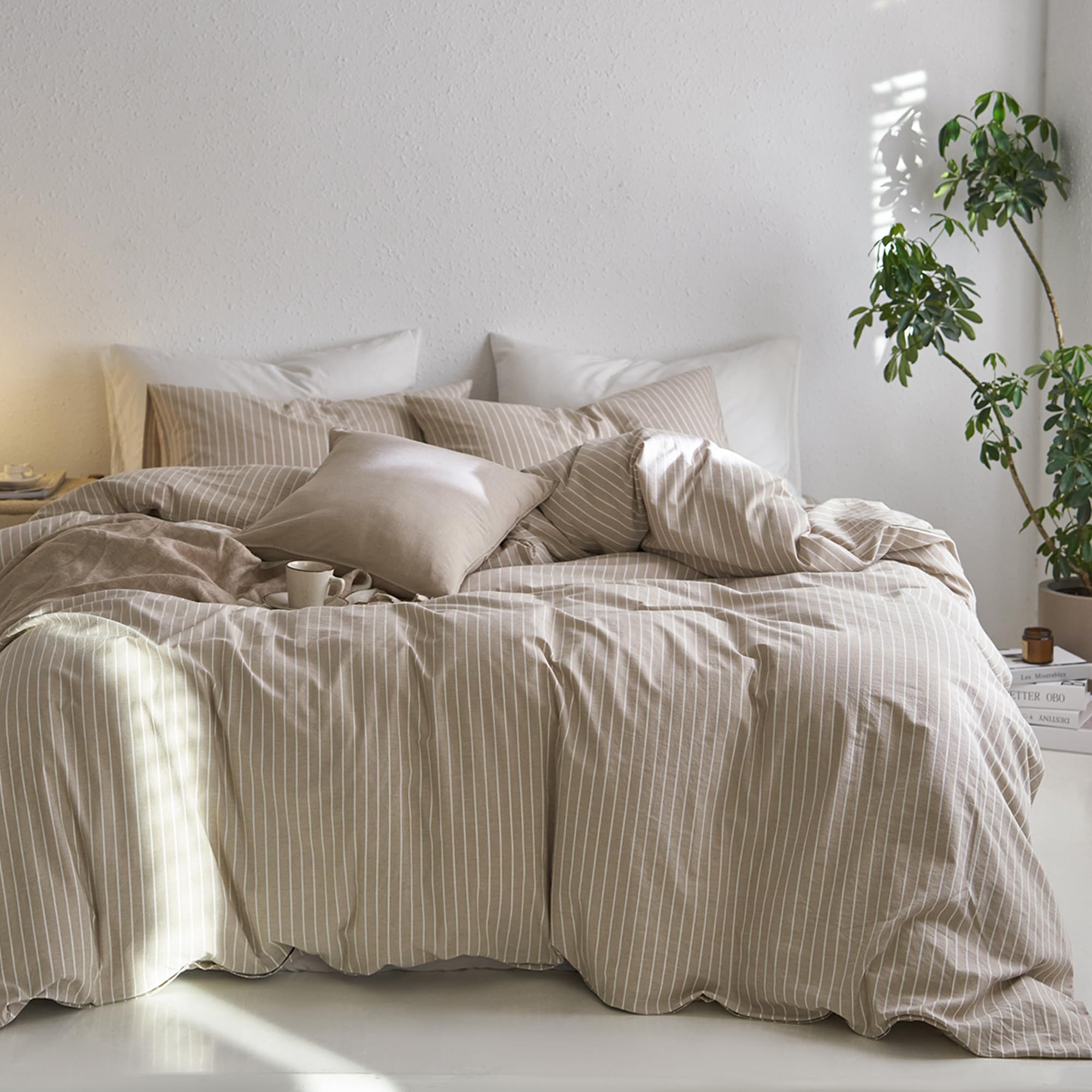
I picked this when I wanted that linen aesthetic but the easy comfort of cotton—the washed cotton texture hits that resort-style look without feeling slippery.
Why I picked it: Washed cotton that looks like linen and sleeps like a soft cotton shirt.
Best for: People who want linen aesthetics but prefer cotton’s feel.
A midrange choice that balances linen style and cotton comfort.
Pros
- 100% washed cotton, linen-like texture
- Hidden zipper and eight corner ties
- Breathable yet cozy year-round
- Durable construction
Cons
- Can retain warmth with fluffy inserts
- Slightly textured, not silky smooth
My take
I reached for the MooMee when I wanted the best of both worlds: linen visuals with cotton comfort. The fabric feels like a well-worn shirt—soft, textured, and cozy without slippery sheen.
The eight corner ties made sure my duvet insert stayed put even when I fluffed it up. I did notice that with a very thick insert it felt warmer, so I swapped to a lighter filling for summer.
For a lived-in, elevated look that wears well through washes, this washed cotton cover has been one of my most-used picks.
How I Choose a White Duvet Cover
Fabric and Feel
I start with fabric because it dictates temperature, hand, and longevity. Linen breathes best and softens with age; long-staple cotton sateen gives a silky sheen; washed cotton delivers a linen-like appearance with cotton comfort; polyester offers texture and easy care but less breathability.
- Choose linen for natural breathability and a relaxed look.
- Pick long-staple cotton for a silky, cool feel.
- Go washed cotton for linen-like texture with cotton softness.
- Use polyester if you need budget-friendly texture and easy washing.
Construction Details I Watch
Closures and internal ties made the biggest difference during my swaps. Hidden zippers are faster to use than buttons, and more corner ties (or sturdier ties) keep the insert from shifting.
- Hidden zipper vs button: zipper is faster and cleaner.
- Four ties is baseline; eight or seven ties hold inserts more securely.
- Check for reinforced seams and neat stitching for durability.
Fit, Size, and Thickness
I always measure my duvet insert before ordering. Some covers list oversized dimensions—if you want a fluffy look, size up; if you prefer a tailored fit, match measurements closely.
- Size up if you like a billowy look.
- Match dimensions for a sleek, tailored finish.
- Consider insert thickness: thick inserts can make cotton feel warmer.
Care and Longevity
How a cover handles washing tells me how it will look in a year. Linen and washed cotton gain character but need gentler care; cotton sateen usually washes well but can wrinkle; polyester is easiest to maintain.
- Linen: gentle cycles, low heat drying, expect natural wrinkles.
- Cotton sateen: machine washable, may need low-heat drying.
- Polyester: machine wash and tumble dry for easiest upkeep.
Style Tips
White covers vary from bright white to off-white; I compare swatches in natural light when possible. Texture and embroidery change the perceived color and depth more than you might expect.
- Texture adds depth—tufting, embroidery, and stripes all change the look.
- Mix pillow textures to avoid a flat white bed.
- Consider reversible prints for more styling options.
Frequently Asked Questions
Will a duvet cover fit different thickness inserts?
Yes—most covers fit a range of insert thicknesses, but I check the cover dimensions against my insert. If I want a fluffier look, I choose a slightly larger cover; for a sleek fit I match sizes exactly.
How often should I wash my duvet cover?
I wash my duvet cover every 2–4 weeks depending on use. Linen and washed cotton soften with washing, so I follow gentle cycles and low heat to preserve fibers.
Should I choose linen or cotton for hot nights?
I prefer linen for hot sleepers—its breathability and moisture-wicking keep me cooler. Long-staple cotton sateen is cooler than polyester but has more sheen; washed cotton is a middle ground.
Final Take
After testing these five covers, I kept one linen for summer nights, a cotton sateen for a polished look, and a washed cotton for everyday comfort. Each cover served a different purpose in my home.
If you want breathable natural fibers, lean toward linen or long-staple cotton. If texture and low maintenance are your priorities, the polyester tufted option or washed cotton are practical wins.
Pick the one that matches how you sleep and how much maintenance you want—the right white duvet cover can simplify mornings and make your bed feel like a retreat.
