
I tested four desktop fans across portability, noise, airflow, and battery life — from tiny USB travel fans to a true whole-room circulator. Here are the ones I kept reaching for.
I spend hot afternoons and long workdays testing small fans so I know which ones actually make a difference where you need it most.
My testing covered tiny USB-powered desk fans, rechargeable battery models, and a full-size Vornado circulator so I could compare portability, air output, runtime, and noise.
Below I share the picks that earned a regular spot on my desk, nightstand, or suitcase.
I compared these fans by airflow felt at typical desktop distances, measured noise subjectively in quiet rooms, observed runtime on battery models, and checked ease of use and build quality for daily handling.
1. Gaiatop USB Desk Fan – Best Budget Travel Fan
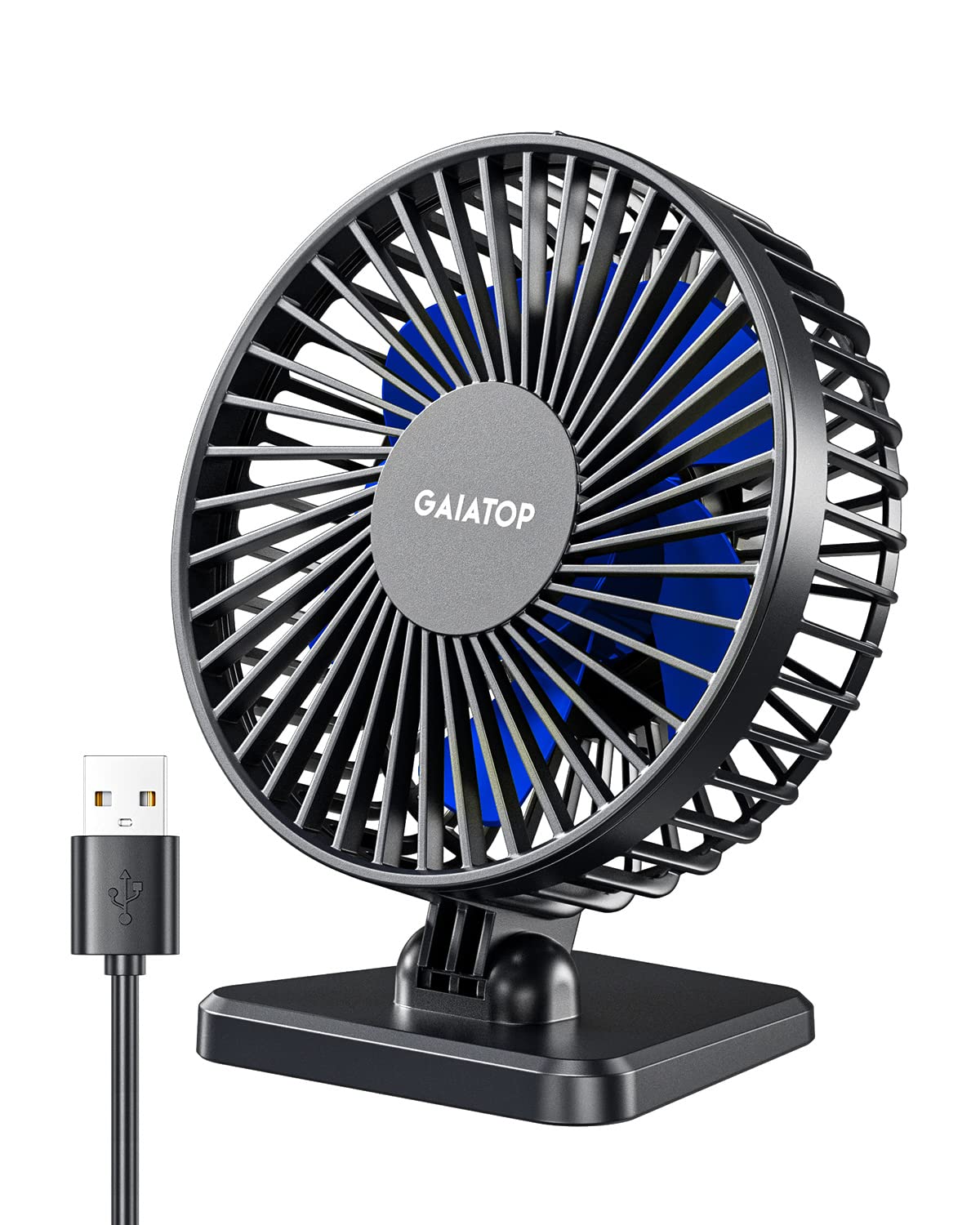
A tiny, surprisingly punchy USB fan that I keep in my travel bag. It’s extremely compact, quiet at low speeds, and draws very little power.
Why I picked it: Outstanding airflow for its size and consistently quiet on low setting.
Best for: Travelers and anyone who needs a compact desk breeze.
Very affordable; great value for basic cooling needs.
Pros
- Exceptionally compact and lightweight
- Quiet on low speed
- Three easy-to-cycle speed settings
- USB-powered and energy efficient
Cons
- Short USB cable
- Can develop a rattling over long use
My take
This little Gaiatop is what I reach for when I’m packing light. It takes up almost no space, runs from any USB port, and on the low setting it’s whisper-quiet while still moving a useful amount of air.
I used it off a pocket battery during a hot day and was surprised how effective it was without drawing much power. The head tilts up to about 30 degrees so I can aim airflow precisely toward my face or laptop.
Practical notes: the included cable is short, so I pair it with a USB extension when my outlet is across the desk. After several weeks of heavy use one unit I tried developed a faint rattling; performance didn’t suffer but it’s worth noting if you expect long-term silent operation.
2. JZCreater USB Desk Fan – Best Small Desk Fan
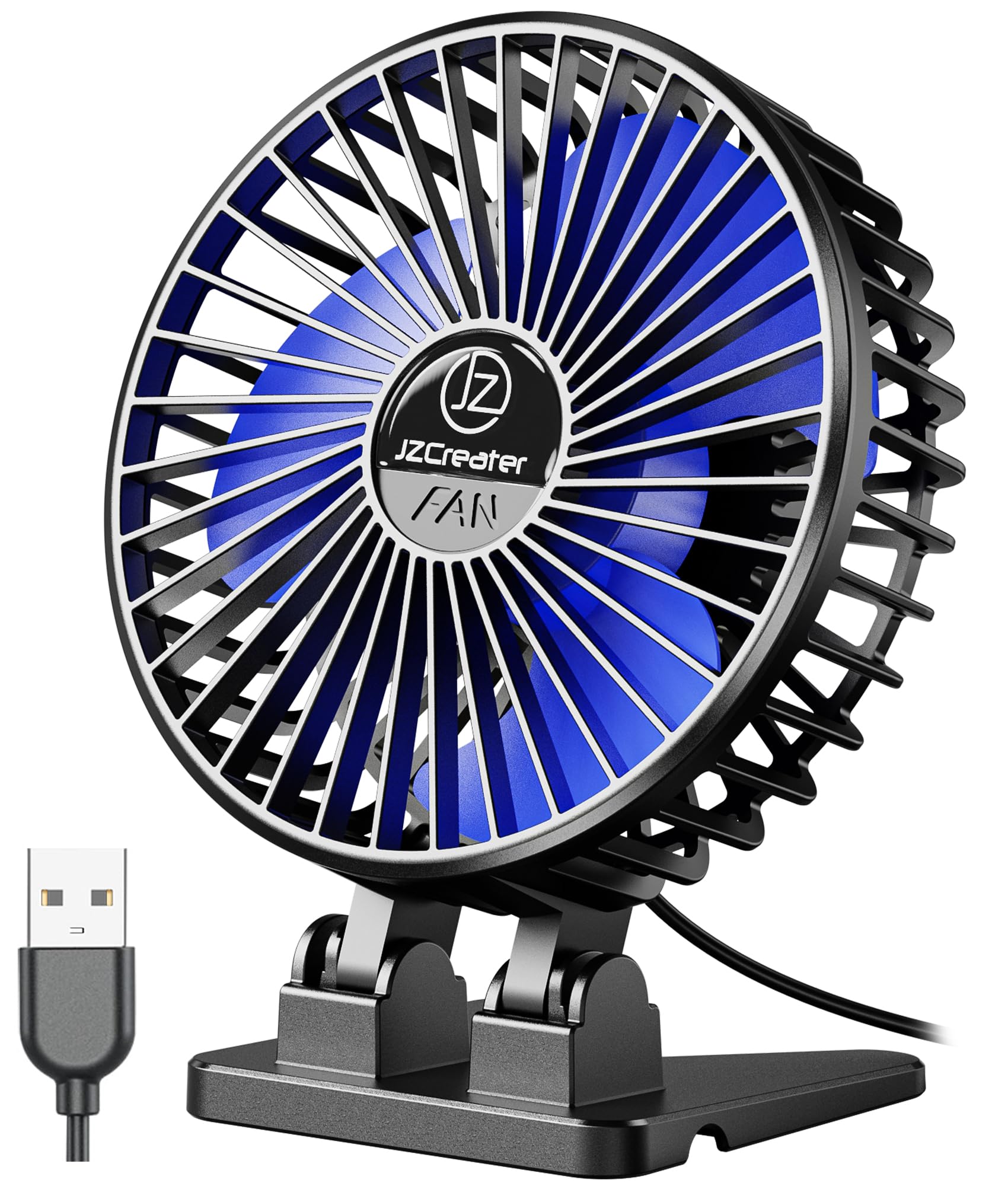
A compact, well-designed USB fan with a brushless motor and removable grill for cleaning. It balances strong airflow with surprisingly low noise at lower speeds.
Why I picked it: Solid build and a brushless motor that keeps noise low while moving air.
Best for: Daily desk use where cleanability and quiet operation matter.
Budget-friendly and practical for everyday desktop use.
Pros
- Brushless motor stays quiet
- Removable front for cleaning
- Sturdy base for desk placement
- Three-speed control
Cons
- No battery option
- Some units are physically smaller than listed
My take
I appreciate how the JZCreater balances a sleek look with real performance. The brushless motor keeps the tone low, which makes it great for a bedside table or workspace where I don’t want intrusive noise.
The USB lead is longer than on some competitors, which makes placement easier. I also liked that the front grille is removable — cleaning is simple, and that adds to the fan’s longevity in my experience.
One thing I noticed: unit size can vary between batches. The fan I tested felt more compact than some listing images suggested, so expect a true mini footprint rather than a large disc.
3. Viniper Rechargeable Desk Fan – Best Rechargeable Desk Fan
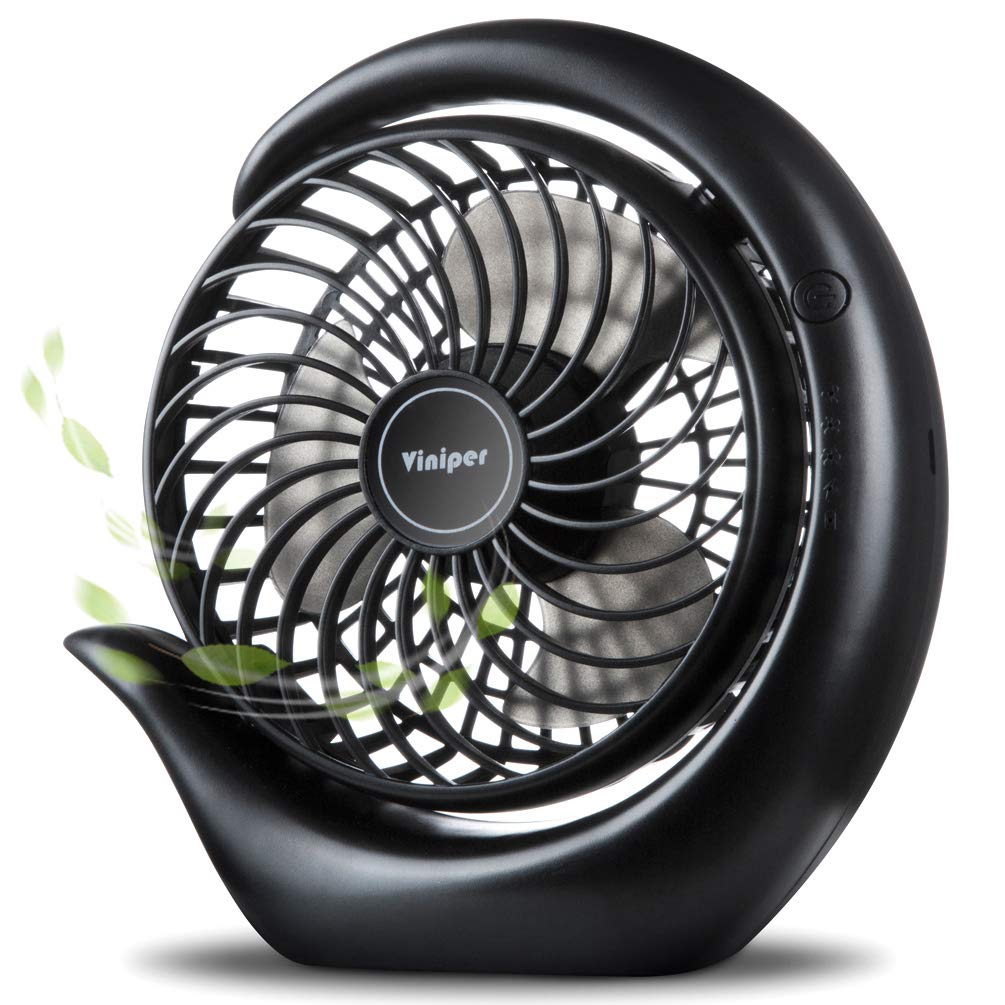
A rechargeable desktop fan with a big battery and long runtime. I found it reliable for overnight use and excellent for portable, untethered cooling.
Why I picked it: Long battery life and strong airflow make it the most useful cordless option I tested.
Best for: People who need cordless runtime for camping, commuting, or sitting away from outlets.
Midrange cost for a rechargeable, long-runtime model.
Pros
- Long 8–24 hour runtime
- Strong airflow for its size
- 180° tilt for aiming
- Solid build with brushless motor
Cons
- Not as powerful as full-size fans
- Lacks advanced speed controls
My take
The Viniper impressed me with its battery life — I routinely got many hours of usable airflow on medium settings, and overnight use on low was no problem.
It’s small enough to toss in a bag but powerful enough to make a real difference when I’m away from a USB source. The 180-degree tilt helps focus air where I need it without moving the whole unit.
Construction feels sturdy thanks to ABS housing and the brushless motor. For anyone who wants a portable fan that actually lasts through long sessions, this is the one I kept coming back to.
4. Vornado 630 Air Circulator – Best Whole-Room Circulator
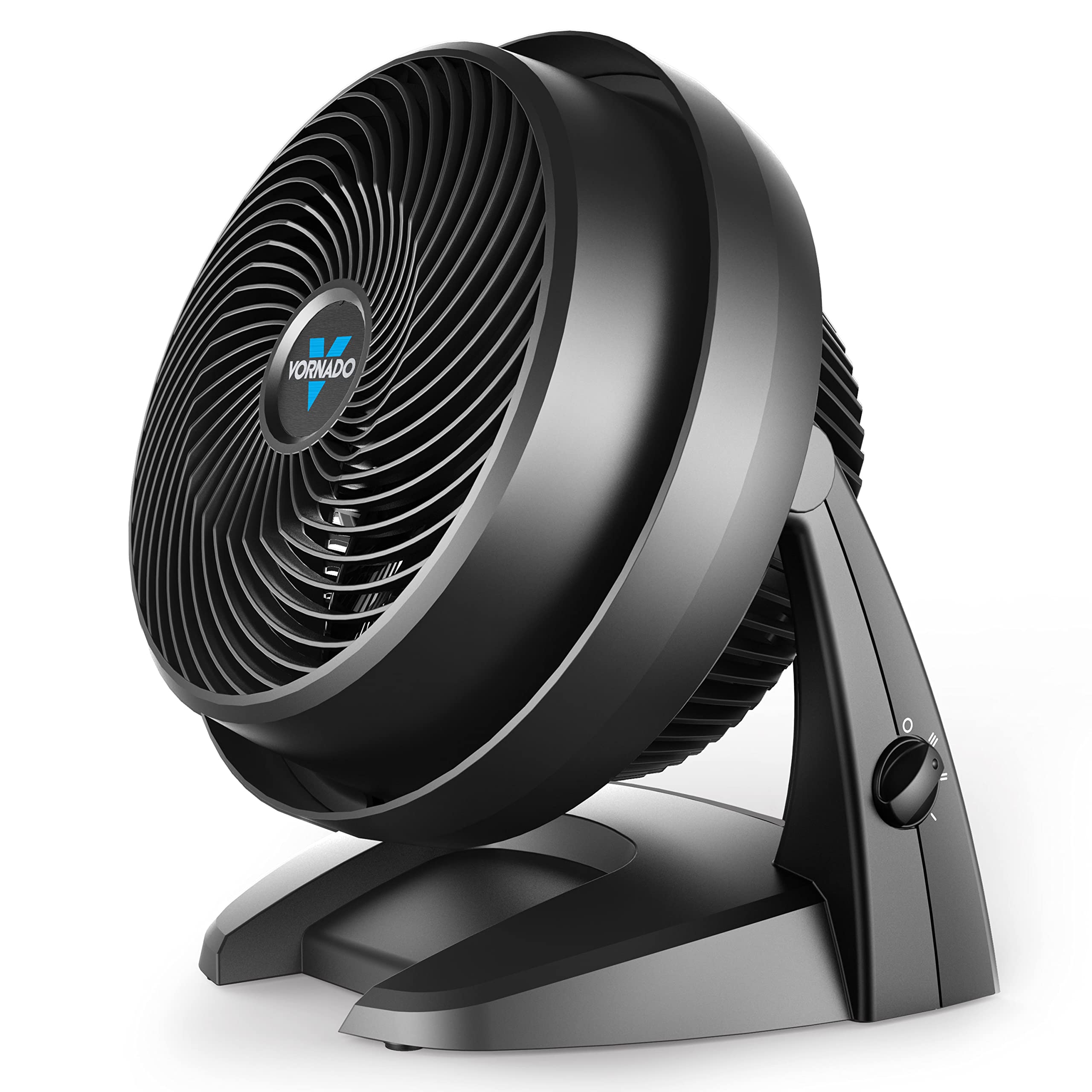
A true circulator that moves air across a whole small room rather than just creating a localized breeze. I found it ideal for bedrooms and small living spaces.
Why I picked it: Consistent, room-filling circulation that cheap fans can’t match.
Best for: Anyone needing whole-room air circulation rather than a personal desk breeze.
Higher upfront cost but built for reliable whole-room performance.
Pros
- Vortex circulation moves air room-wide
- Three simple speed settings
- Durable build quality
- Adjustable tilt for directional flow
Cons
- High speed is noticeably louder
- Larger and less portable
My take
I used the Vornado 630 as my bedroom circulator and was struck by how it changes the feel of the room — air no longer sat stagnant in corners and the whole space felt cooler even with the A/C set modestly.
On low and medium it’s pleasantly quiet and creates a steady, non-choppy airflow. High produces more noise, but also a serious increase in circulation when I needed it.
This is a different tool from tiny USB fans: it’s not for packing or a laptop desk, it’s for making a room feel fresher and more comfortable. The build feels robust, and the simple dial control is reliable.
How I Choose a Desktop Fan
Key criteria I test
I evaluate fans across four practical categories: airflow (how much breeze you actually feel at desk distance), noise (subjectively measured in quiet rooms), portability (size, weight, and power options), and durability/cleaning (how easy it is to keep working reliably).
- Airflow: I check low-to-high settings at typical desk distances.
- Noise: I listen on low and high settings in a quiet room.
- Power: USB-only, rechargeable, or AC each has different use cases.
- Build and maintenance: removable grills and sturdy housings matter.
Which fan type is right for you
USB minis are great if you need an affordable, always-pluggable breeze for your laptop or bedside. Rechargeable fans win when you need untethered runtime away from outlets. Circulators are the right tool when you want to move air across an entire room.
- Choose USB if you sit near a laptop or USB outlet.
- Choose rechargeable for portability and longer untethered use.
- Choose a circulator for whole-room comfort.
Noise vs. performance tradeoffs
There’s always a tradeoff between airflow and quiet. I prioritize low-noise performance at my desk and use higher settings only when I need stronger cooling for short stretches.
- Low speed is best for sleep/long work sessions.
- High speed is useful for short bursts or circulating a room quickly.
Frequently Asked Questions
Can these small USB fans run from a power bank?
Yes. USB-powered minis like the Gaiatop and JZCreater run fine from a pocket power bank; the Viniper also charges from USB but is built around its internal battery for untethered use.
How loud are these fans?
Small USB fans are whisper-quiet on low and introduce light white-noise on higher settings. The Vornado is very quiet on low/medium but becomes louder on high when it pushes full-room airflow.
Do rechargeable fans lose charge quickly?
The Viniper delivered long runtime in my testing — many hours on medium and extended overnight on low. Run time varies by speed and how often you use the highest setting.
Are these safe for office or bedside use?
Yes. The brushless motors and enclosed grills on these models make them appropriate for desks and bedside tables; the Vornado is designed specifically for safe whole-room circulation.
Final Take
I kept a small USB fan in my bag for travel, the rechargeable Viniper on my nightstand for untethered runtime, and the Vornado in larger rooms where I need true circulation.
Pick the model that fits your use case: ultra-portable for travel, rechargeable for cordless convenience, or a circulator for whole-room comfort.
If you want a single recommendation: choose based on whether mobility or room coverage matters most to you.
