
I tested folding grapnels, a fluke anchor, and screw-in ground anchors so you can pick the right anchor for sand, soft bottoms, firm soil, or heavier boats.
I spend a lot of time on small boats, kayaks, and jet skis, and choosing the right anchor makes the difference between a relaxed stop and a drifting headache. For this roundup I focused on compact folding anchors, traditional fluke anchors, and ground screws — each suited to different bottoms and use cases.
My recommendations come from hands-on time deploying, storing, and reusing each anchor. I call out where each design shines (and where I avoid using it), so you can match an anchor to your typical conditions: sand, mud, gravel, rock, or firm soil.
If you need a compact, stowable anchor for a kayak or PWC, the folding grapnel-style anchors (Gradient and Airhead) are my go-tos. For larger boats that need reliable bite across mixed seabeds I reach for the Seachoice fluke. For anchoring into firm ground (not sand), the Vortex spiral screw anchor is the right tool.
1. Gradient Fitness Folding Kayak Anchor Kit – Best Compact Kayak Anchor
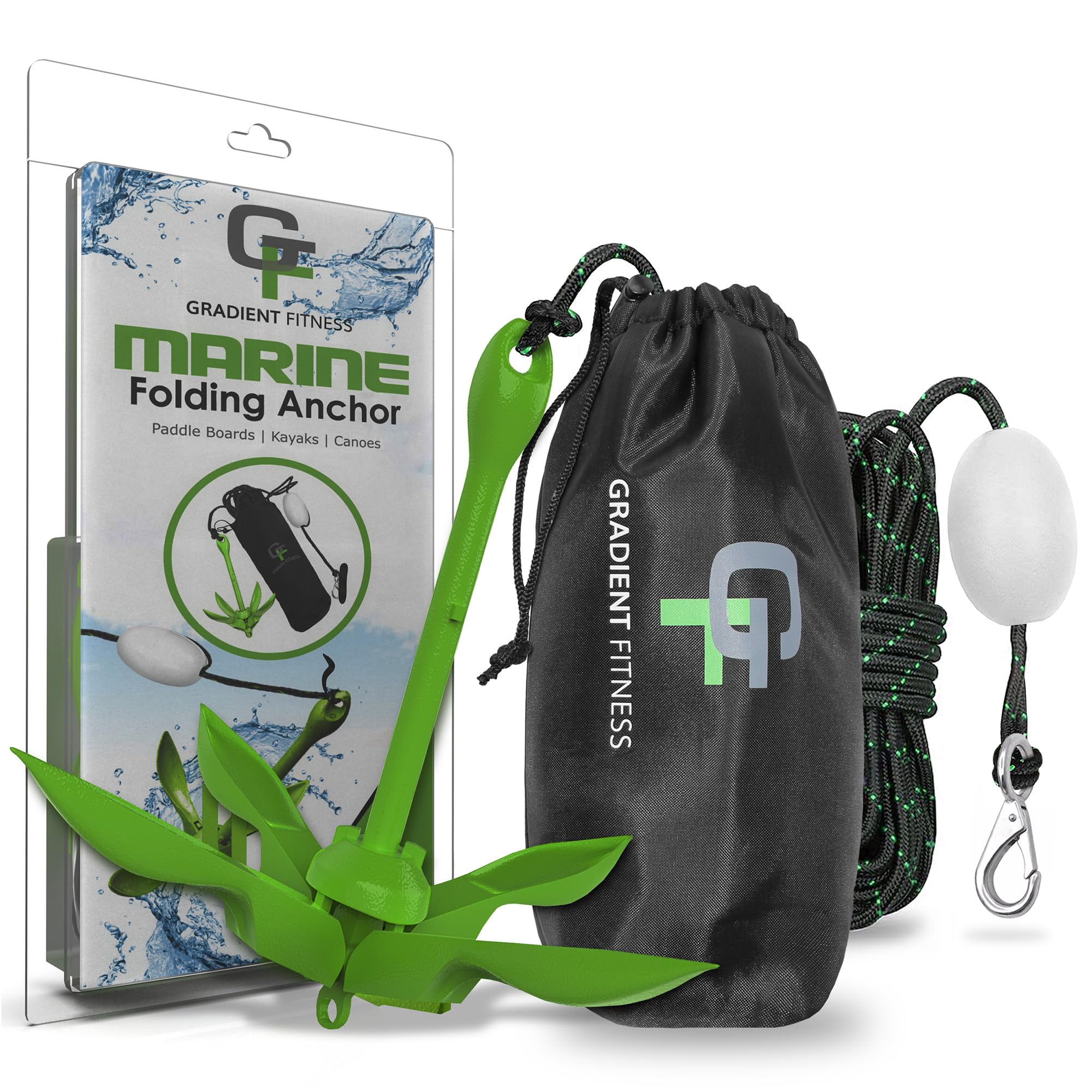
I picked this compact folding anchor for its small folded footprint, padded storage bag, and included rope/float—everything I need to stop a kayak or SUP without bulky gear.
Why I picked it: Compact, padded storage and full kit for small watercraft.
Best for: Kayaks, SUPs, jet skis, short fishing stops in soft sand or mud.
Affordable option for paddlers who want a ready-to-use kit.
Pros
- Folds small for easy storage
- Includes padded drawstring bag
- 25 ft marine-grade rope and float
- Stainless snap hook resists corrosion
Cons
- Lightweight—limited for heavy current
- Not ideal for very rocky bottoms
My take
I keep this anchor in my kayak hatch and appreciate how the four flukes fold down to a compact 12 × 3 inches. The padded bag prevents scratches and makes it simple to stow under a seat without rattling.
Deployment and retrieval are quick — the grapnel arms set easily in sand and softer bottoms and the included PVC float makes locating the anchor straightforward when I pull it back in.
Because it weighs about 3.5 pounds, I treat it as a short-stop tool: great for fishing breaks, lunch stops, or waiting out a gust. I would avoid relying on it in strong current or heavy wind, but for typical lake and calm coastal use it holds my kayak steady.
2. Airhead Grapnel Folding Anchor System – Best for Personal Watercraft
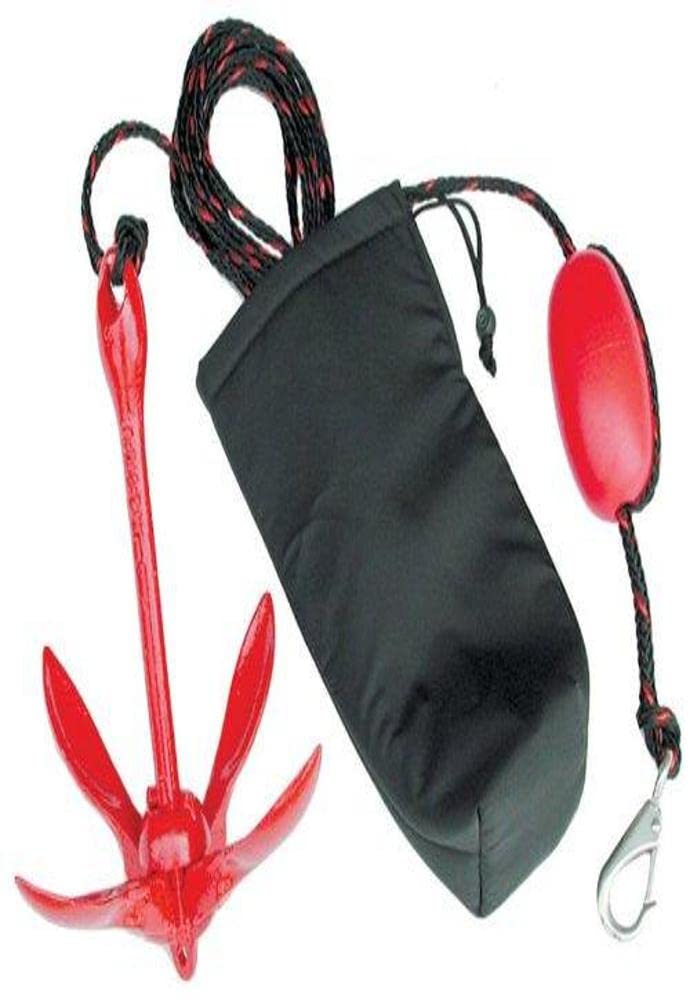
I recommend this folding grapnel for PWCs and small boats because it packs down, stores easily, and includes a complete rope/float/snap hook setup I can clip and go.
Why I picked it: Complete system sized for PWCs and small boats with a padded case.
Best for: Jet skis, inflatable boats, canoes, and short stops in sand, mud, or gravel.
Budget-friendly complete anchor system for PWCs and kayaks.
Pros
- Compact folding design
- Works in sand, mud, gravel, rock
- Padded nylon storage case
- 25 ft marine-grade rope with float
Cons
- Light weight for heavier currents
- Packaging can arrive a bit battered
My take
I use this anchor on my Sea‑Doo and appreciate that the four-fluke design grabs in a range of bottom types — sand, mud, and even gravel — so I can stop to swim or explore without drifting.
The padded case fits neatly in a small storage compartment, and the quick-release latch plus float make safety simple: if a wake pulls the rope free I can retrieve the anchor without a long swim.
For an operator of a small boat or PWC who wants a compact, ready-to-use anchor, this strikes the right balance of portability and holding power. I do treat it as a convenience anchor, not a substitute for larger ground tackle in heavy conditions.
3. Seachoice Deluxe Fluke Anchor – Best for Small Boats
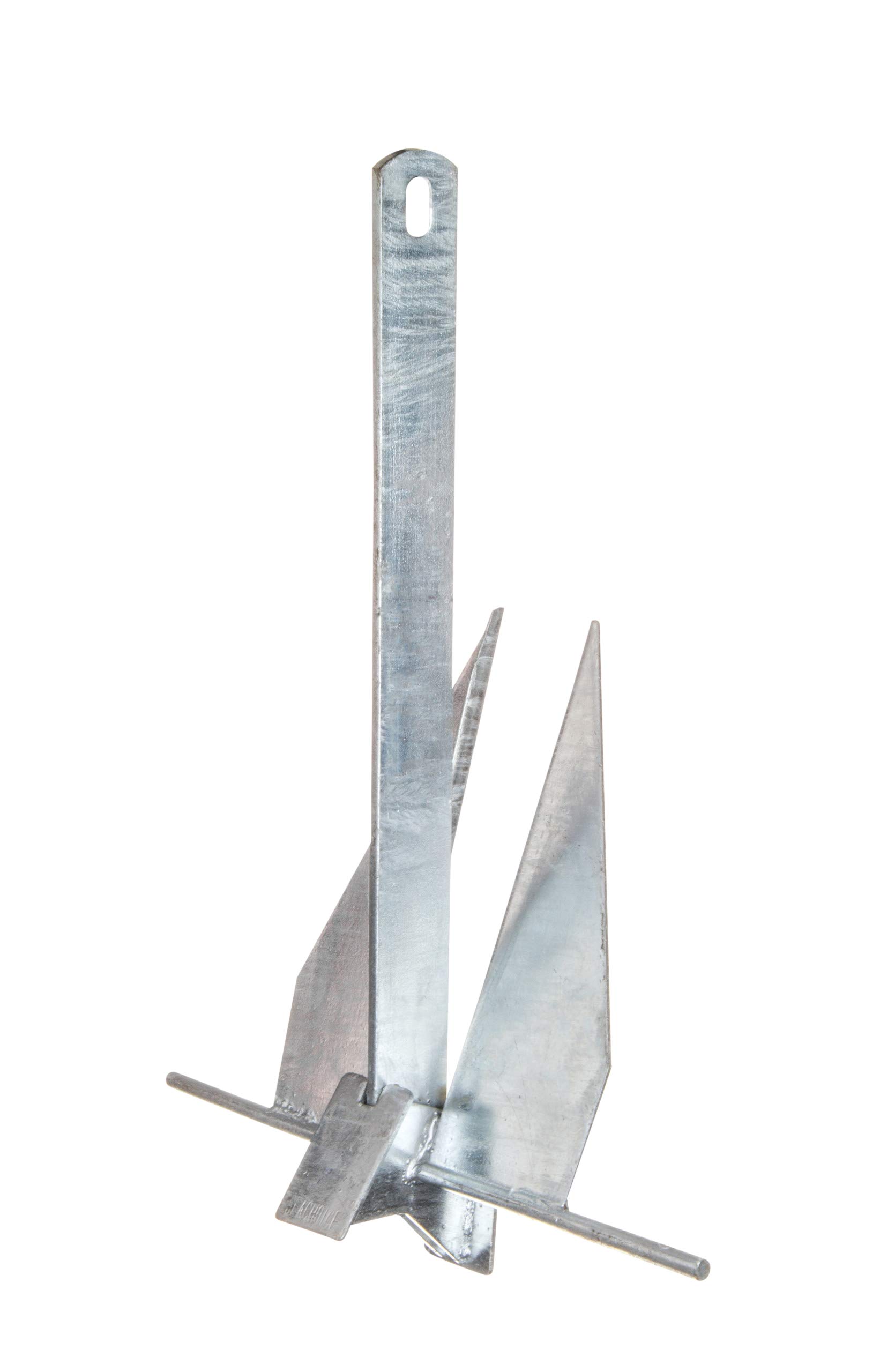
I rely on this hot-dipped galvanized fluke anchor when I need dependable holding across mixed seabeds and a more traditional anchor profile for boats in the 17–24 ft range.
Why I picked it: Galvanized steel with wide flukes for reliable holding on varied bottoms.
Best for: Small powerboats and sailboats operating over sand, mud, gravel, and rock.
A solid-value option for boaters wanting durable, classic fluke performance.
Pros
- Wide flukes bite well in many bottoms
- Hot-dipped galvanized for corrosion resistance
- Good weight-to-hold ratio
Cons
- Heavier—requires bigger D ring or hardware
- Bulky to stow on small boats
My take
When I need reliable holding for an extended anchorage, I reach for the Seachoice fluke. The wide flukes dig cleanly into sand, mud, and mixed bottoms and give a reassuring bite when set.
The hot-dipped galvanized finish holds up well against corrosion during extended outings. I did have to fit a larger D ring because the shaft is thicker than some anchors, so plan hardware accordingly.
This anchor isn’t meant to be tossed into a small hatch on a whim — it’s heavier and best suited to small runabouts and sailboats where storage and mounting are set up for a traditional anchor.
4. Vortex 16-inch Spiral Screw Ground Anchor – Best for Firm Ground (Not Sand)
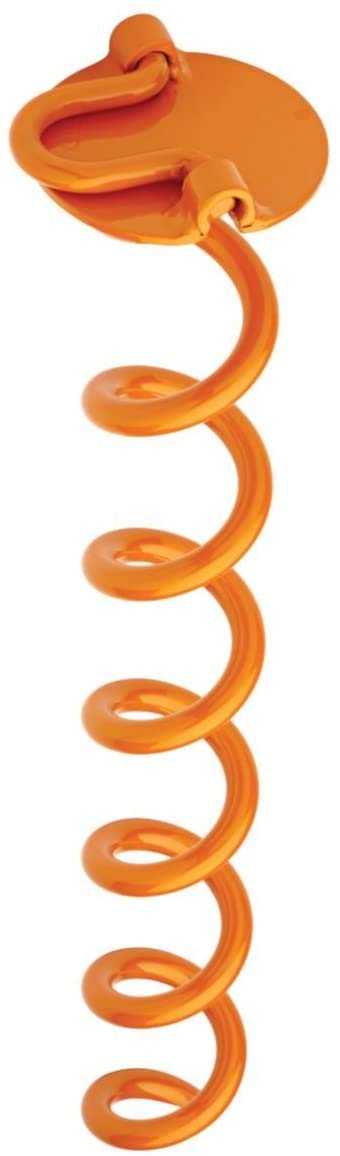
I use this spiral screw anchor to secure trampolines, sheds, and slacklines in firm, compact soil — it’s not appropriate for sand, but it performs strongly in packed ground.
Why I picked it: Spiral screw design for high lateral holding in firm soils.
Best for: Anchoring yard gear, trampolines, fencing, and slacklines in firm soil.
Good value for a heavy‑duty ground anchor when you don’t need sand performance.
Pros
- 425 lb pull force in firm soil
- Folding ring reduces trip hazard
- Powder-coated for weather resistance
- High visibility orange
Cons
- Not recommended for sand
- Can be difficult to drive in rocky ground
My take
I turned to the Vortex screw anchor for yard projects and heavy-tension applications where the anchor must stay put in packed soil. The spiral helix bites into firm ground and the fold-down ring makes mowing easy around the anchor.
Installation takes some elbow grease — I often slipped a bar through the top loop to lever it in, and moistening the hole makes a big difference. Once seated, it handled strong tension on straps without rotating in my use cases.
Because the tip and helix are designed for compact soils, I avoid this anchor on beaches or loose sand. For securing gear to lawn or compacted dirt it’s one of the more reliable screw anchors I’ve used.
How I Choose an Anchor for Sand and Small Watercraft
Matching anchor type to bottom and craft
I always start by thinking about bottom type. Folding grapnels work well in sand, mud, and mixed soft bottoms for short holds. Fluke anchors are versatile across sand, mud, and gravel and scale to larger boats. Screw-in ground anchors are excellent for firm soil but are ineffective in loose sand.
Next I match anchor weight and design to the craft. For kayaks and PWCs I prioritize compact, lightweight folding anchors with a buoy and snap hook. For runabouts and small sailboats I choose a heavier fluke sized to the boat and intended conditions.
- Choose folding grapnel anchors for portable, short-term stops in sand or mud.
- Pick a fluke anchor for mixed bottoms and longer anchoring needs on small boats.
- Use spiral screw anchors only in firm, compact soil — avoid for beaches.
- Look for a full kit (rope, float, snap hook, padded bag) if you want a plug-and-play solution.
- Consider storage: folded dimensions matter for PWCs and small hatches.
Practical tips from my time on the water
Always carry a float on the rode for quick retrieval and to prevent fouling. I find a bright float also helps locate the anchor at a glance.
Practice setting and retrieving in calm conditions before relying on an anchor in rougher water. It’s easier to learn how the anchor sets when you’re not fighting wind or current.
- Bring extra rope if you expect deeper water or longer scope.
- Inspect snaps and rope splice points regularly for corrosion and wear.
- Match hardware size to anchor shaft—some anchors require larger D rings.
Frequently Asked Questions
Can I use a folding grapnel anchor on sand?
Yes — I routinely use folding grapnel anchors in sand and soft bottoms for short-term holds; they set quickly and are easy to retrieve.
Are screw-in ground anchors good for beach sand?
No — I avoid screw anchors in loose sand. They’re designed for compact soil and will not hold reliably on beaches.
What length of rope should I carry with a small craft anchor?
I carry 25 feet as a minimum for short stops; if I expect deeper water or more scope I add extra rope so I can use a proper scope ratio.
Final Take
I choose a folding grapnel if I want a compact, ready-to-use anchor for a kayak or PWC; it’s the most convenient solution for sand and soft bottoms. For small boats that need dependable bite across varied seabeds, the Seachoice fluke is my pick. And when I need to secure gear to firm ground, the Vortex screw anchor is the right tool — just don’t use it on beaches.
Pick the style that matches your typical bottom and storage constraints, and practice deploying and retrieving in calm conditions so you’re ready when you need to stop and enjoy the water.
