
I tested mineral oils and care kits on cutting boards, butcher blocks, countertops, and metal tools to find the most practical, food-safe options for home and pro kitchens.
I maintain a small collection of wooden boards, a kitchen island, and a few stainless-steel appliances, so I use butcher block oil regularly. Over months of testing, I focused on safety, ease of application, absorption, and how the product finishes the wood.
These four options cover what I reach for most: a convenient single-bottle oil, a trusted pro-grade oil, a bulk jug for heavy use, and a two-piece oil-and-wax set for a finished surface. I’ll explain where each one fits in my routine.
If I want quick maintenance I grab a small, easy-to-squeeze bottle; for monthly deep conditioning I prefer the John Boos mystery oil; for shop-level volume I choose a gallon jug; and when I want a sealed, satin finish I use an oil plus beeswax cream.
1. Thirteen Chefs Food-Grade Mineral Oil – Best for Everyday Maintenance
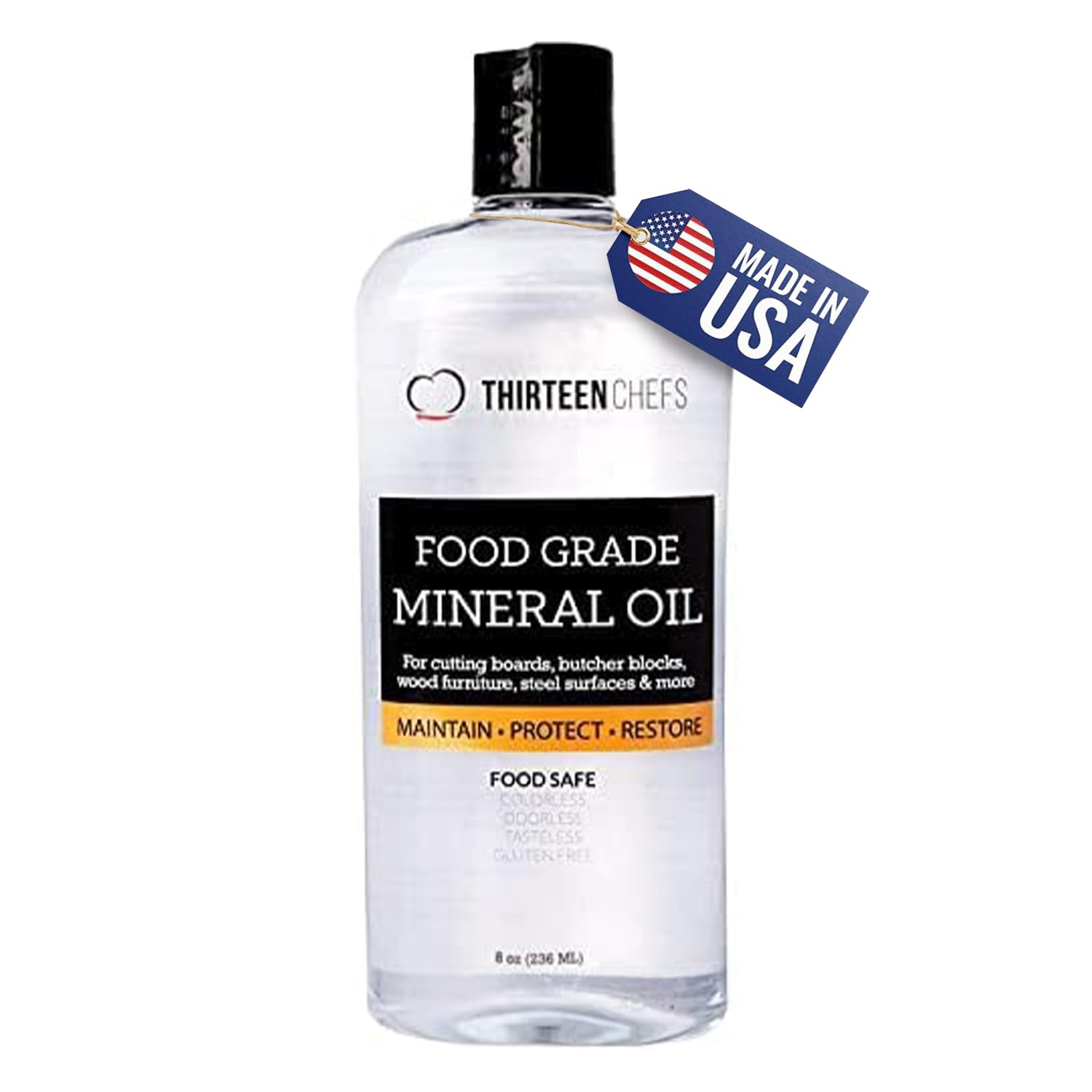
A clear, unscented mineral oil with a push-cap bottle that makes spot treatment and routine upkeep simple.
Why I picked it: Push-cap bottle and no scent make it easy to apply often.
Best for: Small to medium boards, teak, and occasional stainless-steel touch-ups.
Affordable single-bottle option that lasts with occasional use.
Pros
- Food-grade and odorless
- Push-applicator squeeze bottle
- Absorbs without sticky residue
- Made in the USA
Cons
- Smaller bottle for heavy use
- Not a sealing finish
My take
I keep this bottle on hand for quick touch-ups and new boards. The push-cap makes application fast — I squirt a little on, rub it in with a cloth or my hands, and the wood drinks it up without leaving a greasy film.
It’s effectively colorless and nearly scentless, so the board’s natural grain comes forward without any off odors transferring to food prep. I’ve also used it sparingly on stainless-steel surfaces to slow early rust, and it performs well as a light lubricant.
Because one ounce treatment every few months is enough for an 18" board, this bottle has stretched longer than I expected. For people who want simplicity and a no-fuss application, this is what I reach for most mornings.
2. John Boos Mystery Oil – Best Professional-Grade Oil
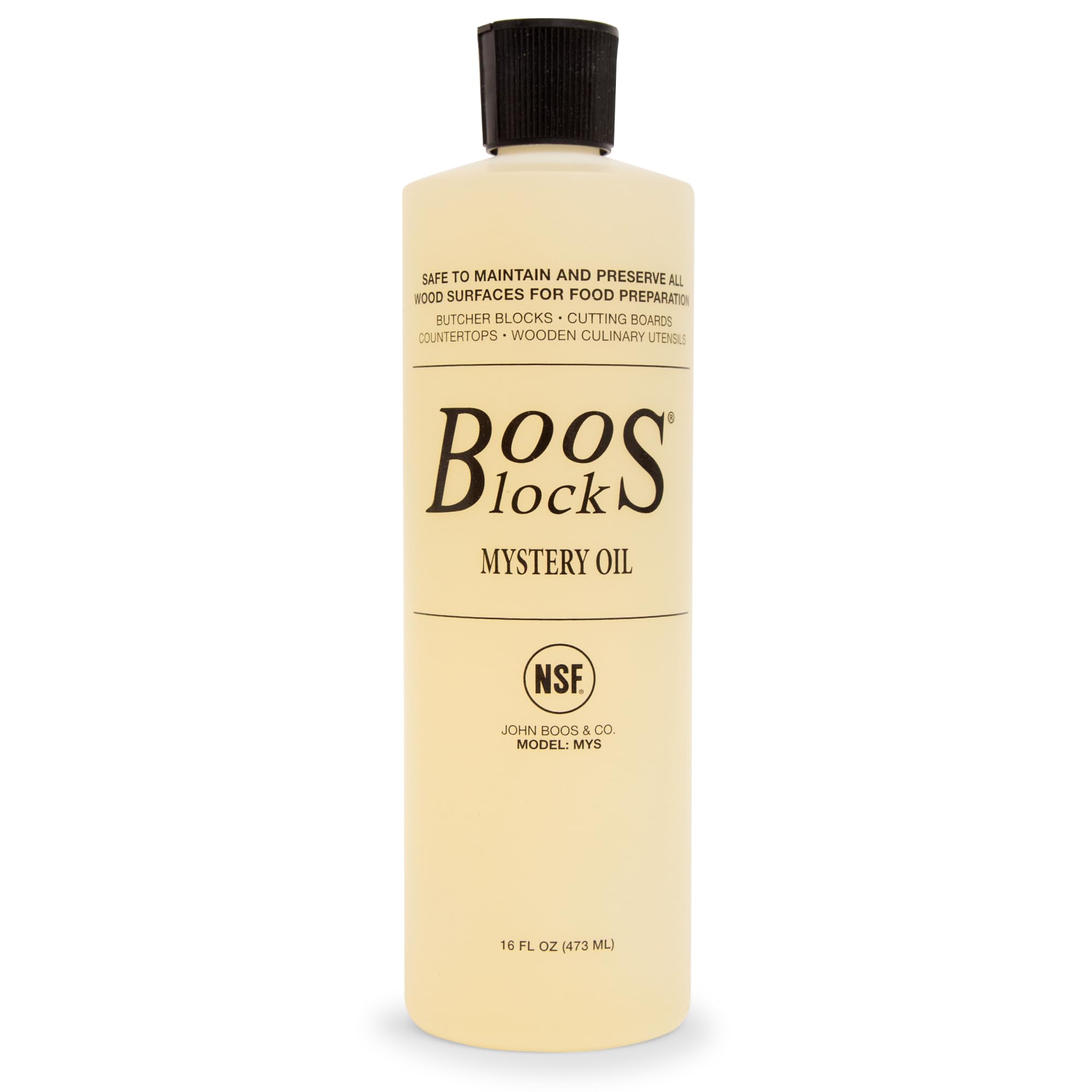
An NSF-certified mineral oil designed to penetrate deeply and condition thirsty, end-grain boards.
Why I picked it: NSF certification and deep-penetrating formula for serious conditioning.
Best for: Monthly deep-conditioning of large or end-grain cutting boards and kitchen islands.
A professional option that pairs well with a follow-up board cream.
Pros
- NSF certified for food surfaces
- Deep penetration for thirsty wood
- Made from natural ingredients
- Good for large boards
Cons
- Best when allowed to soak overnight
- Not a stand-alone surface seal
My take
When a board is dry or brand-new and thirsty, I use John Boos Mystery Oil and let it soak overnight. The oil soaks into the fibers and stops visible dryness and splitting better than quick surface rubs.
I appreciate that it’s NSF certified; it gives me confidence using it on prep surfaces and islands. For maximum durability I follow with a board cream, but even by itself this oil restores color and body to tired wood.
This is my go-to when I need a deeper conditioning session. It takes more time than a single-coat oiling, but the results — richer grain and noticeably suppleness — are worth the wait.
3. UltraPro Food-Grade Mineral Oil (1 gal) – Best for Heavy Use
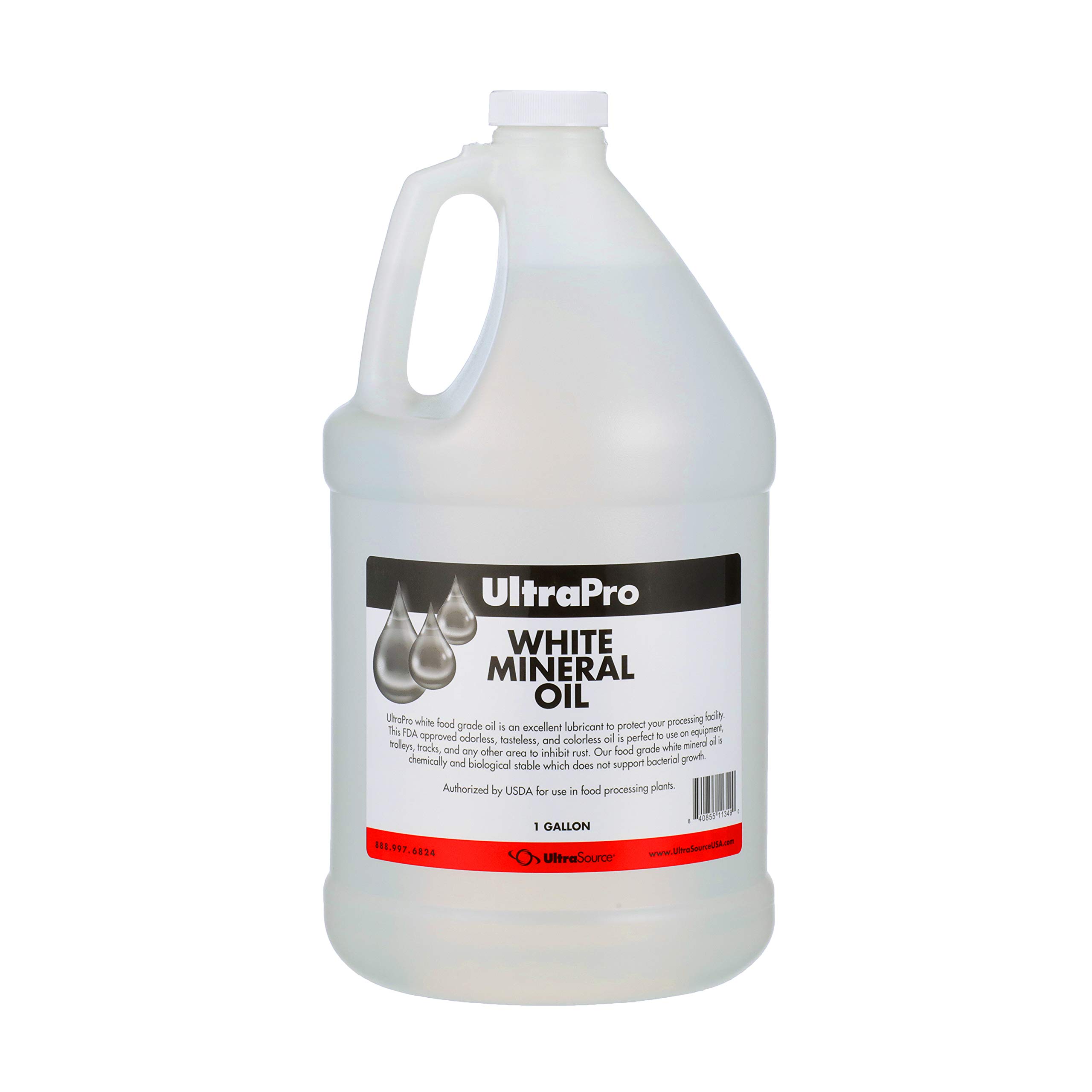
A gallon jug of unscented, food-grade mineral oil that’s meant for multiple boards, stainless appliances, and equipment maintenance.
Why I picked it: Bulk volume for treating many boards and tools without frequent repurchasing.
Best for: Workshops, commercial kitchens, and households with many wooden items.
Bulk, economical option for frequent or large-scale maintenance.
Pros
- Full gallon supply
- Food-grade and unscented
- Multi-use: wood and stainless
- Made in the USA
Cons
- Heavy jug can be awkward
- Packaging can shift in shipping
My take
Because I treat several boards, serving trays, and even a composite sink, the gallon UltraPro jug has been a workhorse. It’s straightforward mineral oil — clear, odorless, and easy to spread — and the quantity means I don’t worry about running out mid-project.
I’ve used it on stainless-steel surfaces, wooden utensils, and machines that benefit from a food-safe lubricant. It performs consistently and feels like the most economical choice if you maintain a lot of pieces or use oil for equipment.
One caveat: large containers need careful handling. I’ve tightened lids and transferred some to smaller bottles for daily use, but for bulk storage and shop-level work this is the bottle I buy.
4. John Boos Mystery Oil & Board Cream Set – Best Complete Care Set
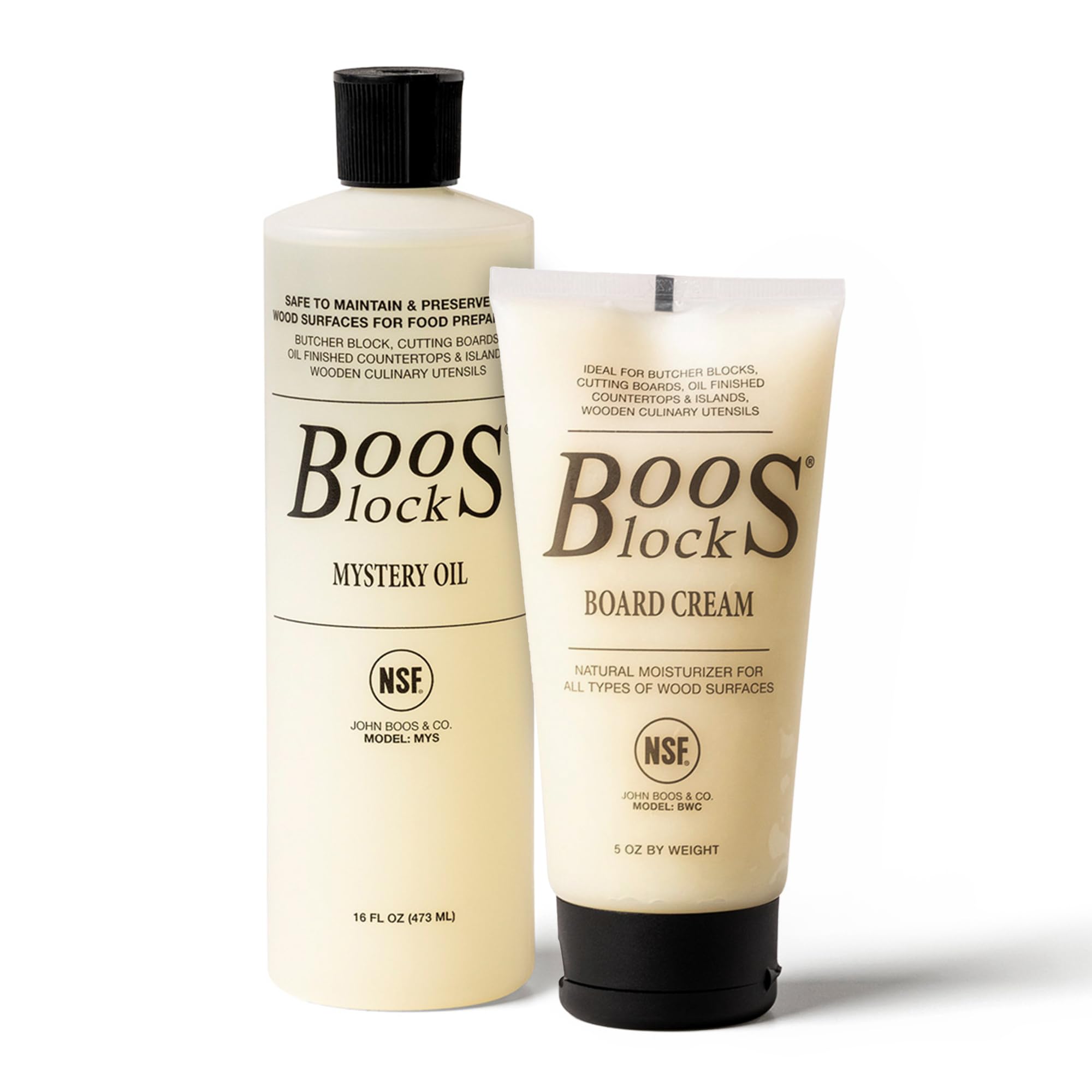
A two-piece system: a conditioning mineral oil plus a beeswax-based board cream to seal and smooth surfaces.
Why I picked it: Combines deep conditioning with a sealing wax for a finished, satin surface.
Best for: People who want both conditioning and a protective, low-sheen finish.
Two-piece kit offers fuller care than oil alone.
Pros
- Includes oil and beeswax cream
- Restores and seals wood
- Easy two-step maintenance
- Trusted brand craftsmanship
Cons
- Wax requires buffing to finish
- Takes extra time versus oil alone
My take
I use the John Boos set when I want boards to look and feel like new. After an overnight oil soak, I apply the board cream and buff it lightly — the beeswax seals pores and leaves a satin, smooth surface that stands up to daily use.
The cream adds an extra layer of protection I appreciate for serving boards and finished countertops. In my experience the combo makes wood less prone to immediate staining and gives a richer color without tackiness.
If you want a maintenance routine that goes beyond simple oiling and yields a polished surface, this two-piece set is the most complete solution I reach for.
How I Choose and Use Butcher Block Oil
Oil vs. Oil + Board Cream
I think of mineral oil as the baseline: it conditions and replenishes lost moisture. Board cream (beeswax blended with oil) adds a protective layer that helps repel water and gives a smoother feel.
For everyday chopping boards I use oil alone. For serving boards, finished islands, and any surface I want to protect longer, I follow oil with a cream.
- Oil: fast absorption, restores grain, prevents cracking
- Oil + Cream: seals surface, reduces frequent reapplications
Food-Safety and Certifications
I always choose food-grade mineral oil for anything that touches food. NSF certification or explicit food-grade labeling is a must for peace of mind.
Unscented and tasteless formulas avoid altering food flavors.
- Look for NSF or food-grade statements
- Avoid scented or perfumed products for prep surfaces
Application and Frequency
I apply oil liberally for initial seasoning and let it soak overnight when the wood is thirsty. For routine upkeep I rub in a light coat monthly or every few months depending on use and climate.
After oiling, wipe away excess and allow full absorption before use. If using cream, buff to a smooth finish after the oil has absorbed.
- Initial conditioning: generous coat, overnight soak
- Maintenance: light application every 1–3 months
- Seal with cream for extra protection
Bottle Size and Use Case
I pick small bottles for occasional home use, mid-size for consistent household maintenance, and gallon jugs when treating many boards or equipment.
For large containers I transfer product to a smaller dispenser for daily convenience.
- Small bottle: easy, neat, good for single board owners
- Gallon jug: cost-effective for heavy use or shops
- Two-piece sets: best for finished surfaces and presentation pieces
Other Uses
I’ve successfully used food-grade mineral oil on stainless-steel tools and appliances as a light protective coating, and on composite sinks to restore luster.
If you plan to use oil on metal, wipe off any excess and reapply sparingly.
- Safe for wooden utensils and stainless-steel spots
- Good for restoring composite surfaces and equipment
Frequently Asked Questions
Is mineral oil safe to use on cutting boards that contact food?
Yes—I choose food-grade mineral oil for any surface that touches food. I use products labeled food-grade or NSF certified to ensure they’re appropriate for prep surfaces.
How often should I oil my cutting board?
I oil a frequently used board every 1–3 months. A new or very dry board can benefit from a series of overnight oilings until it stops absorbing oil rapidly.
Can I use mineral oil on stainless steel or equipment?
I use food-grade mineral oil sparingly on stainless surfaces to slow early rust and to lubricate blades or fittings. Wipe away excess to avoid attracting dust.
Do I need both oil and board cream?
I don’t always use both, but oil plus cream gives the best long-term protection and a smoother finish. Oil conditions the wood; the cream seals and reduces how often I need to reapply.
Final Take
I maintain different bottles for different jobs: a small squeeze bottle for quick upkeep, John Boos oil for deeper conditioning, a gallon for heavy or workshop use, and a two-piece set when I want a sealed, finished look.
Pick the format that matches how many pieces you care for and whether you want a simple conditioner or a fully finished surface. I stick with food-grade options and simple routines that keep wood healthy for years.
