
I tested several impact sprinklers across gardens, lawns, and veggie beds to find reliable, durable heads and portable systems. Here are the models that performed best for different setups and budgets.
I spent weeks running these impact sprinklers on lawns, raised beds, and vegetable patches so I could compare coverage, durability, and ease of use in real conditions.
In this roundup I focus on what mattered to me most: build quality, how easy each unit was to set up and aim, and how predictable the water distribution was on real turf and garden soil.
When I choose between these models I think about permanence and water quality first: pop-up impact heads and in-ground units are my go-to where I want a tidy, set-and-forget system; tripods and three-arm spinners win when I need portability and quick repositioning. I lean to all-metal designs for longevity, and to brass or weighted arms when I’m working with variable pressure or gritty water.
1. Orbit Tripod Zinc Impact Sprinkler – Best Overall
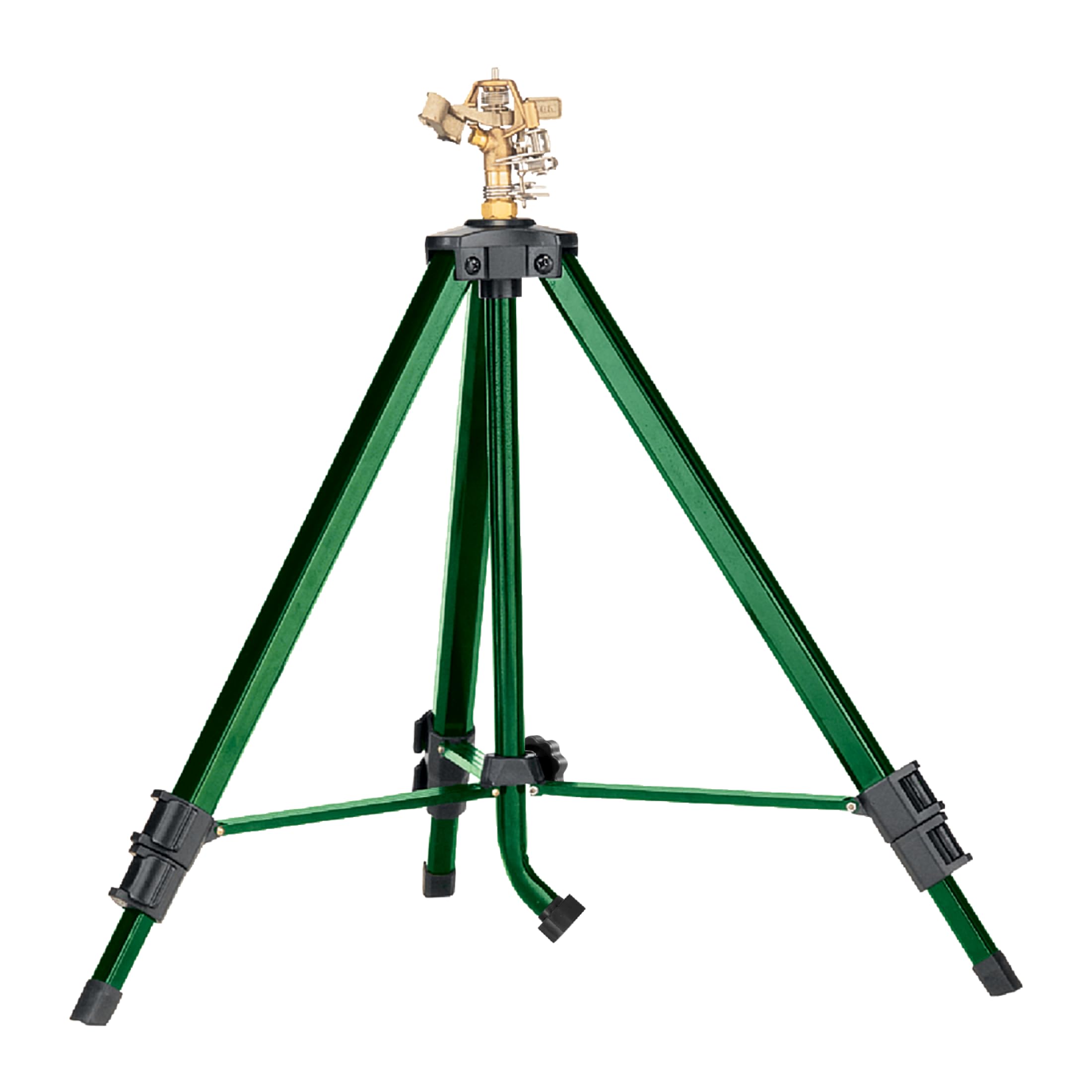
A heavy-duty tripod impact head that gives long-range, 360° coverage and stands up to regular outdoor use.
Why I picked it: I picked this for its beefy tripod base, impressive throw distance, and versatility across large gardens.
Best for: Large yards, vegetable patches, and raised-bed gardens where reach and stability matter.
A solid midrange, durable choice for homeowners who need dependable coverage.
Pros
- Sturdy heavy-duty tripod base
- Long throw that reaches far
- 360-degree rotation for full coverage
- Telescoping legs for quick height adjustment
- All-metal impact head for longevity
Cons
- Takes fiddling to dial in arc precisely
- Can need extra weight in strong wind
- Height may be low for very tall coverage
My take
I put this tripod into service in a large vegetable garden and found the setup fast—the telescoping legs make it easy to get the sprinkler to my preferred height. Right away I noticed the spray distance; it reaches corners I couldn’t hit with my old fan-style sprinkler.
The unit feels heavy-duty. When I left it running while I was away during a hot spell, everything stayed green. In gusty conditions I added a few pavers and used bungees to anchor the legs; that solved the tipping I once worried about.
Getting the exact arc takes a little patience—impact-style heads aren’t as instantly intuitive as some rotary rotors—but once I adjusted the trip pin and nozzle, the distribution across beds and lawn was consistent. For anyone needing portable, long-reach coverage, this is the workhorse I kept going back to.
2. Orbit Brass 3-Arm Impact Sprinkler – Best for Gardens
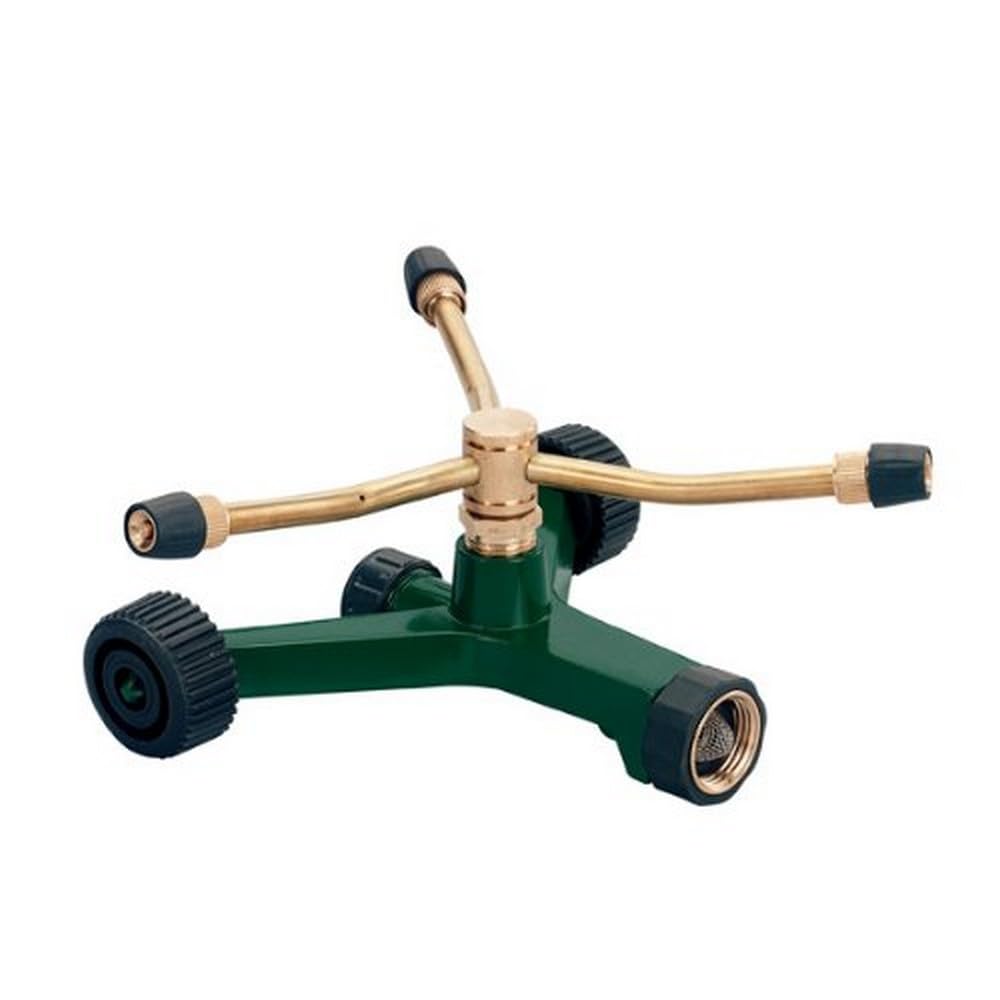
A three-arm spinner that delivers an even, gentle spray for medium areas and garden beds.
Why I picked it: I picked this because the three-arm pattern produces fine, evenly distributed droplets ideal for perennials and shrubs.
Best for: Flower beds, perennials, and medium lawns where gentle, uniform coverage matters.
An affordable option that balances performance and simplicity.
Pros
- Fine, even droplet pattern
- Wheeled base for easy positioning
- Adjustable spray nozzles
- Brass arms resist corrosion
- Flow-through outlet for series use
Cons
- Must lift from base to avoid breakage
- Spike can bend in hard ground
- Two top materials exist; performance varies
My take
In my perennial beds this three-arm spinner was a standout: the spray breaks into small droplets that soak the soil instead of blasting it. That produced noticeably more even wetting across the planting area.
I appreciated being able to pull the wheeled base through the lawn to reposition it without tipping. A practical tip I learned: always lift from the base rather than the top; I once cracked a top piece by grabbing it wrong.
If you have very low-pressure well water, seek out the lighter-top variant; I found the lighter head will spin where heavier brass tops sometimes won’t. Overall, it’s an easy-to-use, economical choice for garden watering.
3. Melnor Metal Pulsating Impact Sprinkler – Best for Range
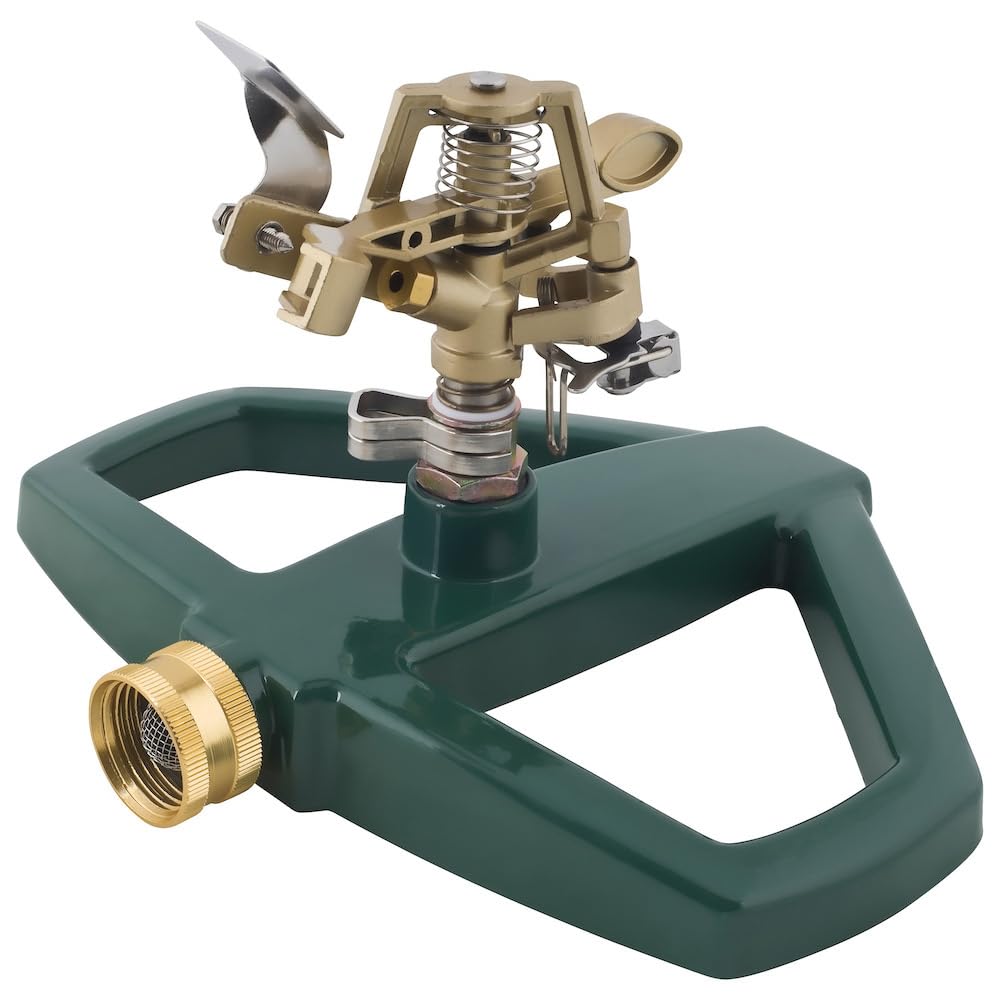
An all-metal pulsating sprinkler built for long-range coverage and long-term durability.
Why I picked it: I picked this for its all-metal construction, adjustable diffuser pin, and impressive throw on open turf.
Best for: Large lawns and wide-open spaces where long throw and durability are priorities.
A value-driven pick for long service life and strong performance.
Pros
- All-metal, non-corrosive construction
- Adjustable from 20° to 360°
- Long throw up to large diameters
- Diffuser pin for spray control
- Backed by a multi-year warranty
Cons
- Lightweight base can lift off
- May need a small weight for stability
- Some overspray inherent in design
My take
This Melnor felt like the most dependable sprinkler in my rotation. I measured consistent coverage at long distances on my front lawn and liked how easily the diffuser pin changes the spray from mist to jet.
Because it’s light, I sometimes secure the sled with a flat rock when the arm is throwing to the sides; that eliminated the lifting issue. Once stabilized, the pattern is even and the adjustments are intuitive even while it’s running.
If you want a long-lasting metal pulsator that you can tune for everything from a tight arc to a full circle, this was the model I relied on the most.
4. Orbit Pulse XL Pop-Up Impact Sprinkler – Best Pop-Up Replacement
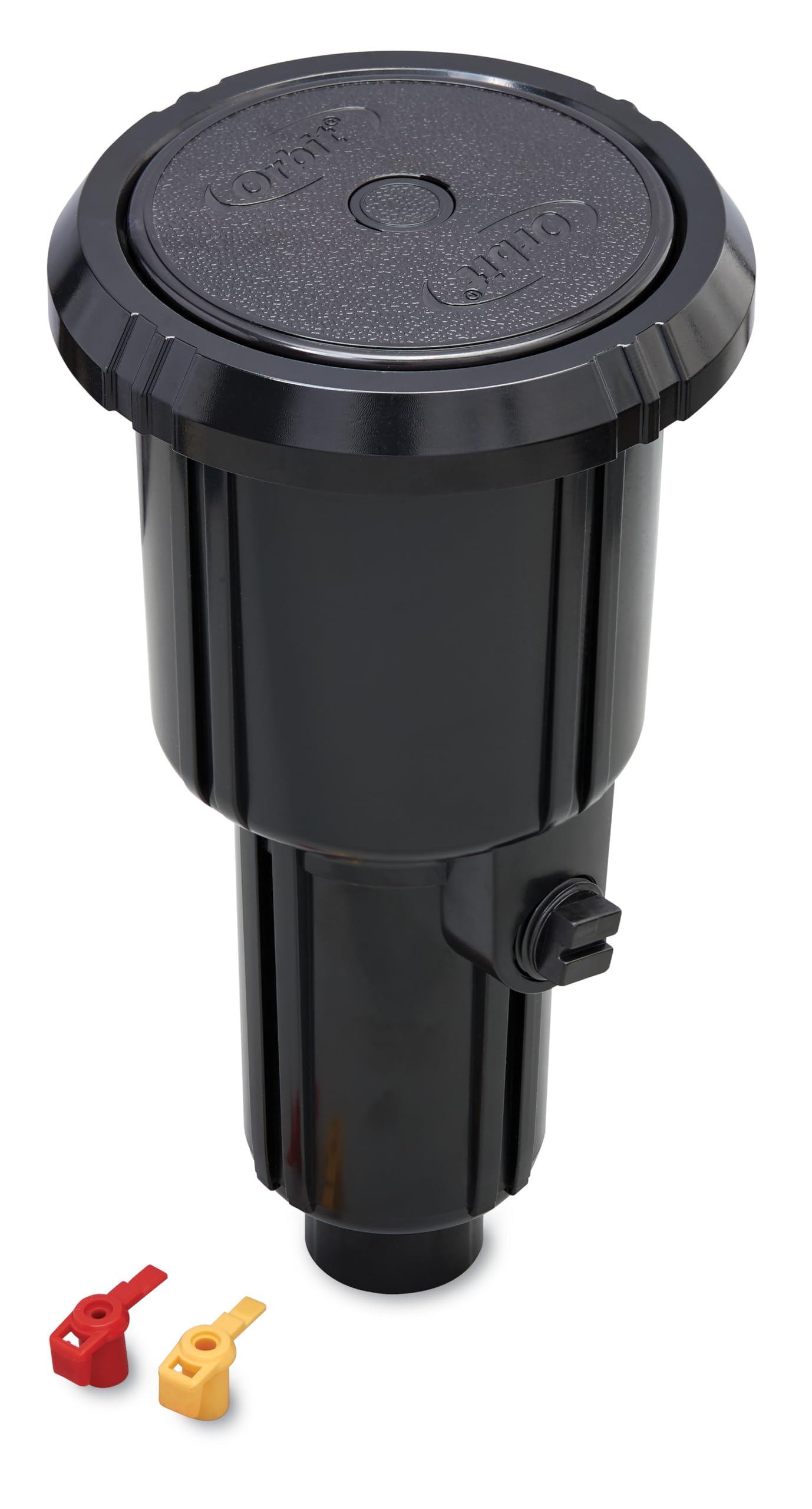
A pop-up impact head designed to resist grit and reclaimed water while offering adjustable radius and nozzle options.
Why I picked it: I picked this for installations where grit or reclaimed water is common and a pop-up solution was required.
Best for: DIY irrigation projects replacing worn rotors or creating pop-up zones with tough water.
A budget-friendly replacement option for pop-up impact systems.
Pros
- Handles dirty and reclaimed water
- Double-weighted arm for reliable action
- Adjustable arc and radius
- Includes multiple nozzles
- High lip prevents grass intrusion
Cons
- May need initial lubrication
- Check inlet size for proper fit
- Retracts slowly on first startup
My take
I installed several of these in a DIY front-yard setup and appreciated the pop-up design clearing tall grass while retracting cleanly when off. The can and riser feel sturdy, and the donut lip keeps grass from growing into the housing.
A couple of heads needed a little silicone lubricant on initial startup to retract smoothly, but after that they operated reliably. I liked that the unit accepts both 1/2" and 3/4" inlets, which made plumbing my layout straightforward.
For anyone swapping out older rotor heads or building a simple pop-up line that must handle mineral-laden water, this Pulse XL was my inexpensive, dependable solution.
5. Rain Bird LG3HE In-Ground Impact Sprinkler – Best Professional-Style
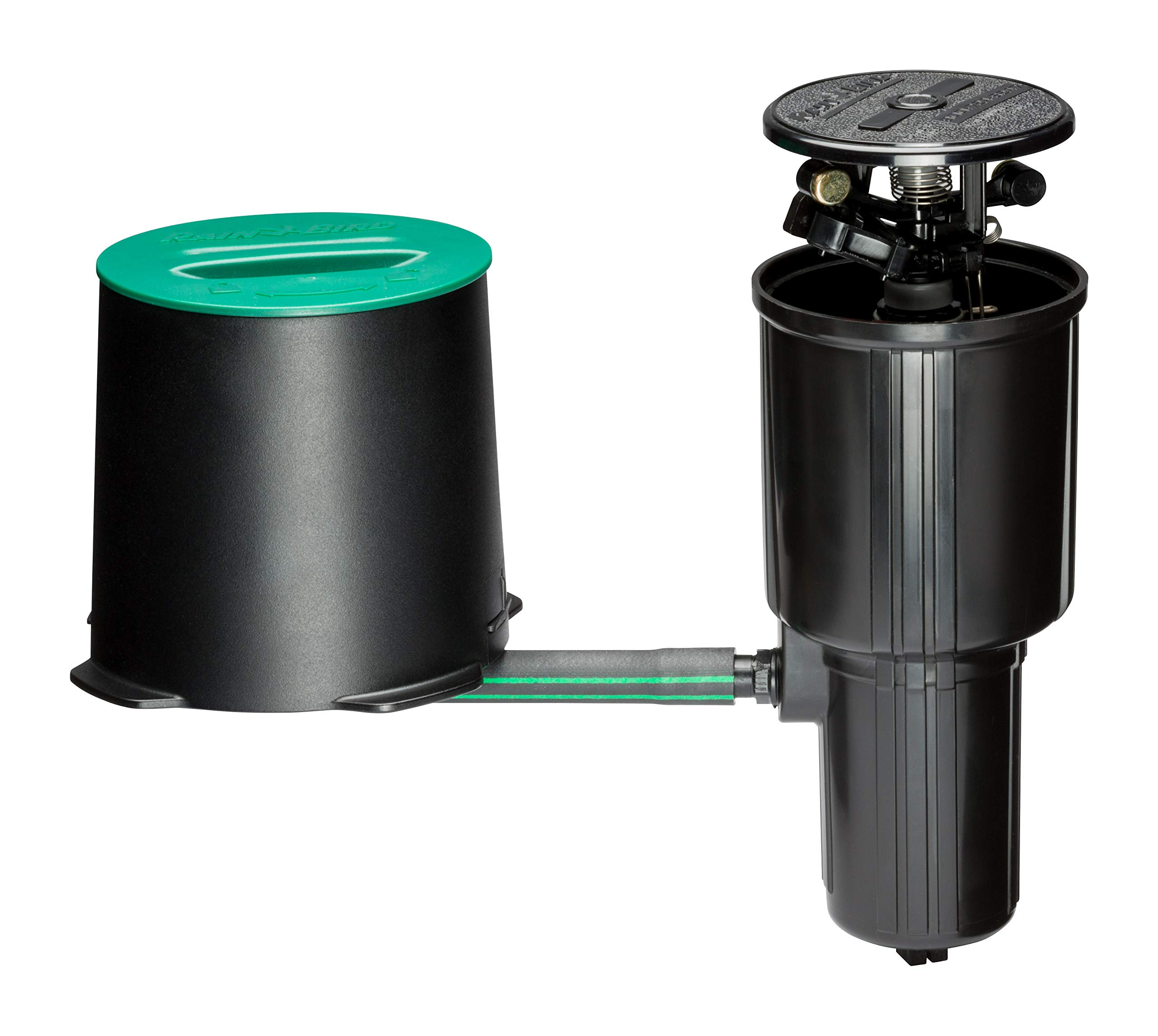
A professional-grade in-ground impact sprinkler with a quick-connect hose feature and a pop-up riser for tidy, long-term use.
Why I picked it: I picked the LG3HE for its pro-level durability, pop-up convenience, and the built-in garden-hose quick-connect.
Best for: Homeowners who want near-permanent pop-up performance without trenching and who use hoses often.
A more professional option for long-term convenience and durability.
Pros
- Built-in quick-connect hose fitting
- 3" pop-up height clears tall grass
- Durable brass spray guide arm
- Adjustable pattern and radius
- Handles gritty, hard water well
Cons
- Riding mowers can dislodge the unit
- Requires proper hole sizing for install
- More installation effort than above-ground
My take
I installed this Rain Bird as a semi-permanent solution where I wanted the hose-connection convenience without trenching. Dig a modest hole, set the can, click in the hose, and the head runs with consistent coverage every time.
The brass weighted spray arm and diffuser give predictable performance even with mineral-rich water. I liked that it offers both full- and part-circle adjustments so I could aim water away from hardscape.
One practical note from mowing: my riding mower created suction that occasionally pulled the cover off, so I recommend a snug installation and checking clearance if you use heavy mowing equipment. When installed thoughtfully, this felt like the most professional, low-fuss in-ground impact head I used.
How I Choose an Impact Sprinkler
Key factors I consider
I look first at the intended use: portable coverage versus permanent pop-up installation changes which features matter most.
Materials and build quality determine how long a head will survive in gritty water and repeated use.
Water pressure and throw distance are linked—match the sprinkler’s rated radius to your actual household pressure for predictable results.
- Coverage: Measure the area you need to water and choose a head with an appropriate radius.
- Construction: Brass and all-metal heads last longer in rough water than plastic components.
- Adjustability: Look for easy arc and radius adjustments you can make while the unit is running.
- Mounting & Stability: Tripods and sleds need anchoring in wind; pop-ups need proper can installation.
- Water Quality: Choose grit-proof bearings or pop-up canisters for reclaimed or mineral-heavy water.
Frequently Asked Questions
How do I set the arc on an impact sprinkler?
I set the arc by flipping or seating the trip pin and adjusting the stop screws while the water is running. I make small changes and watch a full cycle so the hit point and return swing match the area I want to cover.
Can impact sprinklers handle well or reclaimed water?
Yes—models with grit-proof bearings, stainless components, or canister housings handle gritty or reclaimed water best. I prefer brass or stainless internals when my water has sediment.
What’s the best way to stop portable heads from tipping?
I anchor tripods or sleds with flat pavers, use bungee cords to stabilize if needed, or add weight to the base. For spike-style units, soften the ground a bit or use a heavier base to avoid bending.
Final Take
I found reliable options across needs and budgets: tripods and three-arm spinners for portability, Melnor for long-range durability, pop-ups for DIY irrigation, and the Rain Bird when I wanted a professional-feeling pop-up with a hose quick-connect.
Pick the style that matches how you water: portable for seasonal flexibility, pop-up for tidy semi-permanent setups, and solid metal construction when you expect heavy use or gritty water.
Whichever model you choose, take a few minutes to adjust arc and secure the base during initial setup—those steps made the biggest difference in my results.
