
I tested four hoses and adapters I use to connect grills, heaters, generators, and fire pits. These picks focus on fit, durability, and safe connections for common outdoor appliances.
I spend a lot of time setting up outdoor appliances, so I prioritize hoses and adapters that make connections secure, simple, and weather-resistant.
In this roundup I focused on fit, material quality, length options, and certifications so you can match a hose or adapter to your grill, generator, or RV setup.
Below are the products I keep returning to when I need a reliable connection between tanks, appliances, and quick-disconnect systems.
I compared parts by compatibility (fitting size and type), materials (braided stainless and brass fittings), advertised airflow or BTU capacity, and whether the kit included certified components for natural gas runs.
1. DOZYANT 5 ft Propane Adapter Hose (1 lb to 20 lb) – Best Overall Adapter
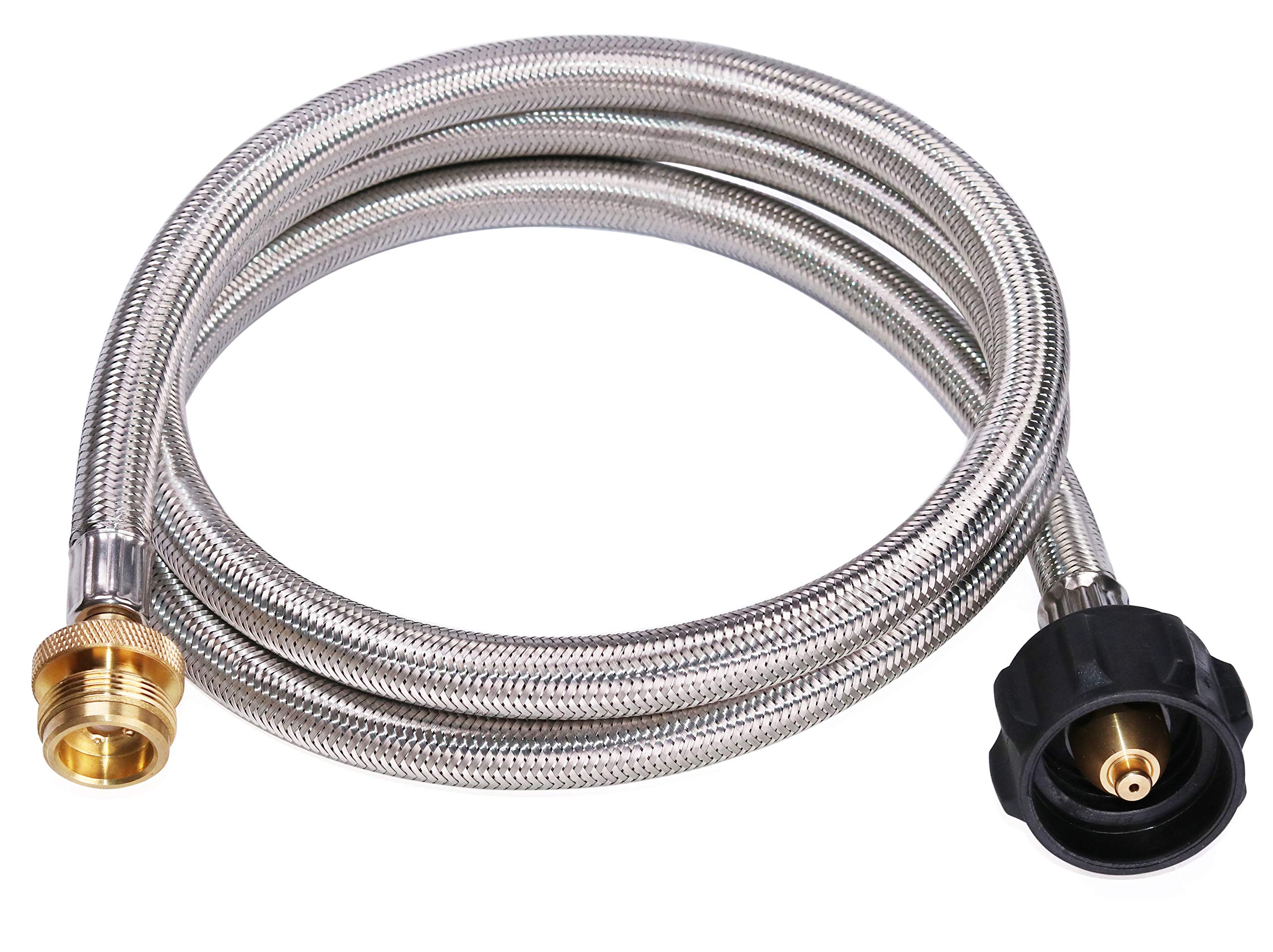
I rely on this short braided hose when I want to run small 1 lb appliances off a larger 20 lb tank so I don't waste single-use cylinders.
Why I picked it: It converts 1 lb appliances to larger tanks with solid brass fittings and a weather-resistant braided hose.
Best for: Lanterns, camp stoves, buddy heaters, and tabletop grills that normally use 1 lb canisters.
Affordable option that extends run time without complex modifications.
Pros
- Lets 1 lb appliances use larger tanks
- Durable brass fittings
- Stainless braided covering
- Weather resistant rubber core
Cons
- Short length limits placement options
- Not a regulator replacement
My take
When I needed to stop burning through 1 lb cylinders, this adapter was the simplest fix. The 5-foot braided hose gives me enough slack to route a line from a 20 lb tank to a small camp stove or lantern without stress on the fittings.
The brass connectors feel secure and tightened cleanly; I've used it in damp and windy conditions and the hose holds up. The rubber core is rated for high pressure and the stainless braid protects against abrasion and animal nips.
Installation is straightforward: attach the adapter to the appliance's QCC1/Type1 inlet and tighten to the larger tank side. I treat this as a cost-saving accessory, not a regulator — it pairs with the appliance's existing regulator when required.
2. DOZYANT 1/4" RV Quick-Connect Adapter – Best Quick-Connect Adapter
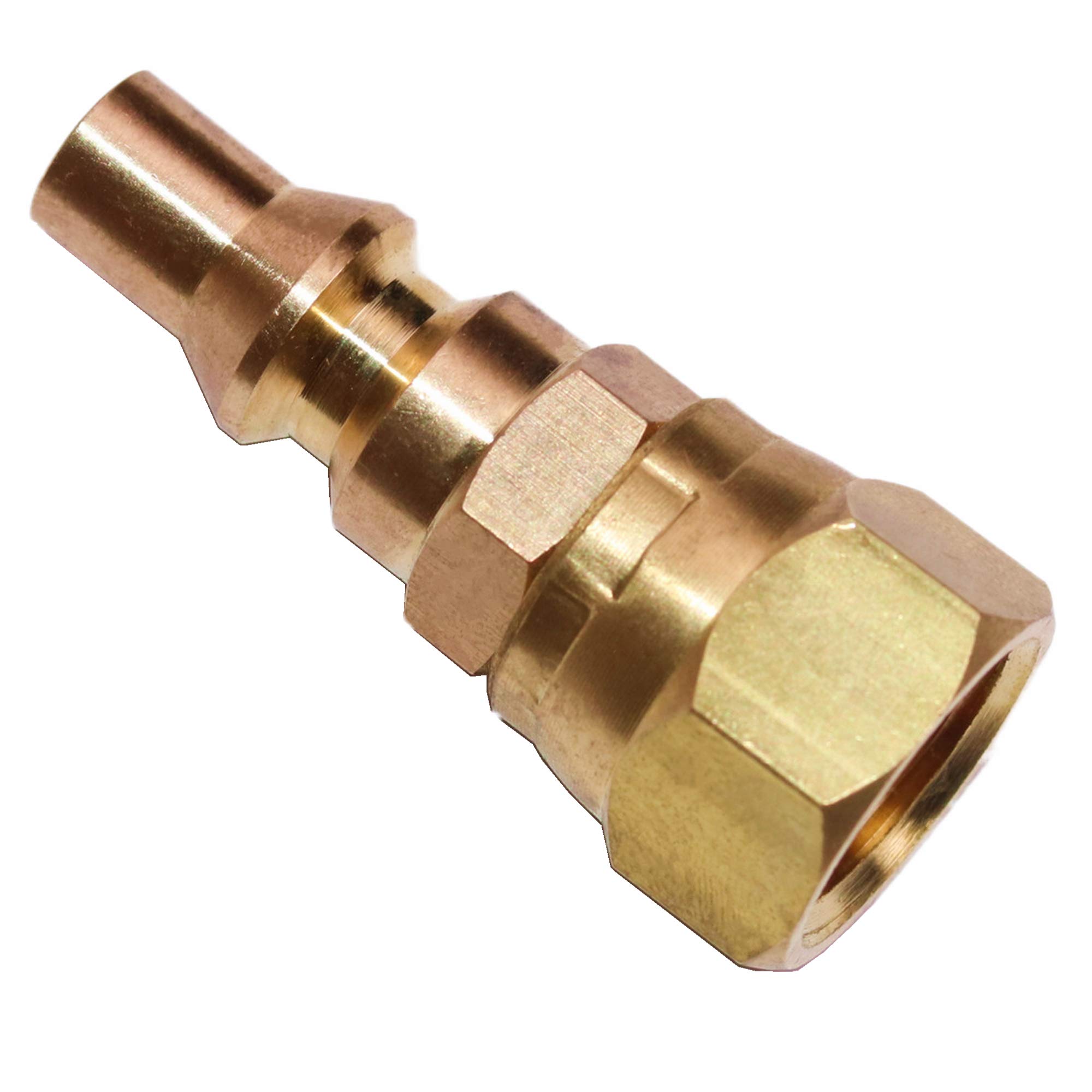
I use this quick-connect key to turn low-pressure grills and fire pits into true quick-disconnect appliances when working from an RV supply.
Why I picked it: It makes switching appliances to an RV's low-pressure quick disconnect fast and repeatable.
Best for: RV owners who want to hook portable grills, fire pits, and small heaters to the RV quick-connect system.
Low-cost accessory that saves time when swapping appliances.
Pros
- Simple quick-connect operation
- Works with many low-pressure appliances
- Easy to assemble
Cons
- Requires matching quick-connect hose
- Not a regulator—check your supply setup
My take
This little adapter has become a staple in my RV gear. I removed the factory hose/regulator on a few portable appliances and installed the quick key so I can plug directly into my camper's supply.
It fit my outdoor griddle and portable fire pit with minimal fuss; the 1/4" quick plug and 3/8" female flare interface together cleanly. I appreciated that assembly was straightforward and leak-free after I hand-tightened the flare connections.
A note from my experience: if your main supply already has a regulator, this adapter simply bypasses the appliance regulator. That worked well for my setup, but be sure your system is configured correctly before use.
3. SHINESTAR 12 ft 3/8" Propane Hose Extension – Best Mid-Length Extension
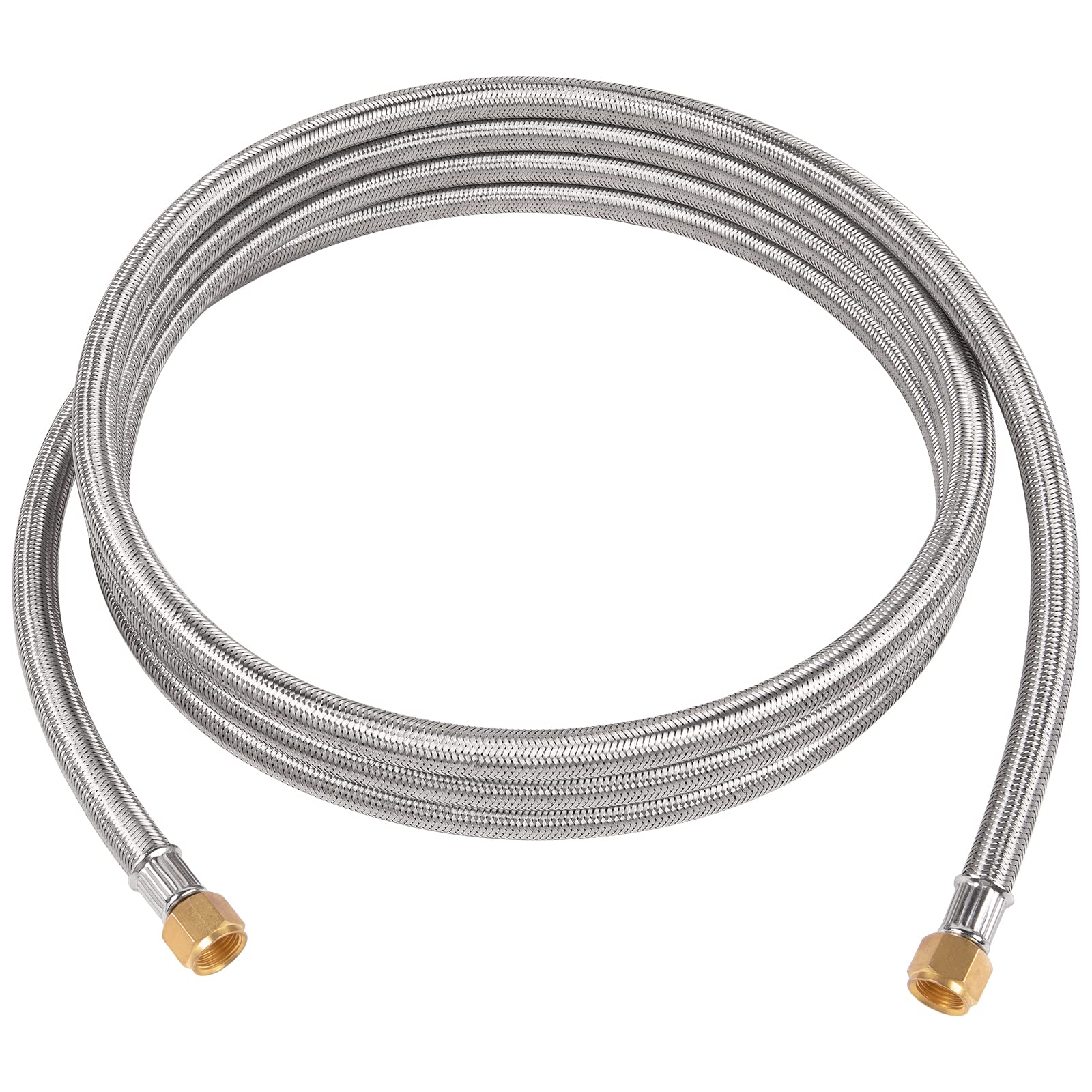
I reach for this 12-foot stainless-braided hose when I need distance between the tank and the appliance without sacrificing durability.
Why I picked it: It provides a long, flexible run with solid brass flare fittings and a protective stainless braid.
Best for: Grills, generators, and burners that need more separation from the fuel source.
Good midrange choice that balances length and build quality.
Pros
- Generous 12-foot reach
- Solid brass flare fittings
- Stainless braided jacket
- Sturdier than plain rubber hose
Cons
- Less flexible than rubber hose
- May need adapters for uncommon fittings
My take
I installed this hose to give my generator enough slack to sit under a sheltered spot while the tank stayed out by the meter. The 12-foot length delivered the clearance I wanted without tight bends.
The brass fittings sealed well and the stainless braid makes the line feel rugged. It’s noticeably firmer than plain rubber, which helps prevent kinks but reduces bendability in tight routing.
In my setup I used brass adapters on the ends to match older fittings. If your appliance uses the same 3/8" male flare, it will hook up without extra parts and perform reliably under outdoor conditions.
4. 48 ft 1/2" Natural Gas Hose with Quick-Disconnect Kit – Best Long-Run Kit
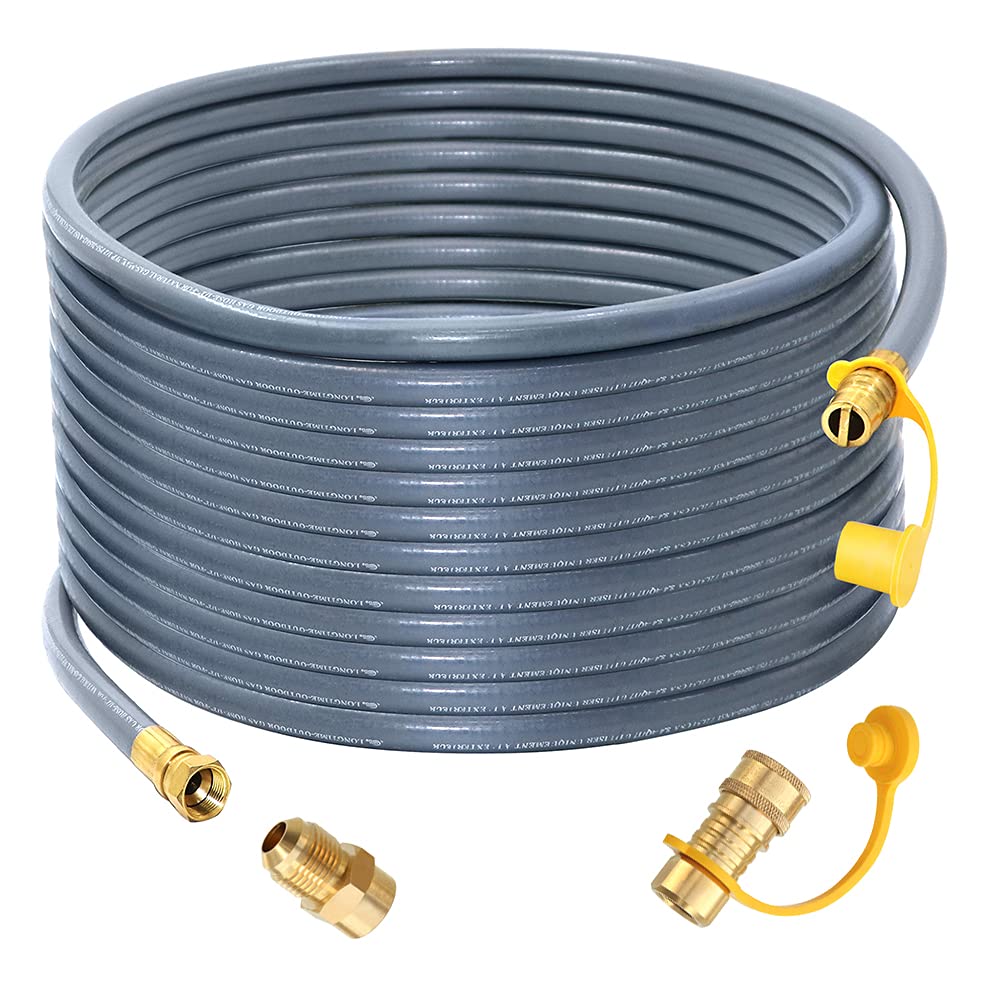
I chose this long 1/2" hose and quick-disconnect kit when I needed a certified, heavy-duty run for a generator and large grill conversion.
Why I picked it: The 48-foot length, 1/2" bore for high airflow, and CSA certification make it suitable for long runs and high-BTU appliances.
Best for: Generators, large grills, and natural gas conversions that require long, high-capacity runs.
More of a premium kit—built for long-distance and higher flow applications.
Pros
- Long 48-foot reach
- 1/2" bore supports high airflow
- Includes brass adapters and tape
- CSA certified for confidence
Cons
- Heavier to handle and store
- Overkill for small appliances
My take
When I needed to position a generator under cover and still reach the gas meter, this 48-foot hose was the solution. The 1/2" diameter delivered the airflow needed for larger BTU draws.
The kit includes a 3/8" to 1/2" adapter, quick-disconnect plug, and sealing tape, which simplified the setup for me. The fittings are solid brass and threaded tightly with no hint of leaks in my tests.
I liked that the manufacturer calls out CSA certification for the kit; that gave me extra peace of mind running a long line to high-demand appliances. The hose is heavier than smaller lines and takes a bit more effort to coil for storage, but it’s rugged and dependable.
How I pick hoses, adapters, and conversion kits
Key factors I consider before buying
Fit: I always match the exact fitting type and size—QCC1/Type1, 3/8" flare, 1/2" flare, or quick-disconnect—before I buy. A wrong fitting will leave you adapting or risking leaks.
Material and durability: I look for solid brass fittings and a braided stainless jacket when the hose will live outdoors. These parts resist corrosion, abrasion, and animal damage better than plain rubber.
Length and bore: For heavy appliances or long runs, I prefer larger bore hoses (for example 1/2") and a longer length to avoid restrictive bends. Short adapters work great for portability but don't replace extended runs.
- Confirm the appliance inlet and regulator type before buying.
- Choose brass fittings and braided jackets for outdoor durability.
- Pick hose diameter based on BTU needs—bigger appliances need larger bore.
- Look for certification (CSA, etc.) on natural gas kits for longer runs.
- Use sealing tape and proper torque on flare fittings to prevent leaks.
Installation and safety tips I follow
I always shut off the supply and test with a soapy water solution at every connection before first use. Bubbles mean a leak—tighten or re-seat fittings until bubbles stop.
Never substitute an adapter for a regulator. If the appliance requires a regulator, keep it in the line or use a regulator-rated solution.
For natural gas conversions and long runs, I prefer certified kits and, when in doubt, consult a licensed technician to verify compliance with local codes.
- Test every connection with a leak solution before use.
- Avoid sharp bends to maintain flow and prevent damage.
- Store braided hoses dry and coiled to extend service life.
Frequently Asked Questions
Can I use these adapters to bypass a regulator?
I do not bypass a regulator with an adapter unless the appliance and supply are designed for that setup. Many quick-connect adapters simply change connection type and do not replace pressure regulation, so verify your system before using.
How do I check for leaks after installing a hose?
I mix a simple soapy water solution and apply it to every fitting and connection while the supply is on. If I see bubbles forming, I shut off the supply, tighten or reseat the fitting, and retest until no bubbles appear.
Are stainless-braided hoses worth it?
From experience, stainless-braided jackets add abrasion resistance and protect the underlying hose from animal damage and abrasion; they're heavier but last longer in outdoor conditions compared with plain rubber lines.
When should I choose a 1/2" hose over a 3/8" or 3/8" flare?
I pick a 1/2" hose for long runs and higher-BTU appliances because the larger bore reduces flow restriction. For small grills and portable appliances a 3/8" line or short adapter is typically sufficient.
Final Take
I keep a short adapter, a quick-connect key, a mid-length braided hose, and a long certified kit in my toolkit so I can match the right connection to the job.
If you want simplicity and value, the 5-foot adapter and quick-connect key cover most portable setups. For generators and large grills, choose the 12-foot or 48-foot options depending on distance and airflow needs.
Follow the safety tips I outlined—confirm fittings, test for leaks, and preserve regulators—and you’ll have reliable outdoor fuel connections season after season.
