
I tested a range of utility sinks—from freestanding thermoplastic tubs to heavy-duty 16-gauge undermounts—to find reliable, easy-to-install options for laundry rooms, basements, and shops.
I spent time installing and using every sink on this list so I could compare how they handle real tasks: soaking, rinsing, pet washes, and filling large buckets.
My picks cover budget freestanding tubs, heavy-duty undermount stainless models, and a few options that include faucets so you don’t have to source one separately.
If you need a tough, no-nonsense work sink or a finished undermount with commercial feel, I’ll walk you through which sink worked best for each situation and why.
I compared capacity, material, included hardware, faucet options, leg stability, and how straightforward each unit was to install and use in real-world laundry and workshop scenarios.
1. VETTA Black Freestanding Utility Sink – Best Overall
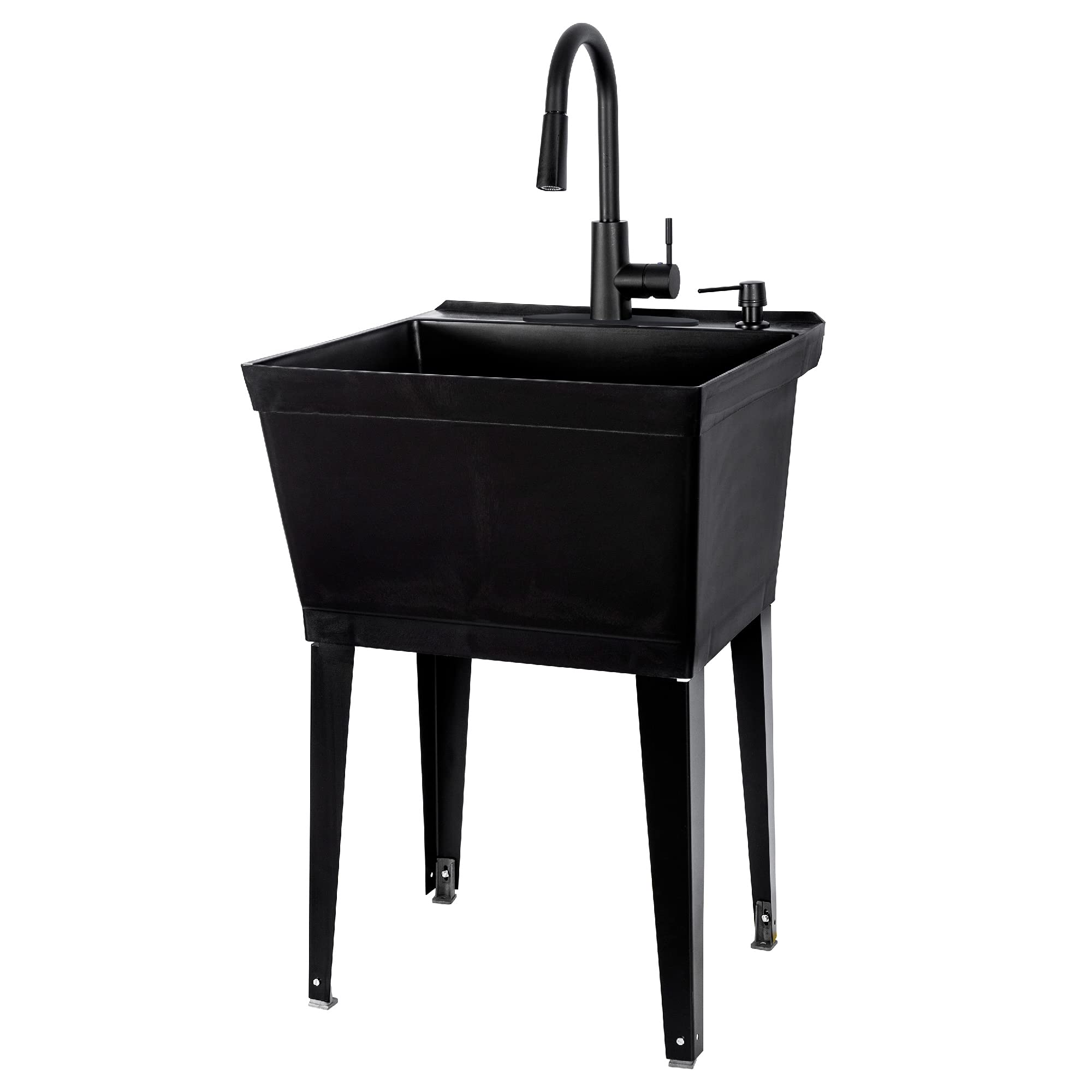
A complete freestanding tub set with a high-arc pull-down faucet and deep 19-gallon basin that balances style and utility.
Why I picked it: Comes as a full kit with a tall pull-down faucet and sturdy drain hardware.
Best for: Laundry rooms and workshops that need a ready-to-install freestanding sink.
Good value for a full kit with faucet included.
Pros
- All-in-one kit with faucet and plumbing
- Tall high-arc pull-down spray
- Deep 19-gallon basin
- Adjustable foot levelers
Cons
- Legs can feel less secure under push
- Tub is plastic, not solid stone
My take
I installed the VETTA tub as a drop-in replacement in my laundry area and liked that it arrived as a complete kit. The tall black faucet with a pull-down sprayer gives me the clearance to wash large items without awkward angles.
The 19-gallon thermoplastic basin is impressively deep and tough for everyday messes; I used it for rinsing gardening tools and hand-washing oversized linens. The metal legs stabilize the tub, and the adjustable foot levelers helped when my basement floor wasn’t perfectly flat.
My main caveat is the leg connection: it relies on gravity and a press-fit that I reinforced. If you expect a lot of jostling—kids leaning on it or heavy use—plan to secure the legs more aggressively. Still, for an attractive, ready-to-install freestanding sink, this delivered functionality and style.
2. JS Jackson 19-Gallon Utility Tub (No Faucet) – Best Budget (No Faucet)
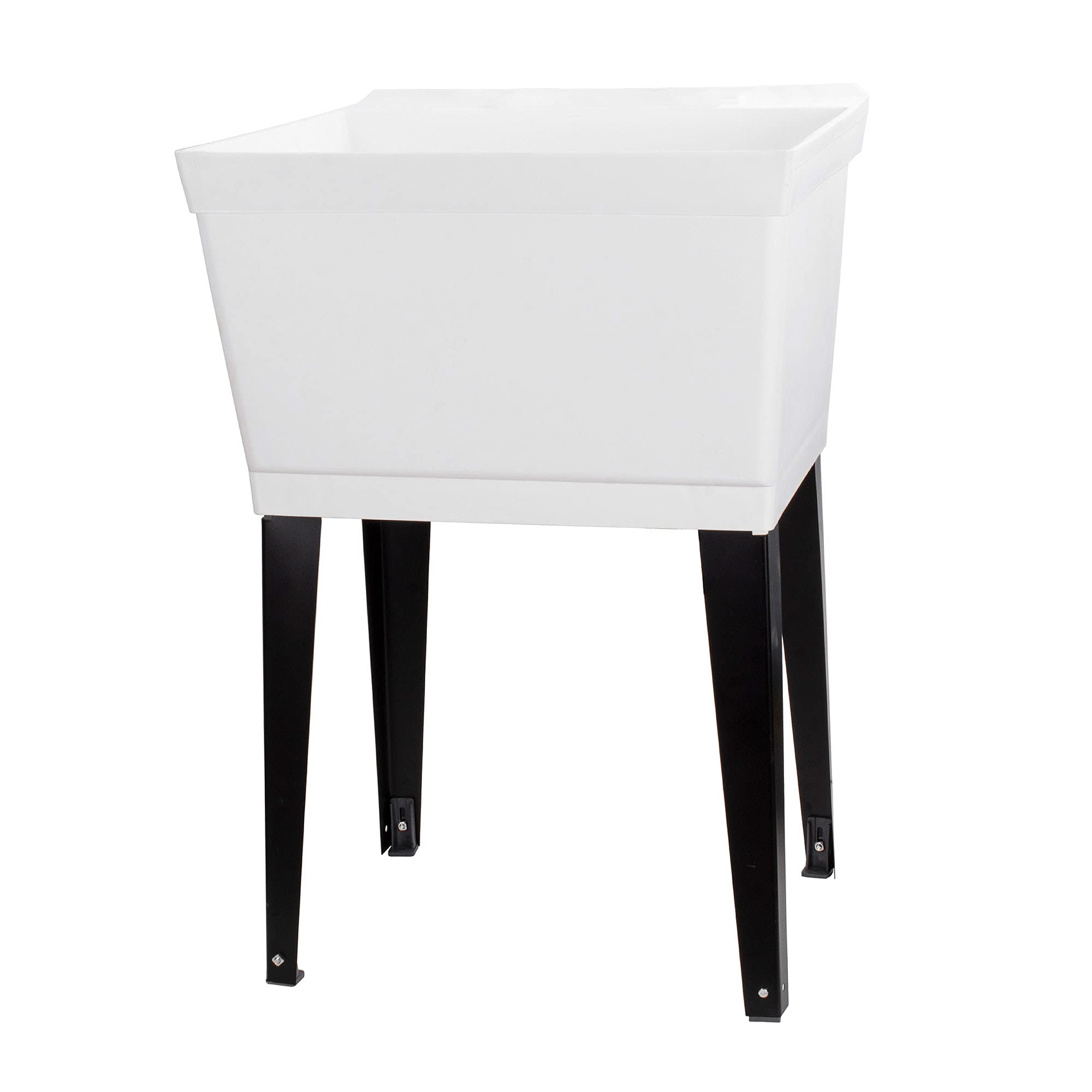
A pared-down 19-gallon thermoplastic tub that lets you pick your own faucet and accessories.
Why I picked it: Simple, affordable tub that offers faucet customization with multiple preformed holes.
Best for: Buyers who want to match a specific faucet or upgrade later.
Very affordable for a durable, customizable tub-only option.
Pros
- Lightweight and portable
- Multiple faucet knockouts
- Includes supply lines and p-trap
- Easy to move if needed
Cons
- Legs can be finicky to seat
- Included drain plumbing feels thin
My take
I liked the flexibility of this tub because it doesn’t force a faucet choice on you. The seven preformed holes made it easy to punch out the pattern I needed for a center-set faucet I already owned.
Assembly is straightforward if you plan for a little carpentry: I used a hole saw to open the faucet cutouts cleanly. The metal legs keep the tub stable when filled, but seating them takes care and a rubber mallet; drive them too far you risk stress on the basin.
For a tight budget, this tub delivers a lot: it’s light enough to be portable, holds 19 gallons, and lets me pick a better faucet than the cheap sets that sometimes come bundled.
3. Lordear 23" Gunmetal Stainless Utility Sink – Best Compact Stainless
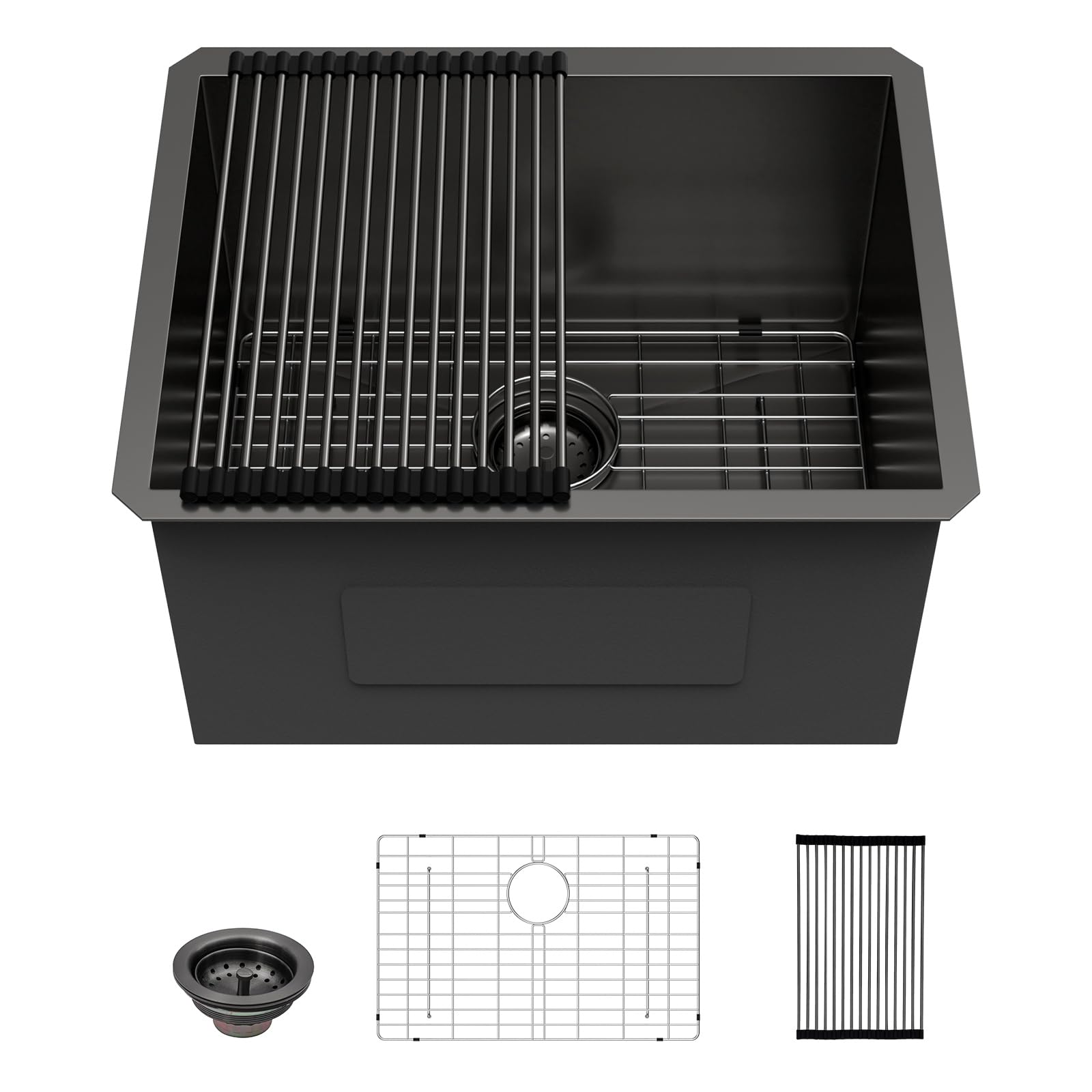
A 16-gauge T304 undermount sink in gunmetal black with deep 12-inch bowl and useful accessories.
Why I picked it: Thick 16-gauge stainless and thoughtful accessories make it a durable undermount choice.
Best for: Small kitchens, laundry nooks, or office utility areas needing a compact stainless sink.
Mid-range option with premium stainless construction.
Pros
- 16‑gauge T304 stainless
- 12‑inch deep bowl
- Includes rinse grid and rack
- Quiet NoiseDefend backing
Cons
- Coating requires cautious handling
- May need separate disposal flange
My take
I installed the Lordear undermount in a compact counter cutout and appreciated how solid the 16-gauge steel feels. The gunmetal finish is striking and matched my other black stainless appliances.
The deep 12-inch bowl handled large pots and utility tasks with ease, and the included bottom grate protects the finish during heavy use. Noise-reduction pads made it noticeably quieter than thinner stainless sinks when I let water run.
My only note is that I stay cautious about scratching: I keep the rack in place to minimize direct contact. Overall, it gave my small remodel a much more finished, commercial feel without a complicated install.
4. Sarlai 24" Black Undermount Stainless Sink – Best Luxury Undermount
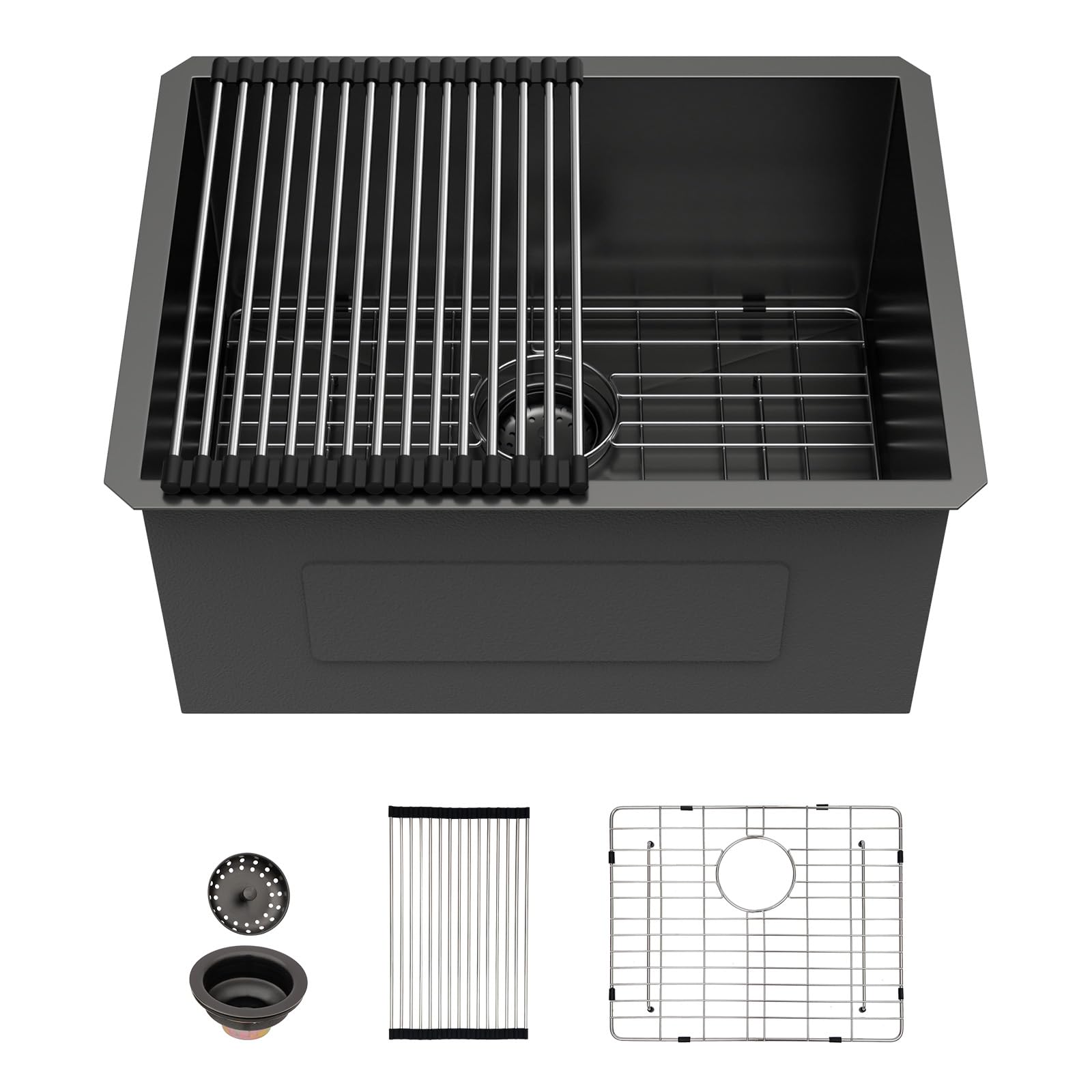
A 24-inch, 16-gauge undermount with Nano PVD gunmetal finish, heavy soundproofing, and strong drainage design.
Why I picked it: Premium 16-gauge steel plus a PVD finish that resists fingerprints and stains.
Best for: Remodels where a high-end look and quiet performance matter.
A more expensive, premium-feeling undermount option.
Pros
- Commercial‑grade 16‑gauge construction
- Nano PVD finish resists spots
- 12‑inch depth for large items
- Solid sound-dampening undercoat
Cons
- Requires minimum cabinet width
- Finish needs gentle cleaning products
My take
I used the Sarlai sink in a laundry-to-kitchen transition project and the PVD-coated gunmetal finish immediately elevated the space. It resists fingerprints and cleans up without streaks.
Installation was smooth thanks to the template and included hardware; the X water guide and bottom slope moved water quickly to the drain so there was no standing residue after rinsing.
If you want a durable undermount with a commercial look, this felt like a careful, premium choice. I’d recommend gentle cleaners to keep the finish looking new over time.
5. JS Jackson Utility Sink with Gooseneck Faucet – Best Freestanding with Faucet
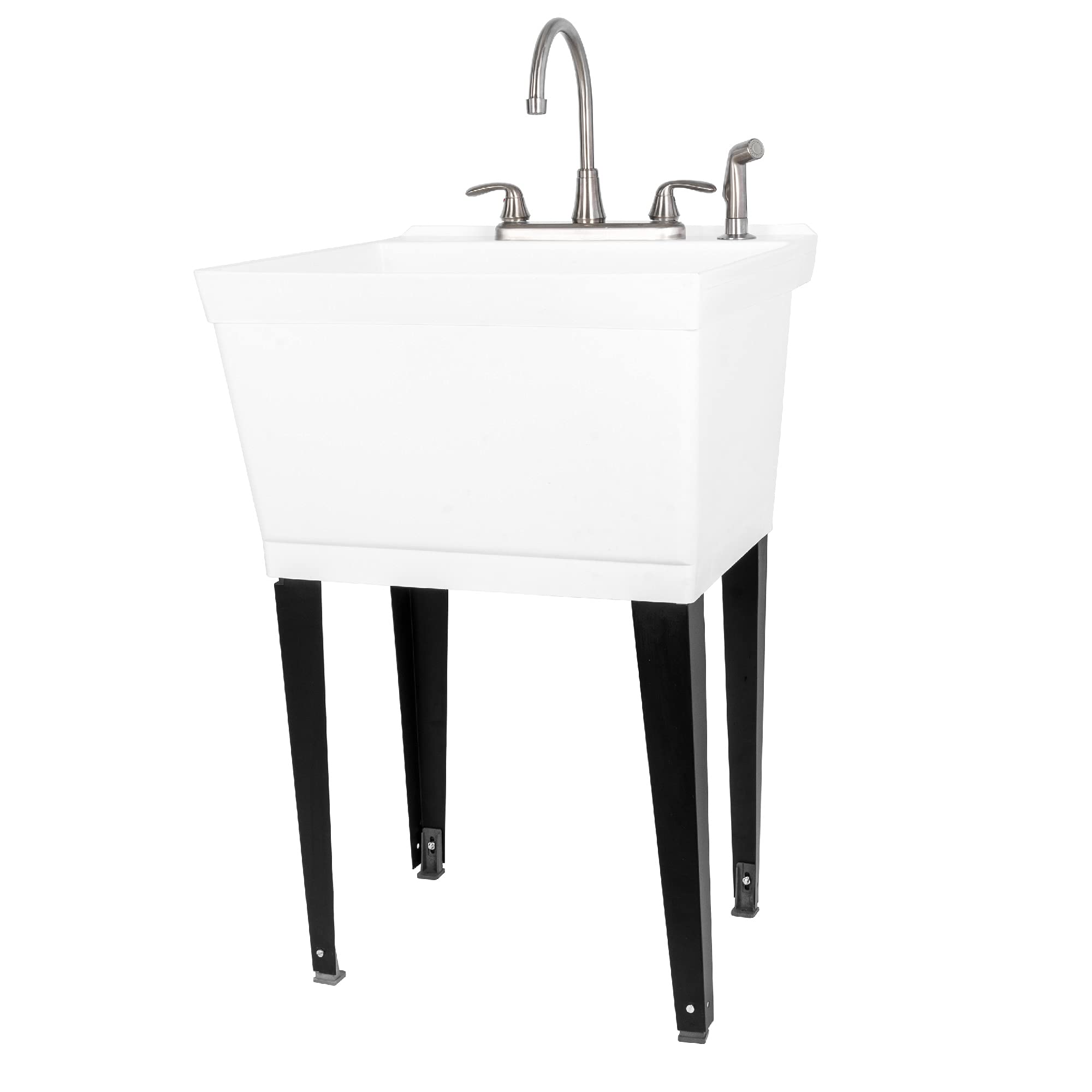
A classic freestanding tub with thicker legs and a two-function ABS faucet for stream and spray.
Why I picked it: Improved leg thickness and a built-in dual-function faucet make setup simple.
Best for: Garages and basements where a sturdy freestanding sink with a sprayer is valuable.
Affordable full-unit option with upgraded leg design.
Pros
- Thicker legs for better stability
- Dual-function stream and spray
- Molded-in drain for easy cleaning
- Simple assembly
Cons
- Faucet components are ABS plastic
- Included drain plumbing can be flimsy
My take
I installed this JS Jackson tub in my workshop and appreciated the thicker legs compared with older models—the extra girth made it sit steadier on concrete.
The gooseneck faucet with stream and spray tackled muddy boots and pet rinses well. Because the faucet is ABS, I treated it as functional rather than premium and swapped plumbing where I wanted more durability.
Overall the tub is light and rugged for non-finished spaces; plan to reinforce or upgrade the drain plumbing if you expect heavy, permanent use.
6. Logmey 24" Undermount Stainless Sink – Best Alternative Undermount
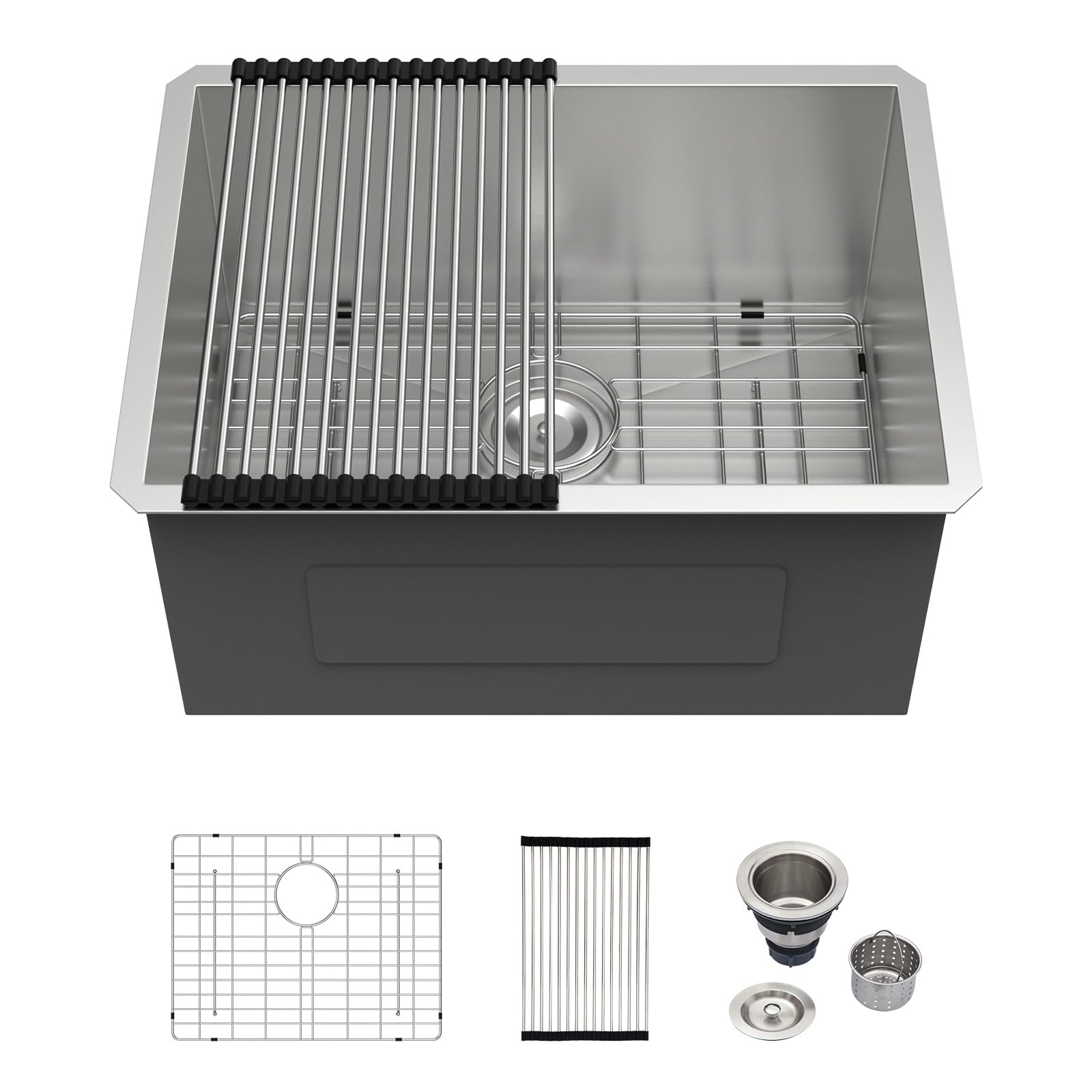
A 24×18 undermount built from 16-gauge stainless with a brushed finish and full accessory set.
Why I picked it: Solid 16-gauge build and complete accessory kit at a competitive level.
Best for: Anyone replacing an undermount sink who wants a heavy-duty stainless alternative.
Well-priced compared with big-box stainless undermounts.
Pros
- 16‑gauge stainless construction
- Includes roll-up rack and drain strainer
- Brushed finish hides wear
- Easy undermount installation
Cons
- Standard depth may not suit very large pots
- Accessories add weight during install
My take
I swapped this Logmey undermount into my countertop cutout and was impressed by the workmanship; the metal felt hefty and the finish blended with my other appliances.
The included bottom grate, roll-up rack, and drain assembly made setup practical and saved a trip to the hardware store. The brushed finish is forgiving of water spots and minor scuffs.
If you want a dependable undermount that doesn’t break the budget but still feels robust, this was a good fit in my remodel pipeline.
How I Choose a Utility Sink
Key factors I check
I evaluate material, depth, included hardware, and whether the sink is freestanding or undermount. Those factors determine durability, installation complexity, and how you’ll use the sink.
- Material: thermoplastic is lightweight and rust-free; 16‑gauge stainless is dent-resistant and quieter.
- Depth: 12 inches is ideal for large pots and soaking; shallower bowls limit big-item cleaning.
- Installation: freestanding tubs are plug-and-play; undermounts need cabinet space and cutout templates.
- Faucet options: bundled faucets save time, but separate faucet choices let you upgrade performance.
Thermoplastic vs stainless: when I pick each
I use thermoplastic tubs in garages or outdoor spaces where weight, affordability, and impact resistance matter. For a finished kitchen or laundry where appearance and noise reduction are priorities, I lean toward 16‑gauge stainless.
- Thermoplastic: tough, rust-proof, usually lighter and less expensive.
- Stainless: better for a polished look, resists dents, and often includes soundproofing.
Installation and plumbing tips I follow
I always check the included hardware and plan for any upgrades: thicker drain plumbing or a better faucet often makes the sink more reliable long-term.
- Seat legs carefully and use wood blocks when tapping to avoid cracking tubs.
- For undermounts, use the provided template and ensure cabinet minimums match the sink.
- Consider replacing thin included drain lines for a permanent indoor install.
Maintenance tips I use
Routine care keeps finishes looking new and prevents leaks or clogs. I stay conservative with cleaning products on coated finishes.
- Wipe PVD or colored finishes with a soft cloth and mild soap.
- Use the included grate to protect stainless from scratches.
- Check leg levelers periodically and tighten if the sink shifts.
Frequently Asked Questions
Do freestanding tubs need to be bolted down?
I usually leave freestanding tubs unbolted for flexibility, but I bolt them down in high-traffic or permanent workshop installs to prevent rocking.
Can I install a garbage disposal in these undermount sinks?
I check the drain opening and manufacturer notes first; most 3-1/2" drains accept common disposals, but sometimes you’ll need a separate flange or adapter.
Are the included faucets durable?
I treat included ABS or mixed-material faucets as functional and replace them with metal faucets if I expect heavy, long-term use.
How do I prevent legs from loosening on thermoplastic tubs?
I seat legs carefully using a wood block and rubber mallet, then occasionally re-seat or reinforce them if the sink sees repeated jostling.
Final Take
I picked options that performed reliably in real tasks and offered clear trade-offs between cost, finish, and installation complexity.
For a ready-to-go freestanding sink, the VETTA kit balances looks and function; if you want a premium undermount, the Sarlai and Lordear stainless models delivered the most refined results.
Use the buying guide to match the sink to how you work—whether that’s heavy workshop duty or a finished laundry room—and you’ll end up with a sink that makes chores easier.
