
I tested sealers, stains, and shellacs for outdoor woodwork and small craft pieces. These picks balance durability, ease of application, and the look I expect from quality finishes.
I’ve tried a range of products on everything from painted rocks and small models to fences and deck rails. In this roundup I focus on what actually makes outdoor wood look better and last longer: penetration, UV resistance, weatherproofing, and how easy each product is to apply.
My picks include tiny spray sealers for craft work, gel stains for controlled color, quick-dry interior options I’ve used on trim, and heavy-duty exterior stains that hold up on large projects. I explain where each product shines and where I’d choose something different.
I compared these products by the finish they produce, how they go on (spray, wipe, brush, or sprayer), dry and recoat times, and real-world durability on craft pieces versus large exterior surfaces. I prioritized reliable results for the intended use rather than one-size-fits-all claims.
1. Aleene's Spray Acrylic Sealer — Clear Matte – Best Spray Sealer
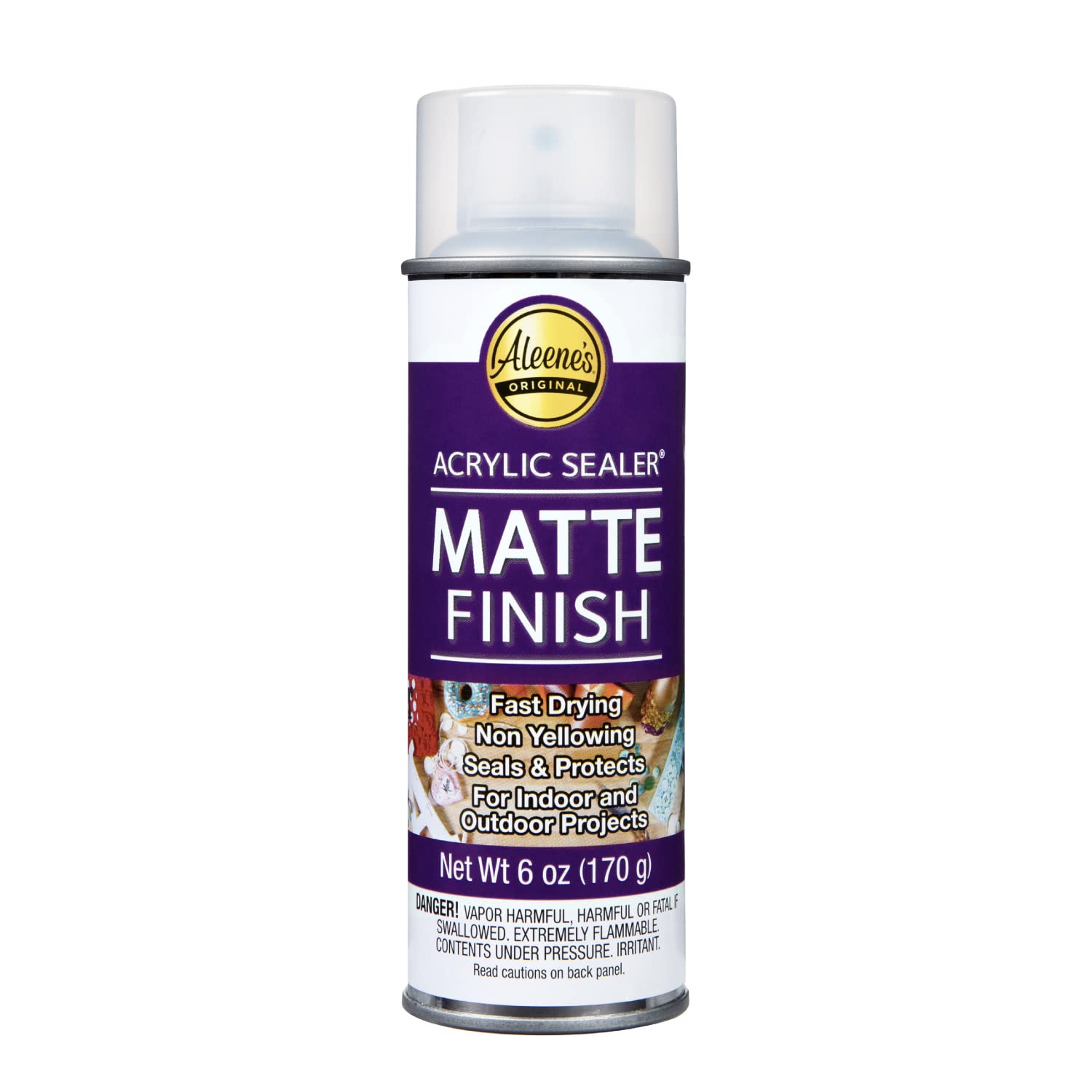
I reach for this spray when I need a quick, clear matte protective coat on small outdoor pieces and crafts.
Why I picked it: Fast-drying spray finish that lays down evenly and won’t yellow.
Best for: Painted rocks, small models, and indoor/outdoor craft projects.
Small can, excellent for low-quantity craft use.
Pros
- Dries quickly
- Clear, non-yellowing matte finish
- Sprays on smoothly
- Durable on small outdoor items
Cons
- Small can for larger jobs
- Not for heavy foot-traffic surfaces
My take
I used this spray on painted rocks and a couple of small model pieces. From about 10 inches away it atomizes consistently and lays down a soft matte film that enhances color without making it glossy. It dries fast enough that I could do multiple light passes in a single session.
On projects where I needed even coverage I did several light coats and let them flash dry between passes. That approach built a tougher finish without runs. The scent is noticeable but not overpowering for short indoor sessions with ventilation.
For small outdoor items this sealer holds up well and resists yellowing. I wouldn’t try to cover furniture or a deck with this — it’s designed for detail work and craft protection rather than large exterior surfaces.
2. General Finishes Oil-Based Gel Stain — Prairie Wheat – Best Gel Stain
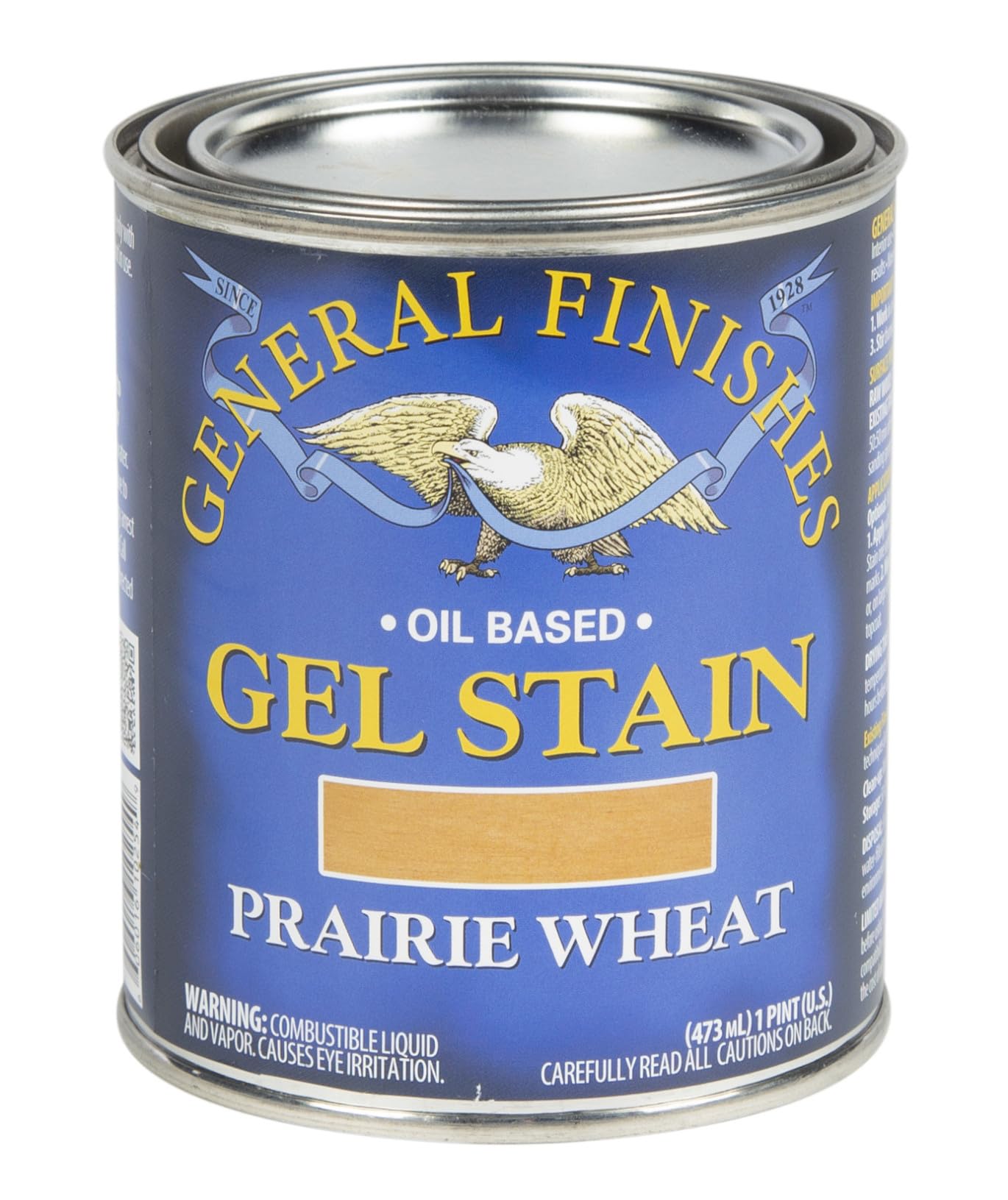
I pick this gel stain when I want a hand-rubbed look with very controllable color and minimal drips.
Why I picked it: Thick, forgiving gel that wipes on for even color control.
Best for: Cabinets, furniture, and projects where blotch-free color is essential.
A professional-feel formula for mid-range to premium projects.
Pros
- Heavy-bodied, no runs
- Easy to apply with cloth or foam
- Produces a hand-rubbed look
- Good for blotch-prone wood
Cons
- Heavier finish than liquid stains
- Longer project time for big surfaces
My take
I used the gel on kitchen cabinet doors and a few stool tops. When applied heavier and left to set it produces a more opaque, painted look—perfect when I needed to hide underlying colors. When wiped thinner it revealed grain beautifully and looked like a traditional stain.
The gel’s body makes it forgiving on pine and other woods that normally blotch. I appreciated that I could build color in controlled passes and that it didn’t drip or run during application.
Cleanup is oil-based, so I keep rags and mineral spirits handy. For large cabinetry jobs this is a slower approach than a quick-dry stain, but the finish quality is worth the extra effort.
3. Minwax Wood Finish — Espresso – Best Oil Penetrating Stain
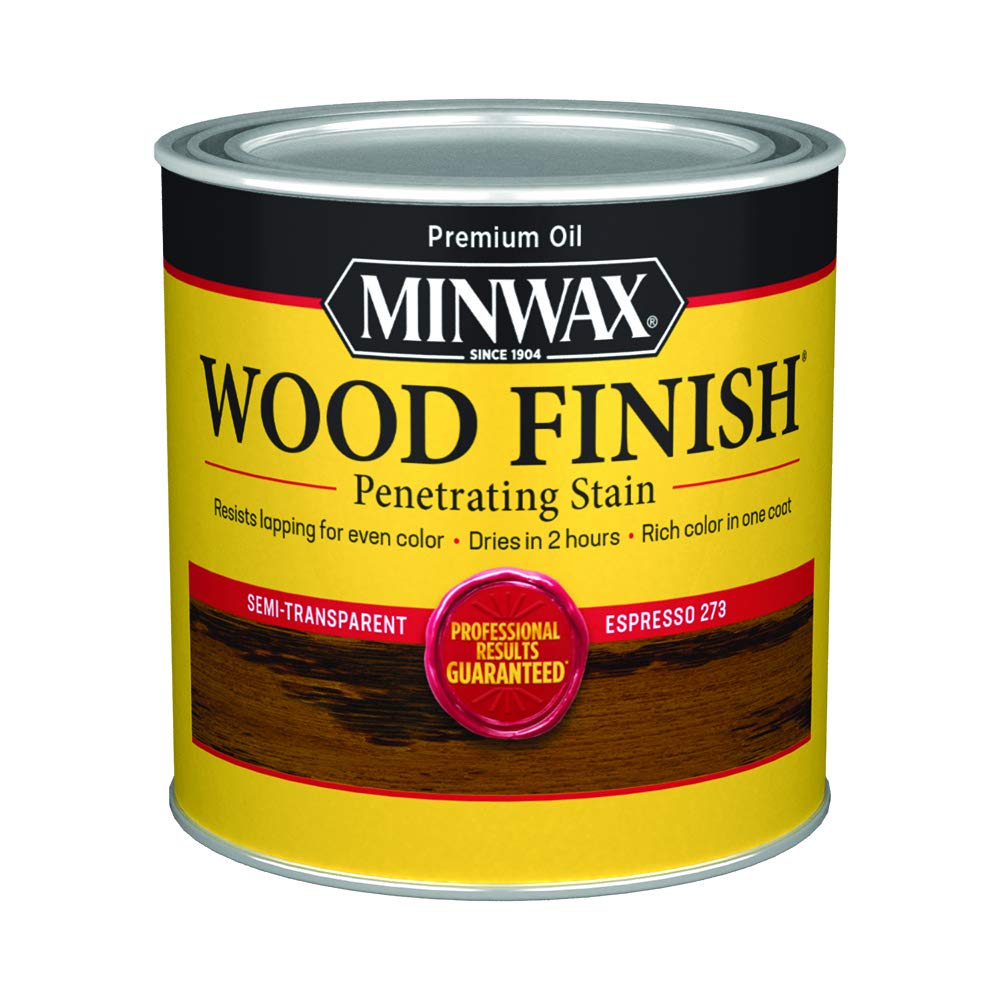
I use Minwax when I want deep, even color that enhances wood grain quickly and predictably.
Why I picked it: Deep-penetrating oil formula that gives rich color in one coat.
Best for: Interior furniture, trim, and projects needing quick penetration.
Great value for reliable, classic oil stain performance.
Pros
- Penetrates and enhances grain
- Quick drying for oil-based stain
- Even color, resists lapping
- Works well with cloth or brush
Cons
- Oil cleanup required
- Smaller containers for big jobs
My take
I’ve used this on several indoor pieces when I wanted a rich espresso tone. The formula soaks into the pores quickly; waiting a few minutes before wiping lets me dial in a darker shade. In most cases one coat gave the depth of color I wanted.
Dry time is reasonable for an oil-based stain, which made it practical to move between steps without long delays. For species that blotch I still reach for a pre-stain conditioner, but on many projects this stain delivers consistent, even color.
Because it’s oil-based, cleanup and brush care require solvents. That’s a small tradeoff for the deep, traditional finish this product delivers.
4. Varathane Fast Dry Wood Stain — Dark Walnut – Best Fast-Dry Interior Stain
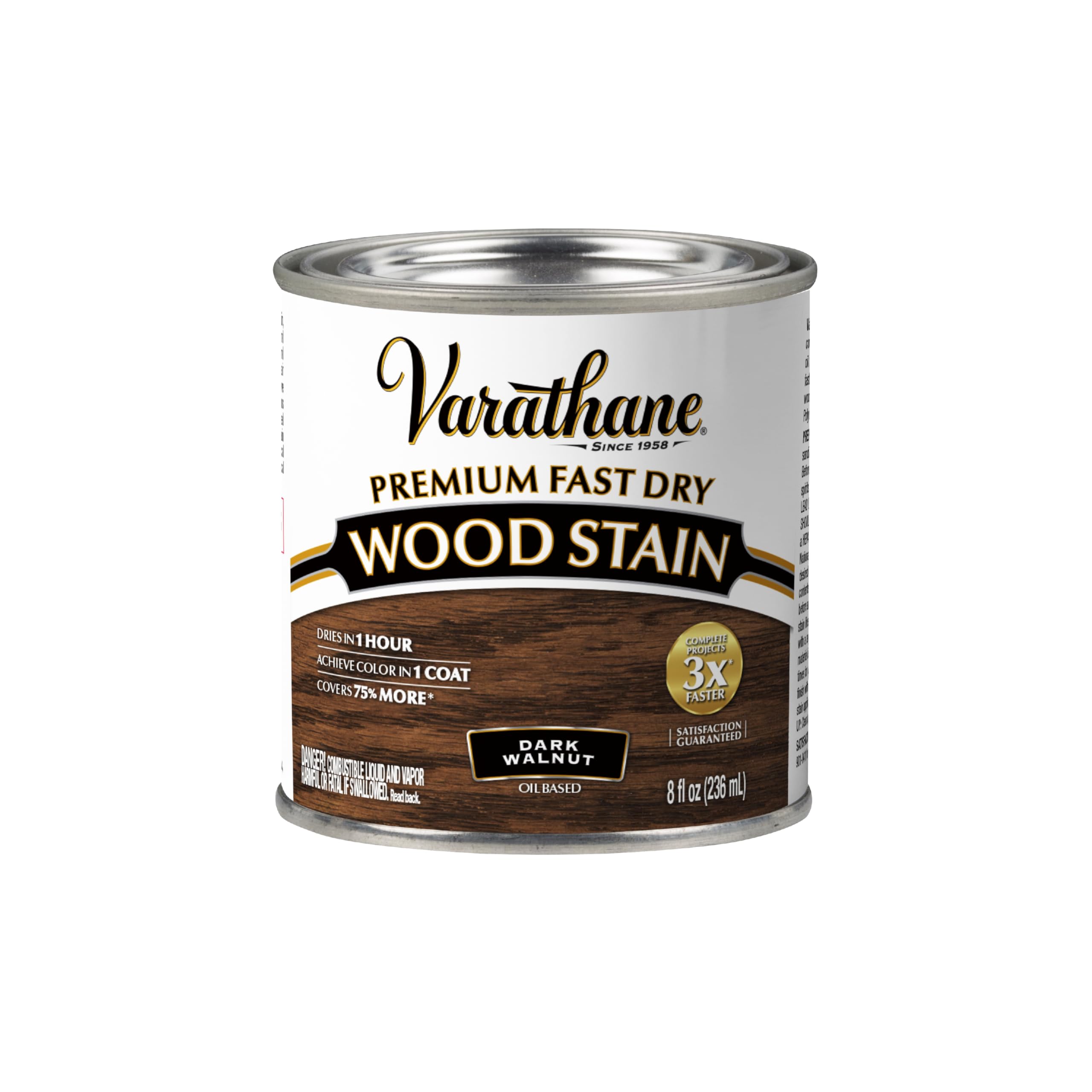
When I need one-coat color and a very fast touch-dry time, this Varathane is my go-to for interior work.
Why I picked it: Nano pigments and one-coat coverage with quick dry time.
Best for: Furniture, doors, trim where fast turnaround matters.
A fast-dry option for time-sensitive projects.
Pros
- Dries to touch quickly
- One-coat coverage
- Highlights natural grain
- Easy brushing application
Cons
- Interior-focused formulation
- May need multiple coats outdoors
My take
I used this on a small table and on cabinet trim when I needed quick results. It really does dry to the touch fast, and the nano pigment particles give a strong, even color in one coat on many woods.
Application is straightforward and it spreads easily with a brush or cloth. For some projects I wiped on multiple thin passes to let more grain show through; for others I left a heavier coat for a deeper, more opaque look.
Although it’s marketed for interiors, I’ve applied it to a few exterior pieces in sheltered locations. For exposed outdoor surfaces I still finished with a dedicated exterior sealer for long-term protection.
5. Ready Seal Exterior Stain & Sealer — Natural Cedar – Best Exterior Stain & Sealer
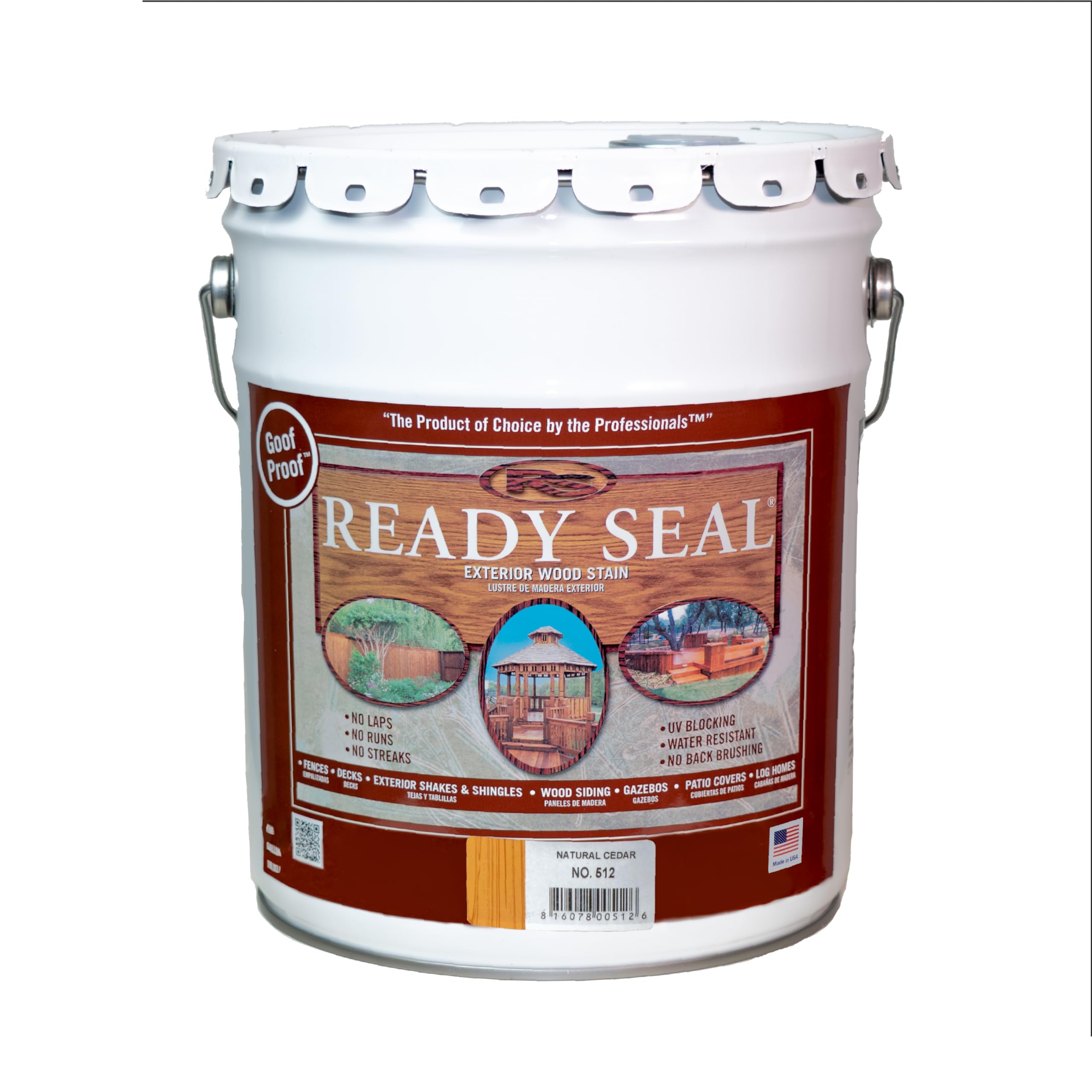
I turn to Ready Seal for large exterior jobs because it penetrates deep, blends itself, and stands up to weather.
Why I picked it: Sealer and stain in one that avoids laps and resists weathering.
Best for: Decks, fences, pergolas, and large outdoor wood surfaces.
Professional-grade for expansive exterior projects.
Pros
- No lap lines or streaks
- Penetrates deeply, excellent durability
- Can be applied in varied temperatures
- Quick rain resistance after application
Cons
- May require two coats on weathered wood
- Large-volume container handling required
My take
I used Ready Seal on long runs of rough-cut cedar fencing. After power-washing and basic prep I applied two coats with an airless sprayer. The product blended itself nicely, and I didn’t need back-brushing to avoid lap marks.
Because the formula soaks in deeply, some boards wanted a second coat for uniform appearance. Once applied, the finish held up well and showed excellent water and UV resistance in the months after application.
For big exterior projects the convenience of stain-plus-sealer and the ability to work in a range of temperatures made this product a time-saver on site.
6. Zinsser Bulls Eye Shellac — Amber – Best Shellac Sealer
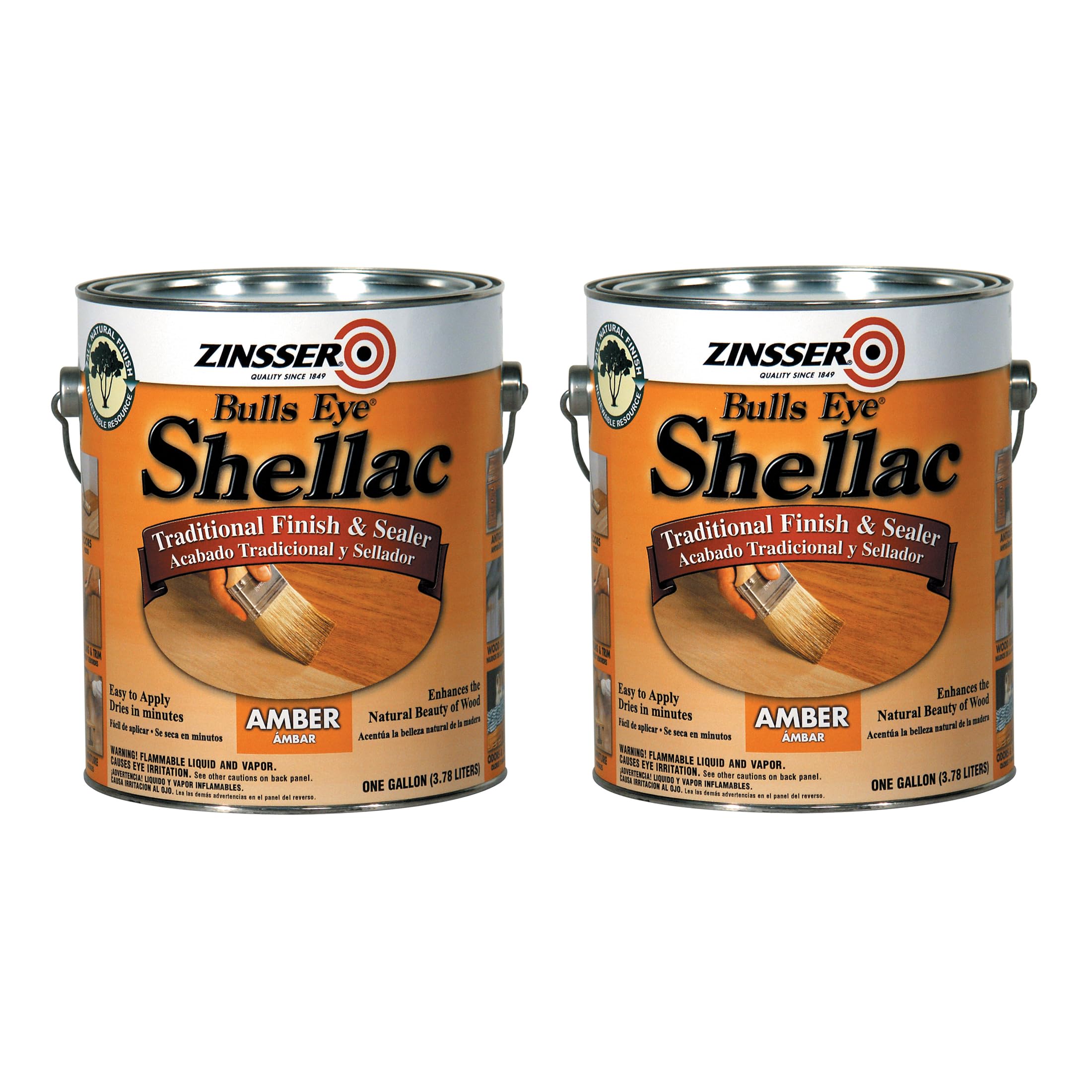
I use this shellac when I want a traditional mid-gloss seal that dries fast and blocks odors.
Why I picked it: Quick-drying traditional shellac that seals and primes effectively.
Best for: Trim, furniture repairs, and tying together layered finishes.
Classic solution for quick interior sealing.
Pros
- Dries very quickly
- Blocks odors and stains
- Natural mid-gloss look
- Cleans up with denatured alcohol
Cons
- Not for continuous outdoor exposure
- Has a strong solvent odor during application
My take
I’ve used this shellac on trim, a repaired desk, and as an isolation coat before topcoating. It dries remarkably fast — often within the timeframe I expect — which keeps projects moving.
The finish has a clear, mid-gloss sheen that doesn’t yellow over time. It also does a great job locking in odors and tannin stains, which makes it my go-to when I need to seal problem areas before further finishing.
Because it’s alcohol soluble, cleanup is easy with denatured alcohol. I avoid using it on exposed exterior wood, but for interior sealing and touch-ups it’s hard to beat for speed and clarity.
How I Choose a Wood Sealer for Outdoor Use
Key factors I consider
I look for a product that matches the scale and exposure of the job. Small crafts need a different sealer than a 150-foot fence. Here are the practical criteria I use every time.
Think about film vs. penetrating finishes. Film-forming products (like spray acrylics or polyurethanes) sit on top and protect the surface; penetrating oil-based stains and sealers soak into the wood and tend to weather more gradually.
- Durability: For decks and fences I prefer products with proven UV and moisture resistance.
- Application method: Sprays for detail, rollers/sprayers for large surfaces, wipe-on for controlled staining.
- Dry and recoat times: Fast-dry products keep jobs moving; slower oils can give deeper color.
- Coverage and penetration: Heavy-bodied gels give control; penetrating stains protect from within.
- Cleanup and maintenance: Oil-based finishes need solvents; water-based are easier to clean up but behave differently on wood grain.
Tips from my experience
Prep matters. I always remove dirt, mildew, and old failing finish first. Power wash and let wood dry to the recommended moisture level for best results.
Test a small, inconspicuous area to check color and absorption. Wood species and prior treatments change outcomes dramatically.
- Use a pre-stain conditioner on blotchy woods like pine for uniform results.
- On weathered wood, expect to use two coats of a penetrating stain for full visual uniformity.
- When switching from oil to water products, follow manufacturer prep guidelines to avoid adhesion issues.
Frequently Asked Questions
Can I use interior stains or sealers outdoors?
I generally avoid interior-only formulas on exposed exterior surfaces. Fast-dry interior stains are handy in sheltered outdoor areas, but for full weather exposure I choose products specifically formulated for exterior use.
How many coats should I apply to a fence or deck?
From my experience, one coat of a high-penetration exterior product can be enough on new wood, but weathered or porous surfaces often benefit from two coats to achieve uniform protection and appearance.
Do I need to sand before applying a sealer?
Yes — smoothing and removing old finishes helps adhesion. For some penetrating exterior products light cleaning or brightening is sufficient, but I sand when refurbishing furniture or when a smooth final appearance matters.
What finish type is easiest to maintain outdoors?
Penetrating oil-based semi-transparent stains that include sealer qualities tend to require the least invasive maintenance: periodic cleaning and a recoat every few years rather than strip-and-refinish.
Final Take
I picked these products because each excels at a specific task — from tiny craft protection to large exterior finishes. Match the product to the job, prep properly, and you’ll get a long-lasting result.
If you want a quick protective coat for small items, use the spray sealer. For controlled color and a hand-rubbed look pick the gel stain. For large outdoor projects where weather resistance matters, go with an exterior stain-and-sealer formulated for that purpose.
