
I tested five centrifugal juicers across power, yield, cleanup, and countertop fit. This roundup highlights the machines I kept using and why each one earned a spot on my counter.
I spent time using these centrifugal juicers side-by-side so I could weigh speed, yield, cleanup, and everyday usability. I focused on machines with wide chutes, dishwasher-safe parts, and enough power to handle both soft and hard produce.
In this guide I call out which models made my life easier: from quick single-serve presses to high-power machines built for family batches. Expect practical takeaways you can act on before you buy.
All of these are centrifugal extractors that favor speed over slow-press extraction. If you want the fastest throughput and easy cleanup, I recommend the models below; if you prioritize cold-press nutrient retention, note which model emphasizes lower heat transfer.
1. Hamilton Beach Big Mouth Juicer – Best Everyday Value
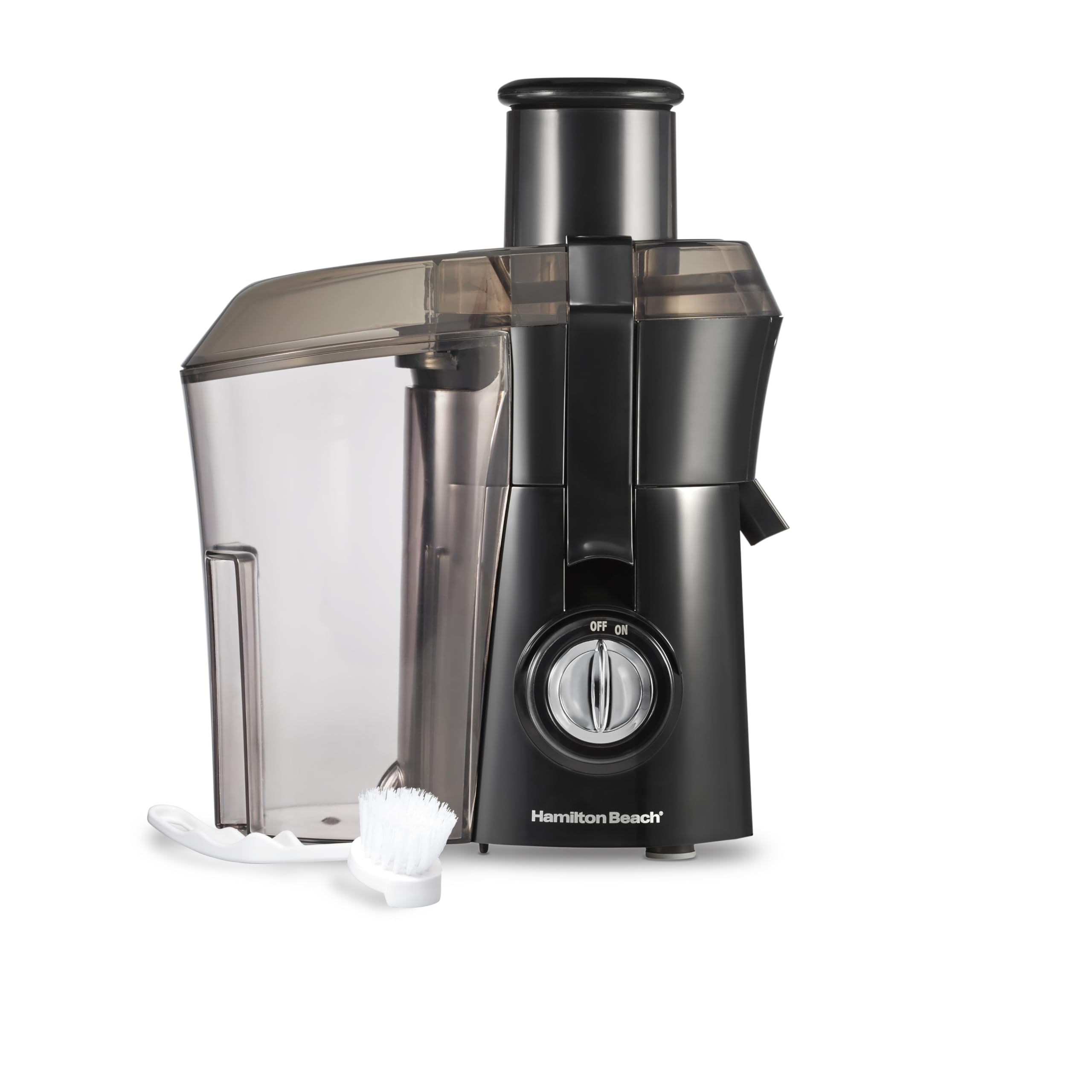
I rely on this for fast daily juicing — a roomy 3" chute, an 800W motor, and dishwasher-safe parts make it simple to use and maintain.
Why I picked it: Big chute and reliable 800W power for quick, low-effort juicing.
Best for: People who want quick morning juice with minimal prep.
Affordable option with solid features.
Pros
- Extra-large 3" feed chute
- Strong 800W motor
- Dishwasher-safe removable parts
- Generous pulp bin capacity
- BPA-free construction
Cons
- Noticeably loud during use
- Basic noise dampening
- Not optimized for leafy greens
My take
This Hamilton Beach stayed on my counter because it makes juice fast and hassle-free. The 3" Big Mouth chute genuinely reduces prep time — I could fit whole apples and handfuls of carrots without chopping.
The 800W motor handles hard roots and softer fruit without bogging down. I appreciated the large pulp bin during longer runs; it meant fewer interruptions when I was making multiple glasses.
Cleanup was easy: the lid, pulp bin, and juice bowl went in the dishwasher, and the included brush got the strainer clean in seconds. The unit is loud compared with the quieter models I tested, but its speed and simplicity kept me using it every morning.
A three-year limited warranty and BPA-free parts gave me confidence that this is built for regular use. If you want a dependable, budget-conscious centrifugal juicer for everyday use, this one hit the sweet spot for me.
2. NutriBullet Centrifugal Juicer – Best for Small Kitchens
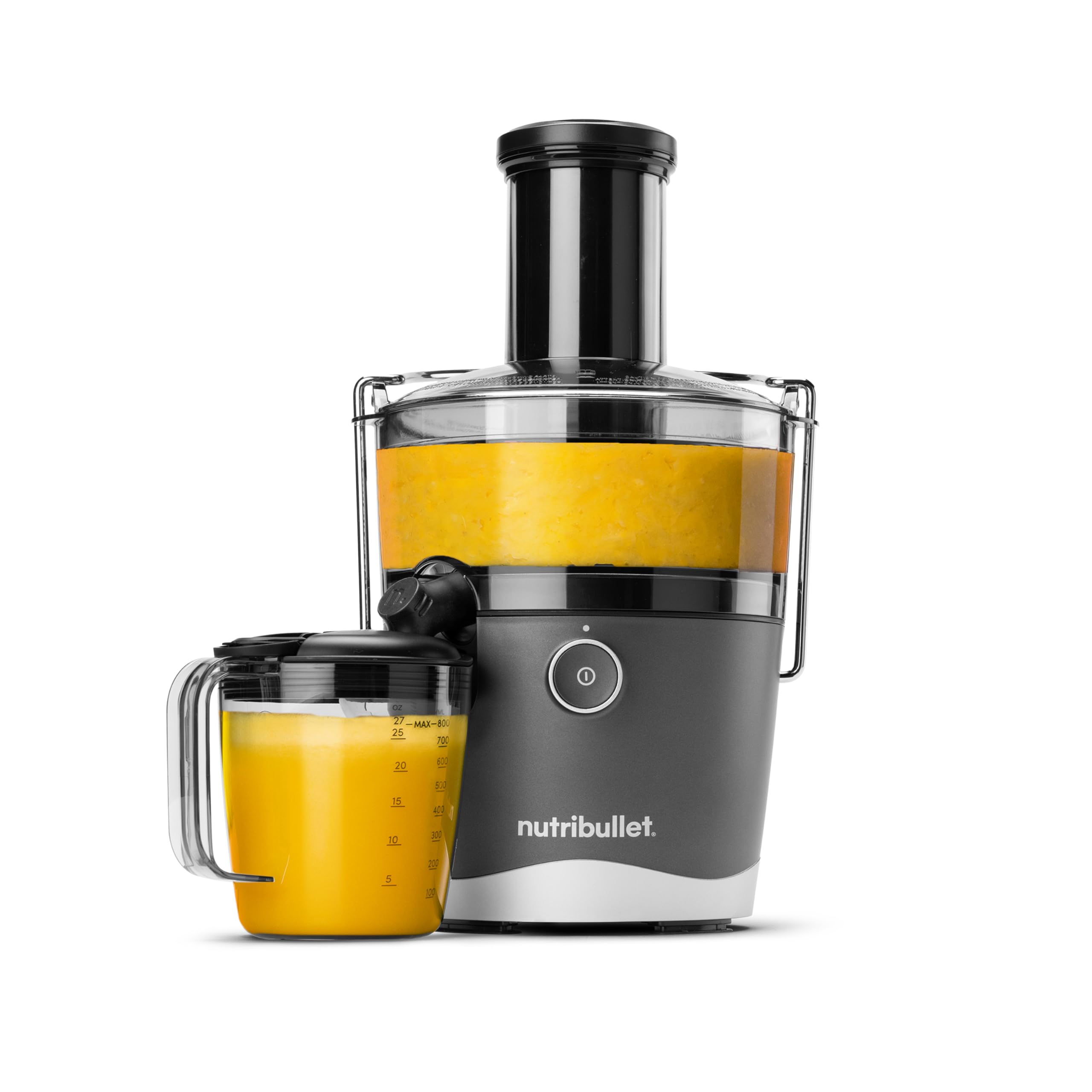
I liked this for its compact footprint, dual-speed control, and a 27 oz sealing pitcher that lets me juice and store without extra containers.
Why I picked it: Compact design with dual speeds and a sealable juice pitcher for storage.
Best for: Small households and anyone who wants make-ahead juice.
Good value for compact, user-friendly performance.
Pros
- Dual-speed control
- 3" feed chute
- 27 oz sealing pitcher
- No-drip spout
- Dishwasher-safe parts
Cons
- Pulp can be wetter than others
- Smaller overall capacity
My take
This NutriBullet fit best in my small kitchen — it’s compact but doesn’t compromise on features. The dual speeds let me match the speed to soft fruit or tougher roots.
I used the 27 oz juice pitcher to store juice for the next day; the sealing lid and froth separator kept the juices ready to grab-and-go. The no-drip spout reduced mess while pouring.
Cleanup was straightforward: the pulp basin and sieve lift off for quick rinsing and dishwasher cycles. I did notice the pulp came out a touch wetter than with higher-power models, so I had to run fibrous runs a bit longer to squeeze extra juice out.
Overall, it’s a practical pick when counter space is limited and you want a straightforward juicer that stores juice in the same container you served it from.
3. KOIOS 1300W Centrifugal Juicer – Best for Power & Yield
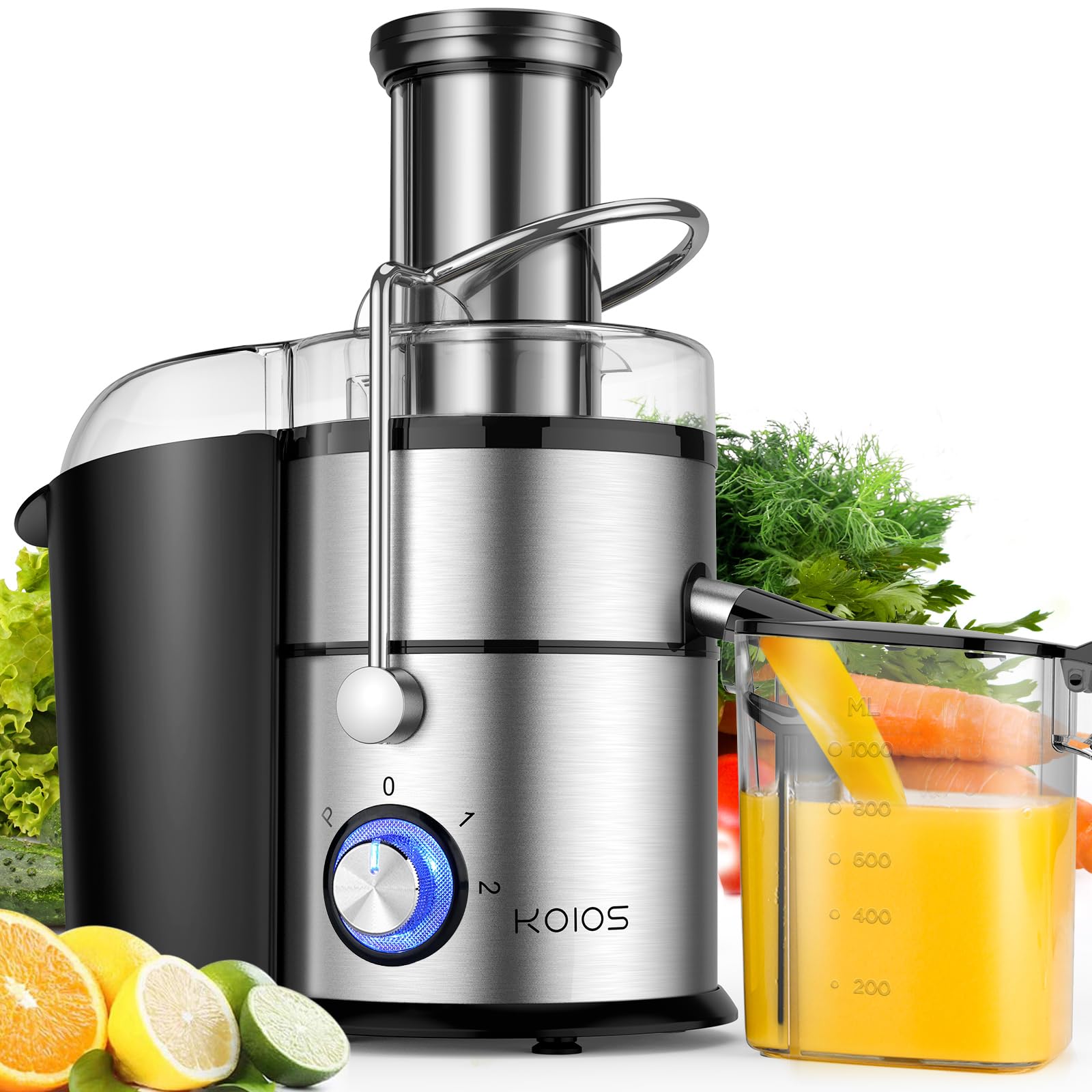
I chose this when I wanted maximum juice yield — a 1300W copper motor, titanium-plated filter, and a large pulp bin delivered noticeably drier pulp.
Why I picked it: High-watt motor and titanium filter for superior extraction and drier pulp.
Best for: Heavy juicers and families who need big batches.
Powerful mid-range option with professional features.
Pros
- 1300W all-copper motor
- Titanium-plated stainless steel filter
- 3-speed control
- Huge pulp container
- Safety lock and overheat protection
Cons
- Larger footprint
- Can be noisy under load
My take
When I wanted a juicer that actually squeezed the pulp dry, the KOIOS impressed me. The 1300W motor has the torque to push through celery, beets, and dense roots and leave compact, dry pulp.
The titanium-plated mesh produced clearer juice with less foam compared with other strainers I used. I also liked the three-speed options — soft, hard, and pulse — which made switching between tomatoes and carrots effortless.
The juice cup and massive pulp chamber let me run long batches without babysitting the unit, which was a real time-saver for weekend meal prep. It’s larger and a bit louder than compact models, but if yield and durability matter to you, it performed exactly as advertised in my kitchen sessions.
Safety features like the latch lock and overheat protection gave me confidence during heavier runs. If you want raw power and efficient extraction, this KOIOS model is the one I kept reaching for.
4. HOUSNAT Centrifugal Juicer – Best Budget Compact
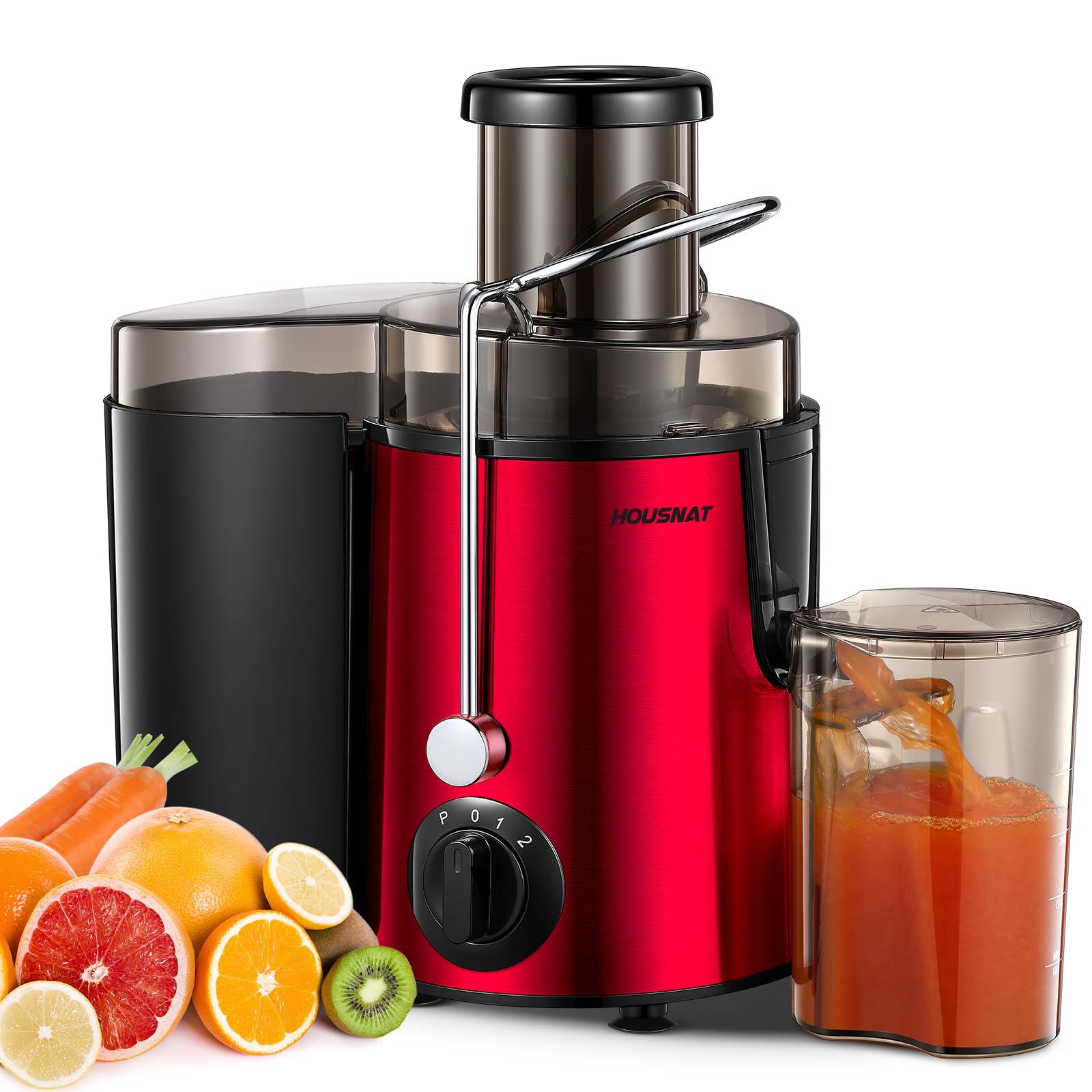
I found this small juicer to be a solid, space-saving performer for single-serve juicing — it’s compact, uses food-grade 304 stainless parts, and has three speeds.
Why I picked it: Compact footprint with food-grade stainless parts for everyday single-serve juicing.
Best for: Singles or anyone who makes small daily batches.
Budget-friendly choice for small kitchens.
Pros
- Compact countertop footprint
- Food-grade 304 stainless parts
- Three speed settings
- Easy assembly
- Included cleaning brush
Cons
- Smaller pulp catcher
- Struggles with apple skin
- Unknown long-term durability
My take
This HOUSNAT felt like a tiny powerhouse for my one-person routines. It didn’t take much space and was quick to assemble and disassemble.
I appreciated the 304 stainless components and the included brush for fast cleanup. For small daily portions it handled carrots, cucumbers, and citrus well.
Two things to know from my use: the pulp catcher is fairly small so I emptied it often, and apples with the skin on required more force and produced more waste. For the price and size, though, it’s a convenient option when you don’t need a full-family machine.
5. Breville Juice Fountain Cold XL – Best Premium
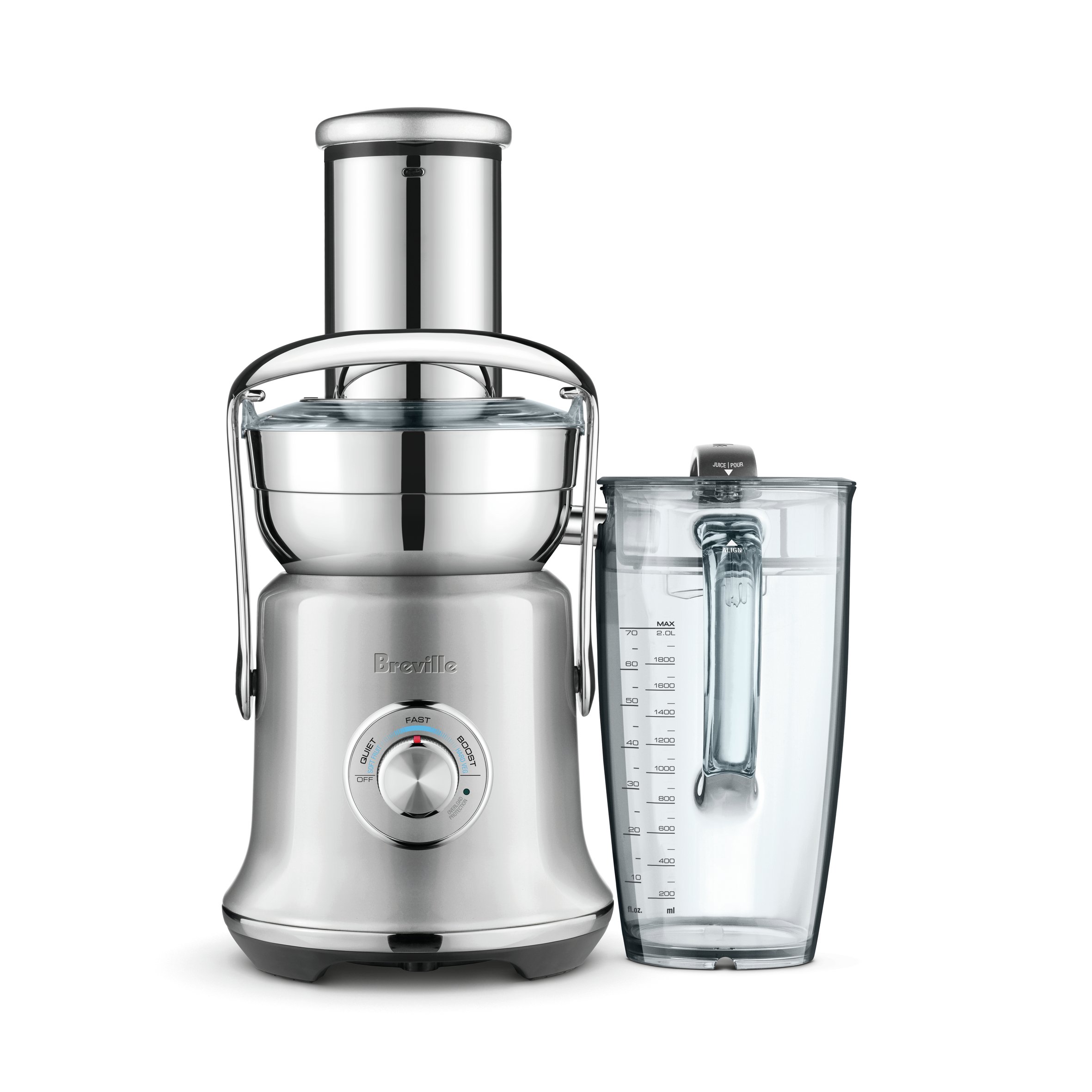
This is the premium centrifugal option I reached for when I wanted speed plus reduced heat transfer — a 3.5" chute, 1,200W motor, Cold Spin tech, and a seal-and-store 70 oz jug.
Why I picked it: Large 3.5" chute, Cold Spin tech, and a big sealable juice jug for family batches.
Best for: Families and anyone who wants faster, lower-heat centrifugal extraction.
Premium-priced with advanced features.
Pros
- Extra-wide 3.5" feed chute
- Cold Spin technology
- 1200W motor
- 70 oz seal-and-store jug
- Noise-reduction setting
Cons
- Cleaning can be fiddly
- Larger, heavier unit
My take
I reached for the Breville when I needed large batches and the best possible juice quality from a centrifugal machine. The 3.5" chute cut prep time dramatically — whole apples and big carrots went in without trimming.
Cold Spin technology meant I noticed less heat buildup during extended juicing, and the juice tasted bright and fresh. The 70 oz jug with an airtight lid made it easy to batch juices and store them for a couple of days.
It’s a heavier, more premium build than the others, and I found cleaning the mesh and plastics easiest with a strong faucet spray. The quiet setting genuinely reduced noise for early-morning prep, making it the one I used when I wanted power without drowning out the kitchen.
How I Choose a Centrifugal Juicer
Power and Speed
I check wattage first because it tells me how well a machine will handle hard roots and dense produce. Higher-watt motors extract more juice from carrots, beets, and celery.
Speed matters too: centrifugal machines are fast, but having multiple speed settings helps me tailor extraction for soft fruit versus hard vegetables.
- 800W is a solid baseline for everyday use.
- 1,200W–1,300W works best for heavy-duty, family-sized juicing.
- Look for variable speeds if you switch between soft and hard produce.
Feed Chute Size
I prefer a wider feed chute because it reduces prep time. A 3" or larger chute lets me juice apples and carrots with minimal chopping.
If countertop real estate is limited, weigh chute size against footprint — big chutes often mean a larger machine.
- 3" chutes are convenient for most household needs.
- 3.5" chutes let you run whole larger fruits with less prep.
Juice Yield and Pulp
I judge extraction by how dry the pulp is after a run. Drier pulp means better yield and less wasted produce.
Filters and motor torque both affect yield; titanium- or stainless-steel filters tend to make cleaner juice.
- High-torque motors + fine mesh = drier pulp.
- Larger pulp bins are better for batch juicing.
Cleanup and Durability
I make sure parts that contact produce are dishwasher-safe and that a cleaning brush is included. Quick teardown gets me back to the rest of my day.
Look for food-grade materials like 304 stainless or BPA-free plastics for longevity and peace of mind.
- Dishwasher-safe removable parts simplify cleanup.
- A good cleaning brush and simple assembly save time.
Noise and Heat
Centrifugal juicers are inherently louder than masticating models. I check for noise-reduction settings if I juice early in the morning.
If you care about nutrient retention, seek models that minimize heat transfer during operation.
- Expect more noise with higher power units.
- Cold-extraction features help preserve vitamins.
Frequently Asked Questions
Can centrifugal juicers handle leafy greens?
In my experience, leafy greens aren’t the strong suit of centrifugal machines. I can juice a small amount if I alternate greens with firmer produce, but a masticating juicer or blender usually gives better results for wheatgrass, kale, and spinach.
How often do I need to empty the pulp bin?
It depends on the pulp bin size and how much you’re juicing. I emptied smaller bins after every two to three medium fruits, while the larger 70–100 ounce bins let me run longer batches before stopping.
Are these juicers hard to clean?
I found most were easy to disassemble and rinse; models with dishwasher-safe parts and an included brush were the quickest. A powerful faucet spray makes mesh filters much easier to clean.
Will a centrifugal juicer heat my juice?
Centrifugal units generate some heat due to high-speed spinning. I noticed that models with cold-spin or noise-reduction tech kept temperature increases minimal and preserved a fresher taste.
Final Take
After testing, I kept reaching for different machines depending on the task: the Hamilton Beach for daily convenience, the KOIOS for raw power and yield, and the Breville when I wanted big batches with better heat control.
Decide whether speed, yield, or nutrient preservation matters most to you, then pick the model that matches that priority. I used every machine in real kitchen scenarios, and each one has a clear role depending on your routine.
