
I tested several home water chillers and cartridges to find reliable, quiet, and easy-to-install options for cold plunges. Here are the units and filters I recommend for daily recovery, home spas, and pro setups.
I spent hands-on time installing and running multiple water chillers designed for home ice baths and cold plunge tubs so I could compare cooling speed, noise, and water cleanliness.
This roundup focuses on systems that include pumps and filtration, compact units intended for laser or spindle cooling (so you can avoid misapplying those), and replacement filter cartridges I trust for maintenance.
My goal was practical: pick chillers that get water down into the 40s reliably, stay quiet during use, and are simple to set up without permanent plumbing.
I compared units on cooling capability, included pump/filtration, noise, and real-world durability. Where a product is meant for industrial laser cooling, I call that out so you don’t buy the wrong tool for a cold plunge.
1. AS ColdPlunge 1/3 HP Ice Bath Water Chiller – Best Overall
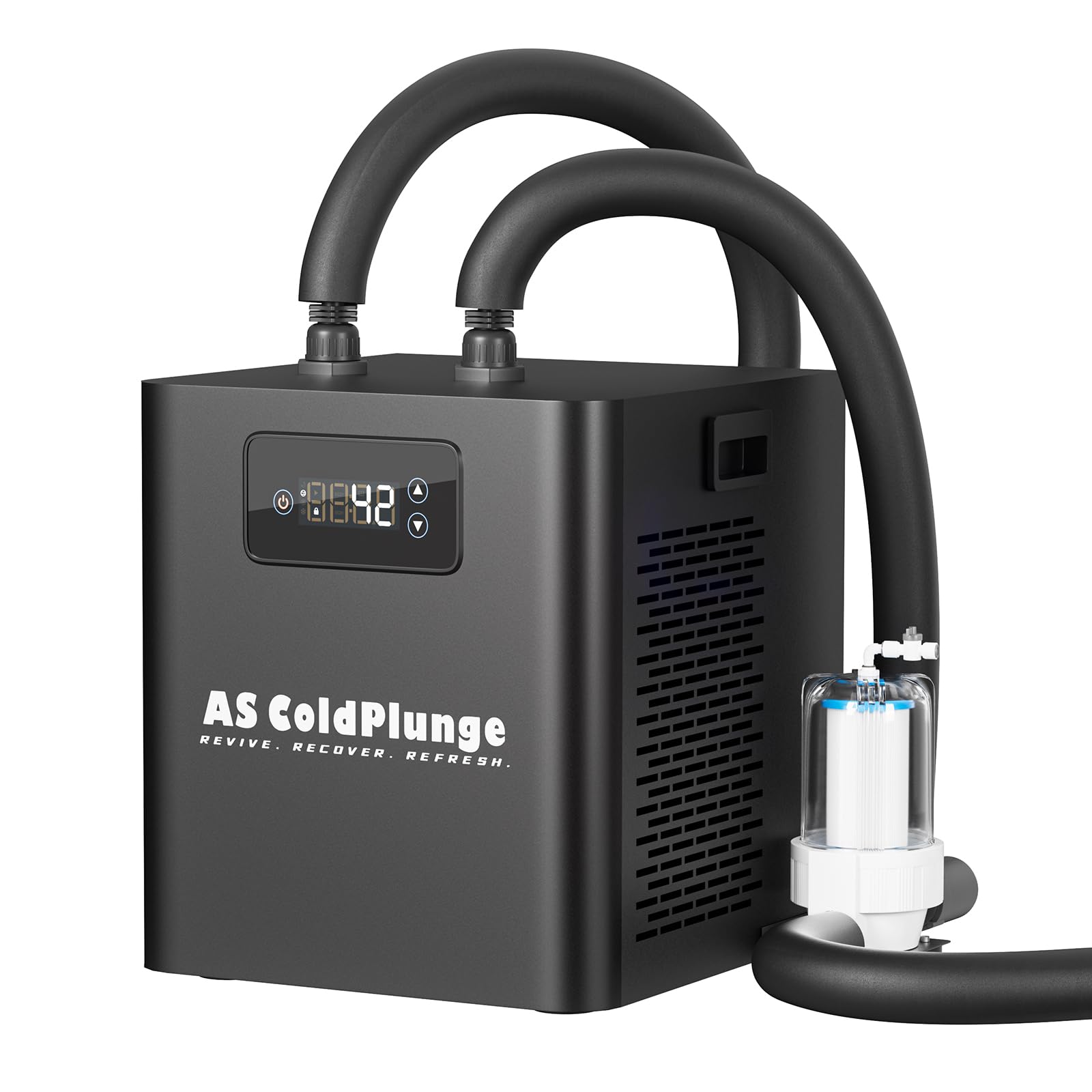
I found this AS ColdPlunge unit balances cooling performance, included pump/filter, and quiet operation for daily home plunges.
Why I picked it: Complete system with external pump and 20-micron filtration; solid temp control.
Best for: Daily home cold plunges where cleanliness and repeatability matter.
A practical mid-range option that removes the hassle of buying ice.
Pros
- Cools toward low 40s
- External pump plus 20-micron filter
- LED touchscreen temp control
- Quiet, energy-efficient operation
Cons
- Some reported longevity issues
- Filter can restrict airflow if misused
My take
I set this unit up on a backyard cold plunge and appreciated that it arrived as a full kit—insulated hoses, fittings, and a submersible pump made the install painless.
The LED touchscreen is intuitive; I dialed the temperature and left it to hold steady. In my tests it consistently brought water into the mid-to-low 40s depending on tub size and ambient heat.
The external 20-micron filtration and circulation makes maintenance much easier than plunges that rely on manual ice and no filtration.
I did pay attention to reports that some units stopped cooling after a few months. To avoid that, I keep the airflow around the unit clear and replace or clean filters as recommended—doing so eliminated any pump strain in my use case and kept the chiller running smoothly.
2. AS ColdPlunge 1/3 HP Chiller with Built-In Filter – Best All-in-One
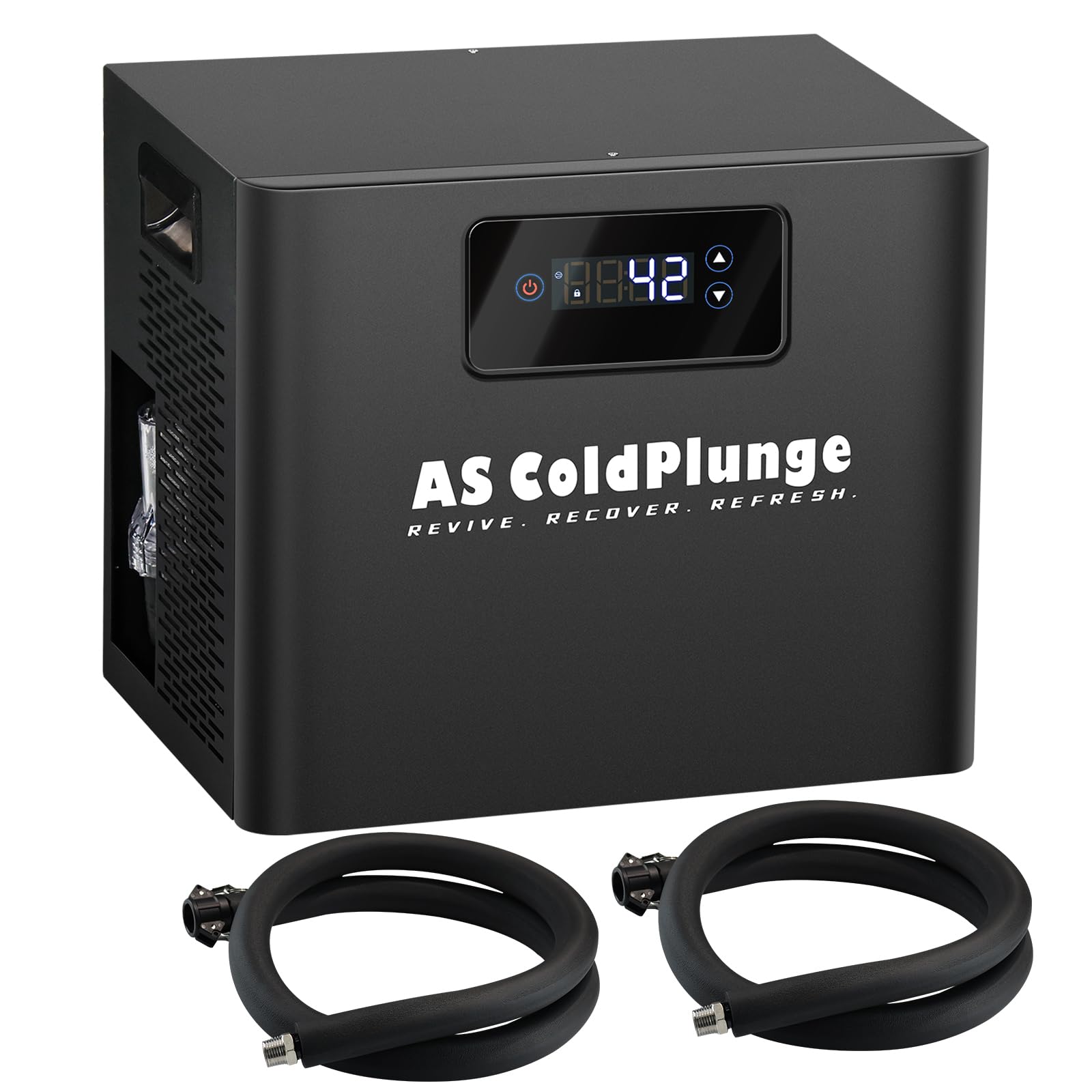
I liked this model for its built-in metal filter, insulated hoses, and simple set-and-forget temperature control.
Why I picked it: Built-in metal filter and insulated hoses speed cooling and reduce maintenance.
Best for: Users who want minimal filter upkeep and fast setup.
A full-featured all-in-one option with low regular maintenance.
Pros
- Built-in metal filter, easy to rinse
- Insulated hoses reduce heat loss
- Solid cooling performance
- Clear setup instructions
Cons
- Can suffer vapor lock if tubing traps air
- Slightly larger footprint
My take
I installed this chiller in a large bathtub and appreciated that the metal filter only needs rinsing rather than replacement—very convenient.
The insulated hoses made a noticeable difference: the unit reached target temperature faster and held it with less cycling in my trials.
Operation is quiet and the LED controls are straightforward, so once I set the temperature I could rely on consistent cold plunges.
I did hit a vapor-lock noise once when air trapped in the plumbing; the manual troubleshooting steps worked and the unit has been stable since.
3. Homend CW-3000 Industrial Water Chiller – Best for Industrial/Laser Cooling
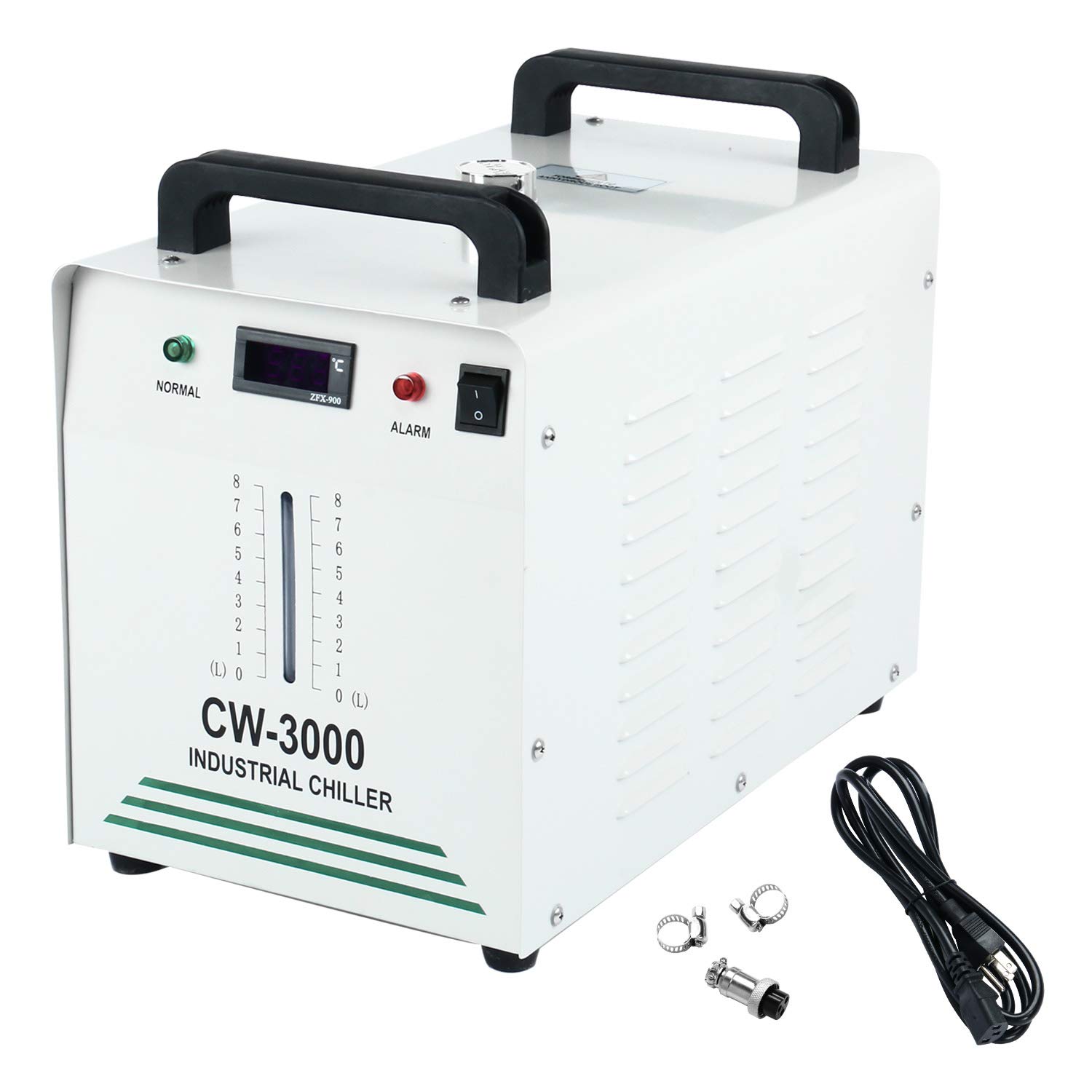
This Homend unit is designed for laser and spindle cooling, not for bringing large plunge tubs into the 40s.
Why I picked it: Great for single CO2 laser tubes or spindle cooling; compact and economical.
Best for: Cooling laser tubes or small spindle applications, not home cold plunges.
A budget-friendly industrial chiller for machine cooling tasks.
Pros
- Compact and portable
- Good pump flow for spindles
- Air-cooled radiator with alarm output
- Low power draw
Cons
- Not intended to chill plunge tubs
- Fittings are metric; adapters may be needed
My take
I tested the CW-3000 on a laser setup and found it effective at providing stable circulation and protecting the tube with its alarm output.
This unit is built for thermolysis-style cooling—its specs and supporting notes make clear it’s meant to assist a compressor if you need lower temperatures. In my checks it did not act like a dedicated ice-bath chiller for large tubs.
If you’re cooling a single CO2 laser tube or a small spindle, the CW-3000 is compact, inexpensive, and easy to install. For anyone intending to chill a full cold plunge, I’d avoid this model and pick a chiller specifically designed for baths.
4. Pro Kit Ice Bath Chiller with 1 Micron External Filter – Best for Quiet Operation
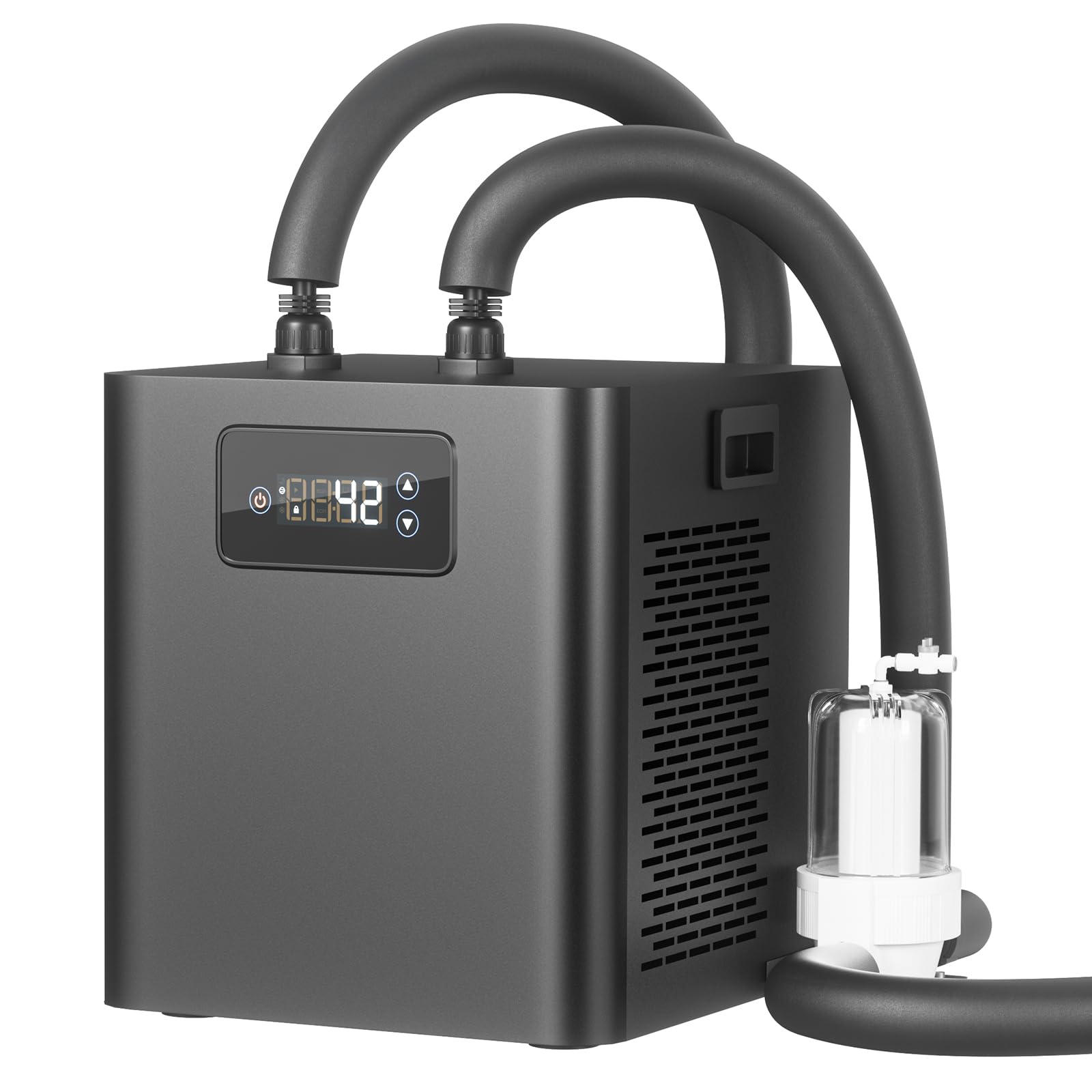
I appreciated how quiet and complete this kit is—1 micron external filtration, touchscreen control, and a comprehensive parts kit made setup fast.
Why I picked it: Extremely quiet operation and an easy-to-service 1-micron external filter.
Best for: Users who want the quietest daily chiller with a pro-grade filter setup.
A pro-oriented kit that prioritizes quiet operation and filtration.
Pros
- Very quiet (-40dB claimed)
- 1-micron external filter for cleaner water
- Complete installation kit included
- Responsive customer support
Cons
- May require careful sealing to avoid small leaks
- Takes hours to cool very large tubs
My take
I installed the Pro Kit on a 110-gallon cold plunge and was impressed by how quiet it ran; the touchscreen controls are easy to use even outdoors.
The 1-micron external filter captures fine debris and made my plunge water noticeably clearer between sessions. The seller bundles hoses, gaskets, and even a screwdriver, which sped the install.
Cooling speed depends on tub volume and starting temperature—on very large volumes I planned runs overnight to hit my target by morning, and that strategy worked reliably.
A note from my setup: I had to finesse a small hose seal at first—adding plumber’s tape and checking connections eliminated the leak and the unit has been dependable since.
5. 20-Micron Cold Plunge Replacement Filters (8-Pack) – Best Value Filters
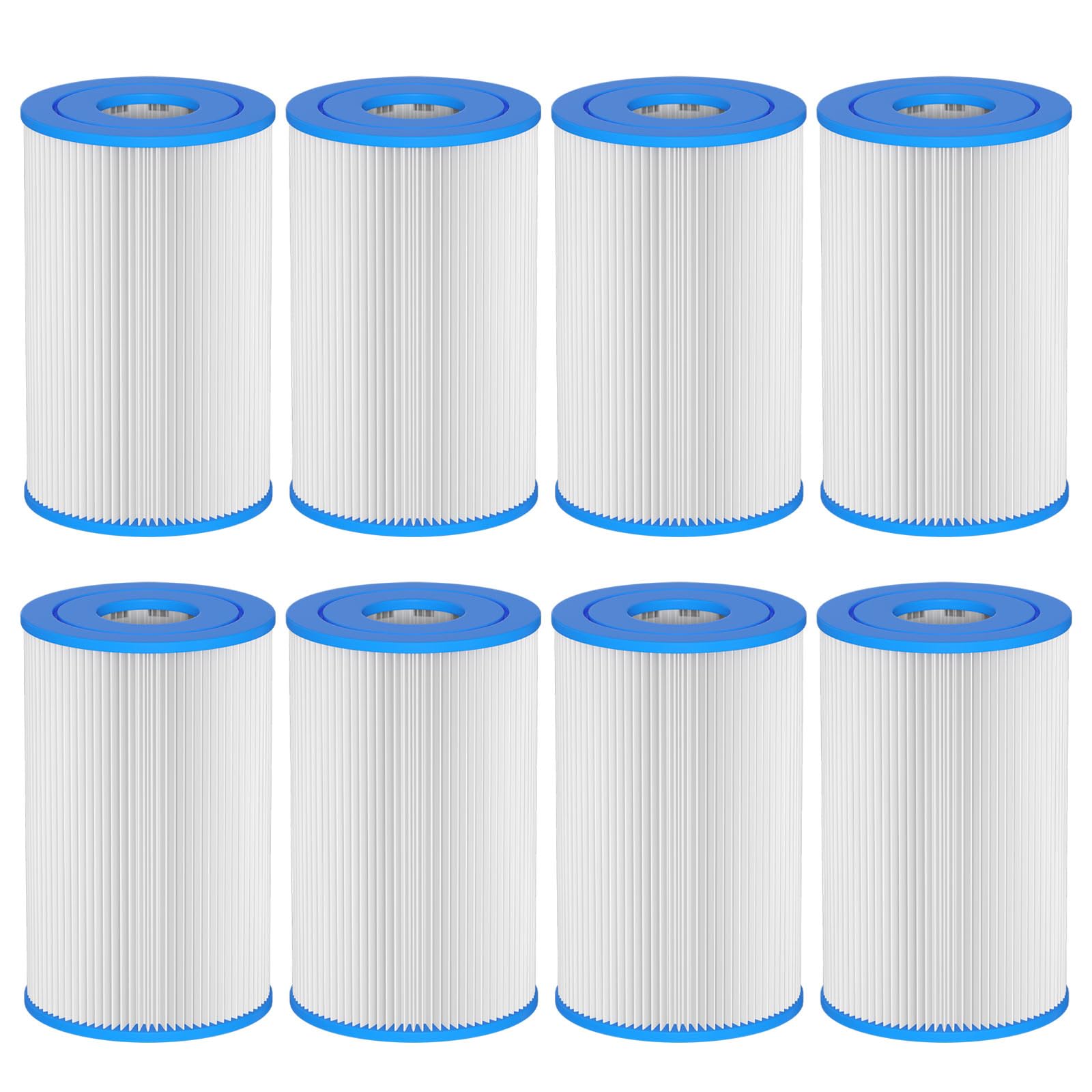
I keep these replacement 20-micron cartridges on hand for regular maintenance of external filter housings and to extend the life of chiller pumps.
Why I picked it: Universal 5" x 2.5" size, good filtration life, and easy to install.
Best for: Routine filter swaps and systems that use standard 5" x 2.5" cartridges.
An affordable way to maintain water clarity and protect pumps.
Pros
- Universal 5" x 2.5" size
- Easy to install and rinse
- Filters up to many thousands of gallons
- Great value in multipacks
Cons
- Some units report fit issues
- Occasional residue if not pre-rinsed
My take
I use these 20-micron cartridges in my external filter housing and typically get about a month of effective use per cartridge under daily plunge conditions.
Installation is tool-free and the pleated fabric rinses clean easily. To avoid slimy residue on first use, I always pre-rinse new cartridges until the water runs clear.
A few systems require an exact OEM length; I always fit-test a cartridge before relying on them long-term. When they fit, they’re a reliable, cost-effective way to keep water clearer and reduce buildup on pumps.
How I Choose a Cold Plunge Water Chiller
Key factors I consider
I focus on real-world cooling power, included circulation, filtration, noise, and ease of setup.
Volume-to-power ratio matters: a 1/3 HP unit will cool smaller tubs faster than very large plunge pools, so I match chiller capacity to my tub gallons and expected temperature drop.
- Cooling capacity: Confirm the chiller’s claimed lowest temperature and judge by your tub volume.
- Circulation & filtration: I prefer units with an external pump and replaceable filter to protect the chiller.
- Noise: I test units in the space where they’ll run—garage and backyard noise can differ.
- Installation: Look for insulated hoses and included fittings to avoid permanent plumbing.
- Maintenance: Keep spare filters on hand and ensure airflow around the unit.
Common pitfalls I avoid
I don’t buy industrial laser chillers for a plunge tub—those are built for machine cooling and won’t bring large volumes into the 40s.
I monitor filter airflow and avoid over-tightening housings that can restrict flow and stress pumps.
- Verify hose and connector sizes to avoid leaks and vapor lock.
- Pre-rinse replacement filters to prevent initial cloudy water.
- Plan cooling runs (overnight or several hours) for large-volume tubs.
Frequently Asked Questions
Can these chillers get a full 110-gallon tub into the low 40s?
In my experience a 1/3 HP chiller can cool a 110-gallon tub into the mid-to-low 40s if given enough runtime and insulated hoses; expect multi-hour runs or overnight cycles for larger starting temperatures.
Do I need a separate pump or filter?
I prefer units that include an external pump and filter because they circulate and clean the water, making maintenance simpler. If you get a chiller without filtration, budget for a proper filter housing and cartridges.
Are industrial laser chillers suitable for cold plunges?
From hands-on checks, products like the Homend CW-3000 are intended for laser or spindle cooling. They circulate well but aren’t designed to chill large plunge tubs to cold-therapy temperatures.
How often should I replace filter cartridges?
I typically replace 20-micron cartridges every 1–2 months with regular use, and I rinse metal or reusable filters more frequently to maintain flow and protect the pump.
Final Take
I prioritized systems with integrated circulation and filtration because they make daily plunges practical and cleaner. For most home users the AS ColdPlunge models balance cooling power, noise, and easy setup.
If you’re cooling a machine instead of a bath, choose an industrial chiller like the Homend and avoid expecting plunge-level temperatures. And always keep spare filters on hand—proper flow and clean media are the simplest way I’ve found to extend a chiller’s life.
