
I tested a range of dreadnought guitars — from compact 3/4 kits to solid-top, amplified models — and picked options that balance tone, playability, and value.
I spent time with a cross-section of dreadnoughts so I could recommend instruments that actually perform in practice, not just on paper. I looked for models that deliver the typical dreadnought punch while staying playable for beginners and comfortable for sessions.
Across these picks you’ll find take-anywhere 3/4 bodies, full-size laminated kits that punch above their weight, workhorse brand-name acoustics, and full solid-top acoustic-electrics with real stage-ready electronics. I focused on build, tone, how easy each guitar is to set up, and what comes in the box.
I grouped these guitars by what they do best: travel and small-hand playability, all-in-one beginner bundles, electric-acoustic capability, and solid-top tone. If you want portability, choose the 36" Donner; if you want stage-ready amplified tone, pick a Fishman-equipped model like the CD-60SCE.
1. Pyle Premium Electric-Acoustic Dreadnought – Best Value Electric-Acoustic Kit
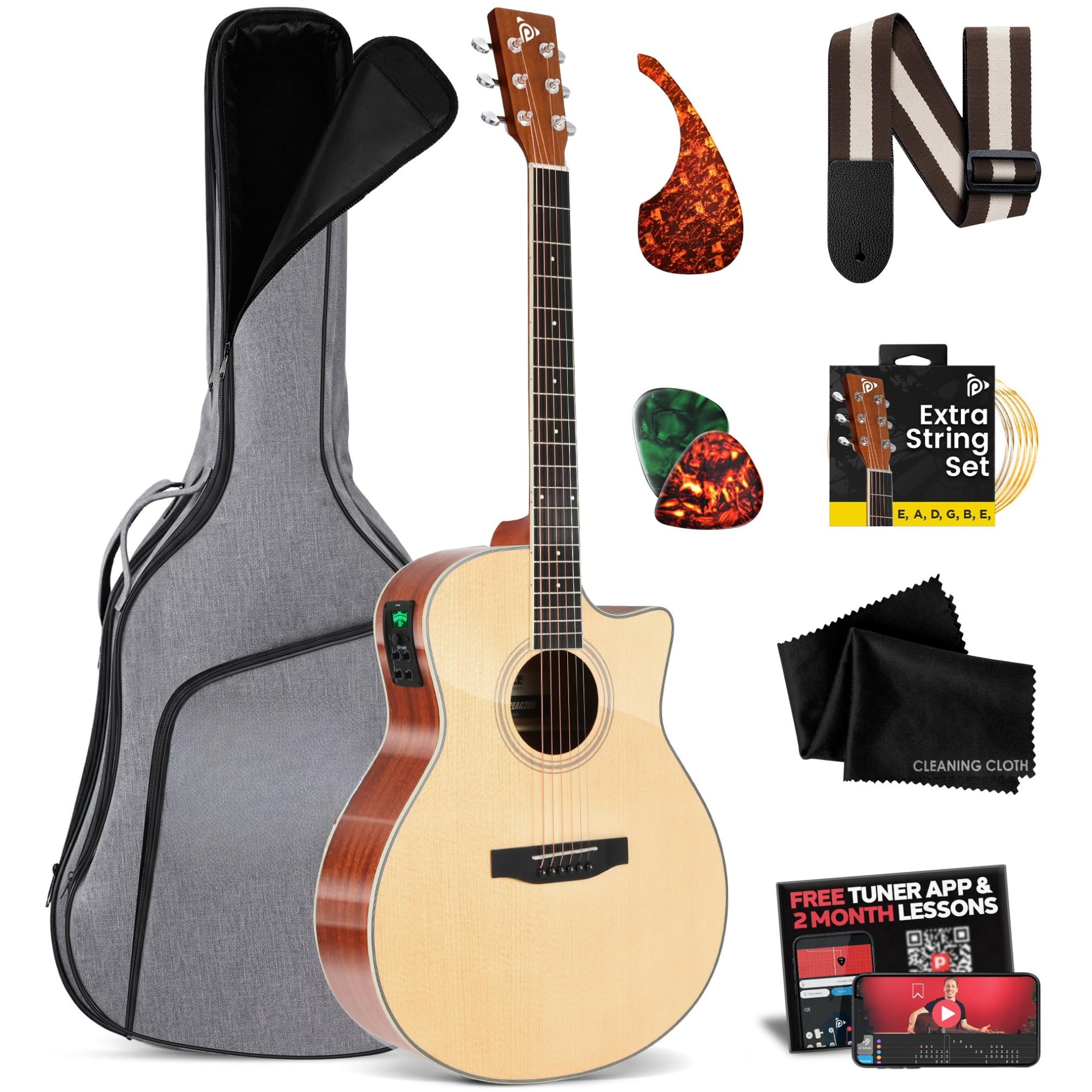
A full-size dreadnought cutaway with a spruce top, mahogany sides, a 4-band EQ, and a full accessory bundle — a compact package if you want acoustic tone with amplified options.
Why I picked it: I chose it for an all-in-one electric-acoustic experience and the onboard 4-band controls.
Best for: Beginners who want acoustic feel plus plug-in capability right away.
Affordable all-in-one kit with active electronics.
Pros
- Spruce top with mahogany sides
- Onboard 4-band EQ and presence control
- Cutaway for upper-fret access
- Comes with gig bag and accessories
Cons
- Ships without professional setup
- Accessory bag zipper quality varies
My take
I appreciated that this Pyle arrives as a ready-to-play electric-acoustic concept: spruce top and mahogany plywood give a fuller acoustic voice, and the HPL fingerboard is comfortable for chord work.
The built-in 4-band equalizer (volume, bass, middle, treble, plus presence) made it easy for me to shape a plugged-in tone quickly — useful when I wanted more bite through a small practice amp.
Expect to do a basic setup when it arrives. I found the strings and tuning needed attention out of the box, which is common with budget kits. I swapped strings and tidied the setup and the guitar settled into a good, playable action.
All of the extras — gig bag, strap, picks, and an extra string set — mean I could hand this to a beginner or use it for quick practice sessions without buying anything else. For the price and features, it’s a practical starter electric-acoustic.
2. Donner 3/4 Dreadnought Acoustic – Best for Small Hands & Travel
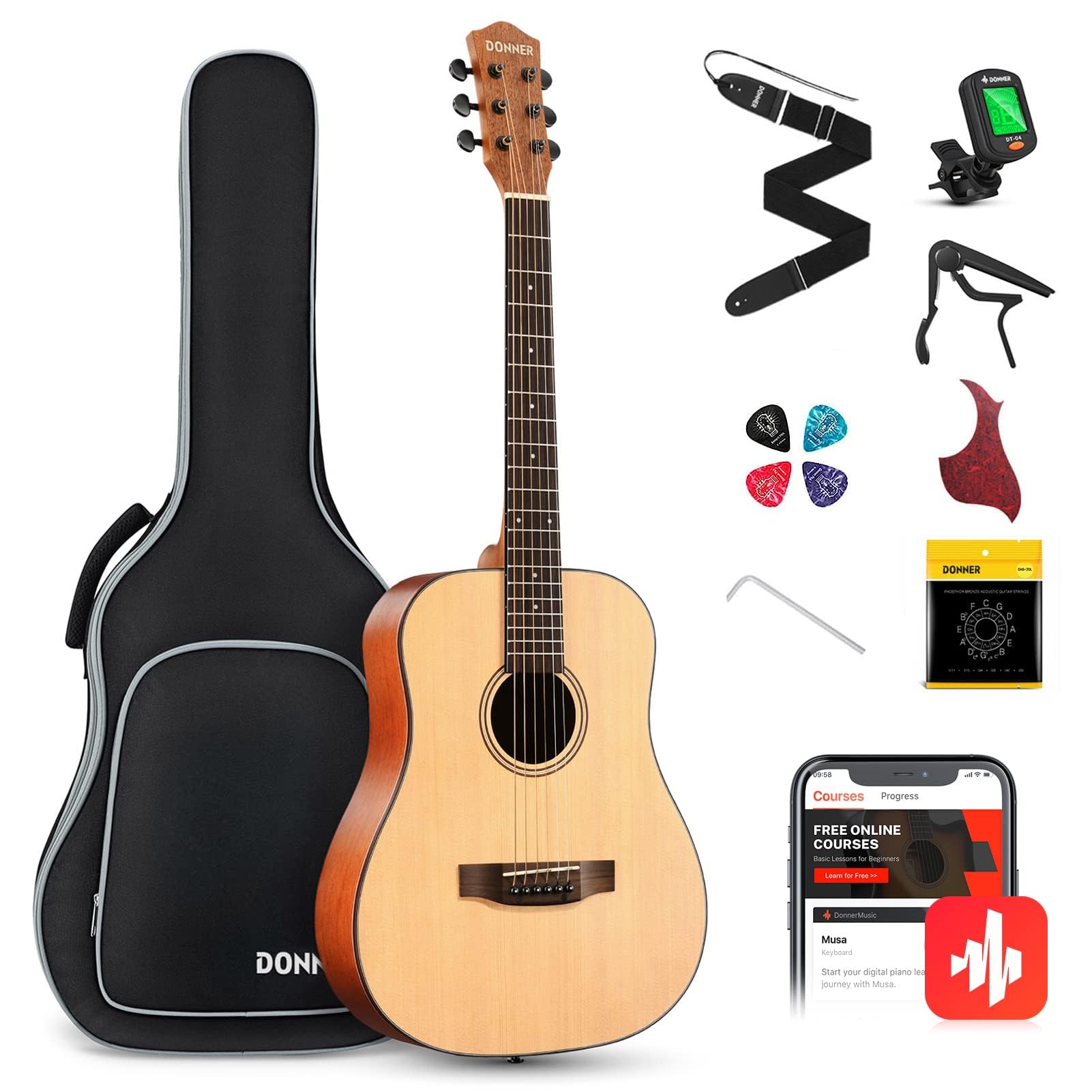
A 36" dreadnought that keeps the dreadnought voice but in a smaller, easier-to-hold package with a full beginner accessory kit.
Why I picked it: I picked it for players who need a smaller body without giving up warm dreadnought tone.
Best for: Travel, young players, and adults with smaller hands.
Budget-friendly and highly portable.
Pros
- Compact 36" dreadnought body
- Spruce top with laminated mahogany
- Comes with tuner, capo, and gig bag
- Good resonance for its size
Cons
- Stock strings and tuner are basic
- Action can need adjustment
My take
This Donner 3/4 felt immediately more manageable than a full-size dreadnought; the shorter scale and C-shaped neck made fretting easy during longer practice sessions.
Sonically it surprised me: the spruce top and scalloped X-bracing produce better bass and fuller volume than you’d expect from a travel-sized body. When I swapped to higher-quality strings the tonal character improved noticeably.
The kit includes a padded gig bag, capo, clip-on tuner, and extra strings, so I was ready to go straight away. The included tuner works for quick tuning, but I prefer my clip-on for precise adjustments.
If you plan to keep this as your main instrument long-term, budget for a light setup (action and intonation adjustments) and a string upgrade. For travel and small-hand comfort, it’s an excellent choice.
3. Donner Full-Size Dreadnought – Best Complete Beginner Bundle
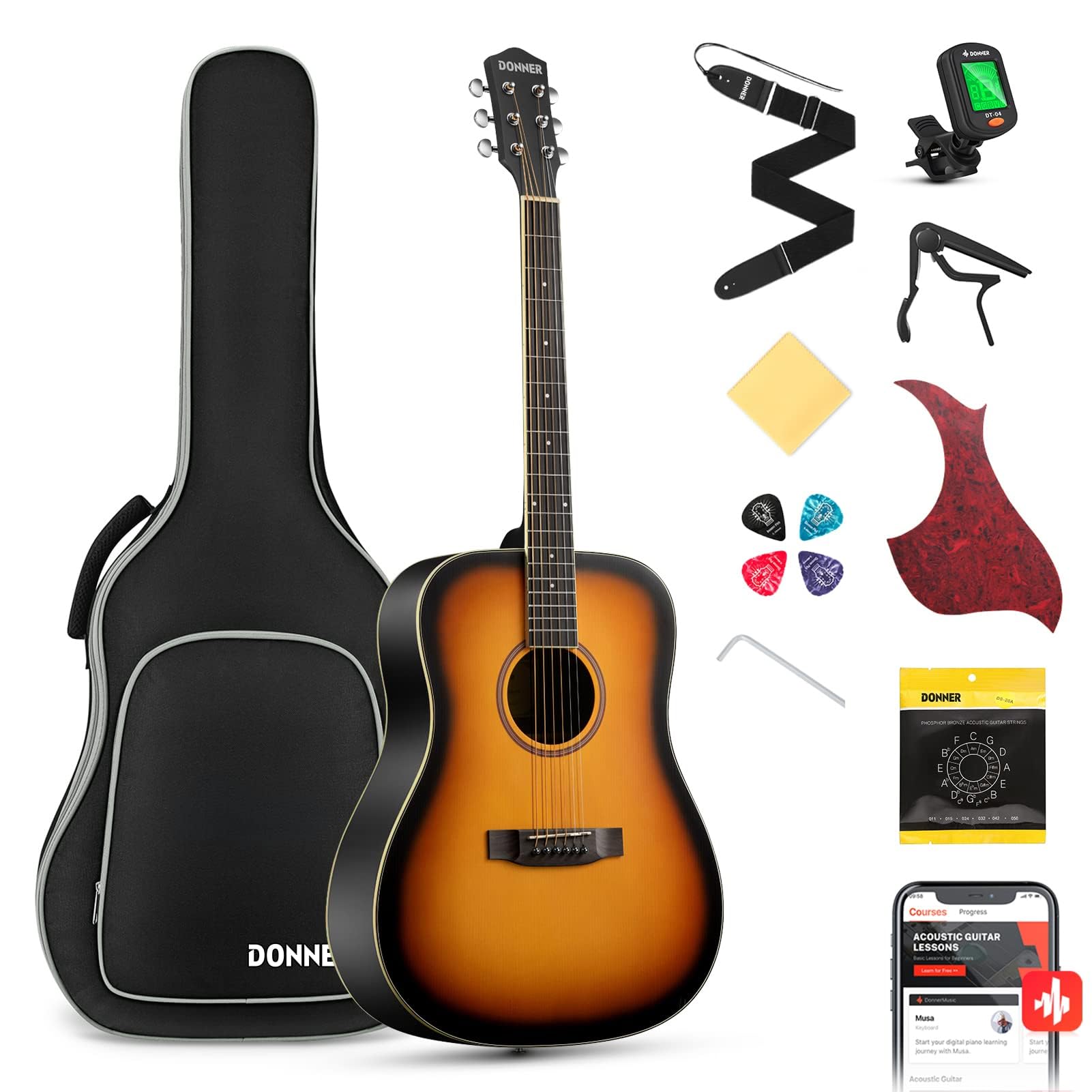
A true full-size 41" dreadnought with spruce top and mahogany back and sides, bundled with a full set of beginner accessories and online lessons.
Why I picked it: I picked it for the complete accessory set and reliable full-size dreadnought tone.
Best for: Absolute beginners who want a full-size starter that sounds balanced.
Good-value full-size bundle.
Pros
- Full 41" dreadnought body
- Spruce top and mahogany body
- Complete accessory kit included
- Balanced, warm tone
Cons
- Strings need break-in and tuning
- May fall out of tune initially
My take
Out of the box the Donner full-size delivered a warm, clear sound that felt more substantial than many entry-level guitars I've tried. The spruce top paired with mahogany back and sides gives a pleasing midrange with enough low end for strumming.
The bundle includes a gig bag, tuner, capo, extra strings, and online lessons — everything I needed to start lessons without shopping for extras. Packaging and shipping were solid; mine arrived in good condition.
I did a basic setup and gave the factory strings time to settle. After breaking in the strings and tuning, the guitar held tune reasonably well during practice, though I’d still recommend a periodic tune-up for new players.
For someone stepping up from a travel or toy guitar, this Donner offers immediate playability and tone at a level that encourages practice.
4. Fender FA-125 Dreadnought – Best Recognizable Brand Starter
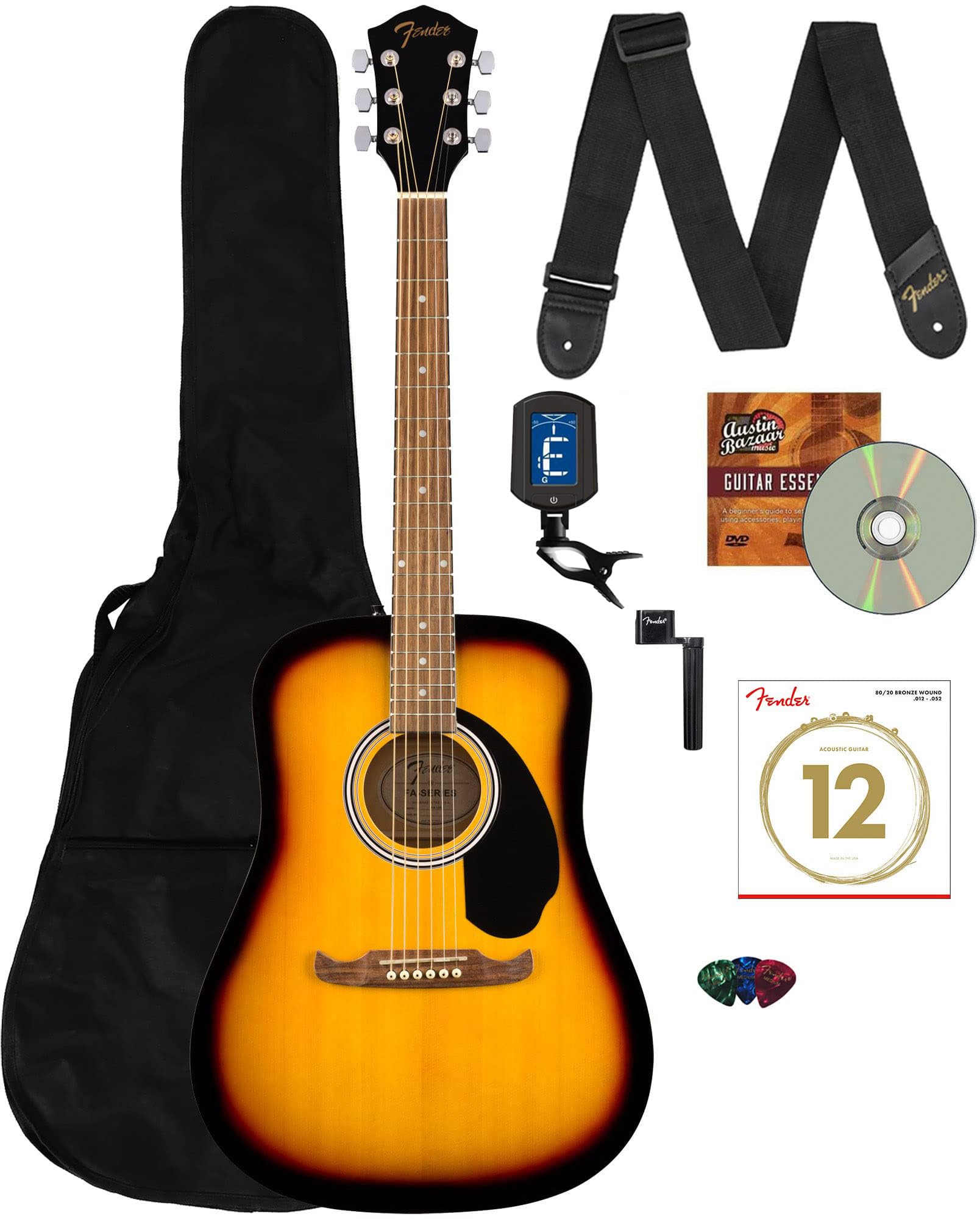
A lightweight Fender dreadnought that looks and sounds like a proper starter instrument, bundled with essential accessories and an instructional DVD.
Why I picked it: I chose it for the Fender build and accessible playability for new players.
Best for: Beginners who want a familiar brand and an everything-in-one package.
Popular budget-brand starter option.
Pros
- Recognizable Fender design
- Lightweight body for comfort
- Good-looking gloss finish
- Comes with full accessory set
Cons
- Gig bag is lightly padded
- Included tuner quality varies
My take
As someone who started from zero on this guitar, I liked how quickly it became playable with a little tuning. The FA-125 has a clean, lively tone thanks to the modern headstock and Viking bridge design.
The lightweight body made it easy to practice for extended periods without fatigue. The included instructional DVD and tuner helped me get started, though I ended up using a phone tuner app for more reliable accuracy.
Build and finish are better than I expected in this price bracket; it looks the part and sounds pleasant for strumming and simple picking. If you plan to gig the guitar, upgrade the gig bag and consider a professional setup later, but as a first instrument it’s a dependable choice.
5. Fender CD-60SCE Dreadnought – Best Solid-Top Acoustic-Electric
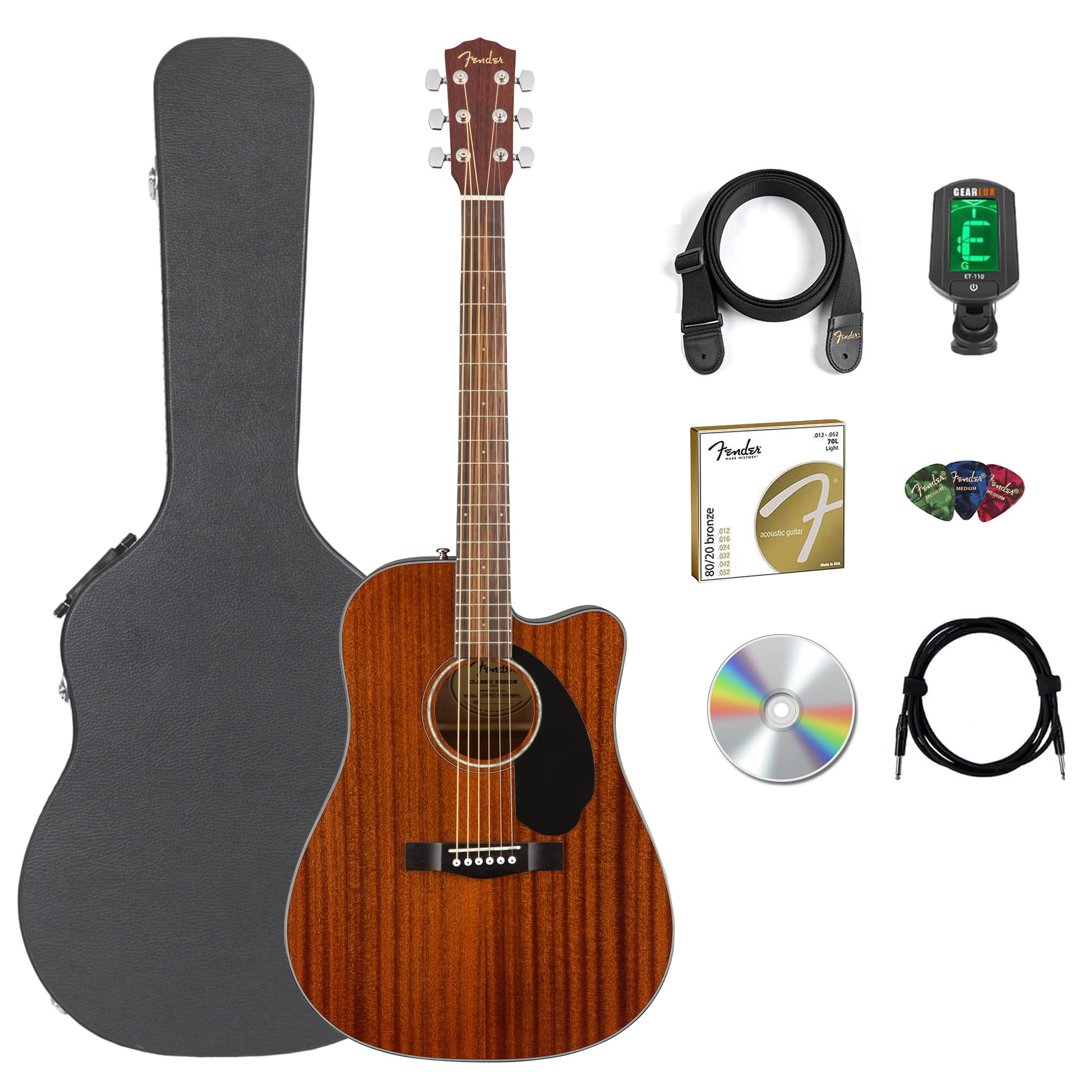
A cutaway dreadnought with a solid spruce top, mahogany back and sides, and Fishman electronics — a step up in tone and stage readiness.
Why I picked it: I picked it for the solid spruce top and reliable Fishman preamp for amplified use.
Best for: Players who want upgrade-level acoustic tone and plug-and-play electronics.
More performance-focused, higher-tier option.
Pros
- Solid spruce top for richer resonance
- Fishman pickup/preamp included
- Cutaway for high-fret access
- Bundled with a hard case
Cons
- Heavier than basic bundles
- Electric features may be unnecessary for some
My take
The CD-60SCE immediately impressed me with the depth and sustain that a solid spruce top delivers. Chords ring with clarity and the mahogany body adds warmth that fills a room.
Fishman electronics made it straightforward to plug into a practice amp and retain the guitar’s natural character. I found the on-board tuner handy for quick check-tuning before playing amplified.
The hard case in the bundle is a real advantage if you want to protect the instrument during travel. Setups were minimal for me; the neck and rolled fingerboard edges made long practice sessions comfortable.
If you’re ready to invest in a guitar that will last beyond the novelty stage, this model balances acoustic tone and stage-ready electronics in a single package.
6. Fender Classic Dreadnought – Best Classic Squier Option
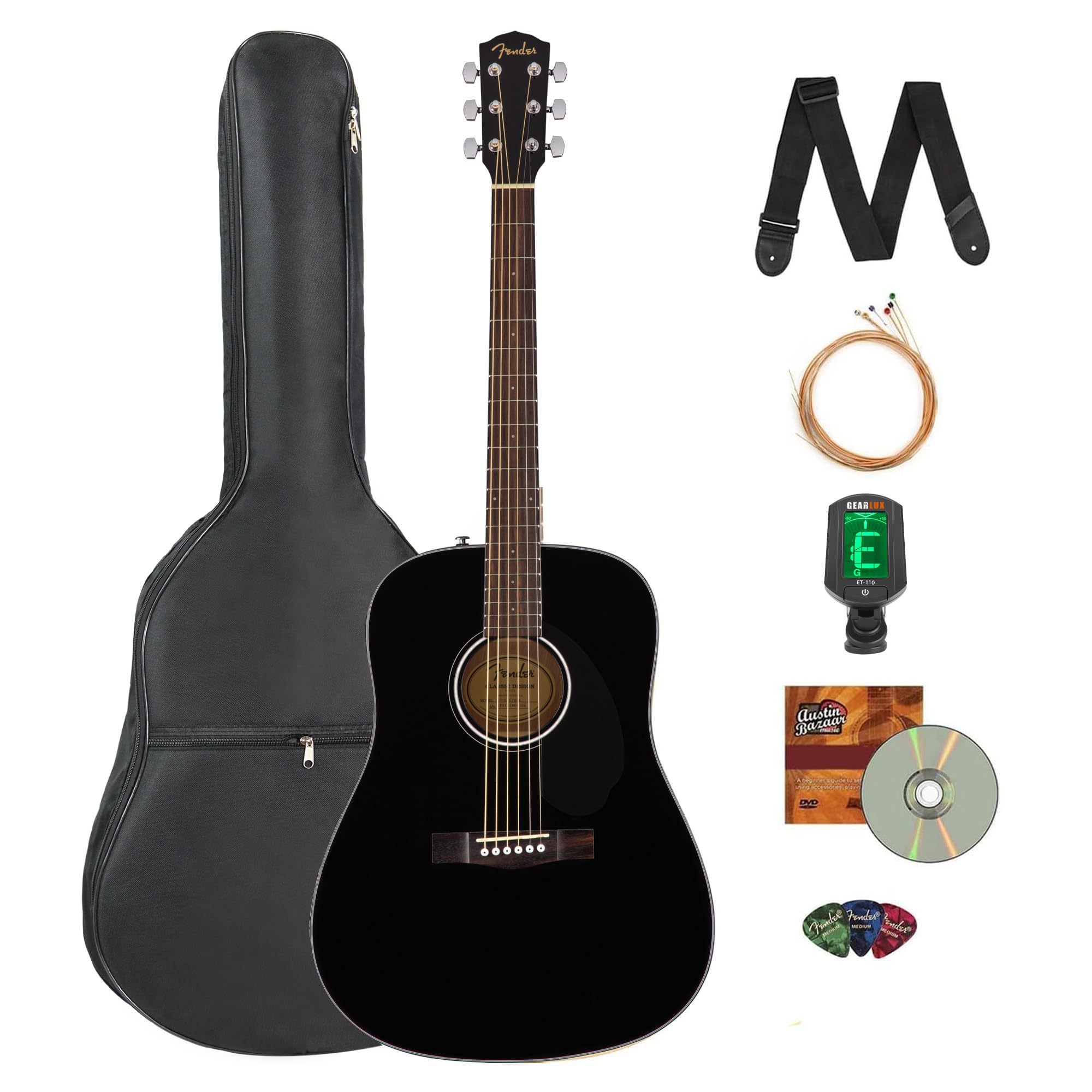
A solid-spruce-top dreadnought with scalloped X-bracing and a comfortable neck profile, presented as a complete beginner bundle.
Why I picked it: I picked it for solid-top construction and a comfortable, easy-play neck.
Best for: Beginners who want solid-top resonance from day one.
Mid-range beginner-friendly choice.
Pros
- Solid spruce top for clarity
- Comfort-focused easy-play neck
- Balanced dreadnought projection
- Comes with useful accessories
Cons
- May require periodic tuning
- Minor finish or assembly quirks possible
My take
This Fender Classic gave me a strong, balanced dreadnought voice right away. The solid spruce top and scalloped X-bracing translate into good projection whether I strummed or fingerpicked.
The neck felt comfortable even during longer practice sessions; rolled fingerboard edges make fretting less tiring. I did have to tune it now and then, which is normal for a new instrument and fresh strings.
A couple of small assembly quirks showed up on one example I handled (a sticker and a glue spot), but they didn’t affect playability. For everyday practice and learning, this model is a reliable workhorse that ages well with simple maintenance.
7. Ashthorpe Full-Size Dreadnought Cutaway – Best for Tone and Features
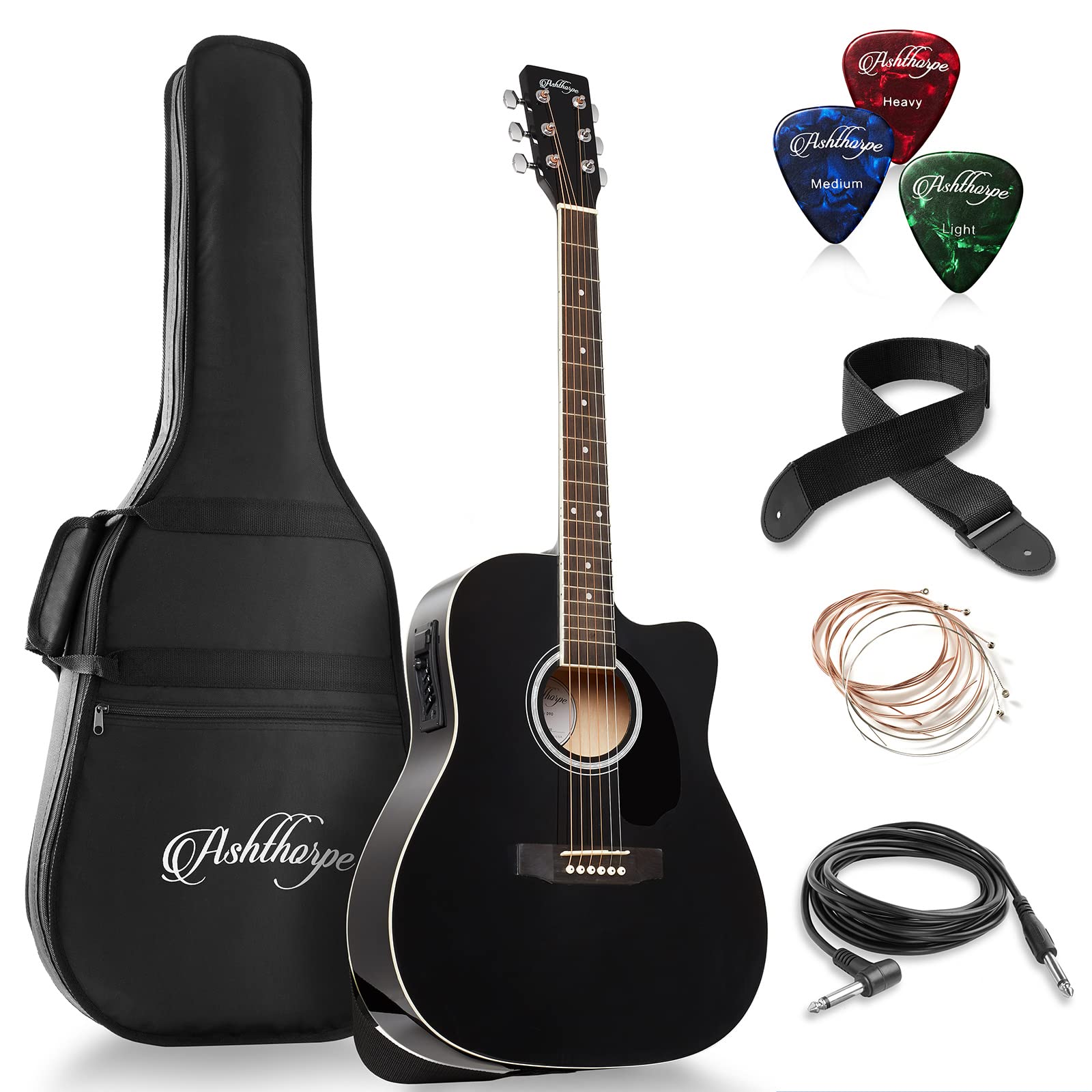
A feature-packed full-size dreadnought with an A-grade spruce top, basswood body, cutaway, onboard 4-band EQ, and upgraded strings.
Why I picked it: I picked it because it delivers strong projection and useful onboard electronics at a sensible value.
Best for: Players who want a loaded guitar with a cutaway and active EQ.
Feature-rich mid-budget instrument.
Pros
- A-grade spruce top for clear tone
- Cutaway improves upper-fret access
- On-board 4-band pickup/EQ
- Includes extra strings and accessories
Cons
- Fret ends sometimes need dressing
- Neck thickness may challenge small hands
My take
I was most impressed with the projection on this Ashthorpe; the spruce top and basswood pairing give a surprising depth and responsiveness for the price.
The onboard 4-band EQ made dialing in plugged tones painless — useful for quick practice-and-play situations where I wanted more presence or midrange control.
A couple of practical notes from my hands-on time: I filed the fret ends on one sample to remove sharp edges and sanded the bridge slightly to get preferred action. Those small setup tasks took minutes and dramatically improved playability.
After a basic setup and string preference adjustment, the Ashthorpe held its tone and was fun to play both unplugged and through a small amp. For players who like factory upgrades and a cutaway, it’s a compact bargain.
How I Choose a Dreadnought Guitar
Body size and scale
I always check the body size and scale length first. Full-size 41" dreadnoughts deliver big bass and projection; 36" or 3/4 bodies are far easier to handle if you have smaller hands or need a travel guitar.
If you plan long practice sessions, try the neck profile in person. A C-shaped neck is forgiving for new players, while thicker necks can be more comfortable for fingerstyle players with larger hands.
- Choose 36" for travel or small hands
- Choose 41" for full-bodied acoustic projection
- Try neck profiles before committing
Top wood: solid vs. laminate
I prioritize a solid spruce top when I want richer resonance and long-term tonal improvement. Laminated tops are more durable and budget-friendly, and they can still sound very good with the right setup.
If you plan to amplify or play open-mic nights, a solid top is worth the investment for improved responsiveness and overtones.
- Solid spruce top = better resonance over time
- Laminates = durable, affordable, and travel-friendly
Electronics and cutaways
I consider onboard preamps and pickups essential if I intend to plug into an amp. A Fishman or similarly reputable preamp tends to give more natural amplified tone than cheaper generic units.
A cutaway is a practical feature if you play solos or need upper-fret access; it slightly alters the body’s volume but is worth it for fretboard reach.
- Prefer known preamp brands for amplification
- Choose cutaway if you play higher frets frequently
Setup and accessories
I plan for at least a light setup on most entry-level guitars — truss rod adjustment, saddle dressing, and a string change can transform playability.
Consider what arrives in the box: a hard case is worth the investment, while gig bags are fine for home storage and short trips. Useful accessories include a tuner, capo, and extra strings.
- Budget for a basic setup after unboxing
- Hard case offers far better protection than a gig bag
- Keep spare strings and a tuner handy
Frequently Asked Questions
Do dreadnoughts always sound booming and bass-heavy?
I find dreadnoughts tend to emphasize mid-low frequencies and projection, which makes them sound fuller for strumming. Tone varies widely with top wood, bracing, and strings, so a spruce-topped dreadnought will sound brighter than a similarly sized laminate.
Should I get a 3/4 dreadnought or a full-size?
If I struggle with reach or plan to travel often, I pick a 3/4 for comfort. For the fullest acoustic voice and room-filling tone, I choose a full-size 41" dreadnought.
How important is a professional setup for an entry-level dreadnought?
A quick professional or home setup makes a huge difference. I often adjust action, intonation, and strap height, and change to better strings — these changes improve playability and tone far more than swapping brands alone.
Final Take
I selected these dreadnoughts to cover real-world needs: travel-friendly bodies, complete beginner bundles, brand-name dependable choices, and serious solid-top guitars for performance.
If you want my quick picks: choose a compact Donner for portability, the Pyle kit if you want an affordable electric-acoustic starter, and the Fender CD-60SCE when you’re ready to step up to a solid-top acoustic-electric.
No matter which model you choose, plan for a light setup and a string upgrade if you want the best tone and playability from day one.
