
I tested a variety of potted palm trees—from lighted outdoor options to silk indoor palms—to find the most realistic, stable, and easy-to-style picks for pots and planters.
I hunt for artificial palms that actually improve a room rather than just fill a corner. For this roundup I focused on how these trees perform in pots: realism of the leaves and trunk, how they assemble and shape, stability in a decorative planter, and whether they arrive ready to use.
Across the selection you’ll find lightweight statement palms, heavy-based areca styles, and a lighted outdoor option. I describe which situations each palm shines in and what I did to make them look natural in a pot.
If you want a palm for indoor styling, prioritize leaf realism and a trunk that bends well; if you need a porch or tiki-bar vibe, pick the metal-trunk, lighted option and plan to stake or weight the base. Most of these arrive in small nursery pots, so repotting into a larger decorative planter and adding filler or foam improves stability and realism.
1. Bagari Bird of Paradise 5ft Artificial Plant – Best Budget Statement
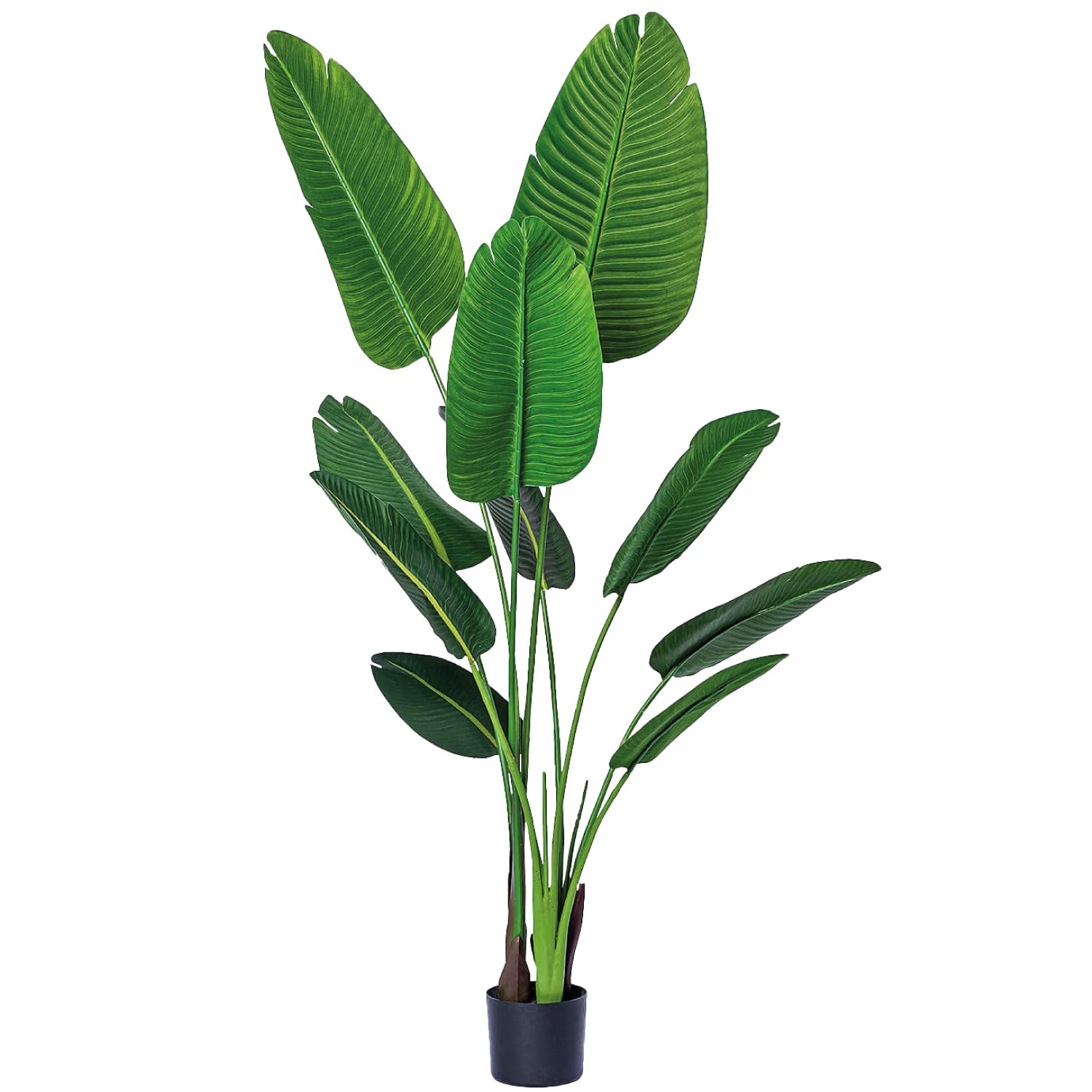
A tall, affordable bird-of-paradise-style palm with bendable stems and thick, waxy-feeling leaves.
Why I picked it: Bendable stalks and a mix of leaf sizes make it easy to style into a tall focal piece.
Best for: Corners or bedrooms where I want a tall, no-fuss statement plant.
Affordable option for a tall faux palm.
Pros
- Bendable stems for shaping
- Thick, natural-feeling leaf material
- True-to-size height
- Lightweight and easy to move
Cons
- Joints are visible up close
- Comes in a small pot
- Needs reshaping after unpacking
My take
This bird-of-paradise style tree is my go-to when I want height without fuss. Assembly is simple and the stems are pleasantly bendable, so I can create a natural silhouette quickly.
The leaves are made from a thick, waxy-canvas feeling material that reads as more realistic than thin plastic. I swapped the original nursery pot into a taller decorative planter and stuffed newspaper and moss to raise the trunk—this turned a 5-foot tree into a fuller 7-foot look for a corner in my bedroom.
Downsides: the plastic joints show if you stare closely and it needs time to fluff and shape after unpacking. For the price and the look from a few feet away, though, it’s a strong, budget-friendly pick.
2. Lightshare 7ft Lighted Palm Tree – Best for Outdoor or Festive Lighting
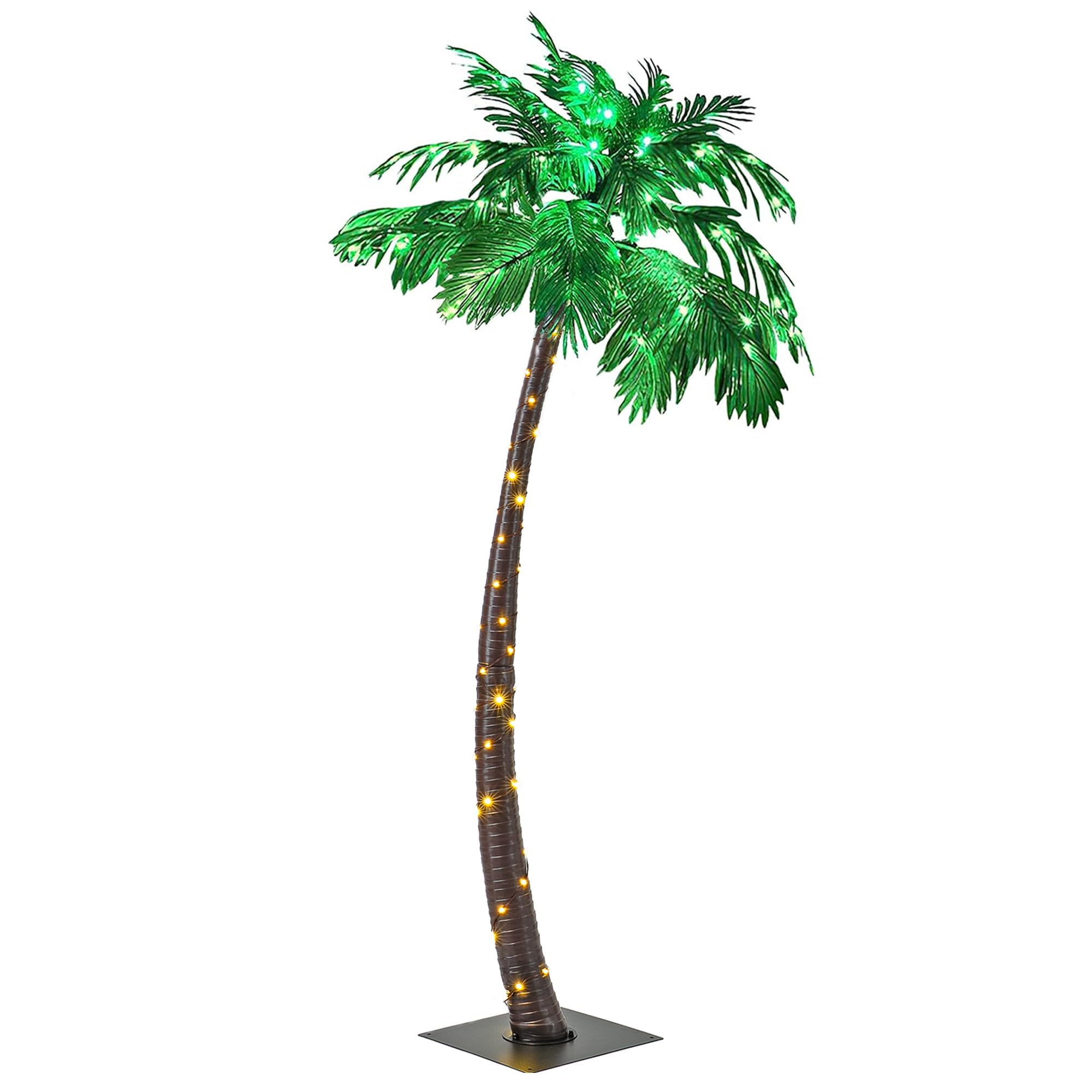
A 7-foot lighted palm with a metal trunk, dual LED accents, and a heavy base designed for seasonal outdoor use.
Why I picked it: Built-in LED leaves plus a metal trunk make it the obvious choice for patios and festive displays.
Best for: Patios, tiki-bar themes, and holiday lighting where a dramatic, lit palm matters.
A more feature-rich, higher-end decorative option.
Pros
- Sturdy metal trunk
- LEDs under the leaves
- Trunk wrapped with mini LEDs
- Heavy-duty base with stakes
Cons
- Trunk lights may be dim
- Leaves can fade in strong sun
- Takes assembly and occasional fixes
My take
This is the pick I grab when I want impact outdoors or for a party. The metal trunk gives a convincing curve and the green LEDs under the leaves create an immediate tropical glow after dark.
In my experience the palm LEDs that sit under the fronds are bright and effective; the tiny lights wrapped around the trunk can be hit-or-miss and I once had to swap a trunk strand. The heavy base and included stakes made securing it on a balcony straightforward.
Keep in mind the leaves are fabric and can fade in continuous sun over time. For covered porches and seasonal displays, though, this tree delivers the look and stability I want.
3. Fopamtri Bird of Paradise 5ft Faux Palm – Best for Realistic Color Variation
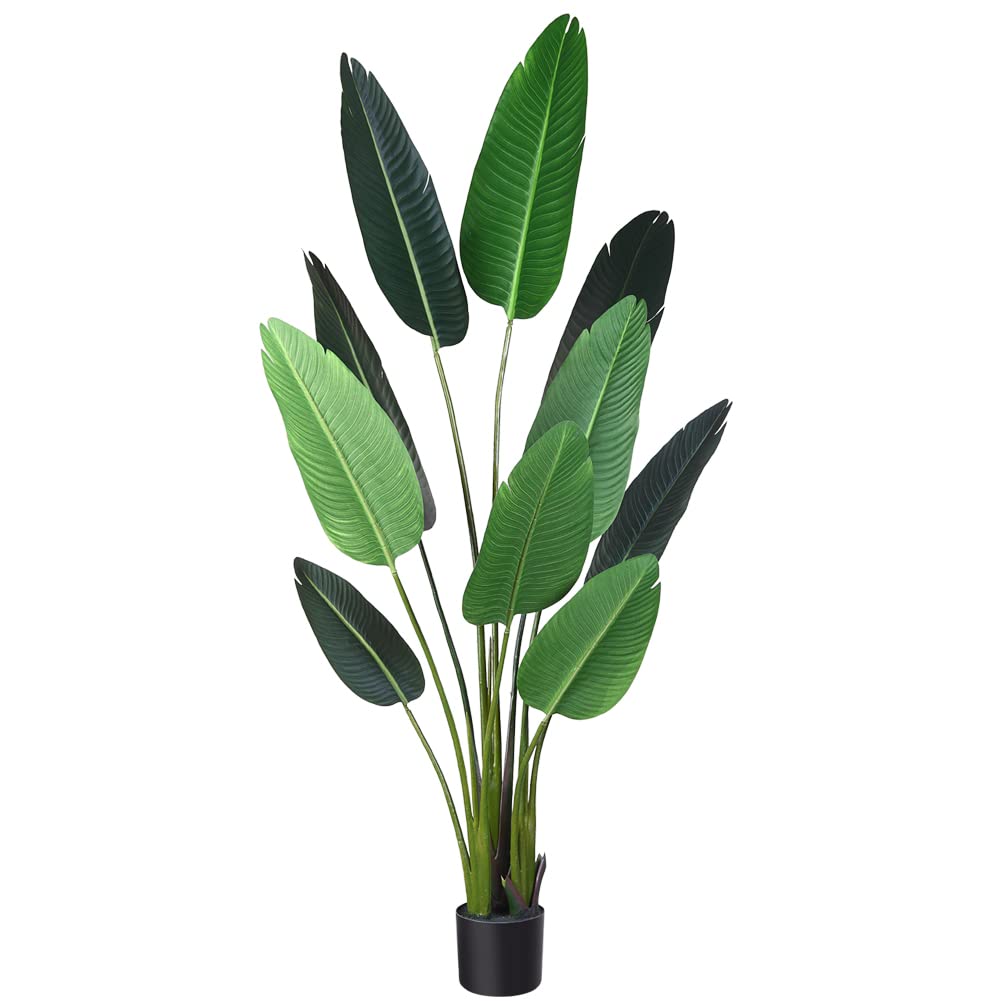
A 5-foot bird-of-paradise-style palm with varied leaf shades, wired stems, and a cement base for extra weight.
Why I picked it: Subtle leaf color variations and internal wiring make it easy to shape and more convincing from a distance.
Best for: Entryways and rooms where a realistic, tropical accent is needed.
Solid midrange value for lifelike foliage.
Pros
- Varied leaf shades
- Sturdy inner metal wires
- Durable polyester leaves
- Cement base for added weight
Cons
- Tiny nursery pot exposes the fake trunk
- Not photorealistic up close
- Occasional leaf detachment
My take
I appreciated how the leaves arrive in subtly different sizes and shades—those variations make a real difference when the tree sits in a dim foyer or corner.
The wired stems let me pose the trunk and fronds into a natural posture, and the cement base adds meaningful stability compared with hollow-plastic bases. I still repotted it into a larger decorative planter because the original pot makes the trunk look unreal.
From several feet away it passes as a lively tropical plant; up close you can tell it’s faux, but I use that to my advantage in low-light spots where it reads as genuinely green and vibrant.
4. Dypsis Lutescens (Areca) 5ft Artificial Palm – Best Areca Look
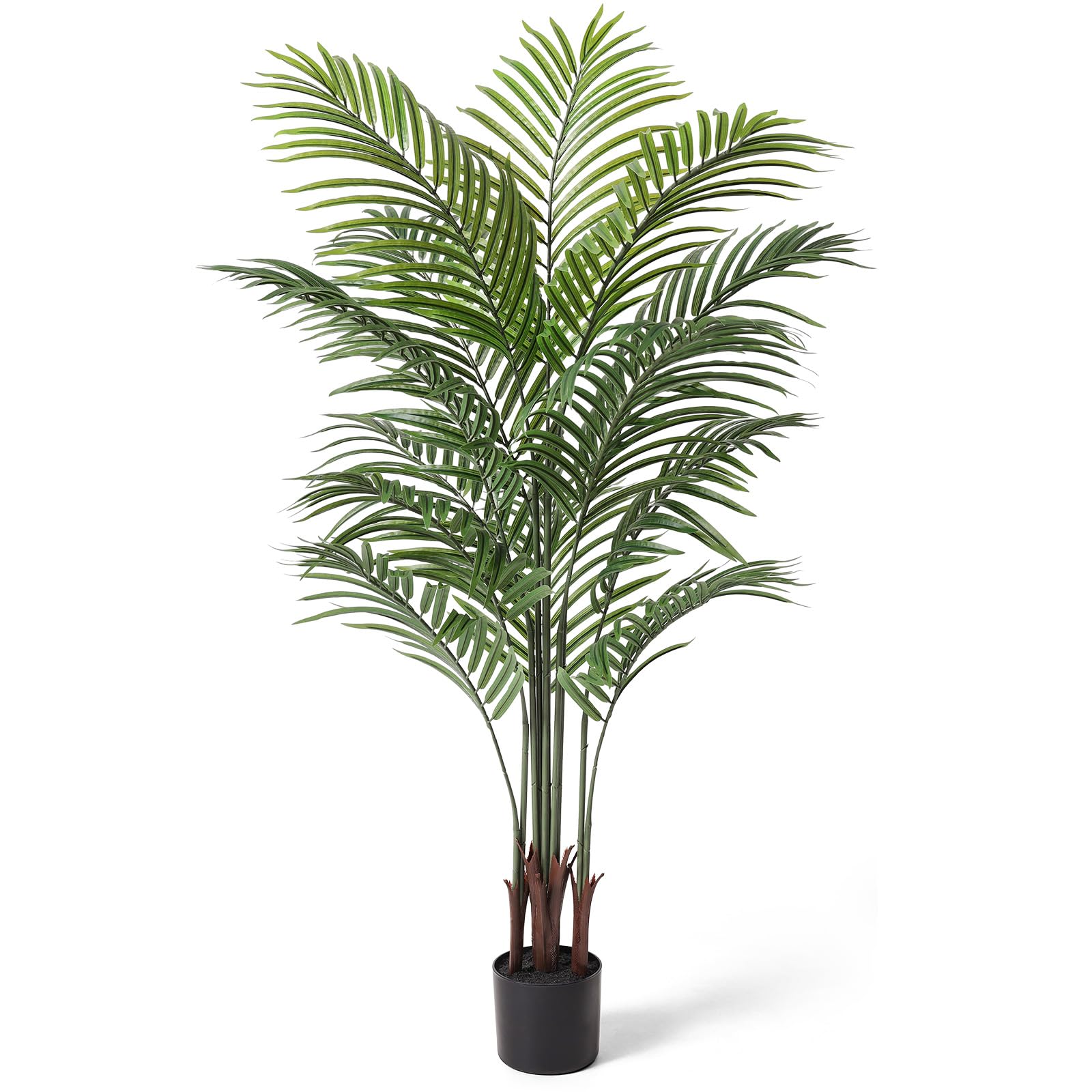
A classic areca-style faux palm with 13 detachable leaves and bendable stems for shaping into a full silhouette.
Why I picked it: The traditional areca profile and adjustable stems make it easy to get that familiar tropical houseplant look.
Best for: Modern interiors that need a soft, feathery palm silhouette.
Good midrange choice for a versatile areca style.
Pros
- Classic areca silhouette
- Adjustable wired stems
- Cement base for stability
- Easy to wipe clean
Cons
- Leaf stems can be hard to seat
- Takes time to fluff
- Pot may be too small
My take
This areca-style palm gives the soft, feathery silhouette I look for when styling living rooms. It takes a little patience to insert and position the leaf stems, but once I did the plant read naturally in a corner.
The stems bend without threatening the trunk, so I could arrange a layered look that hid the smaller nursery pot—repotting into a larger planter finished the illusion.
If you don’t want to fiddle for ten minutes shaping the fronds, this hand-assembly step could be annoying. For the finished look, though, I think the effort is worth it.
5. Maia Shop 5ft11in Artificial Palm Tree – Best Large Indoor Statement
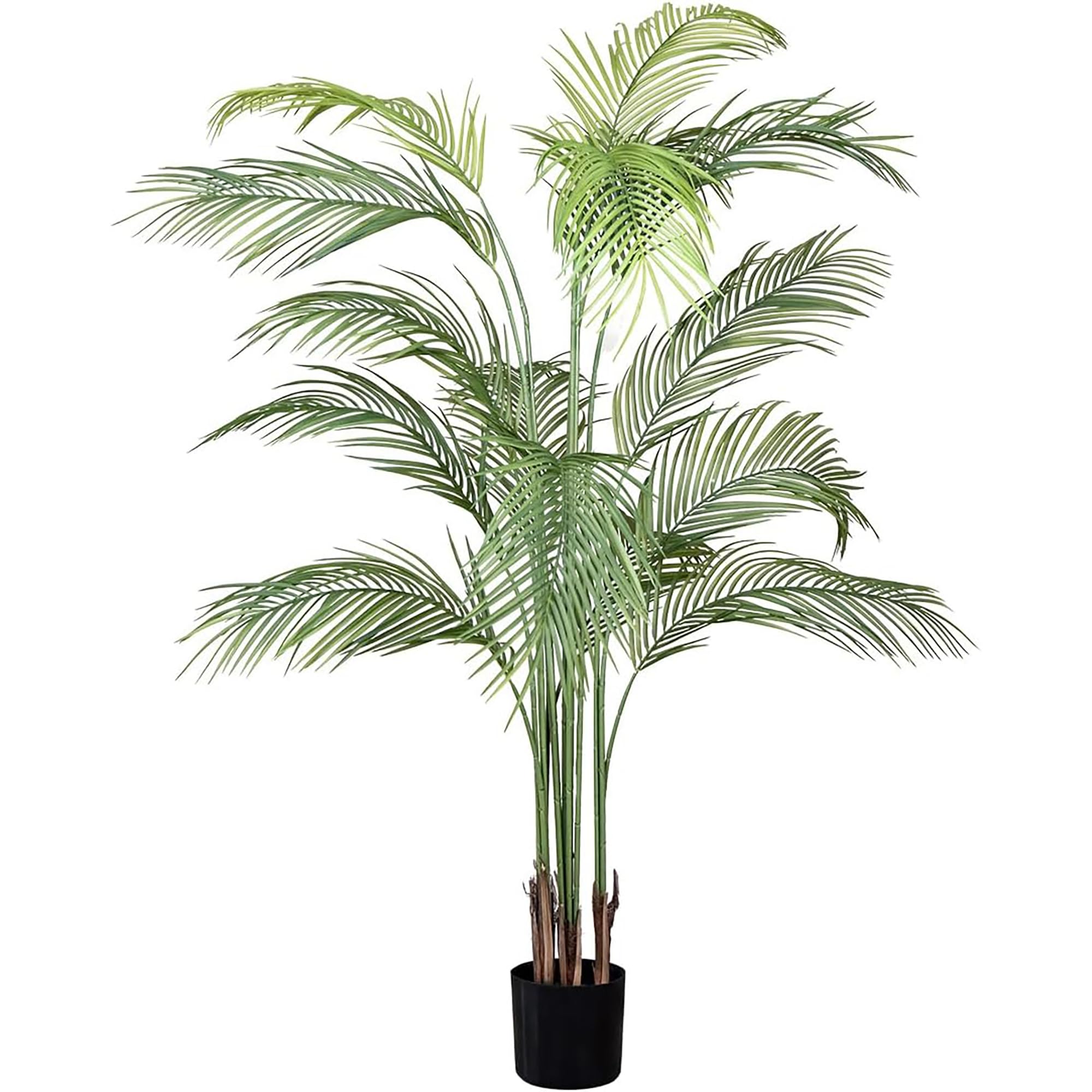
A nearly 6-foot palm that delivers serious presence with a realistic trunk and detachable leaves for easy assembly and storage.
Why I picked it: Scale and trunk realism give it the most convincing, dramatic effect in a living space.
Best for: Large rooms or spaces that need a bold, low-maintenance focal plant.
Good value for a larger, more realistic tree.
Pros
- Impressive scale
- Realistic trunk detail
- Detachable for storage
- Quick to assemble
Cons
- Leaves look plastic up close
- Basic black nursery pot
- Bulky if not repotted
My take
I was skeptical ordering a large faux tree online, but this Maia Shop palm surprised me. The trunk is the standout—textured and convincing—and the overall presence fills a room in a way smaller trees don’t.
Assembly is straightforward: attach the leaves, bend them into shape, and you have an immediate focal point. The leaves are slightly plasticky under close inspection, so I placed this one where it would be seen from medium distance.
I moved it into a decorative planter to match my decor; that step made the tree look far more integrated into the room than the tiny nursery pot would have.
6. Fopamtri Areca Palm 4.6ft with Multiple Trunks – Best Porch or Grouping
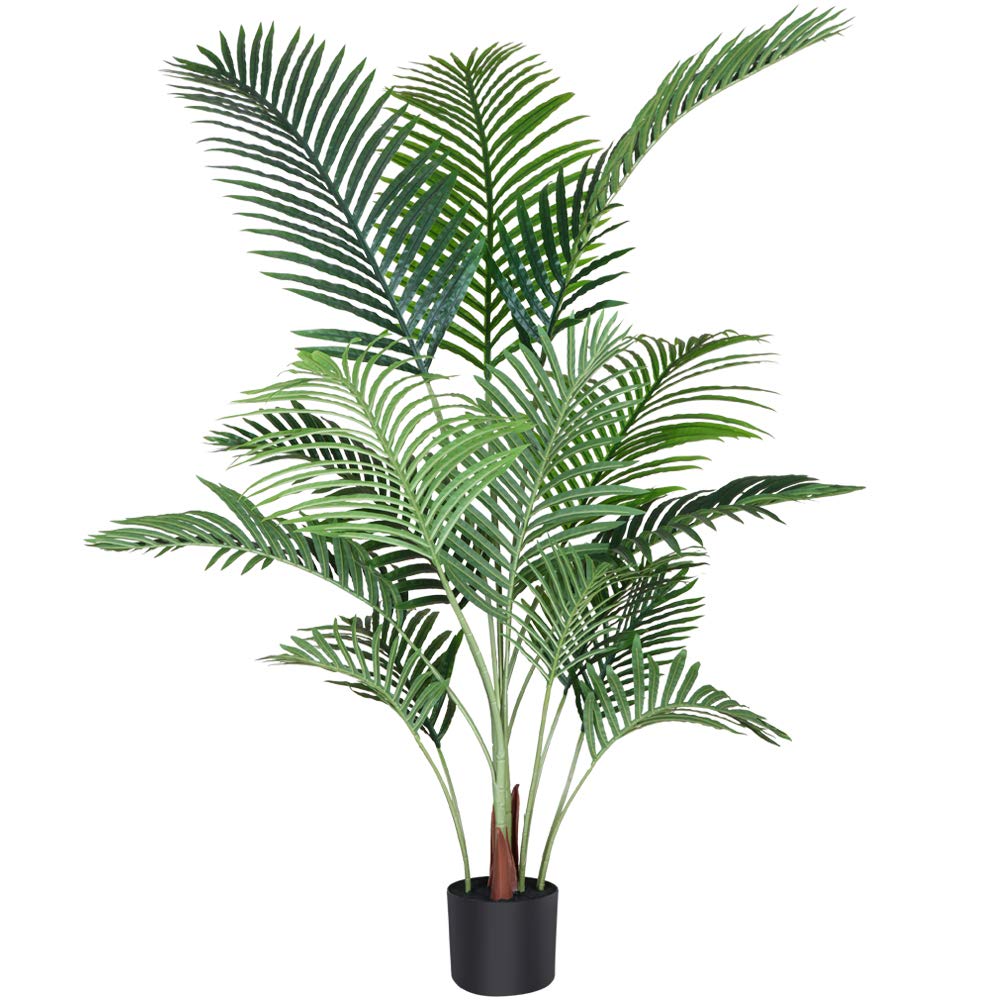
A full-looking 4.6-foot areca with 15 trunks for density and a heavy base that resists light winds when placed in a pot.
Why I picked it: Multiple trunks and a heavier base make it look full and sit securely in a porch pot.
Best for: Front porches, group plantings, or a cluster of faux palms for impact.
Affordable choice for porch and grouping setups.
Pros
- Numerous trunks for fullness
- Heavy base for stability
- Lifelike leaf texture
- Weather-tolerant styling
Cons
- Small supplied pot
- Requires reshaping
- Lay down in very high winds
My take
I used this one on my front porch and the multiple trunks read as a fuller, more natural grouping than a single-stem tree. The cement base gives it real stability in breezy conditions.
To make it look at-home I repotted it into a wider planter and added gravel and foam to keep it upright. If wind regularly exceeds a moderate breeze, I lay these down or bring them inside, but for normal porch use they perform well.
I like how the leaves bend and spread; after a few minutes of styling it looked planted rather than just set into a tiny nursery pot.
7. ASTIDY 5ft Artificial Palm with Tall Planter – Best Complete Planter Package
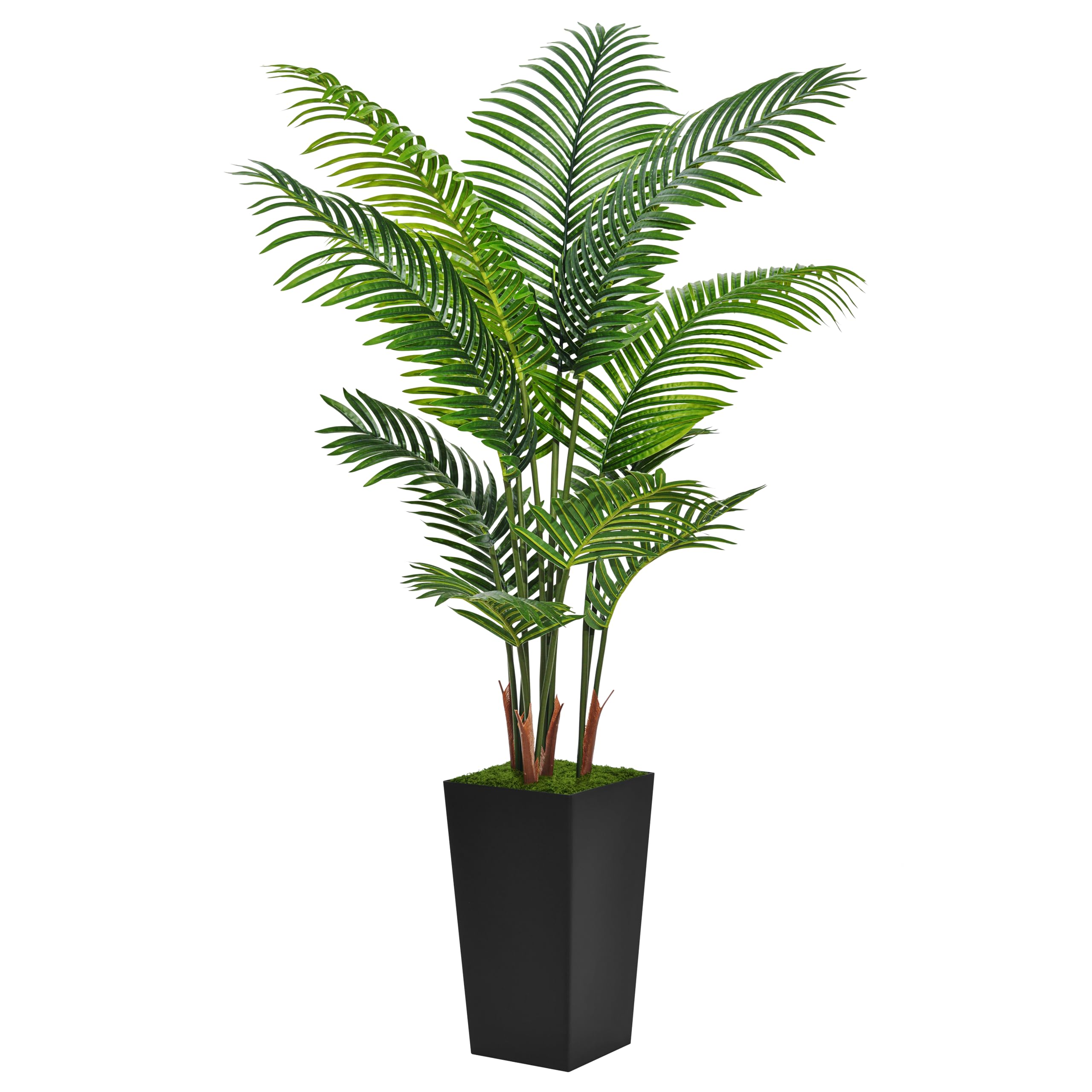
A polished silk-style palm that ships with a proportionate tall planter and artificial moss for a ready-to-style statement piece.
Why I picked it: Comes with a matching planter and moss, so I could install it without hunting for pots.
Best for: Entryways, nurseries, or anyone who wants a ready-to-display palm.
Midrange option that includes a decorative planter.
Pros
- Includes proportionate planter
- Adjustable, bendable leaves
- Comes with artificial moss
- Well-packaged and easy setup
Cons
- Can appear fake up close
- Inserting base into pot can be tricky
- Material is noticeably plastic
My take
I liked that this unit arrived as a complete display: tree, tall planter, and moss. That saved me a repotting step and gave the entryway an immediate, finished look.
The leaves bend and pose well, letting me create a fuller profile, but if you inspect it close-up the silk/plastic finish is visible. For the places where guests get just a glance—hallways, nurseries, and living rooms—the overall presentation works really well.
One practical note: getting the base seated inside the planter can require a second pair of hands. Once positioned, though, it feels stable and proportional.
How I Choose a Palm Tree for a Pot
Key features I check
When I evaluate a faux palm for pot use I look at realism of the leaves and trunk, how the stems bend, the weight and design of the base, and whether a usable pot is included.
A small nursery pot is standard, so I plan for repotting into a decorative planter that matches my room scale and hides the fake root collar.
- Leaf material: fabric or thick PVC reads more natural than thin plastic.
- Trunk construction: metal or textured trunks look convincing.
- Base weight: cement or heavy bases reduce tipping in pots.
- Included pot: convenient if it’s proportionate to the tree.
Sizing and pot fit
Measure ceiling height and the spot where the tree will live before ordering. A 5–6 foot tree usually fits well in standard rooms when paired with a taller decorative pot.
If the supplied nursery pot is small, I repot into a heavier, wider planter and add gravel, foam, or newspaper to lift and stabilize the trunk.
- Aim for a planter wider than the trunk for better balance.
- Use filler or spray foam to lock the trunk in place if needed.
Indoor vs outdoor use
Not every faux palm is built for full sun and weather. I reserve metal-trunk, heavy-base, and fabric-leaf models for covered outdoor spots or seasonal displays.
For year-round outdoor placement choose UV-resistant materials and secure with stakes or extra weight.
- Fabric leaves can fade in direct sun over time.
- Use stakes or a weighted base for exposed porches.
Making your fake palm look real
I bend and separate stems, trim any excess plastic flash, and repot into a proportionate planter to sell the illusion.
Grouping palms at different heights and mixing in a real low plant can also distract from close inspection.
- Fluff leaves outward, avoid symmetrical placement.
- Hide the nursery rim with moss, rocks, or potting filler.
Frequently Asked Questions
Can these palms go outside?
Some can. I put the metal-trunk, heavy-base lighted option on covered porches and seasonal displays. For long-term outdoor exposure pick UV-stable materials and secure the base—fabric leaves will fade in full sun over time.
Will the supplied pots be big enough?
Usually the supplied pot is a small nursery pot. I almost always repot into a larger decorative planter and add filler or foam to anchor the trunk and hide the base.
How do I make a faux palm look more realistic?
I bend wired stems into natural curves, stagger leaf heights, repot into a proportionate planter, and hide the top of the nursery pot with moss or decorative filler.
Are these safe for homes with pets?
They eliminate watering and soil mess, but curious pets may chew leaves. I prefer heavier cement-based models or securing the planter to prevent tipping when pets are active.
Final Take
I picked options that cover the most common pot-styling needs: a budget-friendly tall statement, a lighted outdoor showpiece, fuller multi-trunk arecas, and a ready-to-display planter package.
If you want a showy outdoor or party feature, the Lightshare lighted palm is the one I reach for. For indoor corners and entryways I lean toward the Maia Shop or the Bagari and Fopamtri models—after repotting they look convincing and sit securely.
No matter which you choose, a larger decorative planter and a bit of shaping go a long way toward making a faux palm look planted and natural.