
I tested several sewing machine oils across vintage treadles, modern machines, sergers, and small appliances. These are the bottles I reach for when I need precise application, big quantity, or reliable, non-staining lub
I oil my machines on a schedule and when something squeaks or drags. Over months of hands-on testing I tried narrow-spout bottles, needle-tip dispensers, and larger zoom-spout bottles on everything from a thrifted treadle Singer to a modern Brother embroidery machine.
What mattered most to me was precise dosing, a non-staining formula, and an applicator I could trust in tight spots. Below I break down which oil I keep on my shelf for daily maintenance, deep restores, or oddball tools like turntables and film cameras.
I compared these oils by applicator type, bottle control, viscosity, and how clean they stayed on fabric and machine parts so you can pick the right option for your routine.
1. Singer All-Purpose Sewing Machine Oil – Best for Everyday Machines
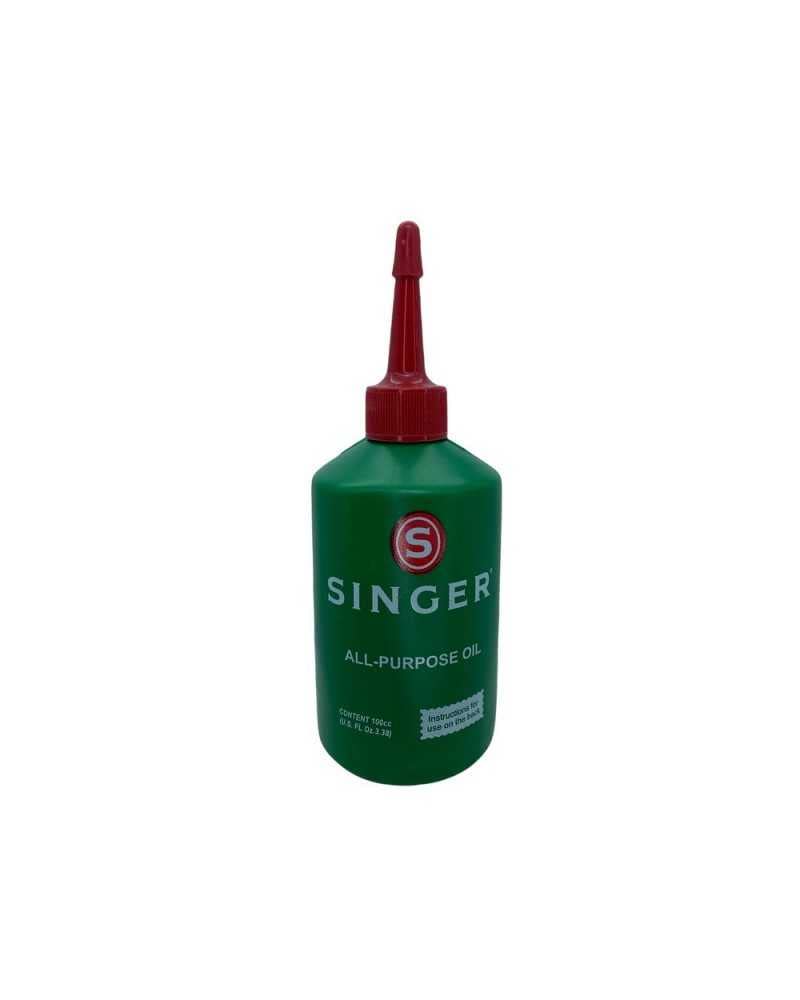
A simple, no-fuss oil I use for routine machine maintenance and small appliances.
Why I picked it: Reliable everyday oil with a handy nozzle that reaches typical lube points.
Best for: Home sewing machines, small appliances, regular maintenance.
Affordable option for occasional to regular use.
Pros
- Easy-to-use nozzle for controlled drops
- Good bottle size for home use
- Reduces noise and smooths moving parts
Cons
- Cap sealing can be imperfect
- Not specialized for heavy industrial use
My take
I keep a bottle of this Singer oil by my sewing table for quick tune-ups. The nozzle lets me place a drop exactly where I need it without flooding the feed dogs or bobbin area.
In daily use I noticed machines ran quieter and smoother after a few well-placed drops. The bottle is a decent size and lasts a long time because you only need tiny amounts.
The only real snag was the cap: on a couple of bottles the seal wasn’t perfect and I taped the cap for long-term storage. That’s an easy workaround compared with the convenience of the applicator and the oil’s straightforward performance.
2. Liberty Precision Oil with Needle Tip – Best Precision Tip
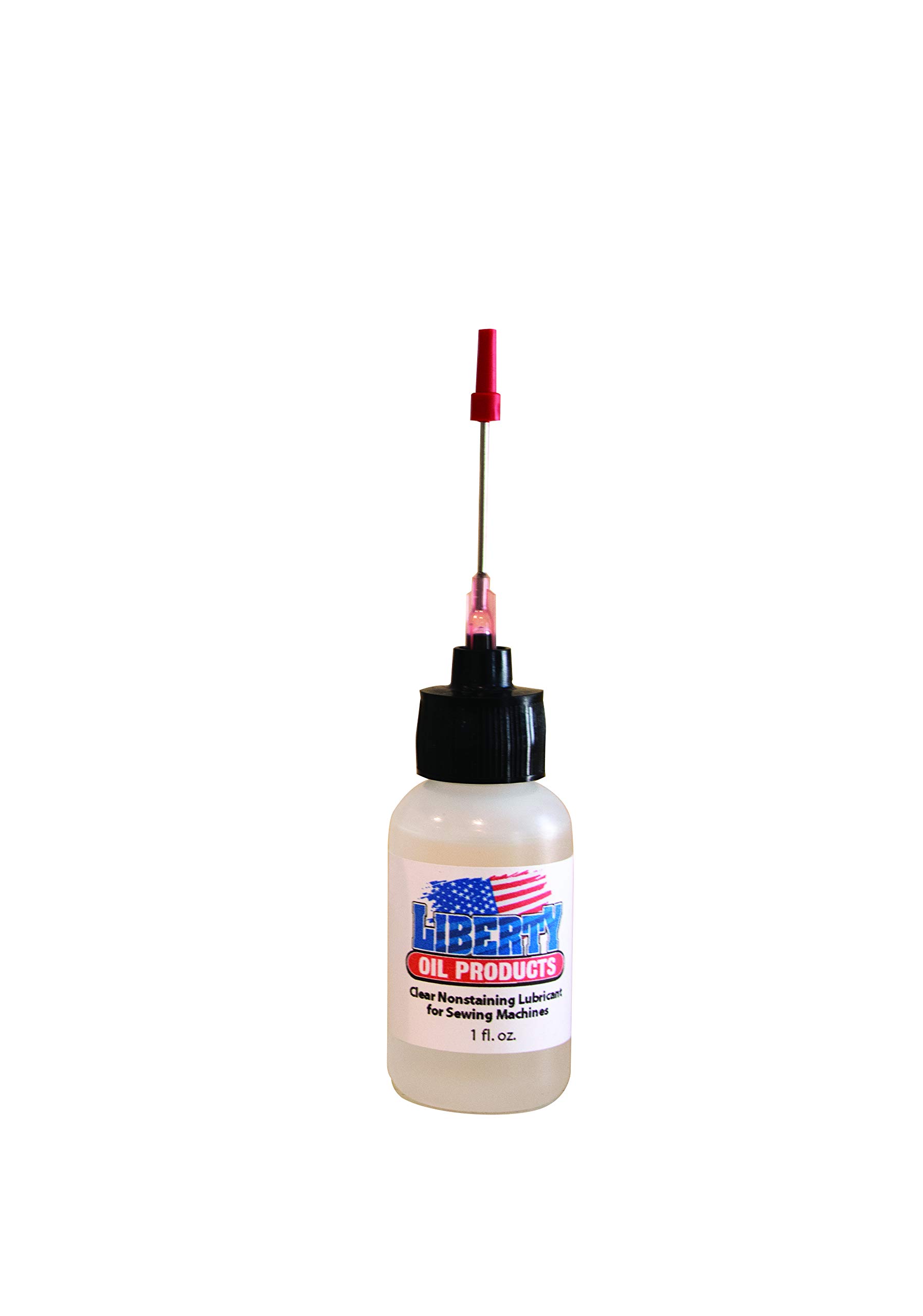
A thin, clear oil with a stainless needle tip I use to reach the tightest oiling points.
Why I picked it: Pharmaceutical-grade needle tip for accuracy when oiling cramped machine spots.
Best for: Embroidery machines, sergers, turntables, and other tight mechanisms.
Small bottle that lasts because only a drop or two is needed.
Pros
- Stainless steel needle tip for pinpoint application
- Clear, non-staining formula
- Very low odor
Cons
- Needle tip can pop off if handled roughly
- Small bottle for heavy users
My take
When I need surgical precision—on feed dogs, tiny bearings, or the inner parts of an embroidery head—I reach for this Liberty bottle. A few drops delivered exactly where I wanted them made a noisy section disappear.
I’ve also used it on a film camera and my vintage turntable; the thin oil penetrated stuck rollers and bearings without leaving residue. The needle tip gives me confidence in tiny, hidden spots that bulk spouts can’t reach.
Take care handling the stainless needle: it’s excellent for accuracy but can pop off if I pull on it or store the bottle loosely. Overall it’s the tool I choose for delicate, precise lubrication.
3. Zoom-Spout Sewing Machine Oil (Albatross) – Best for Vintage Machines
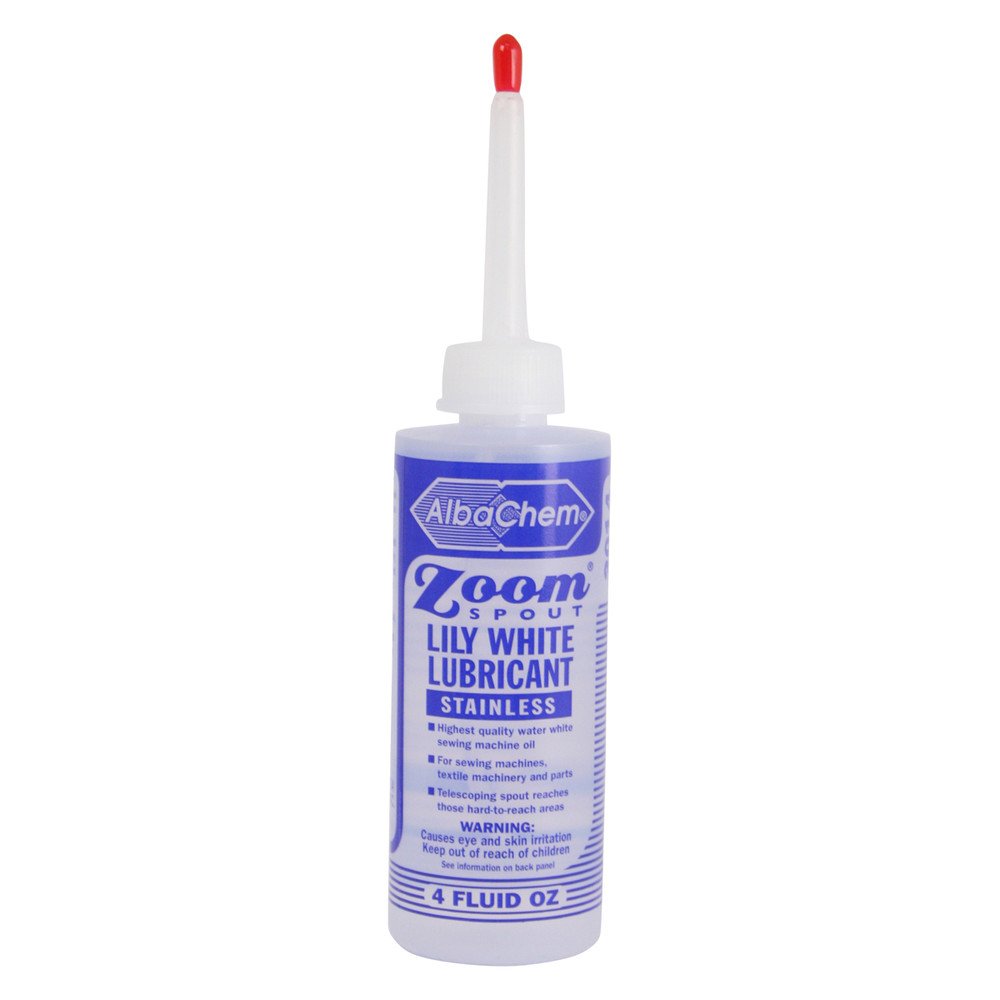
A higher-capacity, narrow-cut mineral oil I use for restorations and machines that need more thorough lubrication.
Why I picked it: Long skinny spout and larger quantity make it ideal for full clean-and-oil sessions.
Best for: Vintage treadle machines, restorations, and industrial parts.
Better value if you do big tune-ups or restore old machines.
Pros
- Long, narrow spout for deep oiling
- Higher quantity for full restorations
- High-purity mineral oil
Cons
- Cap can leak if not kept upright
- Spout seal may not be perfect out of the box
My take
I used the Zoom-Spout oil to bring a seized vintage Adler and a thrifted Singer back to life. The skinny spout reaches oil holes on vintage machines where modern bottles can’t, and the larger bottle size made a full tear-down and re-lube practical.
The oil itself is clear and odorless; I used a little on a rag to clean light surface rust and it helped free stubborn linkages. That combination of cleaning and lubrication is why I keep a bottle for heavier maintenance work.
Be mindful of the cap: if the tip contains oil and the cap isn’t snug the bottle can drip. I store it upright and that has prevented any messes while I focus on the job at hand.
4. Universal Zoom-Spout Sewing Machine Oil – Best Versatile Oil
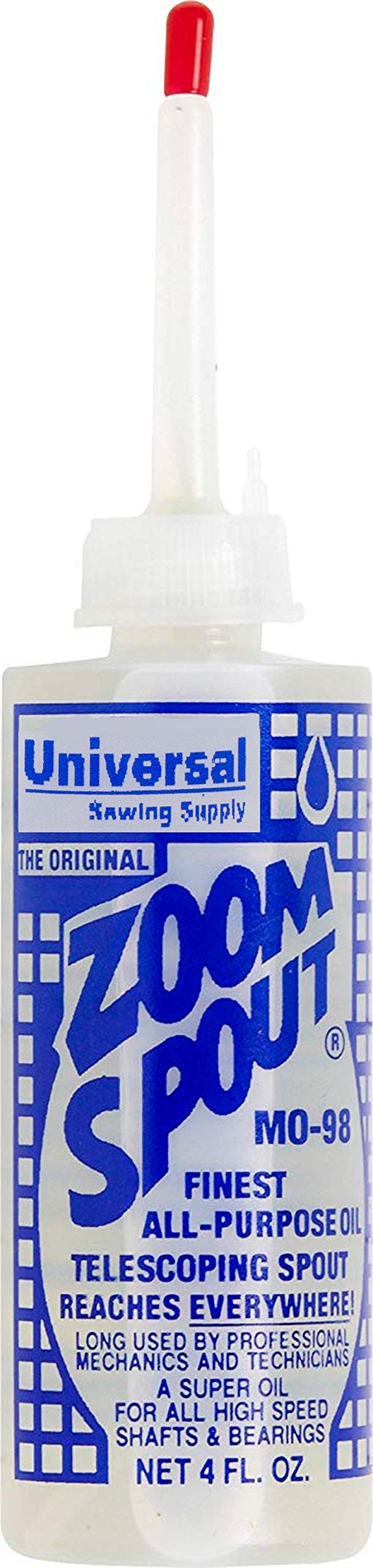
A flexible, non-gumming lily-white oil I use across sewing machines and household equipment.
Why I picked it: Extendable spout and non-staining formula make it useful beyond sewing machines.
Best for: Sewing machines, treadmills, office chairs, and multipurpose lubrication.
A practical midrange option for multi-use needs.
Pros
- Flexible extendable spout for hard-to-reach spots
- Non-gumming, non-staining lily-white oil
- Works well on varied household machines
Cons
- Occasional shipping issues with missing cap
- Not as precise as a needle tip
My take
I keep this Universal zoom-spout oil in my toolbox because it works on more than just sewing machines. It quieted a creaky office chair, lubricated a manual treadmill, and did a tidy job on my Brother serger parts.
The extendable spout lets me snake lubricant into awkward places while keeping control over the drop size. The oil’s non-gumming characteristic is important to me because it won’t attract dust over time.
A few shipments arrived without a cap, so I now check the bottle before storing it near fabric. Despite that, the formula and applicator make this my go-to when I want one bottle to cover multiple machines and tools.
5. Liberty Sewing Machine Oil (4 oz) – Best Large Bottle
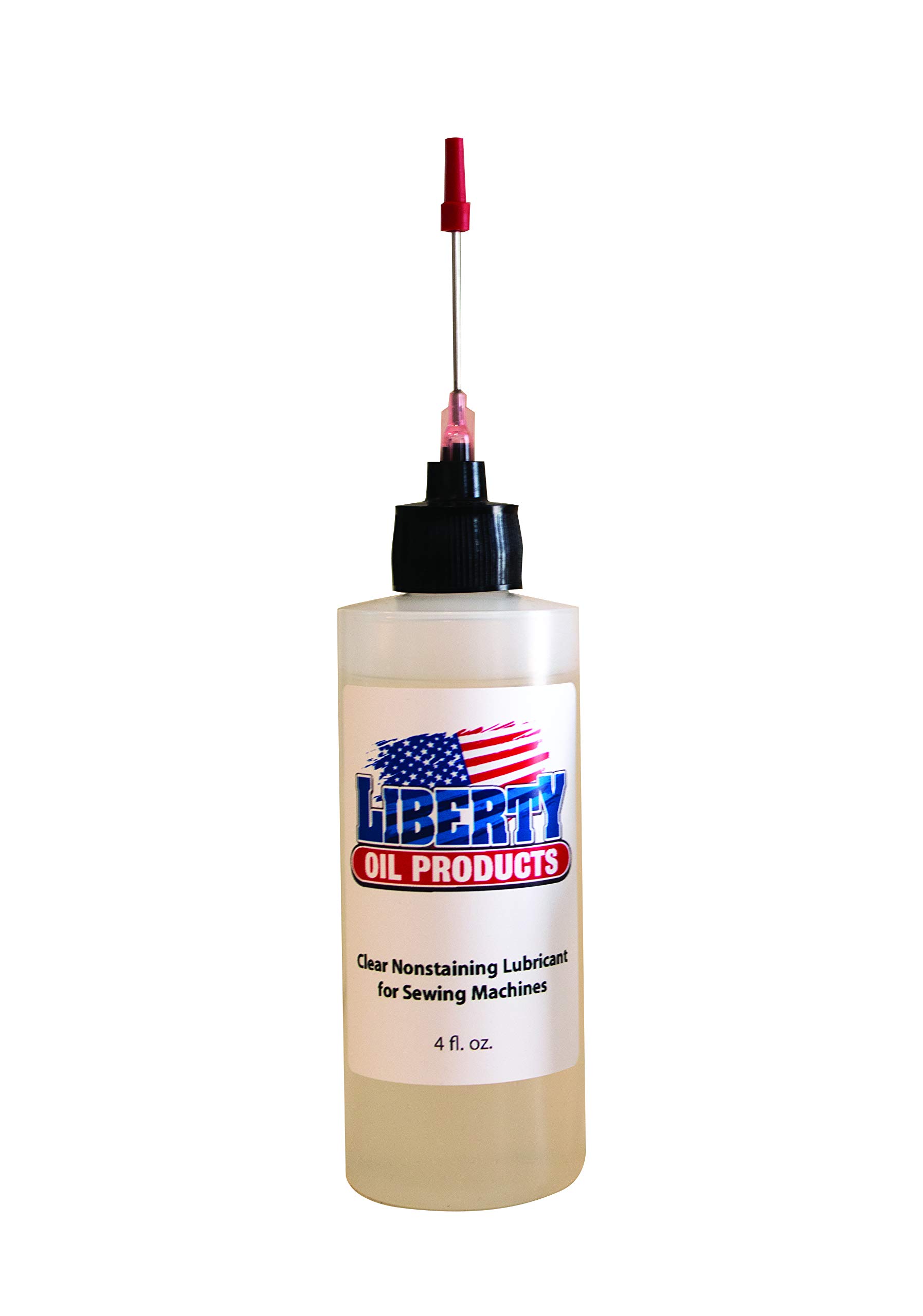
My choice when I need more oil on hand and a medical-grade needle applicator for precision.
Why I picked it: Larger bottle plus pharmaceutical-grade needle gives quantity and precision.
Best for: Frequent sewing, shop use, and restoring multiple machines.
Good long-term value for frequent users or multi-machine households.
Pros
- Generous 4 oz bottle for sustained use
- Medical-grade needle tip for precise application
- Non-staining and low odor
Cons
- Needle applicator needs careful storage
- International packaging variations possible
My take
When I have several machines to maintain or I’m doing a full restoration, the 4 oz Liberty bottle is what I reach for. The quantity means I don’t run out mid-job, and the included stainless needle applicator lets me oil tiny bearings without mess.
I’ve used it on vintage Singers and modern machines alike; it wipes away clean, doesn’t stain fabric, and the low odor makes it pleasant to work with in a small sewing room.
If I over-apply I can get a drip, so I keep the screw cap on and the needle separate between uses. For sustained, precise maintenance this bottle balances control with volume.
How I Choose Sewing Machine Oil
What I look for
I base my picks on three practical factors: applicator control, oil purity/viscosity, and bottle size. Precise applicators (needle tips) let me apply tiny drops without mess. Purity matters because low-quality oils can gum or stain, and the right viscosity ensures penetration without running.
I also consider how often I oil: a hobby sewer needs a small precision bottle, while someone restoring machines or servicing multiple heads needs a larger spout bottle.
- Applicator: needle tip for pinpoint, zoom or spout for broader access
- Purity: non-staining, non-gumming mineral oils are safest for textiles
- Viscosity: thin oils penetrate bearings; avoid oils that attract lint
- Bottle size: small for occasional spot work, large for full restores
- Storage: keep bottles upright and caps secured to prevent leaks
Tips from my bench
I always clean lint and debris before oiling; oil on grit only accelerates wear. After oiling, I run a scrap of fabric through the machine to clear any excess lubricant.
For vintage or seized machines I use a larger, purer oil and warm the mechanisms slightly to help flow; for modern electronic machines I prefer tiny doses from a needle-tip bottle to avoid oil migration into electronics.
- Wipe lint before you oil
- Use scrap fabric to remove excess oil
- Store bottles upright and capped
- Avoid cheap motor oils that may gum or stain
Frequently Asked Questions
How often do I need to oil my sewing machine?
I oil based on use: light hobby use every few months, heavy or daily use monthly. I also oil after cleaning and whenever I hear squeaks or feel resistance.
Can I use the same oil for vintage and modern machines?
Yes—non-staining, narrow-cut mineral sewing oils work across vintage and modern machines. I use larger quantities for restorations and needle-tip bottles for modern electronics and precision points.
What applicator should I choose?
I choose a needle-tip bottle when I need precision and a zoom-spout when I need reach and volume. Needle tips minimize mess; zoom spouts speed up full tune-ups.
Final Take
I keep at least two bottles in my toolbox: a precision needle-tip oil for delicate spots and a zoom-spout bottle for restorations. Between those two I can handle routine maintenance, quiet squeaks, and full machine overhauls.
Pick the applicator you’ll actually use: precision if you oil sparingly, zoom-spout if you tackle larger jobs. Either way, non-staining, non-gumming mineral oil is what I trust for sewing machines.
