
I tested a range of compact safes and organizers so you can pick the right home safe for fire protection, quick access, or larger-capacity storage.
I sorted through small chests, electronic keypad safes, and fire-resistant boxes to find practical options for home use. My focus was on realistic protection for documents, small jewelry, and digital media—not heavy commercial vaults.
Across these picks I prioritized fire protection, solid construction, mounting options, and usable interior space. I also considered how easy each unit is to open in an emergency, whether by keypad, key, or an alternate power option.
I compared these safes on three practical axes: fire and media protection, access method (keypad vs. key vs. emergency power), and usable interior space. I weighted real-world usability—mounting options, removable shelves, and portability—above marketing claims.
1. SentrySafe 1160 Fireproof Chest Safe – Best for Fire Protection
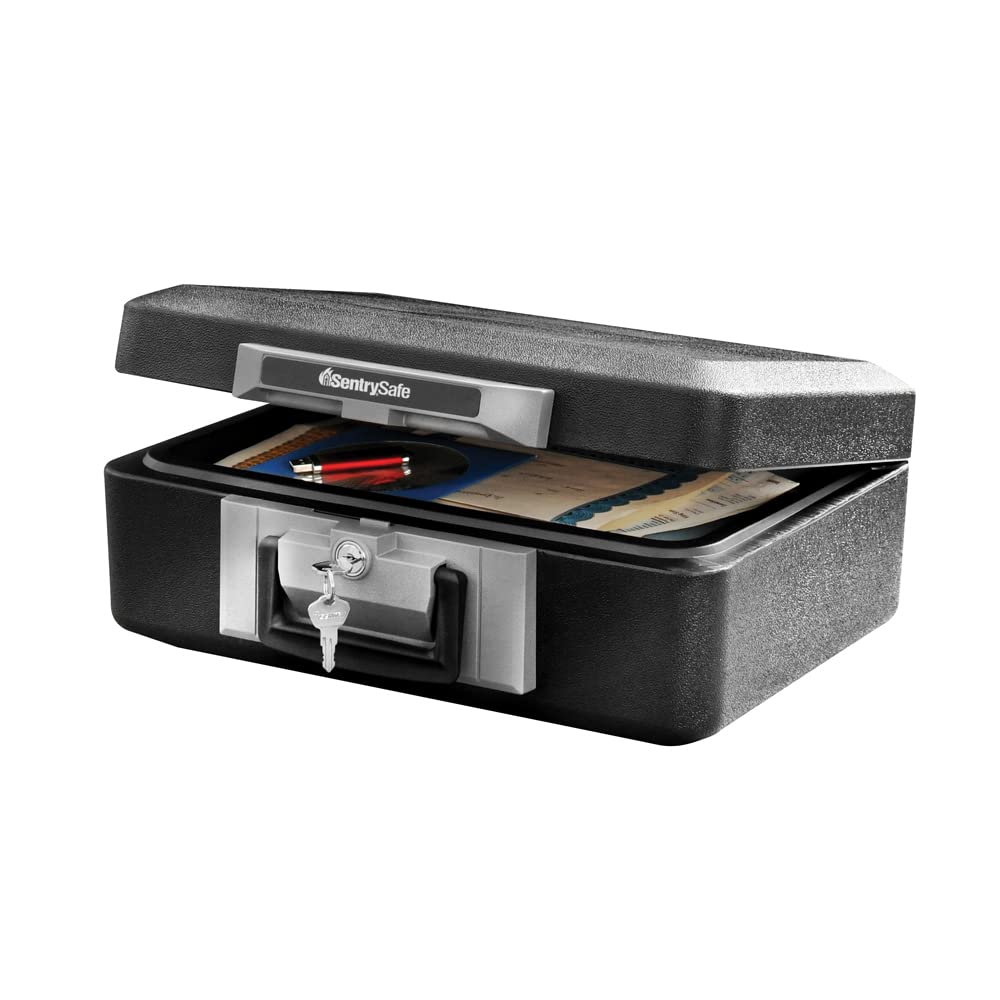
I picked this small chest when fire protection for papers and digital media mattered most. It’s UL-classified and ETL-verified for half-hour fire endurance and includes a lifetime after-fire replacement guarantee.
Why I picked it: UL-classified fire endurance, ETL-verified media protection, and a carry handle for portability.
Best for: Storing important documents, small digital backups, and jewelry with strong fire protection.
A practical mid-range fireproof box for home use.
Pros
- UL-classified half-hour fire endurance
- ETL-verified protection for digital media
- Lifetime after-fire replacement
- Two keys included
- Carrying grips for portability
Cons
- Insulation reduces usable interior space
- Heavier than non-fireproof boxes
- Key-only access (no keypad)
My take
I rely on this SentrySafe when I want trustworthy fire protection in a compact package. The UL classification for 1/2 hour at 1550°F and ETL verification for CDs, DVDs and USB drives give me confidence storing both paper documents and small digital media.
The key lock is straightforward and the two supplied keys make everyday access easy; I appreciate the carrying grips when I need to move it. The tradeoff is interior volume—much of the space is taken by fireproof material, so I reserve it for critical items rather than bulk storage.
Overall, this is the box I choose when fire protection is the non-negotiable feature and I’m willing to accept a smaller internal capacity.
2. Stalwart Electronic Digital Safe – Best Value Digital Safe
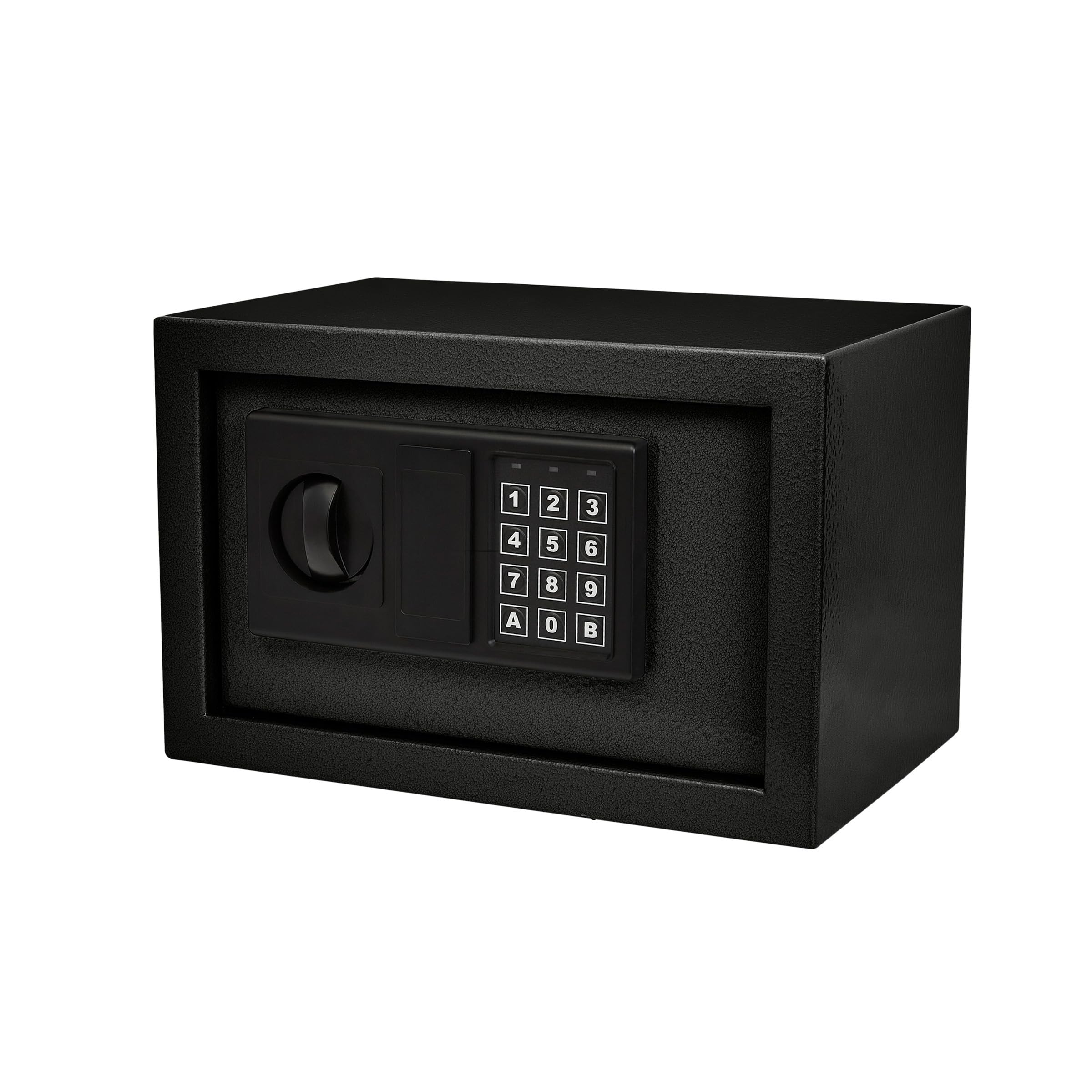
I recommend this when you want programmable keypad access, a built-in alarm for tampering, and the option to bolt the safe to floor or wall for better security.
Why I picked it: Programmable keypad, manual override keys, alarm on wrong attempts, and mountable design.
Best for: Anyone who wants fast keypad access with backup key options and easy mounting.
A strong value pick for an electronic home safe.
Pros
- Programmable 3–8 digit keypad
- Two manual override keys
- Alarm after repeated wrong entries
- Floor or wall-mountable
- Solid steel construction
Cons
- Stock batteries can be low quality
- Initial programming can be confusing
- Not a high-security vault
My take
I reached for the Stalwart when I needed quick keypad access and the reassurance of manual override keys. Programming took a bit of patience, but once set up the keypad is responsive and the alarm behavior (short then longer alarms on repeated wrong entries) adds a useful deterrent.
I bolted mine in place—mounting is simple and dramatically improves security compared with a loose box. I also keep a spare key hidden and use quality batteries rather than the included ones to avoid surprises.
For the price and features, this is the most practical electronic safe I recommend for everyday home use.
3. Brihard Family Key Lock Safe – Best for Documents
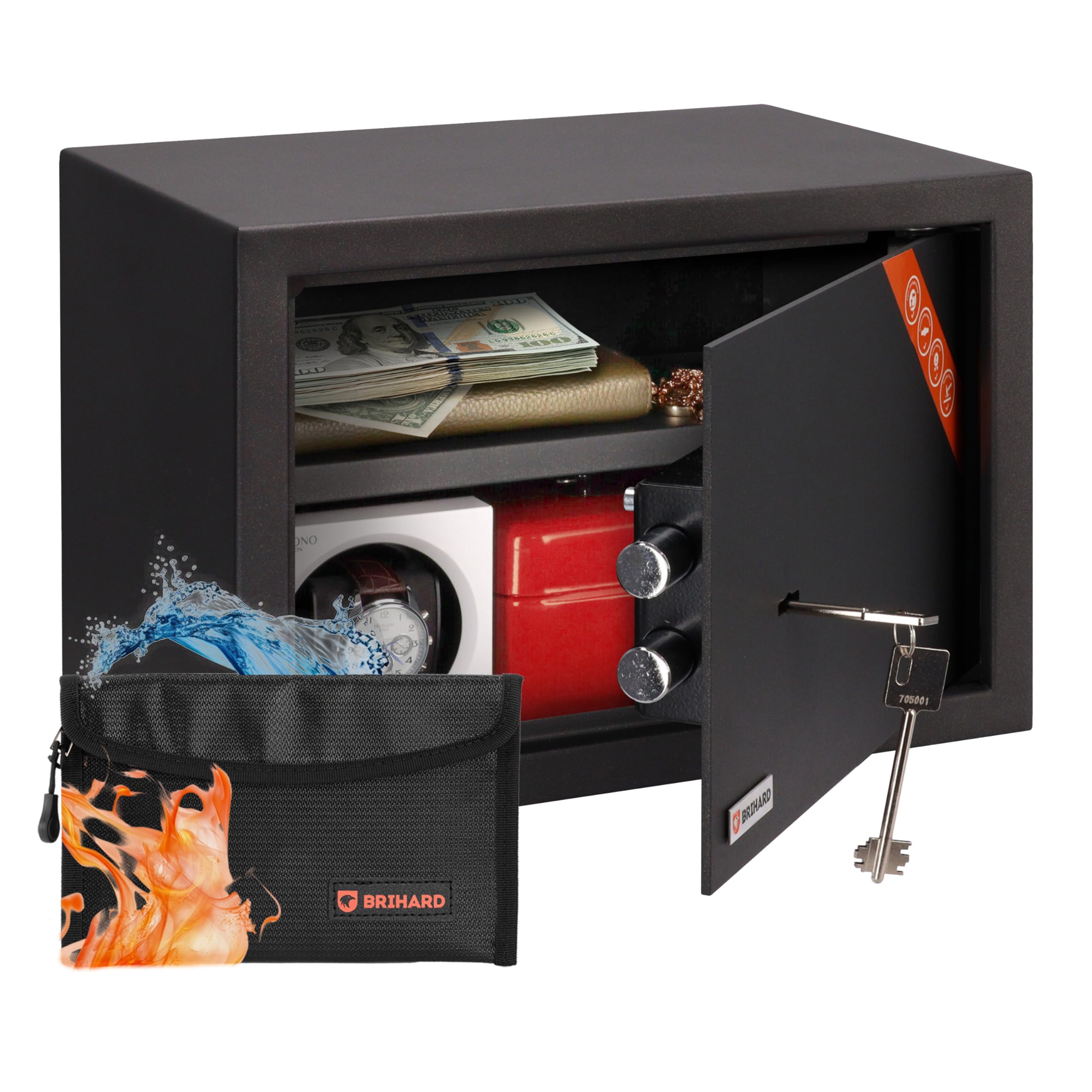
I like this model when I need a medium-size, key-operated safe that fits A4 documents and offers internal organization with a removable shelf.
Why I picked it: Double-bit key lock, removable shelf, and A4 document fit with mountable options.
Best for: Organizing family records, A4 documents, and a fireproof money bag for small items.
A mid-sized key-lock safe focused on document organization.
Pros
- Premium double-bit key lock
- Removable internal shelf
- Fits A4 documents
- Concealed hinges
- Mountable top and bottom
Cons
- Only the money bag is fireproof
- Key access only (no electronic option)
- Some units may ship without mounting screws
My take
I chose the Brihard when I wanted a clearly organized safe that will hold A4 paperwork flat. The removable shelf and carpeted bottom make it easy to arrange documents, jewelry, or small electronics.
The double-bit key lock feels substantial and the concealed hinges are a nice touch for tamper resistance. Important note: the included fireproof-waterproof bag protects contents from fire, but the marketing led me to double-check whether the entire safe is rated—plan accordingly.
This is the unit I use when document layout and reliable key security are my priorities.
4. Bonsaii SF002 Electronic Safe – Best for Modern Access
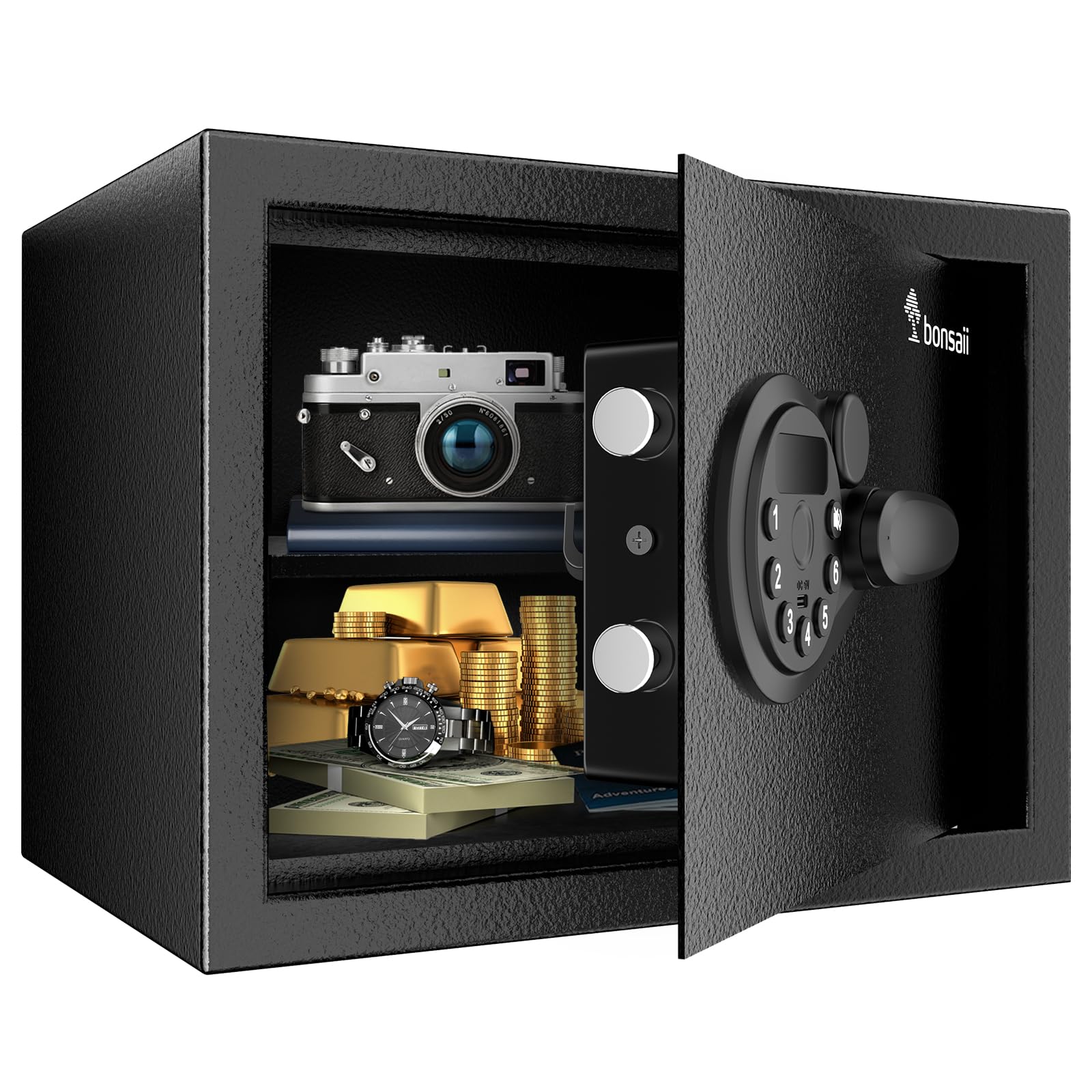
I picked the Bonsaii when I wanted modern emergency access options—personal code, override keys, or Type-C emergency power—along with a removable shelf and felt-lined interior.
Why I picked it: Type-C emergency power option and flexible access methods plus a removable shelf.
Best for: People who want modern emergency power options and flexible interior organization.
Feature-rich for the price point.
Pros
- Type-C emergency power input
- Removable shelf for flexible storage
- SPCC steel construction
- Felt-lined bottom
- Pre-drilled mounting holes
Cons
- Not a top-tier security safe
- Battery compartment contact can be finicky
- Smaller bolts than heavy commercial safes
My take
I reached for the Bonsaii when I wanted a compact safe with modern conveniences. The Type-C emergency power option eliminates the usual fear of dead batteries locking me out, and having both keypad and two override keys gives me multiple access paths.
Build quality surprised me in a good way—SPCC steel, felt lining, and a removable shelf let me store documents and jewelry without scratching. I wouldn’t call this device impervious to determined attack, but it performs exactly as advertised for everyday home security.
If you care about emergency access options and a sensible interior layout, this is the model I recommend.
5. MMF Industries STEELMASTER Security Chest – Best Compact Steel Chest
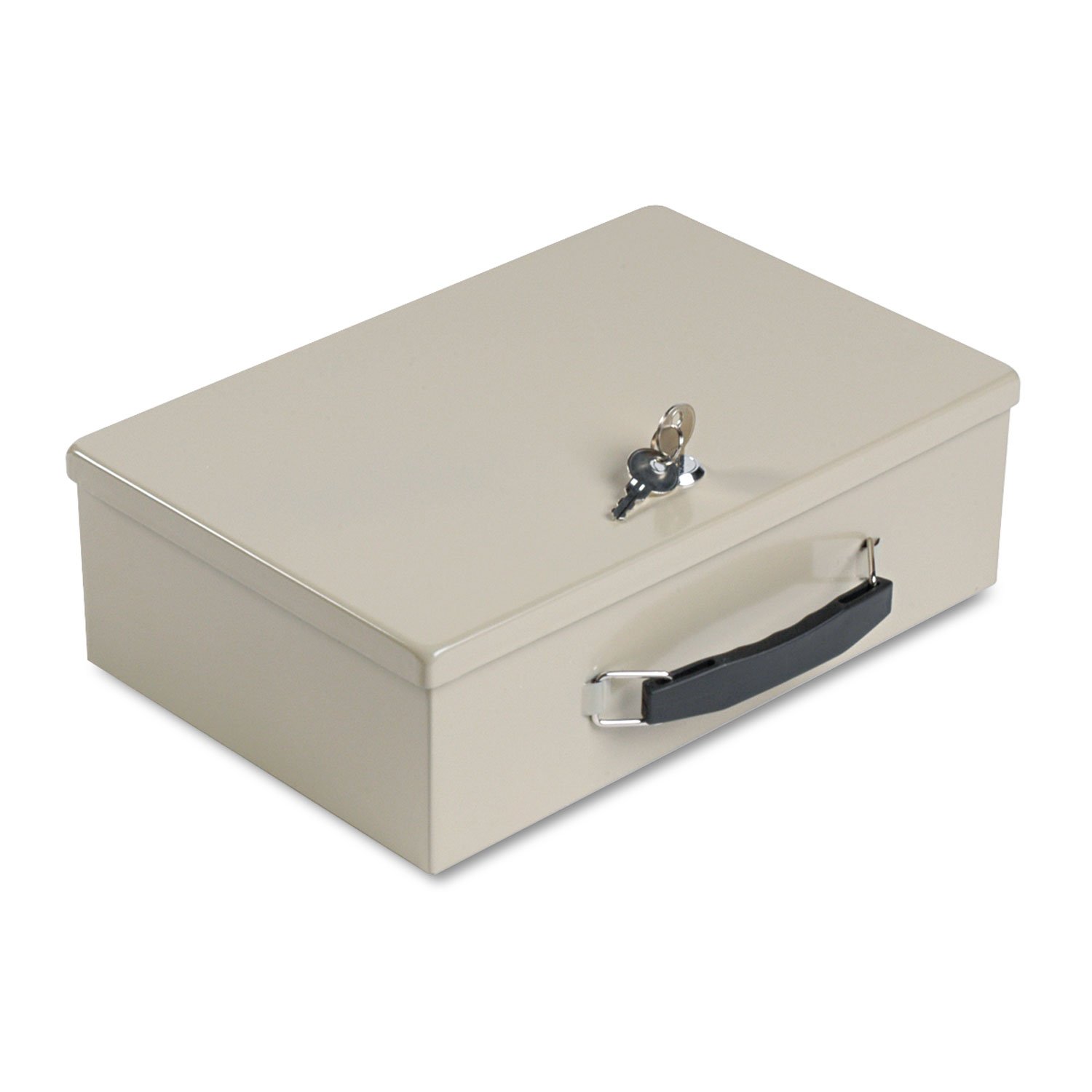
I like the Steelmaster when I need a compact, double-insulated steel chest for papers or a small firearm. It’s lab-tested for short-duration high heat and built like a classic security chest.
Why I picked it: Double-insulated steel construction and compact footprint for concealment or transport.
Best for: Small firearms, vehicle documents, and compact document storage.
A budget-friendly steel chest with solid construction.
Pros
- Double-insulated walls
- Lab-tested fire retardant
- Sturdy steel construction
- Compact and portable
- Two keys included
Cons
- Not designed as a theft-proof safe
- Key tumblers can wear after many years
- Shallow interior depth
My take
I keep a Steelmaster when I want a rugged, no-frills steel chest that will take some abuse and provide basic fire retardation. The double-insulated walls and lab testing at high temperatures give me peace of mind for short fire exposure.
It’s the box I choose for a small handgun or vehicle paperwork because it’s portable and the handle works. I do not treat it as a high-security safe against determined break-in attempts—this is a practical, everyday lockbox.
Long-term, I’ve seen key tumblers loosen on older units, so I recommend keeping a spare key and treating the chest as protective rather than impenetrable.
6. xydled Fire Resistant Key Lock Box – Best Portable Fire Box
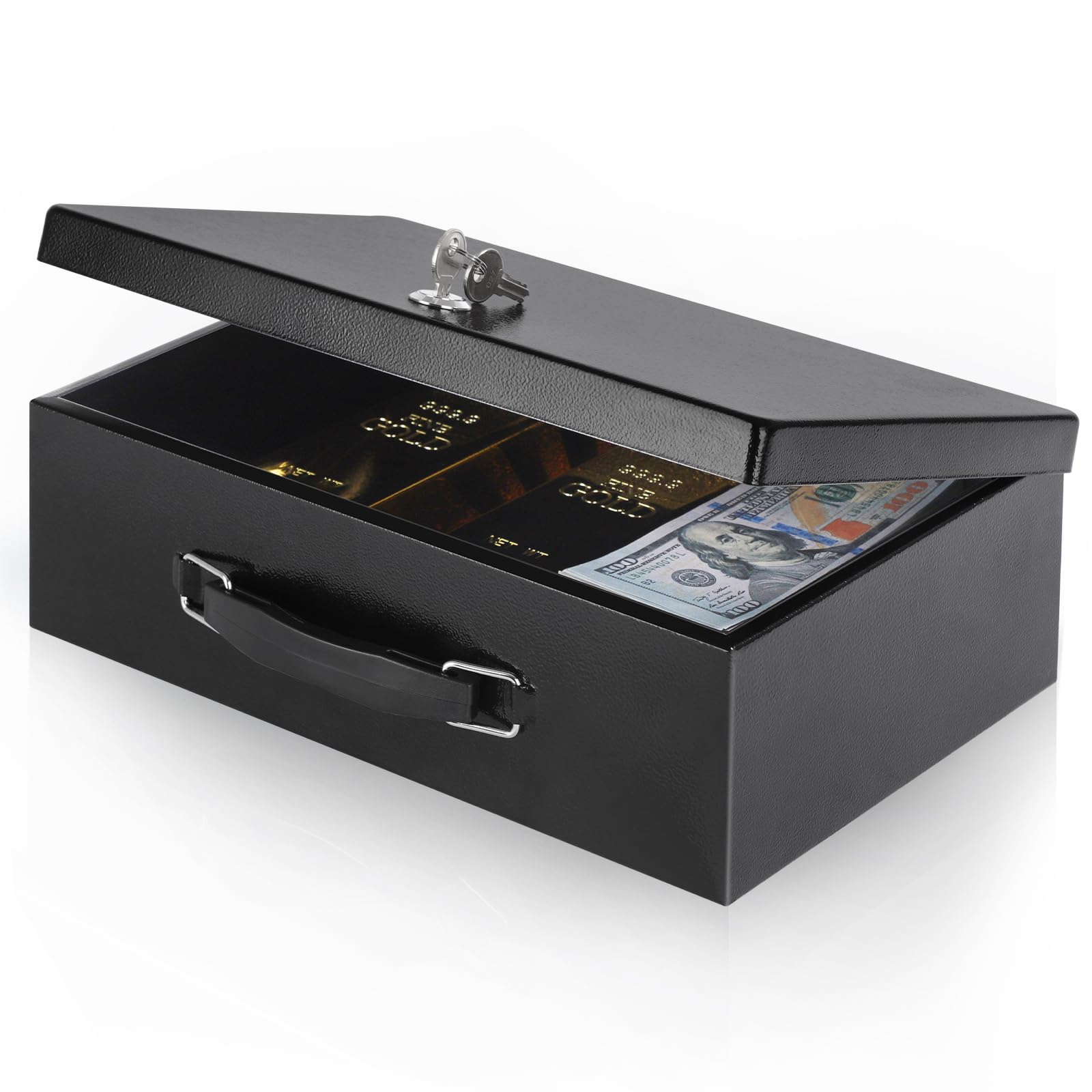
I recommend this shoebox-sized fire-insulated box when I need a portable, affordable option for passports, certificates, and small valuables.
Why I picked it: Compact, fire-insulated shell with a comfortable carry handle and two keys.
Best for: Portable storage for passports, birth certificates, and small keepsakes.
A budget-friendly, portable fire-resistant option.
Pros
- Fire-resistant insulation
- Two keys included
- Sturdy carry handle
- Good interior for small items
- Attractive textured finish
Cons
- Basic security level
- No electronic access option
- Interior space limited by insulation
My take
I picked the xydled box when I needed something close to a shoebox in size but with fire insulation and a handle. It’s heavy enough to feel solid and the two keys make daily use simple.
It stores passports, certificates, and a few small valuables comfortably. I’ve hidden one under a bed and another in a closet—both provide discreet, mobile protection.
For a low-cost, portable fire-resistant container, this is the easy choice I reach for.
7. RPNB Digital Keypad Safe – Best Large-Capacity Home Safe
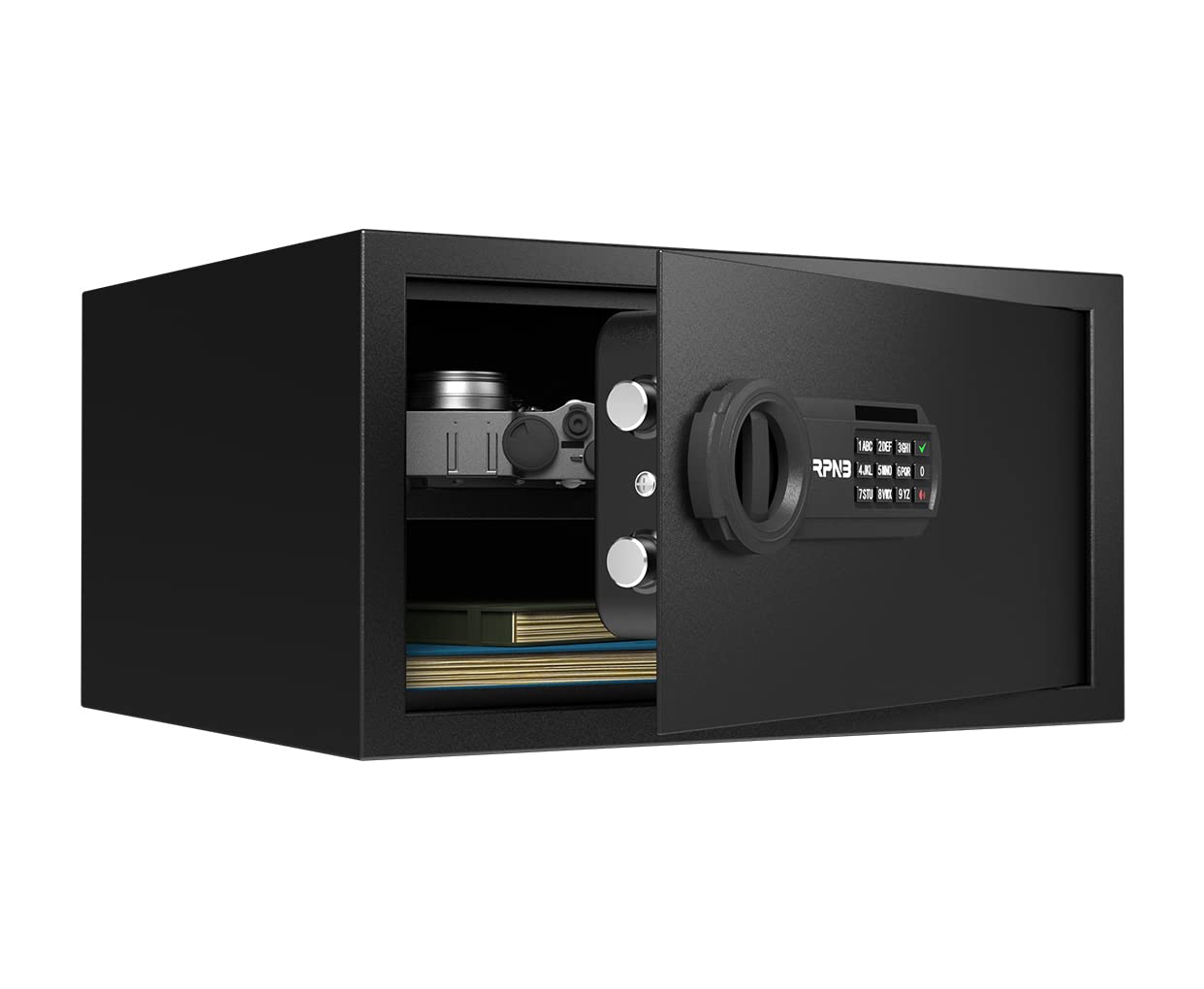
I picked this RPNB when I needed the most interior space from the list—1.0 cubic foot—and a reinforced steel structure with both keypad and key access.
Why I picked it: Largest internal capacity here, reinforced steel, and flexible access methods.
Best for: Users who need more interior volume for multiple documents or small valuables.
A larger-capacity option compared with compact home boxes.
Pros
- 1.0 cubic foot capacity
- Reinforced solid steel walls
- Digital keypad plus keys
- Pre-drilled mounting holes
- Clear battery/operation indicators
Cons
- Requires AA/AAAs for keypad
- Heavier and less portable
- Not rated for extended high-heat fire protection
My take
I turned to the RPNB when storage capacity mattered—the full cubic foot interior fits multiple files and small boxes. Reinforced steel walls and a double cylinder latch give a reassuring feel when I close it.
Programming is straightforward and the light indicators remove guesswork; I mounted mine to a shelf using the included hardware. It’s my go-to when I need more internal real estate than the compact safes can offer.
This is the one I pick for a blend of size and everyday electronic convenience.
8. Liberty Safe Door Panel Organizer (Size 12) – Best Safe Door Organizer
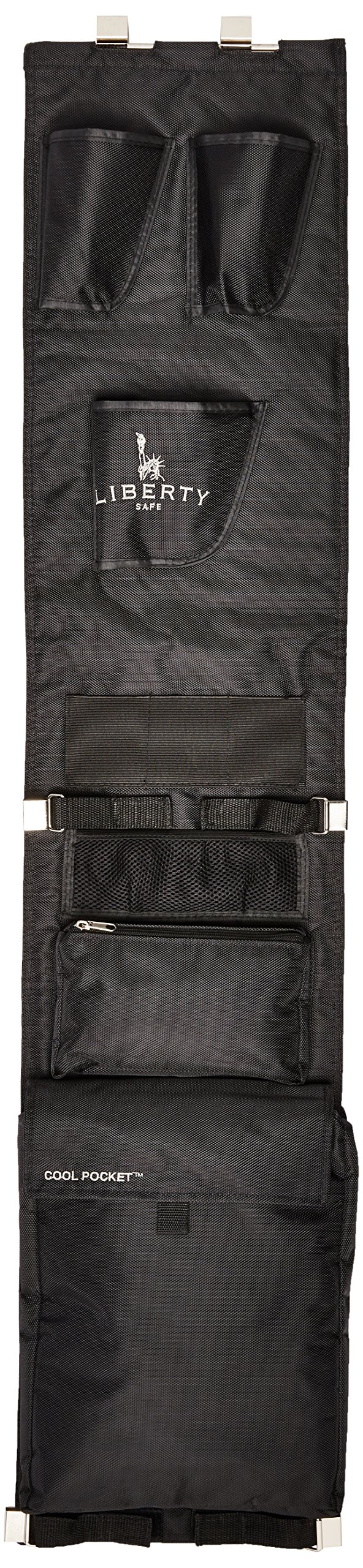
I use this organizer to reclaim shelf space inside larger gun safes—it converts the door into usable storage for handguns, documents, and accessories.
Why I picked it: Adds organized pockets and holsters to a safe door without drilling or tools.
Best for: Safe owners who want to store handguns, magazines, and documents on the door.
A premium accessory to expand usable safe storage.
Pros
- Quick draw holster pockets
- Document storage pockets
- Multiple zip pockets
- Easy no-tool installation
- Felt-lined pistol pockets
Cons
- Pockets may be small for larger items
- Designed for certain door thicknesses
- Accessory—not a standalone safe
My take
I installed the Liberty organizer on a Browning-style interior and immediately freed up top shelf space. The pistol holders are felt-lined and hold handguns securely, while the document pocket keeps titles and certificates accessible.
Installation was tool-free—the clips slip behind the back panel and the adjustable straps tighten it against the door. For anyone with a larger safe who wants to tidy small items, this is the accessory I recommend.
How I Choose a Home Safe
Key factors I consider
I weigh fire protection, access method, usable interior volume, and mounting options when choosing a safe. The right balance depends on whether I prioritize fireproofing, quick access, or capacity.
I also look for practical features: override keys, removable shelves, felt lining for jewelry, and an emergency power input if the unit is electronic.
- Fire rating: I prefer UL/ETL classifications for documents and media.
- Access method: keypad for fast entry, key for simplicity, or both for redundancy.
- Interior space: account for insulation thickness when storing papers.
- Mounting: bolt-down options drastically improve security.
- Emergency entry: spare keys or external power inputs (Type-C) eliminate dead-battery problems.
Frequently Asked Questions
Are these small safes truly fireproof?
I rely on UL or ETL classifications as my benchmark. Some boxes are UL-classified for a half-hour at high temperatures and some include a fireproof money bag only—so I always check whether the whole safe or just the bag is rated before trusting it with irreplaceable items.
What’s the best access method for a home safe?
I prefer a combination: keypad for speed plus a manual override key. If a safe has a Type-C emergency input, that removes battery anxiety. If you favor simplicity, a good key lock with solid construction is still a valid choice.
Should I bolt my safe down?
I bolt small safes to a floor or wall whenever possible. Mounting is the single most effective way to deter casual theft and keep the safe from walking away during a break-in.
How do I prevent being locked out by dead batteries?
I keep a manual override key hidden and use high-quality batteries. For electronic safes with a Type-C emergency power option, I carry a small power bank to restore temporary power and open the safe if needed.
Final Take
I recommend the SentrySafe 1160 if fire protection is your top priority, and the Stalwart if you want the best value in a keypad-equipped safe. For document organization the Brihard is my pick, while the RPNB gives the largest internal capacity.
Whatever you choose, prioritize mounting, keep spare keys, and think about how you’ll access the safe in an emergency. Those practical steps are what protect your important items in real situations.
