
I tested a range of patio benches — from solid hardwood to recycled poly lumber — and I’m sharing which ones stood out for durability, comfort, and style so you can pick the right bench for your porch, patio, or entry.
I spent time assembling and using a variety of patio benches so I could judge how they look, how they hold up, and how comfortable they actually are. My testing covered hardwood benches, metal-framed styles, recycled poly lumber, and heavy-duty HIPS plastic.
In this roundup I highlight what each bench does best, who it suits, and the few trade-offs I found while living with them on a porch and patio.
Across these benches I compared materials, weather resistance, weight capacity, assembly ease, and real-world comfort so you can match a bench to how you plan to use it.
1. Christopher Knight Home Carlisle Acacia Wood Bench – Best Overall
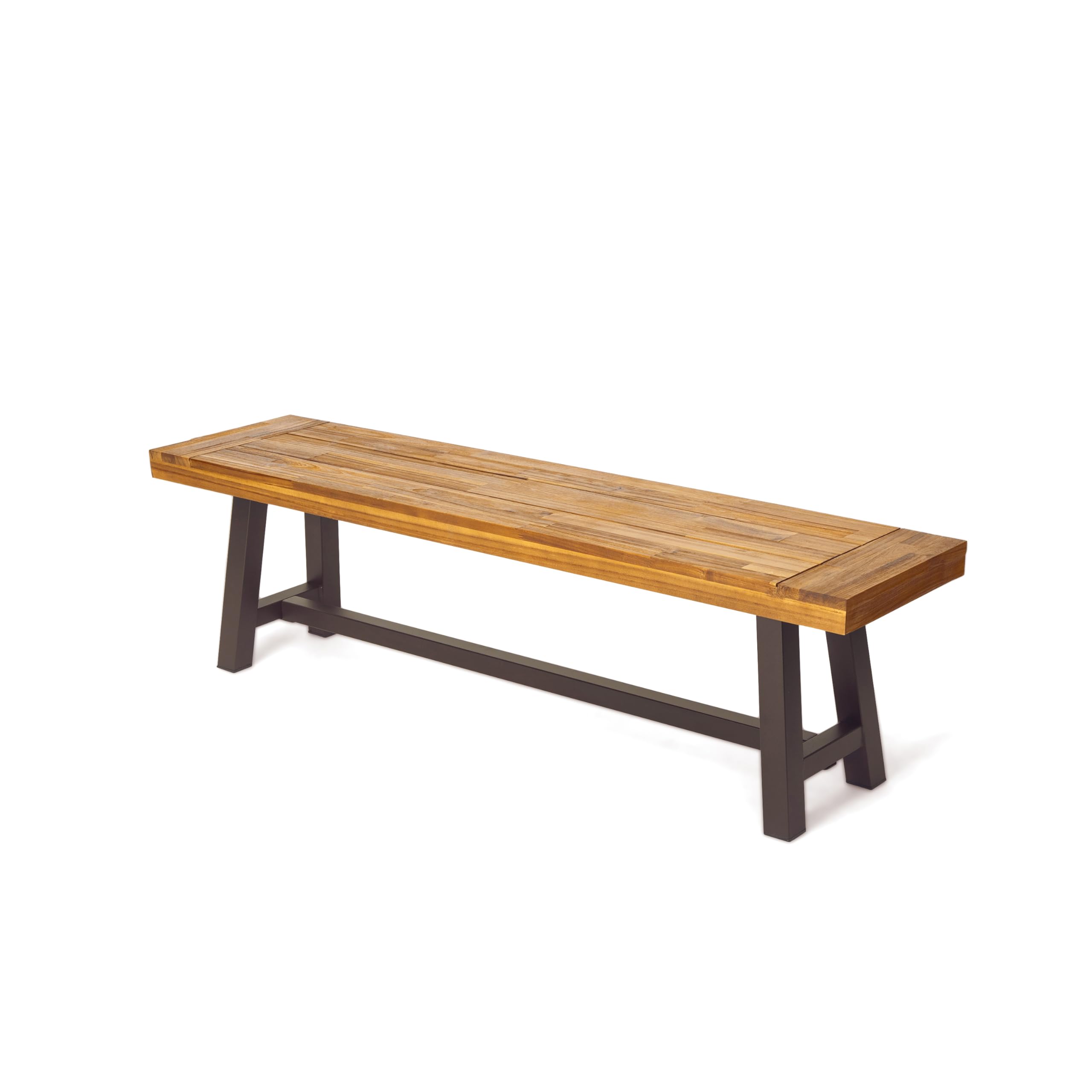
A solid acacia top with a powder-coated metal frame that combines rustic warmth and industrial durability.
Why I picked it: I picked this for its heavy acacia construction, modern-industrial look, and overall sturdiness.
Best for: Covered patios, entryways, and dining-table seating where a sturdy, stylish bench is needed.
Affordable midrange option for hardwood benches.
Pros
- Durable acacia hardwood
- Modern industrial styling
- Sturdy powder-coated frame
- Comes partially assembled
- Clear, straightforward assembly
Cons
- Needs protection from heavy weather
- Seat is relatively shallow for lounging
My take
I assembled this bench myself and found the process straightforward — the parts were labeled, the instructions clear, and it came partially put together which saved time. The piece is heavier than it looks in photos and feels solid when you sit on it.
The sandblasted acacia top has a raw, refined look that worked well on my covered patio and as an entry bench. The powder-coated iron frame gives the bench a modern-industrial edge while adding real stability.
I appreciate that the bench is built to resist mild weather, but I still keep mine under cover during storms and strong sun to protect the finish. Overall, it’s the most versatile option I used: attractive enough for indoor use, tough enough for sheltered outdoor seating.
2. Christopher Knight Home Catriona Acacia Bench – Best for Outdoor Dining
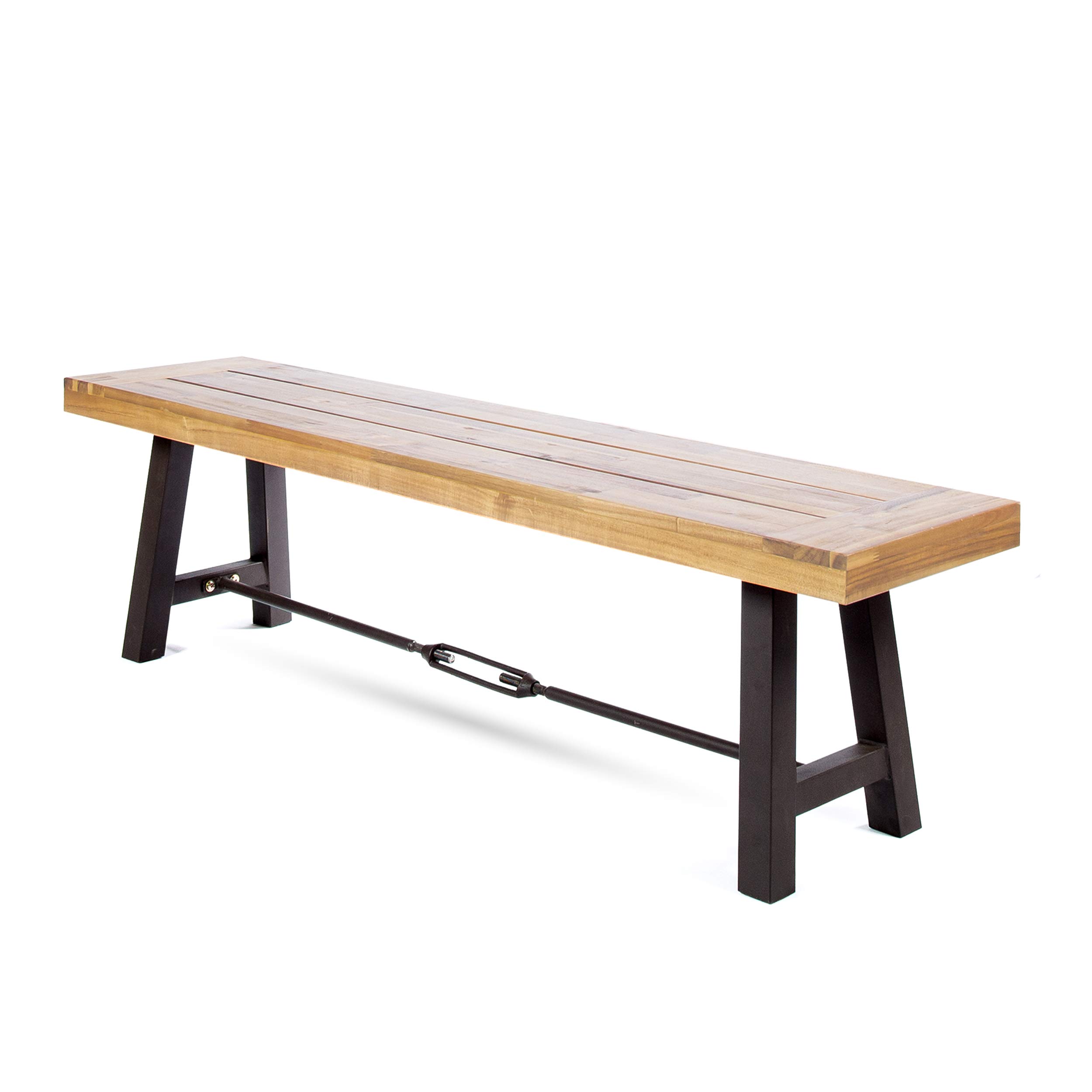
Acacia slat-top bench with metal accents designed to pair with outdoor dining tables.
Why I picked it: I chose this because the slatted acacia top and durable frame make it a natural match for outdoor dining seating.
Best for: Dining-table benches and covered patios where coordinated seating matters.
Solid midrange value for a wood-and-metal dining bench.
Pros
- Acacia wood top
- Classic slat design
- Weather resistant finish
- Includes assembly tools
Cons
- Benefits from occasional oiling
- Not ideal for constant exposure
My take
I used this bench alongside my outdoor table and liked how it visually complemented the setting. Assembly was quick and the included tools made installation painless.
The slat-panel top looks sophisticated and the teak-like finish deepened nicely after I applied a coat of teak oil — it’s an easy way to enrich the color if you want a warmer look.
I kept the bench under a covered patio; it stands up well to mild weather but I still protect it during heavy storms. For dining use it’s a reliable, attractive option that feels far more expensive than it is.
3. Psilvam Poly Lumber 2-Person Bench – Best Low-Maintenance
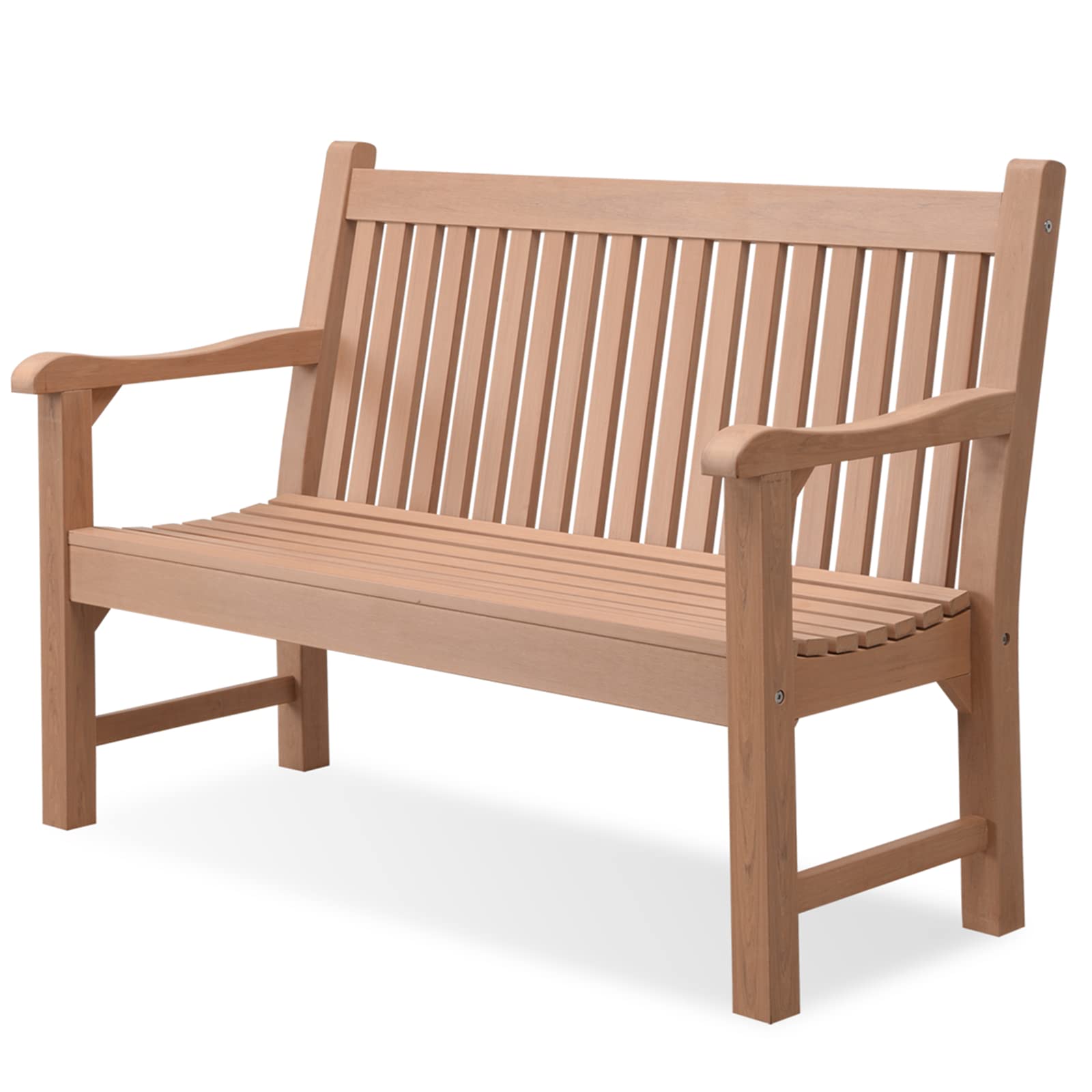
Recycled polystyrene bench that mimics real wood while resisting rot, cracking, and fading.
Why I picked it: I picked this because the poly lumber feels like wood but requires almost no maintenance and supports heavy loads.
Best for: High-use porches, fire-pit seating, and anyone who wants long-lasting, low-maintenance outdoor furniture.
A higher-end poly lumber option with strong durability.
Pros
- Realistic wood-like finish
- Uses recycled materials
- 700 lb weight capacity
- Quick, nine-screw assembly
- Very low maintenance
Cons
- Heavier to move
- Takes up noticeable footprint
My take
Putting this bench together was faster than most — the pre-drilled holes and just nine screws made it almost effortless. Once assembled it felt dense and stable, with zero flex when two adults sat down.
I was impressed by the finish: the poly lumber texture reads like real wood at a quick glance, and cleaning is as simple as soap and water. For family spaces where durability matters, I preferred this to a painted or stained wood bench.
Because it’s made from recycled polystyrene I feel good about the sustainability angle, and the bench’s heft means it won’t blow around in wind. It’s one of my go-to picks for low-fuss outdoor seating.
4. Grand Patio Farmhouse Aluminum Bench – Best Farmhouse Style
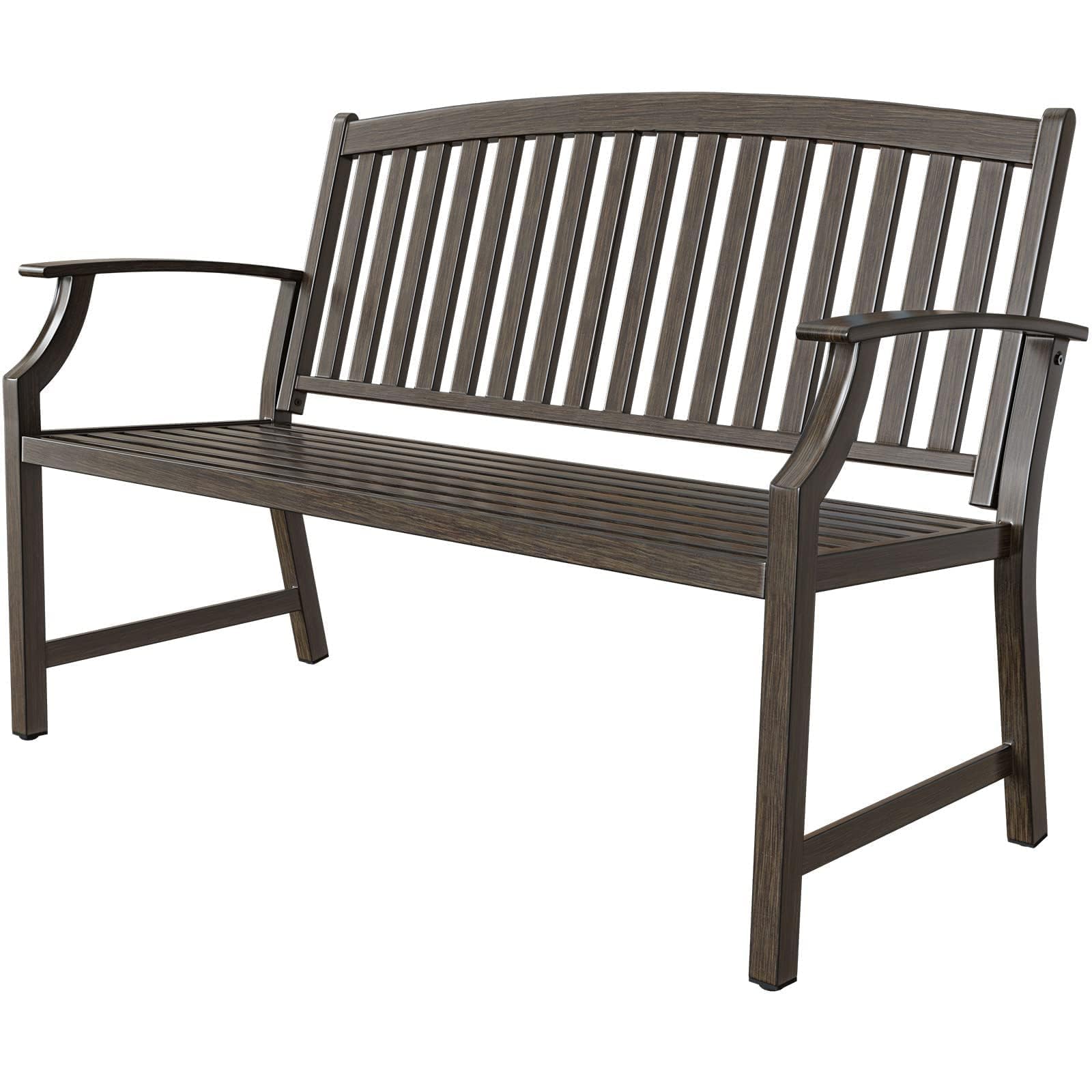
Powder-coated aluminum bench with faux wood grain and a farmhouse silhouette built to resist rust.
Why I picked it: I chose this for its rust-resistant finish and roomy, stable build that suits a farmhouse or cottage yard.
Best for: Porches and gardens where you want a classic farmhouse look and low corrosion risk.
Good value for a rust-resistant metal bench.
Pros
- Anti-rust powder coating
- Roomy seating
- Cross-braced legs for stability
- Includes leg levelers
Cons
- May need cushions for long sitting
- Some assembly time required
My take
Assembly was straightforward and faster with an assistant; the bench arrived well boxed and the parts fit cleanly. I appreciated the cross-braced legs — they made the bench feel notably stable compared with many metal benches I’ve used.
The powder-coated surface has held up to sun and rain in my yard and still looks good after months outdoors. I added a seat pad for extended lounging, which made it much more comfortable without hiding the farmhouse style.
If you want the look of wood without the risk of rust, this aluminum option balances durability and classic styling very well.
5. Backyard Discovery Meranti Wood Farmhouse Bench – Best Budget Wood
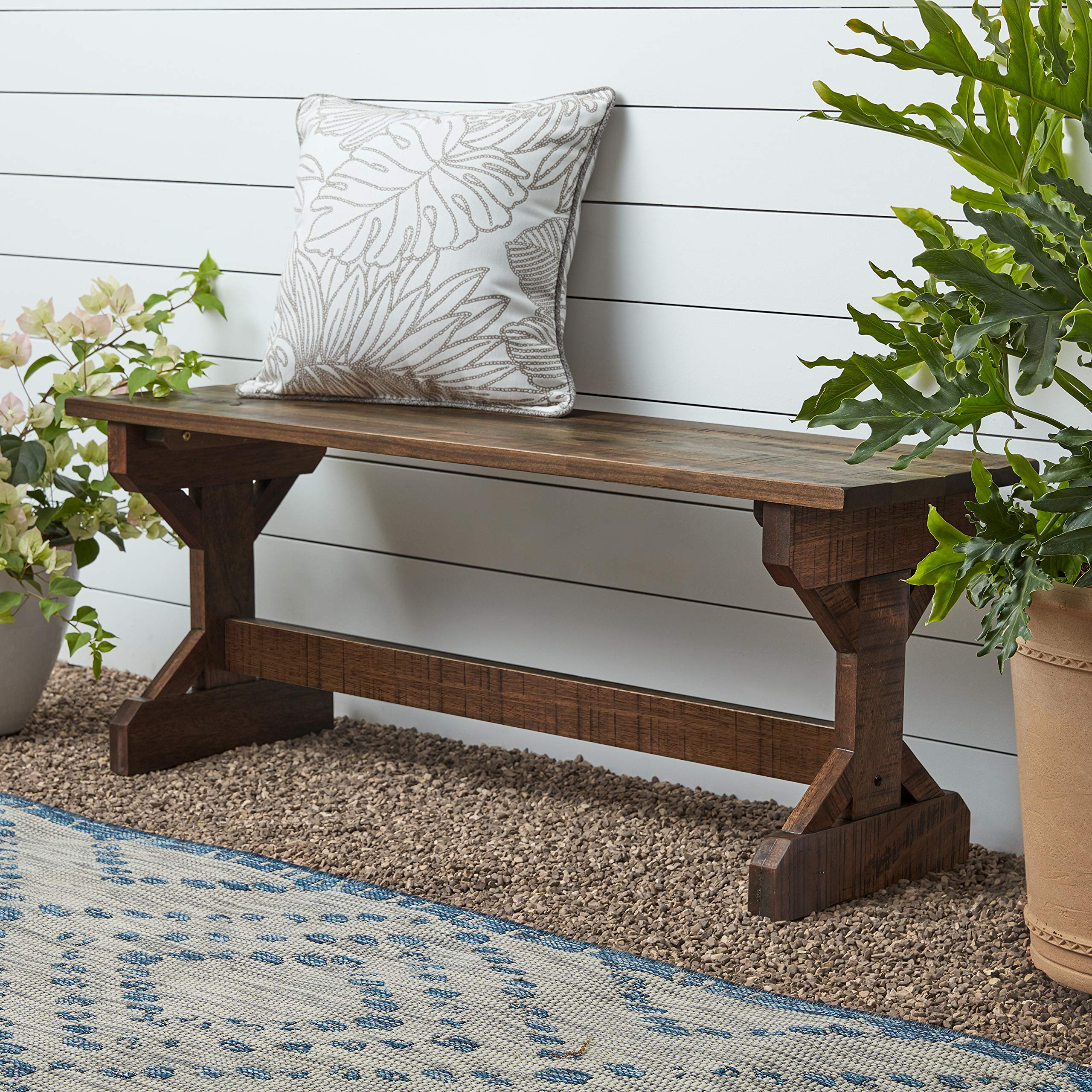
Solid meranti hardwood bench with a pre-stained walnut finish and a long warranty.
Why I picked it: I picked this because solid meranti gives authentic wood warmth with a 5-year warranty for extra confidence.
Best for: Entryways, mudrooms, and porches where a warm, wooden look is desired.
Budget-friendly solid wood option.
Pros
- 100% meranti hardwood
- Five-year warranty
- Versatile indoor/outdoor use
- Supports heavy loads
Cons
- Will need maintenance outdoors
- Heavy to move alone
My take
This bench felt hefty and well-made out of the box. The walnut stain gives it a cozy, farmhouse vibe that matched my dining area as well as my covered porch.
Assembly was straightforward and the finished piece felt sturdy enough to hold planters or to sit on during prep work outside. The included warranty added peace of mind — something I value when choosing wood furniture.
For anyone who wants genuine wood at a budget-friendly price, this Meranti bench delivers the look and function I expected.
6. Psilvam Knight Poly Lumber Backless Bench – Best Backless
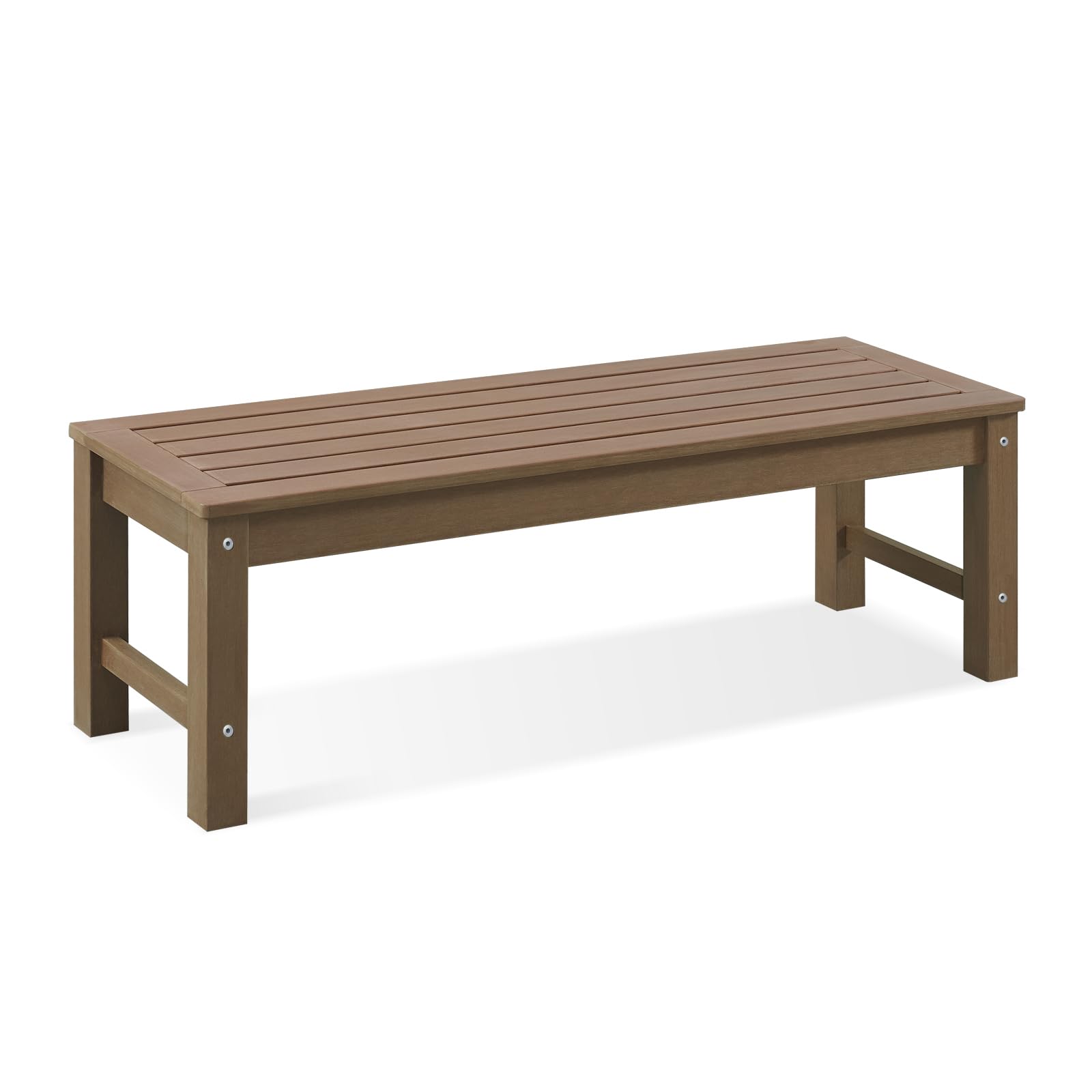
A simple, backless poly lumber bench that resists rot and fading while requiring minimal upkeep.
Why I picked it: I picked the backless Knight because it’s a compact, weatherproof seat that’s extremely low maintenance.
Best for: Tight garden nooks, walkways, or paired seating around a fire pit.
Affordable poly lumber choice.
Pros
- Realistic wood-like finish
- Ultra low maintenance
- Recycled material construction
- Quick four-screw assembly
Cons
- No back support
- Heavy to reposition
My take
This backless bench was the easiest of the bunch to assemble — just a few screws and it was ready to use. The pieces were labeled and fit together with no drama.
I’ve had a version of this bench outside for over a year and the color and finish have held up without fading. It’s not meant for lounging but works perfectly for quick seating and decorative placement.
If you need a compact, dependable bench that you can mostly forget about, this is the one I reach for.
7. Cast Aluminum Rose Patio Bench – Best Classic Look
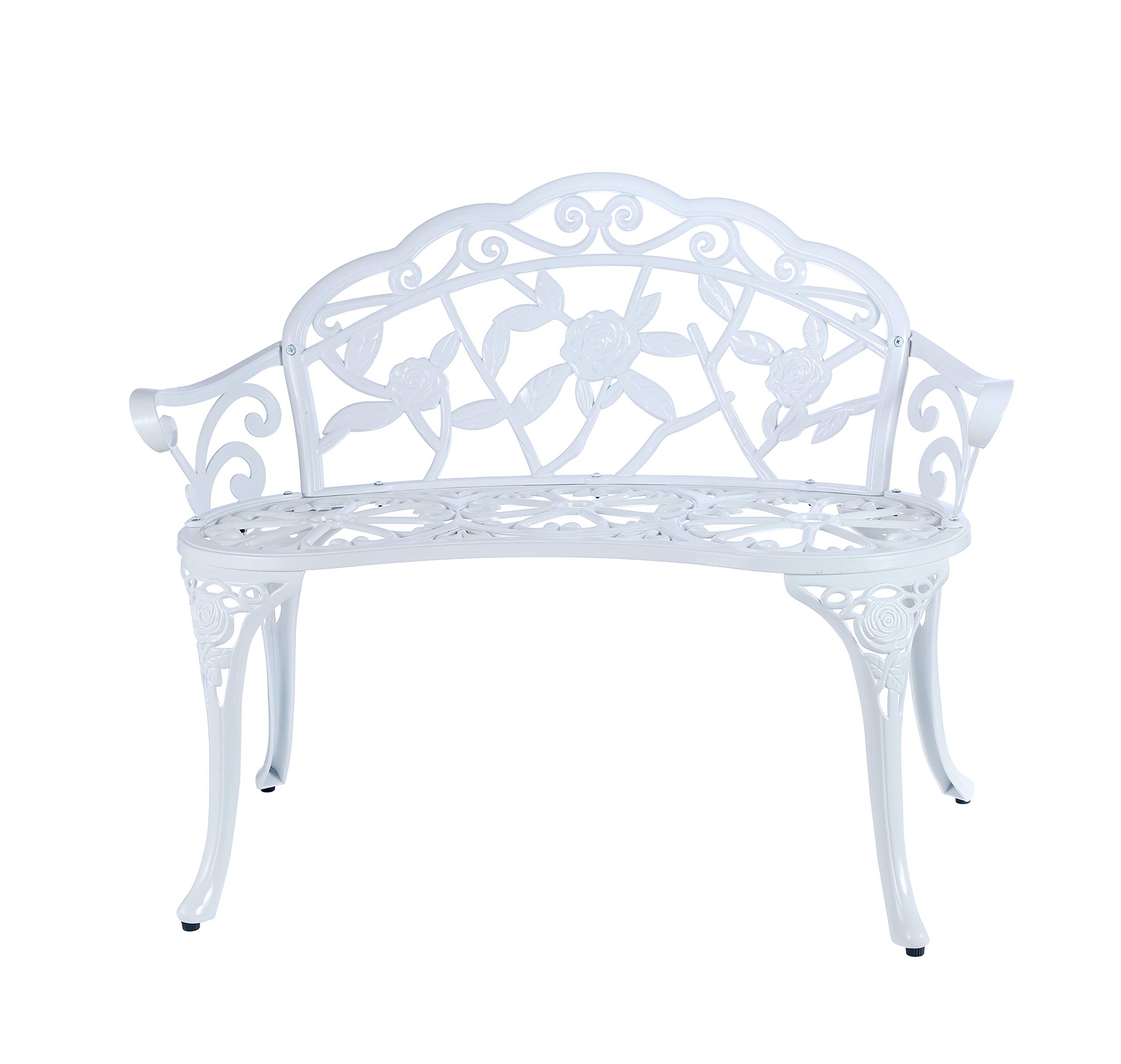
Antique-inspired cast aluminum bench with an ornate back panel and lightweight, rust-resistant construction.
Why I picked it: I picked this for its classic, decorative look and true cast aluminum construction that won’t rust like iron.
Best for: Decorative garden corners, small patios, and light-use seating.
Budget-friendly decorative bench.
Pros
- Antique classic design
- Cast aluminum resists rust
- Easy assembly
- Lightweight to move
Cons
- Lower load capacity
- Smaller seating area
My take
I assembled this bench solo in under 30 minutes and found it very attractive in my landscaping. The cast aluminum looks like a vintage piece but without the maintenance issues of iron.
It’s light enough to move when I want to rearrange my yard, yet sturdy for one person or short visits. I would be cautious about seating two large adults together — it’s a nicer choice for light use and visual appeal.
If you want a decorative statement rather than heavy-duty seating, this bench delivers beautiful detail and easy upkeep.
8. Stoog All-Weather HIPS 2-Person Bench – Best Heavy-Duty
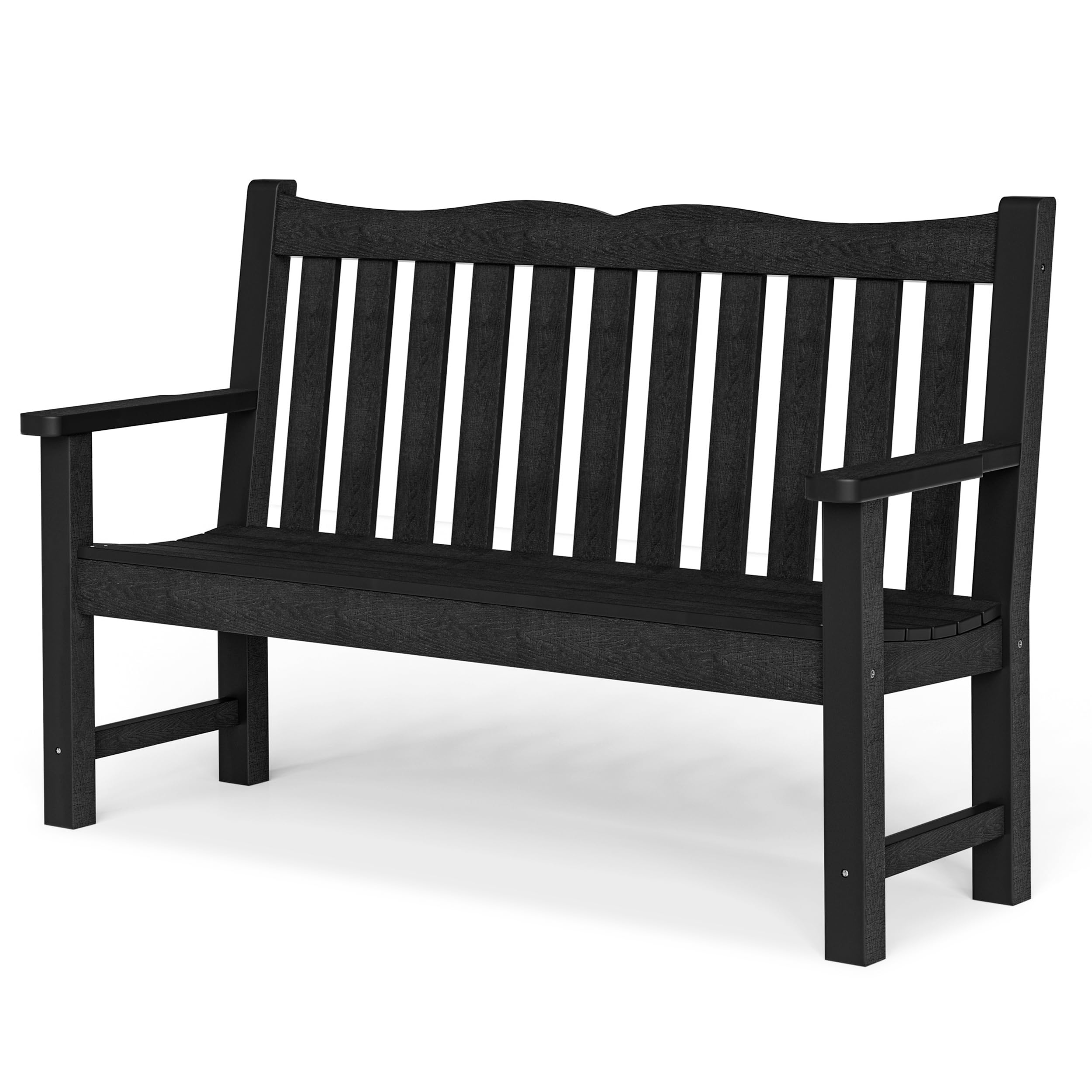
HIPS plastic bench with stainless steel hardware, high weight capacity, and an embossed wood grain finish for realistic looks and longevity.
Why I picked it: I picked this because it blends very high load capacity, precise fit in assembly, and weatherproof HIPS construction.
Best for: High-traffic public spaces, parks, and heavy-use residential areas needing long-lasting seating.
Premium option for extreme durability.
Pros
- 800 lb capacity
- All-weather HIPS material
- Realistic wood grain texture
- Stainless steel hardware
Cons
- Heavier to handle
- Takes up more storage space
My take
Assembly was impressively precise — every bolt and component lined up cleanly and the included hardware made the process quick. The bench felt robust the moment I sat down.
The HIPS material looks and feels like wood at a distance but gives the real benefit of resisting fading, rotting, and rust. Cleaning is as easy as a wipe with soapy water.
For spaces where durability is the top priority, I rely on this bench: it’s built to last and to take heavy use without the maintenance wooden benches demand.
How I Choose a Patio Bench
Materials and durability
I consider material first because it determines how much upkeep a bench will need. Acacia and meranti are beautiful and solid but benefit from shelter or occasional oiling. Poly lumber and HIPS need almost no maintenance and resist rot and fading.
If salt spray or frequent rain is a factor, I lean toward powder-coated aluminum, poly lumber, or HIPS because those materials resist corrosion better than raw metal or unprotected wood.
- Wood (acacia, meranti): authentic look, needs maintenance outdoors
- Poly lumber/HIPS: low maintenance, fade- and rot-resistant
- Aluminum: rust-resistant with powder coating, lighter than steel
Weight capacity and stability
I always check weight capacity because a bench that flexes or tips is not comfortable. The poly and HIPS options I tested offered the highest capacities and the solid wood models felt sturdy but need proper frame support.
Cross-braced legs and leg-levelers made a real difference in stability on uneven patios during my testing.
- Look for reinforced frames or cross-braced legs
- Leg levelers help on uneven surfaces
- Higher capacity benches last longer under heavy use
Seat depth, comfort, and style
Seat depth matters for lounging vs. quick seating. Many dining-style benches are shallower; pick a deeper seat if you want to relax for longer periods.
Style should match your home — farmhouse wood, industrial metal, or decorative cast aluminum — but prioritize comfort and durability over purely decorative choices.
- Shallow seats suit dining; deeper seats suit lounging
- Add cushions for comfort but choose weatherproof fabrics
Assembly and maintenance
I favor benches with pre-drilled holes and labeled parts — they make a one-person assembly realistic. Tools included are a bonus.
Think about seasonal storage. If you won’t store the bench, choose a material that tolerates the worst of your local weather.
- Pre-drilled holes speed up assembly
- Labeled parts and included tools reduce hassle
- Consider storage or protective covers for longer life
Frequently Asked Questions
How do I maintain a wood bench outdoors?
I keep wooden benches under cover, apply a protective oil or sealer once a year on exposed pieces, and clean with a mild soap to remove dirt. If you want minimal upkeep, I recommend a poly lumber or HIPS bench instead.
Can a bench stay outside year-round?
Some benches can, but I protect hardwoods from constant exposure. Metal and plastic-based benches handled all seasons best in my experience; still, I use covers or move lighter pieces into storage during extreme weather.
Which bench is easiest to assemble alone?
The poly lumber and many of the aluminum options were the quickest for me, thanks to pre-drilled holes and minimal fasteners. Backless designs often have the simplest assembly.
Should I add cushions?
I add cushions for long sitting sessions. For outdoor use choose quick-dry, UV-resistant fabrics and be prepared to store cushions during storms to prolong their life.
Final Take
I tested benches across materials and styles to find reliable, comfortable options for different needs — from heavy-duty HIPS for high traffic to warm hardwoods for entries and dining. Consider where you’ll place the bench, how much maintenance you’ll tolerate, and whether you want decorative or workhorse seating.
If you want low maintenance and maximum durability, I reach for the poly lumber and HIPS options. If you prefer the authentic look of wood, the acacia and meranti benches deliver warmth and style but need a little more care. Either way, pick the bench that meets your use case and you’ll get years of solid service.
